
Introduction to Pink Flowering Trees in Australia
Overview of tree with pink flowers australia
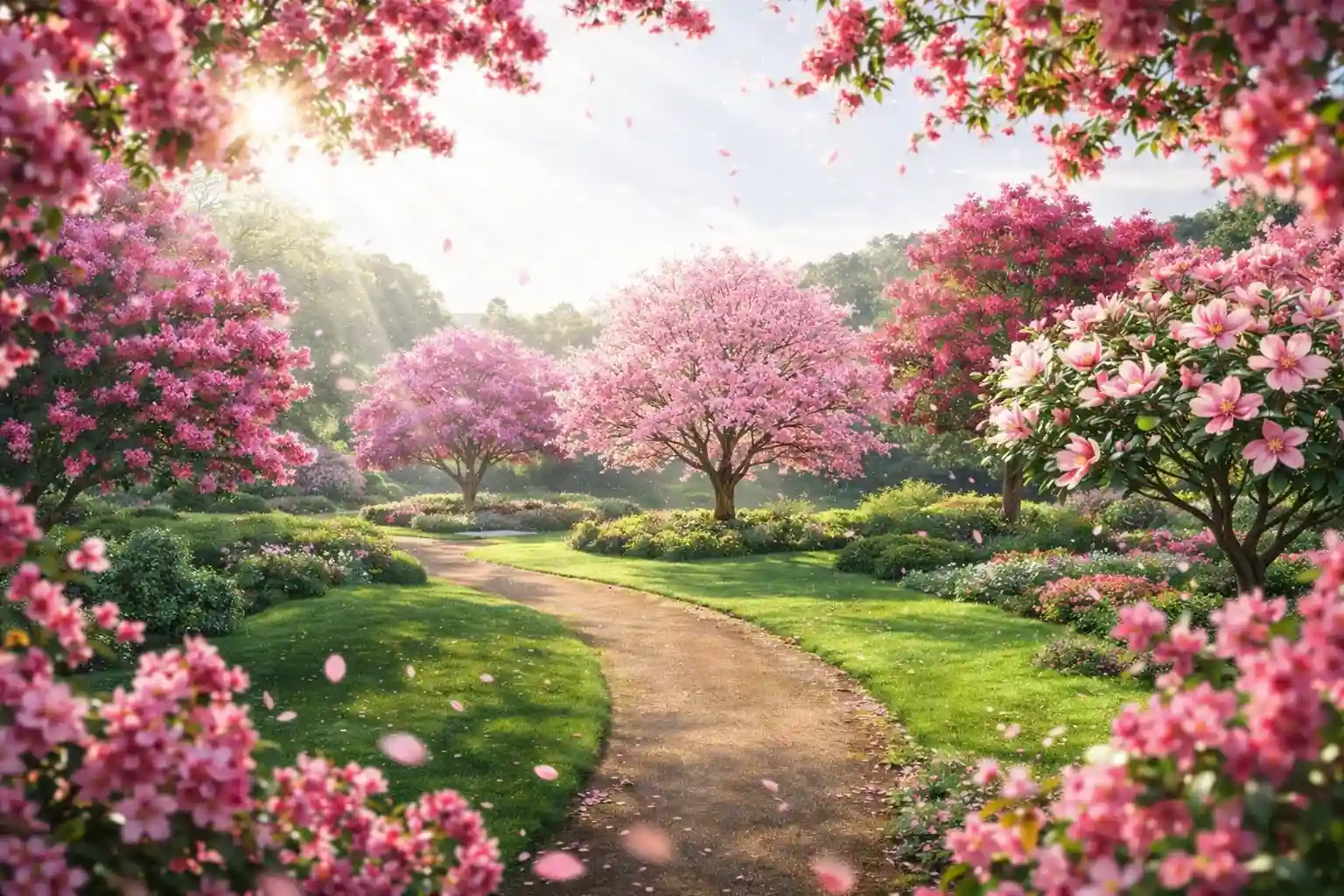
A tree with pink flowers Australia is commonly used in residential landscapes, public gardens, and urban streetscapes for its vibrant seasonal display. Across Australia, both native and ornamental species produce pink blossoms that add visual interest and ecological value to outdoor spaces. These trees vary widely in size, growth habit, and flowering period, allowing gardeners and landscapers to select suitable species for different climates and garden designs. Many pink flowering trees Australia include well-known ornamental varieties such as crepe myrtle, cherry blossom, magnolia, and frangipani, as well as native species like flowering gums and bottlebrush. Because of their distinctive blooms, these trees are also commonly referenced in pink flowering trees identification guides used by gardeners and plant enthusiasts.
If you want a broader foundation for selecting, planting, and maintaining ornamental trees, this gardening and plant care guide explains the core principles that help landscape plants thrive.
Pink flowering trees as ornamental landscape plants
Pink flowering trees are widely planted as ornamental features in Australian landscapes due to their striking appearance and seasonal color. Their blooms create a strong visual focal point in gardens, parks, and streets. Many landscapers use a pink flower tree Australia as a centerpiece planting or as part of avenue plantings to create dramatic spring or summer displays.
These ornamental trees are valued for several characteristics:
- Decorative blossoms in shades ranging from pale pink to deep rose
- Attractive foliage and tree structure
- Compatibility with residential and urban landscapes
- Seasonal interest that enhances garden design
Because of these features, pink flowering trees Australia are often integrated into landscape planning to improve visual appeal and increase plant diversity.
Role in biodiversity and pollinators
Beyond their ornamental value, pink flowering trees contribute significantly to urban biodiversity. Many flowering species produce nectar and pollen that support a range of pollinating insects and wildlife.
Common pollinators attracted to pink flowering trees include:
- Bees that collect nectar and pollen
- Butterflies that feed on flower nectar
- Native birds such as honeyeaters
- Small insects that assist in plant pollination
Native species in particular play an important ecological role. Trees such as flowering gums and bottlebrush provide reliable nectar sources that sustain pollinator populations throughout flowering seasons. As a result, planting pink flowering trees Australia can help strengthen urban ecosystems while maintaining aesthetic landscaping value.
Seasonal blooming patterns in Australian climates
Blooming patterns of pink flowering trees vary depending on species and regional climate conditions. Australia’s diverse climate zones—from tropical regions in the north to temperate southern areas—allow different flowering trees to bloom at different times of the year.
Typical flowering periods include:
- Spring flowering trees: cherry blossoms, magnolias, flowering plums
- Summer flowering trees: crepe myrtle, hibiscus, some bottlebrush species
- Extended bloom periods: certain ornamental trees flower from late spring through autumn in warmer regions
Understanding seasonal bloom cycles is essential for gardeners and landscapers performing pink flowering trees identification, as flowering time often helps distinguish between species. By combining trees that bloom in different seasons, landscapes can maintain continuous color and ecological activity throughout much of the year.
Why Pink Flowering Trees Are Popular in Australian Landscapes
Aesthetic Landscaping Value
Pink flowering trees are widely valued in landscape design because they create strong visual impact in residential gardens, parks, and streetscapes. Their blossoms introduce vibrant seasonal color that contrasts with surrounding greenery and structural garden elements. In Australia, many gardeners choose flowering trees specifically to enhance outdoor aesthetics and create visually balanced landscapes.
Vibrant spring and summer blooms
Many pink flowering trees produce dramatic blooms during spring and summer, which are the primary flowering seasons for ornamental trees. Species such as cherry blossom, magnolia, and crepe myrtle display dense clusters of pink flowers that cover the canopy and create striking seasonal displays. These blossoms can range from soft pastel shades to deep rose tones, allowing gardeners to select varieties that complement existing landscape colors.
Because flowering occurs when temperatures are mild and daylight hours increase, these trees become a key feature in gardens during the most active outdoor seasons.
Garden focal points
Pink flowering trees are often used as focal points in landscape design due to their strong ornamental presence. A single flowering tree can anchor an entire garden layout and draw attention to a specific area.
Common landscaping uses include:
- Centerpiece planting in garden beds
- Accent trees near entrances or pathways
- Feature trees in lawns or open yard spaces
- Avenue plantings along driveways or streets
When placed strategically, these trees enhance spatial balance and provide a natural highlight within the landscape.
Wildlife and Pollinator Attraction
Flowering trees that produce nectar-rich blossoms play an important role in supporting local wildlife. Many pink flowering species attract pollinators that rely on floral resources for food.
Bees
Bees are among the most important pollinators visiting flowering trees. They collect nectar and pollen from blossoms, helping facilitate pollination while supporting healthy bee populations.
Birds
Certain flowering trees attract nectar-feeding birds such as honeyeaters and lorikeets. These birds feed on nectar while moving between blossoms, which also contributes to pollination.
Butterflies
Butterflies are drawn to brightly colored flowers with accessible nectar. Pink blossoms are particularly attractive to many butterfly species that visit gardens during warm seasons.
By providing nectar sources, pink flowering trees help support biodiversity and strengthen pollinator networks within urban and suburban environments.
Seasonal Garden Color
Seasonal color is one of the primary reasons pink flowering trees are planted in Australian gardens. Their blooms introduce temporary bursts of color that transform landscapes during peak flowering periods.
Different species contribute color at different times of the year:
- Spring: cherry blossoms, magnolias, flowering plums
- Summer: crepe myrtle, hibiscus, flowering gums
- Late summer to autumn: extended blooming varieties of crepe myrtle and hibiscus
By selecting trees with staggered flowering periods, gardeners can maintain continuous seasonal interest and ensure that gardens remain visually dynamic throughout much of the year.
For longer-lasting garden color beyond flowering trees alone, this guide to plants that flower all year round in Australia can help you combine trees with other reliable flowering plants.
Types of Pink Flowering Trees Found in Australia
Pink flowering trees in Australia fall into three main categories. These groups help gardeners and landscapers understand the origin, growth characteristics, and climate suitability of different species. Some trees are native to Australia and adapted to local ecosystems, while others are ornamental imports or tropical species that thrive in warm regions. Understanding these categories also assists with pink flowering trees identification, since each group has distinct botanical traits, flowering patterns, and environmental preferences.
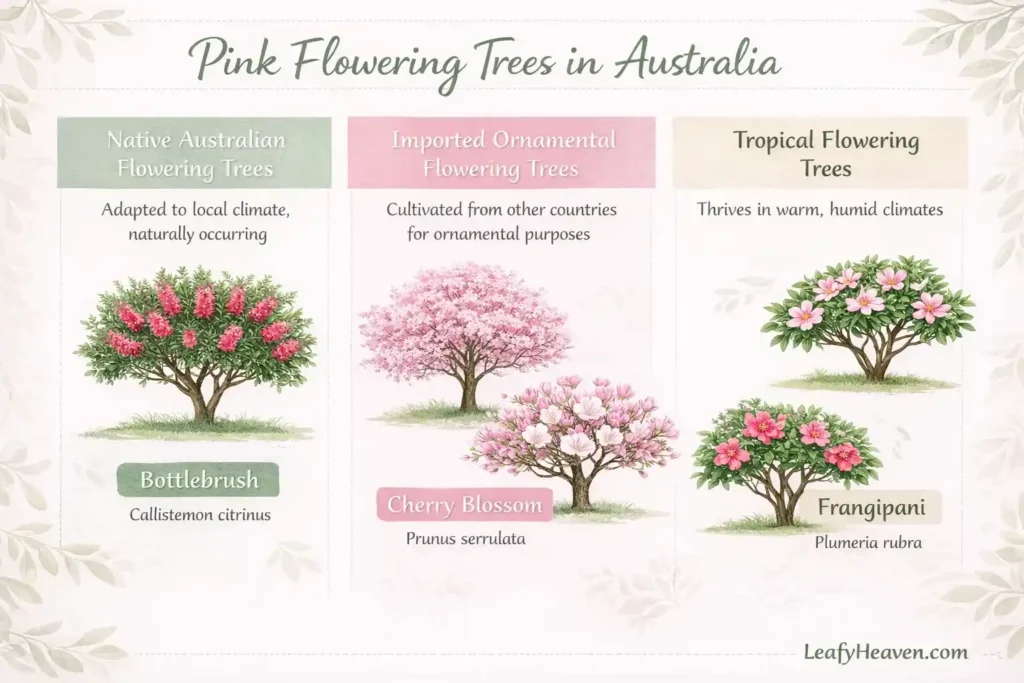
Native Australian Flowering Trees
Native Australian flowering trees are naturally adapted to the country’s soil types, climate conditions, and ecosystems. Many of these species produce pink blossoms that attract native wildlife and pollinators.
Common characteristics of native pink flowering trees include:
- Strong tolerance to Australian drought and heat conditions
- Adaptation to local soils and rainfall patterns
- High ecological value for birds, bees, and insects
- Unique flower structures such as brush-like or clustered blooms
Examples of native trees with pink flowers include bottlebrush species, flowering gums, and beaufortia varieties. Because they evolved in Australian environments, these trees are often recommended for sustainable landscaping and habitat-friendly gardens.
Imported Ornamental Flowering Trees
Many pink flowering trees Australia are ornamental species introduced from other regions of the world. These trees are popular because of their decorative blossoms, elegant forms, and suitability for garden landscapes.
Imported ornamental trees commonly originate from:
- East Asia
- Europe
- North America
Examples include cherry blossom trees, magnolias, flowering plums, and crepe myrtle. These species are widely planted in parks, streets, and residential gardens because they produce dense clusters of attractive pink blooms during spring or summer.
Although not native, these ornamental species adapt well to Australian climates and have become an important part of modern landscape design.
Tropical Flowering Trees
Tropical flowering trees represent another group of pink flowering species commonly grown in warmer regions of Australia. These trees thrive in tropical and subtropical climates where temperatures remain warm throughout most of the year.
Typical characteristics of tropical pink flowering trees include:
- Large, showy blossoms
- Extended flowering seasons in warm climates
- Broad leaves and lush growth habits
- Strong suitability for coastal and subtropical landscapes
Examples include hibiscus trees and frangipani. These species are especially popular in northern Australia and coastal areas where warmer temperatures support tropical plant growth. Their bold flowers and lush foliage make them desirable choices for decorative garden plantings and tropical-style landscapes.
Australian Native Trees With Pink Flowers
Australia is home to several native tree species that produce pink blossoms and thrive in local climates. These trees are well adapted to Australian soils, rainfall patterns, and temperature conditions. Many native flowering trees also play an important ecological role by providing nectar and habitat for wildlife. Because of their resilience and environmental value, they are commonly planted in gardens, parks, and restoration landscapes.
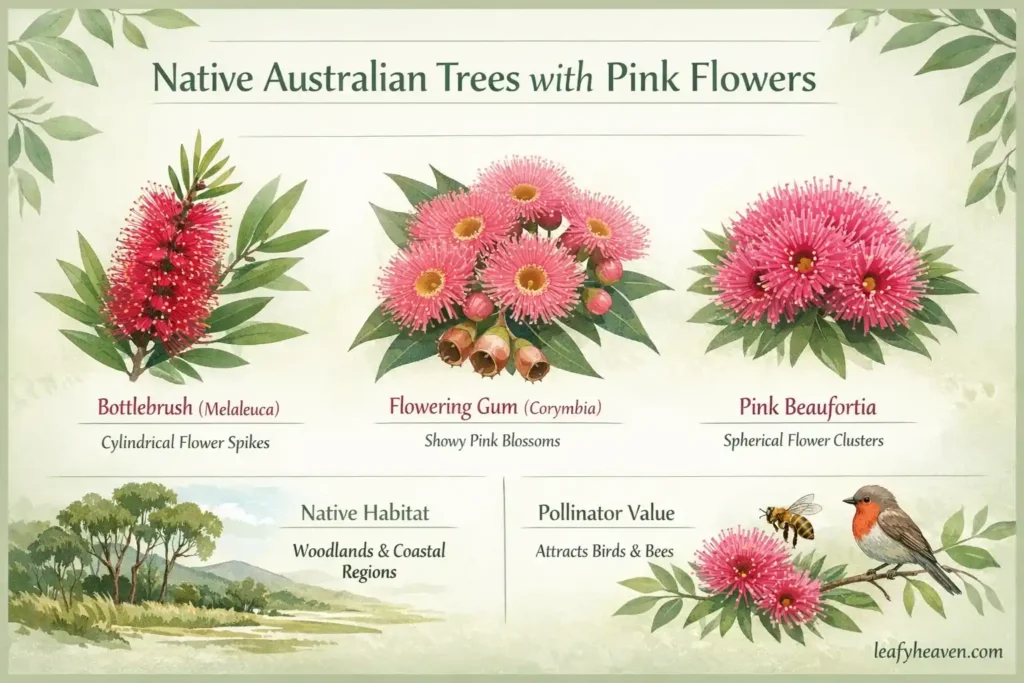
Bottlebrush Trees
Genus: Callistemon / Melaleuca
Bottlebrush trees are among the most recognizable native flowering trees in Australia. These plants belong to the genera Callistemon and Melaleuca, which are closely related groups within the myrtle family (Myrtaceae). Many species produce vibrant flower spikes that resemble a bottle-cleaning brush, giving the tree its common name.
Common bottlebrush species include:
- Melaleuca sabrina
- Melaleuca paludicola
- Melaleuca quercina
- Melaleuca wimmerensis
Bottlebrush species are native Australian plants with distinctive cylindrical flower spikes that may appear pink or red depending on the variety. The flowers are composed of numerous long stamens that form dense brush-like clusters along the branches. These blossoms are rich in nectar and attract a wide range of pollinators, including birds and insects.
Bottlebrush trees are widely used in Australian landscaping because they offer several practical benefits:
- Strong tolerance to drought and heat
- Adaptability to different soil types
- Reliable flowering in warm climates
- High value for wildlife and pollinators
Depending on the species, bottlebrush trees can grow as small ornamental trees or large shrubs. Their evergreen foliage and bright blossoms make them a popular choice for native gardens and habitat-friendly landscapes throughout Australia.
Pink Beaufortia
Scientific Name: Beaufortia schaueri
Pink beaufortia is a native Australian flowering shrub or small tree known for its distinctive spherical flower clusters. The species Beaufortia schaueri belongs to the myrtle family (Myrtaceae) and is naturally found in Western Australia. It is valued for its ornamental appeal and ability to adapt to dry, sandy soils typical of many Australian landscapes.
This species produces dense, rounded flower heads made up of numerous fine stamens that create a soft, brush-like appearance. The blossoms typically appear in bright pink shades and form eye-catching clusters along the branches.
Key characteristics of Beaufortia schaueri include:
- Native distribution in Western Australia
- Compact growth habit suitable for gardens
- Spherical clusters of vivid pink flowers
- Flowering season primarily in spring
- Strong adaptation to well-drained soils and dry conditions
Pink beaufortia is often planted in native gardens and coastal landscapes because it tolerates drought and requires relatively low maintenance once established.
Flowering Gum Trees
Scientific Name: Corymbia species
Flowering gum trees are among the most striking native ornamental trees found in Australia. Belonging to the genus Corymbia, these trees are closely related to eucalyptus species and are well known for their vibrant flowering displays.
Unlike many gum trees that are grown mainly for foliage, flowering gum varieties are cultivated specifically for their decorative blossoms. These blooms can appear in a range of colors, including pink, red, orange, and occasionally cream, depending on the species and cultivar.
Important characteristics of flowering gum trees include:
- Native Australian ornamental tree species
- Large clusters of brightly colored blossoms
- Evergreen foliage typical of gum trees
- Adaptation to warm Australian climates
One of the most widely recognized examples is Corymbia ficifolia, commonly known as the red flowering gum, which also has cultivars producing pink-toned flowers. Because of their dramatic blooms and relatively manageable size compared to many eucalyptus trees, flowering gums are frequently used in residential gardens, parks, and streetscapes across Australia.
Ornamental Pink Flowering Trees Introduced to Australia
Many popular pink flowering trees in Australia originate from Asia or tropical regions but have adapted well to Australian growing conditions. These ornamental species are widely planted in residential gardens, botanical gardens, and public landscapes because of their decorative blossoms and seasonal color displays. Although they are not native, these trees perform well in many Australian climate zones, especially temperate and subtropical regions.
Ornamental flowering trees are typically selected for landscape use because they provide strong visual appeal, predictable blooming cycles, and manageable growth habits. Their pink blossoms create vibrant displays that enhance gardens, parks, and urban streetscapes.
Examples include:
- Cherry blossom trees
- Magnolias
- Crepe myrtle
- Frangipani
These species are valued for their ornamental characteristics, including:
- Large clusters of showy pink flowers
- Distinctive tree forms suitable for landscaping
- Seasonal blooming that adds garden color
- Compatibility with residential and urban planting designs
Because of their popularity in ornamental horticulture, these trees are frequently featured in pink flowering trees identification resources used by gardeners and landscape designers. Their adaptability to Australian climates has allowed them to become a familiar part of modern landscape planting across many regions of the country.
Cherry Blossom Trees With Pink Flowers
Cherry blossom trees are among the most recognizable ornamental flowering trees planted in gardens and parks. These trees belong to the genus Prunus and are widely valued for their dramatic spring blossoms. Many cherry varieties produce abundant clusters of soft pink flowers that appear before or alongside the leaves, creating a dense floral canopy.
In Australia, cherry blossom trees are commonly grown in temperate regions where cool winters and mild springs support healthy flowering. Their seasonal blooms make them popular choices for ornamental landscaping, avenue plantings, and decorative garden displays.
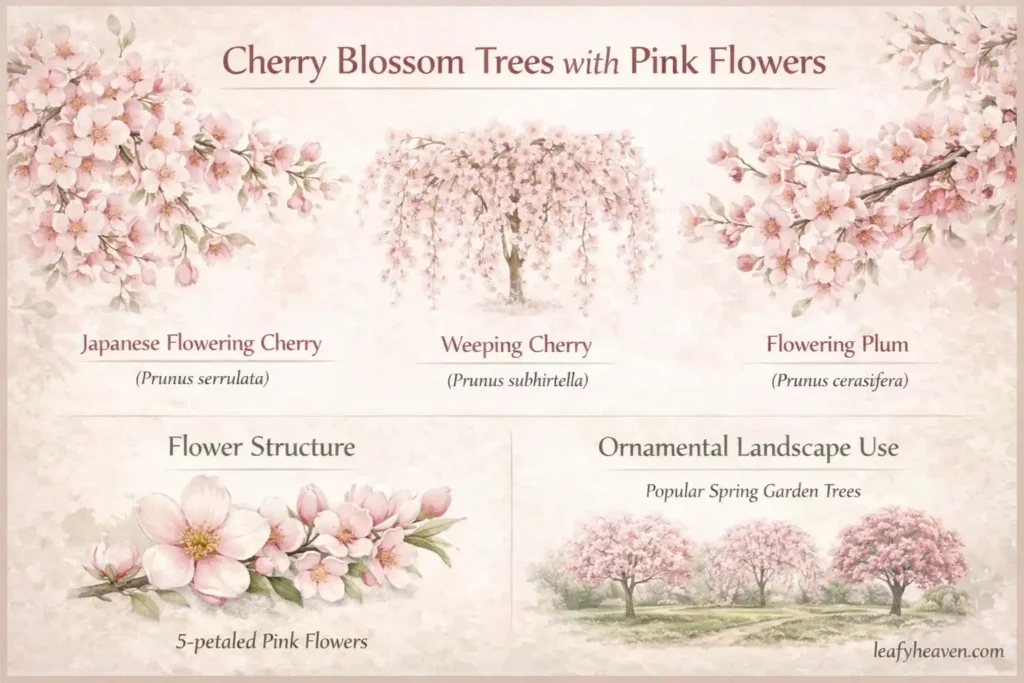
Japanese Flowering Cherry
Scientific Name: Prunus serrulata
Japanese flowering cherry is one of the most famous ornamental cherry blossom trees grown worldwide. Native to East Asia, this species is widely cultivated for its impressive spring flowering display. During the flowering season, the branches become covered with clusters of delicate pink blossoms that create a striking visual effect.
Key characteristics of Prunus serrulata include:
- Abundant spring pink blossoms
- Rounded ornamental tree shape
- Deciduous foliage that changes color in autumn
- Popular use in gardens, parks, and public landscapes
Because of its dramatic floral display, Japanese flowering cherry is frequently planted as a feature tree in ornamental gardens.
Weeping Cherry Tree
Scientific Name: Prunus subhirtella
The weeping cherry tree is known for its graceful cascading branches that produce soft pink blossoms in spring. This species forms a distinctive umbrella-shaped canopy with long, drooping branches that create an elegant landscape feature.
Important characteristics of Prunus subhirtella include:
- Graceful cascading pink flowers
- Weeping growth habit with arching branches
- Compact ornamental tree suitable for gardens
- Early spring flowering period
Because of its decorative form, the weeping cherry tree is often used as a focal tree in residential gardens and ornamental landscapes.
Flowering Plum
Scientific Name: Prunus cerasifera
Flowering plum trees are ornamental members of the Prunus genus that produce attractive pink blossoms in early spring. These trees are commonly grown not only for their flowers but also for their decorative foliage, which can appear in shades of purple or reddish tones.
Key characteristics of Prunus cerasifera include:
- Early spring pink blossoms
- Attractive ornamental foliage
- Moderate-sized tree suitable for urban landscapes
- Seasonal interest through flowers and leaf color
Flowering plum trees are widely used in gardens, streetscapes, and parks because they combine decorative flowers with colorful foliage, making them valuable ornamental landscape trees.
Magnolia Trees With Pink Flowers
Magnolia trees are widely planted in ornamental landscapes for their large showy blossoms. These flowering trees belong to the genus Magnolia, a group of deciduous and evergreen trees known for their impressive floral displays and elegant structure. Many magnolia species produce large pink flowers that appear in early spring, often before the leaves fully develop.
Because of their dramatic blooms and refined growth habit, magnolias are commonly used as feature trees in gardens, parks, and residential landscapes.
Gardeners comparing evergreen magnolia options can also explore Teddy Bear Magnolia vs Little Gem to understand how these popular varieties differ in size, structure, and landscape use.
Their blossoms are typically large, fragrant, and visually striking, making them a popular choice for ornamental planting.
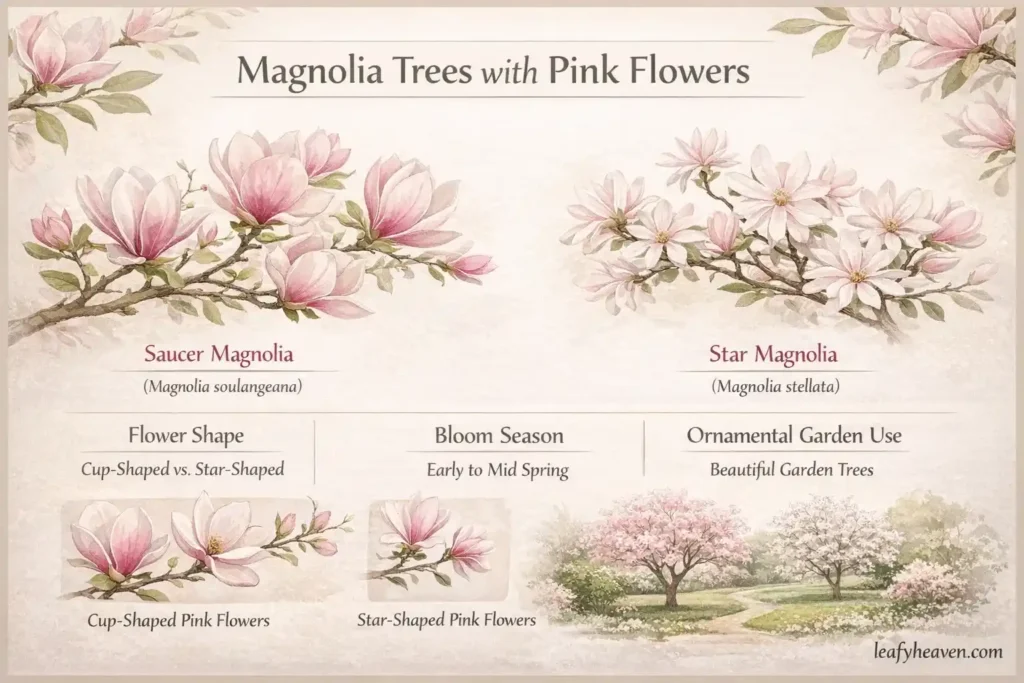
Saucer Magnolia
Scientific Name: Magnolia soulangeana
Saucer magnolia is one of the most widely cultivated magnolia trees with pink flowers. This ornamental species is known for its large, cup-shaped blossoms that appear in early spring. The flowers typically display soft pink to purplish-pink outer petals with lighter interiors, creating a distinctive two-tone appearance.
Key characteristics of Magnolia soulangeana include:
- Large pink cup-shaped flowers
- Early spring blooming period
- Deciduous tree form with spreading branches
- Popular use as a garden centerpiece tree
Because of its impressive floral display, saucer magnolia is commonly planted in residential landscapes and botanical gardens.
Star Magnolia
Scientific Name: Magnolia stellata
Star magnolia is a smaller ornamental magnolia species that produces delicate star-shaped blossoms in early spring. The flowers consist of many narrow petals that radiate outward, forming a star-like appearance.
Important characteristics of Magnolia stellata include:
- Early spring flowering before full leaf growth
- Compact tree size suitable for small gardens
- Star-shaped blossoms that may appear white or soft pink
- Dense branching structure ideal for ornamental planting
Due to its smaller size and attractive floral display, star magnolia is frequently planted in garden landscapes where space is limited.
Hybrid Magnolia Varieties
Hybrid magnolia varieties are developed by crossing different magnolia species to create improved ornamental characteristics. These hybrids often combine desirable traits such as larger flowers, stronger colors, and improved adaptability to different climates.
Common features of hybrid magnolia varieties include:
- Large showy blossoms in pink or pink-purple tones
- Improved flowering reliability in temperate climates
- Moderate tree size suitable for residential landscapes
- Enhanced ornamental value for gardens and parks
Many hybrid magnolias are cultivated specifically for landscape use, making them a common choice for gardeners seeking trees with striking pink blooms.
Crepe Myrtle Trees With Pink Flowers
Scientific Name: Lagerstroemia indica
Crepe myrtle is one of the most widely planted flowering trees in Australia and can bloom from late spring through autumn depending on climate. This ornamental tree is valued for its long flowering season, colorful blossoms, and adaptability to warm environments. Because of its reliable blooming performance, crepe myrtle is commonly used in residential gardens, street plantings, and public landscapes.
The flowers grow in large clusters known as panicles, creating dense displays of pink blossoms that cover the tree canopy during peak flowering periods. These blooms often appear continuously throughout warm months, making crepe myrtle one of the most consistent sources of seasonal garden color.
Key characteristics of Lagerstroemia indica include:
- Long blooming season from late spring through autumn
- Clusters of crinkled, crepe-like pink flowers
- Smooth decorative bark that adds winter interest
- Strong tolerance to heat and drought
- Adaptability to a wide range of soil conditions
Crepe myrtle trees typically grow as small to medium-sized ornamental trees, making them suitable for suburban gardens and urban landscapes. Their moderate size allows them to function effectively as feature trees, street trees, or accent plantings in garden beds.
Popular varieties include:
- Tuscarora – Known for vibrant coral-pink flowers and vigorous growth.
- Biloxi – A tall variety producing soft pink blossoms with strong summer flowering.
- Sioux – Produces medium pink flowers and is valued for its disease resistance and upright growth habit.
Because of their extended flowering period and ornamental features, crepe myrtle trees remain one of the most dependable pink flowering trees for Australian landscapes.
Hibiscus Trees With Pink Flowers
Scientific Name: Hibiscus rosa-sinensis
Hibiscus trees are tropical ornamental plants known for their large, vibrant flowers and lush foliage. The species Hibiscus rosa-sinensis is widely cultivated in warm regions of Australia, especially in subtropical and coastal climates where temperatures remain mild throughout the year. Because of their bold blossoms and continuous flowering habit, hibiscus trees are frequently used in decorative garden plantings and tropical-style landscapes.
This species produces large, showy flowers that typically appear in shades of pink, red, orange, or yellow depending on the cultivar. Pink varieties are particularly popular in ornamental gardens because their blossoms create a striking contrast against the glossy green leaves.
Key characteristics of Hibiscus rosa-sinensis include:
- Tropical flowering tree with evergreen foliage
- Large pink ornamental flowers with prominent central stamens
- Long flowering season in warm climates
- Adaptation to subtropical and coastal regions
Hibiscus trees thrive in warm environments with abundant sunlight and well-drained soil. In suitable climates, they can produce flowers for extended periods throughout the year, making them a reliable source of color in garden landscapes.
Because of their tropical appearance and bright blossoms, hibiscus trees are commonly planted in coastal gardens, residential yards, and landscaped public spaces across many warm areas of Australia.
Frangipani Trees With Pink Flowers
Scientific Name: Plumeria rubra
Frangipani trees are tropical ornamental trees widely planted in warm Australian regions for their fragrant and decorative flowers. The species Plumeria rubra is particularly popular in coastal and subtropical climates where warm temperatures support healthy growth and regular blooming. These trees are commonly used in residential gardens, resort landscapes, and public spaces because of their distinctive flowers and tropical appearance.
Frangipani trees produce clusters of waxy blossoms that typically appear in shades of pink, white, or a combination of both. The flowers are known for their strong fragrance, which becomes more noticeable during warm evenings and humid conditions.
Key characteristics of Plumeria rubra include:
- Tropical ornamental tree with spreading branches
- Pink and white fragrant flowers arranged in clusters
- Thick succulent branches with broad green leaves
- Adaptation to warm and coastal Australian climates
Frangipani trees usually bloom during the warmer months, producing repeated flushes of flowers throughout summer. Their attractive blossoms and sculptural branch structure make them a popular feature tree in tropical and subtropical gardens.
Because of their tolerance to heat and moderate drought conditions, frangipani trees are widely planted in warm Australian regions where they provide seasonal color and fragrance in landscaped environments.
Maple Trees With Pink or Red Foliage in Australia
Maple trees are widely valued in ornamental landscaping for their distinctive foliage rather than their flowers. In Australia, several maple varieties are planted in temperate gardens where cooler seasonal conditions support healthy growth. While they do produce small flowers, their main decorative feature is the vibrant foliage that can display shades of red, pink, burgundy, and deep crimson throughout the growing season.
Because of their elegant structure and colorful leaves, maples are often used as feature trees in residential landscapes and botanical gardens. Their foliage provides seasonal interest from spring through autumn, making them a popular choice for ornamental garden design.
Japanese Maple
Scientific Name: Acer palmatum
Japanese maple is one of the most recognizable ornamental trees grown in temperate gardens. The species Acer palmatum is widely cultivated for its finely textured foliage and graceful branching structure. Although it is primarily grown for its decorative leaves rather than flowers, it remains one of the most visually striking landscape trees.
In acer palmatum Australia plantings, this tree performs best in cooler temperate regions where summers are mild and soil moisture is consistent. Because of its compact size and elegant canopy, it is commonly used in ornamental gardens and courtyard landscapes.
Key characteristics of Japanese maple include:
- Distinctive palm-shaped japanese maple tree leaves
- Compact ornamental tree suitable for small gardens
- Seasonal foliage color ranging from bright red to deep burgundy
- Elegant branching structure that adds landscape interest
Japanese maple is particularly popular in temperate cities and cooler regions. For example, many japanese maple trees Melbourne gardens feature this species because the local climate supports its growth and seasonal color display.
Common varieties include:
- Red Japanese maple – Known for its deep red foliage throughout much of the growing season.
- Weeping Japanese maple – Features cascading branches and finely divided leaves that create a graceful ornamental form.
Because of their refined appearance and vibrant foliage, Japanese maples remain a popular ornamental tree choice for Australian gardens seeking seasonal color and elegant structure.
Small Trees With Pink Flowers for Gardens
Many gardeners prefer compact flowering trees that provide ornamental value without occupying excessive space. A small tree with pink flowers Australia is ideal for residential gardens, courtyards, and urban landscapes where space may be limited. These trees offer decorative blooms while remaining manageable in size, making them suitable for smaller properties and structured garden designs.
If you are planning a compact landscape, this guide to small trees in Australia can help you compare more space-friendly tree options for residential gardens.
Small ornamental trees can function as focal points in garden beds, accent trees near patios, or decorative plantings along pathways. Their pink blossoms provide seasonal color while their compact growth habit allows them to fit comfortably within limited garden areas.
Common characteristics of a small tree with pink blossoms include:
- Manageable height suitable for residential gardens
- Decorative seasonal flowers
- Compatibility with urban landscaping
- Ability to grow in garden beds, lawns, or large containers
Examples include:
- Dwarf crepe myrtle – A compact form of Lagerstroemia indica that produces vibrant pink flower clusters during the warmer months while maintaining a smaller tree size.
- Ornamental cherry trees – Smaller cultivars of cherry blossom trees provide soft pink spring blooms and work well as feature trees in garden landscapes.
- Hibiscus trees – Certain hibiscus varieties can be trained into small tree forms, producing large pink tropical flowers in warm climates.
- Frangipani – A small to medium tropical tree that produces fragrant pink blossoms and is commonly used in warm Australian gardens.
Because of their moderate size and ornamental blooms, these species are among the most popular options when selecting a small tree with pink flowers Australia for decorative garden planting. Their manageable growth and vibrant blossoms allow gardeners to enjoy seasonal flowering displays even in compact outdoor spaces.
Fast Growing Trees With Pink Flowers in Australia
Many gardeners prefer fast-growing flowering trees because they establish quickly and begin producing blooms within a few growing seasons. A fast growing tree with pink flowers Australia is particularly valuable for new gardens, landscape renovations, and urban planting projects where rapid visual impact is desired. These trees combine ornamental value with relatively quick growth, allowing landscapes to develop color and structure in a shorter period.
Fast-growing pink flowering trees generally share several characteristics:
- Rapid establishment in suitable climates
- Strong adaptability to different soil types
- Reliable seasonal flowering
- Suitable use as feature trees or shade trees
Fast-growing species include:
- Crepe myrtle (Lagerstroemia indica) – One of the most reliable ornamental flowering trees in Australia. It grows quickly in warm climates and produces abundant pink flower clusters from late spring through autumn. Crepe myrtle is commonly used for street planting, garden feature trees, and residential landscaping.
- Bottlebrush (Callistemon / Melaleuca species) – Native bottlebrush trees grow relatively quickly and produce distinctive brush-like flowers that can appear in pink or red tones. These trees are drought-tolerant and well adapted to Australian conditions, making them popular choices for native gardens.
- Hibiscus (Hibiscus rosa-sinensis) – In warm subtropical climates, hibiscus plants can grow rapidly and develop into small ornamental trees with large pink blossoms. They are frequently planted in coastal gardens where warm temperatures support vigorous growth.
Selecting a fast growing tree with pink flowers Australia allows gardeners to achieve both rapid landscape development and attractive seasonal flowering displays. These species are commonly chosen for residential gardens, public parks, and urban landscaping where quick plant establishment is beneficial.
Pink Flowering Tree Identification Guide
Correctly identifying flowering trees helps gardeners choose suitable species for landscaping and understand their growth habits.
A pink flowering tree identification Australia approach usually relies on observable features such as flower shape, leaf structure, and flowering season. These characteristics provide reliable clues that distinguish different ornamental and native species commonly found in Australian landscapes.
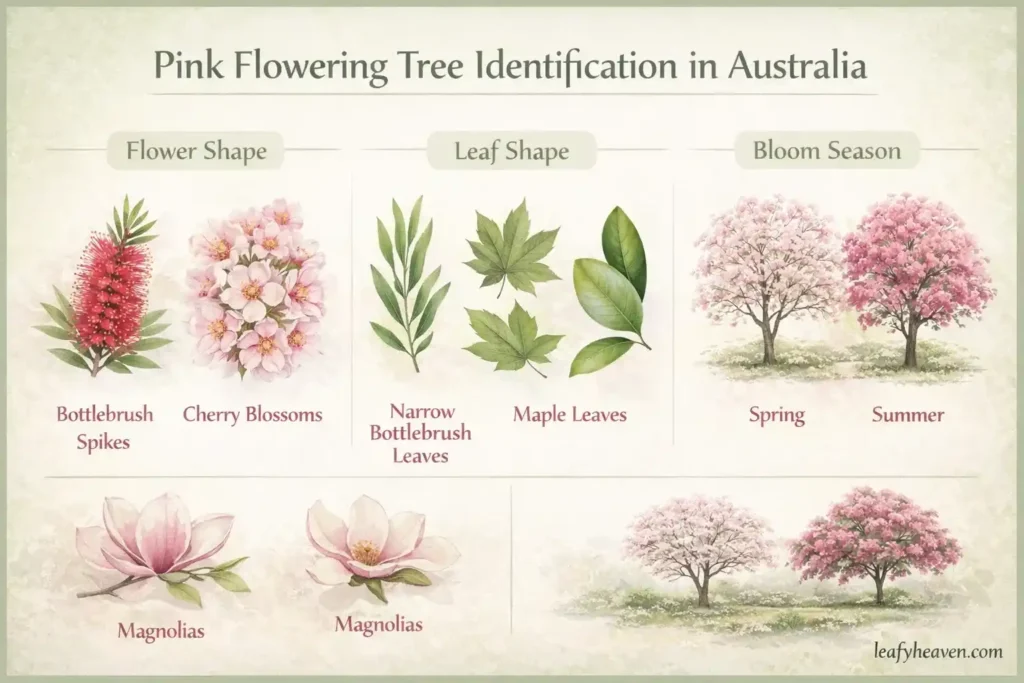
Identify Trees by Flower Shape
Flower shape is one of the most visible characteristics used in tree identification. Different species produce distinct blossom forms that are easily recognized.
Common flower shapes include:
- Bottlebrush spikes
Bottlebrush trees produce cylindrical flower spikes made up of numerous long stamens. These brush-like blooms are typical of Callistemon and Melaleuca species and may appear in pink or red shades. - Cherry blossom clusters
Cherry blossom trees form small flowers grouped in clusters along the branches. These blossoms usually appear in soft pink shades and cover the tree canopy during spring flowering. - Magnolia cup-shaped flowers
Magnolia trees produce large cup-shaped blossoms composed of thick, petal-like structures called tepals. These flowers often appear in pink or pink-purple tones and are highly visible on the tree.
Observing flower shape is often the first step in pink flowering tree identification Australia, especially during peak blooming periods.
Identify Trees by Leaves
Leaf structure also provides useful clues for distinguishing between flowering tree species. The size, shape, and arrangement of leaves can help confirm identification even when flowers are not present.
Typical leaf characteristics include:
- Maple-shaped leaves
Japanese maple trees produce palm-shaped leaves with multiple pointed lobes. These distinctive japanese maple tree leaves are a key identifying feature of Acer palmatum. - Narrow bottlebrush leaves
Bottlebrush trees have narrow, elongated leaves that often appear leathery and aromatic when crushed. These leaves are typical of species in the Callistemon and Melaleuca genera. - Broad magnolia leaves
Magnolia trees develop large, glossy leaves with smooth edges. The broad leaf surface and thick texture make them easy to recognize among ornamental flowering trees.
Leaf structure is particularly helpful for identification outside the flowering season.
Identify Trees by Bloom Season
Bloom timing is another useful indicator when identifying flowering tree species. Many trees follow predictable flowering patterns based on climate conditions.
Common blooming patterns include:
- Spring flowering trees
Trees such as cherry blossoms, magnolias, and flowering plums typically bloom in early to mid-spring when temperatures begin to warm. - Summer flowering trees
Species like crepe myrtle, hibiscus, and some bottlebrush varieties produce flowers during late spring and summer, often continuing into early autumn in warm regions.
By combining observations of flower shape, leaf characteristics, and blooming season, gardeners can perform accurate pink flowering tree identification Australia and distinguish between many common species planted in Australian landscapes.
Trees With Pink and White Blossoms
Some flowering trees produce blossoms that combine both pink and white tones, creating a soft, two-color floral display. These trees are widely used in ornamental landscaping because their mixed-color flowers add visual depth and contrast in garden settings. In many cases, the flowers may open in deeper pink shades and gradually fade to white as they mature, producing a layered color effect across the canopy.
Trees with pink and white blossoms are commonly planted in residential gardens, botanical parks, and decorative street plantings. Their balanced color combination allows them to blend well with a wide range of landscape plants and garden styles.
Examples include:
- Frangipani (Plumeria rubra)
Many frangipani cultivars produce flowers with pink outer petals and white centers. These fragrant blossoms appear in clusters during warm months and are especially common in tropical and subtropical Australian gardens. - Magnolia hybrids
Hybrid magnolia varieties often display two-toned flowers with pink exteriors and pale or white interiors. These large cup-shaped blossoms appear in early spring and are widely valued for their ornamental beauty. - Cherry blossom varieties
Several cherry blossom cultivars produce flowers that open with deeper pink tones and gradually lighten to soft pink or white as the blossoms mature. This creates a delicate layered effect during peak spring flowering.
Because of their blended colors and decorative blooms, trees with pink and white blossoms remain popular choices for ornamental landscaping throughout many Australian gardens.
Best Climate Zones in Australia for Pink Flowering Trees
Australia’s diverse climate zones allow a wide range of flowering trees to grow successfully across the country. Selecting the right species for a specific climate zone is important for healthy growth, reliable flowering, and long-term plant survival. Pink flowering trees vary in their temperature tolerance, rainfall needs, and seasonal growth cycles, so understanding climate suitability helps gardeners choose the most appropriate species for their region.
Tropical Regions
Tropical regions in northern Australia experience warm temperatures throughout the year, high humidity, and seasonal rainfall. Flowering trees that thrive in these areas are typically heat-tolerant and capable of growing in humid conditions.
Common pink flowering trees suitable for tropical regions include:
- Hibiscus trees (Hibiscus rosa-sinensis)
- Frangipani (Plumeria rubra)
- Some flowering gum species
These trees perform well in tropical environments because they tolerate high temperatures and produce flowers during extended warm seasons.
Subtropical Regions
Subtropical regions experience warm summers, mild winters, and moderate rainfall. This climate allows a wide variety of ornamental flowering trees to grow successfully.
Examples of pink flowering trees suited to subtropical climates include:
- Crepe myrtle (Lagerstroemia indica)
- Hibiscus (Hibiscus rosa-sinensis)
- Frangipani (Plumeria rubra)
- Bottlebrush species (Melaleuca / Callistemon)
These species can tolerate seasonal temperature variation while still producing consistent flowering displays.
Temperate Regions
Temperate regions are common in southern Australia and include areas with cooler winters and moderate summer temperatures. Many deciduous ornamental trees that require seasonal temperature changes grow best in these climates.
Examples of pink flowering trees suitable for temperate regions include:
- Cherry blossom trees (Prunus serrulata)
- Magnolia species (Magnolia soulangeana, Magnolia stellata)
- Japanese maple (Acer palmatum)
- Flowering plum (Prunus cerasifera)
Temperate climates support strong seasonal flowering cycles, especially for spring-blooming ornamental trees. Selecting species adapted to local climate conditions helps ensure healthy growth and consistent flowering across Australian landscapes.
How to Grow Pink Flowering Trees in Australia
Growing pink flowering trees successfully requires proper planting conditions and consistent care. While different species have specific requirements, most ornamental flowering trees share similar needs for soil quality, sunlight exposure, water management, and maintenance pruning. Providing these conditions helps trees establish strong roots, produce healthy foliage, and develop reliable seasonal blooms.
Soil Requirements
Soil quality plays a major role in the growth and flowering performance of ornamental trees. Most pink flowering trees grow best in well-drained soil that allows roots to receive oxygen while maintaining adequate moisture.
Important soil considerations include:
- Well-drained soil: Prevents waterlogging that can damage roots
- Moderate fertility: Supports steady plant growth and flowering
- Organic matter: Compost or organic mulch improves soil structure and nutrient availability
- Neutral to slightly acidic pH: Many ornamental trees prefer soil pH between 6.0 and 7.0
Before planting, improving the soil with compost or organic material can significantly enhance root development and long-term tree health.
Sunlight Needs
Most pink flowering trees require abundant sunlight to produce strong blooms. Adequate light exposure encourages healthy photosynthesis and improves flowering intensity during the blooming season.
Typical sunlight requirements include:
- Full sun exposure: At least 6–8 hours of direct sunlight per day
- Open planting location: Avoid heavy shade from buildings or large trees
- Good air circulation: Reduces humidity-related plant diseases
Trees planted in sunny locations generally produce more flowers and develop stronger branching structures.
Watering and Fertilization
Consistent watering is essential during the early establishment stage of newly planted trees. Once mature, many flowering species become more tolerant of moderate drought conditions.
Basic watering and fertilization practices include:
- Regular watering during the first growing season to support root development
- Deep watering rather than frequent shallow watering to encourage deep root growth
- Balanced fertilizer during spring to promote healthy foliage and flowering
- Organic mulch around the base of the tree to conserve soil moisture and regulate temperature
These practices help maintain steady growth and improve flowering performance.
Pruning Flowering Trees
Pruning helps maintain tree shape, remove damaged branches, and encourage healthy growth. Correct pruning techniques also improve air circulation within the canopy and support better flower production.
General pruning guidelines include:
- Remove dead or diseased branches to maintain plant health
- Thin crowded branches to improve airflow and light penetration
- Shape the canopy carefully to maintain balanced tree structure
- Prune after flowering for species that bloom on older wood
Regular maintenance pruning keeps flowering trees healthy and helps preserve their ornamental appearance in garden landscapes.
Landscaping Ideas Using Pink Flowering Trees
Pink flowering trees are widely used in landscape design because they provide strong seasonal color and visual structure. Their blossoms create dramatic focal points while their canopy shape adds height and balance to garden layouts. When placed strategically, these trees can transform outdoor spaces into visually appealing landscapes that remain attractive throughout the growing season.
Garden Centerpiece Trees
Pink flowering trees are often planted as centerpiece trees in gardens to create a strong focal point. A single flowering tree placed in a central location can anchor the entire garden design and draw attention during the blooming season.
Common uses for centerpiece planting include:
- Planting a flowering tree in the middle of a lawn
- Positioning the tree within a circular garden bed
- Creating a focal point near patios or outdoor seating areas
- Highlighting the tree with surrounding low-growing plants or groundcovers
Species such as magnolia, cherry blossom, and crepe myrtle are commonly used as centerpiece trees because their blooms create a striking visual display.
Street Landscaping
Many pink flowering trees are suitable for street and avenue planting. Their seasonal blooms add color to urban environments while their moderate canopy size allows them to fit within roadside planting spaces.
Street landscaping benefits include:
- Seasonal visual appeal along roads and pathways
- Shade and improved urban greenery
- Attraction of pollinators and urban wildlife
Trees such as crepe myrtle, flowering plum, and certain bottlebrush species are frequently used in municipal street planting programs because they tolerate urban conditions and produce reliable flowering displays.
Backyard Flowering Gardens
Backyard gardens often incorporate pink flowering trees to add height, color, and seasonal interest. These trees can be combined with shrubs, perennial plants, and lawn areas to create a balanced landscape design.
Popular backyard landscaping approaches include:
- Planting small flowering trees near garden beds
- Combining flowering trees with evergreen shrubs for contrast
- Using compact ornamental trees in smaller gardens
- Creating layered planting designs with trees, shrubs, and groundcovers
By integrating pink flowering trees into backyard gardens, homeowners can create attractive outdoor spaces that provide both ornamental beauty and ecological value throughout the year.
Complete List of Pink Flowering Trees in Australia
Australia supports a wide variety of pink flowering trees that are used in ornamental landscaping, native gardens, and urban planting programs. These species include both native Australian trees and introduced ornamental varieties that thrive in local climates. The following list highlights some of the most widely recognized pink flowering trees grown across different regions of Australia.
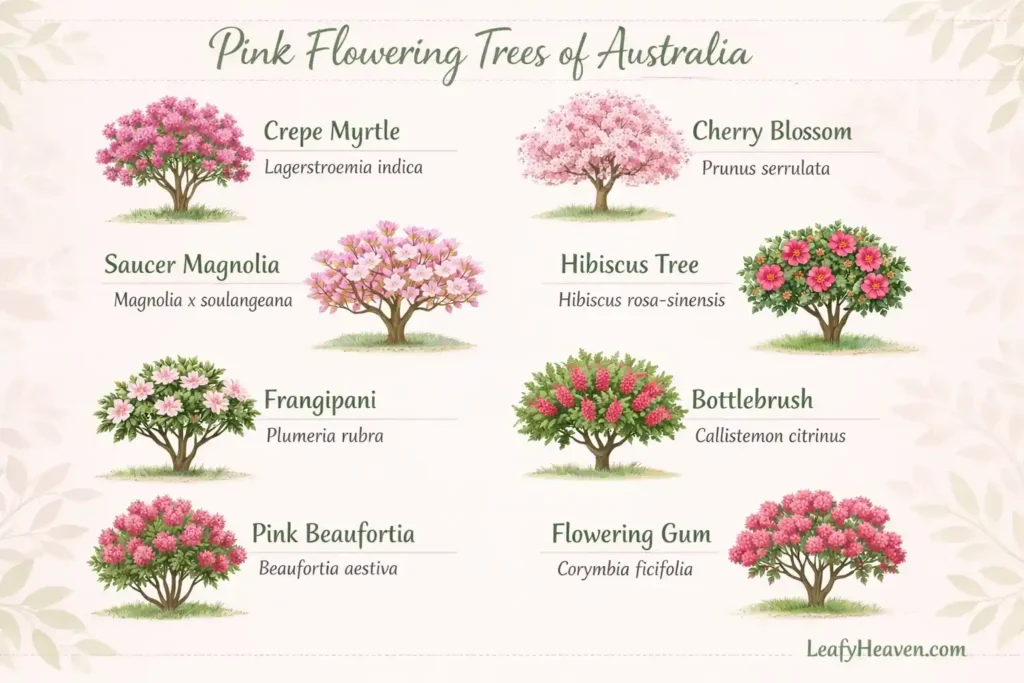
Top species include:
- Lagerstroemia indica — Crepe Myrtle
A highly popular ornamental flowering tree known for its long blooming season and vibrant pink flower clusters that appear from late spring through autumn. - Prunus serrulata — Japanese Cherry Blossom
A famous ornamental cherry tree valued for its dense canopy of delicate pink blossoms that bloom during spring. - Magnolia soulangeana — Saucer Magnolia
A deciduous ornamental tree producing large cup-shaped pink flowers in early spring before the leaves fully emerge. - Hibiscus rosa-sinensis — Hibiscus Tree
A tropical flowering tree that produces large pink ornamental flowers and grows well in warm subtropical climates. - Plumeria rubra — Frangipani
A tropical ornamental tree widely planted in coastal and warm regions, known for its fragrant pink and white blossoms. - Callistemon citrinus — Bottlebrush
A native Australian species producing distinctive brush-shaped flowers that can appear in shades of pink or red. - Melaleuca sabrina — Pink Bottlebrush
A native Australian tree that produces cylindrical pink flower spikes and supports pollinators such as birds and insects. - Melaleuca quercina — Oakey Bottlebrush
A bottlebrush species native to Queensland known for its ornamental flowering spikes and adaptability to local climates. - Melaleuca paludicola — River Bottlebrush
A native species commonly found near wetlands and river systems, producing colorful bottlebrush-style flowers. - Beaufortia schaueri — Pink Beaufortia
A Western Australian native plant producing spherical clusters of bright pink flowers during the spring flowering season. - Corymbia ficifolia — Flowering Gum
A well-known native ornamental tree producing clusters of vibrant flowers that can appear in pink, red, or orange tones.
These species represent some of the most widely planted pink flowering trees across Australian landscapes, offering a range of ornamental characteristics suited to gardens, parks, and urban environments.
Conclusion
Pink flowering trees are among the most visually striking plants found in Australian landscapes. Their seasonal blossoms provide vibrant color while enhancing the overall structure and visual balance of gardens, parks, and streetscapes. Both native and introduced species contribute to this diversity, allowing gardeners to select trees suited to different climates and landscape designs.
From native bottlebrush and flowering gum trees to ornamental species such as cherry blossoms, magnolias, and crepe myrtles, there are many options available for creating attractive flowering landscapes. By selecting species suited to local climate conditions and garden size, homeowners and landscapers can enjoy reliable seasonal blooms while also supporting biodiversity and pollinator activity in Australian environments.
FAQs
What tree has pink flowers in Australia?
Several trees with pink flowers are commonly grown in Australian gardens and landscapes. Popular examples include crepe myrtle (Lagerstroemia indica), cherry blossom (Prunus serrulata), saucer magnolia (Magnolia soulangeana), and bottlebrush species (Melaleuca / Callistemon). These trees are widely planted for their ornamental value and seasonal floral displays.
Are there native Australian trees with pink flowers?
Yes, Australia has several native tree species that produce pink blossoms. Examples include bottlebrush species (Melaleuca), flowering gum trees (Corymbia), and pink beaufortia (Beaufortia schaueri). These native trees are well adapted to Australian climates and also provide nectar for birds, bees, and other pollinators.
What small tree has pink flowers in Australia?
Gardeners looking for compact ornamental trees often choose smaller flowering species. Popular options include dwarf crepe myrtle, hibiscus trees (Hibiscus rosa-sinensis), and ornamental cherry trees. These trees are suitable for residential gardens because they provide decorative blooms without growing excessively large.
What fast-growing tree has pink flowers?
Some flowering trees grow relatively quickly and begin producing blooms within a few years. Crepe myrtle (Lagerstroemia indica) and bottlebrush species are among the fastest-growing pink flowering trees commonly planted in Australian landscapes.
When do pink flowering trees bloom in Australia?
Blooming periods vary depending on the species and regional climate. Many ornamental trees such as cherry blossoms and magnolias bloom in spring, while species like crepe myrtle and hibiscus often flower in summer. In warmer regions, some trees may continue blooming into early autumn.

Written by the LeafyHeaven Editorial Team
LeafyHeaven shares practical gardening tips and simple plant care guides to help you grow, nurture, and enjoy your plants with ease. Our goal is to make gardening feel natural, approachable, and rewarding for everyone.