
Introduction
The watermelon belly button is a small but important feature that can help you choose a ripe, sweet watermelon with more confidence. This spot, found on the bottom of the fruit, often gives clues about ripeness, sugar development, and overall quality. Many people wonder how do you know if a watermelon is ripe or how to tell if watermelon is sweet without cutting it open, and the belly button is one of the easiest signs to check. When combined with other indicators, it can help you judge ripeness, freshness, and texture at a glance. It’s also common to see curiosity around watermelon and weight loss, making proper selection even more important for taste and satisfaction.
To better understand how fruits develop, ripen, and reach peak sweetness, exploring a complete tropical fruit trees growing guide can provide useful insights.
What Is the Watermelon Belly Button?
Watermelon Belly Button vs Watermelon Navel
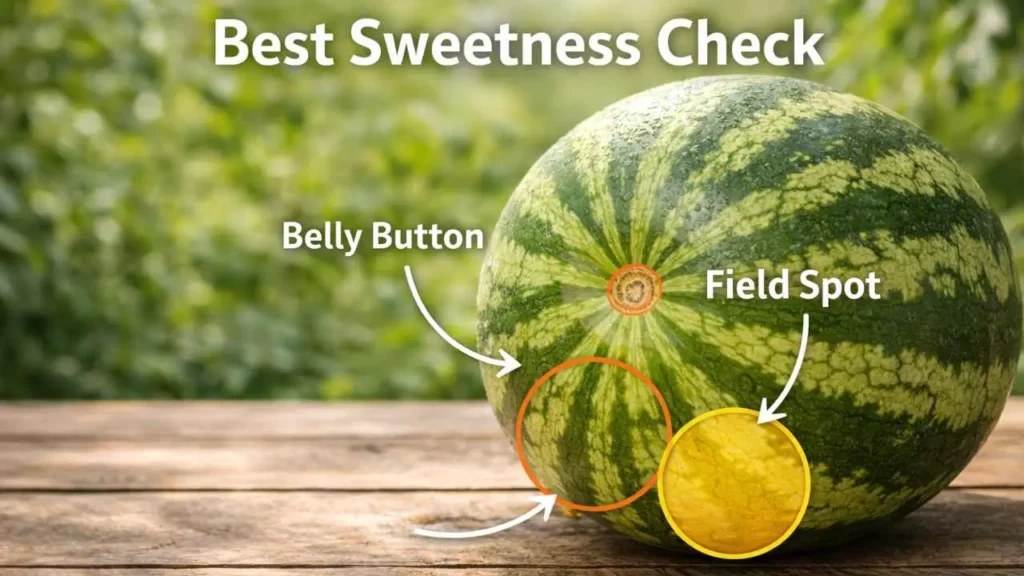
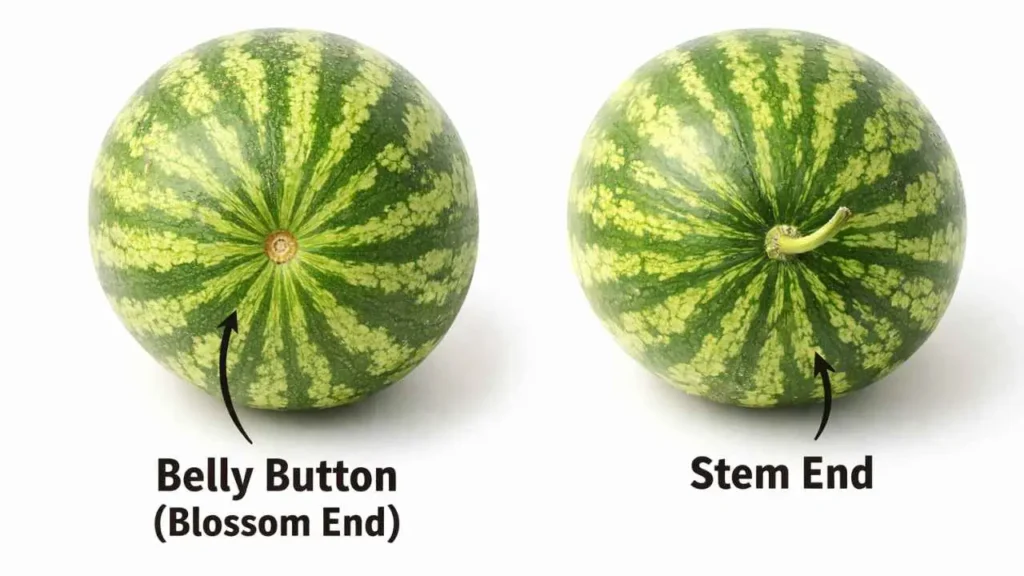
The watermelon belly button is the small circular mark found on the bottom of the watermelon. This spot is the blossom end, where the flower was attached before the fruit developed. It is different from the stem end, which is the opposite side where the watermelon was connected to the vine. Many shoppers confuse these two ends, but only the blossom end is relevant when checking ripeness and sweetness. Some people call this spot the watermelon navel because of its round, button-like appearance, similar to a human belly button. While the names are used interchangeably, they refer to the same blossom-end mark.
Why the Belly Button Matters for Ripeness
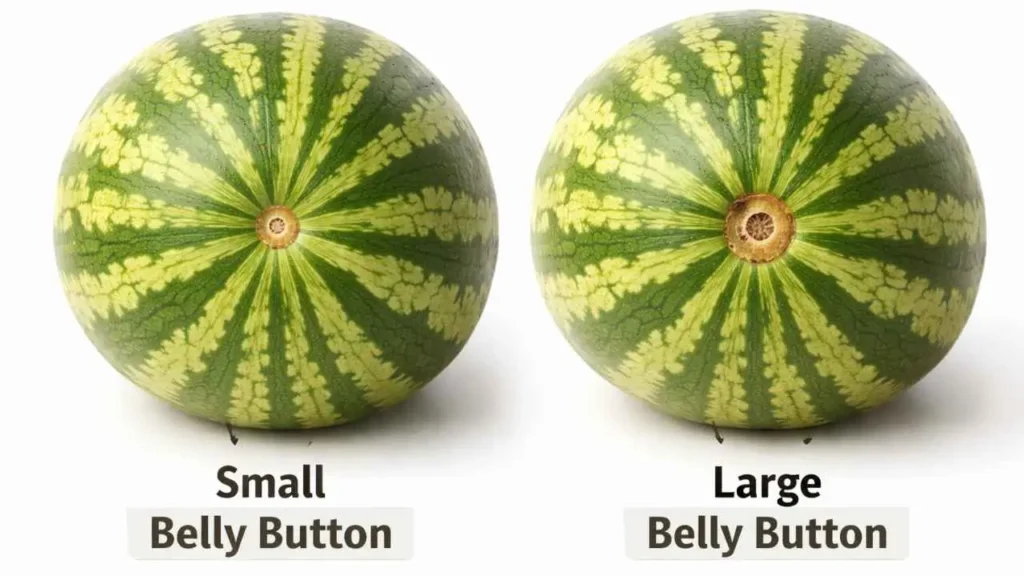
The size of the watermelon belly button can offer useful clues about how the fruit developed. A smaller belly button is often linked to balanced pollination and steady growth, which can support better sugar development and even ripening. A larger belly button may indicate faster or uneven growth, which can sometimes affect texture and flavor. However, this is not a guaranteed rule. A common myth is that belly size alone determines sweetness, but real science shows it is only one indicator. The belly button works best when evaluated alongside other ripeness signs rather than used on its own.
How to Tell If a Watermelon Is Ripe Using the Belly Button
Small Belly Button = Sweeter Watermelon?
A small watermelon belly button is often associated with better sugar development inside the fruit. When pollination happens evenly and the watermelon matures at a steady pace, sugars have more time to form and distribute, which can improve sweetness. This is why many shoppers use belly size as a quick check when learning how to tell if a watermelon is ripe. A small belly button is a good sign when the watermelon also feels heavy for its size and shows other ripeness indicators. On its own, it does not guarantee sweetness, but it can support the idea that the fruit reached maturity naturally.
When a Large Belly Button Is a Red Flag
A large watermelon belly button can sometimes point to overgrowth or uneven pollination during development. When growth is irregular, the watermelon may mature unevenly, affecting both texture and flavor. This can lead to flesh that is less sweet, watery, or slightly grainy. While not every large belly button means a poor-quality fruit, it can be a warning sign if combined with other issues such as pale coloring or soft spots. Using this clue helps avoid watermelons that look big but lack flavor.
How to Know If a Watermelon Is Ripe (Complete Checking Guide)
Checking the Field Spot (Yellow Spot)
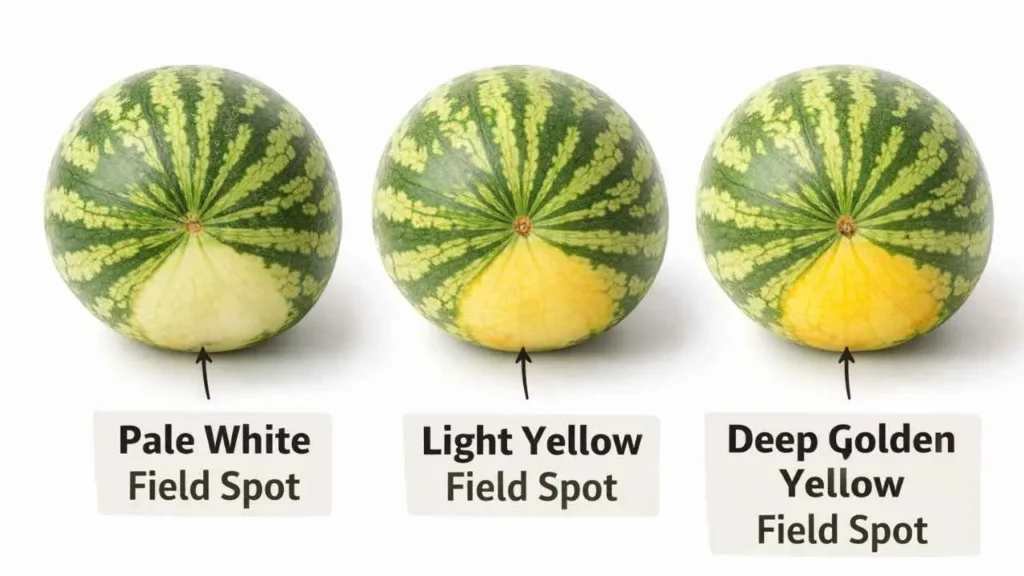
The field spot, also known as the yellow spot, is one of the clearest signs of watermelon ripeness. This is the area where the watermelon rested on the ground while growing. A deep yellow to orange-yellow field spot indicates the fruit stayed on the vine long enough to mature fully. In contrast, a pale yellow or white field spot suggests the watermelon was picked too early, which often results in bland flavor and low sweetness. When learning how to know if a watermelon is ripe, the field spot should always be checked along with the belly button for more reliable results.
Shape, Weight, and Firmness
A ripe watermelon should have a symmetrical, uniform shape with no dents or irregular bulges. An even shape usually means the fruit grew steadily and developed properly. The heaviness test is another key indicator—when you lift the watermelon, it should feel heavy for its size, which signals high water content and juiciness. Firmness also matters. The rind should be hard and resistant to pressure. Soft or mushy spots are warning signs of internal breakdown or overripeness and should be avoided when checking watermelon quality.
How to Pick a Good Watermelon by Tapping
Tapping is a traditional method many people use to judge watermelon ripeness. When tapped, a ripe watermelon produces a deep, hollow sound, which indicates firm flesh and good internal structure. A dull or flat sound can mean the fruit is underripe or overripe. One common tapping mistake is tapping too lightly or tapping near damaged areas, which can give misleading results. For best accuracy, tap the center of the watermelon and combine this method with visual checks rather than relying on sound alone.
Similar fruit selection techniques are used when comparing tropical fruits, such as in the soursop vs custard apple guide, where ripeness and texture play a key role.
How to Tell If a Watermelon Is Sweet
Sugar Webbing and Surface Marks
Sugar webbing, sometimes called sugar scars, refers to rough, brown, web-like markings on the watermelon’s surface. These marks are often linked to strong pollination activity, which can support higher sugar development inside the fruit. When checking how to tell if a watermelon is sweet, light sugar webbing can be a positive sign. However, it’s important to avoid watermelons with deep cracks, splits, or damaged rinds. Cracks can allow bacteria to enter and may signal internal spoilage or poor texture. The goal is to find firm rinds with surface webbing, not structural damage.
Belly Button + Field Spot Combination Test
The most reliable way to judge sweetness is by using the watermelon belly button and field spot together. A small belly button paired with a deep yellow field spot strongly suggests proper ripening and good sugar formation. One sign alone isn’t enough because sweetness depends on multiple growth factors, including pollination, vine time, and maturity. For example, a small belly button with a pale field spot may still indicate underripeness. Combining both signs helps reduce guesswork and improves your chances of choosing a watermelon that is sweet, juicy, and fully mature.
Fruit quality and natural variations can sometimes be misunderstood, as explained in topics like blue strawberries, where appearance and expectations don’t always match reality.
Watermelon Picking Guide (Step-by-Step)
How to Pick the Best Watermelon at the Store
When choosing a watermelon at the store, start with a visual inspection checklist. Look for a watermelon with a deep yellow field spot, a small, well-defined belly button, and a dull, matte rind rather than a shiny one. The shape should be even and symmetrical, with no flat sides or bulges. Check the rind carefully and avoid watermelons with cracks, bruises, or soft areas.
Common mistakes buyers make include picking the largest watermelon, assuming size equals sweetness, ignoring the belly button, or choosing a shiny rind that actually signals underripeness. Focusing on quality signs rather than size leads to better flavor.
How to Pick a Sweet Seedless Watermelon
Seedless watermelons can be just as sweet as seeded ones, but they have a few differences to consider. Many seedless varieties are slightly smaller and rounder, so weight relative to size becomes especially important. A heavy seedless watermelon usually means high juice content. Extra ripeness indicators include a rich, deep rind color, a creamy yellow field spot, and a firm, hard shell. Because seedless watermelons rely heavily on proper pollination, checking both the belly button and field spot together is especially helpful for finding the sweetest option.
How to Tell If a Watermelon Is Good or Bad
Signs a Watermelon Has Gone Bad
A watermelon that has gone bad often shows clear smell, texture, and color warnings. A sour or fermented smell is a strong indicator of spoilage. The rind may develop soft, sunken areas or dark spots that feel mushy to the touch. Changes in color, such as excessive dullness or mold growth on the surface, also signal that the watermelon is no longer good.
Internal spoilage indicators become noticeable after cutting. These include slimy flesh, a strong unpleasant odor, large white or brown patches, or flesh that appears grainy and watery. Any of these signs mean the watermelon should be discarded.
How to Keep Watermelons From Rotting
Proper storage helps keep watermelons fresh and prevents rot. Before cutting, whole watermelons can be stored at room temperature for a short period if they are uncut and undamaged, or kept in the refrigerator to extend freshness. Place them in a cool, dry area away from direct sunlight.
After cutting, watermelon must be refrigerated. Store pieces in airtight containers to reduce moisture loss and slow bacterial growth. Refrigeration is always better than room temperature once the fruit is cut, as it helps maintain freshness, texture, and safety for longer use.
Watermelon Belly Rot Explained
What Is Watermelon Belly Rot?
Watermelon belly rot is a condition where the underside of the fruit, the area in contact with the soil, begins to decay before or after harvest. It is usually caused by excess soil moisture, poor drainage, or prolonged contact with wet ground. These conditions create an ideal environment for fungal organisms to thrive. When moisture remains trapped around the fruit, fungi can penetrate the rind and slowly break down the flesh. Belly rot often starts as a soft, discolored patch and can spread internally, making the watermelon unsafe to eat even if the outer damage looks minor.
How to Prevent Belly Rot
Preventing belly rot starts with good growing and handling practices.
- Garden prevention tips include improving soil drainage, avoiding overwatering, and placing straw, mulch, or cardboard under developing watermelons to keep them off wet soil.
- Harvesting and handling practices are equally important. Harvest watermelons only when fully mature, avoid dropping or bruising them, and keep harvested fruit dry and clean. Proper airflow during storage also helps reduce moisture buildup and lowers the risk of rot developing after harvest.
Watermelon and Weight Loss – What You Should Know
Is Watermelon Good for Weight Loss?
Watermelon is often included in weight loss discussions because of its low calorie content. A large portion contains relatively few calories, making it easier to enjoy without significantly increasing daily calorie intake. Watermelon is also made up of more than 90% water, which helps promote fullness and hydration. This high water content can increase satiety, helping reduce the urge to snack on higher-calorie foods. While watermelon does contain natural sugars, its overall calorie density remains low, which can support weight management when eaten in moderation.
Does Watermelon Reduce Belly Fat?
The idea that watermelon directly reduces belly fat is a myth. No single food can target fat loss in one specific area of the body. However, watermelon can still play a role in a balanced diet. Its hydration, low calories, and refreshing taste make it a useful substitute for processed snacks. Watermelon can support weight loss goals when combined with portion control, regular physical activity, and overall calorie balance. It works best as part of a healthy eating pattern rather than a standalone solution for fat loss.
Common Mistakes People Make When Picking Watermelon
One of the most common mistakes is relying only on size. Many buyers assume a larger watermelon is automatically sweeter, but size alone does not reflect ripeness or sugar content. Large watermelons can be underripe or watery if they were harvested too early.
Another frequent error is ignoring the watermelon belly button. Skipping this simple check means missing a useful clue about how the fruit developed. Belly size, when combined with other signs, can help avoid poorly ripened watermelons.
Confusing shine with ripeness is also misleading. A shiny rind often indicates an underripe watermelon, while a ripe one usually has a dull, matte finish. Choosing shine over true ripeness indicators can result in less flavor and poor texture.
Conclusion
The watermelon belly button is a powerful but often underrated indicator of ripeness that can quickly improve how you choose watermelon. While it should never be used alone, belly button size offers valuable insight into how the fruit developed and whether it had the conditions needed for good sugar formation and even ripening.
The best combination method for choosing the sweetest watermelon is to check multiple signs together: a small, well-defined belly button, a deep yellow field spot, a heavy feel for its size, a symmetrical shape, and a dull rind. Using these indicators as a group greatly reduces guesswork and increases the chances of picking a sweet, juicy watermelon.
For confident watermelon picking, avoid relying on size or shine, take a few extra seconds to inspect key features, and trust visual and physical cues over myths. With these simple checks, choosing a high-quality watermelon becomes easier and far more reliable.
FAQs
What does the watermelon belly button tell you?
The watermelon belly button, also called the blossom end, gives clues about how the fruit developed. A smaller belly button is often linked to steady growth and balanced pollination, which can support better ripeness and sweetness when combined with other signs.
Is a small watermelon belly button always better?
No, a small watermelon belly button is not always better on its own. It is a helpful indicator, but it must be checked alongside other factors like the field spot color, weight, shape, and firmness to accurately judge ripeness and quality.
How can you tell if a watermelon is ripe without cutting it?
You can tell if a watermelon is ripe by checking a deep yellow field spot, a dull rind, a symmetrical shape, a heavy feel for its size, a firm texture, and a balanced belly button. Tapping for a hollow sound can also help when used correctly.
Does watermelon help you lose belly fat?
Watermelon does not directly reduce belly fat. However, it can support weight loss goals because it is low in calories and high in water, which helps with hydration and fullness when included in a balanced diet.
How long does a ripe watermelon last after picking?
A whole ripe watermelon can last about one to two weeks when stored properly in a cool place or refrigerator. Once cut, it should be refrigerated and consumed within three to five days for best freshness and safety.

Written by the LeafyHeaven Editorial Team
LeafyHeaven shares practical gardening tips and simple plant care guides to help you grow, nurture, and enjoy your plants with ease. Our goal is to make gardening feel natural, approachable, and rewarding for everyone.