
Introduction
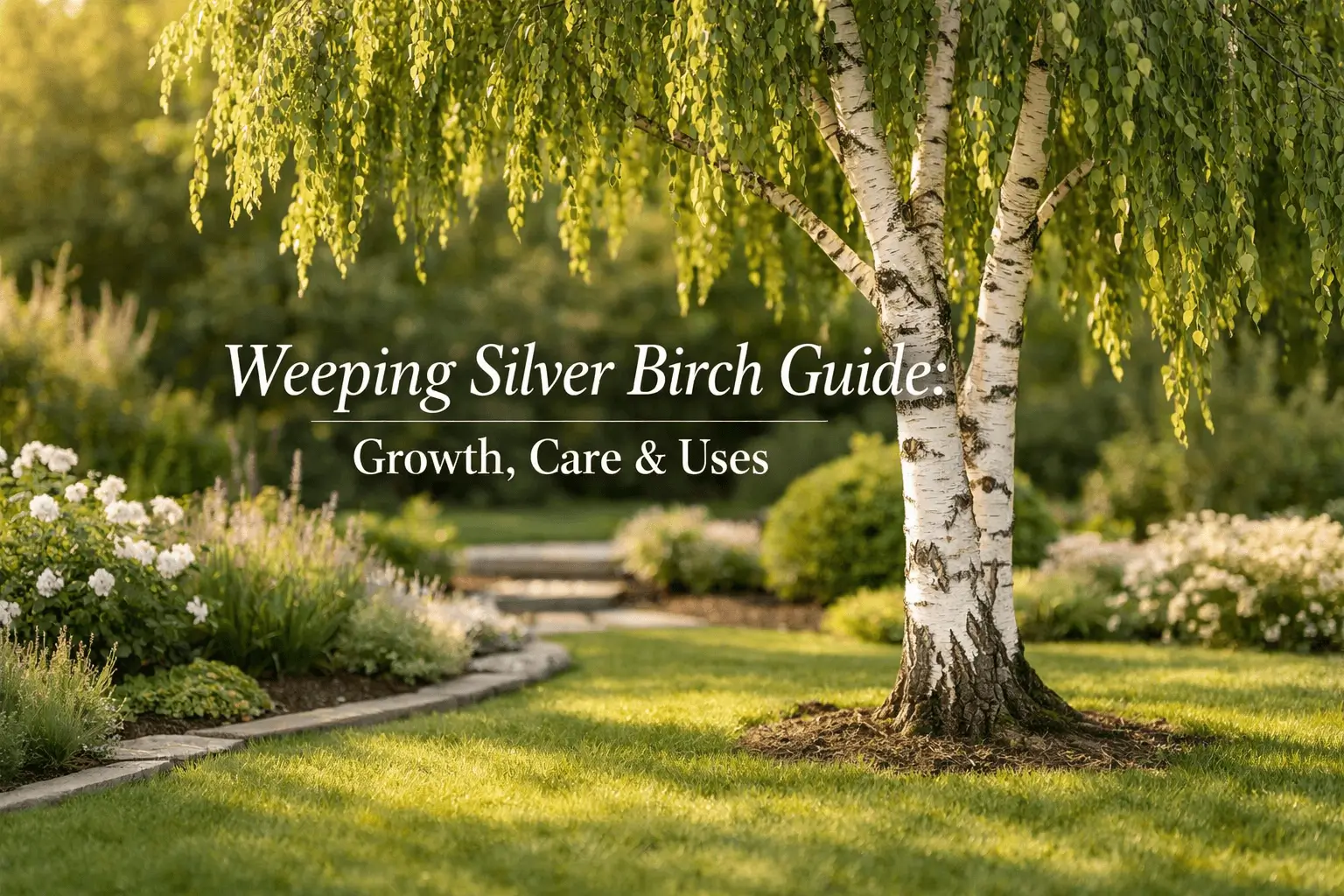
The weeping silver birch is a distinctive ornamental tree known for its graceful, drooping branches and elegant form. Scientifically referred to as Betula pendula Youngii, this cultivar stands out among silver birch trees due to its unique cascading structure and compact growth habit. It is widely used in ornamental landscaping as a focal point tree, especially in smaller gardens where space efficiency matters. Compared to standard birch trees, it offers both visual softness and structural interest. This guide covers everything essential, including identification, growth rate, care requirements, pruning, common problems, and where to buy a weeping silver birch.
What Is a Weeping Silver Birch? (Betula Pendula Youngii Explained)
Botanical Name & Classification
- Botanical name: betula pendula
- Cultivar: betula pendula youngii weeping silver birch
The species belongs to Betula pendula, a widely recognized birch tree known for its adaptability and ornamental value in landscaping.
Also known as:
- weeping silver birch tree
- weeping birch
- silver weeping birch
- silverbirch tree
This tree belongs to the birch family and is a cultivated form of the standard silver birch.
Key Features & Characteristics
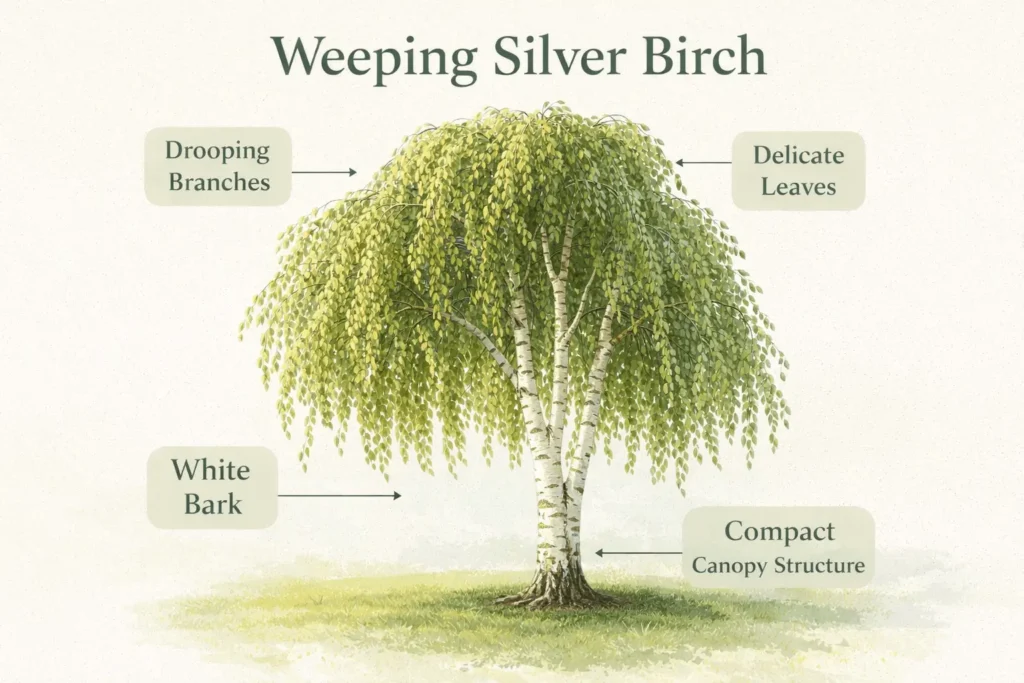
- Graceful drooping branches forming a classic weeping shape
- Deciduous nature (silver birch trees are deciduous)
- Bright white bark with fine, delicate green leaves
Size variations:
- dwarf weeping silver birch
- small weeping silver birch
- standard weeping silver birch
- mature weeping silver birch
These variations make it suitable for both compact and medium-sized landscapes.
Weeping Silver Birch vs Silver Birch (Key Differences)
Structure & Growth Habit
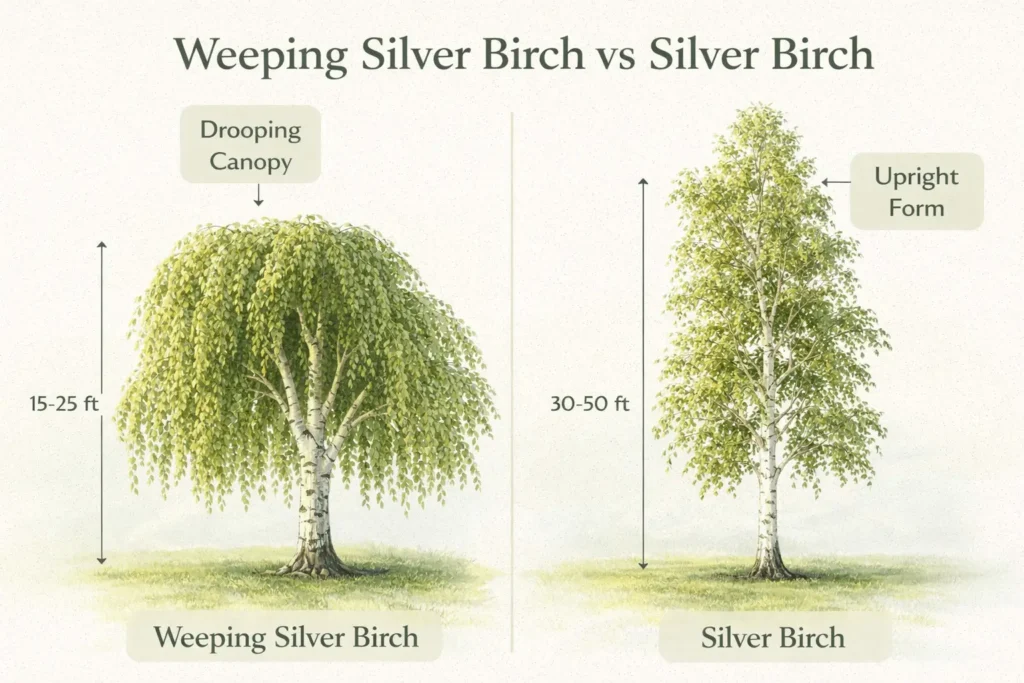
| Feature | Weeping Silver Birch | Standard Silver Birch |
| Shape | Drooping canopy | Upright growth |
| Branches | Hanging | Vertical |
| Form | Compact | Tall and open |
- silver birch vs weeping silver birch shows a major difference in canopy structure
- weeping birch vs silver birch mainly differs in visual form rather than species
Landscaping Uses
- Upright birch trees: used for height and screening
- Weeping forms: used for visual softness
For more compact tree options, explore different choices in small trees for modern gardens that suit limited spaces and contemporary landscapes.
Ideal uses:
- Feature tree
- Garden focal point
- Suitable for small gardens
Context: birch, birch trees, and silver birch varieties offer diverse landscaping options.
Weeping Silver Birch Growth Rate, Height & Size
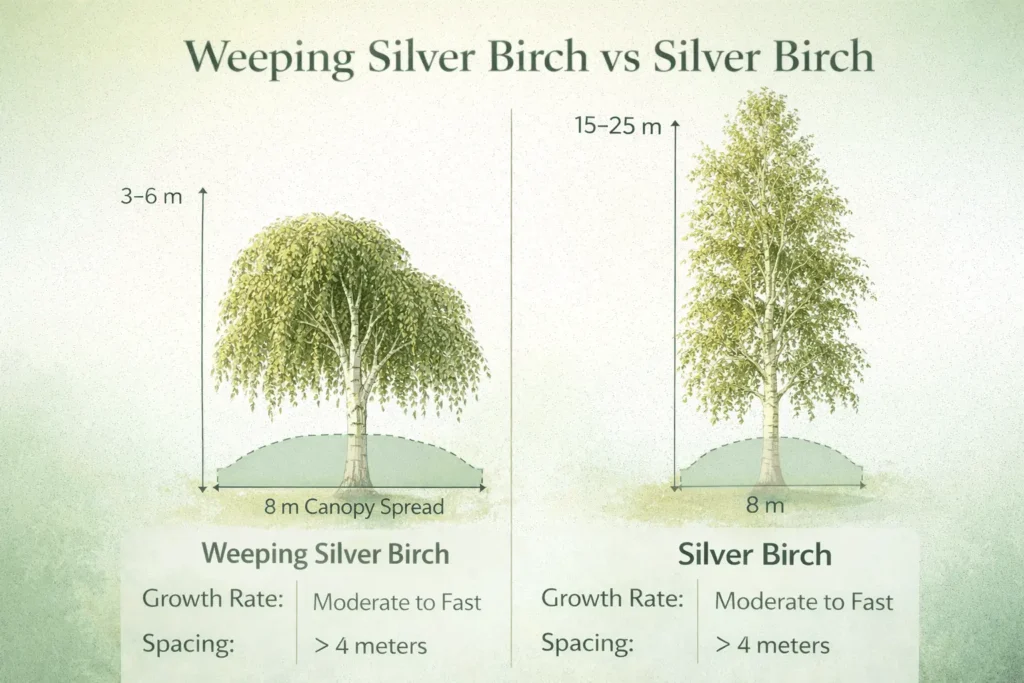
Growth Rate Explained
- Moderate growth speed
- weeping silver birch growth rate is slower than standard silver birch trees
- Focuses more on structure than rapid height
Height & Spread
- weeping silver birch height: typically 3–6 meters
- how tall does a weeping silver birch grow: depends on graft height
- how big do silver birch trees grow: standard trees can reach 15–25 meters
Spacing Requirements
- weeping silver birch spacing: 3–5 meters apart
- Ideal planting distance ensures airflow and root expansion
Root System of Weeping Silver Birch (Important Guide)
Root Structure & Behavior
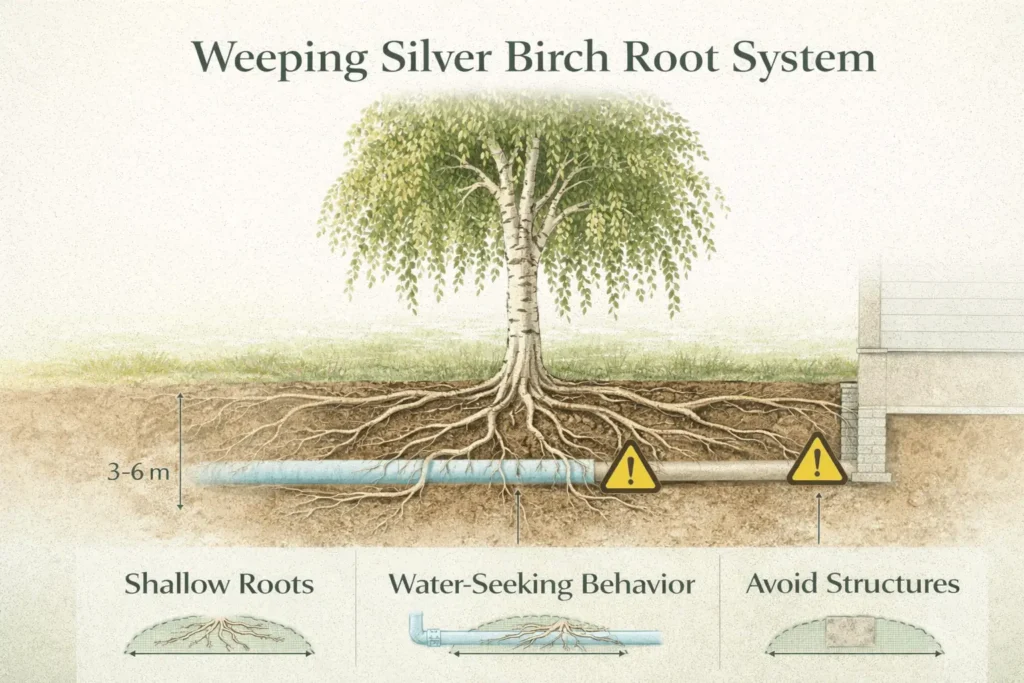
- weeping silver birch root system is shallow and spreading
- Roots extend horizontally rather than deeply
Planting Precautions ⚠️
Avoid planting near:
- Foundations
- Pipes
- Driveways
Scientific Alert:
Birch roots are water-seeking and can spread aggressively in search of moisture, potentially affecting nearby structures.
How to Grow Weeping Silver Birch Successfully
Climate & Location
- Best suited for temperate climates
- Common in regions like weeping silver birch UK
Limitation:
Not ideal for tropical climates (tropical birch conditions are unsuitable).
Soil, Sunlight & Water Needs
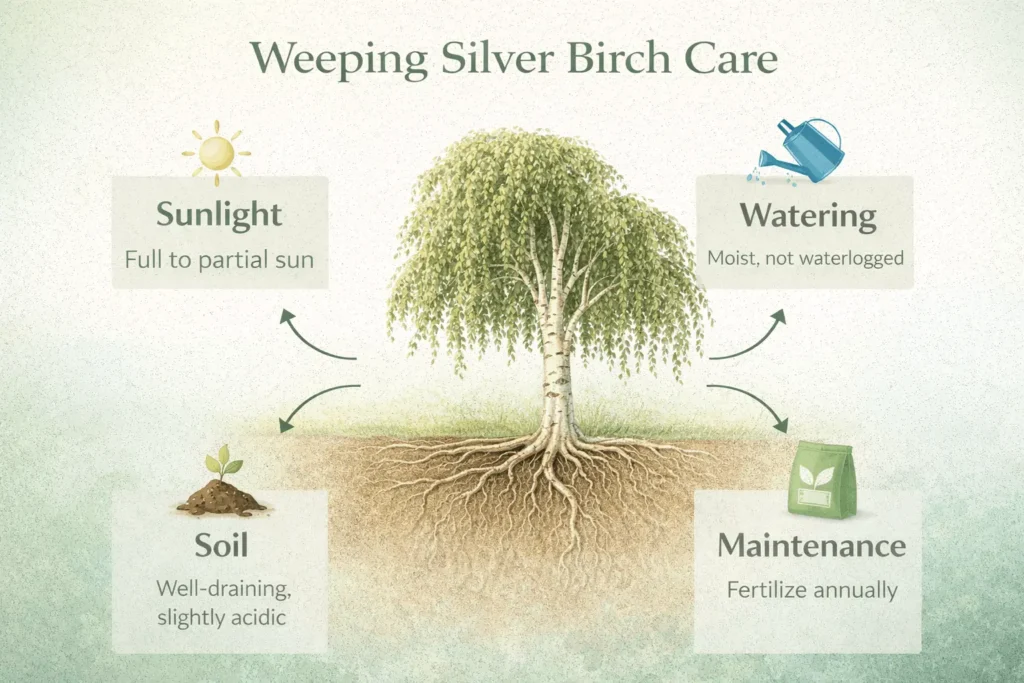
- Well-drained soil
- Full sun to partial shade
- Regular watering, especially during establishment
Planting Time
- Best planted in cooler seasons
- Context: when to plant silver birch in australia → autumn to early winter
Weeping Silver Birch Care Guide
Watering & Fertilizing
- Keep soil moist but not waterlogged
- Use balanced fertilizer during growth season
Mulching & Maintenance
- Apply mulch to retain moisture
- Reduce weed competition
Long-Term Care Tips
- Monitor for stress signs
- Ensure adequate spacing
Context: silver birch trees and silver birch tree australia require climate-appropriate care. For a complete understanding of plant care fundamentals, refer to a detailed gardening and plant care guide covering essential growing practices.
Weeping Silver Birch Pruning (Step-by-Step Guide)
When to Prune
- when to prune weeping silver birch: late summer or early autumn
- Avoid spring due to sap bleeding
How to Prune Properly
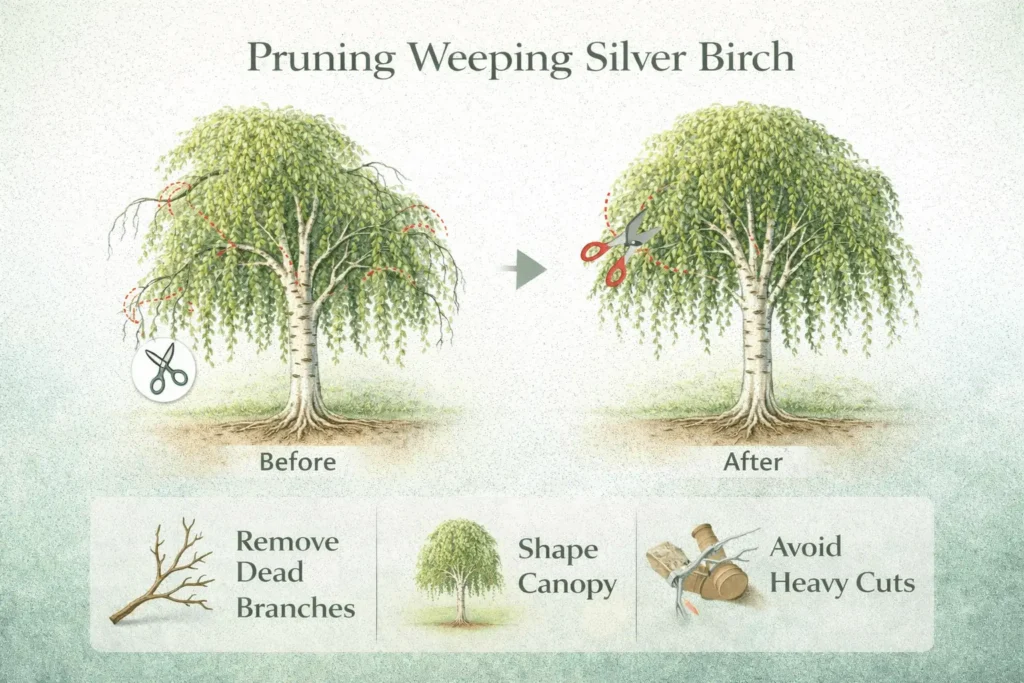
- Remove dead or damaged branches
- Maintain natural weeping shape
- how to prune a weeping silver birch tree: prune lightly, avoid heavy cuts
- weeping silver birch pruning should be minimal
Common Pruning Mistakes
- Over-pruning
- Cutting main structural branches
- Pruning at the wrong time
Common Problems with Weeping Silver Birch
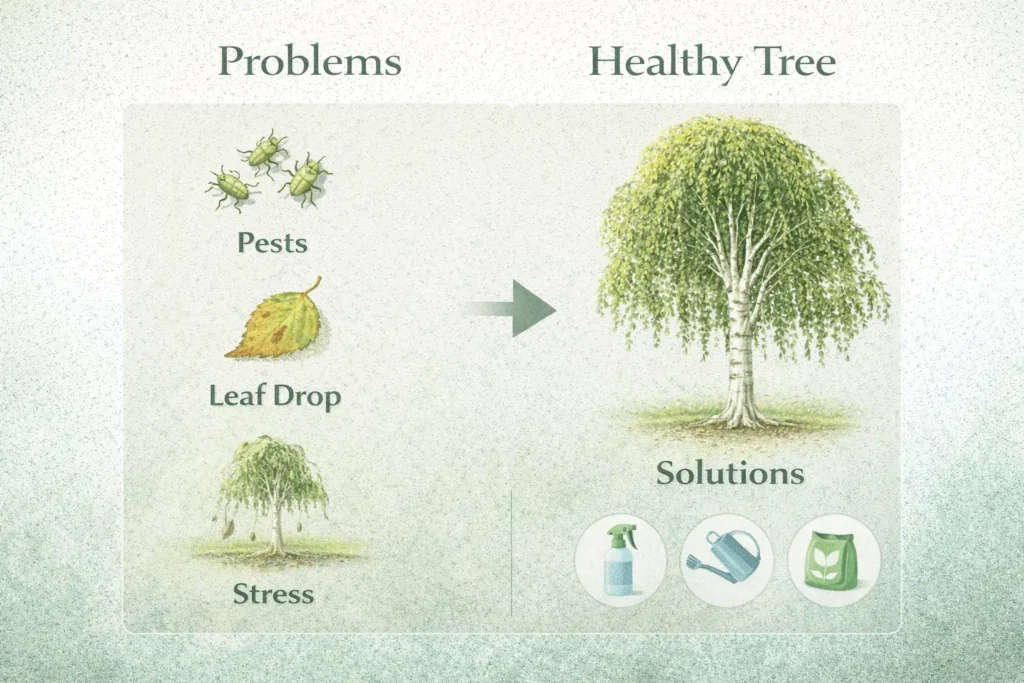
Diseases & Pests
- weeping silver birch problems include:
- Aphids
- Birch leaf miner
- silver birch trees problems may include fungal infections
Leaf Drop, Stress & Growth Issues
- Caused by drought or poor soil
- Heat stress in unsuitable climates
Prevention Tips
- Maintain proper watering
- Ensure suitable climate
- Regular inspection
Where to Buy Weeping Silver Birch (Buying Guide)
Availability & Nursery Options
- weeping silver birch trees for sale available in garden centers
- buy weeping silver birch from certified nurseries
- weeping silver birch trees for sale UK widely available
Buying in Australia
- weeping silver birch bunnings
- silver birch bunnings
- birch tree bunnings
- silver birch tree bunnings
Note: Availability depends on climate suitability.
Weeping Silver Birch in Australia (Climate Suitability Guide)
Can It Grow in Australia?
- where do silver birch trees grow in australia: cooler regions
- silver birch varieties australia limited to temperate zones
Best Alternatives for Warm Regions
- small birch trees australia
- dwarf birch tree australia
- dwarf silver birch australia
These are better adapted to warmer climates. You can also consider native alternatives that perform better in warm climates, especially plants suited for Australian garden conditions.
Landscaping Uses & Design Ideas
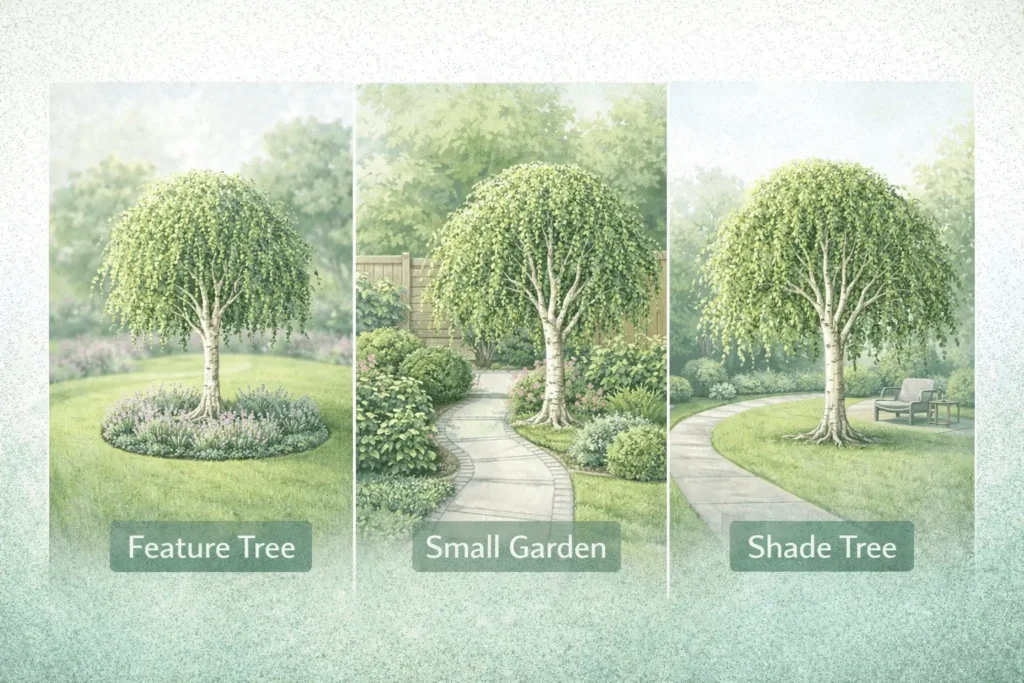
Best Garden Uses
- Feature tree
- Shade tree
- Ideal for small gardens
Pairing with Other Plants
- Combine with shrubs and perennials
- Works well with other weeping tree varieties
Context:
- weeping trees australia
- small weeping trees australia
Conclusion
The weeping silver birch is an elegant ornamental tree valued for its cascading branches and visual appeal. With proper care, it remains relatively low maintenance while offering strong landscape impact. Its compact size makes it suitable for small gardens, and its unique form adds architectural beauty.
👉 Choose weeping silver birch for a graceful focal tree.
FAQs
How tall does a weeping silver birch grow?
It typically grows between 3 to 6 meters, depending on the graft height and growing conditions.
What is the growth rate of weeping silver birch?
It has a moderate growth rate, slower than standard silver birch trees.
Does weeping silver birch have invasive roots?
It has shallow, spreading roots that can become problematic near structures if not properly placed.
When should I prune a weeping silver birch tree?
Pruning is best done in late summer or early autumn to avoid sap bleeding.
Can weeping silver birch grow in warm climates?
It prefers temperate climates and struggles in warm or tropical regions.
Is weeping silver birch suitable for small gardens?
Yes, its compact and controlled growth makes it ideal for small garden spaces.

Written by the LeafyHeaven Editorial Team
LeafyHeaven shares practical gardening tips and simple plant care guides to help you grow, nurture, and enjoy your plants with ease. Our goal is to make gardening feel natural, approachable, and rewarding for everyone.