
Introduction
Knowing when to fertilize orchids is one of the most important factors in keeping them healthy, strong, and capable of producing long-lasting blooms. Orchids do not follow the same feeding patterns as typical houseplants, and timing matters just as much as the type of orchid fertilizer used. Fertilizing orchids at the wrong time or too frequently can stress the roots, slow growth, and even prevent flowering. On the other hand, a well-timed feeding schedule supports leaf development, root strength, and reliable blooms. Understanding how orchids grow and how nutrients support that growth helps prevent common mistakes and ensures fertilizer works as a benefit rather than a risk.
Do Orchids Need Fertilizer?
Orchids rely on more than water alone to thrive. In nature, they absorb nutrients from rainwater, decaying organic matter, and their surrounding environment. When grown at home, those natural nutrient sources are limited, which is why many growers ask, do orchids need fertilizer to survive and bloom properly.
Fertilizer provides essential nutrients that support orchid growing stages, including root expansion, leaf formation, and flower production. Without consistent feeding, orchids may survive but often show slow growth, weak leaves, or poor blooming cycles. Proper nutrition helps orchids maintain energy reserves needed for healthy development and repeat flowering.
When to Fertilize Orchids for Best Results
Fertilizing Orchids During Active Growth
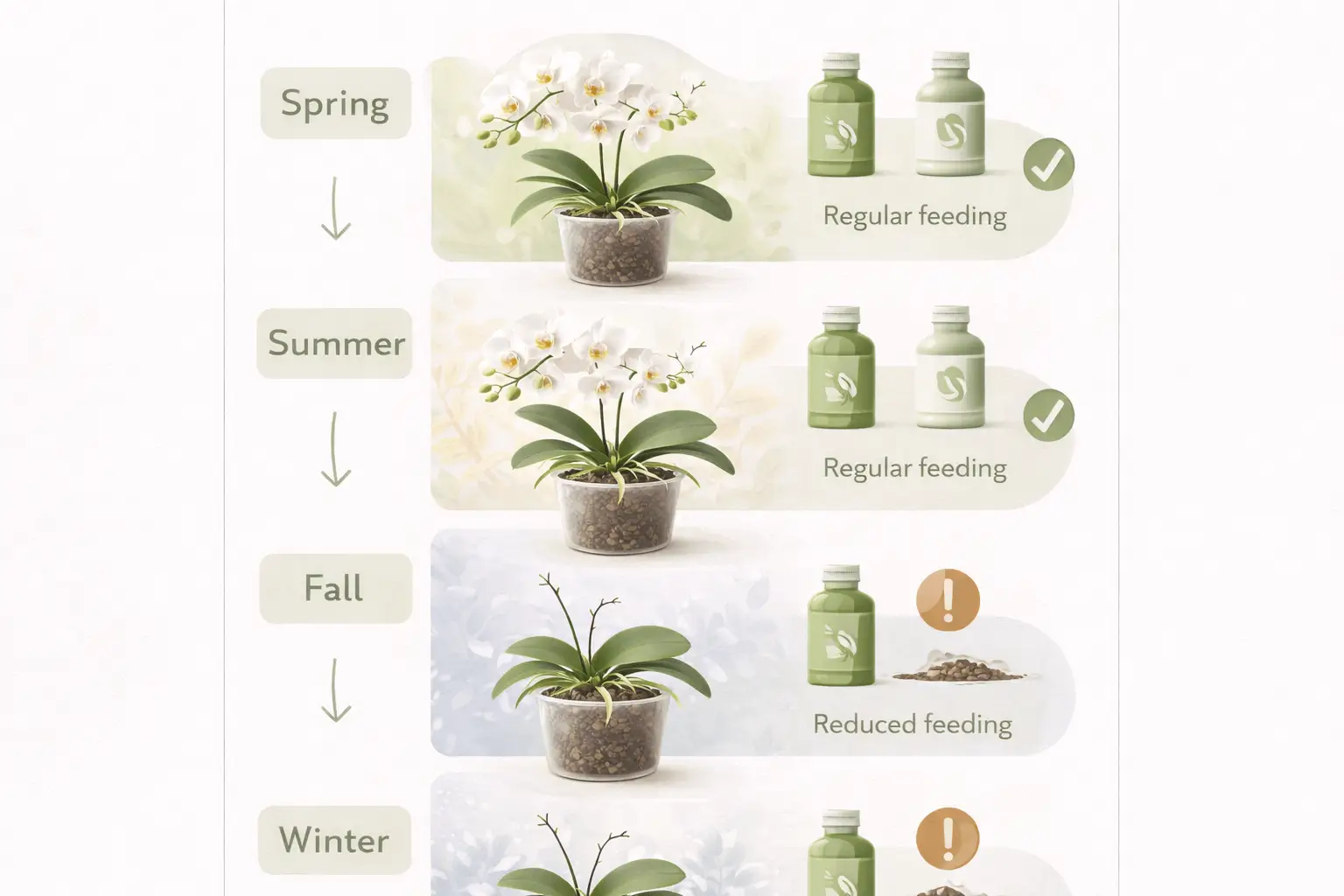
The best time for fertilizing orchids is during periods of active growth, when the plant is producing new leaves and roots. This stage usually occurs in spring and summer, when light levels and temperatures naturally increase. During this time, nutrients are actively absorbed and used efficiently.
Understanding when to fertilize an orchid during active growth helps maximize the benefits of feeding. Regular fertilizing orchids in these seasons supports stronger roots and prepares the plant for future blooms.
When to Stop Fertilizing Orchids
Orchids naturally slow down during dormancy or rest periods, often in fall or winter. During this phase, growth pauses, and nutrient uptake drops significantly. Knowing when to fertilize orchid plants also means knowing when to stop.
Continuing feeding orchids during dormancy can lead to salt buildup and root damage. Fertilizer applied when the plant is inactive often goes unused, increasing the risk of stress rather than benefit.
How Often to Fertilize Orchids
Weekly vs Monthly Feeding Schedule
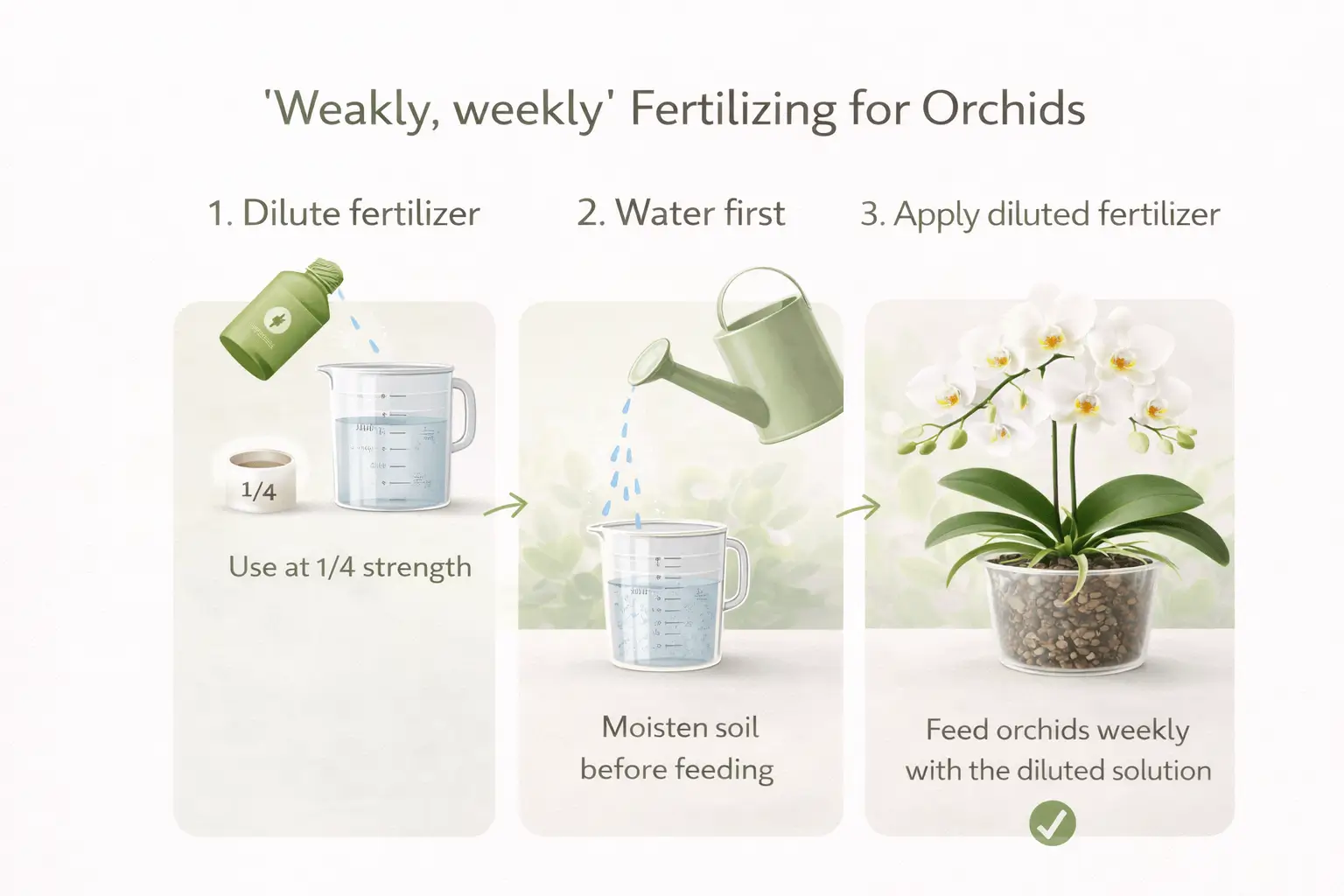
One of the most recommended methods for feeding orchids is the “weakly, weekly” approach. This involves applying a diluted fertilizer solution once a week rather than using a strong dose less frequently.
This method answers common questions like how often to fertilize orchids and how often should you fertilize orchids without overwhelming the plant. Light, consistent feeding reduces the risk of over-fertilization while maintaining steady nutrient availability.
How Often to Feed Orchids by Growth Stage
Feeding frequency depends heavily on the orchid’s age and condition. Young orchids require lighter feeding as they establish roots, while mature plants can handle more consistent nutrition.
Blooming orchids may need reduced feeding compared to non-blooming plants. Understanding how often do you fertilize orchids and how often to feed orchids based on growth stage helps tailor care to the plant’s actual needs.
How to Fertilize Orchids Correctly
Best Way to Apply Orchid Fertilizer
Liquid fertilizers are the most common option for orchids because they allow precise dilution and even distribution. Slow-release fertilizers can be used but require careful control to avoid nutrient buildup.
Knowing how to fertilize orchids and how do you fertilize orchids correctly starts with dilution. Orchid fertilizer should always be mixed weaker than label instructions unless specified otherwise, as orchids are sensitive to excess nutrients.
How to Feed an Orchid Plant Safely
Always water orchids before applying fertilizer. Moist roots absorb nutrients more safely, reducing the risk of chemical burns. Dry roots exposed to fertilizer can suffer permanent damage.
Understanding how to feed an orchid and how do you feed orchids safely focuses on protecting the root system while still delivering essential nutrients.
Fertilizing Orchids in Bloom — Yes or No?
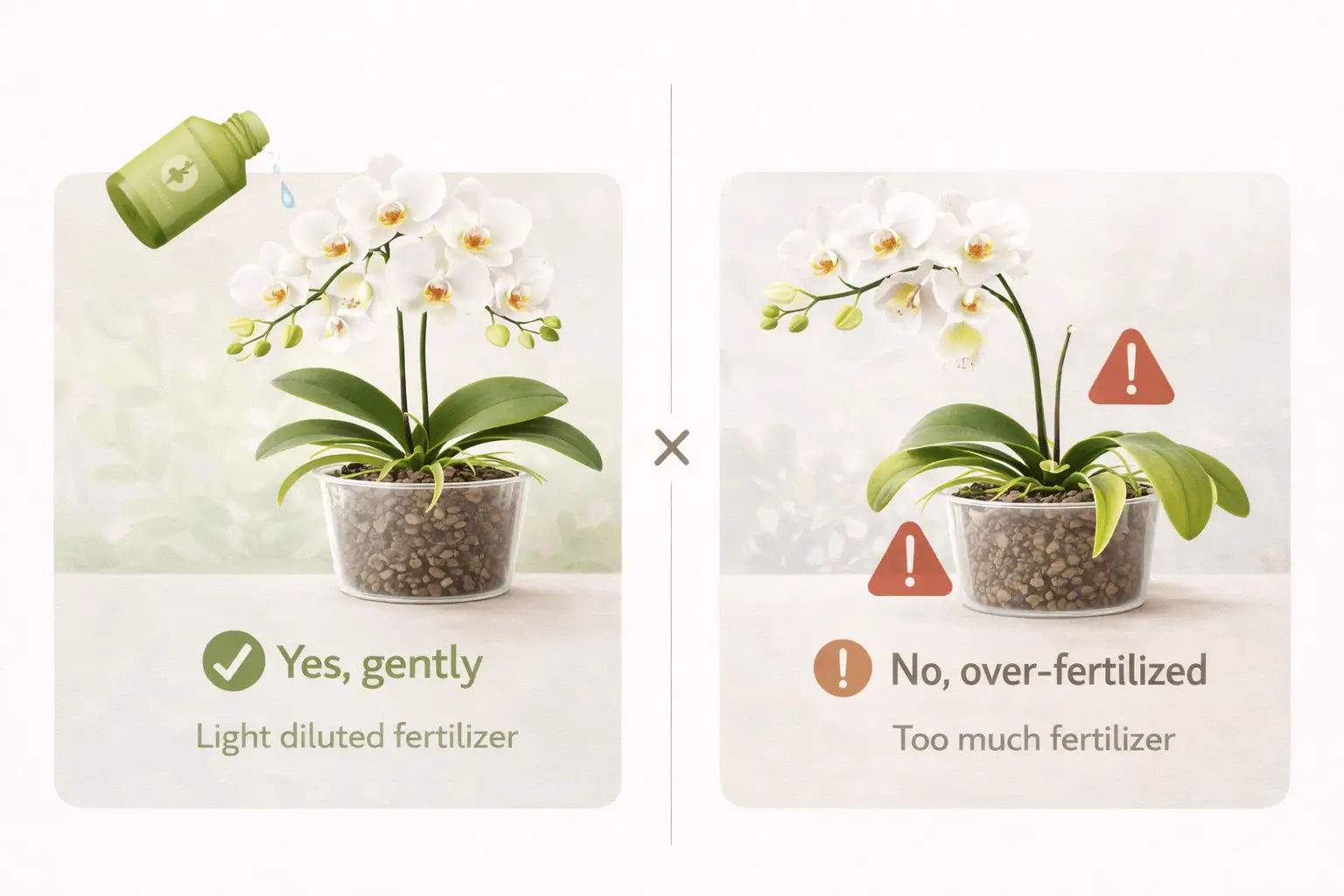
Many growers wonder whether to fertilize orchids in bloom. The answer depends on the plant’s condition. Light feeding can continue during blooming, but fertilizer strength should be reduced.
Overly strong fertilizing orchids in bloom may cause flowers to drop early or shorten bloom duration. A balanced, diluted formula supports the plant without disrupting flowering.
Best Fertilizer for Orchids
Balanced Fertilizer vs Bloom Booster
A balanced fertilizer for orchids typically contains equal parts nitrogen, phosphorus, and potassium. This supports overall growth throughout most of the year.
Bloom boosters, often marketed as fertilizer for orchids to bloom, contain higher phosphorus levels and are best used sparingly just before or during bud formation rather than year-round.
Organic and DIY Orchid Fertilizer Options
Organic orchid fertilizer options include compost-based teas and natural mineral blends. These release nutrients slowly and reduce the risk of buildup when used carefully.
DIY orchid fertilizer methods can work but should be applied with caution. Overuse or improper mixtures may harm roots, even when ingredients seem gentle.
Fertilizing Phalaenopsis Orchids
Phalaenopsis orchids have slightly different feeding needs due to their steady growth cycle. They often benefit from light, consistent feeding during active growth and reduced fertilization during rest periods.
Using the correct fertilizer orchids phalaenopsis formulas supports both leaf growth and flower spikes. Choosing an appropriate orchid phalaenopsis fertilizer helps maintain balance without overstimulating the plant.
Common Orchid Fertilizing Mistakes to Avoid
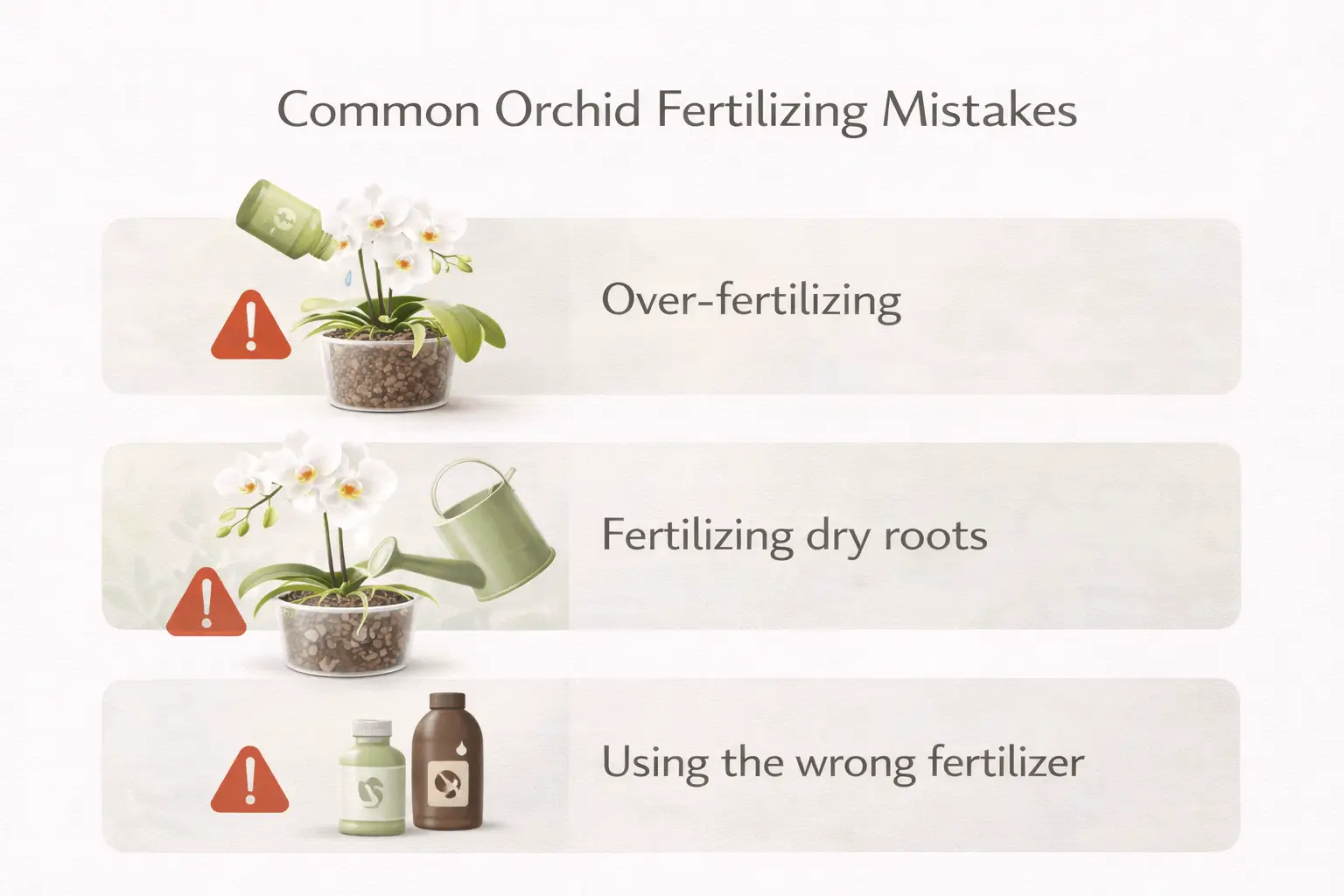
- Over-fertilizing, which leads to salt buildup and root damage
- Fertilizing dry roots, increasing the risk of burns
- Using the wrong fertilizer type for orchids
Avoiding these orchid fertilizing errors improves long-term plant health and ensures feeding orchids supports growth rather than causing stress.
Conclusion — Mastering When to Fertilize Orchids
Mastering when to fertilize orchids comes down to timing, frequency, and careful observation. Feeding during active growth supports strong roots, healthy leaves, and reliable blooms, while reducing or stopping fertilizer during dormancy protects orchids from unnecessary stress. Using the right schedule prevents nutrient buildup and ensures fertilizer is actually used by the plant. Paying attention to growth signals—new roots, fresh leaves, or resting phases—helps guide smarter fertilizing decisions. With consistent, observation-based care, orchids respond with healthier growth, longer-lasting flowers, and better overall resilience, making fertilizing orchids a supportive routine rather than a risky guess.
Read Also: 7+ Expert Tips for Perfect Mini Pilea Plant Care Indoors
FAQs
When is the best time to fertilize orchids?
The best time to fertilize orchids is during active growth, usually in spring and summer, when new leaves and roots are developing and nutrients are efficiently absorbed.
How often should you fertilize orchids indoors?
Indoor orchids are commonly fertilized using a diluted solution once a week or every two weeks, depending on growth stage and light conditions.
Can you fertilize orchids while they are blooming?
Yes, orchids can be lightly fed while blooming, but fertilizer strength should be reduced to avoid stressing the plant or shortening flower life.
What happens if you fertilize orchids too often?
Over-fertilizing can cause salt buildup, root damage, leaf burn, and reduced blooming, making proper frequency essential for orchid health.
Do orchids need fertilizer during winter?
Most orchids require little to no fertilizer during winter, as growth slows and nutrient uptake decreases during this resting period.

Written by the LeafyHeaven Editorial Team
LeafyHeaven shares practical gardening tips and simple plant care guides to help you grow, nurture, and enjoy your plants with ease. Our goal is to make gardening feel natural, approachable, and rewarding for everyone.