
Introduction
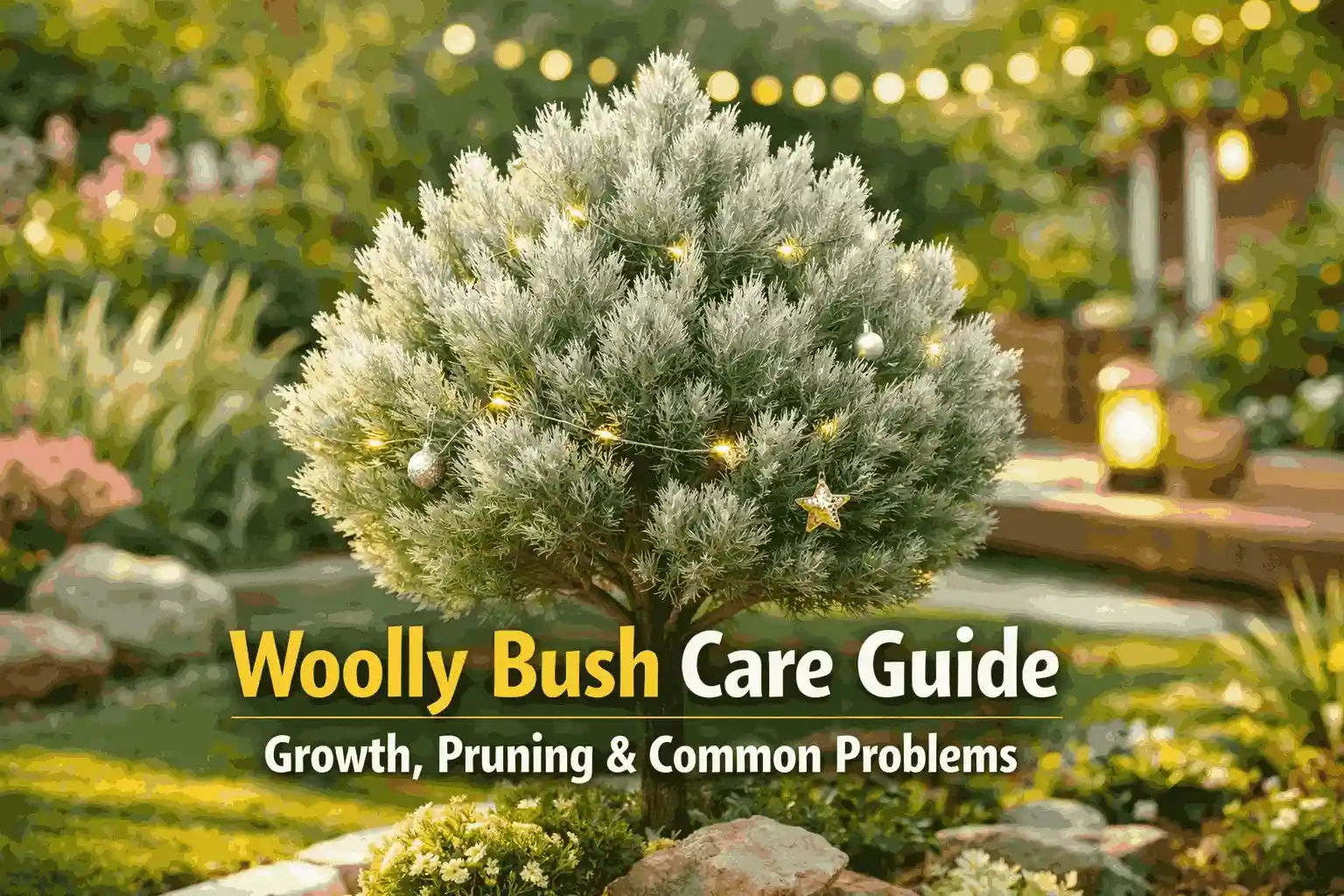
Woolly bush (adenanthos sericeus) is a unique ornamental plant known for its soft texture and attractive silvery appearance. This woolly bush plant is widely used in modern gardening because it adds a clean and elegant look to outdoor spaces. Its fine, needle-like foliage creates a fluffy bush effect that stands out in both small and large landscapes.
It is commonly referred to as woolly bush or wooly bush, but these are simply naming variations for the same plant. The plant is valued not only for its visual appeal but also for its versatility in garden design and decoration. Its silvery bush look makes it especially popular for themed gardens and seasonal displays.
This guide covers everything you need to know about woolly bush, including care requirements, growth habits, pruning methods, common problems, and different varieties. The goal is to provide clear and practical information in one complete resource.
What is Woolly Bush (Adenanthos Sericeus)?
Woolly bush, scientifically known as adenanthos sericeus, is a distinctive evergreen plant from the adenanthos genus. It is commonly grown for its soft foliage and ornamental appeal rather than flowers. This adenanthos woolly bush is widely used in landscaping because of its unique texture and adaptability to different garden styles.
The plant is also referred to as adenanthos sericea in some regions, but adenanthos sericeus is the correct botanical name. It belongs to a group of Australian native shrubs that are valued for their resilience and decorative structure.
Botanical Overview
The scientific name of this plant is adenanthos sericeus woolly bush, and it belongs to the Proteaceae family. It is native to Australia, particularly coastal regions where sandy and well-drained soils are common, as described by the Australian National Botanic Gardens. This plant is known by several common names including woollybush, fluffy bush, and silvery bush. These names reflect its soft texture and light-colored foliage, which give it a unique visual identity compared to other ornamental plants.
Key Features & Characteristics
The woolly bush plant is easily recognized by its soft, needle-like leaves that feel smooth to the touch. These fine leaves create a dense and attractive structure, making it one of the most visually appealing bush trees used in landscaping.
Its silvery texture gives a subtle silver haze effect, especially under sunlight, which enhances its decorative value. Depending on how it is grown, it can develop into a compact shrub or a small woolly bush tree, making it suitable for different garden layouts.
It is often considered among the thickest bush types in ornamental gardening due to its dense foliage and full shape, which provide both aesthetic appeal and functional use in garden design.
Woolly Bush Varieties & Types
There are several woolly bush varieties available, each with slightly different growth habits, sizes, and decorative features. These varieties belong to the broader adenanthos group, including species like adenanthos cunninghamii, adenanthos obovatus, adenanthos cygnorum, and adenanthos lighthouse, which are used in different landscaping styles.
Some varieties are grown for compact structure, while others are preferred for spreading or ground cover use. Understanding these types helps in selecting the right plant for specific garden needs.
Popular Cultivars
Among the most widely grown cultivars, silver streak woolly bush is popular for its striking foliage with a slightly variegated appearance. It is often labeled as woolly bush silver streak and is commonly used as a feature plant in decorative gardens.
Adenanthos silver haze is another well-known variety that offers a soft, muted silver tone. It creates a refined and modern look, especially when planted in minimalist landscapes.
Adenanthos pencil perfect is valued for its upright and structured growth. It is ideal for formal garden designs where clean lines and symmetry are important.
Dwarf & Compact Varieties
Dwarf woolly bush types are specially suited for small spaces, containers, and indoor or patio setups. These include adenanthos sericeus dwarf, which maintains the same soft foliage but in a more compact form.
These varieties are best for:
- Small gardens with limited space
- Pots and containers
- Decorative corners and balcony planting
Their manageable size makes them easy to maintain while still providing the same ornamental value.
Prostrate & Landscape Varieties
Prostrate woolly bush varieties are low-growing and spread horizontally rather than vertically. These are mainly used for ground cover and slope planting where soil stability and coverage are important.
They are ideal for:
- Covering open ground areas
- Preventing soil erosion on slopes
- Creating layered landscape designs
These varieties offer both functional and visual benefits, making them a practical choice for large outdoor spaces.
Woolly Bush Size, Height & Growth Rate
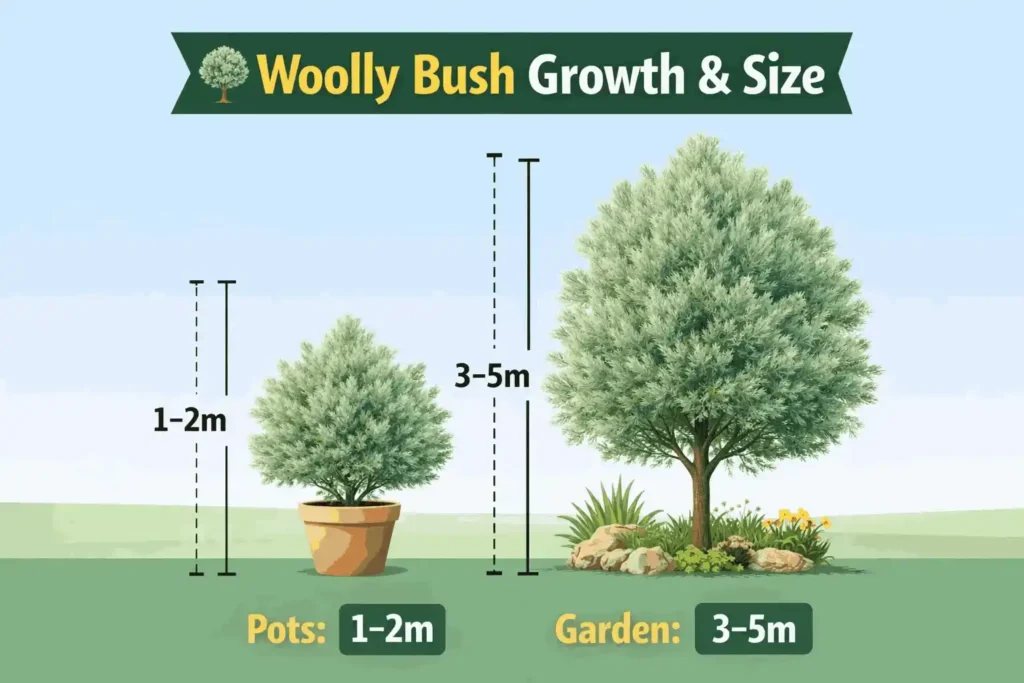
Understanding woolly bush size and growth behavior is important for proper placement in gardens or containers. This plant can develop into a compact shrub or a small woolly bush tree depending on pruning and growing conditions. Its balanced growth and dense foliage make it suitable for both decorative and functional use.
The woolly bush height and spread vary based on environment, soil quality, and care routine. When properly maintained, it forms a symmetrical and full structure that enhances overall landscape design.
Growth Timeline
Woolly bush is considered a moderately fast-growing plant. In ideal conditions, it shows steady development throughout the growing season without aggressive or uncontrollable spread.
- Initial growth phase is noticeable within the first few months after planting
- It establishes its root system in the first year
- Visible structure and density improve significantly in 1 to 2 years
A woolly bush full grown typically reaches maturity within 3 to 5 years. During this time, the plant develops its characteristic dense foliage and defined shape.
Expected Height & Spread
The woolly bush size depends on whether it is grown in the ground or in containers. Growth is generally more restricted in pots compared to open garden conditions.
Typical size variations:
- In garden soil
- Height: 3 to 5 meters
- Spread: 2 to 3 meters
- Can develop into a small woolly bush tree form
- In pots or containers
- Height: 1 to 2 meters
- Spread: More compact and controlled
The plant naturally forms a rounded to slightly upright shape. With proper pruning, it can be maintained as a dense shrub or trained into a more structured tree-like form depending on design preference.
Woolly Bush Flowers & Appearance
Woolly bush is mainly grown for its foliage, but its overall appearance plays a major role in its popularity. The plant has a soft, dense structure with a silvery tone that gives it a clean and modern look. Its visual appeal remains consistent throughout the year, making it a reliable choice for decorative planting.
Even without prominent blooms, the plant maintains a strong ornamental presence due to its texture and shape. This makes it suitable for both minimal and detailed landscape designs.
Does Woolly Bush Flower?
Yes, the woolly bush flower does exist, but it is not the main highlight of the plant. The flowers are small, tubular, and usually appear in shades of red or orange.
Key points about woolly bush flowers:
- Flowers are not large or showy
- They grow close to the stems and can be easily overlooked
- Blooming usually occurs in warmer seasons, especially spring and summer
Because the flowers are subtle, most gardeners focus more on the foliage rather than expecting strong floral display.
Why It Looks Like a “Fluffy Christmas Tree”
The dense, upright growth and soft needle-like leaves give the plant a natural cone-like structure. This is why it is often referred to as a woolly bush christmas tree in decorative use.
Its shape and texture make it ideal for:
- Christmas-themed decoration setups
- Indoor or patio styling during winter seasons
- Minimalist festive displays without heavy ornaments
The natural symmetry and silvery foliage create a clean and elegant look, allowing it to function as a living decorative element without requiring artificial enhancement.
Caring for an Adenanthos Sericeus (Complete Care Guide)
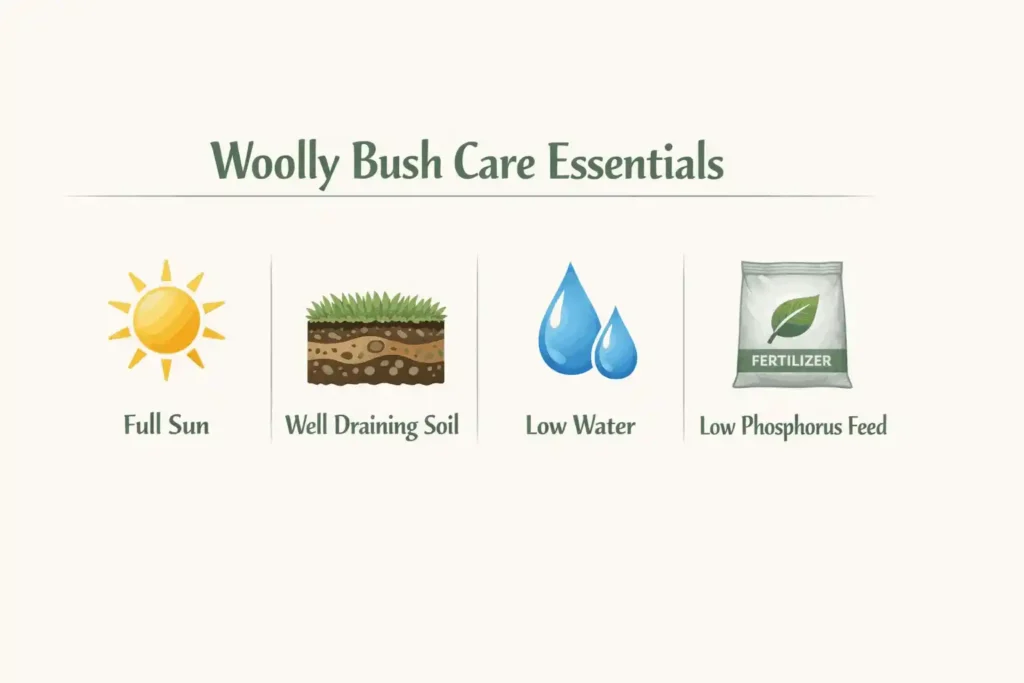
Proper care is essential to keep adenanthos sericeus healthy and visually attractive. This plant is naturally adapted to harsh environments, but it performs best when its basic needs are met correctly. A balanced approach to light, soil, watering, and feeding ensures steady growth and long-term survival.
This section covers all core care factors in a simple and practical way so the plant can maintain its dense foliage and structure.
Light Requirements
Adenanthos sericeus grows best in full sun conditions. Direct sunlight helps maintain its compact shape and enhances the silvery appearance of the foliage.
- Full sun is ideal for strong growth and dense structure
- Partial shade is acceptable but may reduce compactness
- Low light conditions can lead to weak and uneven growth
For best results, place the plant in a location where it receives several hours of direct sunlight daily.
Soil & Drainage
Soil quality plays a critical role in plant health. This plant requires well-draining sandy soil to prevent root-related issues.
- Sandy or light soil allows excess water to drain quickly
- Heavy or clay soil can trap moisture and damage roots
- Good drainage is more important than soil richness
If natural soil is not suitable, improving it with sand or using a raised bed can help maintain proper drainage.
To better understand soil structure, drainage, and overall plant care fundamentals, refer to our complete gardening and plant care guide.
Watering Needs
Watering should be controlled and minimal once the plant is established. Overwatering is one of the most common causes of plant failure.
- Water moderately during early growth stages
- Allow soil to dry slightly between watering
- Avoid constant moisture around roots
Adenanthos sericeus has good drought tolerance, meaning it can survive with less water once fully established. Excess watering should always be avoided.
Fertilizer Requirements
This plant does not require heavy feeding and is sensitive to certain nutrients. Using the right type of fertilizer is important.
- Use low-phosphorus fertilizers only
- Avoid strong or high-nutrient fertilizers
- Feed lightly during the growing season if needed
Over-fertilizing can damage the plant rather than improve growth, so a minimal approach works best.Similar care requirements for humidity, light, and growing conditions are also explained in our guide on anthurium vittarifolium care.
Growing Woolly Bush in Pots vs Ground
Woolly bush can be successfully grown both in containers and directly in the ground. The choice depends on available space, design preference, and maintenance level. Woolly bush in pots offers flexibility and control, while bush planting in the ground allows the plant to reach its full size and natural shape.
Both methods work well if the basic requirements like sunlight and drainage are properly managed.
Container Growing Guide
Growing woolly bush in pots is ideal for small spaces, patios, and balconies. It also allows better control over soil and watering conditions.
Key guidelines:
- Use a medium to large pot with proper drainage holes
- Choose a pot size that supports root expansion as the plant grows
- Avoid very small containers as they restrict growth
Recommended soil mix:
- Sandy soil base for fast drainage
- Add perlite or coarse sand to improve airflow
- Avoid heavy, compact soil mixes
Regular monitoring is important because potted plants dry out faster but are also more sensitive to overwatering.
Garden & Hedge Use
When planted in the ground, woolly bush becomes more vigorous and can develop into a dense structure. It is commonly used to create a woolly bush hedge due to its thick foliage and ability to hold shape.
Common uses in landscaping:
- As a feature plant in modern garden designs
- For creating natural hedges and borders
- In layered planting with other bush trees
For hedge formation:
- Plant multiple shrubs at equal spacing
- Prune regularly to maintain uniform shape
- Ensure consistent sunlight across all plants
This method allows the plant to grow freely while still being shaped according to design needs.
Woolly Bush Pruning Guide
Woolly bush pruning is important to maintain shape, control size, and promote dense growth. Without regular trimming, the plant can become uneven or lose its compact structure. Pruning woolly bush correctly helps keep it visually appealing and healthy over time.
A balanced approach is necessary because excessive cutting can stress the plant, while no pruning can lead to weak structure.
When to Prune
Timing plays a key role in effective pruning. The goal is to trim the plant during active growth periods so it can recover quickly.
Best seasons for pruning:
- Light pruning in spring to encourage new growth
- Maintenance trimming during early summer if needed
- Avoid heavy pruning in winter or extreme heat conditions
Regular light trimming is more effective than occasional heavy cutting. This helps maintain shape without shocking the plant.
How to Prune Properly
Pruning woolly bush should focus on shaping and removing unwanted growth without damaging the main structure.
Key pruning practices:
- Trim the outer growth to maintain a neat and balanced shape
- Remove dry, damaged, or weak branches
- Cut slightly above healthy nodes to support regrowth
Important precautions:
- Do not cut too deep into older wood
- Avoid removing too much foliage at once
- Maintain natural form instead of forcing unnatural shapes
Proper pruning keeps the plant dense and structured while supporting healthy, continuous growth.
For another example of how pruning and maintenance affect ornamental plants, see our guide on double fern leaf peony care.
Woolly Bush Problems & Solutions
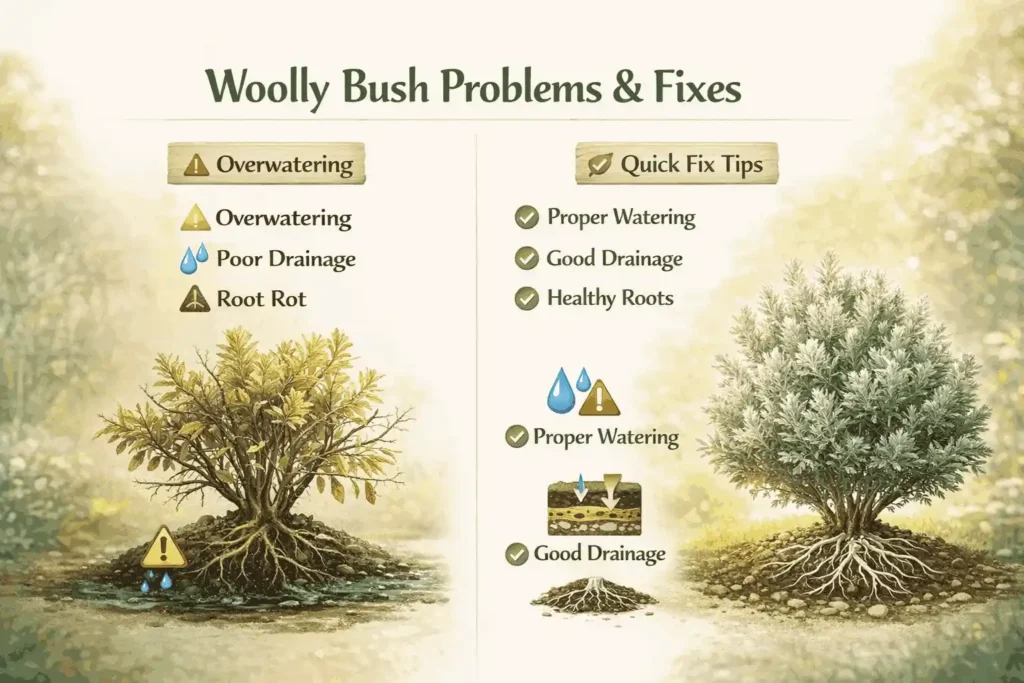
Woolly bush problems usually occur due to improper care conditions, especially related to water and soil. While this plant is naturally hardy, mistakes in drainage, watering, or environment can quickly affect its health. Early identification of issues is important to prevent long-term damage.
One of the most serious concerns is woolly bush dieback, which can cause gradual decline if not addressed in time. Understanding the common problems helps in taking quick corrective action.
Common Issues
Below are the most frequent problems seen in woolly bush plants and their causes:
Yellowing or Drying Foliage
- Leaves may turn yellow due to overwatering or poor drainage
- Dry or brittle foliage often indicates underwatering or heat stress
- Sudden color change can also result from environmental shock
Root Rot
- Caused by excess moisture in soil
- Roots become weak and unable to absorb nutrients
- Common in heavy or waterlogged soil conditions
Dieback
- Woolly bush dieback appears as gradual drying of branches from tips inward
- Often linked to root stress or fungal issues
- Can spread if affected parts are not removed quickly
Quick solutions:
- Ensure soil drains properly and avoid standing water
- Adjust watering frequency based on weather and soil condition
- Remove affected branches to stop spread
- Improve air circulation around the plant
Addressing these issues early helps restore plant health and prevents permanent damage.
Why is My Woolly Bush Dying? (Complete Fix Guide)
Woolly bush dying is a common concern, especially when basic care conditions are not balanced. If you are asking why is my woolly bush dying, the issue is usually linked to water management, soil drainage, or environmental stress. In many cases, early symptoms like woolly bush turning grey or drying tips appear before the plant declines further.
If ignored, the condition can worsen and lead to a situation where the woolly bush died completely. Identifying the exact cause early is the key to saving the plant.
Overwatering & Root Issues
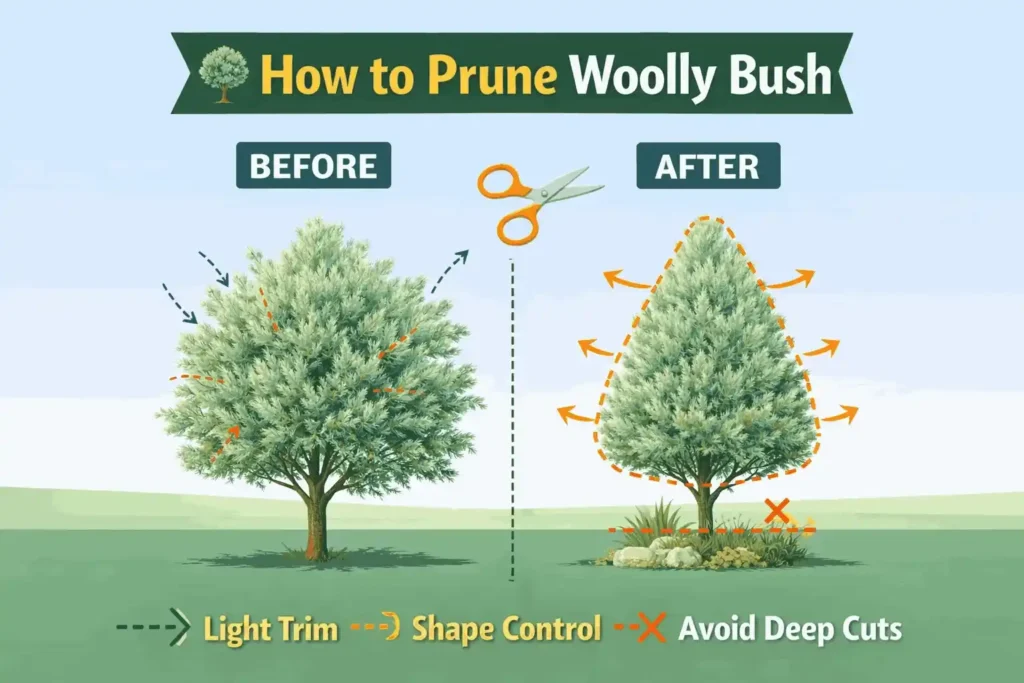
Overwatering is the most frequent reason behind plant decline. Excess moisture damages the roots and limits oxygen availability.
Signs of root issues:
- Leaves losing color and becoming dull
- Soft or weak stems
- Soil remaining wet for long periods
Solution:
- Reduce watering frequency
- Allow soil to dry slightly between watering
- Check roots and remove any rotten sections if possible
Poor Drainage
Even correct watering can cause problems if the soil does not drain properly. Waterlogged soil creates the same effect as overwatering.
Common indicators:
- Water sitting on the surface after watering
- Soil feeling heavy and compact
- Slow plant growth or sudden decline
Solution:
- Improve soil by adding sand or perlite
- Use raised beds or well-draining containers
- Ensure drainage holes are not blocked
Climate Stress (Heat / Frost)
Extreme weather conditions can also affect plant health. Both excessive heat and frost can stress the plant and damage foliage.
Effects of climate stress:
- Leaves turning grey or dry in extreme heat
- Frost damage causing sudden discoloration
- Slowed growth during unfavorable conditions
Solution:
- Provide shade during intense heat
- Protect the plant from frost using covers
- Avoid sudden environmental changes
Recovery Tips
If the plant is already showing signs of decline, timely action can help in recovery.
Practical recovery steps:
- Adjust watering and improve drainage immediately
- Trim damaged or dead branches
- Place the plant in a stable environment with proper light
- Avoid fertilizing until the plant shows signs of recovery
Consistent care and quick corrections can help restore plant health before permanent damage occurs.
Woolly Bush Roots & Invasiveness
Many gardeners ask, are woolly bush roots invasive, especially when planning planting near walls, pathways, or buildings. This plant is generally considered safe because its root system is not aggressive and does not spread uncontrollably.
Woolly bush is more focused on stable growth rather than invasive expansion, making it suitable for residential landscapes and structured garden layouts.
Root System Explained
The root system of woolly bush is relatively moderate and adapted for well-draining soil conditions. It does not develop thick, aggressive roots like large trees.
Key characteristics:
- Roots are moderately deep but not excessively penetrating
- Spread is controlled and supports plant stability
- Performs best in loose, sandy soil where roots can breathe
Compared to large bush trees, its root system remains manageable and does not disrupt surrounding soil structures.
Is It Safe Near Structures?
Yes, woolly bush can be planted near structures without major risk. The answer to are woolly bush roots invasive is generally no, as the plant does not have destructive root behavior.
Safety benefits:
- Does not damage foundations or walls
- Safe for planting near patios and pathways
- Suitable for controlled garden designs
As long as proper spacing and soil conditions are maintained, the plant remains non-invasive and easy to manage in both small and large landscapes.
Regional Growing Tips (Climate Guide)
Woolly bush performs best in climates similar to its natural habitat, especially coastal regions of Australia. Plants like albany woolly bush and albany wooly bush are naturally adapted to sandy soils, strong sunlight, and dry air conditions. These traits make the plant suitable for specific climates but require adjustments in other regions.
Understanding local climate conditions helps improve growth, reduce stress, and prevent common issues.
Best Climate Conditions
Woolly bush perth conditions are considered ideal because they closely match the plant’s native environment. Coastal climates provide the right balance of sunlight, airflow, and soil drainage.
- Coastal areas
- Well-drained sandy soil
- Moderate humidity
- Consistent sunlight and airflow
- Inland areas
- Can grow successfully with proper soil preparation
- Requires careful watering control
- May need protection from extreme heat or cold
The plant prefers dry and open environments rather than dense or humid conditions.
Adaptation Tips
Woolly bush can adapt to different climates if proper care adjustments are made. Managing water, soil, and exposure is key to success.
For hot climates:
- Provide light shade during peak heat
- Avoid frequent watering during extreme temperatures
- Ensure soil does not retain excess moisture
For humid regions:
- Improve drainage using sandy or loose soil
- Increase spacing for better air circulation
- Avoid overhead watering to reduce moisture buildup
With the right adjustments, woolly bush can grow outside its native range while maintaining healthy structure and appearance.
Landscaping & Uses of Woolly Bush
Woolly bush is widely used in landscaping due to its soft texture and structured growth. Among bush trees, it stands out for its neat appearance and adaptability. Many gardeners prefer woollys because they provide both visual appeal and functional use in different garden styles.
Its ability to fit into modern, minimal, and natural landscapes makes it a versatile choice for outdoor and indoor design.
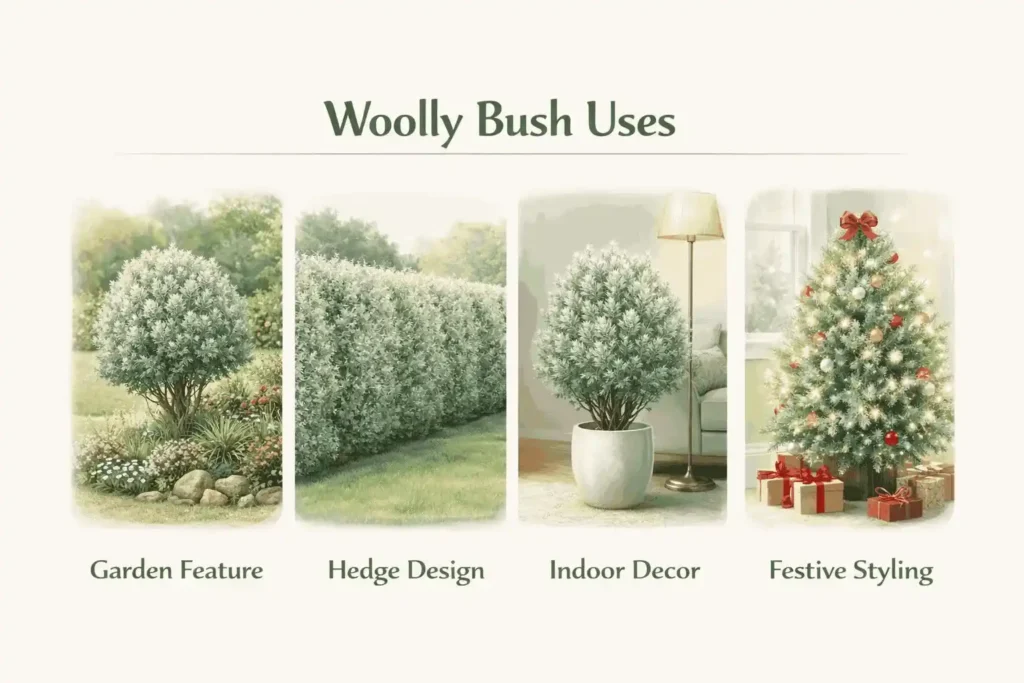
Garden Design Ideas
Woolly bush works well as a feature plant because of its unique shape and silvery foliage. It naturally draws attention without needing additional elements.
Common garden uses:
- As a focal point in small or large landscapes
- Planted in rows to create clean and structured hedge lines
- Combined with other bush trees for layered garden design
For hedge use:
- Plant at equal spacing for uniform growth
- Trim regularly to maintain a consistent shape
- Ensure proper sunlight for all plants in the row
Its dense growth makes it suitable for privacy screens and decorative borders.
Decorative Uses
Woolly bush is also popular in decorative setups due to its soft and elegant appearance. It can be used both outdoors and indoors in controlled conditions.
Decorative applications:
- Indoor decor in bright spaces with good airflow
- Patio and balcony styling in pots
- Seasonal decoration setups, especially winter themes
Its natural shape is often used for Christmas styling, where it resembles a small decorative tree. This makes it a practical and aesthetic choice without requiring artificial decorations.
Conclusion
Woolly bush is a low maintenance ornamental plant that offers strong visual appeal with minimal effort. Its soft foliage, structured growth, and adaptability make it a reliable choice for different garden styles and decorative uses.
Proper care, regular pruning, and well draining soil are the key factors that ensure long term health and stability. When these basics are followed, the plant maintains its dense structure and attractive appearance without frequent intervention.
It is suitable for both beginners and experienced gardeners, as it does not require complex care routines. With the right setup, woolly bush can remain healthy, balanced, and visually appealing for many years.
FAQs
Why is my woolly bush turning grey?
Woolly bush turning grey is usually a sign of stress. The most common causes include overwatering, poor drainage, or extreme heat. When roots are affected, the plant cannot absorb nutrients properly, which leads to dull or greyish foliage. Improving drainage and adjusting watering often helps restore its natural color.
Can woolly bush grow in pots successfully?
Yes, woolly bush can grow very well in pots if the conditions are right. Use a well draining soil mix and a container with proper drainage holes. Regular monitoring is important because potted plants are more sensitive to both overwatering and drying out.
How tall does a woolly bush grow?
The height depends on growing conditions. In garden soil, it can reach around 3 to 5 meters and may develop into a small tree form. In pots, growth is more controlled, usually staying between 1 to 2 meters.
Is woolly bush safe for landscaping near houses?
Yes, it is considered safe. The root system is not aggressive, so it does not damage foundations or nearby structures. This makes it a good option for planting near walls, pathways, and patios.
Does woolly bush need frequent pruning?
Frequent heavy pruning is not required. Light and regular trimming is enough to maintain shape and encourage dense growth. Over pruning should be avoided because it can stress the plant.
What is the difference between woolly bush and wooly bush?
There is no actual difference between woolly bush and wooly bush. These are simply spelling variations of the same plant name. Both refer to adenanthos sericeus.
Why is my woolly bush not growing properly?
Slow or weak growth is often caused by poor soil conditions, lack of sunlight, or overwatering. Ensuring full sun exposure and well draining soil usually improves growth performance.
How often should I water a woolly bush?
Watering should be moderate. Allow the top layer of soil to dry slightly before watering again. Overwatering is more harmful than underwatering, especially once the plant is established.
Can woolly bush survive extreme heat?
Woolly bush can tolerate heat, but extreme conditions can cause stress. Providing light shade during peak heat and avoiding excessive watering helps the plant adapt better.
Is woolly bush suitable for beginners?
Yes, it is a beginner friendly plant. It requires simple care, minimal feeding, and basic pruning, making it easy to manage even for new gardeners.

Written by the LeafyHeaven Editorial Team
LeafyHeaven shares practical gardening tips and simple plant care guides to help you grow, nurture, and enjoy your plants with ease. Our goal is to make gardening feel natural, approachable, and rewarding for everyone.