
Introduction
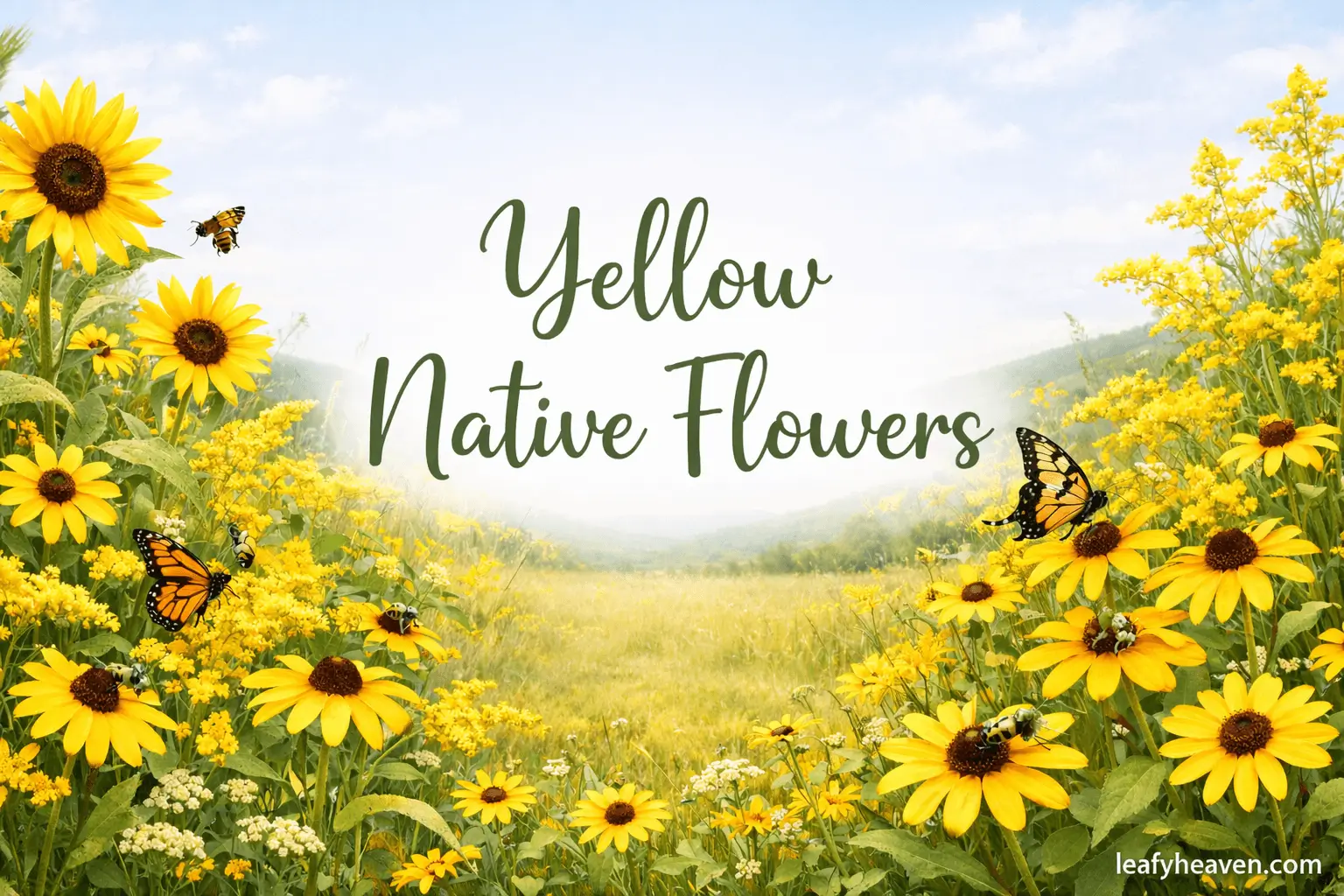
Yellow native flowers are among the most vibrant plants found in natural landscapes and gardens. Their bright color makes them easy to notice in fields, forests, and cultivated spaces. Across different regions, many ecosystems support a wide variety of yellow flowers names that belong to native plant species. These plants contribute to ecological balance while also adding visual appeal to outdoor environments. Understanding yellow flowers types and recognizing common yellow flowers helps gardeners, plant enthusiasts, and nature observers better appreciate local plant diversity. Learning to identify these native plants also improves awareness of regional biodiversity. This guide explores common yellow native flowers, plant identification features, and examples of yellow flowering plants that grow naturally in different habitats.
What Are Yellow Native Flowers?
Meaning of Native Flower Species
Native flower species are plants that naturally grow in a specific region without human introduction. These plants evolved over long periods and adapted to the local climate, soil conditions, and surrounding wildlife.
Key characteristics of native flowers include:
- Natural adaptation to regional weather patterns
- Compatibility with native soil conditions
- Long-term coexistence with local wildlife and insects
Native plants play a critical role in ecosystems because they support local biodiversity. Many insects, birds, and pollinators rely on native flowering plants for nectar, food, and shelter.
Because native species require fewer resources and maintenance, they are often recommended for ecological gardening and landscape restoration.
Why Yellow Native Flowers Are Common in Nature
Yellow is one of the most common flower colors found in natural habitats. Many wildflowers with yellow flowers evolved this coloration to attract pollinators efficiently.
Several ecological reasons explain this pattern:
- Pollinator attraction: Bees, butterflies, and birds easily recognize bright yellow petals.
- High visibility: Yellow flowers stand out in green landscapes, helping insects locate nectar sources.
- Ecological signaling: The color acts as a natural visual signal indicating pollen availability.
As a result, many ecosystems contain a wide variety of wild yellow flower species and wildflowers yellow varieties growing in meadows, grasslands, and forest edges.
How to Identify Plants With Yellow Native Flowers
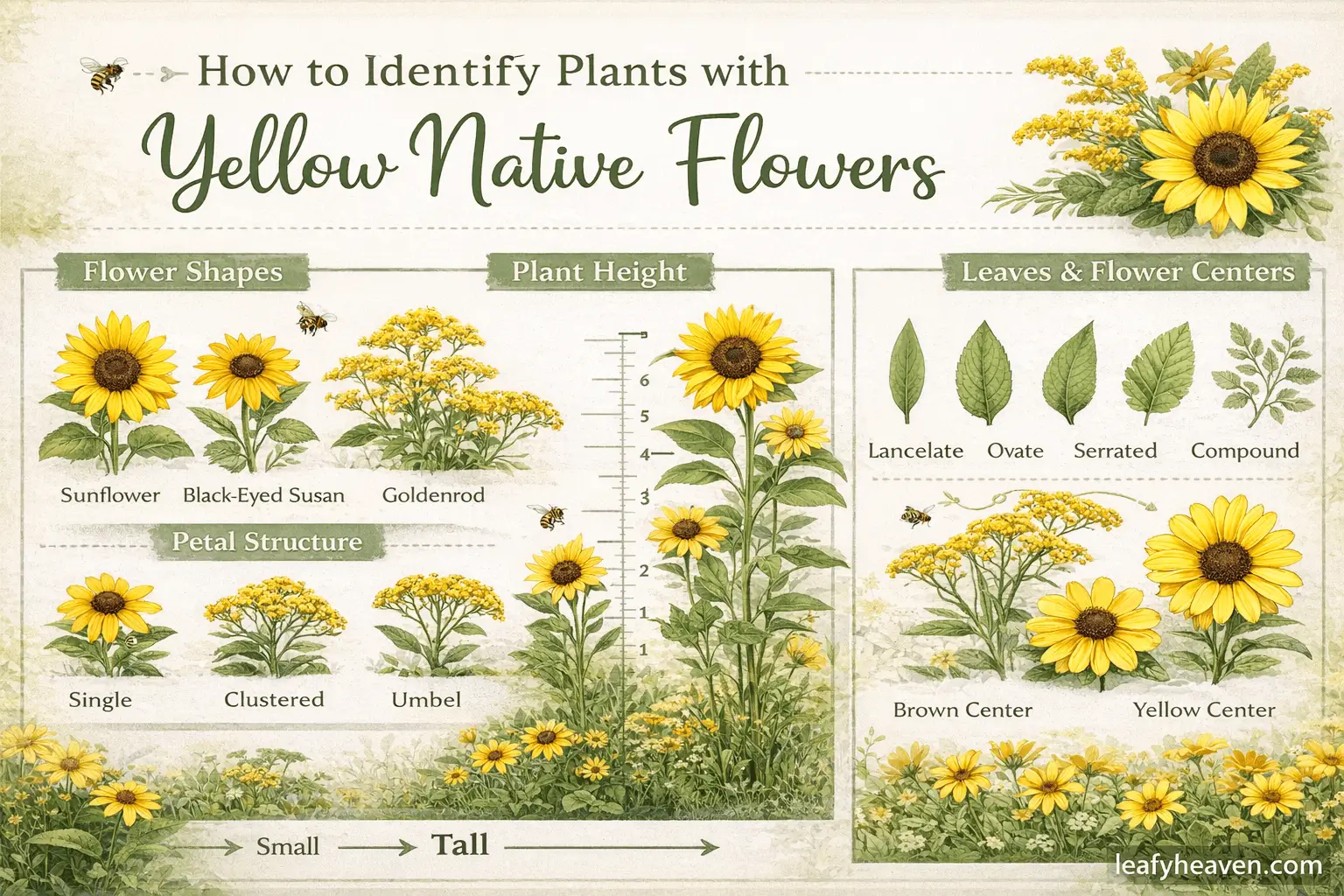
Flower Shape and Petal Structure
One of the most reliable methods of plant identification yellow flower species is examining the flower shape and petal structure.
Important visual characteristics include:
- Petal number: Some species have five petals, while others have many thin petals.
- Flower symmetry: Flowers may have radial symmetry or layered petal structures.
- Flower size: Some species produce big yellow flowers, while others form clusters of smaller blossoms.
Observing these details helps with plant with yellow flowers identification when comparing different species in the wild or garden environments.
Plant Height and Growth Pattern
Plant height and growth structure also provide valuable clues when identifying flowering plants.
Key observations include:
- Tall flowering plants: Many species are tall plants with yellow flowers that grow prominently in open fields.
- Shrub-type flowers: Some yellow flowers grow on woody shrubs.
- Ground-cover species: Certain plants remain low to the ground and spread horizontally.
Recognizing these patterns helps with tall plant with yellow flowers identification and makes it easier to classify tall yellow native flowers growing in natural landscapes.
Leaf Structure and Flower Centers
Leaves and flower centers provide additional identification details that distinguish similar species.
Important features include:
- Leaf shape: Some plants have narrow leaves, while others have broad or deeply divided foliage.
- Plant texture: Leaf surfaces may appear smooth, hairy, or waxy.
- Flower center color: Some species produce a yellow flower with brown center name pattern commonly seen in certain wildflowers.
Examining these characteristics helps improve yellow perennial flowers identification when identifying native flowering plants.
Common Types of Yellow Native Flowers
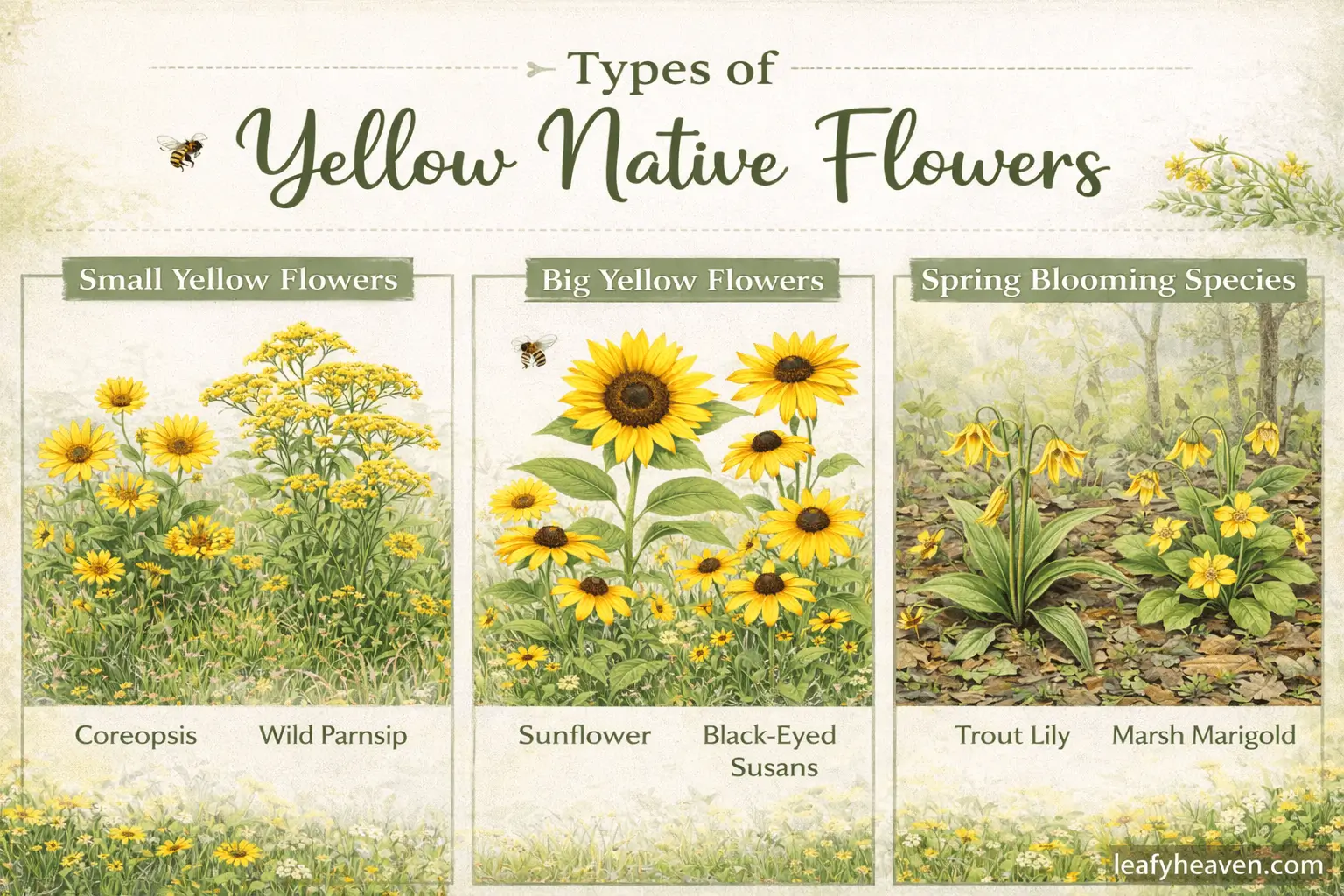
Small Yellow Native Flowers
Many native flowering plants produce small blossoms that grow naturally in meadows, grasslands, and forest clearings.
These small yellow native flowers often grow in clusters and create bright patches of color across natural landscapes.
Common characteristics include:
- Low-growing plants
- Dense clusters of small blooms
- Seasonal flowering cycles
Many yellow wildflowers belong to this category and are often seen in natural habitats during spring and early summer.
Large or Big Yellow Flowers
Some native plants produce bold blossoms that stand out due to their size and bright coloration.
These big yellow flowers often grow on taller plants and are commonly used in landscaping because they create strong visual impact.
Typical characteristics include:
- Wide petal structures
- Prominent flower centers
- Tall stems supporting single large blooms
These species represent some of the most recognizable yellow flowers types in gardens and natural habitats.
Spring-Blooming Yellow Native Flowers
Many native species bloom early in the year and are known for their bright seasonal displays.
These early bloomers help signal the transition from winter to spring.
Examples include plants that produce:
- Bright yellow clusters in early spring
- Meadow wildflowers that bloom after winter
- Forest-edge flowers that appear before tree canopies fully develop
Several well-known yellow spring flowers names belong to native plant groups that thrive in seasonal environments.
Many ornamental varieties also belong to this category, including species similar to the yellow geranium flower, which gardeners often grow for its bright color and reliable seasonal blooms.
Australian Native Plants With Yellow Flowers
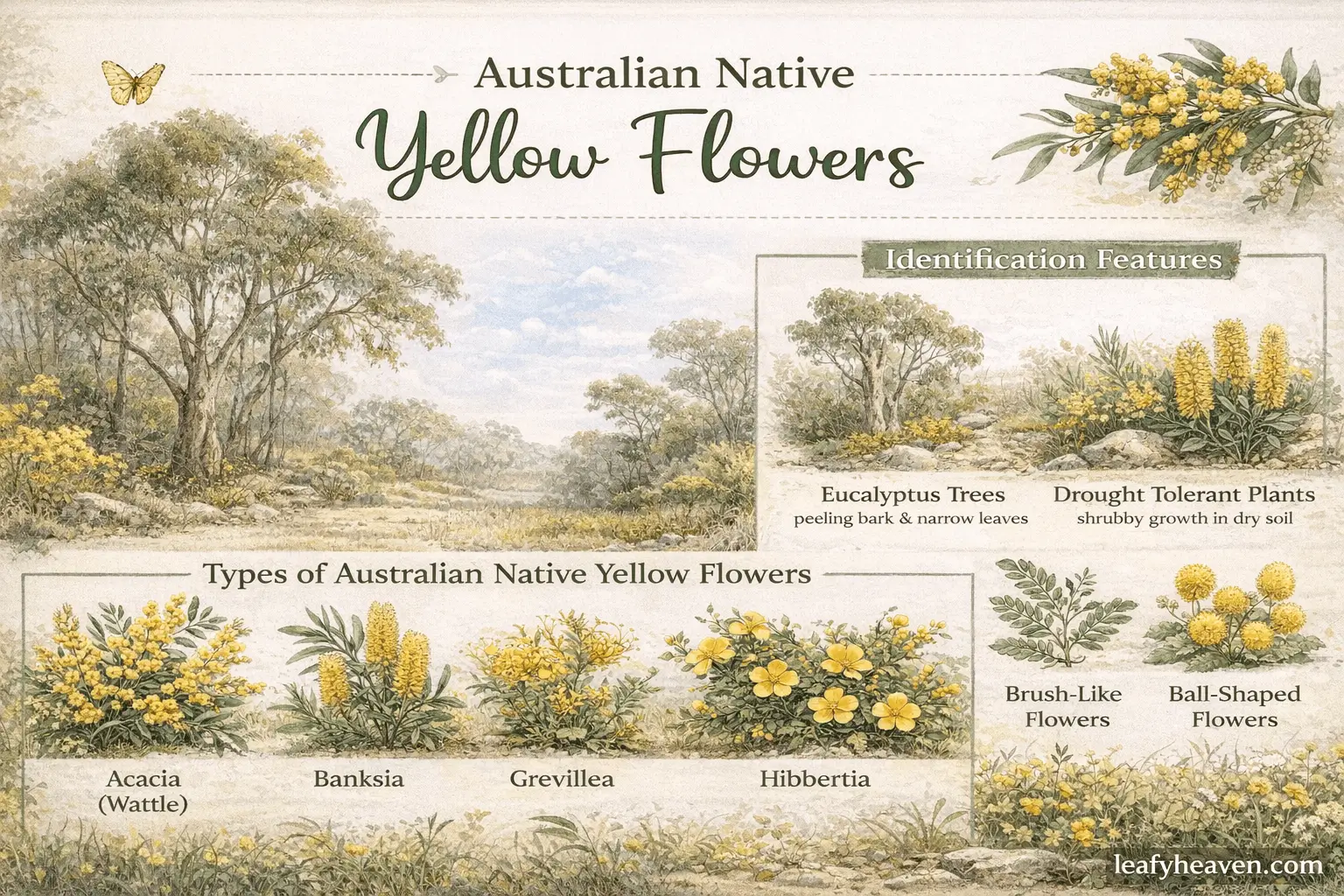
Popular Australian Yellow Native Flowers
Australia contains many unique flowering plants that produce yellow blooms and grow naturally across different regions.
Examples of australian native yellow flowers include shrubs, trees, and wildflowers adapted to dry and coastal climates.
Many yellow native flowers Australia species are known for:
- Bright seasonal blooms
- Drought tolerance
- Unique leaf structures
These yellow australian native flowers contribute to Australia’s diverse botanical landscape.
Identifying Yellow Flower Plants in Australia
Plant identification in Australia often involves observing the structure of shrubs and native trees that produce yellow blossoms.
Key identification features include:
- Flower clusters growing along branches
- Distinct leaf shapes common to Australian flora
- Seasonal blooming cycles in warm climates
Recognizing these characteristics helps identify yellow flower plants Australia and distinguish different australian yellow flowers species growing in gardens and natural areas. Many yellow flowers in australia belong to native shrubs that thrive in local environmental conditions. Many gardeners also explore other native species suitable for landscaping, such as those featured in guides about Australian natives for small gardens, which highlight plants adapted to local climates.
Yellow Wildflowers Found in Natural Landscapes
Wildflower Fields and Native Habitats
Wildflower fields often contain a variety of yellow flowering plants that grow naturally without cultivation.
These wildflower yellow flowers typically appear in environments such as:
- Open meadows
- Grasslands
- Forest edges
- Roadside natural habitats
Many yellow flowers wild species spread naturally through seeds and thrive in sunny environments.
Why Wild Yellow Flowers Are Important for Ecosystems
Wild yellow flowers contribute significantly to environmental health.
Key ecological benefits include:
- Pollination support: Wildflowers provide nectar for bees and butterflies.
- Soil health: Their root systems help stabilize soil and prevent erosion.
- Biodiversity support: Native plants provide food and habitat for many species.
Healthy wildflower populations strengthen ecosystems by supporting insects, birds, and small animals.
Many yellow native flowers belong to the broader group known as wildflowers, which naturally grow without cultivation in open landscapes and natural habitats.
Popular Examples of Yellow Native Flowers
Sunflower
Sunflowers are among the most recognizable yellow flowering plants.
Key characteristics include:
- Large round flower heads
- Bright yellow petals surrounding a dark center
- Tall stems that grow toward sunlight
Sunflowers are often included in lists of yellow flowers names and pictures due to their distinctive appearance.
Black-Eyed Susan
Black-eyed Susan is a famous wildflower known for its striking color contrast.
Identification features include:
- Yellow petals
- Dark brown or black center
- Medium-height stems
This species is frequently referenced in pictures of yellow flowers with names when identifying wildflowers.
Goldenrod
Goldenrod is a tall native wildflower commonly found in open landscapes.
Characteristics include:
- Tall stems with clusters of tiny yellow blossoms
- Late summer blooming season
- Common presence in meadows and grasslands
Goldenrod plays an important role in supporting pollinators during late-season flowering periods.
Benefits of Growing Yellow Native Flowers in Gardens
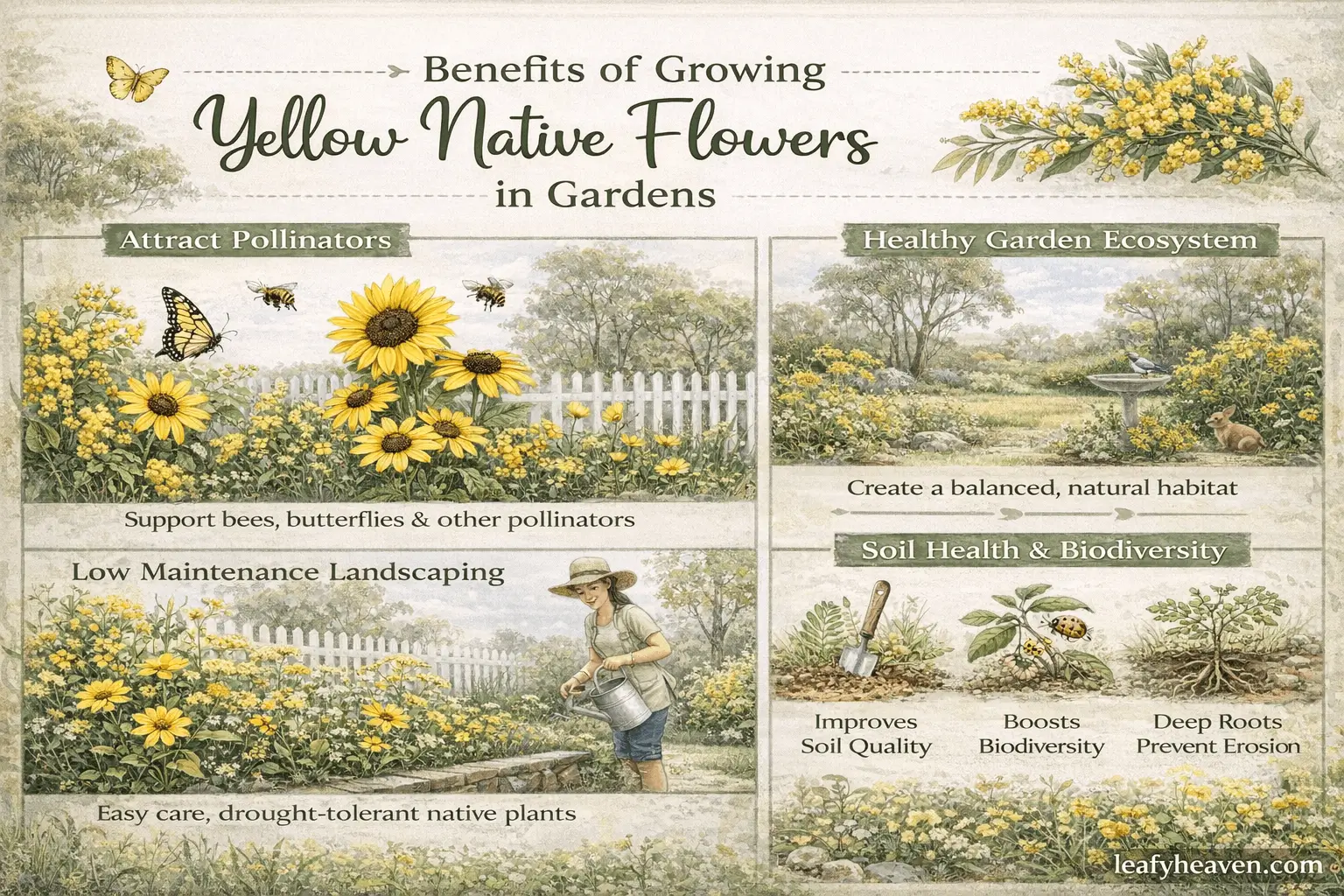
Supporting Pollinators
Planting yellow flowers plants in gardens provides essential food sources for pollinators.
These flowers attract:
- Bees
- Butterflies
- Beneficial insects
By planting native flowers, gardeners help maintain healthy pollinator populations and improve garden biodiversity.
Low-Maintenance Landscaping
One of the main advantages of planting a yellow native flower is its natural adaptability.
Native plants typically require:
- Less watering
- Fewer fertilizers
- Minimal pest control
Because they evolved in local conditions, native species thrive with less maintenance compared to non-native plants.
Understanding how native plants support pollinators and local ecosystems is also an important part of broader gardening and plant care practices.
Conclusion
Yellow native flowers play an important role in both natural ecosystems and home gardens. By learning how to identify yellow native flowers, gardeners and nature enthusiasts can better appreciate the diversity of wildflowers and native plants. Whether growing in wild landscapes or planted intentionally in gardens, these flowers add color, support pollinators, and help maintain healthy environments.
FAQs
What are some common yellow native flowers?
Many native landscapes include flowers such as goldenrod, black-eyed Susan, and various yellow wildflowers that grow naturally in meadows and open fields.
How do you identify a plant with yellow flowers?
Identification usually involves examining the flower shape, petal count, plant height, leaf structure, and flower center color.
Are yellow wildflowers native to many regions?
Yes, yellow wildflowers grow naturally in many ecosystems around the world and are commonly found in grasslands, forests, and meadows.
Do yellow native flowers attract pollinators?
Yes, their bright color attracts bees, butterflies, and other pollinators that help maintain healthy ecosystems.
Can yellow native flowers be grown in home gardens?
Many native flowers adapt well to gardens because they require less maintenance and are suited to local climates.

Written by the LeafyHeaven Editorial Team
LeafyHeaven shares practical gardening tips and simple plant care guides to help you grow, nurture, and enjoy your plants with ease. Our goal is to make gardening feel natural, approachable, and rewarding for everyone.