
Introduction
The Delonix regia bonsai tree, also called the flame tree bonsai or royal poinciana bonsai, is a tropical bonsai species admired for its fern-like foliage, umbrella-shaped canopy, and brilliant red-orange flowers that resemble flames during blooming season.
Native to Madagascar, Delonix regia is one of the most visually striking tropical ornamental trees used in bonsai cultivation. Its fast growth, elegant branching, and tropical appearance make it highly popular among collectors who enjoy dramatic flowering bonsai species.
The royal poinciana bonsai is especially valued for its miniature tropical tree aesthetic. The delicate leaves create a soft fern-like texture, while the spreading canopy gives the tree a mature shade-tree appearance even at a small size. Many growers also refer to it as the flamboyant tree bonsai, bonsai flame tree, flame bonsai tree, or poinciana bonsai.
This tropical bonsai performs best outdoors in warm climates with full sunlight and humidity. However, younger trees can sometimes be grown indoors near bright windows or under grow lights in colder regions. Outdoor cultivation usually produces stronger growth, thicker trunks, and better flowering potential.
Because of its vigorous growth habit, the Delonix regia bonsai develops quickly compared to many traditional bonsai species. With proper pruning, wiring, and seasonal care, growers can shape impressive tropical bonsai forms with wide canopies and dramatic branch structures over time.
What Is a Delonix Regia Bonsai Tree?
A Delonix regia bonsai tree is a miniature version of the tropical flame tree grown using bonsai techniques to create a compact ornamental tree with the same fern-like foliage, spreading canopy, and fiery flowers as the full-sized species.
The Delonix regia bonsai is one of the most recognizable tropical bonsai trees because of its elegant umbrella shape and dramatic seasonal blooms. Growers use pruning, root restriction, wiring, and controlled containers to maintain the miniature size while preserving the natural appearance of a mature flame tree.
For growers who are just starting out, building strong foundational knowledge through a complete gardening and plant care guide makes tropical bonsai training significantly easier from the beginning.
This tropical bonsai is especially popular in warm climates where outdoor growing conditions encourage faster growth and stronger flowering performance.
Scientific Name, Common Names & Plant Family
The scientific name of the flame tree bonsai is Delonix regia, and it belongs to the Fabaceae plant family.
Botanical Classification
| Category | Details |
| Scientific Name | Delonix regia |
| Plant Family | Fabaceae |
| Plant Type | Tropical flowering tree |
| Bonsai Type | Tropical bonsai |
Common Names
The Delonix regia tree is known by several regional and international names, including:
- Flame Tree
- Royal Poinciana
- Flamboyant Tree
- Fire Tree
- Gulmohar Tree
- Arbol de Fuego
- Flamboyan
These names usually refer to the same species, although the popularity of each name varies by country and region.
Origin & Native Habitat
Delonix regia originated in Madagascar and naturally grows in warm tropical and subtropical climates.
The species evolved in dry tropical forests where it adapted to intense sunlight, seasonal rainfall, and warm temperatures. Because of its spectacular ornamental appearance, the tree later spread across many tropical and coastal regions worldwide.
Today, the flame tree is especially popular in:
- Australia
- Florida
- Philippines
- Caribbean islands
- Tropical Asia
In these regions, royal poinciana trees are commonly planted along streets, parks, gardens, and tropical landscapes because of their broad shade canopy and colorful flowering display.
Why Is It Called the Flame Tree?
Delonix regia is called the flame tree because of its brilliant scarlet-red flowers and fiery canopy appearance during blooming season.
When mature trees flower heavily, the canopy becomes covered with vivid red-orange blossoms that resemble flames from a distance. This dramatic flowering effect gives the tree its famous ornamental identity.
Several characteristics contribute to the “flame tree” name:
- Bright scarlet-red blooms
- Dense flowering canopy
- Flame-like tropical appearance
- Seasonal flowering bursts during warm weather
During peak blooming season, some trees produce flowers so heavily that the foliage becomes partially hidden beneath the colorful blossoms.
Delonix Regia Bonsai vs Full-Sized Flame Tree
A bonsai flame tree keeps the same tropical appearance as a full Delonix regia tree but remains compact through bonsai cultivation techniques.
| Feature | Bonsai Flame Tree | Full Delonix Regia Tree |
| Height | Miniature | 30–40 ft+ |
| Flowering | Controlled | Heavy seasonal bloom |
| Root Spread | Restricted | Wide invasive roots |
| Pot Growing | Yes | No |
Delonix Regia Bonsai Characteristics
Flame tree bonsai trees are admired for their delicate leaves, spreading branch structure, tropical canopy shape, and dramatic flowering potential that closely resembles a mature royal poinciana tree in miniature form.
The Delonix regia bonsai combines ornamental foliage with rapid tropical growth, making it one of the most visually distinctive flowering bonsai species. Its soft leaf texture, umbrella canopy, and seasonal blooms create a strong tropical landscape appearance even in small containers.
Leaf Structure & Poinciana Leaves
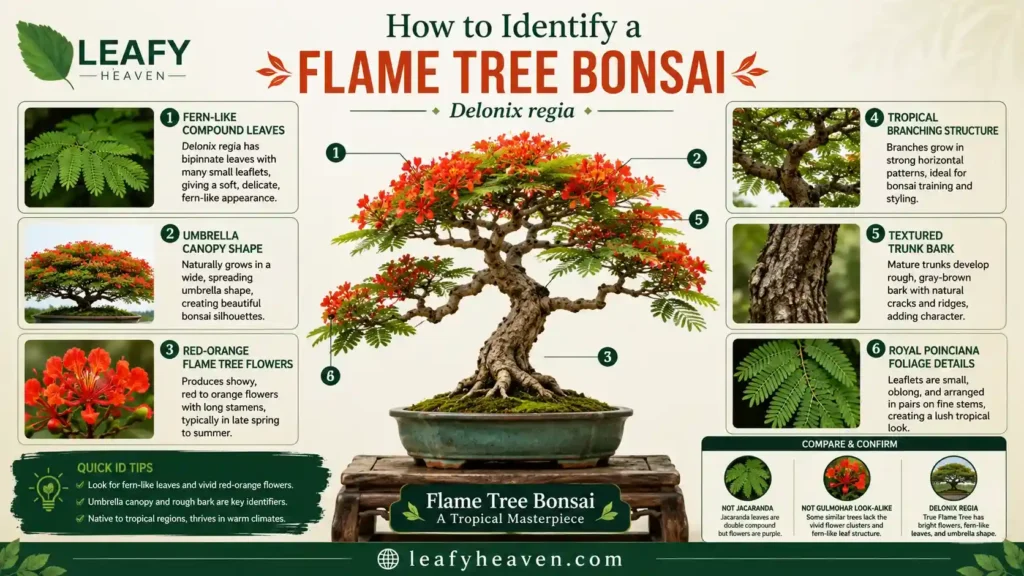
Delonix regia bonsai produces soft fern-like compound leaves that give the tree its elegant tropical appearance.
The leaves are bipinnate, meaning each leaf contains many small leaflets arranged in feather-like patterns. This fine texture creates a light and airy canopy that looks highly refined in bonsai form.
Key Leaf Characteristics
- Fern-like compound leaves
- Bright to deep green foliage
- Soft tropical texture
- Dense canopy development
- Fine miniature appearance for bonsai styling
Poinciana leaves may partially close during evening hours or in low light conditions, which is a normal response for this species.
In cooler seasons or under stress, the flame tree bonsai can also experience seasonal leaf drop. This behavior is more common during temperature changes, reduced sunlight, winter dormancy periods, or transplant shock.
Flame Tree Flowers & Blooming Habit
Flame tree bonsai produces vibrant red-orange flowers during warm growing seasons, although flowering is less common on younger indoor bonsai trees.
The flowers of Delonix regia are one of its most prized ornamental features. Mature trees develop clusters of fiery scarlet-red blossoms that cover the canopy during blooming season.
Flower Characteristics
- Bright red-orange petals
- Large tropical flower clusters
- Seasonal blooming habit
- Strong ornamental display
Royal poinciana bloom timing usually occurs during late spring through summer in warm climates. In tropical regions, flowering may continue longer depending on temperature and humidity conditions.
Bonsai flowering is often harder indoors because the tree needs:
- Intense sunlight
- Warm outdoor temperatures
- Mature root and branch development
- Seasonal environmental triggers
Outdoor-grown flame tree bonsai generally flower more reliably than indoor specimens.
Trunk, Bark & Canopy Shape
Delonix regia bonsai develops a spreading umbrella canopy with elegant branching and a thicker tropical trunk as it matures.
One of the defining features of the flame bonsai tree is its naturally wide horizontal branching structure. Bonsai growers often train the tree to emphasize its signature umbrella-like silhouette.
Structural Characteristics
- Wide umbrella canopy
- Graceful tropical branching
- Smooth young bark
- Thickening trunk with age
- Strong horizontal branch spread
As the tree matures, the trunk gradually becomes thicker and more textured, creating the appearance of an aged tropical landscape tree in miniature form.
Growth Rate & Lifespan
Delonix regia is a fast-growing tropical bonsai species capable of living for many years with proper maintenance.
Compared to many traditional bonsai trees, the royal poinciana bonsai grows aggressively during warm weather. Fast branch extension and vigorous root development allow growers to shape the tree relatively quickly.
Growth Characteristics
| Feature | Description |
| Growth Speed | Fast |
| Development Rate | Vigorous in warm climates |
| Training Response | Good with pruning |
| Lifespan | Long-term with proper care |
With consistent pruning, repotting, and seasonal care, a healthy flame tree bonsai can remain attractive for decades.
USDA Zones & Climate Requirements
Delonix regia bonsai thrives in warm tropical climates with high humidity and protection from frost.
According to the USDA Plant Hardiness Zone Map, this species performs best in Zones 10–12 where temperatures remain warm for most of the year. Because it is a tropical tree, cold weather can quickly damage foliage, roots, and branches.
Climate Requirements
- Warm climate preference
- High tropical humidity
- Full sunlight exposure
- Protection from frost
- Stable warm temperatures
Fire tree Australia growing conditions are especially favorable in warmer coastal and subtropical regions where winters stay mild. In colder climates, growers often move the bonsai indoors during winter to prevent frost damage.
Even short exposure to freezing temperatures can stress or kill young Delonix regia bonsai trees, so winter protection is essential outside tropical regions.
How to Grow Delonix Regia Bonsai From Seed
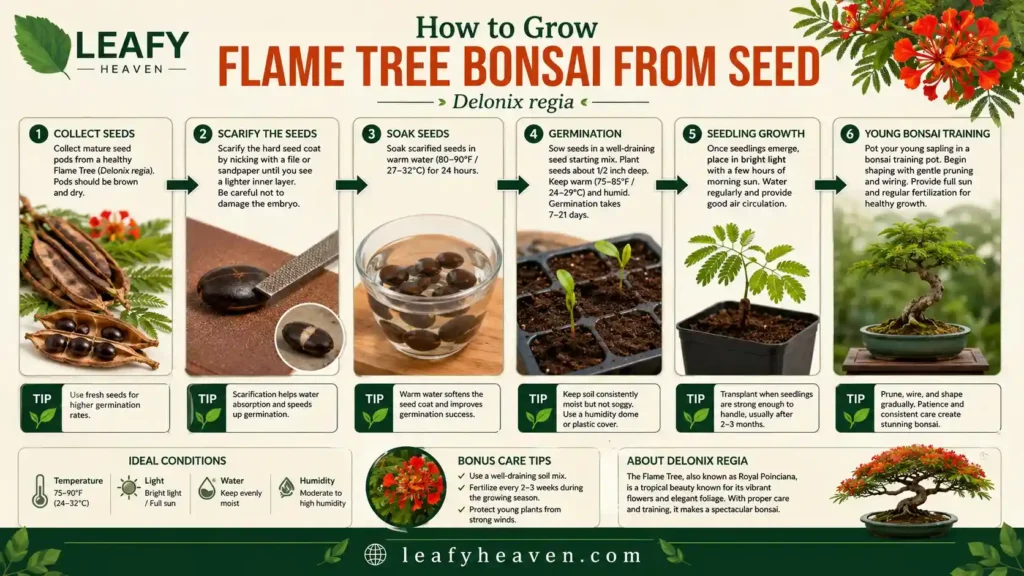
Flame tree bonsai can be grown successfully from seed using scarification, warm temperatures, and humid germination conditions that encourage faster sprouting and healthy tropical growth.
Growing a Delonix regia bonsai from seed is one of the most rewarding ways to develop a tropical bonsai from an early stage. Young seedlings adapt well to shaping and allow growers to build trunk movement, canopy structure, and root development gradually over time.
Delonix Regia Seeds & Seed Pods
Delonix regia produces hard-coated tropical seeds inside long woody seed pods commonly known as royal poinciana seed pods.
The seed pods are dark brown, flat, and elongated. Mature pods can grow very large and contain multiple hard seeds inside.
Flame Tree Seed Characteristics
- Hard oval-shaped seeds
- Brown to dark reddish color
- Smooth glossy surface
- Extremely durable seed coat
- Produced inside long woody pods
Poinciana seeds identification is relatively easy because the seeds are thicker and harder than many common bonsai species. The hard outer shell naturally protects the seed until proper moisture and warmth trigger germination.
Flame tree seeds usually require scarification before planting because untreated seeds may take a very long time to sprout naturally.
How to Scarify Flame Tree Seeds
Scarifying Delonix regia seeds helps water penetrate the hard seed coat and dramatically improves germination speed.
Step-by-Step Flame Tree Seed Scarification
- Nick the seed coat carefully using a nail clipper, knife, or sandpaper.
- Avoid damaging the inner seed embryo.
- Place the seeds in warm water.
- Soak the seeds for 24 hours.
- Use the warm water method to soften the outer shell before planting.
After soaking, healthy seeds often swell slightly, which indicates that moisture has entered the seed coat successfully.
How to Plant Royal Poinciana Seeds
Royal poinciana seeds germinate best in warm, moist, fast-draining soil with high humidity and consistent temperatures.
Best Growing Conditions for Germination
| Requirement | Recommendation |
| Soil Mix | Fast-draining bonsai mix with organic matter |
| Seed Depth | About 0.5–1 inch |
| Germination Temperature | 75–90°F (24–32°C) |
| Humidity | Moderate to high |
A lightweight soil mix helps prevent fungal problems and root rot during early development. Many growers use a blend of bonsai soil, coarse sand, perlite, and organic compost.
Place the container in a warm bright location with indirect sunlight until sprouting begins. Consistent warmth is one of the most important factors for successful germination.
Delonix Regia Seed Germination Timeline
Delonix regia seeds usually sprout within a few weeks under warm conditions, while bonsai training begins after early trunk development.
| Stage | Estimated Time |
| Soaking | 24 hours |
| Sprouting | 1–3 weeks |
| Seedling stage | 1–2 months |
| Bonsai training | 1–2 years |
Germination speed may vary depending on temperature, seed quality, humidity, and scarification success.
Delonix Regia Seedling Care
Young flame tree seedlings need warmth, bright light, controlled watering, and gentle early training for healthy bonsai development.
Essential Seedling Care Tips
Sunlight
Provide bright sunlight or filtered outdoor light once seedlings establish their first true leaves. Strong light encourages compact growth and healthier stems.
Watering
Keep the soil lightly moist but never waterlogged. Overwatering is one of the most common causes of seedling loss.
Early Pruning
Light pruning can begin after the seedling becomes stable and produces multiple leaf sets. Early shaping encourages branching and future bonsai structure.
Sapling Protection
Protect young saplings from:
- Frost
- Heavy rain
- Strong winds
- Sudden cold temperatures
Young Delonix regia seedlings are highly sensitive during their first growth stages.
Common Germination Problems
Most Delonix regia germination problems are caused by poor moisture control, low temperatures, or improper seed preparation.
Seeds Not Sprouting
Possible causes include:
- No scarification
- Old or non-viable seeds
- Cold temperatures
- Dry soil conditions
Mold Problems
Mold usually develops when humidity is excessive and airflow is poor. Use clean containers and avoid constantly wet soil.
Seed Rotting
Rotting commonly occurs from overwatering or poorly draining soil. Always use a fast-draining germination mix.
Weak Seedlings
Weak growth is often linked to:
- Insufficient sunlight
- Nutrient deficiency
- Overcrowding
- Excess moisture
Healthy flame tree seedlings grow rapidly once warmth, sunlight, and proper watering conditions are balanced correctly.
Best Soil, Light & Water Requirements
Delonix regia bonsai trees need fast-draining soil, full sun, warm temperatures, and controlled watering to maintain healthy tropical growth and strong canopy development.
Because the flame tree bonsai is a vigorous tropical species, proper environmental conditions directly affect foliage density, root health, flowering potential, and overall bonsai structure. Consistent sunlight and moisture balance are especially important for long-term success.
Best Soil Mix for Flame Tree Bonsai
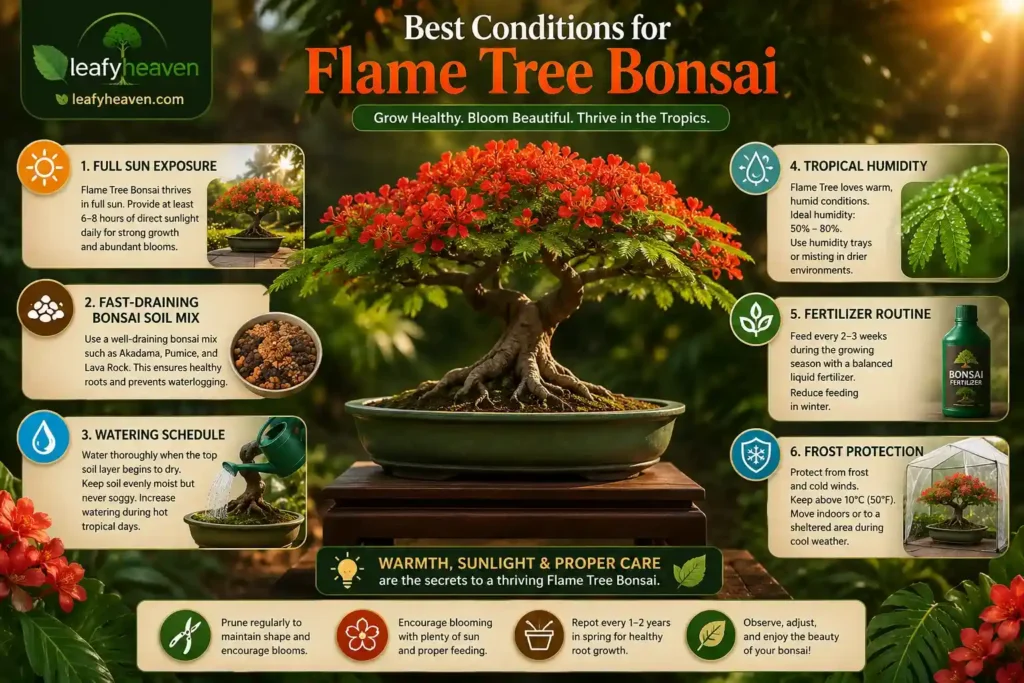
The best soil mix for a flame tree bonsai is a fast-draining bonsai substrate that provides airflow, moisture balance, and healthy root development.
Delonix regia roots dislike compacted wet soil. A loose granular bonsai mix prevents root rot while still holding enough moisture for tropical growth.
Recommended Soil Components
- Akadama for moisture retention
- Pumice for root aeration
- Lava rock for drainage
- Organic compost blend for nutrients
Example Bonsai Soil Mix
| Soil Component | Purpose |
| Akadama | Water retention |
| Pumice | Root aeration |
| Lava rock | Drainage support |
| Organic compost | Nutrient supply |
A well-draining soil mix is especially important in humid climates where excess moisture can quickly lead to fungal problems.
Sunlight Requirements
Delonix regia bonsai trees require full sun for strong growth, compact foliage, and better flowering performance.
This tropical bonsai thrives in bright outdoor conditions where it receives several hours of direct sunlight daily. Insufficient light often causes weak growth, elongated branches, and reduced flowering potential.
Ideal Light Conditions
- Full sun exposure
- Bright warm locations
- Outdoor sunlight preferred
- Good airflow around foliage
Outdoor growing provides several advantages:
- Faster growth
- Stronger trunk thickening
- Better canopy density
- Improved flowering chances
Indoor lighting limitations can affect long-term health because standard indoor light is usually weaker than tropical outdoor sunlight. Indoor growers often need supplemental grow lights during colder months.
Watering Requirements
Flame tree bonsai prefers moist but not soggy soil with more frequent watering during active summer growth.
The watering schedule depends on climate, temperature, humidity, pot size, and sunlight exposure. Tropical bonsai soil should never remain constantly soaked.
Watering Guidelines
During Summer
- Water more frequently
- Monitor soil daily
- Allow slight surface drying between watering
During Winter
- Reduce watering frequency
- Avoid cold wet soil
- Prevent prolonged moisture buildup
Overwatering is one of the most common causes of root problems in royal poinciana bonsai trees. Proper drainage is essential year-round.
Temperature & Humidity Needs
Delonix regia bonsai thrives in warm tropical humidity and requires protection from cold temperatures and frost.
This species grows best in consistently warm climates where temperatures rarely drop below freezing. Tropical humidity helps maintain healthy foliage and active growth.
Climate Preferences
| Requirement | Ideal Condition |
| Temperature | Warm tropical conditions |
| Humidity | Moderate to high |
| Frost Tolerance | Very low |
| Winter Protection | Necessary in cold regions |
Royal poinciana in winter may slow growth or temporarily lose foliage when exposed to cooler temperatures. In colder climates, bonsai growers often move the tree indoors or into protected greenhouse conditions before frost arrives.
Even short frost exposure can damage leaves, branches, and roots.
Indoor vs Outdoor Flame Tree Bonsai
Outdoor growing conditions are generally better for flame tree bonsai because they provide stronger sunlight, faster growth, and improved flowering potential.
| Indoor | Outdoor |
| Less flowering | Better flowering |
| Slower growth | Faster growth |
| Needs grow lights | Natural sunlight |
Indoor cultivation can still work in colder climates, especially during winter protection periods. However, long-term outdoor growing in warm tropical or subtropical regions usually produces healthier and more vigorous Delonix regia bonsai trees.
Delonix Regia Bonsai Care Guide
Proper pruning, feeding, repotting, and seasonal maintenance are essential for healthy flame tree bonsai development and long-term tropical bonsai structure.
Delonix regia grows quickly under warm conditions, so regular care is necessary to maintain compact branching, balanced root growth, and an attractive umbrella canopy. Consistent maintenance also improves foliage density and future flowering potential.
Pruning Techniques for Flame Tree Bonsai
Flame tree bonsai pruning focuses on controlling rapid growth, improving branch structure, and maintaining the tree’s tropical canopy shape.
Because Delonix regia is a vigorous species, pruning is required regularly during the active growing season.
Structural Pruning
Structural pruning shapes the main framework of the bonsai.
This type of pruning helps:
- Develop trunk movement
- Improve branch placement
- Remove crossing branches
- Build long-term bonsai structure
Heavy structural pruning is usually best performed during strong active growth periods when recovery is faster.
Maintenance Trimming
Maintenance trimming keeps the bonsai compact and balanced.
Regular trimming helps:
- Control excessive branch extension
- Encourage finer branching
- Maintain leaf density
- Improve canopy appearance
Fast-growing shoots should be trimmed frequently during warm seasons.
Canopy Shaping
The flame bonsai tree is naturally suited to wide tropical canopy styling.
Growers often shape the canopy into:
- Broad umbrella forms
- Horizontal tropical silhouettes
- Open layered branch structures
Proper canopy shaping improves both airflow and visual balance.
Wiring & Bonsai Styling
Wiring young branches helps shape Delonix regia bonsai into elegant tropical bonsai forms while preserving smooth bark and natural branch flow.
Young branches remain flexible and easier to train than older mature wood.
Wiring Tips
- Wire young branches early
- Use gentle bending techniques
- Monitor wire marks regularly
- Remove wire before scarring develops
Avoiding bark damage is important because the bark of younger flame tree bonsai can mark easily under tight wire pressure.
Popular Bonsai Styles
The species works especially well in:
- Informal upright styles
- Tropical umbrella canopy styles
- Wide-spreading branch designs
Its natural horizontal branching habit makes it ideal for dramatic tropical bonsai compositions.
Fertilizer for Royal Poinciana Bonsai
Royal poinciana bonsai benefits from balanced feeding during active growth and higher phosphorus fertilizer during flowering preparation.
Fast growth and dense foliage production require regular nutrient support throughout the growing season.
Recommended Fertilizers
| Fertilizer Type | Purpose |
| Balanced fertilizer | General growth and foliage |
| High phosphorus bloom fertilizer | Flower development |
Fertilizer Schedule
During Active Growth
- Feed every 2–4 weeks
- Use balanced bonsai fertilizer
Before Flowering Season
- Switch to higher phosphorus fertilizer
- Support bloom production
During Winter
- Reduce feeding frequency
- Avoid excessive fertilization during slow growth periods
Overfertilizing can cause weak elongated growth, so moderate feeding is usually best.
Repotting Guide
Delonix regia bonsai should be repotted during warm active growth periods to support healthy roots and controlled bonsai development.
Because this species grows quickly, roots can fill containers rapidly.
Best Repotting Season
The ideal repotting period is:
- Late spring
- Early summer
- Warm tropical growing season
Avoid repotting during cold weather or dormancy stress periods.
Root Pruning
Root pruning helps:
- Control tree size
- Improve root branching
- Maintain bonsai proportions
- Encourage healthier feeder roots
Moderate root pruning is usually safer than aggressive root reduction for younger trees.
Pot Size Selection
Choose bonsai pots that provide:
- Strong drainage
- Enough root space
- Stability for canopy spread
- Balanced visual proportions
Shallow bonsai containers also help create a mature tropical appearance.
Seasonal Care Routine
Flame tree bonsai care changes throughout the year depending on temperature, sunlight intensity, and tropical growth activity.
Summer Care
Summer is the primary active growth season.
During warm months:
- Water more frequently
- Increase fertilizer use
- Monitor rapid branch growth
- Provide full sunlight exposure
This is also the best time for pruning and styling work.
Winter Dormancy Behavior
Delonix regia may partially slow growth during cooler weather.
Common winter behavior includes:
- Reduced growth speed
- Partial leaf drop
- Lower water needs
- Temporary dormancy response
Tropical Climate Adjustments
In tropical climates, the bonsai may continue growing for much of the year with only short slow-growth periods.
Growers in colder regions should:
- Protect trees from frost
- Reduce winter watering
- Move bonsai indoors if necessary
- Maintain warmth and airflow
Stable tropical conditions usually produce the healthiest and fastest-growing royal poinciana bonsai trees.
Common Delonix Regia Bonsai Problems
Most flame tree bonsai problems are caused by improper watering, insufficient sunlight, poor drainage, or exposure to cold temperatures that stress this tropical species.
Delonix regia bonsai trees grow vigorously in warm conditions, but they can decline quickly when environmental conditions become unstable. Early identification of problems helps prevent long-term damage to roots, foliage, and branch structure.
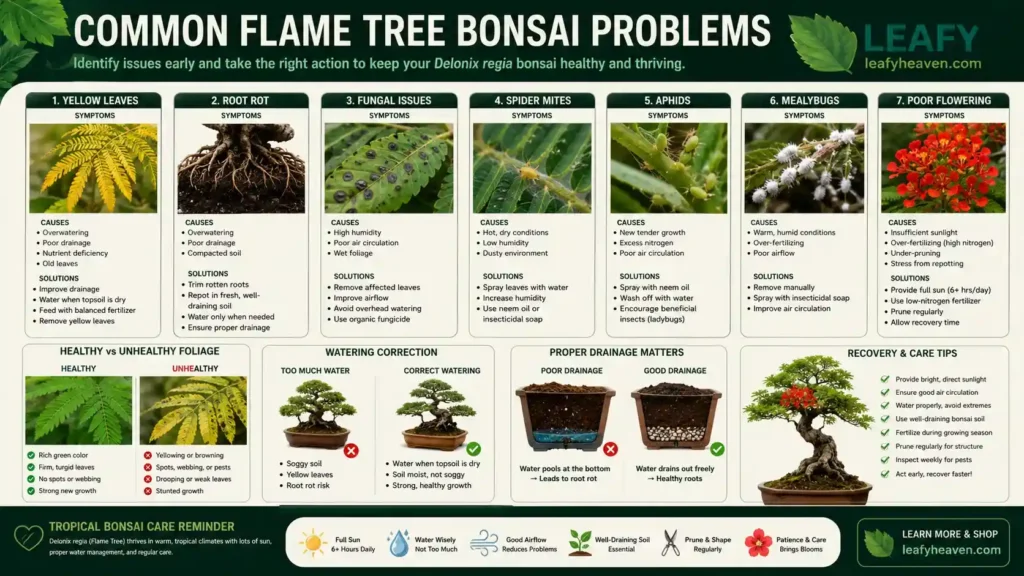
Yellow Leaves on Flame Tree Bonsai
Yellow leaves on a flame tree bonsai are usually linked to watering problems, nutrient imbalance, or cold stress.
Leaf yellowing is one of the most common warning signs in tropical bonsai care.
Overwatering
Excess moisture around the roots reduces oxygen availability and weakens the root system.
Common symptoms include:
- Yellowing foliage
- Soft stems
- Drooping leaves
- Slow growth
Poor drainage often worsens overwatering problems.
Nutrient Deficiency
Lack of nutrients can also cause pale or yellow foliage.
Common deficiencies include:
- Nitrogen deficiency
- Iron deficiency
- General nutrient depletion in old soil
Regular balanced fertilization usually restores healthy green growth.
Cold Stress
Delonix regia is highly sensitive to cold weather.
Cold stress may cause:
- Sudden yellow leaves
- Leaf drop
- Wilting
- Slowed growth
Even mild frost exposure can damage tropical foliage quickly.
Root Rot & Fungal Problems
Root rot and fungal infections usually develop when flame tree bonsai roots remain wet in compacted poorly draining soil.
Tropical bonsai roots require both moisture and airflow. Saturated soil conditions create an environment where fungal pathogens spread rapidly.
Common Causes
- Poor drainage
- Soil compaction
- Constantly wet soil
- Low airflow around roots
Signs of Root Problems
- Foul soil odor
- Blackened roots
- Weak foliage
- Persistent wilting despite watering
Prevention Tips
- Use fast-draining bonsai soil
- Avoid oversized pots
- Water only when needed
- Improve airflow around the bonsai
- Remove standing water from trays
Healthy root systems are essential for maintaining vigorous Delonix regia growth.
Pest Problems
Flame tree bonsai may occasionally develop pest infestations, especially in warm indoor conditions with low airflow.
Tropical foliage can attract sap-feeding insects that weaken leaves and reduce growth strength.
Spider Mites
Spider mites are common in dry indoor conditions.
Symptoms include:
- Tiny webbing
- Pale leaf spotting
- Dry foliage
Aphids
Aphids feed on soft new growth and young shoots.
They can cause:
- Curled leaves
- Sticky residue
- Distorted growth
Scale Insects
Scale insects attach to stems and branches while feeding on plant sap.
Common signs include:
- Brown shell-like bumps
- Weak growth
- Sticky honeydew buildup
Mealybugs
Mealybugs appear as white cotton-like clusters around leaves and stems.
They often hide in:
- Leaf joints
- Branch intersections
- Root zones
Routine inspection and strong airflow help reduce pest outbreaks.
Why Is My Royal Poinciana Not Flowering?
Royal poinciana bonsai trees may fail to flower because of immaturity, insufficient sunlight, or indoor growing conditions.
Flowering in bonsai form is naturally more difficult than in full-sized landscape trees.
Age Factor
Young trees often need several years of maturity before flowering begins.
Immature bonsai usually focus energy on:
- Root development
- Trunk thickening
- Branch growth
Lack of Sunlight
Flower production depends heavily on strong direct sunlight.
Insufficient light commonly results in:
- Weak growth
- Sparse foliage
- No blooms
Outdoor sunlight produces the best flowering response.
Indoor Growing Limitations
Indoor environments often reduce blooming because of:
- Lower light intensity
- Reduced heat exposure
- Limited seasonal changes
- Lower humidity
Outdoor tropical conditions usually provide much better flowering potential.
Bonsai Recovery Tips
Most stressed flame tree bonsai trees recover well when sunlight, watering, airflow, and nutrition are corrected quickly.
Quick Recovery Checklist
- Increase sunlight exposure
- Adjust watering routine
- Improve airflow around foliage
- Use balanced fertilizer
Additional recovery steps may include:
- Repotting into better-draining soil
- Removing damaged roots
- Protecting from cold temperatures
- Monitoring for pests regularly
Healthy tropical growing conditions are the key to restoring vigorous Delonix regia bonsai growth and foliage quality.
Best Bonsai Styles for Delonix Regia
The umbrella canopy and tropical branching structure make Delonix regia suitable for several dramatic bonsai styles that highlight its spreading growth habit and delicate fern-like foliage.
Because the flame tree naturally develops wide horizontal branches and soft tropical foliage, it adapts especially well to bonsai designs that emphasize canopy spread, open branch structure, and tropical landscape aesthetics.
Informal Upright Style
The informal upright style is one of the most natural and popular bonsai forms for Delonix regia.
This style features a gently curved trunk with balanced branching that mimics mature tropical trees found in nature.
Key Characteristics
- Slight trunk movement
- Natural branch taper
- Open canopy structure
- Balanced tropical silhouette
The fern-like leaves soften the appearance of the bonsai and help create a mature miniature tree effect.
This style works especially well for younger flame tree bonsai because flexible trunks are easier to shape during early development.
Wide Canopy Tropical Style
The wide canopy tropical style highlights the signature umbrella-shaped growth habit of the royal poinciana bonsai.
This design focuses on horizontal branch expansion and broad canopy development rather than tall vertical growth.
Tropical Canopy Features
- Wide umbrella branching
- Flat tropical canopy appearance
- Open layered foliage pads
- Strong horizontal branch lines
Many mature Delonix regia bonsai are trained specifically in this style because it closely resembles full-sized tropical flame trees growing in warm climates.
The style also creates impressive shade-tree aesthetics in miniature form.
Forest Bonsai Style
Delonix regia can also be grown in forest bonsai arrangements that recreate tropical landscape scenes.
Multiple flame tree bonsai are planted together to create the appearance of a miniature tropical grove.
Forest Style Benefits
- Natural tropical scenery
- Layered canopy effect
- Depth and visual movement
- Realistic landscape composition
Forest bonsai plantings often combine trees of different heights and trunk thicknesses to create a more realistic mature forest appearance.
The delicate foliage texture of Delonix regia works particularly well in group plantings.
Flame Tree Bonsai Time-Lapse Development
Flame tree bonsai development is relatively fast compared to many bonsai species, with visible structural changes occurring over several years of training.
Because Delonix regia is a vigorous tropical grower, trunk thickening and canopy formation progress faster under warm outdoor conditions.
Typical Growth Transformation Stages
| Development Stage | Bonsai Progress |
| Year 1 | Seedling growth and trunk establishment |
| Year 2 | Early branch selection and wiring |
| Year 3–4 | Canopy shaping and trunk thickening |
| Year 5+ | Mature tropical bonsai refinement |
Training Expectations Over Time
Early Years
During the first years, growers focus mainly on:
- Root development
- Trunk movement
- Primary branch structure
- Early canopy direction
Intermediate Development
As the tree matures, training shifts toward:
- Ramification improvement
- Canopy widening
- Branch refinement
- Tropical silhouette balance
Mature Bonsai Stage
Older flame tree bonsai develop:
- Thick trunks
- Elegant branch spread
- Dense foliage pads
- Mature umbrella canopy appearance
Flowering may also become more likely as the bonsai ages and receives stronger outdoor growing conditions.
Delonix Regia Bonsai vs Similar Bonsai Trees
Flame tree bonsai differs from other tropical bonsai trees through its fiery red-orange flowers, umbrella canopy, and delicate fern-like foliage that create a dramatic tropical appearance.
Although several tropical bonsai species share similar foliage textures or common names, Delonix regia remains unique because of its rapid growth, seasonal flowering display, and wide-spreading canopy structure.
Delonix Regia vs Australian Flame Tree
Delonix regia and the Australian flame tree are different species even though both are commonly called “flame trees.”
The confusion usually happens because both trees produce highly colorful flowers and are widely grown in warm climates.
Species Comparison
| Feature | Delonix regia | Brachychiton acerifolius |
| Common Name | Royal Poinciana / Flame Tree | Australian Flame Tree |
| Native Region | Madagascar | Australia |
| Flower Color | Red-orange | Bright red |
| Leaf Type | Fern-like compound leaves | Large lobed leaves |
| Canopy Shape | Wide umbrella canopy | Upright rounded canopy |
| Bonsai Use | Popular tropical bonsai | Less common bonsai species |
Delonix regia is generally more popular for bonsai because its smaller leaf structure and branching habit adapt better to miniature styling.
Royal Poinciana vs Gulmohar Tree
Royal poinciana and gulmohar tree are different common names for the same species: Delonix regia.
There is no botanical difference between them. The name varies depending on the region and local language.
Common Regional Naming
| Name | Common Usage Region |
| Royal Poinciana | United States & tropical landscaping |
| Gulmohar Tree | India & South Asia |
| Flame Tree | General ornamental use |
| Flamboyant Tree | Caribbean & tropical regions |
All of these names refer to the same tropical flowering species known for its scarlet-red blooms and fern-like foliage.
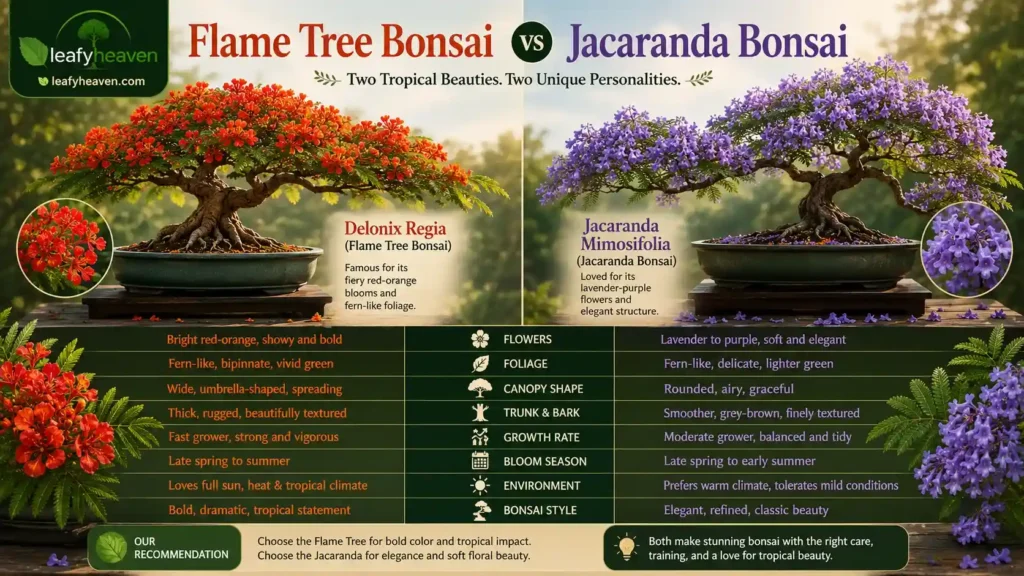
Flame Tree Bonsai vs Jacaranda Bonsai
Flame tree bonsai and jacaranda bonsai share tropical fern-like foliage, but they differ significantly in flower color, growth rate, and canopy character.
| Feature | Flame Tree Bonsai | Jacaranda Bonsai |
| Flowers | Red-orange | Purple-blue |
| Leaves | Fern-like | Fern-like |
| Growth | Fast | Moderate |
Delonix regia typically develops a broader umbrella canopy and grows more aggressively in warm climates. Jacaranda bonsai usually produce softer purple-blue flowers and somewhat slower branch development.
Both species are popular tropical bonsai choices because of their elegant foliage texture.
Gardeners who enjoy dramatic seasonal displays may also find inspiration among other stunning ornamental flowering trees that thrive in warm Australian climates.
Delonix Regia vs Delonix Decaryi
Delonix regia and Delonix decaryi are closely related tropical species, but they differ in size, flowers, and bonsai suitability.
Size Differences
Delonix regia generally grows:
- Larger overall
- Faster in tropical climates
- Wider canopy spread
Delonix decaryi often remains:
- More compact
- Slower growing
- Smaller in mature size
Flower Differences
The flowering appearance also differs noticeably.
Delonix regia
- Bright red-orange flowers
- Dense flowering canopy
- Strong flame-like display
Delonix decaryi
- White to pale-colored flowers
- Softer ornamental effect
- Less dramatic flowering appearance
Bonsai Suitability
Both species can technically be grown as bonsai, but Delonix regia is usually preferred because of:
- Faster development
- More dramatic flowers
- Strong tropical canopy appearance
- Better ornamental impact
Delonix decaryi may appeal to collectors looking for rarer or more unusual tropical bonsai species with smaller growth habits.
Benefits of Growing a Flame Tree Bonsai
Delonix regia bonsai trees offer ornamental beauty, tropical aesthetics, fast growth, and excellent long-term bonsai training value for both hobbyists and experienced growers.
The flame tree bonsai stands out among tropical bonsai species because of its dramatic canopy structure, delicate foliage, and seasonal flowering potential. Its rapid development also allows growers to shape mature-looking bonsai faster than many slower-growing tree species.
Understanding the deeper significance of a bonsai tree can also add meaningful context to the practice of shaping and maintaining these miniature living art forms.
Tropical Ornamental Appeal
The tropical appearance of Delonix regia makes it one of the most visually striking ornamental bonsai trees.
Its fern-like leaves and fiery seasonal flowers create a lush tropical landscape effect even in small bonsai containers.
Ornamental Features
- Bright tropical foliage
- Elegant umbrella canopy
- Red-orange flowering potential
- Exotic tropical appearance
- Fine-textured branching
The royal poinciana bonsai is especially attractive in patios, tropical gardens, balconies, and warm outdoor bonsai displays.
Shade Canopy Miniature Effect
Flame tree bonsai naturally develops a miniature shade-tree appearance with wide horizontal branching and layered canopy growth.
Unlike many upright bonsai species, Delonix regia creates a broad canopy structure that resembles mature tropical landscape trees.
Visual Canopy Benefits
- Wide umbrella silhouette
- Natural tropical proportions
- Realistic mature-tree appearance
- Layered branch spread
This miniature shade canopy effect is one of the main reasons the species is highly valued in tropical bonsai styling.
Collector Value for Bonsai Enthusiasts
Delonix regia bonsai has strong collector appeal because of its unique foliage texture, rapid growth, and flowering potential.
Many bonsai enthusiasts consider the flame bonsai tree a premium tropical species due to its dramatic visual impact and relatively uncommon flowering bonsai characteristics.
Why Collectors Value It
- Tropical flowering potential
- Fast structural development
- Distinctive fern-like foliage
- Impressive mature canopy forms
- Exotic ornamental character
Older well-trained royal poinciana bonsai specimens can become especially valuable because mature tropical bonsai require years of careful shaping and maintenance.
Educational Bonsai Training Species
Delonix regia is an excellent educational bonsai species for learning pruning, wiring, canopy development, and tropical bonsai care techniques.
Its vigorous growth allows growers to observe bonsai responses relatively quickly compared to slower species.
Bonsai Skills Learned
- Structural pruning
- Branch wiring
- Root pruning
- Canopy shaping
- Tropical bonsai maintenance
Because the tree responds actively to training, beginners and intermediate growers can gain practical bonsai experience while developing visually impressive tropical bonsai designs over time.
Is Delonix Regia Bonsai Safe for Pets & Homes?
Delonix regia is generally considered a low-risk bonsai species for homes, but seeds, seed pods, and plant material should still be kept away from pets and children as a precaution.
The flame tree bonsai is commonly grown in gardens, patios, and indoor bonsai collections without major toxicity concerns. However, like many ornamental plants, accidental chewing or ingestion may still cause mild digestive irritation in sensitive animals or young children.
Pet Safety
Delonix regia bonsai is not widely known as a highly toxic species, but pets should still be discouraged from chewing the foliage or seed pods.
Dogs and cats occasionally chew bonsai leaves out of curiosity, especially indoor plants placed at floor level.
Basic Pet Safety Tips
- Keep bonsai out of reach of pets
- Avoid allowing pets to chew leaves
- Remove fallen seed pods promptly
- Monitor pets around indoor bonsai displays
If a pet consumes large amounts of plant material and shows unusual symptoms, professional veterinary advice is recommended.
Seed Pod Caution
Royal poinciana seed pods should be handled carefully because the hard pods and seeds may create choking or digestive hazards.
Delonix regia produces large woody seed pods that contain hard seeds with thick outer coatings.
Seed Pod Precautions
- Keep seed pods away from children
- Avoid leaving loose seeds near pets
- Store collected seeds safely
- Dispose of damaged pods properly
The seeds are extremely hard and not intended for consumption.
Indoor Placement Precautions
Indoor flame tree bonsai placement should provide bright light, airflow, and safe positioning away from heavy traffic areas.
Because Delonix regia bonsai can develop spreading branches and delicate foliage, stable placement helps prevent accidental damage.
Indoor Placement Recommendations
| Placement Factor | Recommendation |
| Lighting | Bright sunny location |
| Airflow | Good ventilation |
| Safety | Away from pets and children |
| Stability | Secure bonsai stand or shelf |
Avoid placing the bonsai near cold drafts, heating vents, or low-light corners because unstable indoor conditions can weaken tropical growth over time.
Quick Delonix Regia Bonsai Care Summary
Delonix regia bonsai trees grow best in warm tropical conditions with full sunlight, fast-draining soil, moderate watering, and regular bonsai maintenance.
| Requirement | Recommendation |
| Sunlight | Full sun |
| Watering | Moderate |
| Soil | Fast draining |
| Climate | Tropical |
| Fertilizer | Balanced bonsai feed |
| Flowering | Warm mature conditions |
| Difficulty | Moderate |
Conclusion
The delonix regia bonsai tree is one of the most visually striking tropical bonsai species, combining dramatic foliage, umbrella branching, rapid growth, and fiery seasonal flowers in a miniature tropical form.
Its fern-like leaves, spreading canopy, and ornamental flowering potential make the flame tree bonsai highly attractive for growers who enjoy tropical bonsai styling. The species develops quickly compared to many traditional bonsai trees, allowing enthusiasts to shape impressive canopy structures within a relatively short period.
For beginners, Delonix regia can be a rewarding bonsai choice in warm climates where sunlight, heat, and humidity support healthy growth. While it does require regular pruning, proper watering, and frost protection, its vigorous growth habit makes training easier to observe and learn over time.
The royal poinciana bonsai performs best outdoors in tropical and subtropical regions such as Australia, Florida, Southeast Asia, and other frost-free climates. Outdoor cultivation usually produces stronger trunks, denser foliage, and better flowering performance than long-term indoor growing.
Growing a flame tree bonsai from seed is also highly rewarding because it allows complete control over trunk movement, canopy formation, and bonsai structure from an early stage. With patience and seasonal care, seedlings gradually transform into mature tropical bonsai specimens with impressive umbrella silhouettes.
Over time, the Delonix regia bonsai becomes more valuable both visually and horticulturally. Its exotic tropical appearance, dramatic branching style, and seasonal flame-colored flowers make it one of the most distinctive tropical bonsai species for collectors and ornamental bonsai enthusiasts.
FAQs
How long does it take to grow a delonix regia bonsai tree from seed?
A delonix regia bonsai tree usually takes 1–2 years for early bonsai training and several more years to develop a mature canopy and trunk structure. Because the species grows relatively fast in warm climates, seedlings establish quicker than many traditional bonsai trees. Strong sunlight, regular pruning, and tropical growing conditions help accelerate development.
Can a royal poinciana bonsai grow indoors?
Yes, a royal poinciana bonsai can grow indoors temporarily, but it performs much better outdoors in warm sunny conditions. Indoor growing often limits flowering and slows growth because sunlight intensity is lower than natural outdoor conditions. If grown indoors, the bonsai should receive bright light or supplemental grow lights along with good airflow and warmth.
Why are the leaves on my flame tree bonsai turning yellow?
Yellow leaves on a flame tree bonsai are commonly caused by overwatering, nutrient deficiency, cold stress, or insufficient sunlight. Poor drainage and wet soil are among the most common problems. Adjusting watering habits, improving sunlight exposure, and using balanced fertilizer usually help restore healthy foliage.
Does a flame tree bonsai produce flowers?
Yes, mature flame tree bonsai can produce red-orange flowers when grown under strong warm outdoor conditions. Flowering is more likely on older healthy bonsai trees that receive full sun, proper fertilization, and tropical temperatures. Indoor bonsai specimens usually flower less frequently.
How often should I water a delonix regia bonsai?
Delonix regia bonsai should be watered whenever the upper soil layer begins to dry slightly but before the soil becomes completely dry. During summer, watering may be needed more frequently because of rapid tropical growth. In winter, watering should be reduced to prevent overly wet soil conditions.
Is delonix regia the same as royal poinciana?
Yes, Delonix regia is the scientific name for the tree commonly known as royal poinciana, flame tree, flamboyant tree, and gulmohar tree. These names all refer to the same tropical flowering species famous for its fiery blooms and umbrella-shaped canopy.
What is the best fertilizer for royal poinciana bonsai?
A balanced bonsai fertilizer is best for regular growth, while higher phosphorus fertilizer can support flowering development. During active growing seasons, feeding every few weeks helps maintain healthy foliage and vigorous branch growth. Avoid excessive fertilizer during winter slow-growth periods.
Can I grow a flame tree bonsai in Australia?
Yes, flame tree bonsai grows very well in many warm Australian climates, especially in subtropical and tropical regions. Australian conditions with strong sunlight and warm temperatures are highly suitable for Delonix regia bonsai growth. Frost protection may still be necessary in cooler southern regions during winter.
How do you germinate royal poinciana seeds quickly?
Royal poinciana seeds germinate faster when the hard seed coat is scarified and soaked in warm water for 24 hours before planting. Warm temperatures, humidity, and fast-draining soil also improve sprouting success. Most healthy seeds germinate within 1–3 weeks under ideal conditions.
What is the difference between flamboyant tree bonsai and flame tree bonsai?
There is no botanical difference between flamboyant tree bonsai and flame tree bonsai because both names refer to Delonix regia bonsai. The names vary by region and language, but they describe the same tropical bonsai species with fern-like foliage and bright red-orange flowers.

Written by the LeafyHeaven Editorial Team
LeafyHeaven shares practical gardening tips and simple plant care guides to help you grow, nurture, and enjoy your plants with ease. Our goal is to make gardening feel natural, approachable, and rewarding for everyone.