
Introduction
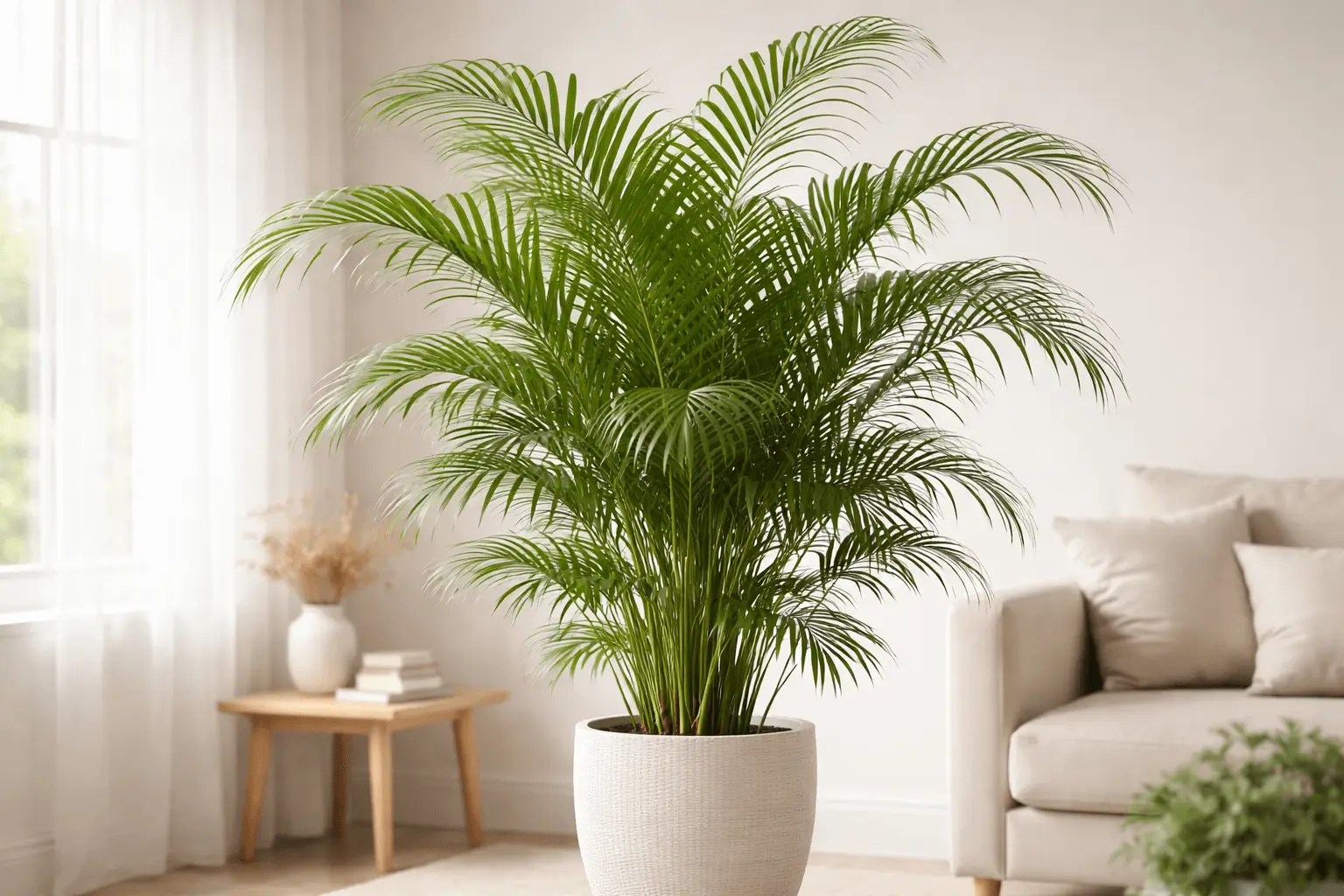
Areca palm is a widely grown ornamental plant valued for its feathery fronds and adaptability to both indoor and outdoor environments. Understanding how to take care of areca palm involves managing light exposure, watering routines, soil quality, and basic maintenance practices. Known botanically as Dypsis lutescens, this palm thrives in bright spaces with controlled moisture and well-draining soil. Because areca palm responds well to consistent care without demanding intensive attention, it has become a preferred choice for homes, offices, patios, and gardens. With proper areca plant care, the plant maintains healthy green foliage, steady growth, and long-term visual appeal in a wide range of growing conditions.
To better understand how different indoor plants respond to light, watering, and soil conditions, you can explore our complete gardening and plant care guide.
What Is an Areca Palm Plant?
Scientific Name & Common Names
The scientific name of areca palm is Dypsis lutescens. It is commonly referred to as areca palm, butterfly palm, golden cane palm, and areca bamboo palm. While these names are often used interchangeably, they all describe the same species. The term butterfly palm highlights the arching shape of its fronds, while golden cane refers to the yellowish stems that mature over time. Care guidelines for butterfly palm care and golden cane remain consistent, as they share identical growth habits and environmental needs.
Areca Palm Indoor vs Outdoor Growth
Areca palm is commonly grown as a houseplant due to its tolerance for indoor conditions and filtered light. When grown indoors, areca palm indoor setups focus on stable temperatures, indirect sunlight, and moderate watering. Outdoors, areca palm outdoors performs best in warm, humid climates where frost is not a concern. In landscape settings, it is often used as a privacy screen or accent plant. While it tolerates some direct sunlight, the question “can areca palm grow in full sun” depends on climate, as prolonged harsh sun can damage foliage.
Areca Palm Light Requirements
Best Light for Indoor Areca Palm
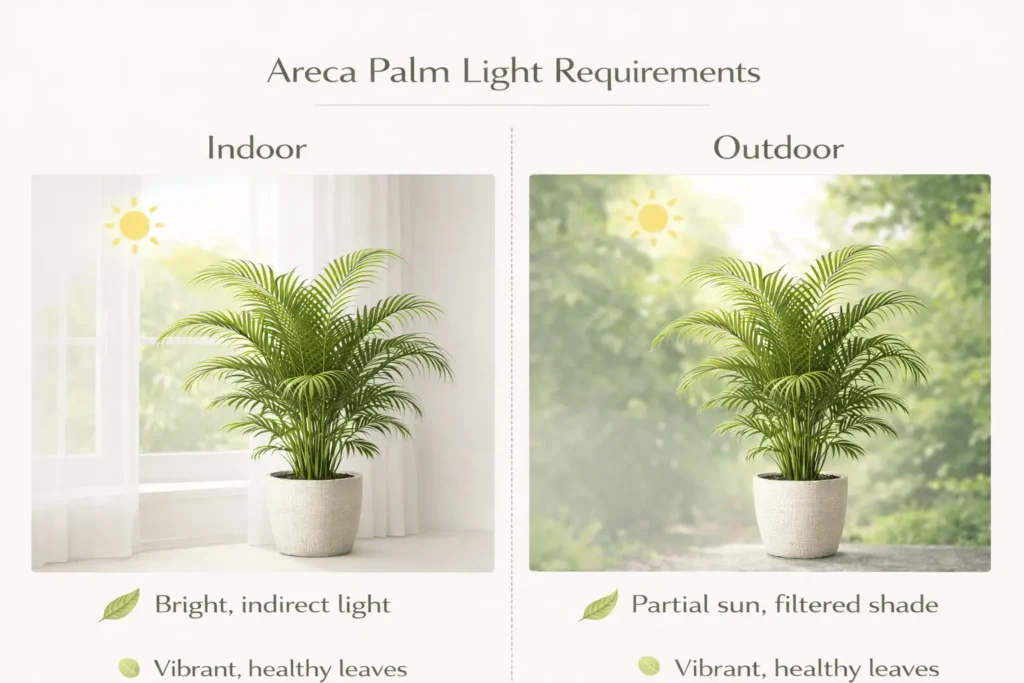
Areca palm light requirements indoors center on bright, indirect light. Direct midday sun through glass can scorch the leaves, while low light slows growth and causes thinning fronds. Ideal placement includes positions near east- or north-facing windows where sunlight is diffused. For homes with limited natural light, areca palm for indoors adapts well when positioned in well-lit rooms with consistent brightness throughout the day.
Similar light sensitivity can also be seen in our guide on sansevieria laurentii care, which explains how indoor plants adapt to different lighting conditions.
Outdoor Sunlight Needs
For outdoor cultivation, areca palm outdoor care requires partial sun or filtered light. Morning sun combined with afternoon shade produces the healthiest growth. While some gardeners ask if can areca palm grow in full sun, extended exposure often leads to leaf burn, fading, or brown patches. Sunburn symptoms include yellowing tips and dry, brittle fronds, indicating excessive light stress.
How Often to Water Areca Palm
Areca Palm Watering Schedule
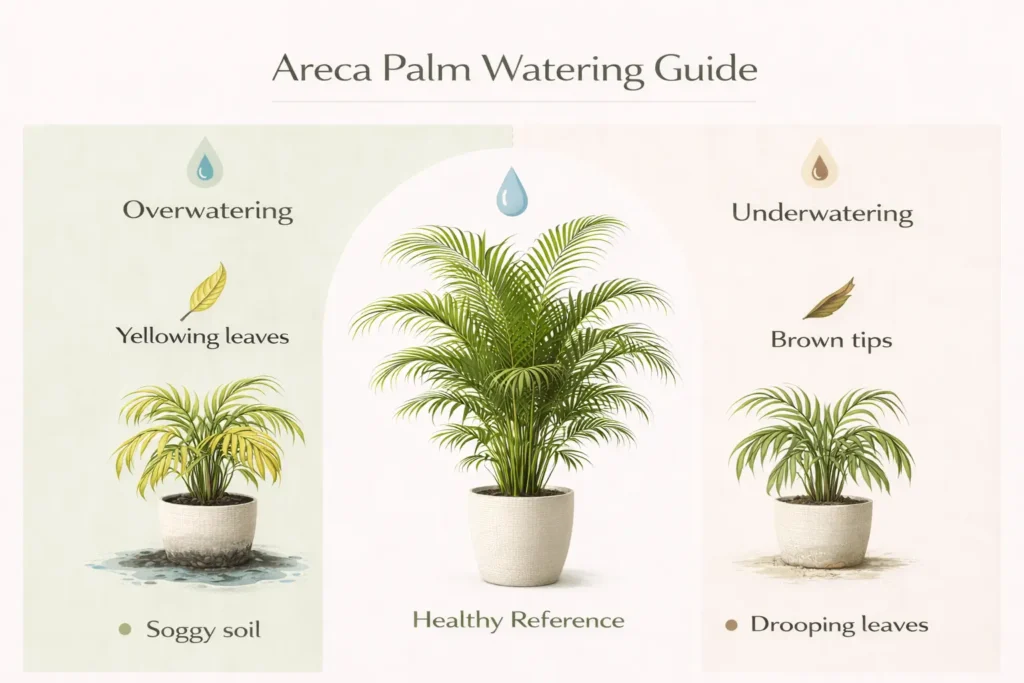
How often to water areca palm depends on location, season, and container drainage. Generally, watering is required when the top inch of soil becomes dry. During warmer months, areca palm watering may be needed once or twice weekly, while cooler months require reduced frequency. In indoor environments, areca palm indoor care emphasizes evenly moist soil without waterlogging.
Signs of Overwatering & Underwatering
- Overwatering signs
- Yellowing leaves
- Soft stems
- Root decay
- Underwatering signs
- Areca palm brown leaves
- Areca palm leaves drooping
- Dry soil pulling away from pot edges
When gardeners ask why is areca palm turning brown, inconsistent watering is often the primary cause.
Proper watering balance is also essential in other houseplants, as discussed in our article on spider plant indoor benefits.
Best Soil & Potting Mix for Areca Palm
Ideal Soil Composition
Areca palm grows best in a well-draining palm mix that supports healthy root development. Soil should retain moisture while allowing excess water to escape freely. Because areca palm root depth is moderate rather than deep, compacted soil restricts oxygen flow and weakens growth. A quality palmmix plant care approach includes organic matter combined with coarse materials for aeration.
Repotting Areca Palm
Repotting areca palm is typically needed every two to three years or when roots outgrow the container. The new pot should be only slightly larger and must include drainage holes. During areca palm repotting, roots should be handled gently to avoid damage, and fresh soil should replace old, compacted mix.
Areca Palm Fertilizer & Feeding Schedule
Best Fertilizer for Areca Palms
Areca palms require balanced nutrients to maintain green foliage and steady growth. A slow-release fertilizer for areca palm with micronutrients supports long-term health. Both organic compost-based options and commercial palm formulas work well when applied correctly. Choosing the best fertilizer for areca palms helps prevent nutrient deficiencies such as leaf yellowing.
Fertilizing Frequency
- Feed every 4–6 weeks during active growth
- Reduce feeding during cooler or dormant months
- Avoid over-fertilizing to prevent root stress
Areca Palm Pruning & Trimming
How to Trim Areca Palm Safely
Knowing how to trim areca palm involves removing only dead, yellow, or brown fronds at the base. Clean, sharp tools reduce the risk of infection. Regular areca palm pruning improves airflow and appearance without disrupting healthy growth.
Common Pruning Mistakes
- Cutting green, healthy fronds
- Removing too many leaves at once
- Improper trimming angles
Understanding how to prune an areca palm correctly prevents stress and growth slowdown.
Common Areca Palm Problems & Solutions
Brown Tips & Yellow Leaves
Common causes include low humidity, inconsistent watering, and nutrient imbalance. Areca palm yellow leaves often indicate overwatering, while areca palm brown tips suggest dry air or salt buildup. Adjusting care routines usually restores plant health.
Stem Rot & Root Issues
Areca palm stem rot develops from prolonged moisture and poor drainage. Prevention includes well-draining soil, controlled watering, and adequate airflow. Early treatment focuses on removing affected areas and correcting soil conditions.
Areca Palm Growth Rate, Height & Lifespan
How Fast Does Areca Palm Grow?
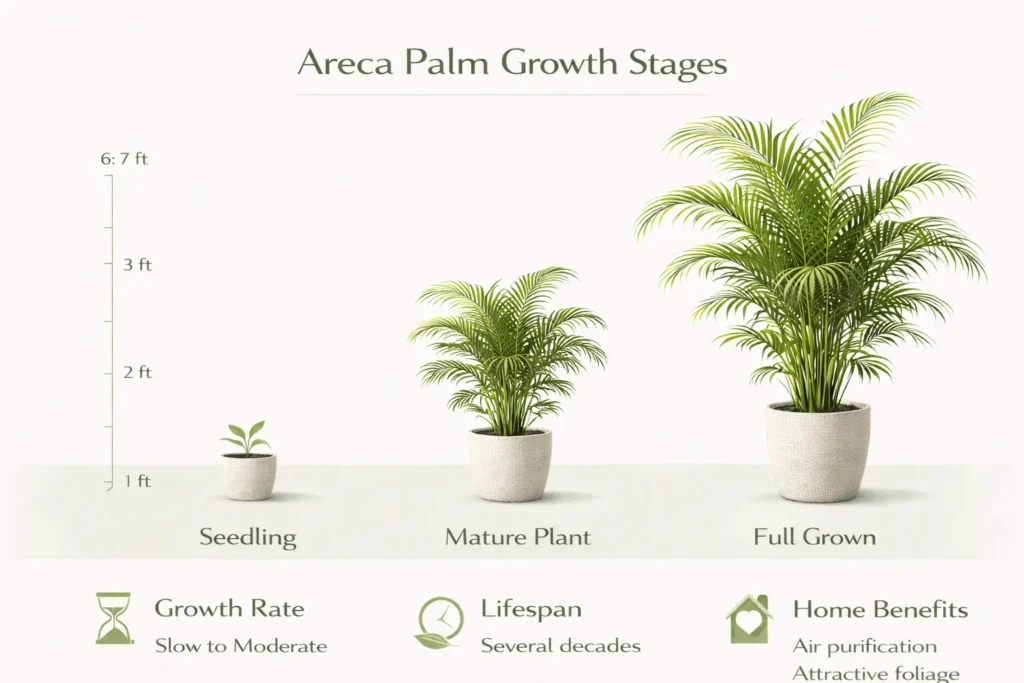
Areca palm growth rate is moderate. Indoors, growth is slower due to limited light, while outdoor plants grow faster in warm climates. When asked how fast does an areca palm grow, most plants add steady height each year under ideal care.
Full Grown Areca Palm Size
A full grown areca palm tree typically reaches 6–10 feet indoors and taller outdoors. Areca palm height depends on space, light, and care consistency. With proper maintenance, areca palm lifespan extends for many years as a long-term ornamental plant.
Areca Palm Benefits for Home & Health
Indoor Air & Aesthetic Benefits
Areca palm plant benefits include visual softness, lush greenery, and space enhancement. The benefits of areca palm extend to creating a calming indoor environment and improving room aesthetics through natural texture and movement.
The air-quality benefits of indoor plants have also been studied by the NASA Clean Air Study, which highlights how certain plants can help improve indoor environments.
Why Areca Palm Is a Popular Houseplant
Areca palm houseplants remain popular due to easy care requirements, adaptability, and décor compatibility. Among areca palm advantages are its non-invasive roots, elegant appearance, and suitability for both modern and traditional interiors.
Conclusion — How to Take Care of Areca Palm Successfully
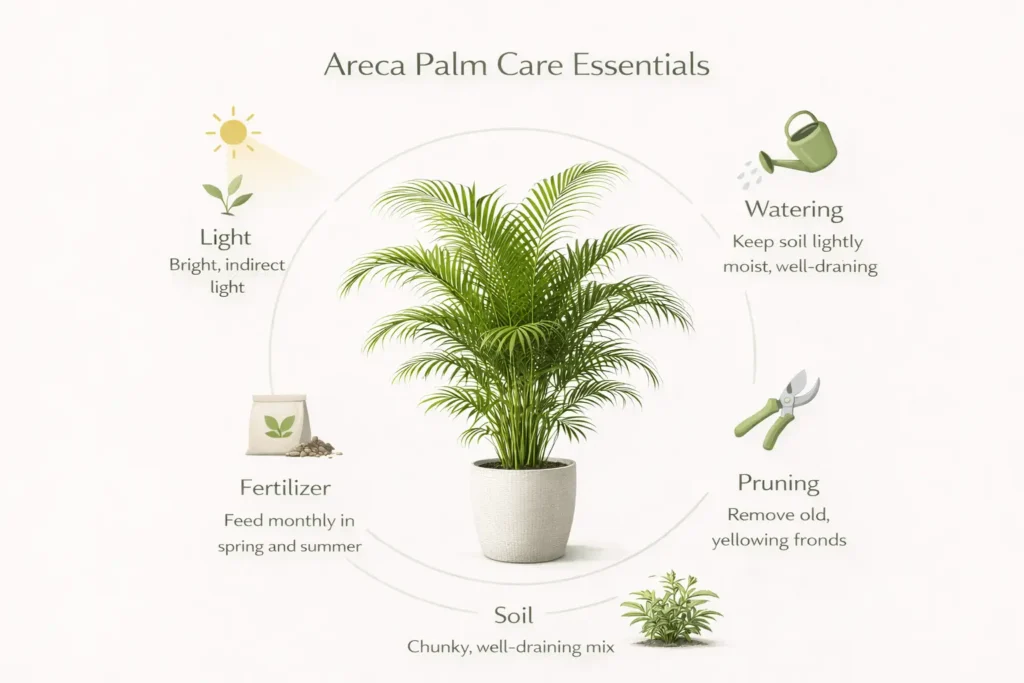
Successful areca palm care depends on balancing a few essential factors. Provide bright, indirect light indoors or filtered sunlight outdoors to prevent leaf damage. Maintain a consistent watering routine that keeps the soil lightly moist without causing waterlogging. Use a well-draining palm-specific soil mix to support healthy roots, and fertilize during the growing season to sustain steady growth. Occasional pruning of dead or damaged fronds helps maintain appearance and overall plant health. With proper attention to light, water, soil, fertilizer, and pruning, areca palm remains a long-lasting and visually appealing plant. Consistent maintenance and timely adjustments ensure strong growth, vibrant foliage, and long-term success.
FAQs
How often should I water an areca palm indoors?
Water an areca palm indoors when the top inch of soil feels dry. This typically means watering once every 7–10 days, depending on room temperature, humidity, and light levels.
Can areca palm grow in full sun?
Areca palm can tolerate limited direct sun, especially in mild climates, but prolonged full sun often causes leaf burn. Filtered or partial sunlight is ideal for healthy growth.
Why are my areca palm leaves turning brown?
Brown leaves usually result from underwatering, low humidity, salt buildup, or excessive sunlight. Adjust watering habits, improve humidity, and ensure indirect light exposure.
How tall do areca palms get indoors?
Indoors, areca palms typically grow between 6 and 10 feet tall, depending on container size, light availability, and overall care consistency.
What is the best fertilizer for areca palm plants?
A balanced, slow-release palm fertilizer with essential micronutrients works best. Apply during the growing season to support leaf color and overall plant health.

Written by the LeafyHeaven Editorial Team
LeafyHeaven shares practical gardening tips and simple plant care guides to help you grow, nurture, and enjoy your plants with ease. Our goal is to make gardening feel natural, approachable, and rewarding for everyone.