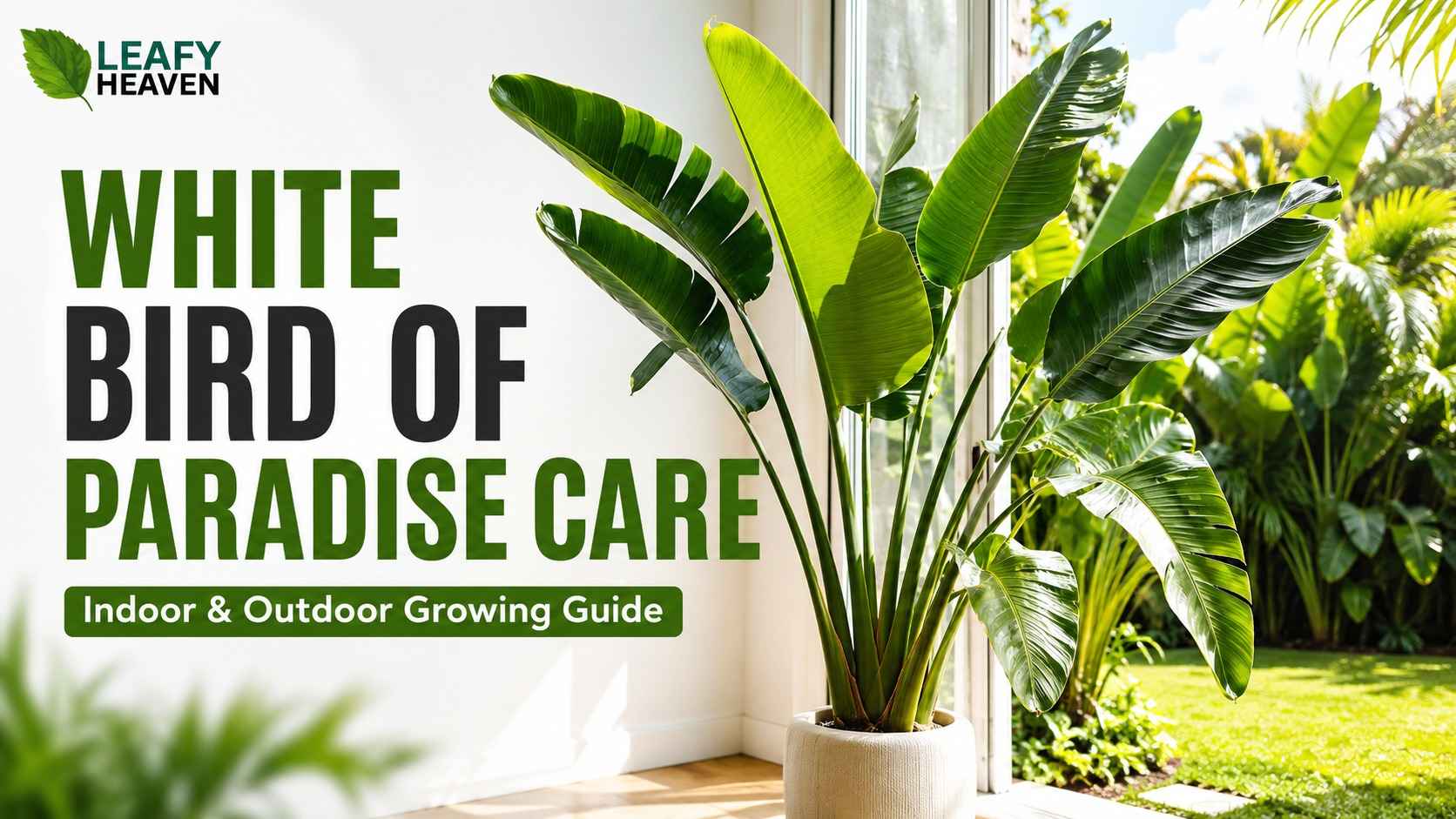

White Bird of Paradise, botanically known as Strelitzia nicolai, grows best with very bright light, well-draining soil, controlled watering, warm temperatures, and enough space for its large leaves and expanding roots. Effective white bird of paradise care changes slightly indoors and outdoors because light levels, moisture loss, temperature, and available space differ. This guide focuses specifically on the white bird of paradise and explains practical Strelitzia nicolai care, including light, watering, soil, temperature, feeding, growth, pruning, pests, and common problems. These same fundamentals support reliable bird of paradise care and bird of paradise plant care, while helping clarify the specific needs involved in white birds of paradise care.
Quick Care Snapshot
| Care Factor | Best Conditions |
| Light | Very bright indirect light with some acclimated direct sun |
| Watering | Water thoroughly after the upper soil begins to dry |
| Temperature | Warm, stable conditions |
| Humidity | Moderate to higher humidity |
| Soil | Fertile, airy, well-draining potting mix |
| Growth | Fastest with strong light, warmth, nutrition, and adequate root space |
What Is a White Bird of Paradise Plant?
White Bird of Paradise is a large tropical plant botanically known as Strelitzia nicolai. It is valued for its broad, banana-like leaves, strong upright growth, and dramatic architectural appearance, making it popular as both an indoor specimen and an outdoor tropical landscape plant.
| Feature | White Bird of Paradise |
| Common Name | White Bird of Paradise |
| Botanical Name | Strelitzia nicolai |
| Plant Type | Large herbaceous tropical plant |
| Typical Use | Indoor houseplant or outdoor tropical specimen |
| Mature Size | Can become very large, especially when grown outdoors in suitable conditions |
Is White Bird of Paradise the Same as Bird of Paradise?
White Bird of Paradise belongs to the Bird of Paradise group, but it is specifically Strelitzia nicolai. It generally develops into a much larger plant than some other commonly grown Bird of Paradise species.
The term bird of paradise plant can refer to several Strelitzia species, so identifying the botanical name is important. A birds of paradise plant labeled Strelitzia nicolai is the large white-flowering type discussed here. Indoors, this paradise plant is often grown as a striking bird of paradise houseplant because of its tall stems and oversized foliage.
Why Is It Sometimes Called Giant White Bird of Paradise?
It is called Giant White Bird of Paradise because of its impressive mature size and its distinctive white-and-blue flowers. It can become substantially larger than smaller Strelitzia species that are better known for orange flowers.
Good giant white bird of paradise care should therefore account for its need for strong light, adequate root space, and enough room for its expanding foliage. A mature white bird of paradise plant can become a dominant feature in a bright indoor space or a large tropical landscape.
Is White Bird of Paradise a Tree?
White Bird of Paradise can develop a tall, tree-like appearance as it matures, but it is not a true woody tree. It is a large herbaceous tropical plant that forms strong leaf stalks and dense clumps as it grows.
Because of its height and upright form, it is sometimes informally described as a bird of paradise tree. Botanically, however, it remains a large Strelitzia rather than a woody tree species.
White Bird of Paradise Care at a Glance
Successful White Bird of Paradise care depends mainly on bright light, proper watering, good drainage, warm conditions, and enough space for vigorous growth. A practical bird of paradise care guide should focus on these core needs because they directly influence leaf size, root health, moisture use, and overall growth.
| Care Factor | Ideal Condition |
| Light | Bright indirect light to strong filtered sunlight |
| Water | Water thoroughly after the upper soil begins drying |
| Soil | Loose, fertile, well-draining mix |
| Temperature | Warm indoor or tropical conditions |
| Humidity | Moderate to higher humidity |
| Fertilizer | Regular feeding during active growth |
| Repotting | Repot when roots become crowded |
| Growth | Fast under strong growing conditions |
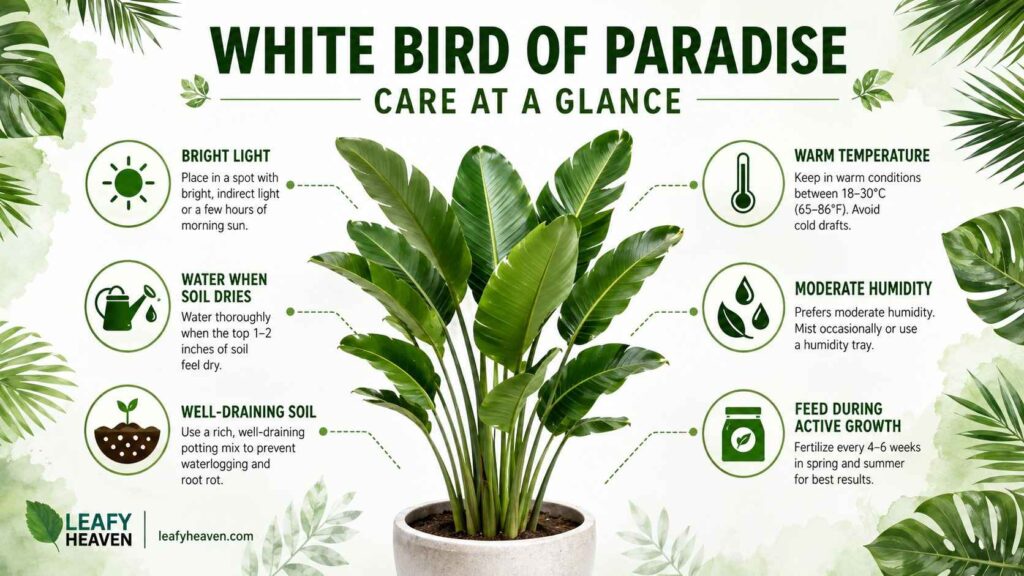
The most useful bird of paradise care tips are to prioritize strong light, check soil moisture before watering, and prevent water from collecting around the roots. These same birds of paradise care tips are especially important for white bird paradise plant care, since Strelitzia nicolai can develop a large root system and broad foliage when conditions are favorable.
Gardeners looking to build on these fundamentals will find a wide range of practical advice for tropical and ornamental plants through this comprehensive guide to gardening and plant care.
How Much Light Does a White Bird of Paradise Need?
White Bird of Paradise needs very bright light and performs best near a bright window indoors or in a sunny outdoor position after proper acclimation. Strong light supports healthier foliage, firmer stems, and more vigorous growth, while low-light conditions can slow development and increase the risk of overly wet soil.
Does White Bird of Paradise Need Direct Sun?
White Bird of Paradise can tolerate and benefit from some direct sunlight, but sudden exposure to intense sun can scorch leaves if the plant has not been acclimated gradually. For white bird of paradise sun exposure, increasing direct light slowly is safer than moving the plant immediately from shade or indoor conditions into harsh sunlight.
A white bird of paradise full sun position can work well outdoors in suitable climates, especially for established plants, but newly moved or indoor-grown specimens should be introduced to stronger sun in stages.
Best Indoor Location for a White Bird of Paradise
Place it close to the brightest suitable window where it receives strong light for much of the day. Good white bird of paradise care indoor starts with maximizing natural light without creating sudden heat or sun stress.
For effective white bird of paradise plant care indoors, avoid placing the plant deep inside a dim room. Anyone learning how to care for white bird of paradise indoors should treat light as one of the most important factors because a bird of paradise houseplant uses brighter conditions to support larger leaves and stronger upright growth.
Signs Your White Bird of Paradise Needs More Light
A White Bird of Paradise that receives too little light may show several clear signs:
- Slow growth: New leaves appear less frequently or overall development stalls.
- Leaning toward windows: Stems and leaves stretch toward the strongest available light.
- Smaller new leaves: Fresh foliage may emerge noticeably smaller than older leaves.
- Weak stems: Growth can become less sturdy and more stretched.
- Consistently wet soil: Lower light reduces water use, so the potting mix may remain moist for much longer.
Quick takeaway: Strong light supports larger leaves, faster growth, stronger stems, and more efficient water use.
How to Water a White Bird of Paradise Correctly
Water a White Bird of Paradise deeply when the upper portion of the soil begins to dry, then allow excess water to drain completely. The goal is to keep the root zone evenly supplied with moisture without leaving the plant in constantly wet soil, which can reduce oxygen around the roots and increase the risk of root problems.
How Often Should You Water a White Bird of Paradise?
Watering frequency depends on light, temperature, pot size, season, soil composition, and how quickly the plant is growing. Checking the soil is more reliable than following a fixed weekly schedule.
When learning how to water white bird of paradise, test the upper soil before adding more water. If it is still noticeably moist, wait longer. For anyone learning how to take care of white bird of paradise, adjusting watering to current conditions is more effective than watering by the calendar.
Signs of Overwatering
Overwatering usually appears when the soil remains wet for too long or the roots have poor drainage. Common warning signs include:
- Yellowing leaves: Older or lower leaves may begin turning yellow.
- Persistently wet soil: The potting mix stays damp for an unusually long time.
- Soft stems: Stems or leaf bases may lose firmness.
- Unpleasant soil odor: Sour or musty smells can indicate overly wet conditions.
- Root rot risk: Prolonged saturation can damage roots and reduce their ability to absorb water and nutrients.
Signs of Underwatering
Underwatering occurs when the soil becomes excessively dry and the roots cannot supply enough moisture to the foliage. Typical signs include:
- Drooping: Leaves and stems may lose their usual upright appearance.
- Dry soil: The potting mix feels very dry through much of the container.
- Curling leaves: Foliage may curl inward as moisture stress increases.
- Crispy edges: Leaf margins may become brown and dry.
- Slower growth: New growth may slow when moisture is consistently insufficient.
| Condition | Common Symptoms |
| Overwatering | Yellowing leaves, persistently wet soil, soft stems, unpleasant soil odor, root rot risk |
| Underwatering | Drooping, dry soil, curling leaves, crispy edges, slower growth |
Should Watering Change in Winter?
Yes. White Bird of Paradise usually needs water less frequently in winter because lower light and slower growth reduce how quickly the plant uses moisture.
Check the soil carefully before each watering rather than assuming the same routine will work year-round. Indoor heating, container size, and available light can still affect drying speed, so soil moisture should remain the main guide.
What Is the Best Soil for White Bird of Paradise?
White Bird of Paradise grows best in a fertile, airy, well-draining potting mix that holds enough moisture for steady root hydration while allowing excess water to escape quickly. The right soil structure helps maintain a healthy balance between moisture and oxygen around the roots.
Best Potting Mix Characteristics
A suitable potting mix for White Bird of Paradise should provide four main qualities:
- Good drainage: Excess water should move through the soil instead of collecting around the roots.
- Adequate aeration: Small air spaces in the potting mix help roots receive the oxygen they need for healthy function.
- Moderate moisture retention: The soil should hold some moisture between waterings without remaining saturated.
- Organic matter: A fertile mix containing organic material can support nutrient availability and healthy growth.
The best container mix should therefore be loose rather than compact. Dense soil can stay wet too long and reduce airflow around the root system.
Why Drainage Is Essential
Good drainage is essential because saturated soil contains less available oxygen around the roots. When a potting mix remains waterlogged for extended periods, healthy root respiration becomes more difficult and the root system can become stressed.
Prolonged saturation can also increase the risk of damaged roots and root rot. A well-draining potting mix allows excess moisture to leave the container while still retaining enough water for the plant to use between waterings.
Does the Pot Need Drainage Holes?
Yes. A White Bird of Paradise container should have drainage holes because they significantly reduce the risk of standing water and root damage.
Drainage holes allow excess water to leave the pot after thorough watering. Without an escape route, water can collect at the bottom of the container, keeping the lower roots continuously wet and increasing the risk of root rot. Keeping drainage holes open and allowing the pot to drain fully supports a healthier root environment.
Temperature and Humidity Requirements
White Bird of Paradise prefers consistently warm conditions and moderate to high humidity, similar to the tropical environment where Strelitzia nicolai naturally performs best. Stable warmth supports active growth, while adequate humidity can help maintain healthier-looking foliage and reduce moisture stress around the leaf edges.
Ideal Temperature for Indoor Plants
White Bird of Paradise performs best in warm, stable indoor conditions rather than areas exposed to repeated temperature stress. Consistency is especially important because sudden shifts can affect leaf quality and slow growth.
For better indoor conditions:
- Keep the plant in a comfortably warm room.
- Avoid cold drafts from doors, vents, or frequently opened windows.
- Protect it from sudden temperature changes.
- During winter, move it away from very cold window glass or areas where nighttime temperatures drop sharply.
A stable environment generally supports stronger growth than one that alternates between warm and cold conditions.
How Much Humidity Does It Need?
Average household humidity may be enough for a White Bird of Paradise to grow, but moderate to higher humidity can improve leaf quality and reduce dry or crispy edges.
Low humidity becomes more noticeable in heated or air-conditioned rooms where indoor air is especially dry. If the leaf margins repeatedly become brown despite correct watering, humidity should be considered alongside other possible causes such as inconsistent moisture or salt buildup.
Should You Mist White Bird of Paradise?
Misting can temporarily add moisture to the leaf surface, but it does not provide a reliable or long-lasting increase in humidity around the plant. The effect usually disappears quickly, so misting should not be treated as the main humidity solution.
More dependable approaches include:
- Keeping the plant away from drying heating or cooling vents.
- Grouping compatible plants together to create a slightly more humid local environment.
- Using a room humidifier when indoor air is consistently dry.
- Maintaining proper watering so the plant is not dealing with both dry soil and dry air.
Misting is optional, but stable room humidity and correct overall care are more important for maintaining healthy foliage.
How to Fertilize White Bird of Paradise
Feed White Bird of Paradise during active spring and summer growth, when the plant is producing new leaves and using nutrients more actively. Reduce or pause fertilizer when growth slows, especially during periods of lower light, to avoid unnecessary nutrient buildup in the soil.
Best Time to Fertilize
The best time to fertilize White Bird of Paradise is during spring and summer, when warmer temperatures and stronger light encourage active growth. Feeding during this period helps support healthy foliage, root development, and continued growth.
During fall and winter, growth often slows as natural light decreases. Fertilizer should therefore be reduced rather than applied at the same rate year-round.
How Often Should You Feed It?
Feed according to the directions on the fertilizer product rather than assuming that more frequent feeding will produce faster growth. A balanced fertilizer applied regularly during active growth can provide the nutrients the plant needs without overwhelming the roots.
How often feeding is needed also depends on growing conditions. A plant receiving strong light and actively producing new leaves generally uses nutrients more quickly than one growing slowly in lower light.
Signs of Too Much Fertilizer
Excess fertilizer can cause mineral salts to accumulate in the potting mix and stress the root system. Common warning signs include:
- Leaf tip burn: Tips or margins may become dry and brown.
- Salt buildup: Excess mineral salts can accumulate in the soil over time.
- Stressed roots: High fertilizer concentrations can interfere with normal root function.
- Crust on soil: A white or pale crust may develop on the soil surface or around the pot.
Fertilizing Checklist
- Fertilize mainly during active spring and summer growth.
- Follow the fertilizer label for dilution and application frequency.
- Apply fertilizer to appropriately moist soil rather than severely dry roots.
- Reduce feeding when growth slows.
- Watch for brown tips or visible salt buildup.
- Avoid adding extra fertilizer in an attempt to force faster growth.
How Fast Does White Bird of Paradise Grow?
White Bird of Paradise can grow relatively quickly when it receives strong light, warm temperatures, adequate nutrition, consistent watering, and sufficient root space. Its growth rate is highly dependent on environmental conditions, so plants growing in bright, favorable settings usually develop faster than those kept in dim or restrictive conditions.
White Bird of Paradise Growth Rate Indoors
The white bird of paradise growth rate indoors depends mainly on light exposure and available root space. Plants positioned near a very bright window generally produce new foliage more actively than plants kept farther from natural light.
Container size also influences the bird of paradise growth rate. A severely crowded root system can restrict water uptake and development, while a suitably sized pot provides enough room for continued root expansion.
Factors that influence birds of paradise growth rate indoors include:
- Available natural light
- Container size
- Root health
- Warm temperatures
- Watering consistency
- Nutrient availability
The bird of paradise plant growth rate may slow noticeably when light is limited, especially during cooler or darker periods. Similarly, the birds of paradise plant growth rate can be restricted when roots become excessively crowded. Healthy bird of paradise growth is therefore best supported by balancing light, root space, moisture, and nutrition.
How Fast Do White Birds of Paradise Grow?
Growth varies substantially with growing conditions, with bright, warm environments producing noticeably faster development than low-light rooms. There is no single reliable growth rate that applies to every White Bird of Paradise.
When considering how fast do white bird of paradise grow, focus on the plant’s environment rather than expecting a fixed amount of annual growth. Strong light, warmth, healthy roots, proper watering, and active-season feeding all encourage faster development.
The same principle applies when asking how fast do white birds of paradise grow indoors. Plants in lower light typically produce new leaves more slowly, while specimens receiving stronger suitable light can develop more vigorously.
How Large Can White Bird of Paradise Become?
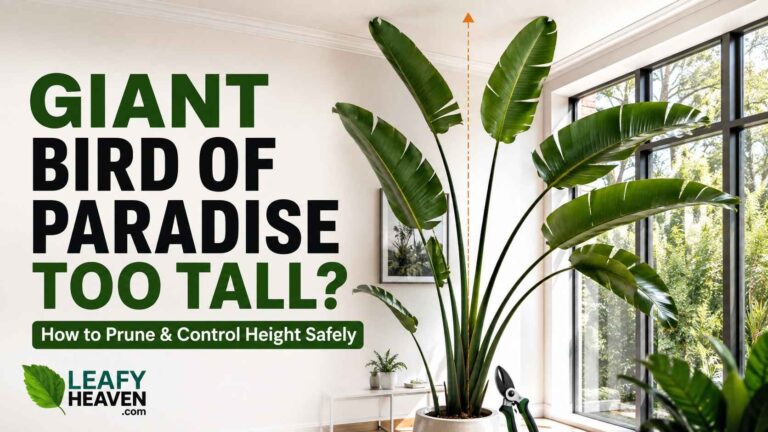
White Bird of Paradise has the potential to become a large indoor specimen, with broad leaves and a tall, upright form that can occupy considerable floor and vertical space.
Outdoors in suitable warm climates, it can become substantially larger because it has greater access to sunlight, root space, and favorable growing conditions. Mature plants can develop long leaf stalks and very large foliage, creating a strong tropical appearance.
Indoors, available ceiling height and room size should be considered before placing the plant permanently. Its large leaves spread outward while new growth adds height, so sufficient vertical and surrounding space helps accommodate its mature form.
White Bird of Paradise Indoor Care
Indoor White Bird of Paradise care centers on maximizing light, preventing overwatering, maintaining warm temperatures, and providing enough physical space. Successful white bird of paradise care indoor also depends on adjusting watering and placement to slower indoor drying, limited room dimensions, and changing seasonal light.
Best Indoor Placement
Place the plant close to the brightest suitable window where it can receive strong natural light for much of the day. Good white bird of paradise plant care indoors begins with avoiding dark corners or locations far from windows, because insufficient light can slow growth and keep the soil wet for longer.
Anyone learning how to care for white bird of paradise indoors should also keep the plant away from cold drafts, heating vents, and areas with frequent temperature changes.
How to Rotate the Plant for Balanced Growth
Rotate the pot periodically so different sides of the plant receive exposure to the main light source. This helps reduce excessive leaning and encourages a more balanced shape.
When learning how to care for a bird of paradise indoors, gradual rotation is more useful than repeatedly moving the plant to completely different locations. Keeping the overall environment stable while changing its orientation can support more even growth.
How to Keep Large Leaves Clean
Large White Bird of Paradise leaves can collect dust, especially indoors. Gently wipe both sides of the foliage with a soft, damp cloth to keep the leaf surfaces clean and make pest inspection easier.
Regular cleaning is a practical part of caring for a bird of paradise plant indoors because the broad leaves provide plenty of surface area for dust and pests to accumulate. Avoid harsh cleaning products that can leave residues on the foliage.
How to Manage Limited Indoor Space
White Bird of Paradise can become tall and wide, so indoor space should be considered as part of long-term care. Position it where the large leaves have room to expand without constantly rubbing against furniture, walls, or walkways.
For anyone learning how to care for indoor birds of paradise, useful space-management practices include:
- Place the pot where there is sufficient vertical clearance.
- Avoid narrow corners that restrict leaf expansion.
- Remove only genuinely damaged or dead leaves rather than cutting healthy foliage simply to reduce size.
- Rotate the plant to keep growth more evenly distributed.
- Repot only when the roots genuinely need additional space.
Indoor Care Checklist
- Provide very bright natural light.
- Check soil moisture before watering.
- Keep temperatures warm and stable.
- Rotate the pot periodically for balanced growth.
- Wipe large leaves clean and inspect them for pests.
- Allow enough floor and vertical space for mature growth.
White Bird of Paradise Outdoor Care
Outdoors, White Bird of Paradise needs warm conditions, sufficient sunlight, good drainage, regular moisture, and protection from damaging cold. Effective white bird of paradise care outdoor also requires adjusting watering and sun exposure to local heat, wind, rainfall, and seasonal temperature changes.
Can White Bird of Paradise Grow Outdoors?
Yes. White Bird of Paradise can grow outdoors, particularly in warm climates where temperatures remain suitable for tropical plants.
A white bird of paradise outdoor specimen often has access to stronger light and more growing space than an indoor plant. Growing white bird of paradise outside can therefore support vigorous development when drainage, moisture, and temperature are appropriate. A white bird of paradise plant outdoor setting should also provide enough room for its large leaves and expanding root system.
Gardeners in hot, sunny regions can also explore this curated selection of warm-climate flowering plants that thrive under similar bright, warm conditions.
How Much Outdoor Sun Should It Receive?
White Bird of Paradise can handle strong outdoor light, but plants moved from indoor or shaded conditions should be acclimated gradually.
Sudden exposure to intense direct sun can scorch foliage that developed under lower light. Increase sun exposure over time so the leaves can adjust. Established plants in suitable conditions can tolerate much brighter light than recently moved indoor specimens.
Outdoor Watering Requirements
Outdoor plants may need more frequent watering because sun, heat, and wind can dry the soil faster. Container-grown plants are especially vulnerable because pots hold a limited amount of moisture and can heat up quickly.
Check the soil regularly rather than following a fixed schedule. Water thoroughly when the upper soil begins to dry, then allow excess water to drain. Rainfall should also be considered so the plant is not watered unnecessarily after wet weather.
Protecting White Bird of Paradise From Cold
White Bird of Paradise is a tropical plant, so cold conditions can damage foliage and slow growth. Good white bird of paradise plant care outdoors includes protecting the plant from sudden cold spells and prolonged low temperatures.
For reliable birds of paradise outdoor care:
- Move container plants to a protected location when damaging cold is expected.
- Avoid exposed sites where cold winds directly hit the foliage.
- Reduce watering when cool conditions slow growth and soil drying.
- Protect roots from prolonged cold and waterlogged soil.
These same principles support practical birds of paradise plant outdoor care, especially in climates with seasonal temperature changes.
White Bird of Paradise: Indoor or Outdoor?
White Bird of Paradise can grow either indoors or outdoors, but the best choice depends on climate, available light, space, and temperature. When deciding between white bird of paradise indoor or outdoor growing, consider how well each setting can provide strong light, warm conditions, proper drainage, and enough room for mature growth.
When Indoor Growing Is Better
Indoor growing is usually better when outdoor temperatures become too cold or unpredictable for a tropical plant. It also allows greater control over temperature, watering, wind exposure, and seasonal conditions.
An indoor setting is a practical choice when:
- The local climate has cold winters.
- A very bright window is available.
- Outdoor frost or cold winds are a concern.
- The plant can be given enough floor and vertical space.
- More controlled watering and temperature are preferred.
The main indoor limitation is often space, because White Bird of Paradise can develop large leaves and significant height.
When Outdoor Growing Is Better
Outdoor growing is often better in warm climates where the plant can receive stronger light and more physical space. Suitable outdoor conditions can support faster and larger growth than many indoor environments.
Outdoor growing works best when:
- Temperatures remain warm enough for tropical plants.
- The plant can be protected from damaging cold.
- Sun exposure can be introduced gradually.
- Soil or containers provide reliable drainage.
- There is enough space for its expanding leaves and root system.
Outdoor plants may require closer moisture monitoring because heat, direct sun, and wind can dry the soil more quickly.
Indoor vs Outdoor Care Comparison
| Factor | Indoor | Outdoor |
| Light | Bright window | Sun to filtered sun |
| Water | Usually slower drying | Often faster drying |
| Growth | More controlled | Potentially much larger |
| Temperature | Easier to control | Climate dependent |
| Space | Major limitation | Usually more available |
Neither setting is automatically better in every situation. Indoors offers greater environmental control, while outdoors can provide stronger light and more space when the climate is suitable.
Gardeners planning a low-effort warm-climate garden alongside their White Bird of Paradise can explore additional options in this guide to outdoor low maintenance plants.
How to Care for a Potted White Bird of Paradise
A potted Bird of Paradise needs strong light, reliable drainage, proper watering, and enough root space to grow well. Good potted bird of paradise care also means choosing an appropriately sized container and repotting only when the root system has genuinely become crowded.
Choosing the Right Pot Size
Choose a pot that provides enough room for the roots without giving the plant an excessive volume of wet soil. A container that is too large can hold moisture for longer than the roots can use it, increasing the risk of overwatering.
When moving to a larger pot, select one that is only moderately bigger than the current container. It should also have open drainage holes so excess water can escape after watering.
When Should You Repot It?
Repot a White Bird of Paradise when its root system becomes crowded enough to affect watering, stability, or growth. Repotting should be based on the plant’s condition rather than a fixed calendar.
A plant that is growing normally and still has adequate root space does not need frequent repotting. When repotting becomes necessary, move it into a slightly larger container with fresh, well-draining potting mix.
Signs the Plant Is Root-Bound
A root-bound White Bird of Paradise may show several noticeable signs:
- Roots emerging from drainage holes: Visible roots underneath the pot can indicate that available space is becoming limited.
- Rapid drying: A root-filled container may dry much faster because little potting mix remains to hold moisture.
- Restricted growth: New growth may slow when the root system becomes severely crowded.
- Roots circling the pot: Dense roots wrapping around the inside of the container are a strong indication that the plant needs more space.
Check more than one sign before deciding to repot. A few visible roots alone do not always mean an immediate move is necessary, but crowded roots combined with rapid drying or reduced growth usually indicate that a larger container is appropriate.
How and When to Repot White Bird of Paradise
Repot White Bird of Paradise when the root system becomes crowded enough to restrict water absorption, stability, or healthy growth. Repotting too frequently is unnecessary, so the decision should be based on root conditions and plant performance rather than a fixed schedule.
Best Time of Year to Repot
The best time to repot White Bird of Paradise is generally during spring or early summer, when the plant is entering active growth. Warmer conditions and stronger light can help it recover more efficiently after root disturbance.
Avoid unnecessary repotting when growth is naturally slow. If the plant is severely root-bound or experiencing drainage problems, however, repotting may be needed even outside the ideal seasonal window.
Step-by-Step Repotting Process
- Select a slightly larger container. Choose a pot with drainage holes and enough additional space for continued root growth.
- Prepare fresh well-draining soil. Use an airy potting mix that balances drainage, moisture retention, and root aeration.
- Remove the plant carefully. Support the base and root ball while easing the plant from its existing container.
- Inspect the roots. Check for tightly circling, damaged, soft, or unhealthy roots before repotting.
- Position at the same planting depth. Avoid burying the base of the plant deeper than it was previously growing.
- Fill around the roots. Add fresh potting mix around the root ball without packing the soil excessively tightly.
- Water thoroughly. Allow water to move through the soil and drain completely from the bottom of the container.
- Allow recovery in suitable light. Return the plant to a bright, stable location and avoid unnecessary environmental changes while it adjusts.
Should You Divide a Large White Bird of Paradise?
Yes, established White Bird of Paradise clumps can sometimes be divided when they have developed multiple well-rooted sections. Division can help manage an oversized plant or create separate plants, but each division should retain a healthy portion of roots and foliage.
Because division causes more root disturbance than ordinary repotting, it is best done during active growth when the plant has favorable conditions for recovery.
Pruning and Leaf Maintenance
White Bird of Paradise requires little structural pruning, but damaged, yellow, or dead leaves can be removed to keep the plant healthy, tidy, and easier to inspect. Regular leaf maintenance also helps preserve the plant’s appearance without removing healthy foliage unnecessarily.
How to Remove Damaged Leaves
Remove badly damaged, yellow, or dead leaves with clean, sharp pruning shears. Cut the affected leaf stalk close to its base without injuring nearby healthy stems.
For safe pruning:
- Use clean, sharp tools.
- Remove only leaves that are clearly damaged or declining.
- Avoid cutting healthy leaves simply to control size.
- Inspect the remaining foliage after pruning for pests or additional damage.
Removing old leaves can improve the plant’s appearance and make routine inspection easier.
Should Split Leaves Be Cut Off?
Not necessarily. Natural splitting is common in Bird of Paradise foliage and does not automatically mean the plant is unhealthy.
Large leaves can split as they expand, move, or respond to airflow. If a split leaf remains green and healthy, it can continue contributing to the plant’s growth and does not need to be removed.
Cut it off only if it becomes severely damaged, yellow, dead, or unattractive enough that removal is preferred.
How to Clean Dust From Large Leaves
Clean the broad leaves regularly with a soft, damp cloth to remove dust and surface debris. Wipe gently along the leaf rather than rubbing aggressively.
Clean foliage improves the plant’s appearance and makes it easier to notice early signs of pests such as spider mites, scale, or mealybugs. Regular cleaning also prevents thick dust buildup from covering the large leaf surfaces.
Common White Bird of Paradise Problems and What They Mean
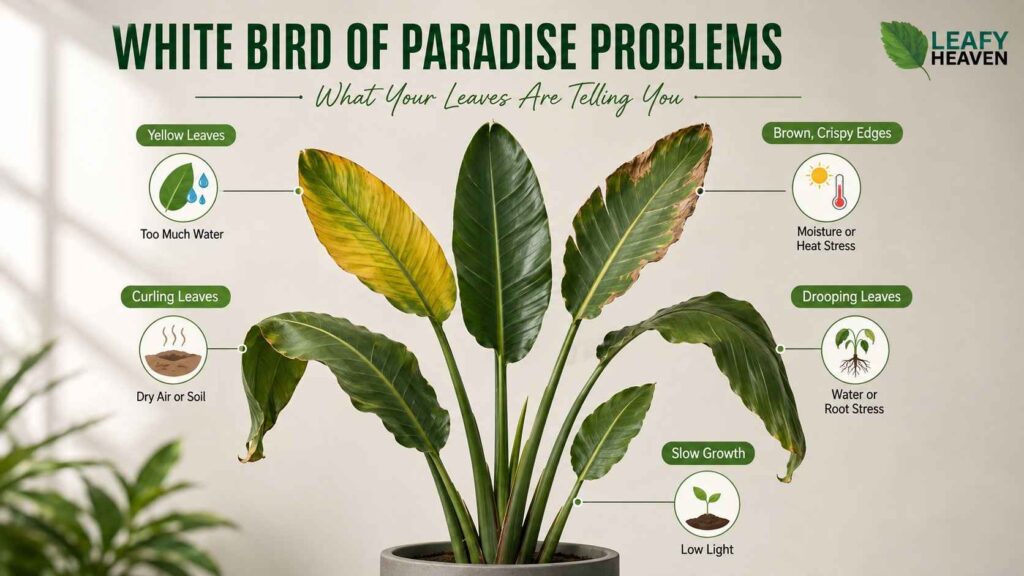
Most White Bird of Paradise problems can be traced to incorrect watering, insufficient light, dry air, temperature stress, or root conditions. Because several problems can cause similar symptoms, check the plant’s environment, soil moisture, and roots before assuming there is a single cause.
Why Are White Bird of Paradise Leaves Turning Yellow?
Yellow leaves can develop for several reasons, including excessive watering, natural leaf aging, root stress, insufficient light, or nutrient imbalance.
A single older leaf turning yellow may simply be part of normal aging. However, repeated yellowing across multiple leaves should prompt a closer check of soil moisture, drainage, light exposure, and root health.
Why Are the Leaf Edges Turning Brown?
Brown leaf edges are commonly linked to dry soil, low humidity, mineral or salt buildup, or inconsistent watering.
If the soil is repeatedly allowed to become too dry, leaf margins may become crispy. Low indoor humidity can worsen the problem, while fertilizer salts or minerals in the potting mix may also contribute to brown tips and edges.
Why Are the Leaves Curling?
Curling leaves usually indicate some form of moisture or environmental stress. Possible causes include dry soil, excessive heat, sudden temperature changes, or root problems.
Check soil moisture first, then consider whether the plant has recently experienced strong heat, cold drafts, repotting, or other changes that may affect water uptake.
Why Is My White Bird of Paradise Drooping?
Drooping can result from underwatering, overwatering, insufficient light, root disturbance, or sudden environmental changes.
If the soil is very dry, the plant may be losing more water than the roots can replace. If the soil remains saturated, damaged roots may struggle to absorb moisture properly. Recent repotting, relocation, temperature shifts, or lower light can also temporarily affect the plant’s posture.
Why Is My White Bird of Paradise Not Growing?
Slow or stalled growth is often caused by inadequate light, seasonal slowdown, root restriction, nutrient deficiency, or unsuitable temperatures.
Start by checking light exposure because low light is one of the most common reasons indoor plants grow slowly. Also consider whether the plant is in a naturally slower season, severely root-bound, underfed during active growth, or exposed to consistently cool conditions.
| Symptom | Likely Cause | First Thing to Check |
| Yellow leaves | Overwatering, aging foliage, root stress, low light, nutrient imbalance | Soil moisture and drainage |
| Brown leaf edges | Dry soil, low humidity, salt buildup, inconsistent watering | Soil moisture and humidity |
| Curling leaves | Moisture stress, heat, temperature changes, root problems | Soil moisture and recent environmental changes |
| Drooping | Underwatering, overwatering, low light, root disturbance | Soil condition and root health |
| No growth | Low light, seasonal slowdown, root restriction, low nutrients, cool temperatures | Available light and growing conditions |
Common Pests on White Bird of Paradise
Indoor White Bird of Paradise can occasionally develop sap-feeding pests, especially when the plant is stressed or indoor conditions favor infestations. Regular inspection of the large leaves, stems, and leaf joints makes early detection easier and can prevent pests from spreading.
Spider Mites
Spider mites are tiny pests that often gather on the undersides of leaves. They may cause pale speckling, dull foliage, or fine webbing when populations increase.
What to do:
- Check leaf undersides closely.
- Wipe leaves with a damp cloth.
- Rinse affected foliage where practical.
- Repeat inspections regularly until no new activity appears.
Scale Insects
Scale insects usually appear as small brown, tan, or pale bumps attached firmly to stems or leaves. They feed on plant sap and may weaken growth when infestations become heavy.
What to do:
- Inspect stems, leaf bases, and undersides.
- Remove visible insects carefully.
- Clean affected areas.
- Continue monitoring because young scale can be difficult to notice.
Mealybugs
Mealybugs are easier to recognize because they often look like small white, cotton-like clusters. They commonly hide in leaf joints, along stems, and in protected areas of the plant.
What to do:
- Check hidden leaf joints carefully.
- Remove visible clusters.
- Wipe affected surfaces clean.
- Reinspect the plant regularly for new pests.
How to Inspect and Isolate an Infested Plant
Inspect the entire plant rather than checking only the damaged leaf. Look at leaf undersides, stems, leaf joints, and new growth, where pests can remain hidden.
If pests are found:
- Move the affected plant away from nearby houseplants.
- Inspect neighboring plants for similar signs.
- Remove or clean visible pests.
- Keep the foliage clean and continue regular checks.
- Return the plant to the group only after the infestation appears controlled.
Early isolation and repeated inspection are usually more effective than waiting until pest numbers become severe.
Seasonal White Bird of Paradise Care
White Bird of Paradise care should change through the year because light, temperature, growth rate, and water use naturally fluctuate. Adjusting watering, feeding, and placement with the season helps the plant match its care needs to its actual growth activity.
Spring and Summer Care
Spring and summer usually bring more active growth, especially when the plant receives stronger light and warm temperatures.
During this period:
- Increase watering as needed: Check the soil more often because active growth and warmer conditions can increase moisture use.
- Feed during active growth: Apply fertilizer according to product directions while the plant is producing new foliage.
- Repot if necessary: Spring or early summer is generally a suitable time to repot a root-bound plant.
- Maximize bright light: Stronger seasonal light can support larger leaves and faster growth.
- Monitor outdoor plants closely: Heat and wind may cause containers to dry more quickly.
Fall and Winter Care
Fall and winter often bring slower growth, especially indoors where daylight levels decrease. Care should be adjusted rather than continued at the same summer intensity.
During this period:
- Reduce fertilizer: Feed less often or pause when active growth slows.
- Water less frequently: Lower light and slower growth usually mean the soil stays moist longer.
- Protect from cold drafts: Keep the plant away from cold windows, doors, and sudden temperature changes.
- Watch indoor light levels: Move the plant closer to the brightest suitable window if seasonal light becomes limited.
- Check soil before watering: Avoid assuming the plant needs water on the same schedule used during warmer months.
Essential White Bird of Paradise Care Tips
The most important care practices are strong light, careful watering, excellent drainage, warm temperatures, and avoiding unnecessary environmental changes. These practical bird of paradise care tips help maintain healthy roots, strong foliage, and steady growth.
- Give it as much suitable bright light as possible. Strong light supports larger leaves, stronger stems, and more active growth.
- Check soil before watering. One of the most useful birds of paradise care tips is to judge watering by soil moisture rather than a fixed schedule.
- Never leave the roots sitting in water. Standing water can reduce oxygen around the roots and increase the risk of root problems.
- Use a well-draining potting mix. An airy soil structure should retain some moisture while allowing excess water to escape efficiently.
- Protect the plant from cold drafts. Sudden cold exposure can stress this tropical plant and slow growth.
- Rotate indoor plants for balanced growth. Periodic rotation helps reduce excessive leaning toward the main light source.
- Keep large leaves clean. Wiping dust from the foliage improves appearance and makes pest inspection easier.
- Fertilize mainly during active growth. Feed during spring and summer when the plant is actively producing new foliage, then reduce feeding as growth slows.
- Repot only when necessary. Crowded roots, rapid drying, or restricted growth are better indicators than repotting on a fixed schedule.
- Inspect foliage regularly for pests. Check leaf undersides, stems, and joints for spider mites, scale, or mealybugs.
For anyone asking birds of paradise how to care, the key is consistency rather than constant adjustment. Understanding how to care bird of paradise plants means matching light, water, soil, and temperature to current growing conditions. The same approach applies when learning how to care birds of paradise indoors or outdoors.
White Bird of Paradise Care Mistakes to Avoid
The biggest mistakes are overwatering, insufficient light, poorly draining soil, and sudden exposure to harsh environmental changes. Avoiding these common problems is often more effective than trying to correct plant stress after symptoms become severe.
Watering on a Fixed Schedule
Watering on the same day every week can lead to overwatering or underwatering because soil does not dry at a fixed rate.
Light, temperature, season, pot size, and growth all affect moisture use. Check the upper soil before watering and adjust frequency according to actual conditions.
Keeping the Plant Too Far From Natural Light
White Bird of Paradise needs very bright conditions to maintain strong growth. Keeping it far from a suitable window can lead to slower development, smaller leaves, leaning, and soil that stays wet for too long.
Place indoor plants close to the brightest appropriate natural light source rather than treating them as low-light houseplants.
Using a Pot Without Drainage
A pot without drainage holes can trap excess water around the roots. This creates saturated conditions, reduces oxygen in the root zone, and increases the risk of root damage.
Always use a container that allows excess water to drain freely after watering.
Moving It Straight Into Intense Full Sun
A plant that has been grown indoors or in shade should not be moved directly into intense full sun.
Sudden exposure can scorch leaves that are not adapted to stronger light. Increase direct sunlight gradually so the foliage has time to acclimate.
Overfertilizing a Slow-Growing Plant
More fertilizer does not automatically produce faster growth. A plant growing slowly because of low light, cool temperatures, or seasonal changes may not use added nutrients efficiently.
Excess fertilizer can contribute to salt buildup, brown leaf tips, and root stress. Reduce feeding when active growth slows.
Assuming Every Split Leaf Is a Care Problem
Split leaves are common on White Bird of Paradise and do not always indicate poor care.
Large leaves can naturally tear as they expand or move in airflow. If the leaf remains green and healthy, it usually does not need to be removed or treated as a sign of disease or serious stress.
Quick White Bird of Paradise Care Checklist
Use this checklist to quickly confirm that the plant’s basic growing conditions are suitable. If several items are not being met, correct the environment before assuming the plant has a more serious problem.
- Bright light available: Place the plant where it receives strong suitable light.
- Soil partially dries between watering: Check moisture before adding more water.
- Drainage holes remain open: Make sure excess water can leave the container freely.
- No standing water in saucer: Empty collected water after the pot finishes draining.
- Warm, stable temperature: Avoid cold drafts and sudden temperature changes.
- Moderate humidity: Maintain comfortable humidity to support healthy leaf quality.
- Leaves inspected for pests: Check stems, leaf joints, and undersides regularly.
- Fertilizer used appropriately during active growth: Feed mainly when the plant is actively growing.
- Roots checked before deciding to repot: Look for crowding, rapid drying, or restricted growth.
- Indoor plants rotated periodically: Turn the pot occasionally to encourage more balanced growth.
Conclusion:
White Bird of Paradise is easiest to maintain when its five main needs are consistently met: strong light, correct watering, reliable drainage, warm conditions, and adequate growing space. These fundamentals form the basis of effective white bird of paradise care and long-term Strelitzia nicolai care.
Good bird of paradise plant care also means evaluating the plant’s full environment before reacting to a single yellow, brown, split, or drooping leaf. Light levels, soil moisture, root condition, temperature, humidity, and recent changes should all be considered together.
Indoor and outdoor care mainly differ because of light intensity, moisture loss, available space, and climate. Indoor plants usually need closer attention to light and slower soil drying, while outdoor plants may grow faster and require more frequent moisture checks in heat or wind.
If you are still learning how to care for white bird of paradise, start by checking three basics first: the plant’s current light exposure, the moisture level in the soil, and whether excess water can drain freely. These simple checks can help identify many common care problems before making unnecessary changes.
Frequently Asked Questions About White Bird of Paradise Care
Q1: How do you care for a White Bird of Paradise indoors?
Give it very bright light, well-draining soil, warm temperatures, and controlled watering. When learning how to care for white bird of paradise indoors, allow the upper portion of the soil to begin drying before watering thoroughly, and keep the plant near a bright window with enough space for its large leaves.
Q2: Can White Bird of Paradise take full sun?
Yes, an established or properly acclimated plant can tolerate strong sunlight. However, a white bird of paradise full sun position should be introduced gradually if the plant was previously grown indoors or in shade.
Sudden increases in white bird of paradise sun exposure can scorch leaves, so increase direct sunlight in stages.
Q3: How often should I water a White Bird of Paradise?
Water when the upper portion of the soil begins to dry rather than following a fixed weekly schedule. The correct frequency changes with light, temperature, season, pot size, and soil composition.
The best approach to how to water white bird of paradise is to check soil moisture before every watering and allow excess water to drain completely.
Q4: Is White Bird of Paradise better indoors or outdoors?
Either environment can work. Choosing white bird of paradise indoor or outdoor growing depends mainly on climate, available light, space, and temperature.
Indoor growing provides better climate control, while warm outdoor conditions often provide stronger light, more space, and the potential for more vigorous growth.
Q5: How fast does a White Bird of Paradise grow?
White Bird of Paradise can grow relatively quickly when it receives strong light, warmth, proper watering, adequate nutrition, and sufficient root space. Low light or unsuitable conditions can significantly slow development.
The white bird of paradise growth rate therefore varies by environment. When considering how fast do white birds of paradise grow, growing conditions are more useful than relying on a fixed yearly growth estimate.
Q6: Why are my White Bird of Paradise leaves turning brown?
Brown leaf edges often result from inconsistent watering, dry air, mineral or fertilizer salt buildup, or environmental stress.
Check soil moisture, humidity, fertilizer use, and recent temperature changes before deciding on a correction. More than one factor may contribute to browning at the same time.
Q7: Why do White Bird of Paradise leaves split?
Leaf splitting is common and is not necessarily a sign of poor health. The large leaves naturally develop splits as they expand or move in airflow.
If a split leaf remains green and otherwise healthy, it can usually stay on the plant and continue supporting growth.
Q8: Can a White Bird of Paradise stay in a pot?
Yes. White Bird of Paradise can remain container-grown for many years when it has proper drainage, suitable soil, and enough root space.
Good potted bird of paradise care includes checking for crowded roots, rapid soil drying, restricted growth, and roots circling the container. Move the plant into a slightly larger pot when its root system genuinely needs more space.

Written by the LeafyHeaven Editorial Team
LeafyHeaven shares practical gardening tips and simple plant care guides to help you grow, nurture, and enjoy your plants with ease. Our goal is to make gardening feel natural, approachable, and rewarding for everyone.