
Introduction
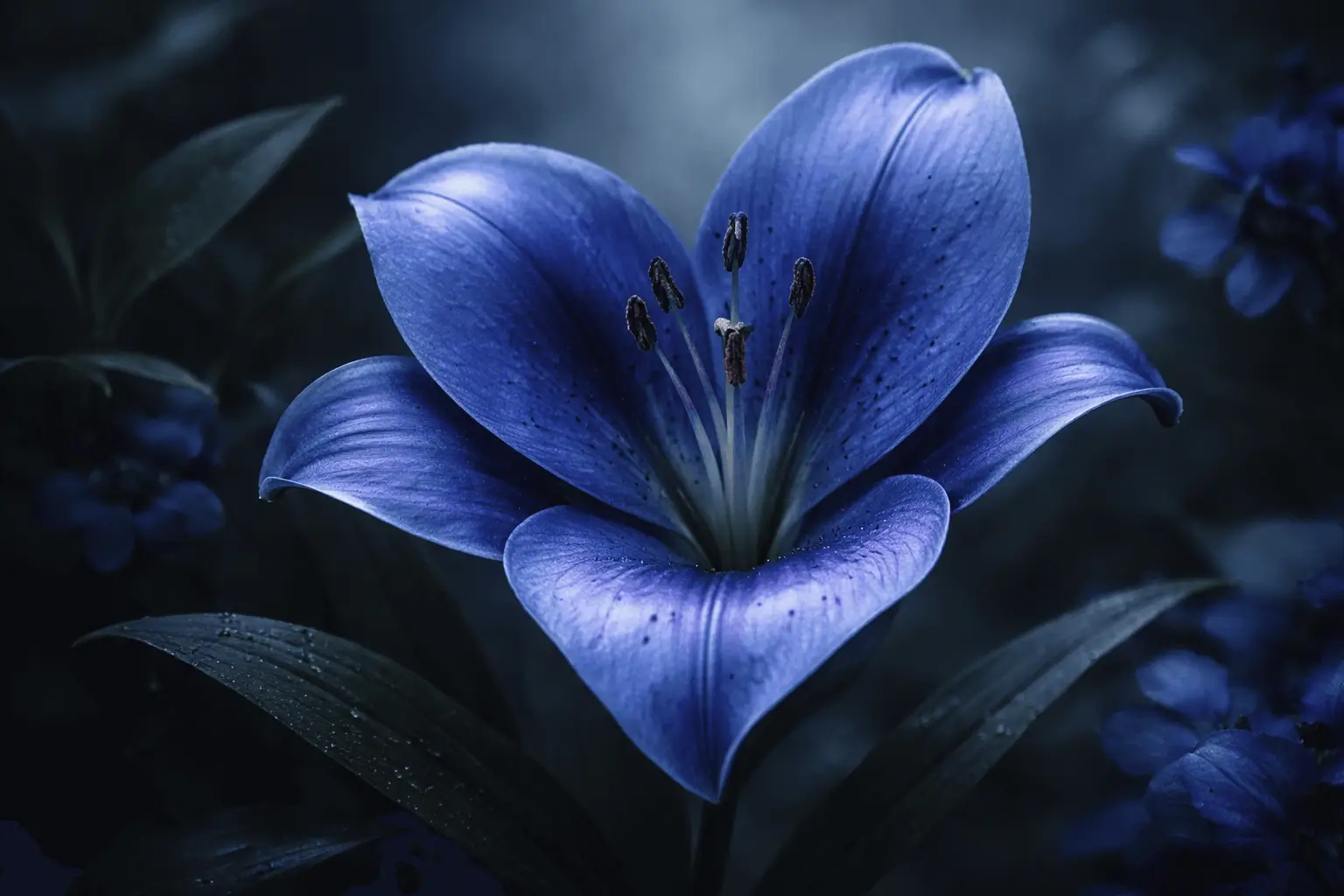
Blue heart lilies are often presented as rare, emotionally meaningful flowers with a striking heart-like shape and deep blue tones. Interest in blue heart lilies has grown rapidly due to their dramatic appearance in online images, floral listings, and social media promotions. Many people are curious whether these flowers truly exist in nature or if the color and form are the result of selective marketing. The confusion mainly comes from the way blue flowers are advertised, often blending real plants, edited images, and artificial products under one name. Understanding what blue heart lilies actually are, how the term is used, and whether the color is natural helps buyers make informed decisions and avoid misleading claims.
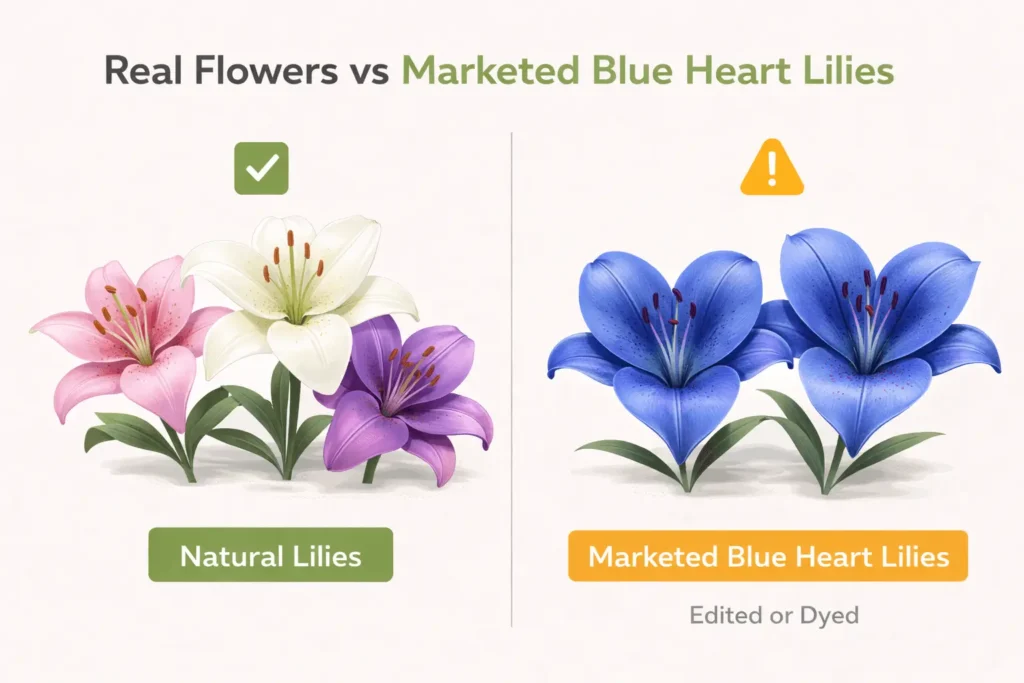
Blue heart lilies are not a scientifically recognized flower species. The term is commonly used for dyed, artificial, or digitally enhanced blooms marketed for emotional symbolism rather than botanical accuracy.
What Are Blue Heart Lilies?
Origin and Common Naming
The name blue heart lilies is not a formally recognized botanical term. It is commonly used as a descriptive or commercial label rather than a scientific classification. In most cases, the term does not refer to a true lily species within the Lilium genus. Instead, it is applied to ornamental plants, artistic floral arrangements, or modified flowers that visually resemble lilies and display a heart-like form. Sellers often use this name to create a sense of rarity and emotional appeal rather than to identify a specific plant type.
Visual Characteristics
Blue heart lilies are typically described as having a heart-shaped bloom or petal structure combined with blue or midnight-blue coloration. These color claims are often influenced by lighting conditions, photo editing, or artificial dyes. In real-life settings, a blue lily may appear darker or cooler-toned under low light, creating the illusion of a deeper blue shade. Selective breeding can produce darker purples or bluish hues, but true blue coloration remains uncommon.
Blue Heart Lilies Meaning and Symbolism
Emotional and Cultural Meaning
Blue flowers are widely associated with calmness, trust, mystery, and emotional depth. When combined with a heart-shaped bloom, the symbolism often extends to themes of deep affection, loyalty, and quiet emotional connection. The heart-like form reinforces ideas of love and sincerity, while the blue tone suggests introspection and emotional balance.
Modern Floral Interpretations
In modern floral marketing, blue heart lilies meaning is often defined by florists and sellers rather than cultural tradition. They are promoted as symbols of rare love, uniqueness, and emotional intensity. These interpretations are commonly tailored to gifting occasions such as anniversaries or symbolic gestures, even when the flower itself is artificial or color-enhanced.
Midnight Blue Heart Plant – Real or Fake?
What Is the Midnight Blue Heart Plant?
The term midnight blue heart plant is a trade name rather than a recognized botanical species. It is used to describe plants or floral products that appear very dark blue with a heart-like shape. This name does not correspond to any officially classified plant and is primarily used for marketing and visual branding.
Natural vs Artificial Color
Naturally occurring plant pigments rarely produce true blue flowers. Most midnight-blue appearances are achieved through dyeing, digital enhancement, or artificial materials. Claims surrounding the midnight blue heart plant real or fake question usually arise from edited product images or vague descriptions. Clear labeling often reveals whether the item is dyed, preserved, or fully artificial. Some flowers may appear cooler or slightly blue under certain lighting conditions, similar to discussions around moonflower blue varieties.
Understanding how plant traits and color variations develop is easier when you follow a complete guide to plant care and gardening basics.
Blue Heart Lilies – Botanical Reality Check
| Claim | Botanical Reality |
|---|---|
| Naturally blue lily | Extremely rare due to pigment limits |
| Midnight blue heart plant | Marketing or trade name |
| Heart-shaped bloom | Often edited or artificial |
| Deep blue color | Usually dyed or digitally enhanced |
| Sold as live blue plant | Rarely naturally true blue |
Blue Heart Lilies vs Similar Flowers
Blue Heart Lilies vs Blue Tulip
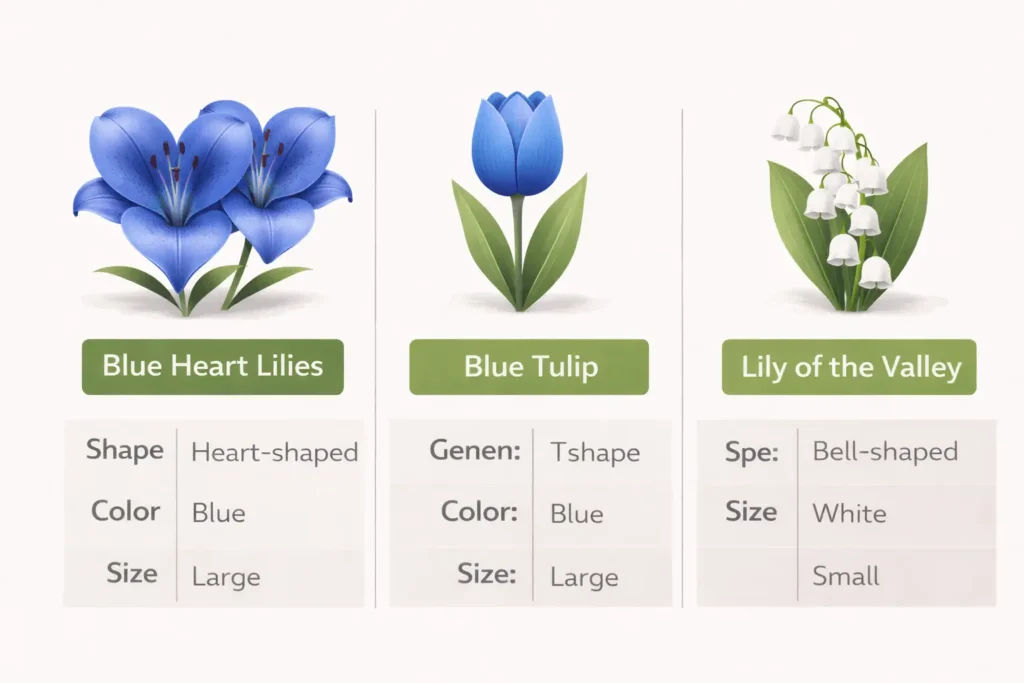
A blue heart tulip differs significantly in structure and growth habit. Tulips have smooth, cup-shaped blooms and a distinct stem form, while blue heart lilies are presented as having layered petals and a heart-like outline. Misconceptions occur when edited images blur these differences, leading buyers to assume they are the same type of flower.
Blue Heart Lilies vs Lily of the Valley
Lily of the valley produces small, bell-shaped white flowers and grows on low, arching stems. In contrast, blue heart lilies are depicted as larger, single blooms with bold color. Confusion arises due to naming overlap, but the shape, color, and growth pattern clearly separate lily of the valley from blue heart-themed products.
Are Blue Heart Lilies Naturally Blue?
Scientific Reality of Blue Lilies
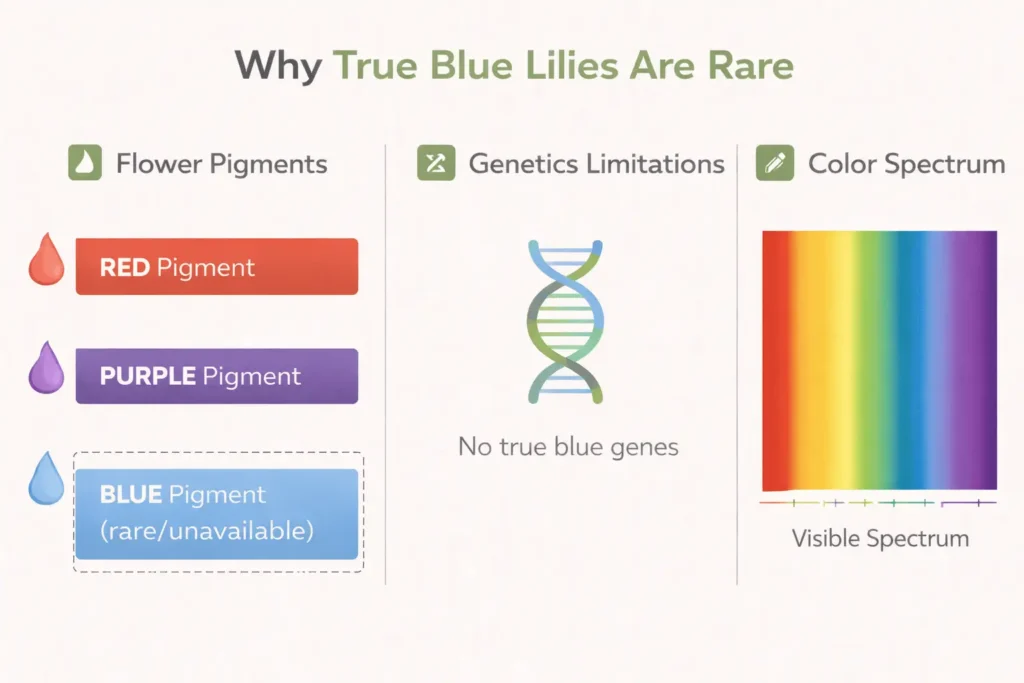
True blue lilies are extremely rare due to genetic limitations. Plants lack the natural pigment required to produce a stable blue color. While some lilies appear purplish or cool-toned, genetics prevent the formation of a true blue pigment in most cases. True blue flower coloration depends on anthocyanin pigments, which vary in intensity and stability depending on plant genetics and pH levels, as explained by Britannica.
Dyed and Hybrid Alternatives
To meet demand, dyed flowers and hybrid varieties are often used to simulate a blue lily appearance. These options can safely achieve deep or midnight tones without altering plant genetics. Dark purple cultivars and treated blooms are commonly marketed as blue alternatives.
Similar confusion exists around other rare-colored plant claims, such as the debate about blue strawberries, where edited images often blur botanical reality.
Where to Buy Blue Heart Lilies
Online Flower Stores
Online platforms frequently offer blue heart-themed floral products. Descriptions usually clarify whether the item is artificial, dyed, or preserved. Reading details carefully is essential when searching for where to buy blue heart lilies online.
Local Nurseries vs Artificial Flower Shops
Local nurseries typically sell real plants and bulbs but rarely stock naturally blue varieties. Artificial flower shops, on the other hand, specialize in decorative blue heart-style flowers designed for long-term display rather than growth.
Blue Heart Lilies for Sale – What to Check Before Buying
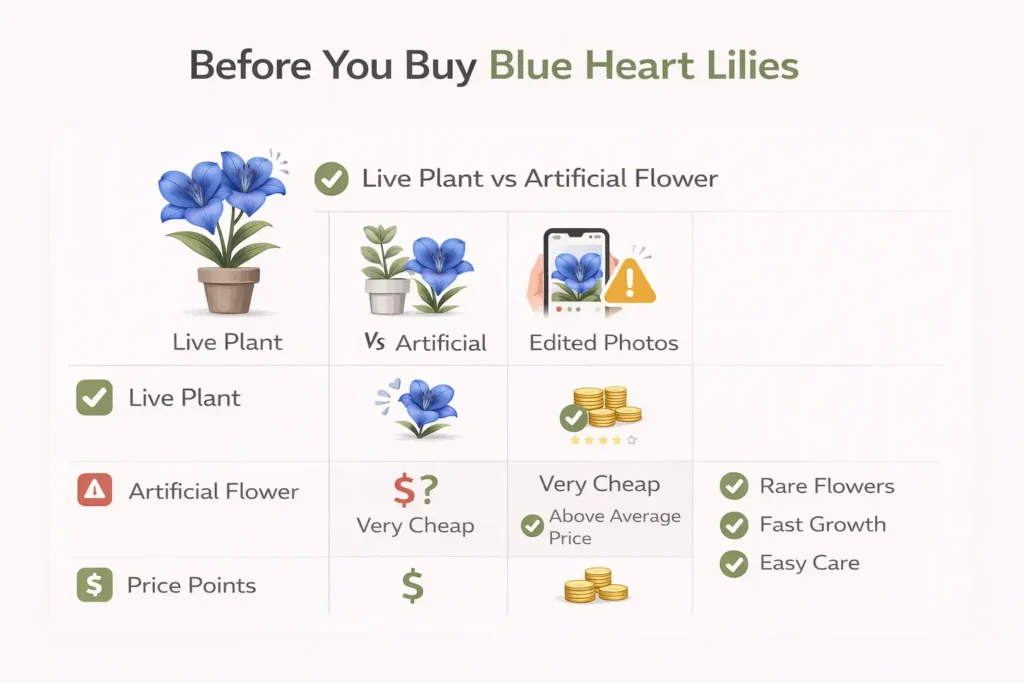
Live Plant, Bulb, or Artificial Flower?
Identifying whether blue heart lilies for sale are live plants, bulbs, or artificial arrangements requires checking product labels and images closely. Real plants will include care instructions and growth details.
Price, Photos, and Seller Claims
Red flags include overly saturated photos, vague botanical names, and unrealistic promises. Comparing prices and reading reviews helps avoid misleading listings and exaggerated claims.
Care Expectations (If You Buy One)
Light, Water, and Soil Basics
If the plant is real, general care includes bright indirect light, moderate watering, and well-draining soil. Care requirements depend on the actual species rather than the marketed name.
Maintenance for Artificial or Dyed Flowers
Artificial or dyed flowers require minimal maintenance. Keeping them away from direct sunlight preserves color, while gentle dusting maintains appearance over time.
Conclusion
Blue heart lilies are best understood as a descriptive or marketing term rather than a naturally occurring flower species. While their appearance and symbolism are appealing, true blue coloration in lilies is rare. Many products labeled under this name are dyed, artificial, or visually enhanced. Understanding the reality behind the name helps buyers separate myths from facts. Informed purchasing decisions ensure expectations match the product, whether for decoration, gifting, or collection. Like other visually dramatic flower myths such as black lotus flowers, the concept of a naturally blue heart lily often blends symbolism with marketing presentation.
FAQs
They are usually not a naturally occurring flower and are often dyed, artificial, or marketed under a descriptive name.
They are commonly associated with deep emotions, trust, calmness, and symbolic love.
Most examples are artificial, dyed, or digitally enhanced rather than naturally blue.
Reputable online stores and clearly labeled artificial flower shops are the safest options.
No, they differ in structure, growth, and botanical classification.
Genetic limitations prevent lilies from producing stable blue pigments naturally.
Most products sold under this name are not naturally blue lilies grown from true bulbs.
Digital editing, lighting effects, and dye treatments often intensify color beyond natural limits. Are blue heart lilies real flowers?
What is the meaning of blue heart lilies?
Is the midnight blue heart plant natural or artificial?
Where can I buy blue heart lilies safely?
Are blue heart lilies the same as blue tulips or lilies?
Why are true blue lilies so rare?
Can blue heart lilies grow from bulbs?
Why do online photos look extremely blue?

Written by the LeafyHeaven Editorial Team
LeafyHeaven shares practical gardening tips and simple plant care guides to help you grow, nurture, and enjoy your plants with ease. Our goal is to make gardening feel natural, approachable, and rewarding for everyone.


[…] Read Also: 7+ Stunning Truths About Blue Heart Lilies You Must Know […]