
Introduction
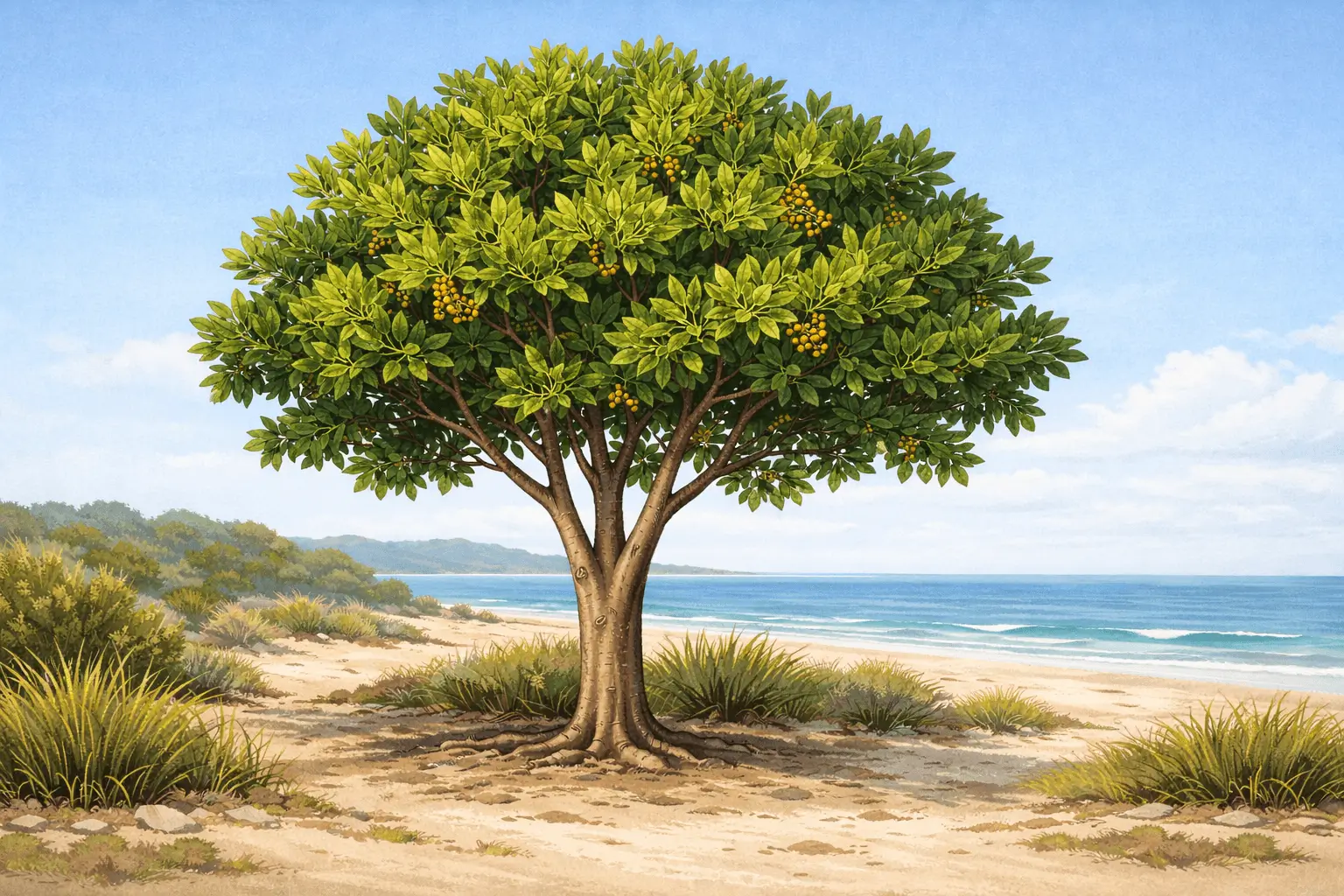
The tuckeroo tree is a well-known native evergreen tree valued for its durability, clean appearance, and adaptability to Australian conditions. Widely planted in streetscapes, parks, and residential gardens, it offers year-round greenery with minimal maintenance. Its popularity in Australian landscaping comes from its strong coastal tolerance, ability to handle urban pollution, and dependable growth habit. Botanically known as Cupaniopsis anacardioides, the tuckeroo tree belongs to a group of hardy evergreen species suited to warm and temperate climates. With glossy foliage, a dense canopy, and resilience to wind and salt spray, it performs especially well in coastal and suburban environments. These qualities make it a practical and visually consistent choice for long-term landscape planning.
What Is a Tuckeroo Tree?
Botanical Identity and Classification
- Common name: Tuckeroo
- Scientific name: Cupaniopsis anacardioides (This species classification and native distribution are documented in Australian botanical resources such as the Australian Government’s plant database.)
- Family overview: Sapindaceae family, which includes several hardy Australian natives
- Natural habitat in Australia: Coastal forests, subtropical regions, and open woodlands along eastern Australia
The tuckeroo tree naturally thrives in warm coastal zones, making it well adapted to Australian soils and climate patterns.
Tuckeroo vs Other Evergreen Trees
The tuckeroo fits well within common types of evergreen trees used in landscaping due to its year-round foliage retention. Unlike deciduous species that shed leaves seasonally, a tree evergreen like tuckeroo maintains a stable canopy throughout the year. This consistency provides reliable shade, screening, and visual structure. Compared with many evergreen trees, tuckeroo stands out for its tolerance to wind, salt, and urban stress, making it a dependable long-term planting choice.
You can also compare it with fast growing evergreen trees Australia to evaluate speed, structure, and suitability for landscaping projects.
Tuckeroo Tree Characteristics
Tuckeroo Leaves and Canopy
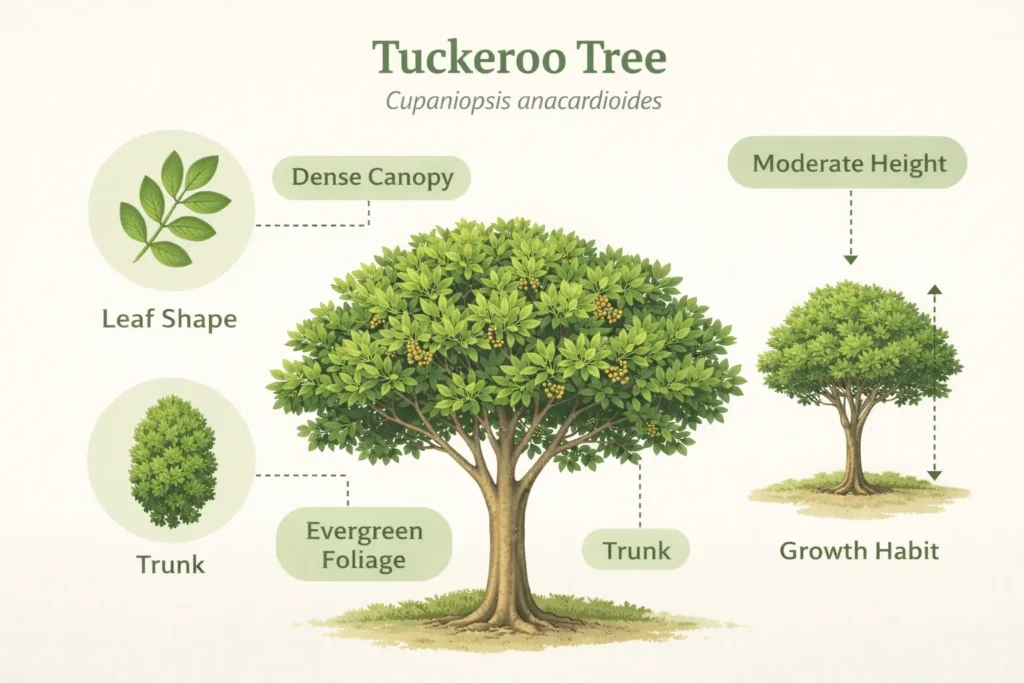
- Oval-shaped leaves with a smooth, glossy surface
- Medium-sized foliage with a firm texture
- Dense canopy that reduces light penetration
The dense foliage offers excellent shade and screening, making the tree suitable for privacy buffers and heat reduction in outdoor spaces.
Size, Growth Rate, and Form
- Mature height typically ranges from 8 to 15 metres, smaller than many tall evergreen trees
- Moderate growth rate with a balanced, upright form
- Suitable for streets, parks, and home gardens without overwhelming nearby structures
Its controlled growth habit makes it manageable in both public and private landscapes.
Tuckeroo Tree Fruit Explained
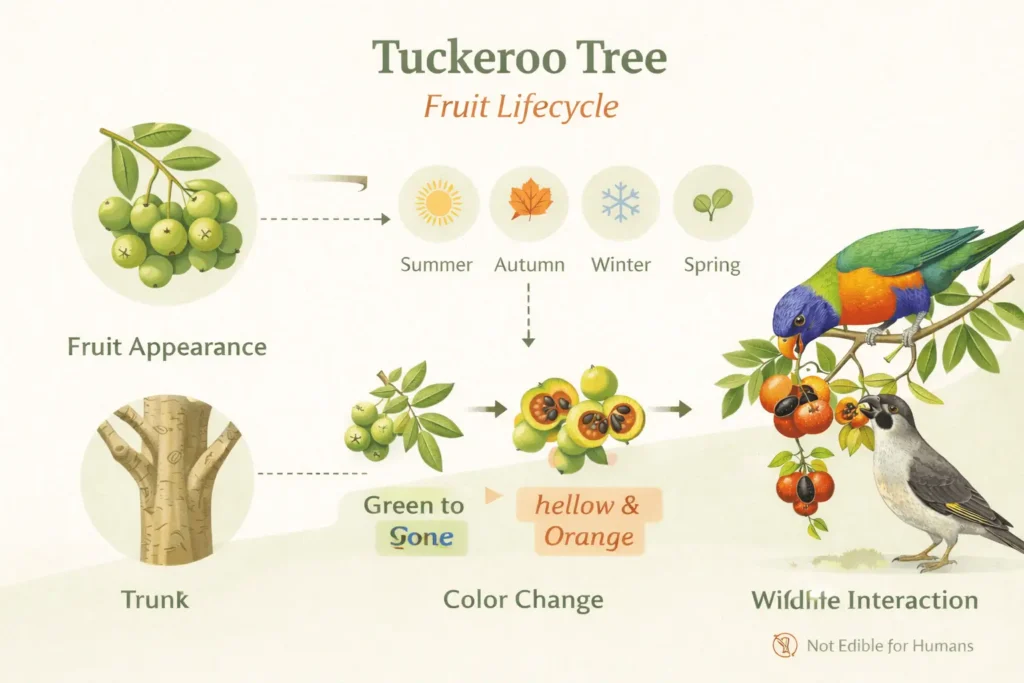
What Does Tuckeroo Fruit Look Like?
- Fruits appear seasonally, usually in warmer months
- Small, rounded capsules that change colour as they mature
- Bright interior seeds that attract birds and wildlife
The fruiting cycle plays an important role in supporting native fauna.
Is Tuckeroo Tree Fruit Edible?
Tuckeroo tree fruit is not considered edible for humans and should not be consumed. While handling the fruit is generally safe, ingestion is not recommended. Birds and native animals benefit from the fruit, making the tree valuable for wildlife-friendly planting without posing significant risks to people.
Tuckeroo Seeds and Propagation
Understanding Tuckeroo Seeds
- Seeds are enclosed within a hard outer capsule
- Germination occurs under warm conditions
- Fresh seeds typically show better success rates
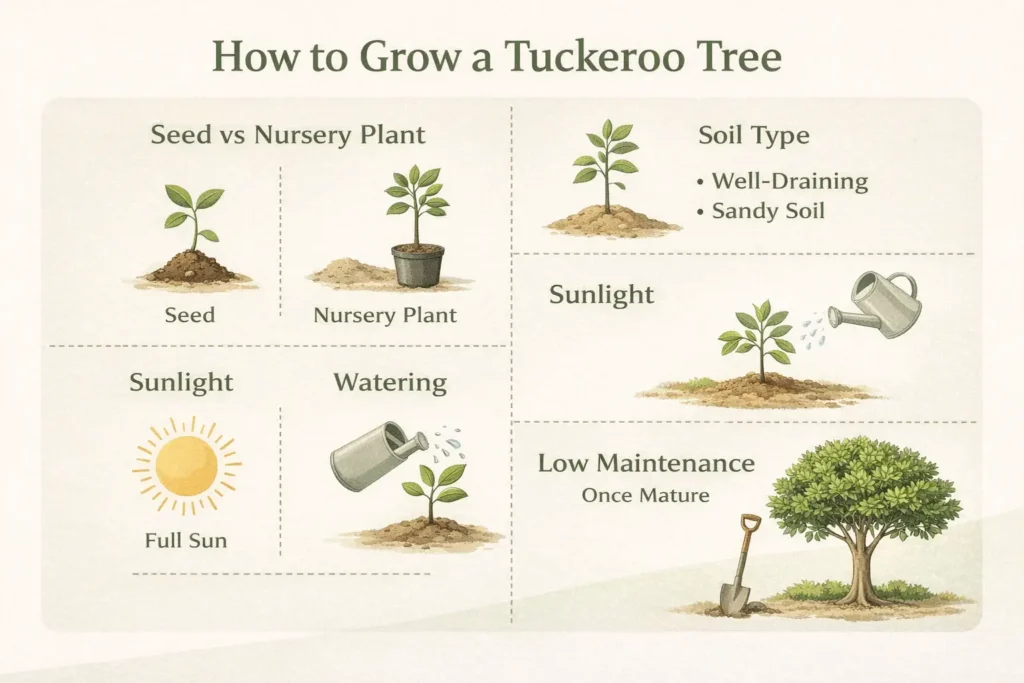
How to Grow a Tuckeroo Tree
- Can be grown from seed or purchased as a nursery-grown plant
- Prefers well-draining soil and full sun to partial shade
- Requires regular watering during establishment, then minimal supplemental watering
Nursery plants are often chosen for faster establishment and predictable growth.
Landscaping Uses of the Tuckeroo Tree
Tuckeroo in Residential Landscaping
- Ideal for front yards and backyards
- Works well as a feature tree or shade tree
- Suitable for boundary planting and open lawn areas
Tuckeroo as an Evergreen Landscaping Tree
- Plays a strong role among evergreen trees for landscaping
- Less demanding than many decorative evergreen trees
- Performs well in coastal and urban settings due to salt and pollution tolerance
Tuckeroo vs Similar Trees
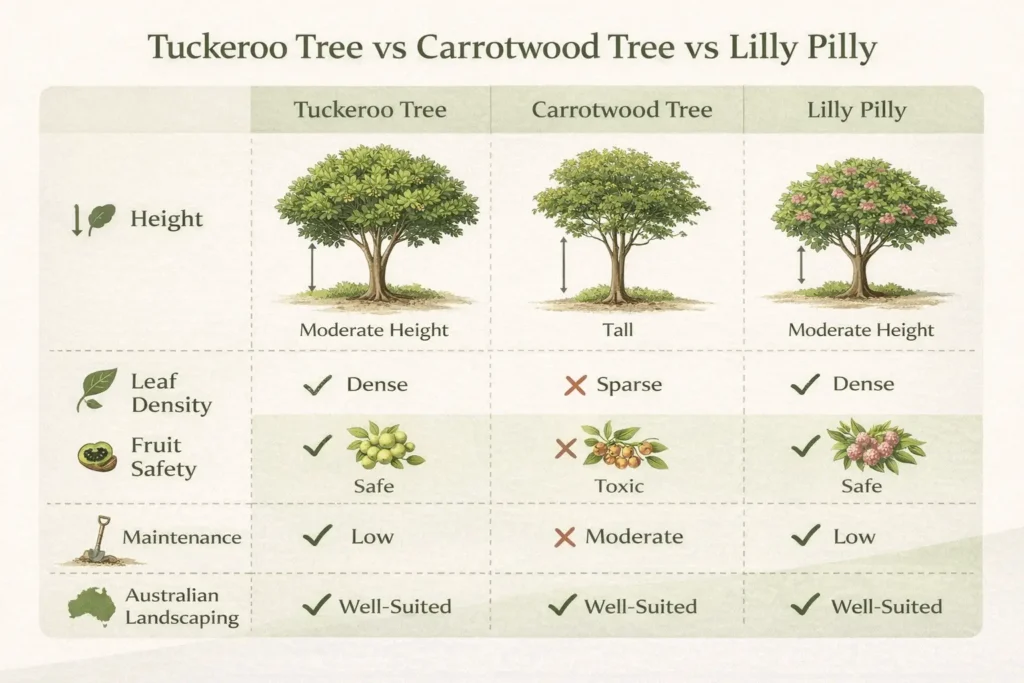
Tuckeroo vs Carrotwood Tree
- Tuckeroo is native, while carrotwood tree is often considered invasive
- Carrotwood tree fruit edible confusion exists; carrotwood fruit is also not suitable for human consumption
- Tuckeroo is preferred for sustainable Australian landscaping
Tuckeroo vs Lilly Pilly Trees
- Often confused due to similar leaf shape and evergreen nature
- Lilly pilly typically requires more pruning and maintenance
- Tuckeroo is chosen when a low-maintenance, structurally strong tree is preferred
For a deeper comparison of similar Australian species, you can explore lilly pilly species to understand their growth habits and maintenance needs.
Care and Maintenance Tips
Watering, Pruning, and Soil Needs
- Low-maintenance once established
- Occasional pruning to maintain shape
- Tolerates a wide range of soils with good drainage
For long-term success with trees and plants, following a complete gardening and plant care guide can help you build the right foundation.
Common Problems and Solutions
- Minor pest issues are rare
- Occasional leaf drop due to environmental stress
- Generally resistant to serious diseases
Benefits of Planting a Tuckeroo Tree
- Evergreen year-round appeal
- Supports birds and native wildlife
- Low water needs after establishment
- Excellent choice for urban and coastal environments
Conclusion
The tuckeroo tree stands out as a smart evergreen option for Australian landscapes due to its durability, adaptability, and visual consistency. Its coastal tolerance, low maintenance requirements, and wildlife benefits make it suitable for a wide range of planting scenarios. Whether used in residential gardens or public spaces, the tuckeroo tree delivers long-term value. For best results, consult local nurseries or landscape designers to ensure proper selection and placement.
FAQs
Is the tuckeroo tree suitable for small gardens?
Yes, when space allows for its mature size, tuckeroo can work well due to its controlled growth and clean canopy.
How fast does a tuckeroo tree grow?
It has a moderate growth rate, establishing steadily without aggressive spread.
Is tuckeroo tree fruit safe to touch or handle?
Yes, handling is generally safe, but the fruit should not be eaten.
Can tuckeroo trees handle coastal conditions?
Yes, they are highly tolerant of salt spray, wind, and sandy soils.
How does tuckeroo compare to other evergreen trees for landscaping?
Tuckeroo offers better reliability, lower maintenance, and stronger tolerance to urban and coastal stress than many evergreen alternatives.

Written by the LeafyHeaven Editorial Team
LeafyHeaven shares practical gardening tips and simple plant care guides to help you grow, nurture, and enjoy your plants with ease. Our goal is to make gardening feel natural, approachable, and rewarding for everyone.