
Introduction
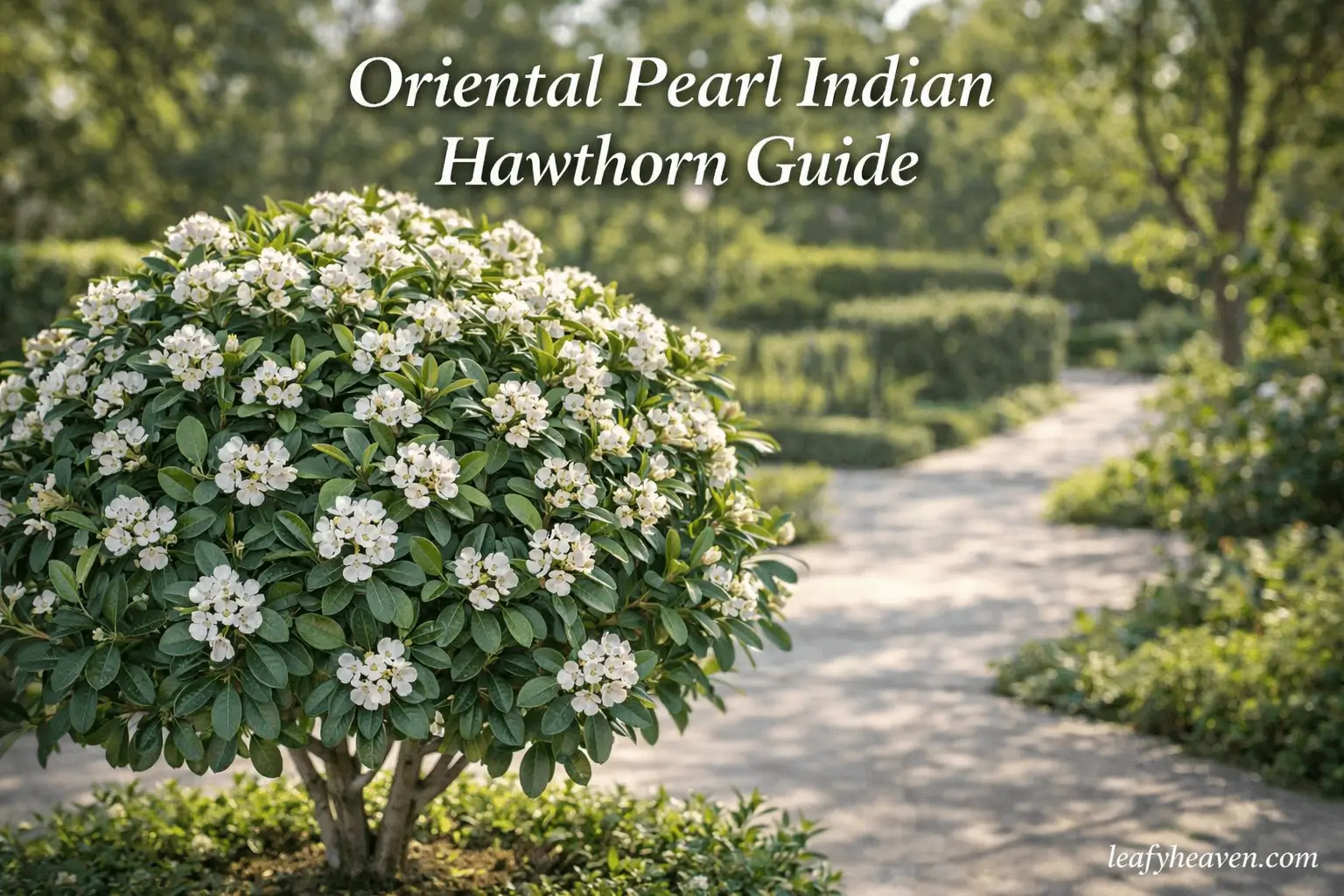
Oriental pearl indian hawthorn is a compact evergreen flowering shrub valued for its neat structure, glossy foliage, and seasonal white blooms. Botanically known as Rhaphiolepis oriental pearl or oriental pearl rhaphiolepis, this plant is widely used in low-maintenance landscapes where tidy growth and year-round greenery are essential. Gardeners often select the oriental pearl plant for structured borders, formal hedging, or small garden accents because it maintains a dense, rounded habit with minimal care. Whether grown as an oriental pearl hedge, shaped into a border feature, or mistakenly searched as an oriental pearl tree, this versatile shrub offers reliable ornamental appeal and practical landscaping performance in warm, temperate environments.
Botanical Profile and Plant Characteristics
Size, Growth Habit, and Mature Spread
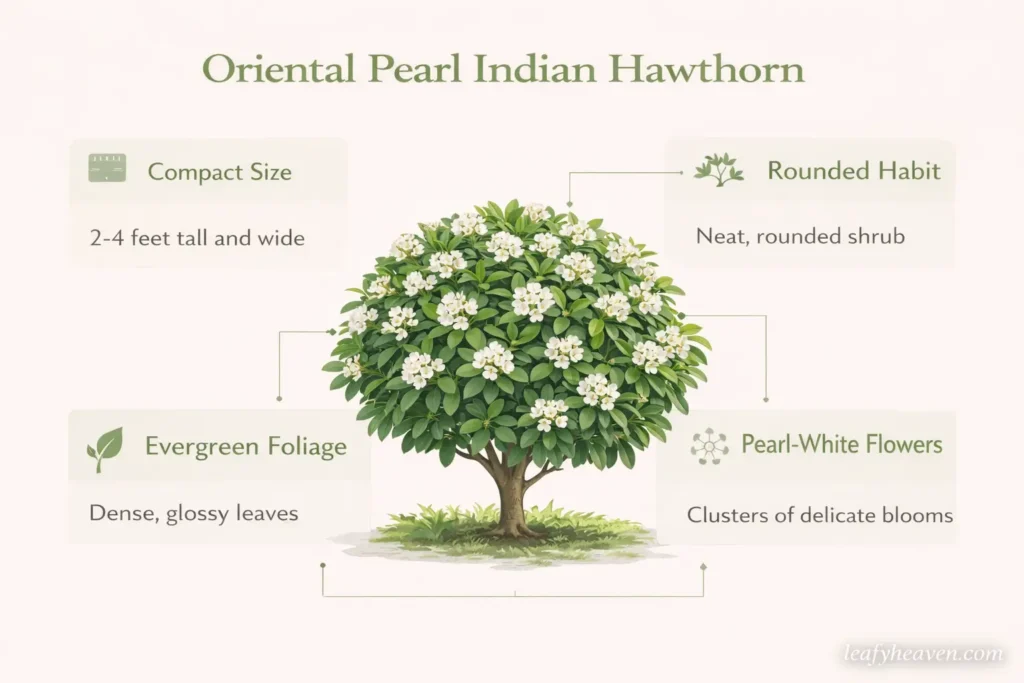
Rhaphiolepis oriental pearl typically forms a compact, rounded shrub with moderate growth and controlled spread. This plant classification and growth behavior are supported by botanical records from the Royal Botanic Gardens, Kew. Mature plants usually remain small enough for residential landscapes, making them ideal for edging, foundation planting, and confined garden beds. Dense evergreen foliage provides consistent structure throughout the year, allowing the plant to function as both a decorative specimen and a practical screening shrub in small gardens.
Flowers, Bloom Season, and Visual Appeal
This variety is admired for its pearl-white blossoms that appear in seasonal clusters, creating a soft and refined floral display. Blooming generally occurs in the warmer months, adding brightness without overwhelming surrounding plants. The flowers attract pollinators such as bees, enhancing garden biodiversity while maintaining strong ornamental value in formal and modern landscape settings.
Is Oriental Pearl a Tree, Shrub, or Hedge Plant?
Despite occasional references to an oriental pearl tree, the plant is botanically a shrub. Its naturally compact structure makes it especially suitable for hedging, edging pathways, or framing foundations rather than growing as a tall tree. Landscapers value its predictable form, which allows it to serve multiple design roles while remaining easy to manage.
Ideal Growing Conditions for Oriental Pearl Indian Hawthorn
Sunlight, Soil, and Climate Requirements
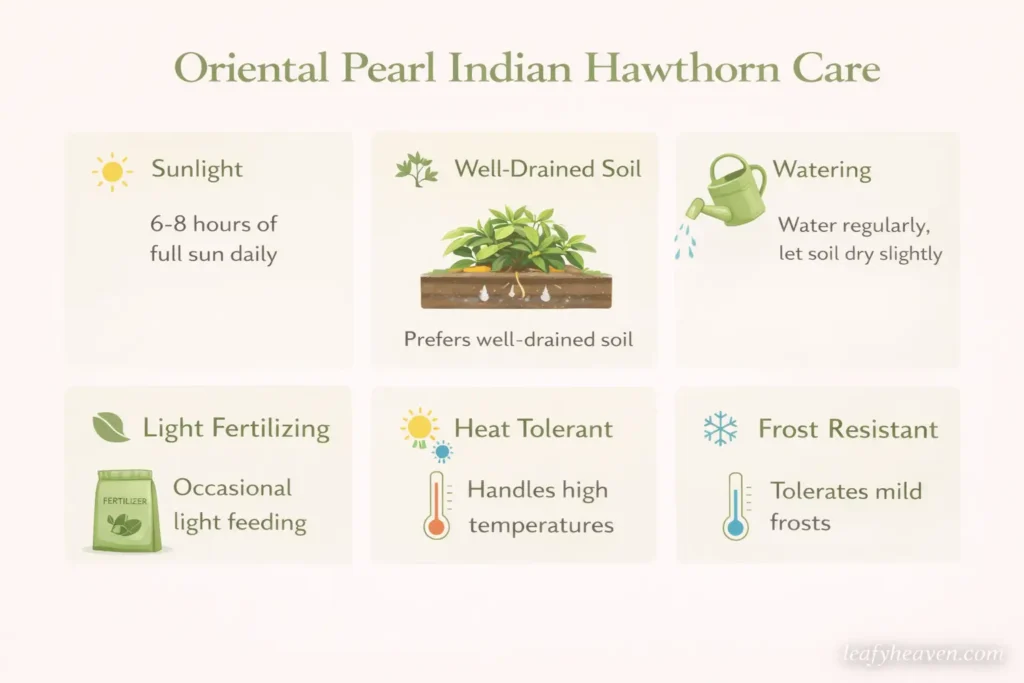
Oriental pearl indian hawthorn performs best in full sun to partial shade, where adequate light supports dense foliage and consistent flowering. Well-drained soil is essential to prevent root stress, and once established, the shrub demonstrates notable drought tolerance. These traits make it dependable in regions with warm summers and moderate rainfall.
To maintain healthy shrubs and long-term growth, it helps to follow a complete gardening and plant care guide for proper soil and environmental balance.
Watering and Fertilizing Needs
Regular watering is important during the establishment phase to encourage deep root development. After maturity, watering frequency can be reduced, reflecting the plant’s low-maintenance nature. Light seasonal feeding with a balanced fertilizer supports healthy foliage and flowering without excessive growth.
Hardiness and Environmental Tolerance
This shrub tolerates heat, coastal wind exposure, and mild frost conditions, making it suitable for warm-temperate landscapes. Its resilience contributes to long-term landscape stability, particularly in areas where climate adaptability is essential.
Landscaping Uses and Design Ideas
Using Oriental Pearl as a Hedge or Border
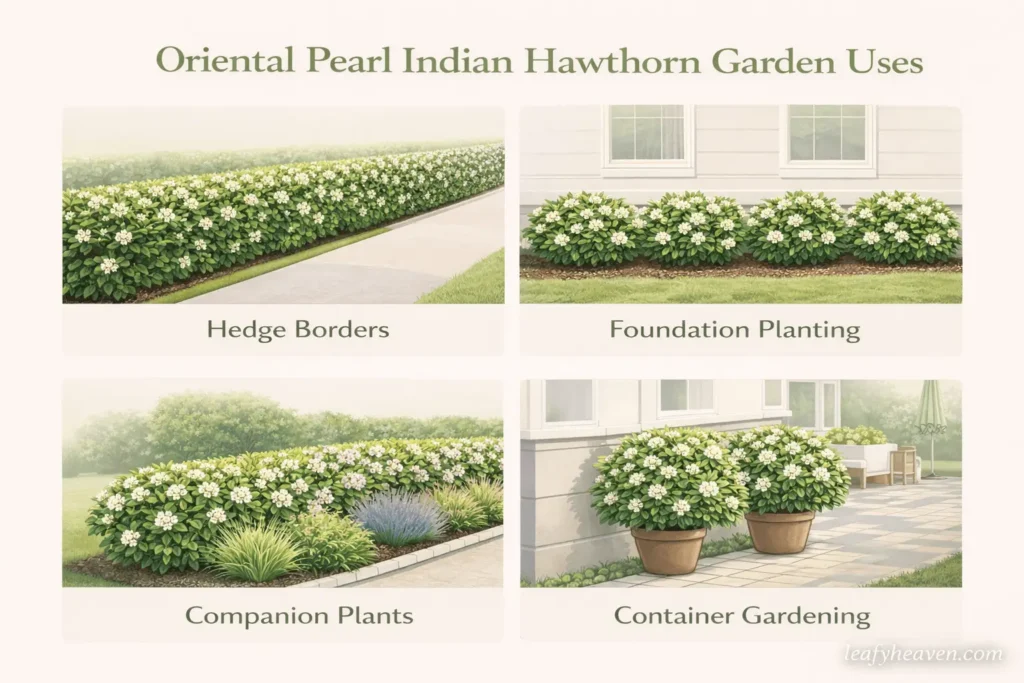
The dense branching habit makes the oriental pearl plant hedge highly effective for structured borders and privacy screening. Consistent spacing during planting ensures a continuous oriental pearl hedge with uniform coverage. Minimal pruning is required to maintain shape, supporting low-effort landscape management.
You can also explore teddy bear magnolia hedge as another structured evergreen option for creating clean and formal garden borders.
Companion Plants and Garden Styling
Oriental pearl pairs well with flowering shrubs, ornamental grasses, and groundcovers that contrast in texture or color. It integrates smoothly into modern, coastal, and formal garden themes where evergreen structure balances seasonal blooms.
For more compact garden inspiration, you can also look at australian natives for small gardens that thrive in similar landscape conditions.
Container and Small-Space Gardening
Growing the oriental pearl plant in containers or courtyards is practical due to its compact root system and manageable size. Proper drainage, periodic feeding, and occasional pruning keep container specimens healthy and visually balanced.
Availability, Buying Guide, and Nursery Options
Where to Buy Oriental Pearl Indian Hawthorn
Garden centers and online nurseries commonly list the oriental pearl plant for sale, including major retailers where searches such as oriental pearl plant bunnings, oriental pearl bunnings, or indian hawthorn bunnings may appear. Availability can vary seasonally, so checking local nursery stock improves selection success.
What to Check Before Purchasing
When selecting plants, look for:
- Healthy, glossy foliage without spotting
- Strong root systems not bound or damaged
- Appropriate plant size for hedging or feature planting
Choosing the correct maturity level ensures faster landscape establishment and better long-term performance.
Care, Pruning, and Maintenance Tips
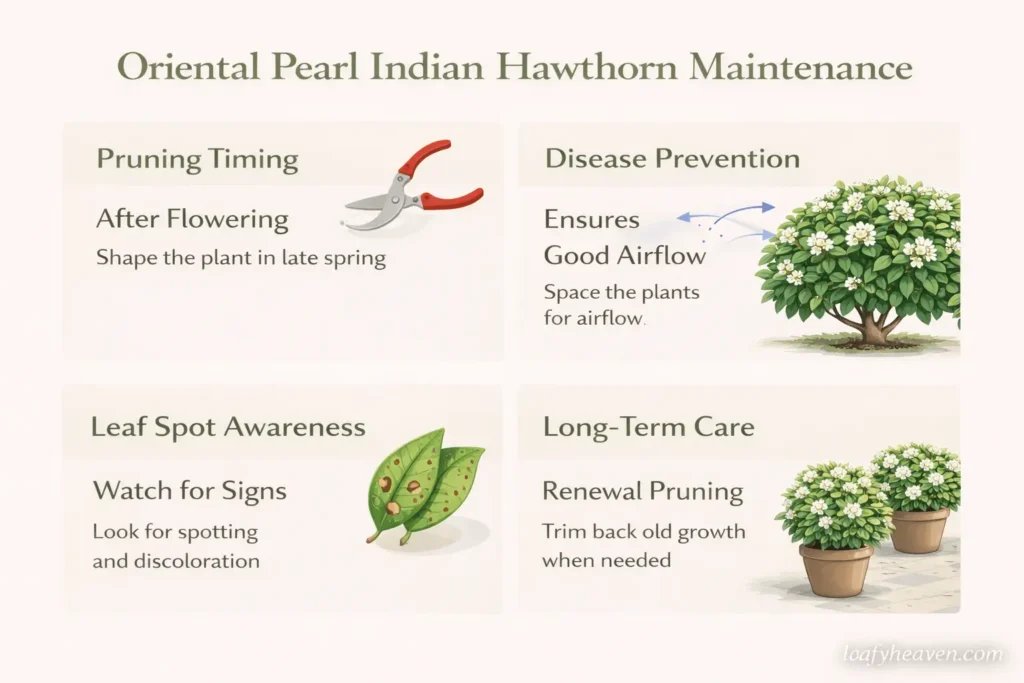
Pruning for Shape and Flowering
Prune after the flowering period to maintain natural form while encouraging dense hedge growth. Light shaping is usually sufficient because the shrub retains a tidy structure naturally.
Common Pests, Diseases, and Prevention
Leaf spot and fungal issues may occur in poorly ventilated or overly wet conditions. Prevent problems by:
- Allowing airflow between plants
- Watering at soil level rather than overhead
- Maintaining well-drained soil
These practices significantly reduce disease risk.
Long-Term Maintenance and Lifespan
Oriental pearl indian hawthorn is valued for long-term evergreen performance with minimal intervention. Occasional renewal pruning can refresh aging plants and sustain compact growth for many years.
Oriental Pearl Indian Hawthorn vs Other “Oriental Pearl” Searches
Difference Between the Plant and the Shanghai Tower
Search confusion sometimes links the plant with structures such as the oriental pearl tower, shanghai oriental pearl tower, pearl tower shanghai, oriental pearl tv tower, or pearl of the orient tower shanghai. These names refer to architectural landmarks, not botanical species. Oriental pearl indian hawthorn is strictly a landscape shrub.
Avoiding Search Confusion When Buying Plants
To ensure accurate purchasing, focus on the botanical name rhaphiolepis oriental pearl. Using the scientific name prevents confusion with unrelated landmarks or products.
Conclusion
Oriental pearl indian hawthorn stands out as a practical solution for low-maintenance hedges, compact evergreen structure, and attractive seasonal flowers. Its resilience, tidy growth habit, and adaptable landscaping uses make it ideal for modern residential gardens. Gardeners seeking reliable structure with minimal upkeep can confidently select this shrub and explore nursery availability to begin planting.
FAQs
How big does oriental pearl indian hawthorn grow?
Most plants remain compact, forming a small rounded shrub suitable for borders, hedges, and foundation plantings rather than tall tree growth.
Is oriental pearl suitable for hedging?
Yes. Dense evergreen foliage and controlled growth make it highly effective for formal hedges and low screening.
Can oriental pearl grow in pots or containers?
It grows well in containers when provided with drainage, balanced feeding, and occasional pruning to maintain shape.
Where can I buy oriental pearl indian hawthorn?
Local garden centers, online nurseries, and major retailers commonly stock this shrub, often listed under oriental pearl plant availability searches.
Is oriental pearl indian hawthorn drought tolerant?
Once established, it shows good drought tolerance, requiring only occasional watering in dry conditions.

Written by the LeafyHeaven Editorial Team
LeafyHeaven shares practical gardening tips and simple plant care guides to help you grow, nurture, and enjoy your plants with ease. Our goal is to make gardening feel natural, approachable, and rewarding for everyone.

[…] Read Also: 5+ Stunning Oriental Pearl Indian Hawthorn Secrets […]