

Introduction to Silver Wattle Tree
The silver wattle tree is a fast-growing and visually striking plant widely appreciated for its soft foliage and bright seasonal blooms. Known scientifically as Acacia dealbata, it stands out as one of the most recognizable members of Australia’s native flora. Often referred to as australia’s wattle, this species has gained global popularity due to its adaptability, ornamental value, and rapid growth in suitable climates.
Commonly known by several names—including silver acacia, acacia silver wattle, and silver wattle acacia—this tree is valued both for landscaping and ecological purposes. Its elegant appearance, combined with practical benefits like soil improvement and pollinator support, makes it a preferred choice for gardens and outdoor spaces.
This guide provides a complete informational resource on the silver wattle tree, covering its characteristics, growth habits, care requirements, uses, and key considerations for successful cultivation.
To successfully grow and manage trees like this, understanding the fundamentals in a complete gardening and plant care guide is essential.
What Is Silver Wattle? (Acacia Dealbata Explained)
Scientific Classification & Botanical Name
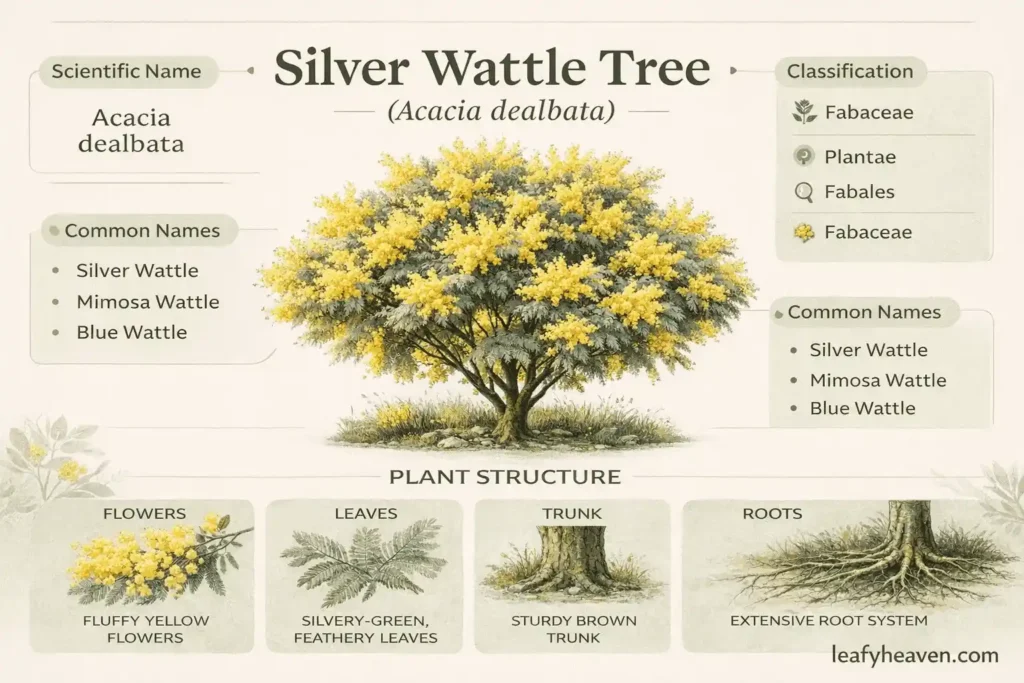
The silver wattle is scientifically known as Acacia dealbata, a species belonging to the genus Acacia and the family Fabaceae (legume family). The acacia dealbata plant is part of a large group of nitrogen-fixing trees and shrubs that are widely distributed across Australia and other regions. As a fast-growing evergreen, the acacia dealbata tree is valued for both its ornamental appeal and ecological role, particularly in improving soil quality through natural nitrogen enrichment.
Common Names and Variations
The silver wattle is known by several common names, which are often used interchangeably depending on region and context. These include:
- silver wattle
- silver acacia tree
- acacia silver
- silver wattle acacia dealbata
These variations all refer to the same species, Acacia dealbata, and reflect its widespread recognition in gardening, landscaping, and botanical discussions. The use of multiple names helps cover different search intents and regional naming preferences while describing the same distinctive plant.
Key Features and Characteristics of Silver Wattle Tree
Appearance and Growth Habit
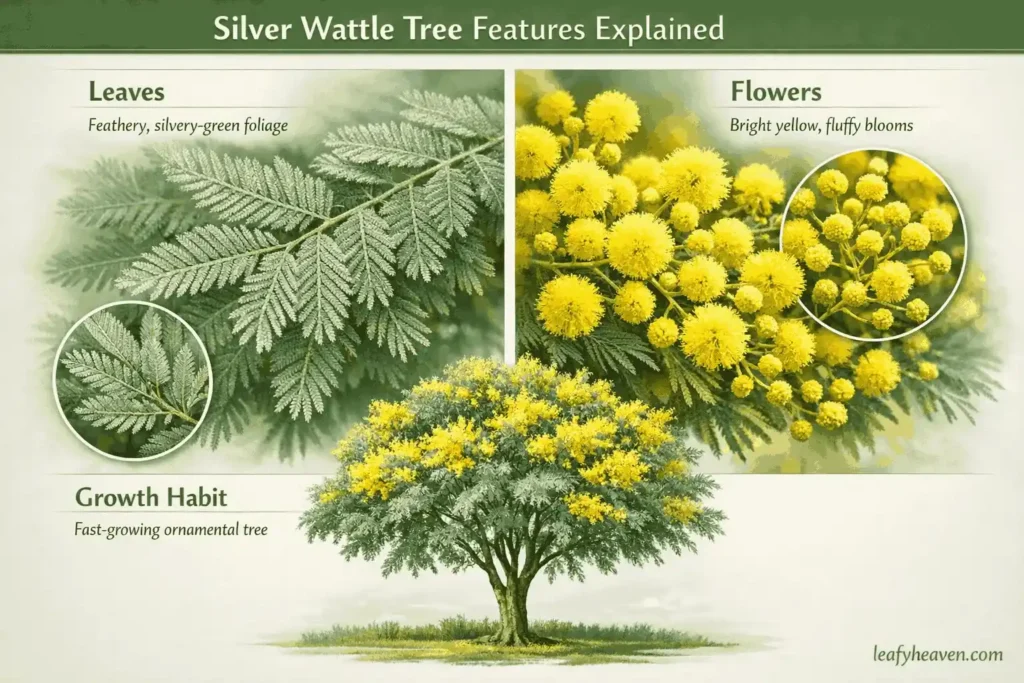
The silver wattle plant is known for its rapid growth and graceful structure, making it a standout choice in landscapes. It typically reaches a height of 10 to 30 meters, depending on growing conditions, with a spread that can extend several meters wide. This tree develops a slender trunk and an open, airy canopy that allows filtered light to pass through.
Key growth characteristics include:
- Fast-growing nature, often establishing quickly within a few years
- Upright growth with a slightly spreading crown
- Smooth, grey to dark bark that matures over time
- Suitable for use as a quick shade or screening tree
Its ability to grow rapidly makes it ideal for areas where quick coverage or visual impact is needed.
Silver Wattle Leaves and Foliage
The foliage of the silver wattle is one of its most distinctive features. The silver wattle leaves are finely divided and feathery, giving the tree a soft, fern-like texture. These leaves often have a silvery or bluish-green tone, which is why the plant is sometimes referred to as silver leaf wattle.
Notable foliage traits include:
- Soft, delicate leaf structure with a feathery appearance
- Silvery-green coloration that adds visual contrast
- Evergreen habit in suitable climates
- Light, airy canopy that enhances ornamental appeal
This unique foliage contributes significantly to the tree’s decorative value in gardens and outdoor spaces.
Flowers and Blooming Season
The silver wattle produces clusters of bright yellow, fluffy blooms that are highly recognizable. These spherical flowers, often referred to as acacia flower or wattles flower, appear in dense clusters and create a vibrant display during the blooming season.
Flowering characteristics include:
- Small, round, pom-pom-like yellow flowers
- Strong visual impact when in full bloom
- Typically flowers in late winter to early spring
- Light fragrance that attracts pollinators
These blooms not only enhance the tree’s ornamental value but also support pollinators, making it beneficial for the surrounding ecosystem.
Types of Wattle Trees and Related Species
Popular Wattle Varieties
There are hundreds of types of wattle found across different regions, especially in Australia, where the genus Acacia is highly diverse. These types of wattle trees vary in size, leaf structure, and flowering patterns, making them suitable for different landscaping and environmental conditions.
Some key points about common acacia varieties include:
- Tree vs shrub forms: Some wattles grow as tall trees, while others remain compact shrubs
- Leaf differences: Certain species have feathery foliage, while others have broader, simpler leaves
- Growth rate: Many wattle species are fast-growing, but growth speed can vary
- Flowering traits: Most produce yellow flowers, though size and density differ between varieties
Popular acacia varieties are widely used for ornamental planting, windbreaks, and soil improvement due to their adaptability and resilience.
Similar and Related Species
Several species are closely related to the silver wattle or are often confused with it due to similar appearance:
- Blue wattle (Acacia saligna): Known for its bluish-green foliage and slightly different leaf shape compared to silver wattle
- Queensland wattle: A regional variation adapted to warmer climates, often with different growth habits
- QLD silver wattle: A localized form of silver wattle found in Queensland, showing minor variations in size and tolerance
- Acacia podalyriifolia: Recognized for its broad, silvery leaves and compact growth, often used as an ornamental shrub
- White wattle: Features lighter-colored foliage and flowers, differing visually from the typical yellow blooms of silver wattle
👉 These related species share similarities in structure and growth but differ in leaf shape, color, size, and environmental adaptability. Understanding these differences helps with accurate identification and selecting the right species for specific landscaping or ecological needs.
Natural Habitat and Distribution
Where Does Silver Wattle Grow?
The silver wattle is native to Australia and is widely recognized as part of the country’s natural vegetation. As one of the well-known acacia plant Australia species, it naturally grows in southeastern regions, including New South Wales, Victoria, and Tasmania. These areas provide the ideal balance of climate and soil conditions required for healthy development.

Across its native range, silver wattle is commonly found in:
- Open forests and woodland areas
- Hillsides and slopes with good drainage
- Riverbanks and disturbed soils
Due to its adaptability, it has also been introduced to other parts of the world, where acacia plants Australia are valued for ornamental planting and land restoration projects.

Climate and Environmental Preferences
The silver wattle thrives in environments that match its natural habitat, but it is also known for its ability to adapt to different conditions when properly managed.
Key environmental preferences include:
- Sunlight: Prefers full sun for optimal growth and flowering
- Soil: Well-draining soil is essential; tolerates sandy, loamy, and slightly poor soils
- Climate: Best suited to mild, temperate climates but can handle light frost once established
- Water conditions: Moderate drought tolerance after establishment
Its strong adaptability makes it suitable for a wide range of landscapes, provided that extreme conditions such as waterlogging or prolonged freezing are avoided.
Silver Wattle Tree Benefits and Uses
Landscaping and Ornamental Use
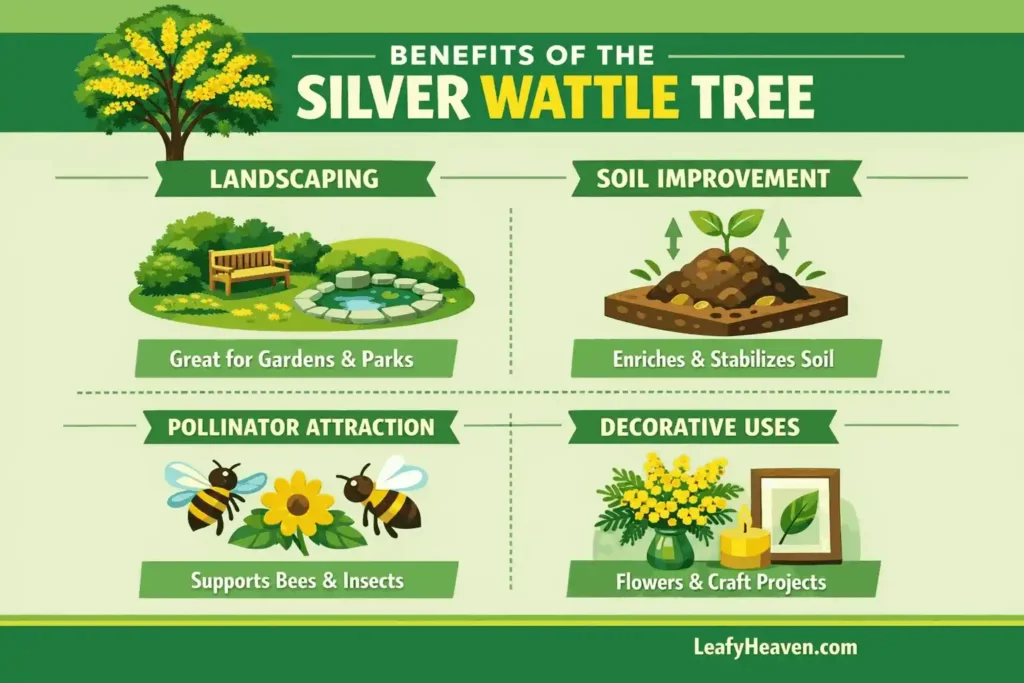
The silver wattle tree is widely valued for its strong visual appeal and versatility in landscape design. Its soft, feathery foliage combined with bright yellow blooms creates a striking contrast that enhances garden aesthetics.
Key ornamental advantages include:
- Adds texture and color to gardens and outdoor spaces
- Works well as a focal point or background tree
- Suitable for both residential and large landscape projects
- Blends easily with other ornamental plants
As a fast-growing shade tree, it provides quick coverage, making it ideal for newly developed gardens or areas needing rapid greenery.
Environmental Benefits
Beyond its visual value, the silver wattle contributes positively to the surrounding environment. Like many species in the acacia group, it plays a role in improving ecological conditions.
Main environmental benefits:
- Soil improvement: Helps enrich soil by fixing nitrogen, supporting healthier plant growth
- Pollinator attraction: Its flowers attract bees and other beneficial insects
- Supports biodiversity by providing shelter for small wildlife
These qualities make it useful in both garden settings and environmental restoration projects.
Many acacia species are recognized for their nitrogen-fixing ability, as documented by the USDA Natural Resources Conservation Service (NRCS).
Practical and Traditional Uses
The silver wattle also has practical applications beyond landscaping. The acacia plant has been used in various ways depending on region and availability.
Common uses include:
- Wood: Light wood used for small crafts and basic construction purposes
- Decorative use: Flowering branches are often used in floral arrangements
- Traditional applications: In some regions, parts of the plant have been used in local practices and natural products
These uses highlight the multifunctional value of the silver wattle, combining aesthetic appeal with practical benefits.
Colorful plants like purple marigolds can also enhance garden aesthetics, adding contrast and seasonal visual interest alongside larger ornamental trees.
How to Grow Silver Wattle Tree
Planting Guide
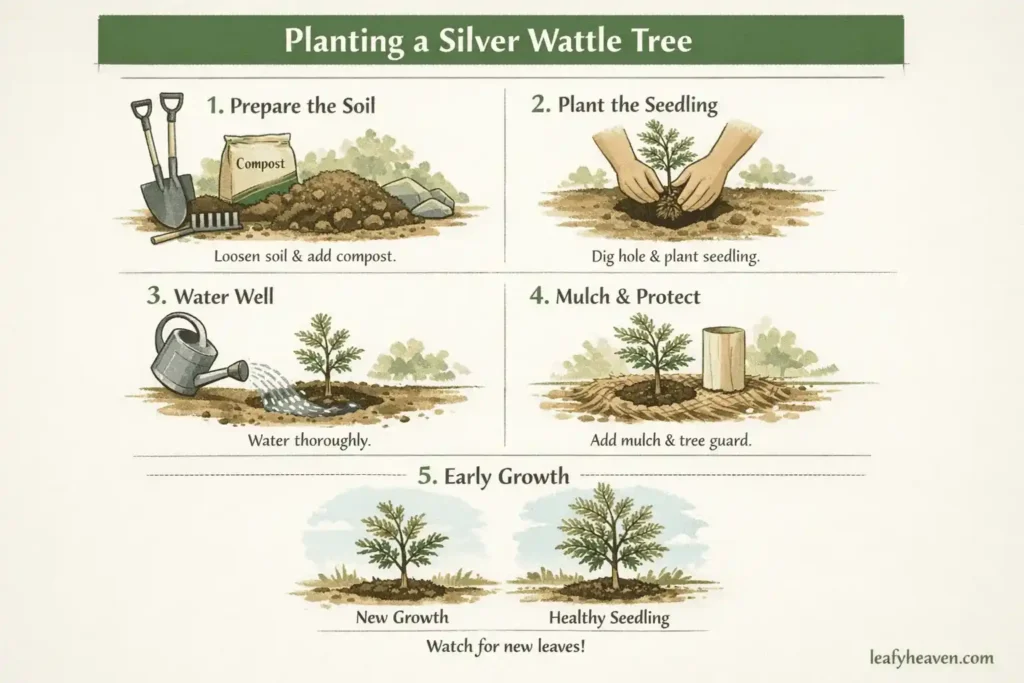
Growing a silver wattle tree starts with proper soil preparation and timing to ensure strong early development.
Soil preparation:
- Choose well-draining soil to prevent root issues
- Loosen the soil before planting to support root spread
- Sandy or loamy soil works best, but it can tolerate slightly poor soils
- Avoid heavy clay or waterlogged areas
Best planting time:
- Plant during early spring or mild autumn conditions
- Avoid extreme heat or frost periods during initial planting
- Moderate temperatures help roots establish faster
Planting in the right conditions allows the tree to adapt quickly and begin healthy growth.
Growth Rate and Timeline
The silver wattle is known for its rapid development, making it one of the fastest-growing ornamental trees.
Growth characteristics:
- Can grow several feet per year under ideal conditions
- Reaches medium to large height within a few years
- Establishes quickly compared to many other trees
Typical timeline:
- Early stage (first year): Root establishment and initial height growth
- 2–3 years: Noticeable size increase and structural development
- 3–5 years: Mature form begins to develop with full foliage and flowering potential
Its fast growth makes it ideal for gardeners looking for quick shade, screening, or landscape impact.
Silver Wattle Tree Care Guide
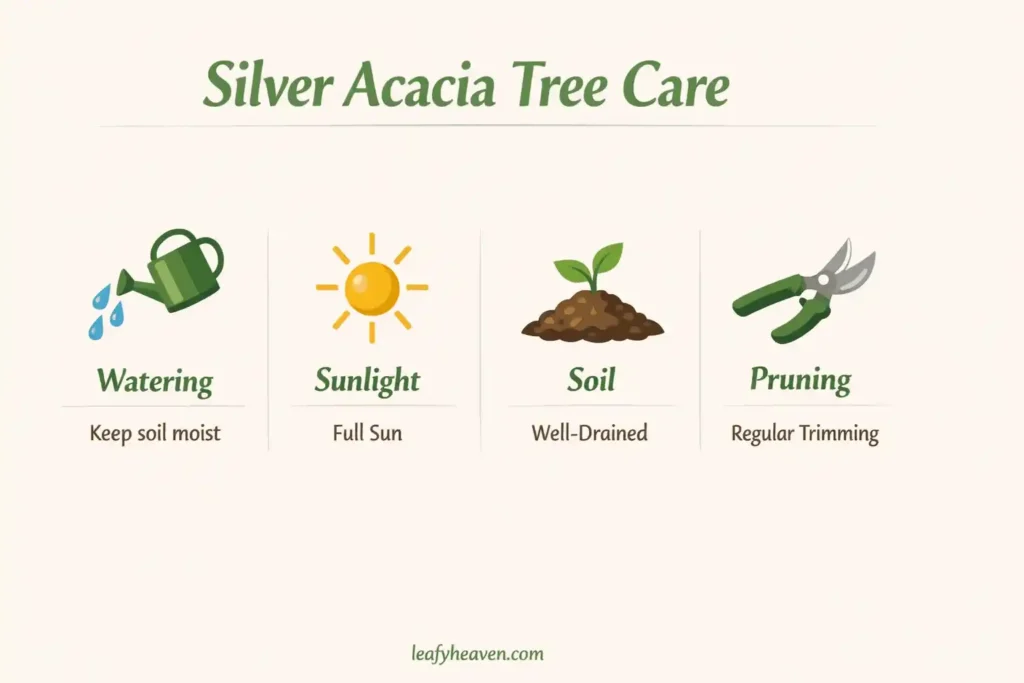
Watering Needs
Proper watering is essential for establishing a healthy acacia dealbata plant, especially during its early growth stage.
Watering guidelines:
- Water regularly during the first growing season to support root development
- Keep soil slightly moist but never waterlogged
- Once established, reduce watering as the tree becomes drought-tolerant
- Avoid excessive watering, as it can lead to root problems
Balanced watering helps maintain steady growth without stressing the plant.
Sunlight Requirements
The silver acacia tree performs best in bright, open conditions with full sun exposure.
Sunlight needs:
- Requires full sun for optimal growth and flowering
- Minimum 6–8 hours of direct sunlight daily
- Insufficient light can reduce flowering and slow growth
Adequate sunlight ensures dense foliage and vibrant seasonal blooms.
Soil Preferences
The silver wattle adapts to various soil types but thrives best in well-draining conditions.
Ideal soil conditions:
- Prefers sandy or loamy soil
- Tolerates slightly poor or nutrient-deficient soil
- Avoid heavy clay or compacted soil that retains excess water
- Good drainage is more important than soil fertility
This adaptability makes it suitable for different landscapes with minimal soil modification.
Pruning and Maintenance
Regular maintenance helps shape the tree and supports long-term health.
Pruning and care tips:
- Light pruning after flowering helps maintain structure
- Remove dead, damaged, or weak branches
- Avoid heavy pruning, as it may stress the tree
- Monitor growth to prevent overcrowding in garden spaces
Consistent maintenance keeps the tree healthy, visually balanced, and suitable for ornamental use.
Root System of Silver Wattle Tree
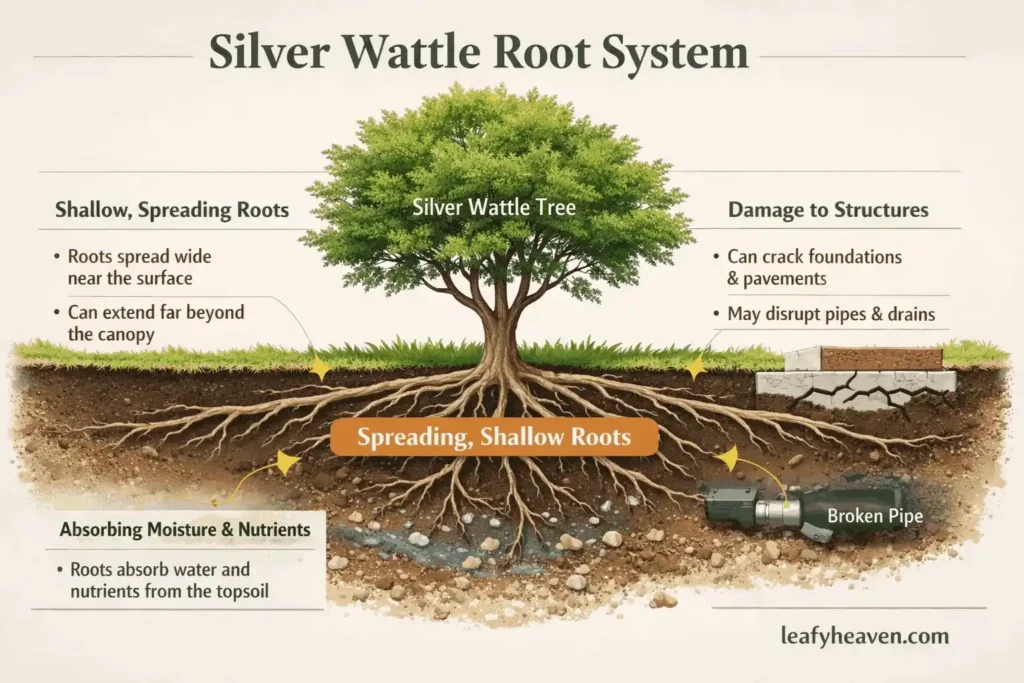
Root Structure and Behavior
The silver wattle tree develops a strong and fast-spreading root system that supports its rapid growth and adaptability. Its roots are typically shallow but wide-reaching, allowing the tree to absorb nutrients efficiently from the surrounding soil.
Key root characteristics:
- Spreading roots: Extend horizontally rather than deeply, covering a broad area
- Fast establishment: Roots develop quickly to support rapid above-ground growth
- Soil binding ability: Helps stabilize soil, especially on slopes and disturbed land
Impact on nearby structures:
- Can interfere with pavements, pathways, and shallow foundations if planted too close
- May compete with nearby plants for water and nutrients
- Not ideal for planting near walls, driveways, or underground pipes
Proper spacing during planting is essential to avoid structural and landscaping issues over time.
Is Silver Wattle Invasive?
The silver wattle is not always invasive, but it can behave aggressively in certain environments. Its fast growth, high seed production, and adaptability allow it to spread beyond intended areas if not managed.
Important considerations:
- Can self-seed easily, leading to uncontrolled spread in favorable conditions
- May outcompete native vegetation in non-native regions
- Often considered invasive in some countries outside Australia
Management tips:
- Regularly monitor and remove unwanted seedlings
- Control seed spread through timely pruning
- Avoid planting near natural ecosystems where it may spread uncontrollably
👉 While valuable as an ornamental and environmental plant, the silver wattle should be grown responsibly to prevent ecological imbalance.
Understanding root behavior is important, especially when comparing it with trees like the crepe myrtle root system, which shows different growth patterns.
Problems, Risks, and Precautions
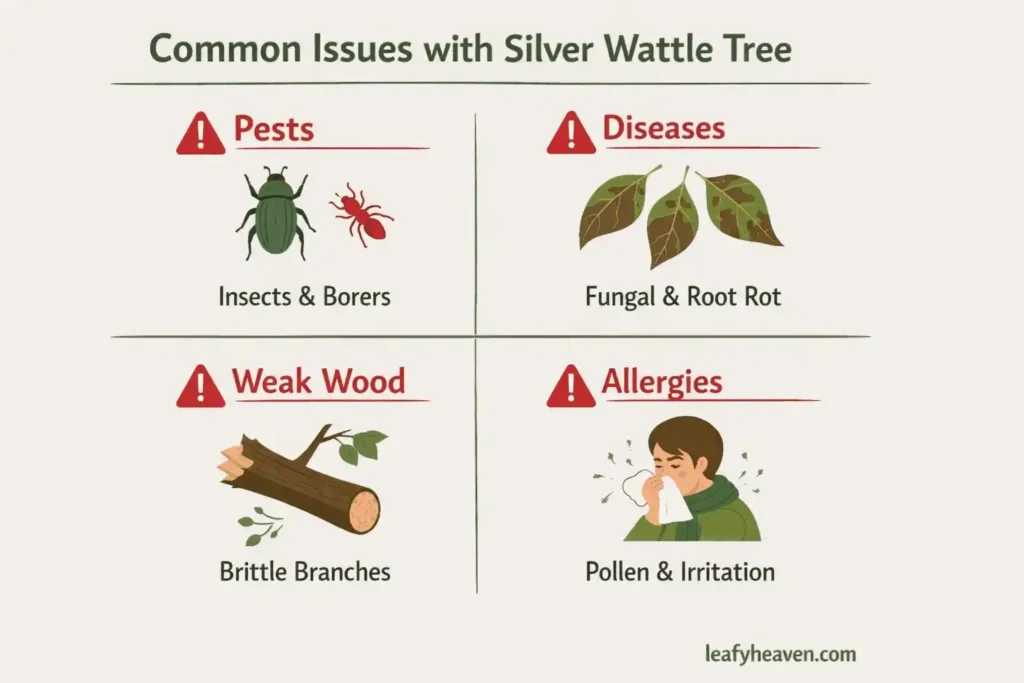
Common Issues
Like many fast-growing trees, the silver wattle can face certain pests and diseases that affect its health and appearance.
Common problems include:
- Pests: Aphids, scale insects, and caterpillars may feed on leaves and stems
- Fungal diseases: Root rot can occur in poorly drained soil
- Leaf damage: Yellowing or dropping leaves due to stress or improper care
Regular monitoring and maintaining proper growing conditions help reduce the risk of these issues.
Potential Drawbacks
While the silver wattle offers many benefits, it also has some limitations that should be considered before planting.
Key drawbacks:
- Short lifespan: Typically lives around 10–20 years, which is shorter than many other trees
- Weak wood: Branches can be brittle and prone to breaking, especially during strong winds or storms
- Rapid growth trade-off: Fast growth can sometimes lead to less structural strength
These factors make it important to choose the planting location carefully and manage the tree properly over time.
Safety Considerations
Safety is an important aspect when growing silver wattle, particularly for sensitive individuals.
Important precautions:
- Allergies: The pollen from its flowers may trigger allergic reactions in some people
- Pollen sensitivity: High flowering periods can increase airborne pollen levels
- Placement awareness: Avoid planting near frequently used outdoor spaces if allergies are a concern
Understanding these risks helps ensure the tree can be enjoyed safely in residential and landscaped environments.
Silver Wattle vs Other Wattle Species
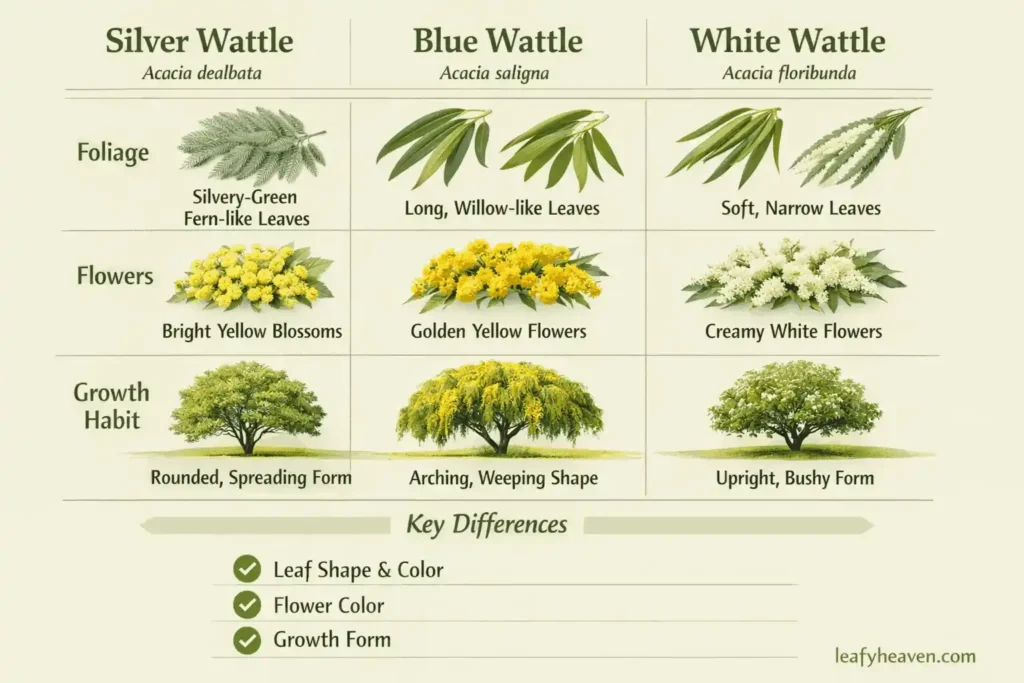
Identification Guide
Accurate wattle species identification is important because many acacia species share similar features but differ in growth habit, leaf structure, and flowering patterns.
Key identification features of silver wattle:
- Foliage: Fine, feathery, silvery-green leaves
- Flowers: Bright yellow, fluffy flower clusters
- Growth form: Fast-growing tree with an open, spreading canopy
- Bark: Smooth to slightly rough, often grayish in color
These characteristics help distinguish silver wattle from other wattle species that may have broader leaves or different growth patterns.
Key Differences
Understanding how silver wattle compares to other species helps in selecting the right plant for specific needs.
Comparison with related species:
- Blue wattle:
- Has broader, bluish-green leaves instead of fine feathery foliage
- Often grows as a denser tree or shrub
- Less delicate appearance compared to silver wattle
- White wattle:
- Features lighter foliage and less vibrant flowers
- May have different leaf shapes depending on the species
- Generally softer visual contrast than the bright yellow blooms of silver wattle
- Queensland silver wattle:
- Adapted to warmer climates
- May vary slightly in size and growth habit
- Shows similar foliage but with regional differences in resilience and performance
👉 These differences highlight how each wattle species varies in appearance, adaptability, and landscaping use, making proper identification essential for choosing the most suitable option.
How to Use Silver Wattle in Landscaping
The silver wattle tree is a versatile option in landscape design due to its fast growth, soft foliage, and seasonal color impact. It can be used strategically to enhance both small and large outdoor spaces.
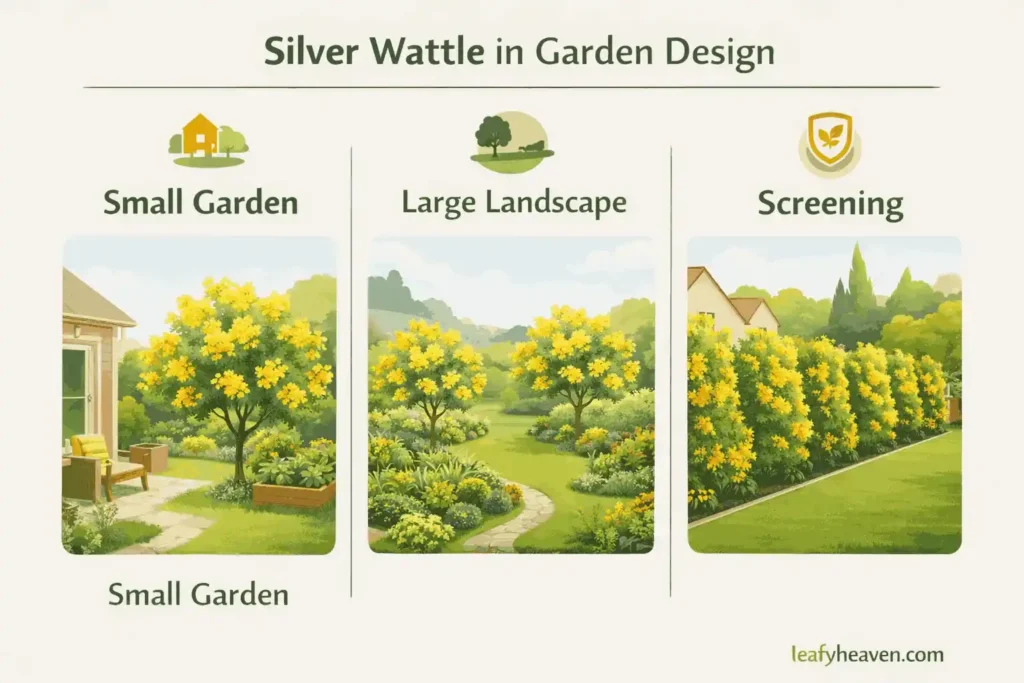
Garden design ideas:
- Use as a focal point tree to add height and visual interest
- Combine with shrubs and low-growing plants for layered landscaping
- Plant along boundaries to create a natural, soft-textured backdrop
- Pair with contrasting foliage plants to highlight its silvery leaves and yellow blooms
Small vs large space suitability:
- Small spaces: Best used as a single feature tree with regular pruning to control size
- Large spaces: Ideal for grouping or planting in rows for a more natural, woodland effect
- Requires adequate spacing due to its spreading canopy and root system
Fast screening plant use:
- Works effectively as a natural privacy screen due to rapid growth
- Can be planted in lines to form a visual barrier within a short time
- Provides partial shade and wind protection in outdoor areas
Its combination of speed, structure, and visual appeal makes the silver wattle a practical choice for both decorative and functional landscaping purposes.
Conclusion
The silver wattle tree stands out as a fast-growing, visually appealing, and highly adaptable species that offers both ornamental and environmental value. From its soft, feathery foliage and bright yellow blooms to its ability to improve soil and support pollinators, it provides multiple benefits for gardens and landscapes. Its rapid growth makes it especially useful for shade, screening, and quick landscape transformation, while its versatility allows it to fit into a wide range of outdoor designs.
Whether used for decorative planting or practical purposes, the silver wattle remains a strong choice among acacia species. With proper care and thoughtful placement, it can deliver lasting impact in both residential and larger landscape settings.
If you’re planning to enhance your garden, consider planting a silver wattle tree or explore more about acacia species to find the best option for your space and needs.
FAQs About Silver Wattle Tree
What is the scientific name of silver wattle tree?
The scientific name of the silver wattle tree is Acacia dealbata. It belongs to the Fabaceae family and is one of the most recognized acacia species.
How fast does a silver wattle tree grow?
The silver wattle is a fast-growing tree. Under suitable conditions, it can grow several feet per year and reach a mature size within 3–5 years.
Are silver wattle trees invasive?
Silver wattle trees can become invasive in certain regions outside their native habitat. Their fast growth and ability to self-seed may lead to uncontrolled spread if not properly managed.
What are silver wattle leaves like?
Silver wattle leaves are fine, feathery, and soft in texture, with a silvery-green appearance. This distinctive foliage gives the tree its name and ornamental value.
Where does silver wattle naturally grow?
The silver wattle naturally grows in Australia, particularly in southeastern regions such as New South Wales, Victoria, and Tasmania.
What is the difference between silver wattle and blue wattle?
The main difference lies in their foliage and appearance. Silver wattle has fine, feathery leaves with a silvery tone, while blue wattle typically has broader, bluish-green leaves and a denser structure.

Written by the LeafyHeaven Editorial Team
LeafyHeaven shares practical gardening tips and simple plant care guides to help you grow, nurture, and enjoy your plants with ease. Our goal is to make gardening feel natural, approachable, and rewarding for everyone.


[…] example, fast-growing evergreen species like the silver wattle tree are widely used for landscaping and environmental […]