
Introduction to Lilly Pilly Acmena Smithii
Lilly pilly acmena smithii is a popular evergreen plant widely used in gardens, hedging, and landscaping due to its dense foliage and attractive appearance. The lilly pilly botanical name is Syzygium smithii, and it is also commonly referred to as acmena smithii or syzygium acmena smithii. This versatile lilly pilly tree can grow as a shrub or small tree, making it suitable for both compact gardens and large outdoor spaces. A typical lilly pilly description includes glossy green leaves, fluffy white flowers, and small edible berries that add ornamental value.
In terms of scientific classification, Syzygium smithii belongs to the Myrtaceae family and is one of the most recognized lilly pilly species used in cultivation. It is widely known by several common names, including lilli pilli, common lilly pilly, and australian lilly pilly, depending on the region.
A common question is: is lilly pilly native to Australia? The answer is yes. This plant is a true native lilly pilly, naturally found along the eastern coasts of Australia. If you wonder, are lilly pillies native to Australia, they are indeed native and play an important role in local ecosystems, supporting wildlife and biodiversity.
The popularity of lilly pilly acmena smithii in landscaping comes from its fast growth, dense structure, and adaptability. It is widely used for privacy hedges, screening plants, and decorative garden features. Its ability to thrive in different conditions, combined with its low maintenance needs, makes it a top choice for both home gardeners and professional landscapers.
Lilly Pilly Acmena Smithii Description & Key Features
Plant Appearance
Lilly pilly acmena smithii is an evergreen shrub or small tree known for its lush, year-round foliage and structured growth. It naturally forms a compact, upright shape, making it highly suitable for hedging and screening purposes.
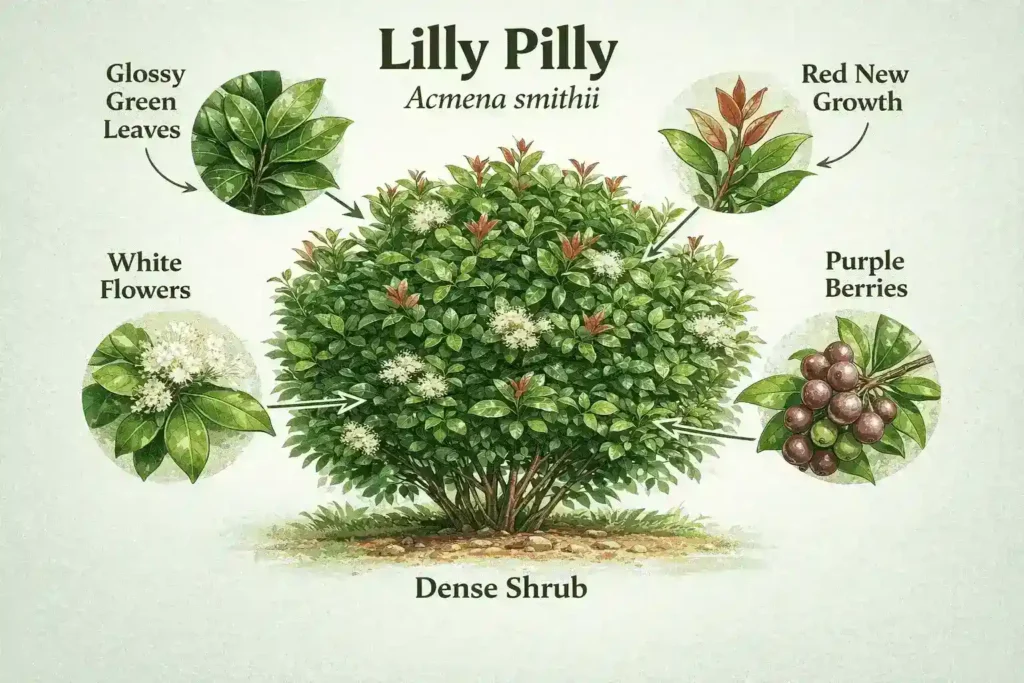
The plant features:
- Glossy green leaves that are smooth, dense, and visually appealing
- New growth often appears with a soft pink or reddish tint, adding seasonal color contrast
- Small white to cream flowers that bloom in clusters, enhancing its ornamental value
- Purple to reddish berries, which are edible and commonly used in jams or preserves
Its overall growth habit is dense and upright, which makes it ideal for creating privacy screens and formal hedges. The tight foliage structure allows it to be easily shaped, trimmed, and maintained in both residential and commercial landscapes.
Size, Height & Growth Pattern
The acmena smithii height can vary depending on the growing conditions and whether it is pruned regularly. On average, many gardeners ask, how tall do lilly pillies grow—and the answer depends on how the plant is managed.
- Typical height range: 3 to 10 meters
- When unpruned, it can develop into a fully grown lilly pilly tree with a broader canopy
- In ideal conditions, it can become a tall lilly pilly, suitable for large privacy screens
- Some specimens may reach the size of the tallest lilly pilly, especially in natural or less-maintained environments
The growth pattern is naturally vertical with branching density, allowing it to fill out quickly. This makes it especially effective for structured landscaping, hedging lines, and creating consistent green barriers.
Suggested Growth & Care Table
| Feature | Details | Notes / Tips |
|---|---|---|
| Height | 3–10 m (unpruned), 2–5 m (hedge) | Regular pruning keeps hedge compact and dense |
| Spacing for Hedges | 50 cm – 1 m apart | Closer spacing → faster dense coverage; wider → better airflow |
| Growth Rate | 30–60 cm per year (avg) | Faster in warm climates with full sun and good soil |
| Sunlight | Full sun – partial shade | Full sun → denser foliage and faster growth |
| Soil Type | Well-drained, sandy or loamy | Add organic compost to improve fertility |
| Watering | Regular for young plants; minimal once established | Mulch around base to retain moisture |
| Fertilizer | Balanced slow-release in spring; compost annually | Avoid excess nitrogen; supports healthy foliage |
| Maintenance / Pruning | 2–4 times per year for hedges | Light trimming encourages bushier growth |
| Pest Resistance | Moderate; psyllids possible | Choose resistant varieties for easier care |
| Uses | Hedges, privacy screens, feature trees | Can be shaped formally or grown naturally |
Growth Rate – How Fast Does Lilly Pilly Grow?
Growth Speed Explained
A common question among gardeners is how fast does lilly pilly grow or how fast do lilly pillys grow. The answer is that lilly pilly acmena smithii is considered a fast growing lilly pilly, especially when planted in favorable conditions.
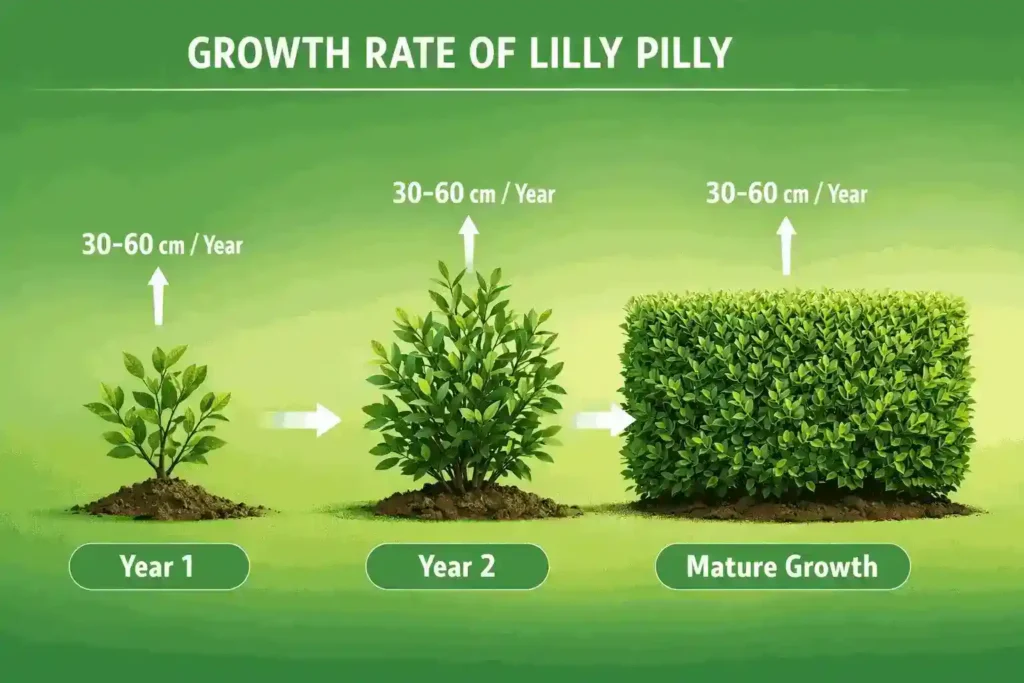
The typical lilly pilly growth rate is:
- 30 cm to 60 cm per year under average conditions
- Faster in warm climates with consistent care
- Slower in poor soil or low-light environments
Because of this steady and reliable growth, it is often classified as a lilly pilly fast growing plant, making it ideal for hedging and screening where quick coverage is needed. Some improved cultivars are even considered among the fastest growing lilly pilly options available for landscaping projects.
Factors That Affect Growth
The growth speed of lilly pilly depends on several key environmental and care factors:
- Soil Quality
- Prefers well-draining, nutrient-rich soil
- Poor or compacted soil can slow growth significantly
- Sunlight Exposure
- Grows best in full sun to partial shade
- More sunlight generally leads to faster, denser growth
- Water Availability
- Requires regular watering, especially during early stages
- Inconsistent watering can reduce growth rate and plant vigor
- Climate Suitability
- Thrives in warm, temperate climates
- Growth may slow in cooler regions or areas with frost
- Fertilization
- Balanced fertilizers promote faster development
- Regular feeding supports stronger foliage and quicker vertical growth
When these factors are optimized, lilly pilly can establish quickly and form dense hedges in a relatively short time, making it one of the most reliable fast-growing plants for garden structure and privacy.
Popular Lilly Pilly Varieties (Acmena & Syzygium Types)
Main Species & Botanical Variants
There are several closely related botanical forms within the lilly pilly species group, often classified under both Acmena and Syzygium. These are commonly referred to as lilly pilly types in horticulture.
- acmena smithii
A widely recognized form known for its dense foliage and adaptability. It is commonly used for hedging and screening in residential landscapes. - syzygium smithii
The updated botanical classification of acmena smithii. It is the most commonly cultivated species among lilly pilly varieties Australia due to its resilience and consistent growth. - syzygium acmena smithii
A transitional naming variation that reflects the reclassification from Acmena to Syzygium. It is still used in nurseries and plant labeling.
These botanical variants share similar characteristics, including evergreen growth, glossy leaves, and suitability for hedging, making them core representatives of the lilly pilly species used in landscaping.
High-Value Varieties (SEO Cluster)
Modern cultivation has introduced improved cultivars that offer better performance, pest resistance, and aesthetic appeal. These are among the most popular lilly pilly varieties Australia for both home gardeners and professionals:
- acmena smithii minor / syzygium smithii minor
A compact, dwarf variety ideal for smaller gardens and low hedges. Maintains a neat structure with minimal pruning. - acmena smithii cherry surprise
Known for its vibrant new growth and attractive berry production, adding both color and ornamental interest. - acmena smithii sublime
A refined variety with dense foliage, commonly used for formal hedges and structured garden designs. - forest flame lilly pilly
Features bright red new growth that creates strong visual contrast, making it suitable for decorative hedging. - red head lilly pilly
Recognized for its striking red foliage during new growth phases, offering a bold landscape feature. - lilly pilly resilience
Specifically developed for improved resistance to pests like psyllids, making it a reliable low-maintenance option. - lilly pilly firescreen
A popular screening variety with fast growth and dense coverage, ideal for privacy hedges.
These cultivated options expand the range of lilly pilly types, allowing gardeners to choose plants based on size, growth rate, appearance, and resistance, while maintaining the core benefits of the species.
Lilly Pilly as a Hedge & Screening Plant
Why It’s Ideal for Hedging
Lilly pilly acmena smithii is one of the most effective plants for hedging due to its naturally dense and structured growth.

Key reasons it works well:
- Dense foliage for privacy
The thick leaf coverage creates a solid green wall, making it ideal for blocking views and reducing noise. - Fast-growing structure
It establishes quickly and fills gaps efficiently, allowing you to create a full hedge in a shorter time compared to slower-growing plants.
Because of these qualities, both syzygium smithii hedge and acmena smithii hedge options are widely used in residential and commercial landscaping.
Hedge Height & Spacing
Proper spacing and height management are essential for a healthy and uniform hedge.
Lilly pilly hedge height:
- Typically maintained between 2 to 5 meters
- Can grow taller if left unpruned
- Easily controlled through regular trimming
Lilly pilly hedge planting distance:
- Space plants 50 cm to 1 meter apart for dense coverage
- Closer spacing creates a thicker hedge faster
- Wider spacing suits informal or natural screens
Correct spacing ensures that the hedge fills evenly and maintains strong airflow and root development.
Best Lilly Pilly for Hedging & Screening
Choosing the best lilly pilly for screening or hedging depends on growth habit, density, and pest resistance.
Top recommended varieties:
- lilly pilly resilience → Excellent pest resistance and dense growth
- lilly pilly firescreen → Fast-growing and ideal for tall privacy screens
- syzygium smithii → Reliable and widely used standard hedge plant
- acmena smithii minor → Best for low hedges and compact spaces
These options are considered the best lilly pilly for hedging because they combine fast growth, dense foliage, and ease of maintenance.
Hedge Types & Landscaping Uses
Lilly pilly is highly versatile and can be shaped into different hedge styles based on design needs.
Common hedge applications:
- Formal hedge
Neatly trimmed, structured lines used for modern or classic garden layouts - Natural screen
Allowed to grow freely for a softer, more organic appearance - Flowering hedge
Provides seasonal blooms and berries, adding visual interest
In landscaping, lilly pilly hedge, lilly pilly hedges, and lilly pilly screening are commonly used for:
- Boundary definition
- Privacy barriers
- Wind protection
- Decorative green walls
Whether used for hedging lilly pilly in tight garden spaces or creating large-scale lillypilly hedges, this plant remains one of the most reliable and adaptable choices for structured greenery.
How to Plant Lilly Pilly (Step-by-Step Guide)
Ideal Growing Conditions
To successfully plant lilly pilly, it’s important to provide the right environment from the start. A healthy foundation ensures strong root development and faster establishment.
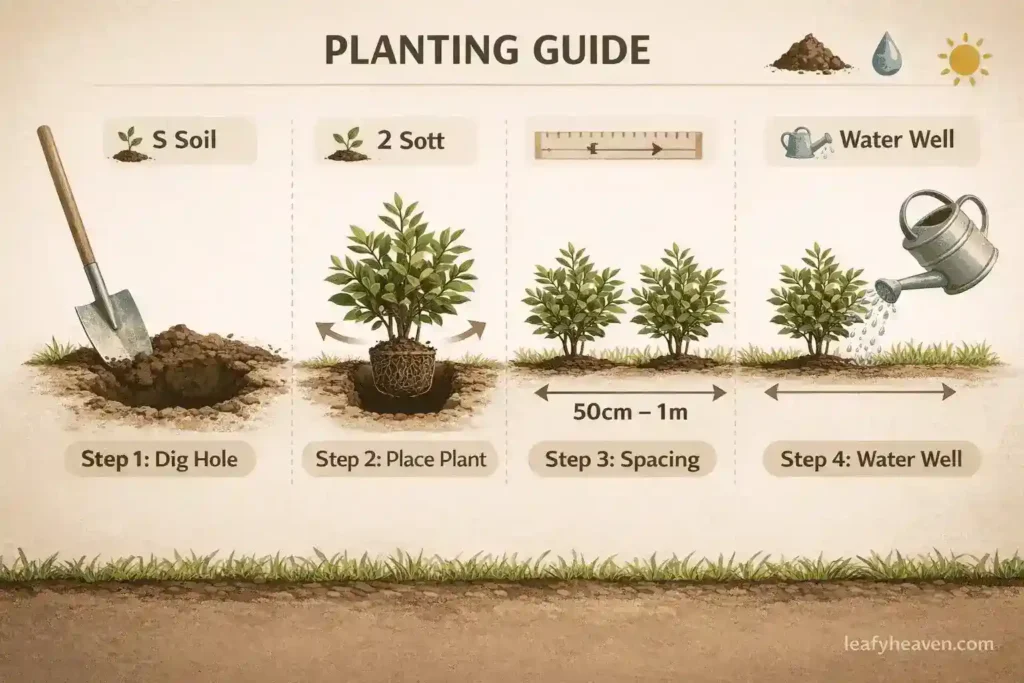
Soil type:
- Prefers well-draining, fertile soil
- Tolerates a range of soil types, but performs best in slightly acidic to neutral soil
- Avoid heavy, waterlogged soil that can damage roots
Sunlight:
- Grows well in full sun to partial shade
- Full sun promotes denser foliage and faster growth
- Partial shade is suitable in warmer climates
Climate:
- Thrives in warm, temperate to subtropical climates
- Can tolerate mild frost once established
- Performs best in conditions similar to its native Australian environment
Providing these conditions helps the lilly pilly plant establish quickly and maintain healthy, consistent growth.
Understanding how climate, soil, and sunlight affect long-term plant development becomes easier when you follow the fundamentals in a complete tropical fruit trees grow guide, especially for outdoor tree species.
Planting Process
Following the correct planting method ensures long-term success and strong development.
- Prepare the planting area
- Loosen the soil and remove weeds
- Mix in compost or organic matter to improve soil quality
- Dig the hole
- Make the hole twice as wide and equal depth as the root ball
- This allows roots to spread easily into surrounding soil
- Position the plant
- Place the lilly pilly plant in the hole at the same depth it was in the nursery pot
- Ensure the root crown is level with the soil surface
- Spacing and depth
- Maintain spacing of 50 cm to 1 meter for hedges
- For standalone planting, allow more space for full growth
- Do not plant too deep, as this can restrict root development
- Backfill and firm the soil
- Fill the hole with soil and gently press down to remove air pockets
- Watering after planting
- Water thoroughly immediately after planting
- Keep the soil consistently moist during the establishment phase
- Avoid overwatering, but do not allow the soil to dry out completely
By following these steps, you can successfully plant lilly pilly and ensure the plant develops into a strong, healthy shrub or tree suitable for hedging or landscaping.
Similar step-by-step planting techniques are also explained in how to plant lemongrass, where proper setup helps plants establish faster and grow more efficiently.
Caring for Lilly Pilly Acmena Smithii
Watering & Feeding
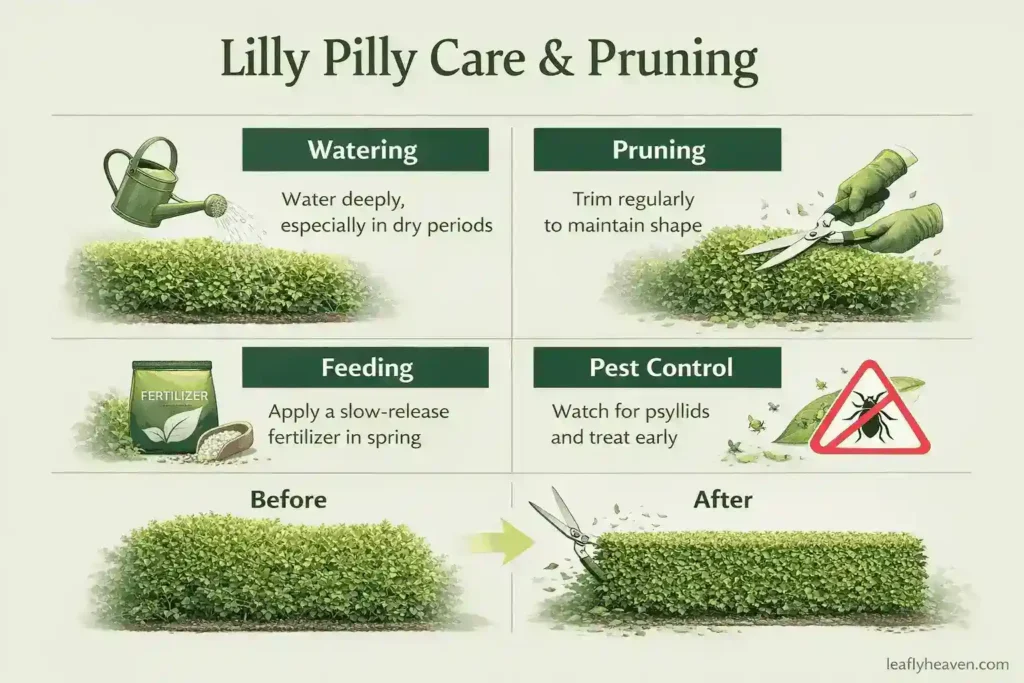
Proper watering and nutrition are essential for healthy growth and dense foliage when caring for syzygium smithii.
Watering schedule:
- Water regularly during the first 6–12 months after planting
- Keep soil consistently moist but not waterlogged
- Once established, it becomes moderately drought-tolerant
- Increase watering during hot or dry periods
Fertilizer needs:
- Apply a balanced slow-release fertilizer in spring
- Use organic compost to improve soil health
- Avoid excessive nitrogen, which can cause overly soft growth
- Feed 1–2 times per year for steady development
Consistent watering and proper feeding support strong root systems and vibrant foliage.
Pruning & Maintenance
Regular pruning keeps the plant structured, dense, and visually appealing.
Shaping hedges:
- Trim lightly and frequently to maintain shape
- Encourage bushier growth by cutting new shoots
- Maintain desired height and width through controlled pruning
Pleaching lilly pilly:
- A technique where branches are trained horizontally to create a flat, structured screen
- Ideal for formal garden designs and architectural landscapes
- Requires regular trimming and support during early training stages
Routine maintenance ensures the plant remains dense and suitable for hedging or decorative use.
Pest & Disease Management
While generally hardy, lilly pilly can face a few common issues.
Common problems:
- Psyllids (sap-sucking insects) causing leaf bumps or distortion
- Minor fungal issues in overly wet conditions
Prevention tips:
- Choose resistant varieties such as improved cultivars
- Maintain good airflow through proper spacing and pruning
- Avoid overwatering and waterlogging
- Use organic pest control methods if needed
With proper care and monitoring, most pest and disease issues can be minimized, allowing the plant to remain healthy and vigorous throughout the year.
Propagation – How to Grow Lilly Pilly from Seeds or Cuttings
Growing from Seeds
Growing lilly pilly seeds is a natural method, though it requires patience and consistent care.
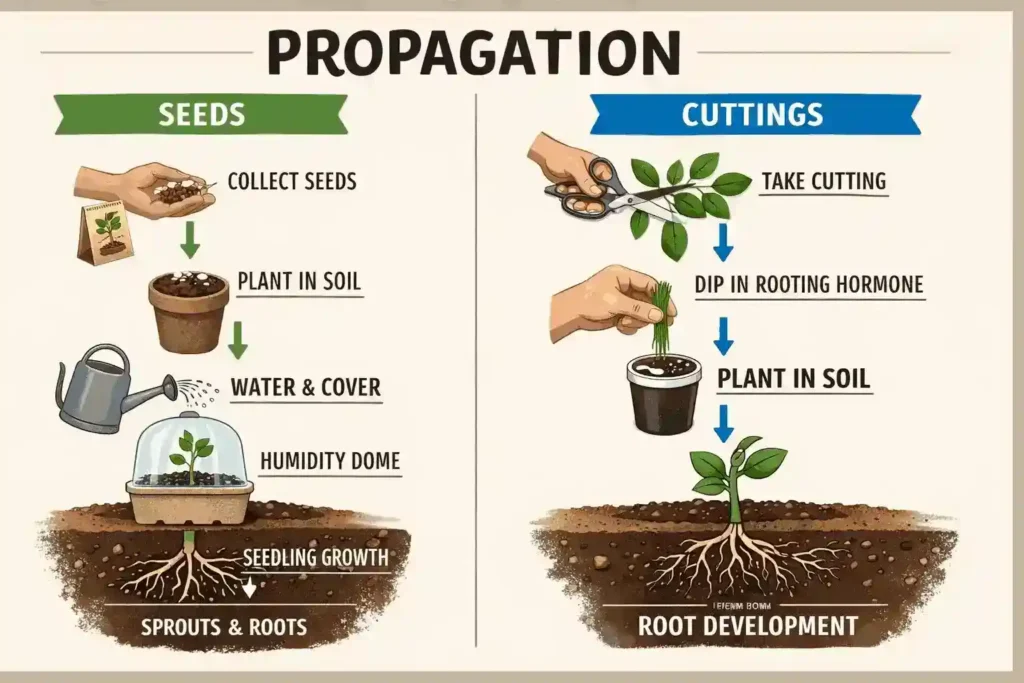
Steps to grow from seeds:
- Collect ripe berries and remove the seeds
- Clean off any pulp to prevent fungal issues
- Sow seeds in a well-draining seed-raising mix
- Lightly cover with soil and keep moist
- Place in a warm, shaded area for germination
Key points:
- Germination can take 2–6 weeks or longer
- Seed-grown plants may vary slightly in growth and appearance
- Best suited for gardeners who want a natural propagation method
This method is slower but effective for propagating lilly pilly in a more traditional way.
Propagation via Cuttings
Using cuttings is a faster and more reliable method for propagating lilly pilly, especially when you want consistent results.
Steps for propagation via cuttings:
- Take semi-hardwood cuttings (10–15 cm long) from healthy plants
- Remove lower leaves and keep a few at the top
- Dip the cut end in rooting hormone to improve success rate
- Plant in a moist, well-draining propagation mix
- Cover with a plastic dome or place in a humid environment
Key points:
- Rooting typically occurs within 4–8 weeks
- Produces plants identical to the parent plant
- Faster establishment compared to seed propagation
Propagation through cuttings is the preferred method for gardeners and landscapers looking for quick, uniform growth and reliable results.
Best Uses of Lilly Pilly in Landscaping
Garden Design Uses
Lilly pilly acmena smithii is highly versatile and fits into multiple garden styles due to its dense foliage and adaptable growth habit. It is widely used as one of the most reliable lilly pilly hedging plants in both residential and commercial landscapes. For gardeners looking for more detailed guidance on hedge height, growth rate, and care of fast-growing lilly pilly varieties like Resilience, this comprehensive guide is a helpful resource.

Common landscaping uses:
- Privacy screens
Forms thick, evergreen barriers that block unwanted views
Ideal for boundary planting and urban gardens - Feature trees
Can be grown as a standalone lilly pilly tree with a structured canopy
Adds height and visual focus to garden layouts - Borders and edging
Works well as low to medium-height borders when regularly trimmed
Helps define pathways, driveways, and garden beds
Because of its dense growth and easy shaping, it is often chosen as one of the top lilly pilly hedge plants for creating clean, green garden structures.
Growing in Pots
Lilly pilly can also be successfully grown in containers, making it suitable for patios, balconies, and small spaces.
Best lilly pilly for pots:
- Compact varieties like acmena smithii minor are ideal
- Choose slow-growing or dwarf types for easier maintenance
Key requirements for pot growth:
- Use a large container with good drainage
- Fill with high-quality potting mix
- Water regularly, as pots dry out faster than ground soil
- Prune to maintain size and shape
Container-grown plants are perfect for decorative use and can still function as small privacy screens. With proper care, potted lilly pilly remains dense, healthy, and visually appealing throughout the year.
Benefits & Advantages of Lilly Pilly
Lilly pilly acmena smithii offers multiple practical and aesthetic benefits, making it one of the most valuable plants for modern gardens and landscapes.
Fast-growing privacy plant
- Quickly forms dense hedges and screens
- Ideal for blocking views, noise, and wind
- Reliable option for creating natural green barriers in a short time
Native, eco-friendly
- A true native lilly pilly, well adapted to local conditions
- Supports biodiversity by attracting birds, bees, and beneficial insects
- Requires fewer chemical inputs compared to non-native plants
- As an australian lilly pilly, it fits naturally into sustainable landscaping designs
Attractive foliage & berries
- Glossy green leaves provide year-round visual appeal
- New growth often adds color variation with reddish tones
- Produces decorative flowers followed by edible berries
- Enhances both ornamental and functional garden value
Low maintenance
- Easy to grow and manage with minimal effort
- Responds well to pruning and shaping
- Tolerates a range of soil and climate conditions
- Suitable for both beginner gardeners and professionals
These advantages make lilly pilly a dependable choice for hedging, screening, and decorative planting while maintaining low ongoing care requirements.
Potential Problems & Considerations
While lilly pilly acmena smithii is generally a reliable and low-maintenance plant, there are a few important considerations to keep in mind for long-term success.
Root system behavior
- The root system is non-invasive compared to many large trees
- Roots are typically shallow and spreading rather than aggressive
- Suitable for planting near fences, paths, and garden structures
- However, avoid planting too close to foundations or pipes to prevent minor interference over time
Understanding how root systems behave in different soil conditions, as explained in the firestick plant root system, can help prevent drainage issues and improve planting decisions.
Pest issues
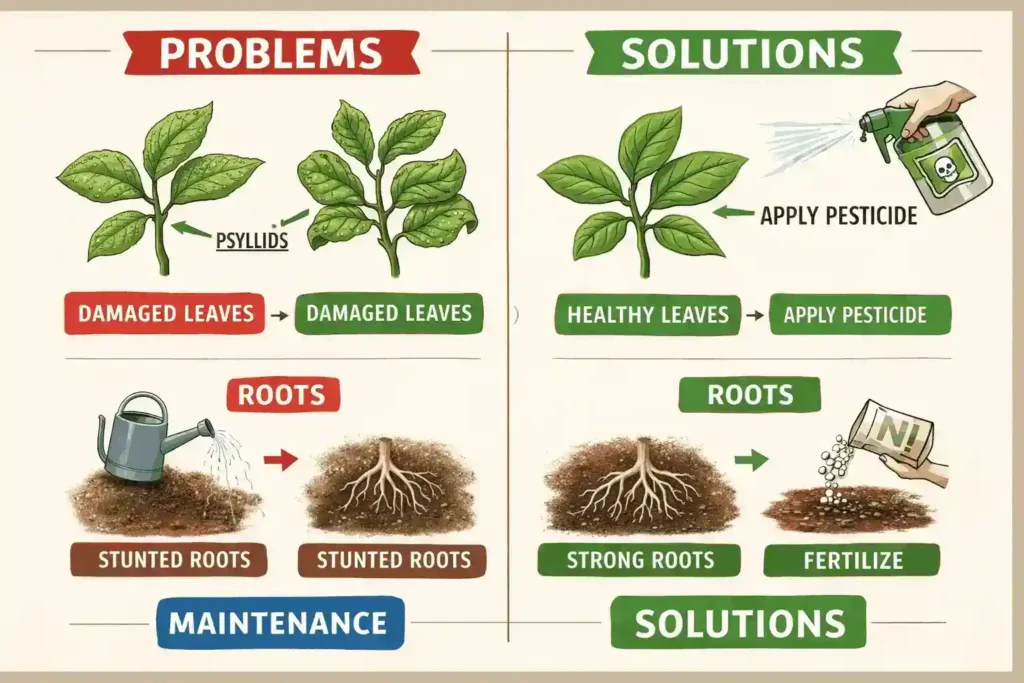
- The most common problem is psyllids, which cause leaf bumps and distortion
- Some varieties are more resistant than others
- Minor infestations usually affect appearance rather than plant health
- Regular monitoring helps prevent spread
Maintenance needs
- Requires regular pruning to maintain shape and density, especially for hedges
- Can become leggy or uneven if left untrimmed
- Needs consistent watering during establishment
- Occasional feeding supports healthy growth and foliage
By understanding these factors, gardeners can manage potential issues early and keep lilly pilly performing well in both hedging and ornamental applications.
Conclusion
Lilly pilly acmena smithii stands out as a top choice for modern landscaping due to its fast growth, dense foliage, and adaptability. It combines practical benefits like privacy screening with strong ornamental value, making it suitable for a wide range of garden styles. As a reliable evergreen, it performs well in different conditions while remaining easy to manage.
Its best use cases include hedging, screening, and ornamental planting. Whether used as a structured hedge, a natural privacy screen, or a feature tree, it delivers consistent results with minimal maintenance.
For gardeners and landscapers looking for a dependable, attractive, and efficient plant, lilly pilly is a smart investment. Planting it in your garden can quickly enhance privacy, structure, and overall visual appeal.
FAQs
Is lilly pilly acmena smithii native to Australia?
Yes, lilly pilly acmena smithii is native to Australia. It naturally grows along the eastern coastal regions and is considered a true native species that supports local ecosystems and wildlife.
How fast does lilly pilly grow?
Lilly pilly is a fast-growing plant. On average, it grows 30–60 cm per year, depending on soil quality, sunlight, and care. In ideal conditions, it can establish quickly and form dense hedges within a few years.
What is the best lilly pilly for hedging?
The best lilly pilly for hedging includes varieties like lilly pilly resilience, lilly pilly firescreen, and syzygium smithii. These are popular due to their dense growth, fast establishment, and improved pest resistance.
How tall does acmena smithii grow?
Acmena smithii can grow between 3 to 10 meters tall, depending on conditions and pruning. When left untrimmed, it can reach its full height as a small tree, while regular pruning keeps it suitable for hedges.
Can lilly pilly be grown in pots?
Yes, lilly pilly can be grown in pots, especially compact varieties like acmena smithii minor. With proper watering, good drainage, and regular pruning, it can thrive in containers on patios or balconies.
How do you propagate lilly pilly?
Lilly pilly can be propagated from seeds or cuttings. Seeds take longer to grow, while cuttings are a faster and more reliable method, producing plants identical to the parent.
Does lilly pilly have invasive roots?
No, lilly pilly generally has a non-invasive root system. Its roots are shallow and manageable, making it suitable for planting near fences and garden areas, though some spacing from structures is still recommended.
Are lilly pilly berries edible?
Yes, lilly pilly berries are edible. They are often used in jams, jellies, and sauces, although their taste can vary depending on the variety.
How often should you prune lilly pilly hedges?
Lilly pilly hedges should be pruned 2–4 times per year to maintain shape and density. Regular light trimming encourages bushier growth and a more uniform appearance.
What problems affect lilly pilly plants?
The most common issue is psyllid pests, which cause leaf bumps and distortion. Choosing resistant varieties and maintaining proper care can help prevent most problems.

Written by the LeafyHeaven Editorial Team
LeafyHeaven shares practical gardening tips and simple plant care guides to help you grow, nurture, and enjoy your plants with ease. Our goal is to make gardening feel natural, approachable, and rewarding for everyone.