
Introduction to Common Garden Bugs
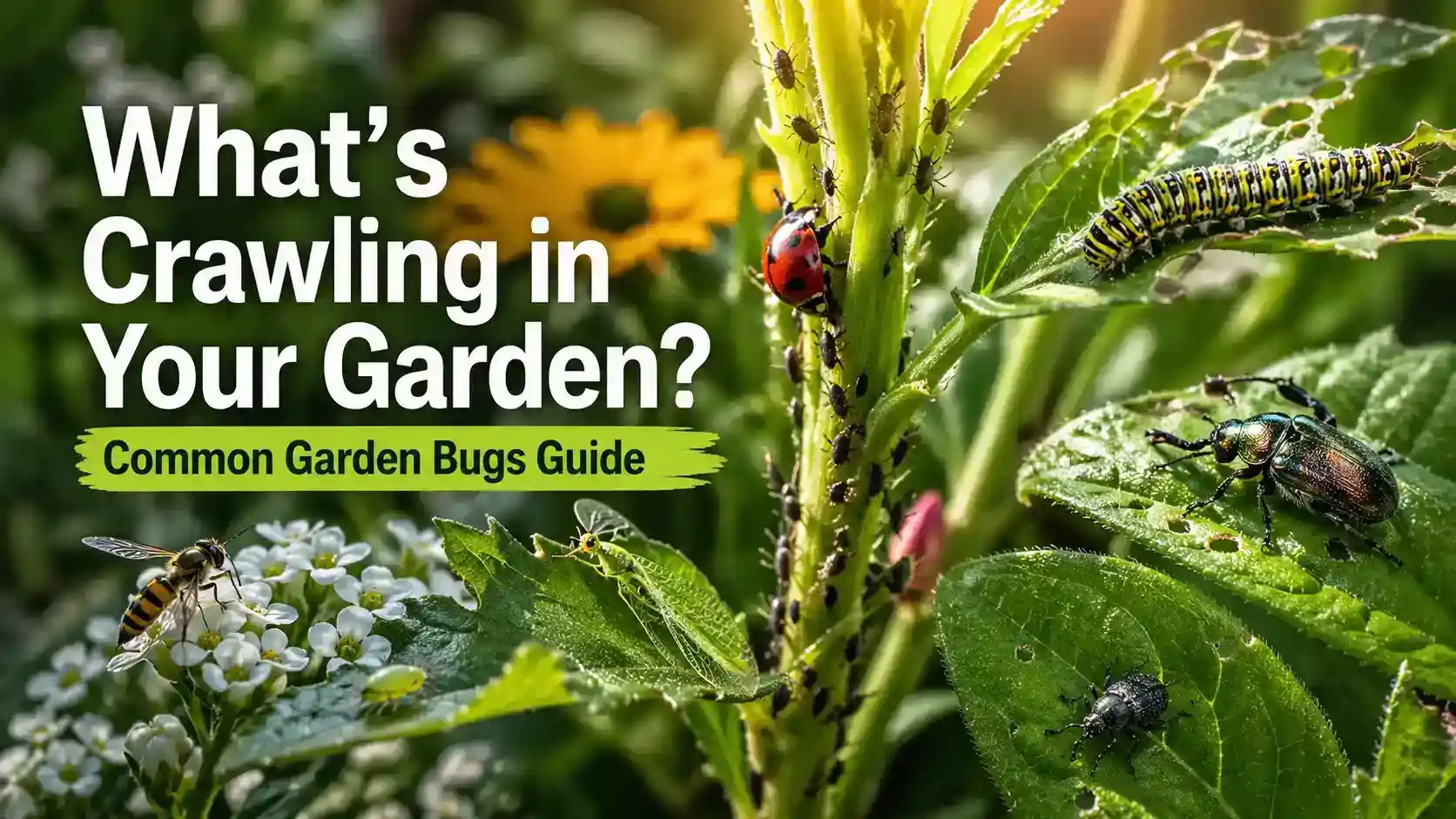
Common garden bugs refer to the wide range of small organisms and garden insects that live in or around plants, soil, and garden environments. These bugs in garden spaces appear naturally due to factors like plant availability, moisture, soil conditions, and seasonal changes. Gardens provide food, shelter, and breeding grounds, making them an ideal habitat for many insects in garden ecosystems.
Not all garden bugs are harmful. There is a clear difference between garden pests and beneficial insects:
- Garden pests are insects that damage plants by feeding on leaves, stems, roots, or sap. They can cause visible harm like holes in leaves, yellowing, or stunted growth.
- Beneficial insects, on the other hand, support the garden by pollinating plants or controlling pest populations. These insects help maintain a natural balance and improve plant health.
Understanding this distinction is essential for effective garden management. Without proper identification, gardeners may remove helpful insects or ignore harmful ones, leading to poor plant growth and increased infestations.
Accurate garden bugs identification allows gardeners to:
- Recognize harmful vs helpful insects
- Take targeted action instead of random treatments
- Protect plant health while preserving ecosystem balance
In short, knowing how to identify and manage common garden bugs is a fundamental step toward maintaining a healthy, productive, and sustainable garden.
Types of Common Garden Bugs (Complete Classification)
Harmful Garden Bugs (Bad Garden Bugs)
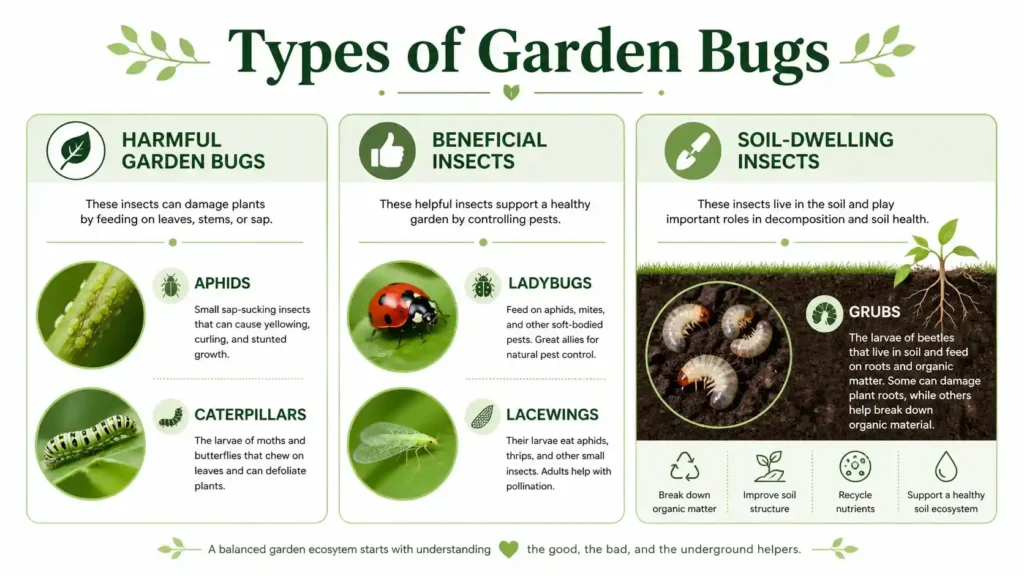
Harmful garden bugs, also known as bad garden bugs, are insects that damage plants by feeding on their leaves, stems, roots, or sap. These harmful garden insects directly affect plant health, reduce growth, and can even kill plants if infestations are severe.
Common examples include aphids, caterpillars, beetles, and whiteflies—many of which are known as insects that eat plants.
Key signs of infestation include:
- Leaf damage: Irregular holes or chewed edges caused by garden pests eating leaves
- Yellowing leaves: Often due to sap-sucking insects draining nutrients
- Stunted growth: Plants fail to grow properly due to continuous damage
- Wilting or curling: A sign of internal stress caused by pest activity
Early detection of these symptoms is critical to prevent widespread damage and protect overall garden productivity.
Beneficial Garden Bugs (Good Bugs for Garden)
Beneficial insects are commonly referred to as good garden bugs because they support plant health and maintain ecological balance. These helpful bugs in the garden play a vital role in controlling pest populations and assisting in pollination.
Examples include ladybugs, lacewings, and predatory beetles—known as highly effective beneficial insects for garden ecosystems.
Why they are important:
- Natural pest control: They feed on harmful insects like aphids and mites
- Pollination support: Some insects help in flower pollination, improving yields
- Ecosystem balance: They reduce the need for chemical pesticides
Encouraging beneficial insects helps create a sustainable and low-maintenance garden environment.
Soil-Dwelling Garden Bugs
Soil-dwelling bugs are insects that live beneath the surface, often in the root zone. These garden soil insects can be either harmful or beneficial, depending on their role in the soil ecosystem.
Common types of bugs in garden soil include grubs, larvae, and certain beetles. These are often categorized as common soil insects.
Key characteristics:
- Live in soil or near plant roots
- Feed on organic matter or roots
- Can affect plant stability and nutrient absorption
Potential impact:
- Harmful soil insects: Cause root damage, leading to weak or dying plants
- Beneficial soil insects: Help break down organic matter and improve soil structure
Understanding soil-dwelling insects is essential, as many pest problems originate below the surface where they are harder to detect.
Most Common Garden Bugs List (Identification Guide)
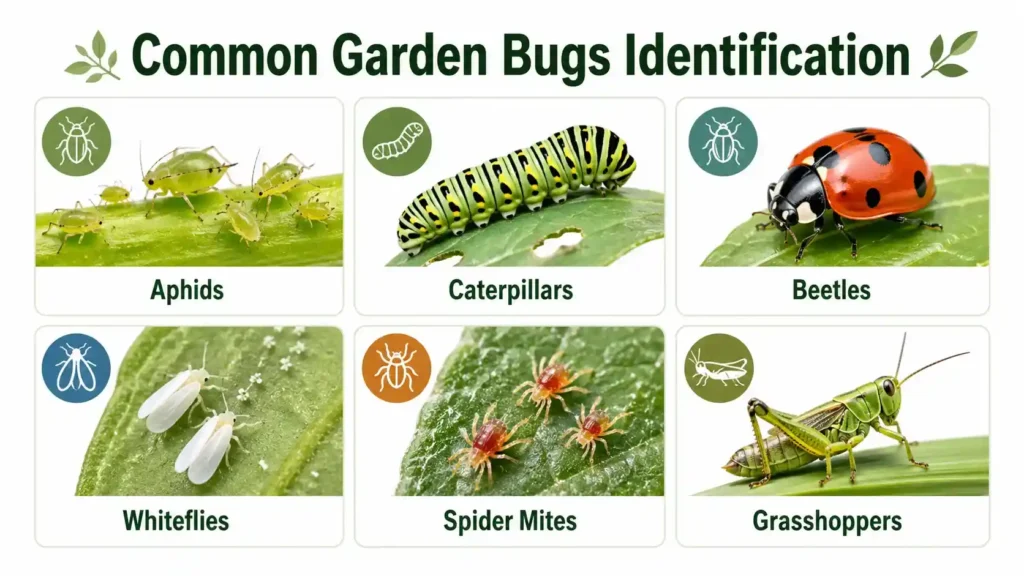
Aphids
Aphids are small, soft-bodied pests that feed on plant sap. They are one of the most common issues in gardens and are easily recognized through proper aphid identification techniques.
Key characteristics:
- Tiny, pear-shaped bodies
- Colors: green, black, yellow, or white
- Found in clusters on stems and leaf undersides
Signs and damage:
- Sticky residue (honeydew) on leaves
- Yellowing and curling leaves
- Stunted plant growth
A common confusion is white aphids vs mealy bugs. While both appear white, aphids are smoother and smaller, whereas mealybugs have a cotton-like coating.
Caterpillars & Worms
Caterpillars and worms are larval stages of insects and are known as aggressive insects that eat leaves. These caterpillar pests can quickly defoliate plants if not controlled.
Key characteristics:
- Soft, elongated bodies
- Often green or brown, blending with foliage
- Visible on leaves or stems
Damage signs:
- Large, irregular holes in leaves
- Missing leaf sections
- Presence of droppings near feeding areas
Green worms are especially common and can go unnoticed until significant damage occurs.
Beetles (Garden Beetle Pests)
Beetles are a diverse group of garden beetle pests that attack different parts of plants. These beetle pests in garden environments can damage leaves, flowers, and roots.
Key characteristics:
- Hard outer shell (exoskeleton)
- Various colors: black, metallic, striped
- Active during day or night depending on species
Damage signs:
- Skeletonized leaves (only veins remain)
- Holes in foliage
- Damaged roots (in larval stage)
Some beetles are beneficial, but many species are harmful and require monitoring.
Whiteflies & Mealybugs
Whiteflies and mealybugs are tiny pests commonly found on plant leaves and stems. These appear as white bugs on plants and can spread rapidly.
Key characteristics:
- Whiteflies: small flying insects that flutter when disturbed
- Mealybugs: soft-bodied with cotton-like coating
Damage signs:
- Sticky leaves due to honeydew
- Yellowing and weakening plants
- Black mold (sooty mold) growth
Important indicators:
- Presence of mealy bug eggs in clusters
- Need for treatment such as whitefly spray to control infestations
Spider Mites & Thrips
Spider mites and thrips are microscopic pests that cause serious damage before they are easily noticed. These include mites on shrubs and tiny insects often overlooked.
Key characteristics:
- Extremely small, barely visible
- Thrive in dry and warm conditions
Damage signs:
- Speckled or discolored leaves
- Fine webbing (spider mites)
- Distorted or scarred leaves
Many gardeners ask, what are thrips on plants—they are slender insects that scrape plant surfaces and suck out contents, causing long-term damage.
Grasshoppers & Leafhoppers
Grasshoppers and leafhoppers are highly active chewing pests that cause visible destruction in gardens.
Key characteristics:
- Grasshoppers: large, jumping insects
- Leafhoppers: smaller, fast-moving insects that hop between plants
Damage signs:
- Severe grasshopper damage with large holes in leaves
- Leafhopper damage on leaves such as yellow spots and curling
- Reduced plant vigor due to continuous feeding
These pests are easy to spot but can quickly spread across multiple plants if not controlled early.
How to Identify Garden Bugs (Beginner to Expert Guide)
Visual Identification (With Patterns & Colors)
Visual inspection is the first and most effective step in identifying garden insects. Using garden bugs identification pictures helps match real insects with known species based on shape, size, and color patterns.
What to look for:
- Body color: Green, black, orange, white, or mixed tones
- Patterns: Stripes, spots, or segmented markings
- Shape and size: Round, elongated, soft-bodied, or hard-shelled
Some insects are easily recognized by their color combinations. For example:
- An orange and black garden bug often indicates beetle species or warning-colored insects
- A black bug with orange stripe can signal either a pest or a beneficial insect depending on species
Careful observation of these visual traits helps in early and accurate identification, reducing the risk of misclassification.
👉 A strong understanding of plant care basics can make it easier to recognize unusual patterns and pest damage early.
Damage-Based Identification
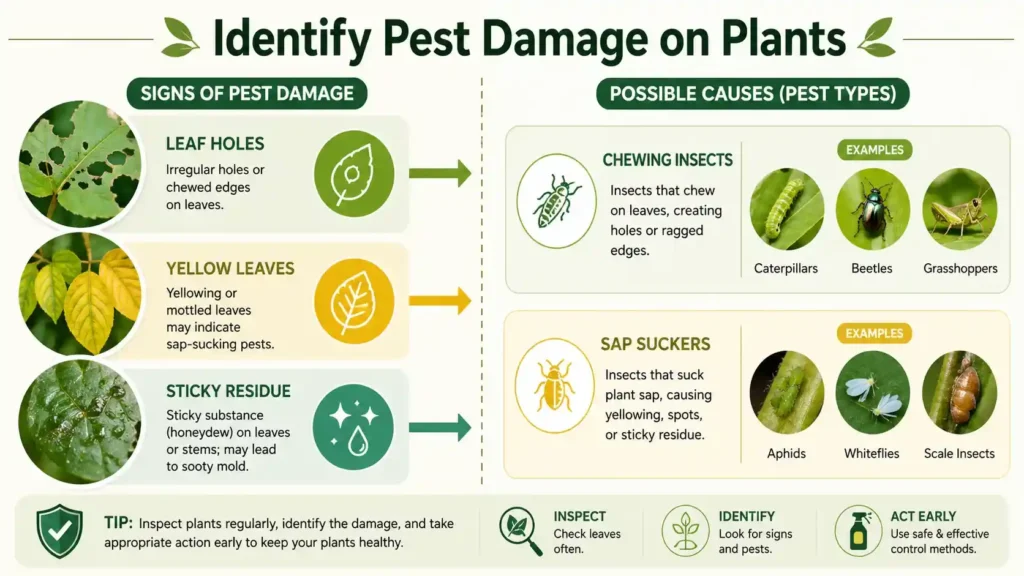
When insects are not visible, plant damage becomes the key indicator. Insect leaf damage identification allows gardeners to determine the type of pest based on feeding patterns.
Common damage patterns:
- Leaf holes: Caused by chewing pests like caterpillars and beetles
- Skeletonized leaves: Only veins remain, typical of aggressive feeders
- Sticky leaves: Indicate sap-sucking insects such as aphids or whiteflies
- Curling or distorted leaves: Often due to internal feeding or toxin release
If you’re wondering what insect is eating my plants, analyzing the type of damage is often more reliable than spotting the insect itself.
Soil & Root Signs
Many garden pests live below the surface, making soil inspection essential. Garden pests in soil can damage roots without immediate visible signs above ground.
Key indicators:
- Weak or wilting plants despite proper care
- Loose or unstable roots
- Slow growth or sudden decline
A common issue is the presence of white grubs in soil, which feed on roots and can severely weaken plants.
Typical soil pest signs include:
- Root damage leading to nutrient deficiency
- Holes or tunnels in soil
- Presence of larvae or soft-bodied insects underground
Identifying these garden pests in soil early helps prevent long-term damage and ensures healthier plant development.
Common Signs of Garden Pest Infestation
Recognizing early signs of pest activity is essential to prevent serious plant damage. Most garden insects leave visible clues that indicate their presence, even if the pests themselves are not immediately seen.
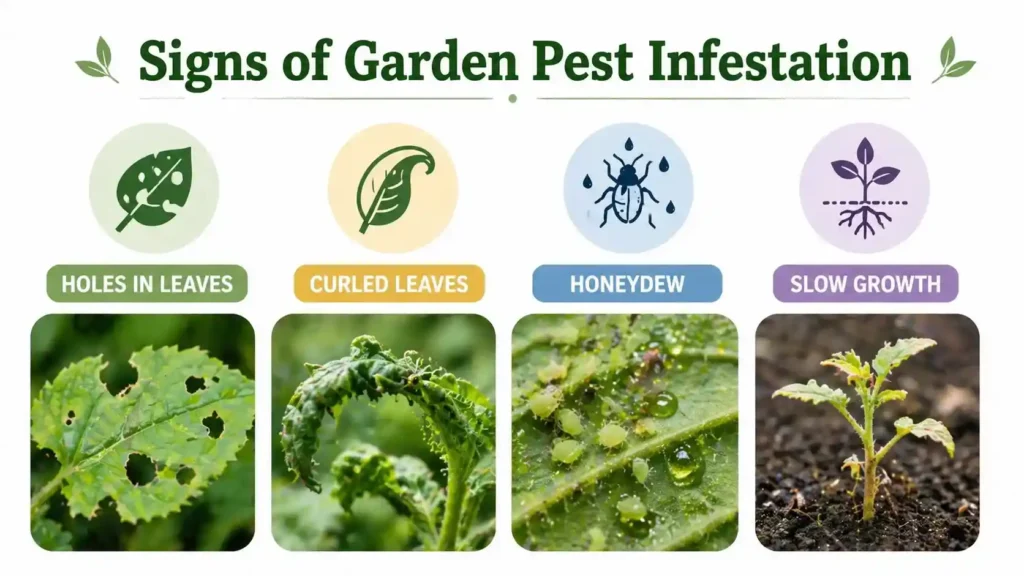
Key Signs to Watch For
- Holes in leaves
Irregular or large holes are usually caused by chewing insects such as caterpillars, beetles, or grasshoppers. These are classic feeding marks from pests that consume plant tissue directly. In severe cases, leaves may appear completely eaten or skeletonized. - Yellowing or curling leaves
Leaves turning yellow or curling inward often indicate sap-sucking insects like aphids, whiteflies, or thrips. These pests drain nutrients from plants, weakening them over time. Early signs of chinch bugs may also include yellow patches that gradually spread across leaves. - Sticky residue (honeydew)
A shiny, sticky substance on leaves or stems is a clear sign of sap-feeding pests. This residue, known as honeydew, attracts ants and can lead to black mold growth. It is commonly associated with aphids, whiteflies, and mealybugs. - Slow or stunted growth
When plants stop growing or appear weak despite proper care, it often signals hidden pest activity. Root damage, nutrient loss, or continuous feeding can slow down overall plant development. Some underground pests and larvae contribute to this issue.
👉 Recognizing early plant stress symptoms can help you identify underlying pest or environmental issues.
Additional Indicators
- Sudden plant decline without environmental cause
- Visible larvae or droppings near affected areas
- Patchy damage across multiple plants
Specific infestations can also be identified through targeted symptoms. For example:
- Signs of army worms include rapid leaf destruction and large chewed sections appearing overnight
- Signs of chinch bugs often show as dry, yellowing patches that resemble drought stress
Identifying these symptoms early allows for timely action and helps maintain a healthy, pest-free garden environment.
How to Get Rid of Common Garden Bugs (Complete Solutions)
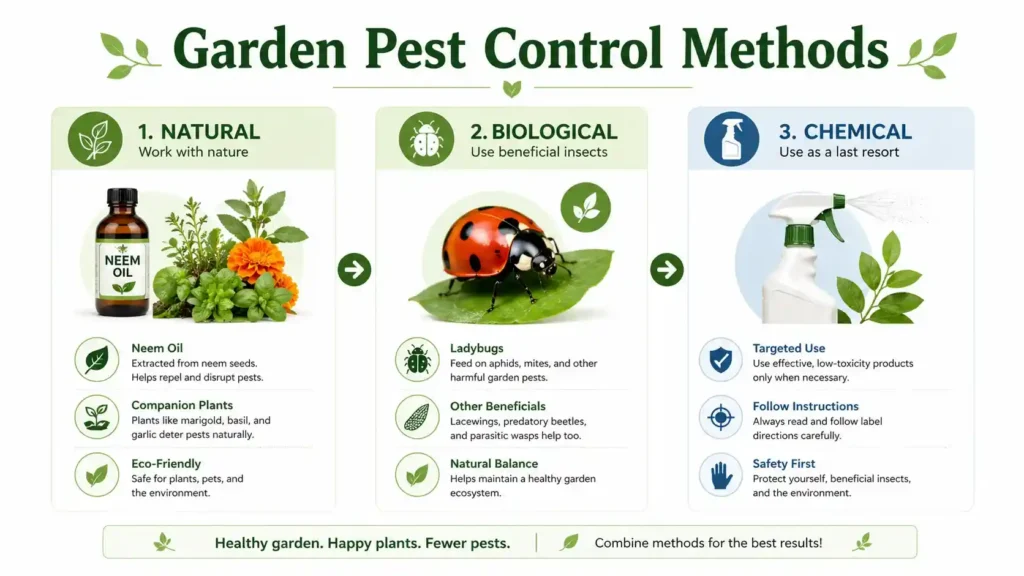
Natural & Organic Methods
Natural methods are the safest and most sustainable way to control garden pests. These approaches focus on reducing infestations without harming plants, soil, or beneficial insects.
Effective organic solutions:
- Neem oil spray: A widely used natural treatment that disrupts insect feeding and reproduction. It works well on aphids, whiteflies, and mites.
- Companion planting: Growing pest-repelling plants (like marigolds or basil) alongside crops helps naturally keep pests out of garden areas.
- Manual removal: Handpicking visible insects or using water sprays to remove them from leaves is simple but effective for small infestations
These methods are ideal for gardeners looking for how to get rid of bugs in garden environments without relying on chemicals.
👉 For more targeted strategies, you can also explore detailed insect management techniques.
Biological Control (Best Method)
Biological control uses natural predators to manage pest populations. This is one of the most effective long-term strategies for maintaining balance in a garden ecosystem.
Common beneficial insects:
- Ladybugs: Feed on aphids and other soft-bodied pests
- Lacewings: Highly effective against mites, thrips, and insect larvae
Introducing these good bugs for your garden helps reduce harmful insect populations naturally while supporting biodiversity.
Benefits of biological control:
- Long-term pest management
- No chemical residue
- Safe for plants and soil health
Chemical Control (When Needed)
Chemical treatments should be used only when infestations are severe and other methods are not effective. Choosing the right product and applying it correctly is essential.
Key guidelines:
- Use safe insecticides designed for specific pests
- Apply treatments during early morning or evening to avoid harming beneficial insects
- Follow label instructions carefully to prevent plant damage
Examples:
- Insecticide for earwigs: Targets soil and nighttime pests
- Pesticide for grasshoppers: Helps control large, fast-spreading infestations
Chemical control can provide quick results, but it should always be the last option after natural and biological methods.
How to Prevent Garden Bugs (Long-Term Protection)
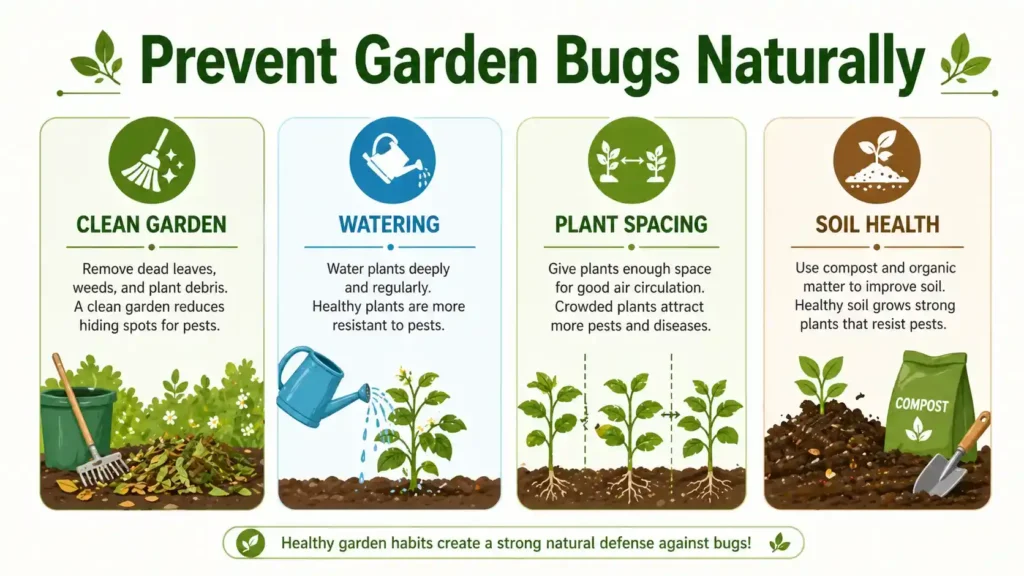
Garden Hygiene Practices
Maintaining a clean garden environment is the first step in preventing pest infestations. Poor hygiene creates ideal conditions for insects to breed and spread.
Essential practices:
- Remove plant debris: Dead leaves, fallen fruits, and weeds can attract pests and provide hiding spots
- Clean soil surface: Keeping the top layer of soil clear reduces breeding grounds
- Proper watering: Avoid overwatering, as excess moisture encourages pest activity and fungal growth
Consistent garden hygiene minimizes the chances of pests establishing themselves and spreading across plants.
Soil Health & Plant Strength
Healthy soil directly supports strong plants, making them more resistant to pests. Weak plants are more vulnerable to attacks from garden soil bugs and other soil insects.
Key strategies:
- Use nutrient-rich soil: Balanced nutrients improve plant immunity
- Ensure proper drainage: Prevents root rot and discourages harmful insects
- Add organic matter: Compost improves soil structure and beneficial microbe activity
Quick insight:
Healthy soil = stronger plants = fewer pest problems
By improving soil quality, gardeners can naturally reduce the impact of garden soil bugs and maintain long-term plant health.
Regular Monitoring & Early Detection
Routine inspection is one of the most effective ways to prevent pest outbreaks. Early detection allows for quick action before infestations become severe.
Best practices:
- Weekly inspection: Check leaves (top and underside), stems, and soil
- Look for early signs: Spots, holes, discoloration, or insect presence
- Track changes: Monitor plant growth and health regularly
Using simple methods to identify bugs in garden areas helps in timely control. Tools or references like a garden pest identifier can improve accuracy and prevent misidentification.
Consistent monitoring ensures that problems are detected early and managed effectively before they spread.
Garden Bugs Good vs Bad (Balanced Ecosystem Guide)
Understanding garden bugs good and bad is essential for maintaining a healthy and productive garden. Not all insects cause damage—many play a crucial role in supporting plant growth and ecosystem stability.
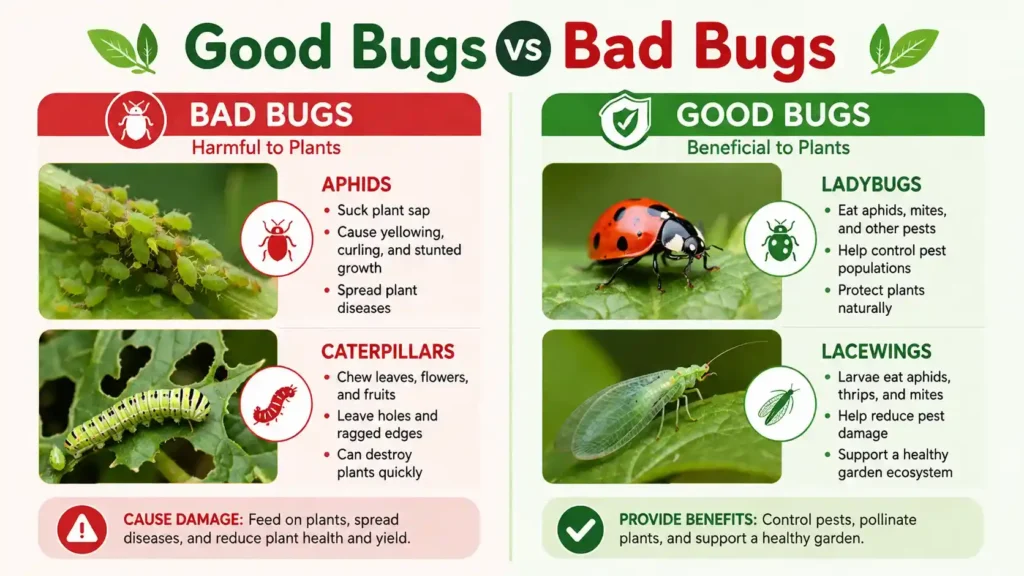
Understanding Good and Bad Bugs in the Garden
Garden insects can be divided into two main categories:
- Bad bugs (harmful pests):
These insects feed on plants, damage leaves, suck sap, or attack roots. Examples include aphids, caterpillars, and certain beetles. They reduce plant health and can spread quickly if not controlled. - Good bugs (beneficial insects):
These are natural helpers in the garden. If you’re wondering what bugs are good for the garden, common examples include ladybugs, lacewings, and predatory beetles. They feed on harmful pests and help keep infestations under control.
Why Not All Insects Are Harmful
A common mistake is assuming every insect is a threat. In reality, many insects contribute positively by:
- Controlling pest populations naturally
- Supporting pollination for flowers and crops
- Improving overall biodiversity
Eliminating all insects can disrupt the natural balance, leading to increased pest problems over time.
Creating a Balanced Ecosystem
A balanced garden ecosystem depends on the presence of both plants and beneficial insects working together.
How to maintain balance:
- Encourage beneficial insects by avoiding excessive pesticide use
- Grow a variety of plants to attract natural predators
- Allow minor pest presence to support predator populations
Quick summary:
- Not all bugs are harmful
- Beneficial insects reduce the need for chemicals
- Balance leads to a healthier, more sustainable garden
By understanding garden bugs good and bad, gardeners can make smarter decisions that protect plants while supporting a thriving ecosystem.
Landscaping & Garden Design Tips to Reduce Bugs (LeafyHeaven Style)
A well-planned garden design plays a major role in naturally reducing pest problems. Strategic layout, plant selection, and organic practices can significantly limit insect infestations while promoting a healthy ecosystem.
Plant Spacing and Airflow
Proper spacing between plants improves air circulation and reduces moisture buildup, which often attracts pests and fungal issues.
Best practices:
- Avoid overcrowding plants
- Maintain recommended spacing for each plant type
- Prune regularly to improve airflow
Good airflow creates a less favorable environment for many insects and helps plants stay dry and healthy.
Companion Planting Strategy
Companion planting involves placing specific plants together to naturally repel pests or attract beneficial insects.
Examples:
- Marigolds help deter harmful insects
- Basil can repel certain flying pests
- Herbs attract pollinators and predator insects
This method reduces reliance on chemical treatments and supports a balanced garden system.
Native Plants Advantage
Native plants are naturally adapted to local conditions and are more resistant to pests compared to non-native species.
Benefits:
- Require less maintenance and fewer treatments
- Attract local beneficial insects
- Better tolerance to environmental stress
Using native plants strengthens the overall resilience of the garden.
Organic Gardening Approach
An organic approach focuses on natural solutions and long-term sustainability rather than quick chemical fixes.
Core principles:
- Use compost and natural fertilizers
- Avoid synthetic pesticides
- Encourage biodiversity in the garden
This method aligns with sustainable gardening practices and helps maintain a naturally pest-resistant environment.
Conclusion
Common garden bugs include a wide range of insects that can either harm or benefit your plants. From leaf-eating pests to helpful predators, understanding their role is essential for proper garden care. Identifying these insects early allows you to take the right action—whether it’s controlling harmful pests or protecting beneficial ones.
Accurate identification, combined with effective prevention methods, is the key to long-term success. By maintaining clean garden conditions, supporting soil health, and using natural control techniques, you can reduce pest problems without disrupting the ecosystem.
A well-managed garden is not pest-free by chance—it is the result of informed decisions and consistent care. Focus on balanced practices, monitor regularly, and take early action when needed.
Maintain a healthy, pest-free garden naturally by combining smart identification with sustainable prevention strategies.
FAQs
What are the most common garden bugs?
The most common garden bugs include aphids, caterpillars, beetles, whiteflies, mealybugs, spider mites, thrips, grasshoppers, and leafhoppers. These insects are frequently found in gardens and can cause damage depending on their feeding behavior.
How do I identify bugs in my garden?
You can identify bugs in your garden by: Observing their size, color, and shape Checking plant damage patterns (holes, yellowing, sticky residue) Inspecting the underside of leaves and soil Using a garden pest identifier or reference images can improve accuracy.
Are all garden bugs harmful to plants?
No, not all garden bugs are harmful. Many insects are beneficial and help control pests or support pollination. Removing all insects can harm the natural balance of your garden.
What bugs are beneficial for the garden?
Beneficial bugs include ladybugs, lacewings, and predatory beetles. These insects feed on harmful pests and help maintain a balanced ecosystem, reducing the need for chemical treatments.
How can I get rid of garden pests naturally?
You can control pests naturally by: Using neem oil spray Practicing companion planting Removing pests manually Encouraging beneficial insects These methods are safe and effective for long-term pest management.
What are the signs of pests in soil?
Common signs include: Weak or wilting plants despite proper care Slow or stunted growth Root damage or loose plants Presence of grubs or larvae in soil
What insect is eating my plant leaves?
Chewing pests like caterpillars, beetles, and grasshoppers are usually responsible for leaf damage. The size and pattern of holes can help identify the exact pest.
How often should I check my garden for pests?
It is recommended to inspect your garden at least once a week. Regular monitoring helps detect early signs of infestation and prevents major damage.
Can overwatering attract garden bugs?
Yes, overwatering creates excess moisture, which attracts pests and promotes fungal growth. Proper watering helps reduce pest problems.
What is the fastest way to control a pest infestation?
The fastest method is to combine manual removal with targeted treatments like neem oil or safe insecticides. Quick action prevents pests from spreading.

Written by the LeafyHeaven Editorial Team
LeafyHeaven shares practical gardening tips and simple plant care guides to help you grow, nurture, and enjoy your plants with ease. Our goal is to make gardening feel natural, approachable, and rewarding for everyone.