
Introduction
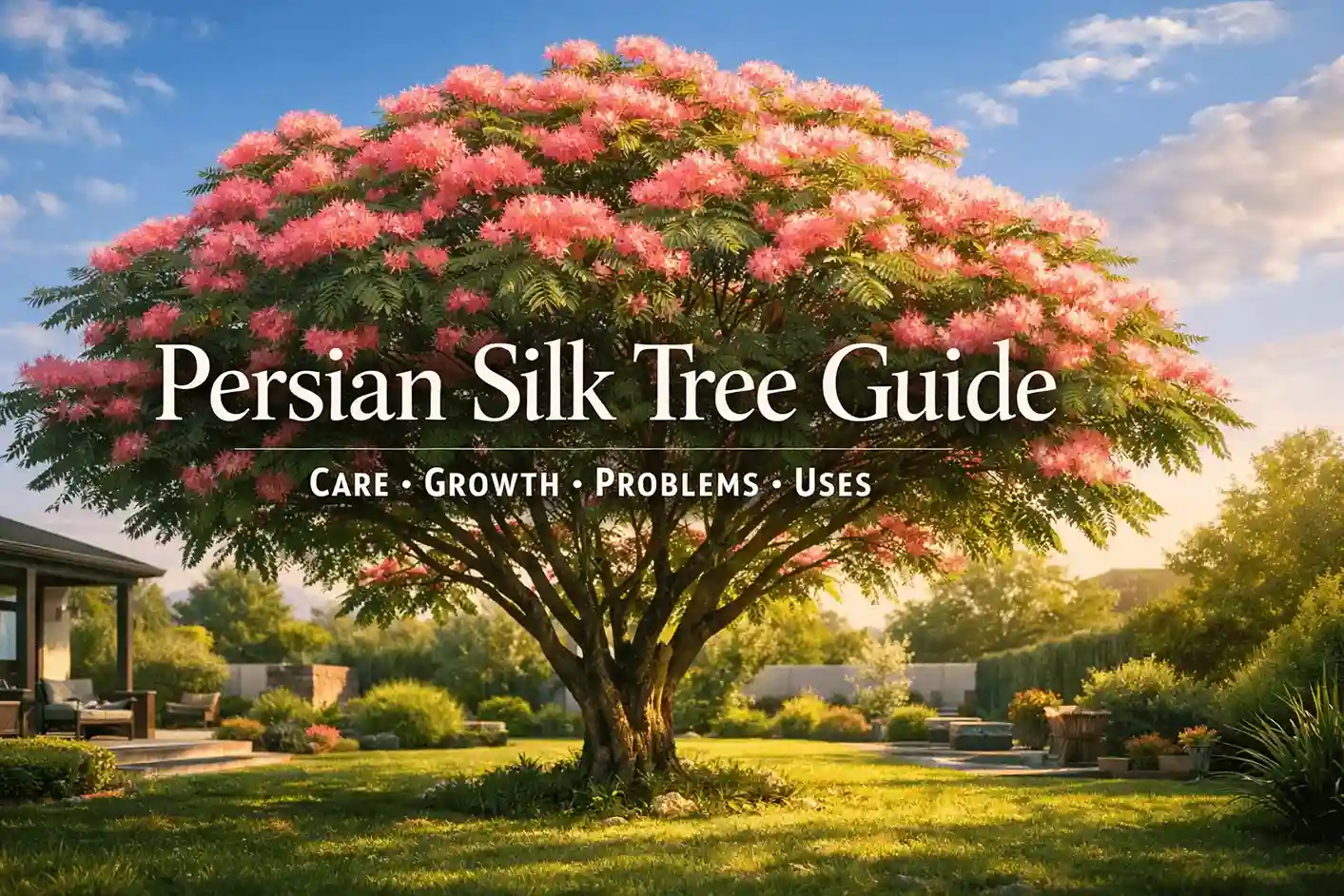
The Persian silk tree (Albizia julibrissin) is a fast-growing ornamental tree widely admired for its soft, feathery foliage and striking pink blooms. Commonly known as the pink silk tree or ornamental silk tree, it adds a tropical, airy appearance to gardens and landscapes. Its popularity has increased globally, especially in regions like Persian silk tree Australia, where it adapts well to warm climates. This guide covers everything users need—identification, growth habits, care requirements, practical uses, and common problems—helping both beginners and experienced gardeners understand and manage this visually appealing yet sometimes challenging tree.
What is the Persian Silk Tree? (Albizia julibrissin Overview)
Scientific Classification and Common Names
The albizia julibrissin (scientific name) belongs to the Fabaceae family. It is widely known by several names:
- Pink silk tree
- Mimosa Persian silk tree
- Silk tree albizia
It is part of the broader albizia tree group, often referred to collectively as silk trees due to their silky flower texture. The albizia julibrissin (scientific name) belongs to the Fabaceae family and is widely recognized for its ornamental value (learn more on Wikipedia).
Origin and Natural Habitat
Native to Asia, particularly regions of Iran, China, and Korea, the tree has spread globally due to its ornamental value. It thrives in warm, temperate climates and has adapted well in areas like silk tree Australia and albizia tree Australia, where conditions support its rapid growth and flowering.
Persian Silk Tree Appearance and Features
Persian Silk Tree Flower (Key Attraction)
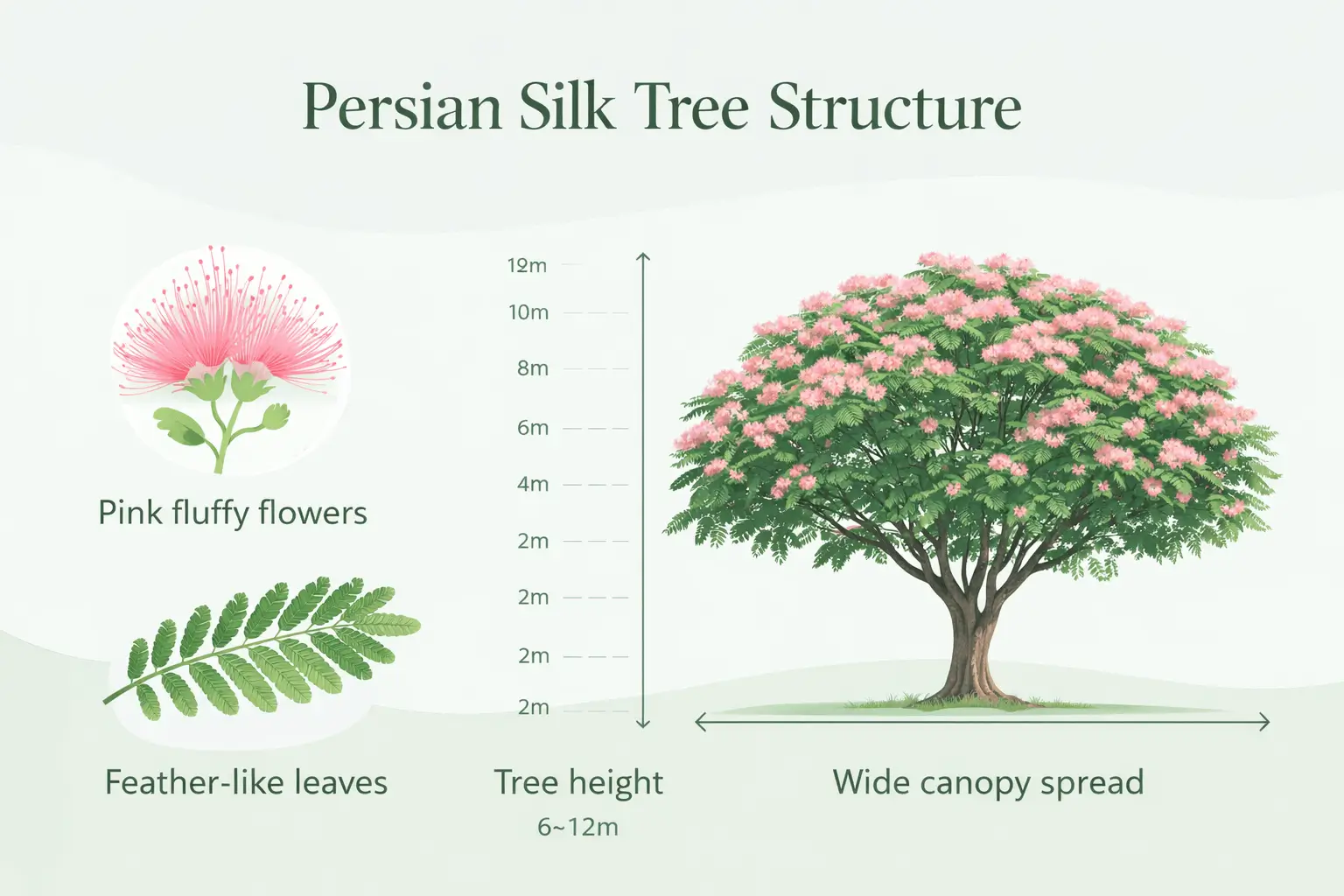
The persian silk tree flower is the tree’s main attraction:
- Fluffy, silk-like pink blooms
- Fine thread-like stamens creating a soft texture
- Typically blooms in late spring to summer
These pink silk tree flowers give the tree a unique ornamental appeal.
Tree Size, Height, and Growth Rate
- Average persian silk tree height: 6–12 meters
- Spread: 4–10 meters wide
- Growth rate: Fast-growing under ideal conditions
Deciduous Nature and Seasonal Changes
The persian silk tree deciduous nature means:
- Leaves drop in autumn
- Bare branches in winter
- Fresh green foliage returns in spring
This seasonal cycle enhances its landscape value.
Persian Silk Tree in Australia
Growing Persian Silk Tree Australia Conditions
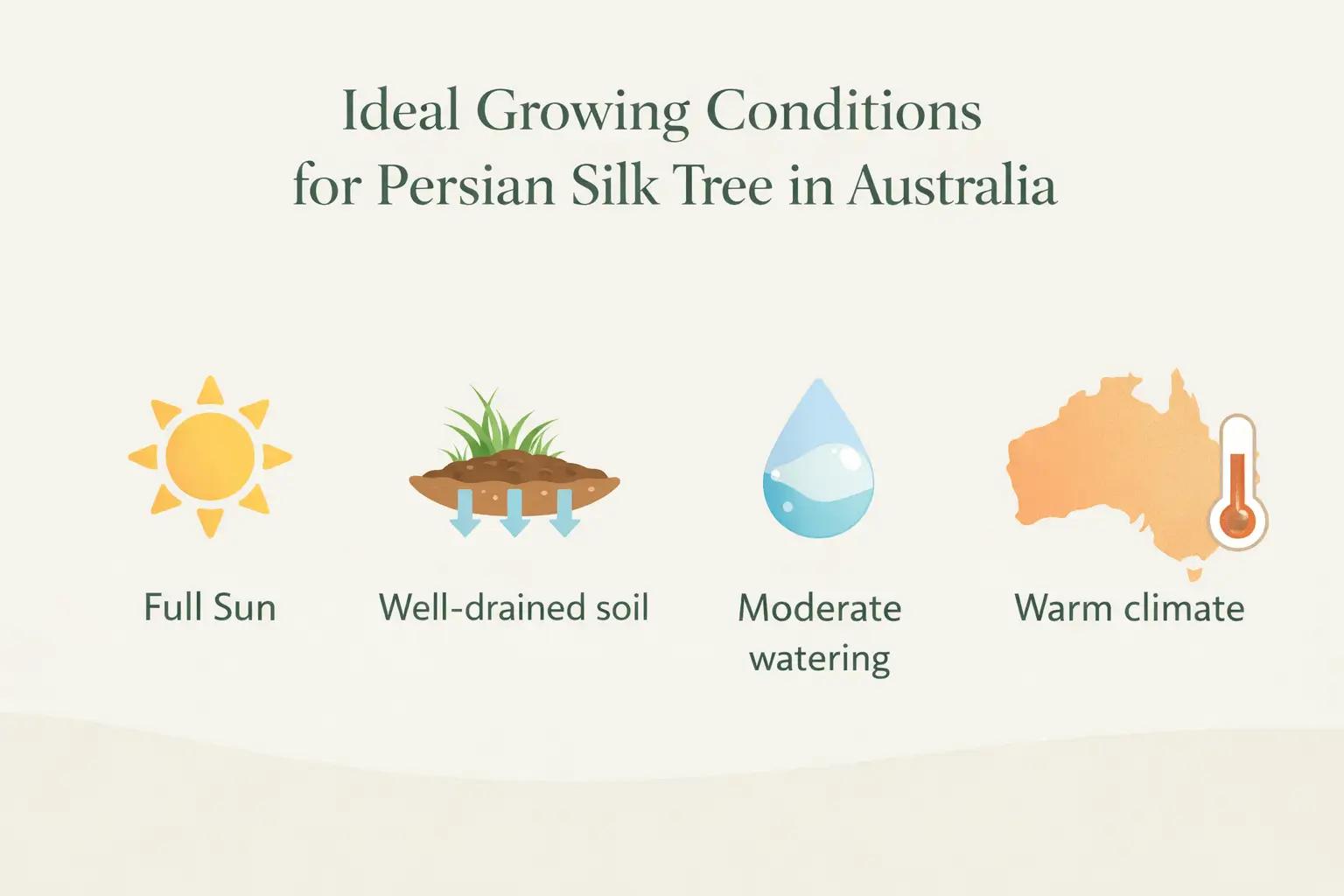
For successful growth in persian silk tree Australia:
- Climate: Warm, frost-sensitive regions
- Soil: Well-drained sandy or loamy soil
- Sunlight: Full sun preferred
- Water: Moderate watering, drought-tolerant once established
Availability in Australia (Where to Buy)
You can find:
- Persian silk tree Bunnings (availability varies)
- Online nurseries offering persian silk tree for sale
- Local suppliers of persian silk trees Australia
Is It Suitable for Australian Landscapes?
Yes, commonly used as:
- A pink tree Australia feature plant
- Shade tree in gardens
- Decorative silk tree Australia in parks and streets
For more options, explore other trees with pink flowers in Australia to compare similar ornamental species for landscaping.
How to Grow Persian Silk Tree
Growing from Seeds and Propagation
Using persian silk tree seeds:
- Scarify seeds before planting
- Soak in warm water overnight
- Germination typically occurs within 1–3 weeks
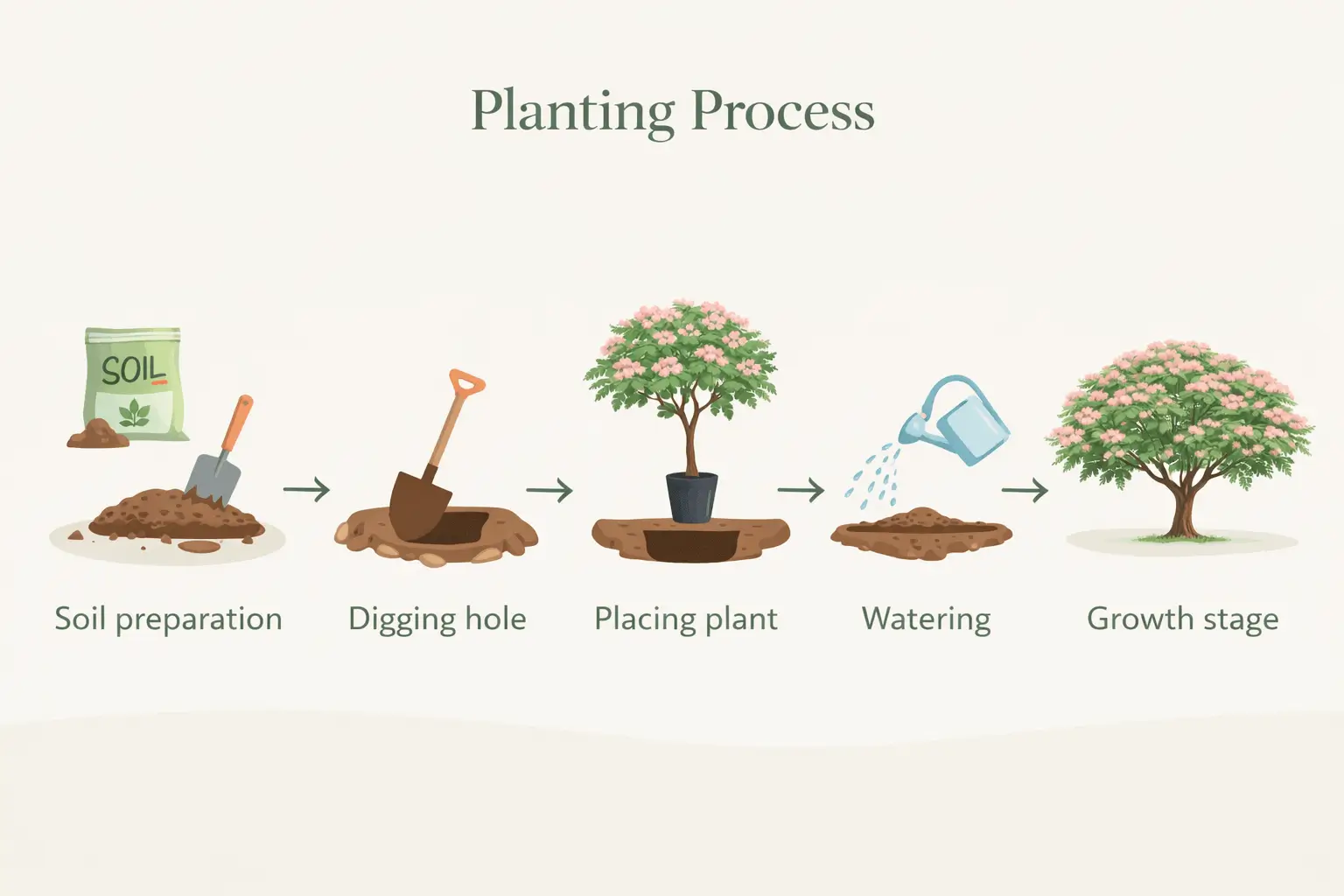
Planting Guide (Step-by-Step)
- Prepare well-drained soil
- Dig a hole twice the root ball size
- Place the plant at proper depth
- Backfill and water thoroughly
- Maintain spacing for spread
Bonsai Potential
The persian silk tree bonsai is popular due to:
- Fine foliage structure
- Responsive pruning
- Easy shaping with regular maintenance
If you’re interested in shaping miniature trees, understanding the significance of a bonsai tree can help you master the art of training and styling ornamental species like Albizia.
Persian Silk Tree Care Guide
Watering, Sunlight, and Soil Needs
- Water regularly during early growth
- Full sun exposure for best flowering
- Prefers loose, well-drained soil
Pruning and Maintenance
- Prune to shape and control growth
- Remove weak or damaged branches
- Maintain structure for safety
Fertilization and Growth Boost Tips
- Use balanced fertilizer in spring
- Avoid excessive nitrogen
- Organic compost improves soil health
Persian Silk Tree Problems and Disadvantages
Common Issues and Diseases
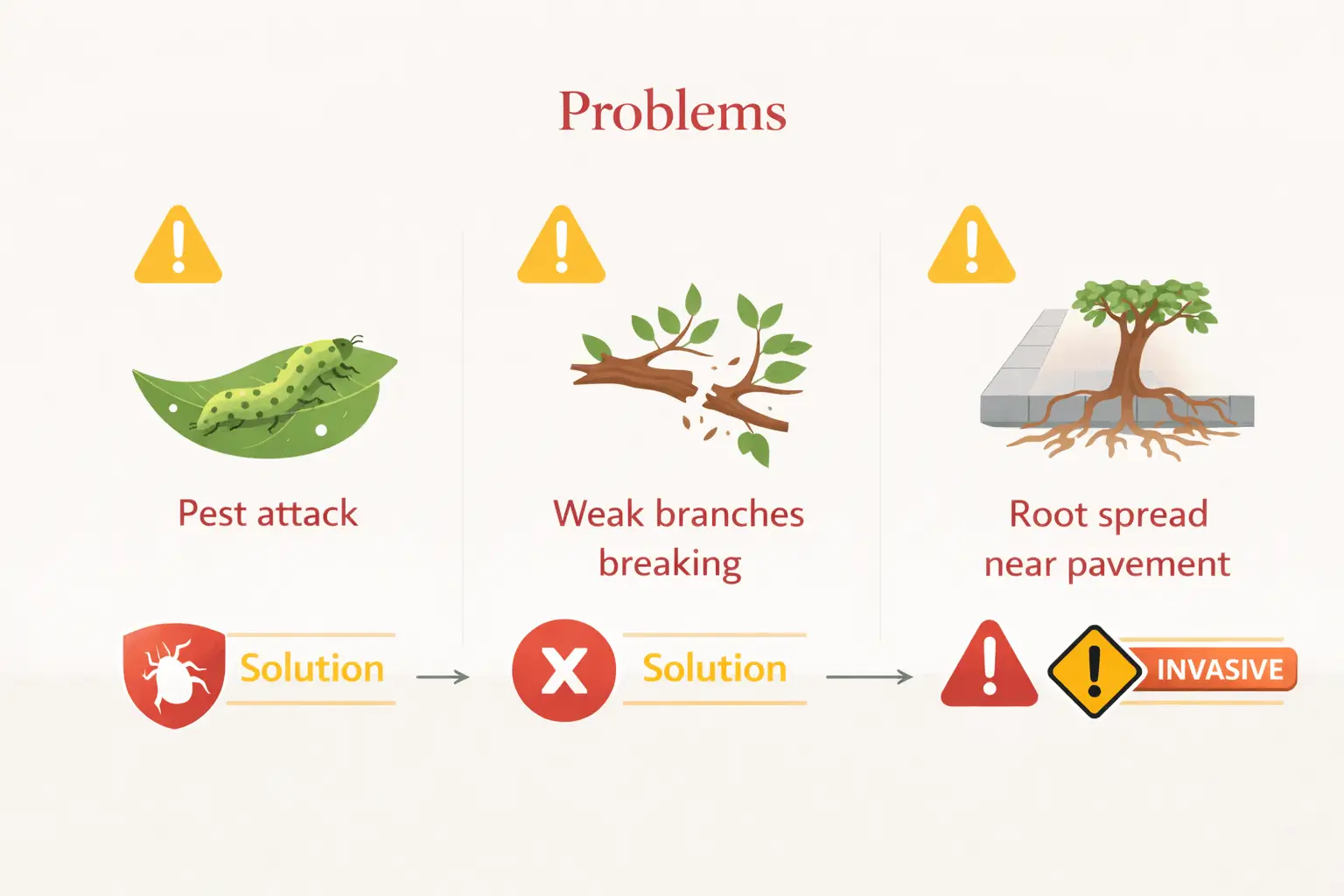
Common persian silk tree problems include:
- Pest infestations (webworms, borers)
- Weak wood prone to breakage
- Susceptibility to fungal diseases
Root System and Structural Concerns
- Wide root spread
- May affect pavements and foundations
- Not ideal near structures
Environmental Concerns (Invasive Potential)
- Can spread aggressively in some regions
- Considered invasive in certain climates
- Requires monitoring in natural ecosystems
Persian Silk Tree vs Mimosa (Key Differences)
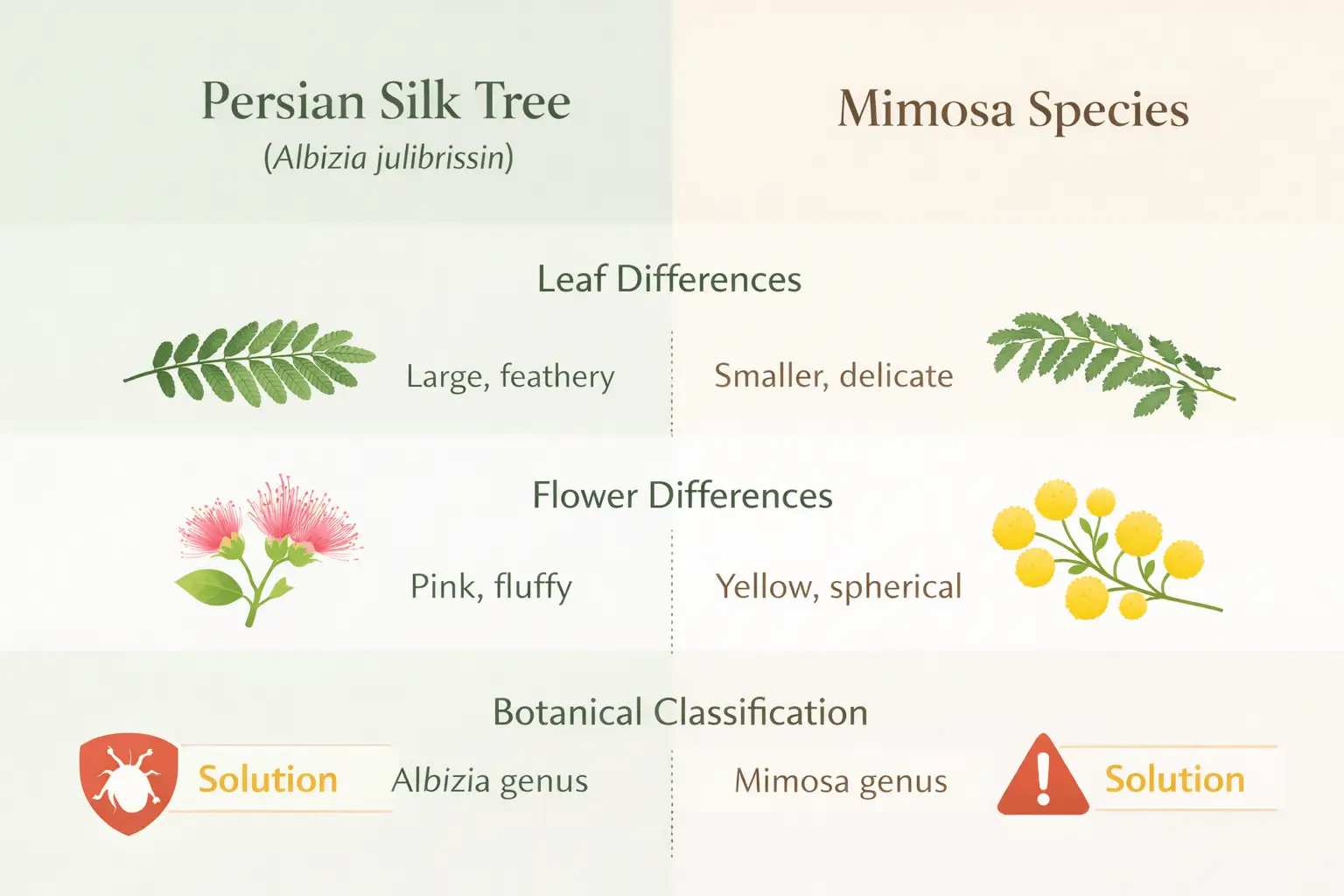
Are They the Same Tree?
The persian silk tree vs mimosa confusion exists because the Persian silk tree is often called mimosa. However, it refers specifically to Albizia julibrissin.
Botanical Comparison
- Persian silk tree: Albizia genus
- True mimosa: Mimosa genus
- Differences lie in leaf structure, growth habit, and classification
Uses of Persian Silk Tree
Landscaping and Ornamental Uses
- Shade tree
- Garden focal point
- Decorative street planting
Medicinal Uses and Benefits
Reported persian silk tree medicinal uses include:
- Traditional use in herbal medicine
- Associated with calming properties
(Use with caution; consult professionals before use)
Practical Uses
- Urban landscaping
- Garden design enhancement
- Soil improvement in some cases
Albizia Tree Varieties and Related Silk Trees
Albizia Julibrissin vs Other Albizia Species
- albizia julibrissin persian silk tree is the most common ornamental
- Other albizia silk tree species vary in size and climate tolerance
Other Silk Trees in Australia
- Various silk trees Australia species available
- Adapted varieties of albizia julibrissin Australia for local climates
Conclusion
The persian silk tree stands out as a visually striking ornamental tree known for its delicate pink blooms and fast growth. Popular as a pink silk tree, it offers strong landscaping value, especially in warm regions like Australia. While it provides beauty and shade, proper care and awareness of its potential issues—such as invasive behavior and structural concerns—are essential. With the right approach, it can be a valuable addition to gardens and landscapes. To deepen your knowledge, explore this complete gardening & plant care guide for growing healthy and thriving plants.
FAQs
What is a Persian silk tree?
A Persian silk tree is an ornamental tree (Albizia julibrissin) known for its pink, fluffy flowers and fast growth.
Is the Persian silk tree invasive in Australia?
In some regions, it may spread aggressively, so monitoring and responsible planting are important.
How tall does a Persian silk tree grow?
It typically grows between 6 to 12 meters tall, depending on conditions.
Where can I buy a Persian silk tree in Australia?
It is available through nurseries, online stores, and sometimes at Bunnings.
Is Persian silk tree the same as mimosa?
It is often called mimosa, but it belongs to the Albizia genus, not true Mimosa species.
How long does it take for a Persian silk tree to flower?
It usually flowers within 2–3 years under ideal growing conditions.

Written by the LeafyHeaven Editorial Team
LeafyHeaven shares practical gardening tips and simple plant care guides to help you grow, nurture, and enjoy your plants with ease. Our goal is to make gardening feel natural, approachable, and rewarding for everyone.