
Introduction to Hydroponic Plants
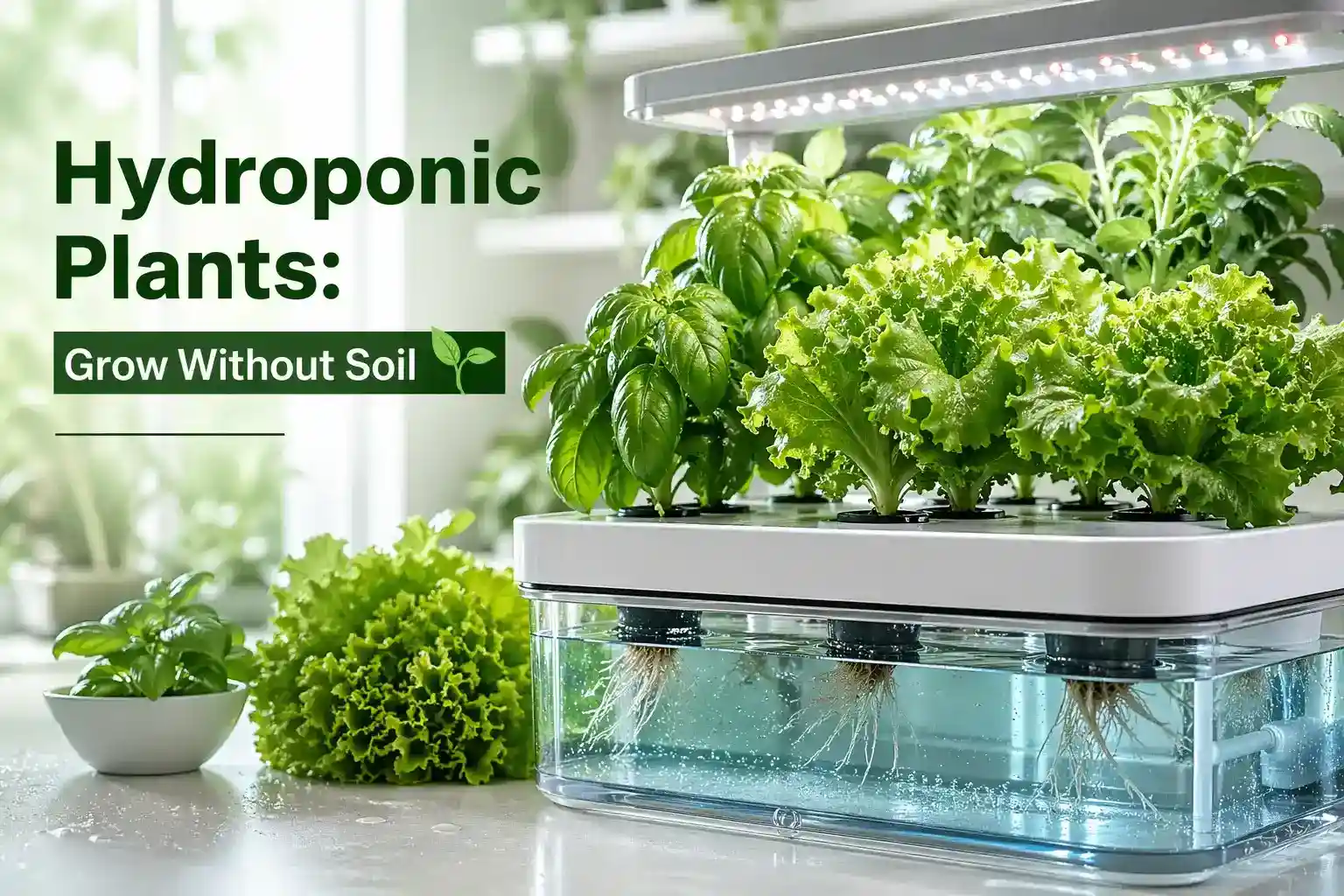
Hydroponic plants are grown using a modern cultivation method where soil is completely replaced with nutrient-rich water. To understand what is hydroponics, it is a technique of growing plants without soil by supplying essential minerals directly through water. The hydroponics definition focuses on a controlled system where plants receive water, nutrients, and oxygen in a balanced environment. In simple terms, the hydroponic meaning refers to water-based plant cultivation that ensures faster and more efficient growth compared to traditional methods.
Hydroponic Plants Kya Hotay Hain?
Hydroponic plants wo plants hotay hain jo mitti ke baghair ugaye jate hain. In plants ko support dene ke liye water-based system aur alternative growing mediums use kiye jate hain. Roots directly nutrient solution se nutrients absorb karti hain, jis se plant growth zyada efficient ho jati hai. Yeh method especially un logon ke liye useful hai jo limited space mein ya indoor environment mein plants grow karna chahte hain.
Why Hydroponics is Trending
Aaj kal hydroponic gardening rapidly popular ho rahi hai, khas taur par indoor gardening aur urban farming ke trend ki wajah se. Iske kuch major reasons yeh hain:
- Indoor Gardening Friendly: Apartments aur small spaces mein asaani se setup ho jata hai
- Water-Based Growing: Traditional farming ke muqable mein kam pani use hota hai
- Faster Growth: Hydroponics plants tezi se grow karti hain due to direct nutrient supply
- Space Efficient: Vertical systems aur compact setups mein bhi possible hai
- Clean & Controlled Environment: Soil-related pests aur diseases ka risk kam hota hai
Yeh tamam factors mil kar growing plants without soil ko ek modern, efficient aur sustainable solution bana dete hain, jo future gardening trends ka important hissa ban raha hai.
For a strong foundation, understanding basic plant care principles can help you manage hydroponic systems more effectively.
How Hydroponic Plants Grow (System Explained)
Basic Working Mechanism
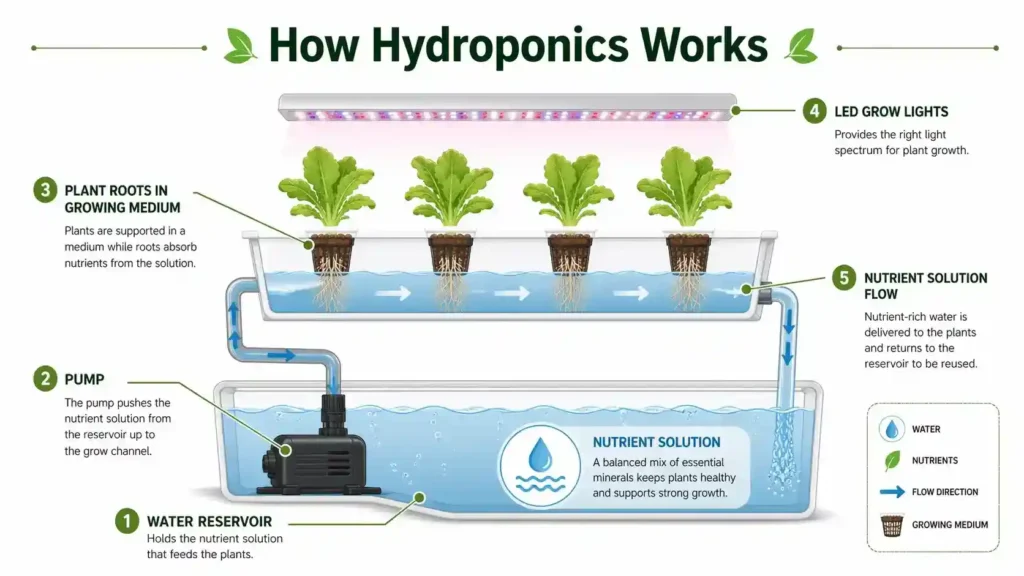
The growth of hydroponic plants is based on a controlled system where water, nutrients, and oxygen work together to support plant development. To understand how hydroponics work, plants are placed in a setup where their roots are directly exposed to hydroponics water enriched with essential nutrients.
The hydroponics process follows a simple but efficient cycle:
- Roots absorb nutrients directly from water instead of soil
- Oxygen is supplied to roots to prevent suffocation and support growth
- Water continuously circulates to maintain nutrient balance
- Environmental factors like light and temperature are controlled
This system ensures that plants receive everything they need in precise amounts, resulting in faster and healthier growth compared to traditional soil-based methods.
Key Components of Hydroponic System
A complete hydroponic growing system consists of several essential components that work together:
- Reservoir: Stores nutrient-rich water solution
- Hydroponic Water Pump: Circulates water and nutrients to plant roots
- LED Hydroponic Lights Reservoir Setup: Provides artificial light for indoor plant growth
- Growing Medium: Supports plant roots (like coco peat, perlite, or rockwool)
Each component plays a critical role in maintaining a stable environment. The hydroponic water pump ensures continuous flow, while LED hydroponic lights help plants perform photosynthesis in indoor setups.
Types of Hydroponic Systems
Different hydroponic systems are used depending on plant type and setup requirements. The most common systems include:
- Deep Water Culture (DWC):
Plants roots are submerged in nutrient-rich water with oxygen supply. Simple and ideal for beginners. - Nutrient Film Technique (NFT):
A thin layer of nutrient solution flows over roots continuously. Efficient for small plants like lettuce. - Drip System:
Nutrient solution is delivered drop by drop to each plant. Suitable for larger setups and better control.
Each hydroponic setup offers unique advantages, but all are designed to optimize the hydroponics growing system for maximum efficiency and plant health.
Best Hydroponic Plants for Beginners
Easy Hydroponic Plants
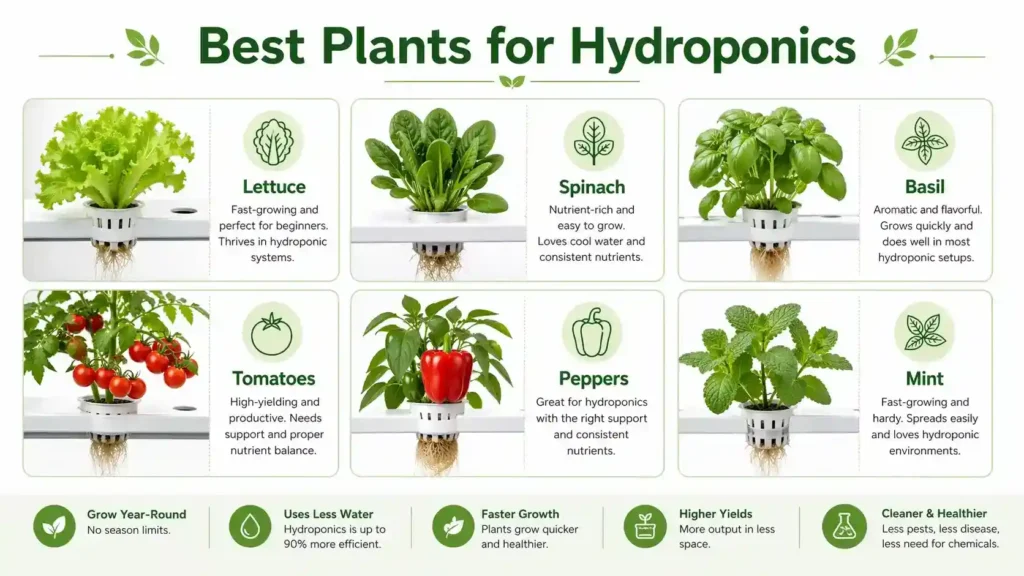
For beginners, choosing simple and fast-growing plants makes hydroponic gardening easier to manage. These are considered the best plants for hydroponics because they require minimal maintenance and adapt quickly to water-based systems.
Good plants for hydroponics beginners include:
- Lettuce: Fast-growing, ideal for small setups, and thrives in most hydroponic systems
- Spinach: Grows well in nutrient-rich water and does not need complex care
- Basil: One of the easiest herbs with rapid growth and strong flavor output
These plants are perfect starting points because they respond quickly to nutrients and help beginners understand how hydroponic systems work.
Hydroponic Vegetables
Once basics are clear, beginners can move toward growing hydroponic vegetables that offer higher yield and variety. A small hydro vegetable garden can easily be created at home using simple systems.
Popular hydroponic vegetables:
- Tomatoes: Require proper support and light but produce high yields
- Peppers: Adapt well to controlled environments and grow efficiently
- Cucumbers: Fast-growing vines that perform well in hydroponic setups
These vegetables need slightly more attention but provide better productivity and long-term results.
Hydroponic Herbs & Indoor Plants
Herbs and decorative plants are excellent choices for indoor setups. Many indoor hydroponic plants grow efficiently under artificial lighting and controlled conditions.
Best hydroponic herbs and houseplants:
- Mint: Extremely easy to grow and spreads quickly in water-based systems
- Coriander (Cilantro): Requires stable nutrients but grows well indoors
- Hydroponic Houseplants: Many ornamental plants adapt well without soil
These hydroponic herbs and hydroponic houseplants are ideal for kitchens, living spaces, and small indoor gardens, making hydroponics both practical and visually appealing.
👉 You can also explore other indoor plant options that improve your living environment.
Hydroponic Plants Growing Medium & Nutrients
Growing Medium Options
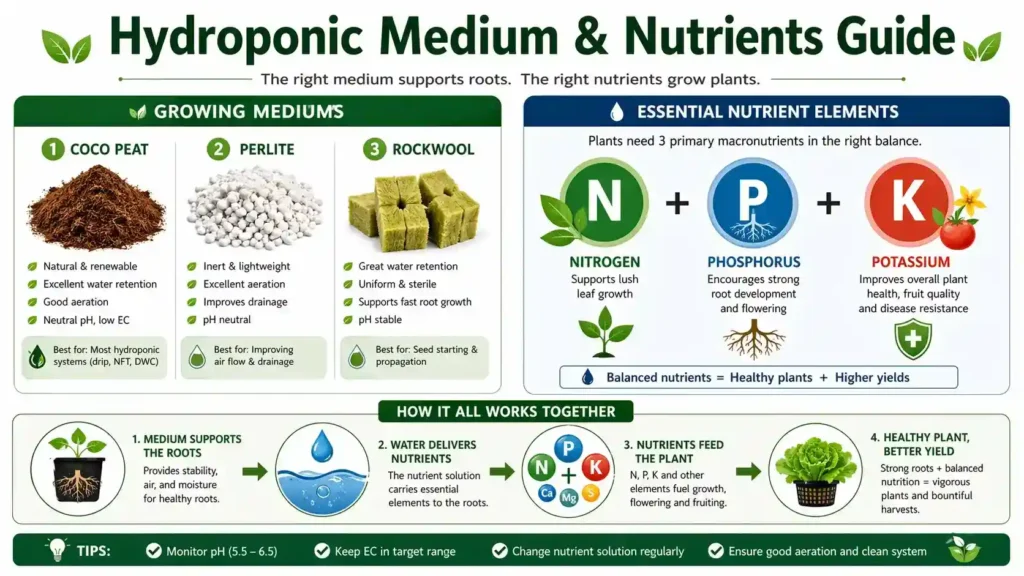
In hydroponics, plants are supported by a hydroponic growing medium instead of soil. This medium does not provide nutrients but helps hold the roots in place while allowing proper water flow and oxygen circulation. Choosing the right hydroponic planting medium is essential for healthy root development.
Common hydro grow medium options include:
- Coco Peat:
Made from coconut husk, it retains moisture well and provides good aeration. Ideal for beginners. - Perlite:
A lightweight, porous material that improves oxygen flow and drainage in the system. - Rockwool:
A popular hydroponic growing medium that holds water efficiently while maintaining air pockets for roots.
Each hydroponic planting medium has its own advantages, but all are designed to support roots without interfering with nutrient delivery.
Nutrient Solutions
Since there is no soil, plants rely entirely on a balanced hydroponic solution for their growth. This solution contains all the essential nutrients required for plant development.
Key elements in hydroponic plant food (NPK):
- Nitrogen (N): Supports leaf growth and overall plant health
- Phosphorus (P): Helps in root development and flowering
- Potassium (K): Improves plant strength and disease resistance
A proper hydroponics fertilizer mix ensures that plants receive nutrients in the right proportions. This controlled feeding system makes hydroponic plant food more efficient than traditional soil-based nutrition, resulting in faster growth and better yields.
How to Grow Hydroponic Plants at Home (Step-by-Step)
Setting Up a Home Hydroponic System
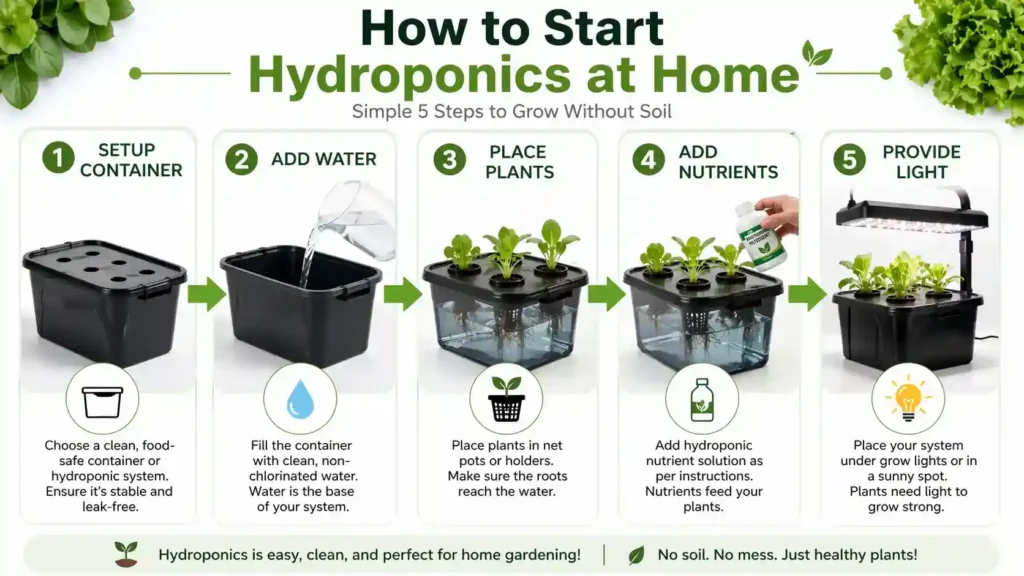
Starting hydroponics for home is simple if you follow a structured approach. A basic home hydroponic system can be set up using minimal equipment and space.
Beginner-friendly hydroponic setup:
- Choose a simple system (Deep Water Culture is best for beginners)
- Select a container or reservoir to hold nutrient solution
- Install a small hydroponic setup with net pots and growing medium
- Add an air pump or circulation system for oxygen supply
- Place plants in a location with good light (natural or artificial)
This setup ensures that plants receive water, nutrients, and oxygen in a controlled environment, making hydroponics easy to manage at home.
Planting & Maintenance
Proper planting and regular care are essential for successful hydroponic growth. Using quality hydroponics seeds and maintaining the system ensures healthy plants.
Key steps for planting and maintenance:
- Start with high-quality hydroponics seeds suited for water-based systems
- Place seeds in a suitable growing medium (like coco peat or rockwool)
- Monitor hydroponics watering to maintain correct nutrient levels
- Check pH and nutrient balance regularly
- Ensure proper airflow and cleanliness for better hydroponic plant care
Consistent monitoring helps prevent common issues and promotes faster growth.
Indoor vs Outdoor Hydroponics
Hydroponic systems can be set up both indoors and outdoors, depending on available space and environmental conditions.
Indoor Hydroponic Garden:
- Uses artificial lighting like LED grow lights
- Controlled environment (temperature, humidity, light)
- Ideal for apartments and limited spaces
Sunlight Hydroponics (Outdoor):
- Relies on natural sunlight for plant growth
- Lower electricity cost
- Suitable for balconies, rooftops, or open areas
Choosing between an indoor hydroponic garden and sunlight hydroponics depends on your space, budget, and control requirements.
Benefits of Hydroponic Plants
Hydroponic systems are gaining popularity in modern hydroponic farming and hydroponic agriculture due to their efficiency and controlled growing conditions. These systems offer multiple advantages over traditional soil-based methods, especially for indoor and urban environments.
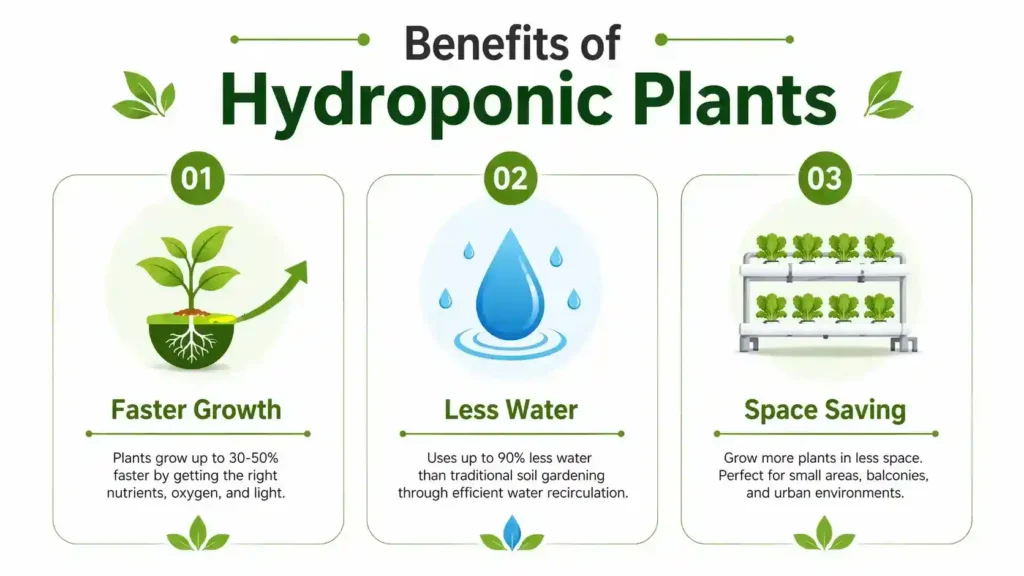
Faster Growth Rate
- Plants grow up to 30–50% faster compared to soil gardening
- Direct nutrient delivery improves absorption efficiency
- Controlled environment reduces growth interruptions
This accelerated growth makes hydroponics ideal for continuous production and higher yields.
Less Water Usage
- Uses up to 80–90% less water than traditional farming
- Water is recycled within the system, reducing waste
- No water loss through soil absorption or runoff
This makes hydroponics a highly sustainable solution, especially in areas with limited water resources.
Space-Saving
- Perfect for growing plants in water indoors with compact setups
- Vertical farming allows more plants in less space
- Ideal for apartments, rooftops, and small urban areas
Because of these advantages, hydroponic systems are becoming a preferred method in modern hydroponic agriculture, offering efficient, clean, and scalable plant production.
Common Problems & Solutions in Hydroponics
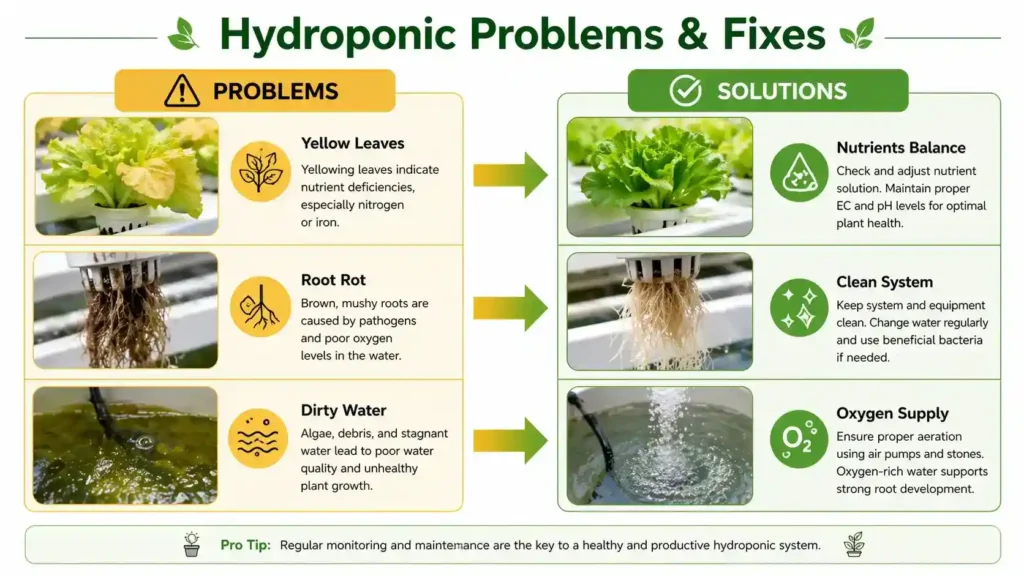
Nutrient Deficiency
Nutrient imbalance is one of the most common issues affecting hydroponic plant growth. Since plants depend entirely on nutrient solutions, even small deficiencies can impact health and yield.
Common signs:
- Yellowing leaves (Nitrogen deficiency)
- Weak roots and slow growth
- Poor flowering or fruiting
Solutions:
- Regularly monitor nutrient levels in hydroponics water
- Use a balanced nutrient solution (NPK + micronutrients)
- Maintain proper pH range (typically 5.5–6.5)
- Adjust feeding schedule based on plant stage
Consistent monitoring ensures stable hydroponic plant care and prevents nutrient-related stress.
Root Rot Issues
Root rot occurs when roots lack oxygen or remain in overly stagnant water. This can severely damage plant health and stop growth completely.
Common causes:
- Poor oxygen supply in water
- Overheated nutrient solution
- Dirty or unclean system
Solutions:
- Ensure proper aeration using air pumps
- Keep water temperature between 18–22°C
- Clean system regularly to avoid bacterial buildup
- Remove affected roots immediately to prevent spread
Healthy roots are essential for proper hydroponic plant growth, so maintaining oxygen levels is critical.
Water Quality Problems
The quality of hydroponics water directly affects plant performance. Impure or imbalanced water can disrupt nutrient absorption.
Common issues:
- High salt or mineral content
- Incorrect pH levels
- Contaminated water sources
Solutions:
- Use clean, filtered, or RO water if possible
- Check and adjust pH regularly
- Replace nutrient solution periodically
- Avoid using untreated or hard water
Maintaining good water quality is a core part of effective hydroponic plant care, ensuring plants grow consistently and efficiently.
👉 If plants show signs of stress, understanding common plant health issues can help diagnose the problem early.
Hydroponic Plants vs Soil Gardening
Understanding the difference between soil and hydroponics helps in choosing the right growing method based on needs, space, and resources. Both systems have their own advantages, but growing plants without soil offers more control and efficiency in many cases.
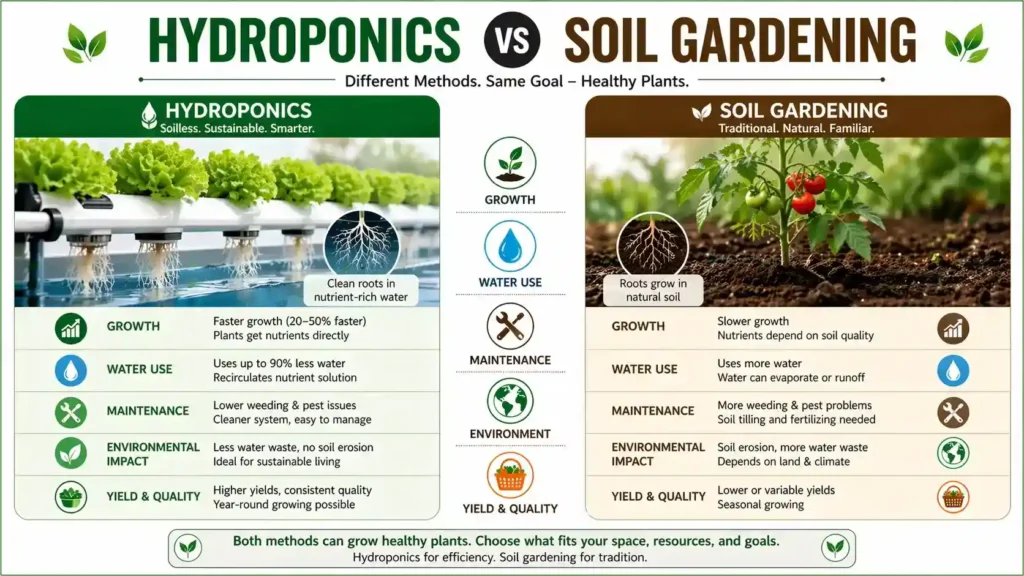
Comparison: Hydroponics vs Soil Gardening
| Factor | Hydroponic Plants (Growing Plants Without Soil) | Soil Gardening |
| Growth Rate | Faster growth due to direct nutrient supply | Slower due to nutrient absorption through soil |
| Yield | Higher yield in controlled environment | Depends on soil quality and external factors |
| Water Usage | Uses less water (recycled system) | Higher water consumption due to runoff |
| Maintenance | Requires system monitoring (pH, nutrients) | Requires weeding, soil care, pest control |
| Space Usage | Space-efficient, supports vertical setups | Needs more land and space |
| Cleanliness | No soil mess, fewer pests | Soil-based pests and dirt issues |
Key Difference Explained
- In hydroponic soil systems (soilless setups), plants rely completely on water-based nutrients
- In traditional soil gardening, nutrients are naturally present but less controlled
- Growing plants without soil allows precise control over nutrients, light, and environment
Hydroponics is ideal for indoor, urban, and high-efficiency farming, while soil gardening remains suitable for natural outdoor cultivation.
Tips for Successful Hydroponic Gardening
Achieving consistent results in hydroponic gardening depends on maintaining the right balance of environmental and system factors. Small adjustments can significantly improve hydroponic growing plants performance and overall yield.
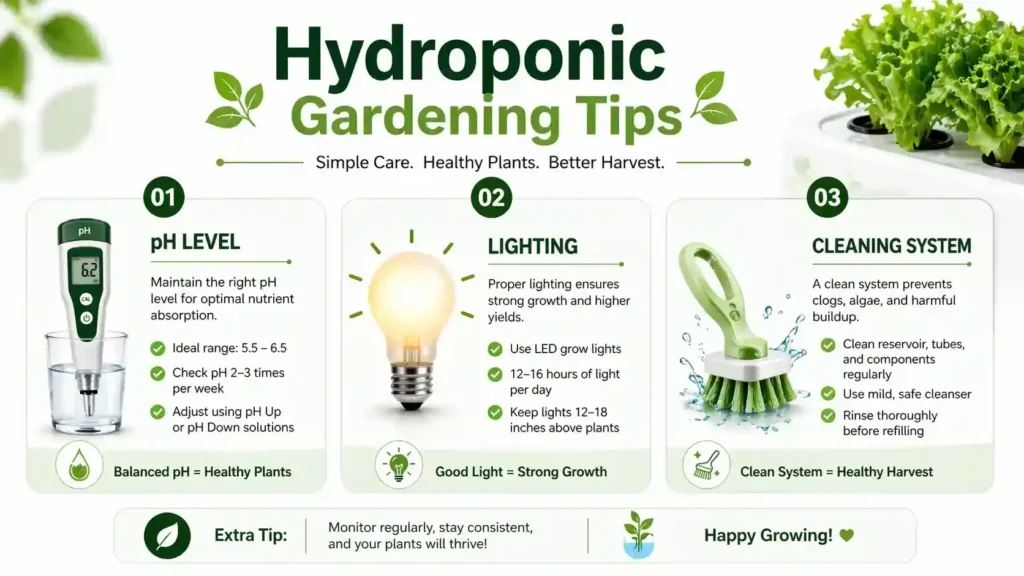
Maintain pH Level
- Keep pH between 5.5 to 6.5 for optimal nutrient absorption
- Check pH regularly using a meter or test kit
- Adjust using pH up/down solutions when needed
Stable pH ensures nutrients remain available to plants at all times.
Proper Lighting
- Use high-quality LED grow lights for indoor setups
- Provide 12–16 hours of light depending on plant type
- Maintain proper distance between lights and plants to avoid stress
Adequate lighting is essential for photosynthesis and strong plant growth.
Clean System
- Clean reservoir, pipes, and containers regularly
- Prevent algae, bacteria, and mold buildup
- Replace nutrient solution periodically
A clean system reduces disease risks and supports healthy hydroponic growing plants.
Following these simple but effective tips can greatly improve the success rate of your hydroponic gardening system.
Conclusion (Call-To-Action)
Hydroponic plants are rapidly becoming the future of modern gardening due to their efficiency, sustainability, and space-saving advantages. As urban living increases and traditional farming faces limitations, methods like hydroponics at home offer a practical solution for growing fresh, healthy plants in any environment.
This method not only allows you to grow plants in water with better control over nutrients and growth conditions, but also reduces water usage and eliminates many soil-related challenges. Whether you have a small apartment or a dedicated indoor space, hydroponics makes it possible to grow your own vegetables, herbs, and plants easily.
If you’re just starting, begin with a simple setup and a few beginner-friendly plants. As you gain experience, you can expand your system and explore more advanced techniques. Hydroponics is not just a trend—it’s a smart, future-ready way to grow plants efficiently at home.
FAQs
Hydroponic plants are those grown without soil using a nutrient-rich water system. In this method, roots directly absorb minerals from water, which improves efficiency and supports faster plant growth compared to traditional soil gardening.
The best plants for hydroponics include: Leafy greens like lettuce and spinach Herbs such as basil, mint, and coriander Vegetables like tomatoes, peppers, and cucumbers These plants adapt well to controlled environments and show consistent growth in hydroponic systems.
Yes, hydroponic plants can grow without natural sunlight. Indoor systems use LED grow lights to provide the required light spectrum for photosynthesis. This allows plants to grow efficiently in an indoor hydroponic garden.
Hydroponic gardening offers advantages like faster growth, less water usage, and better space efficiency. However, it requires proper monitoring of nutrients and pH levels. Soil gardening is simpler but less controlled. The better option depends on your needs and setup.
Hydroponic plants generally grow 30–50% faster than soil-grown plants. For example: Lettuce: 3–4 weeks Herbs: 3–5 weeks Tomatoes: 6–8 weeks Growth time depends on plant type, system setup, and maintenance quality.
Yes, hydroponic plants require a specialized nutrient solution instead of traditional soil fertilizers. This solution contains essential elements like nitrogen, phosphorus, and potassium for proper growth.
Yes, hydroponics is beginner-friendly if you start with simple systems like Deep Water Culture and easy plants such as lettuce or basil. With basic monitoring, beginners can achieve successful results.
Clean, filtered, or RO water is ideal for hydroponics. Maintaining proper pH (5.5–6.5) and avoiding hard or contaminated water helps ensure healthy plant growth.
Yes, hydroponics at home is very practical. Small systems can be set up in kitchens, balconies, or indoor spaces, allowing you to grow fresh plants year-round.
Hydroponic plants often taste fresher and cleaner because nutrients are controlled and there is no soil contamination. Flavor quality depends on nutrient balance and growing conditions. What are hydroponic plants?
Which plants grow best in hydroponics?
Can hydroponic plants grow without sunlight?
Is hydroponic gardening better than soil?
How long do hydroponic plants take to grow?
Do hydroponic plants need fertilizer?
Is hydroponics suitable for beginners?
What water is best for hydroponics?
Can hydroponics be done at home?
Do hydroponic plants taste different?

Written by the LeafyHeaven Editorial Team
LeafyHeaven shares practical gardening tips and simple plant care guides to help you grow, nurture, and enjoy your plants with ease. Our goal is to make gardening feel natural, approachable, and rewarding for everyone.