
Introduction
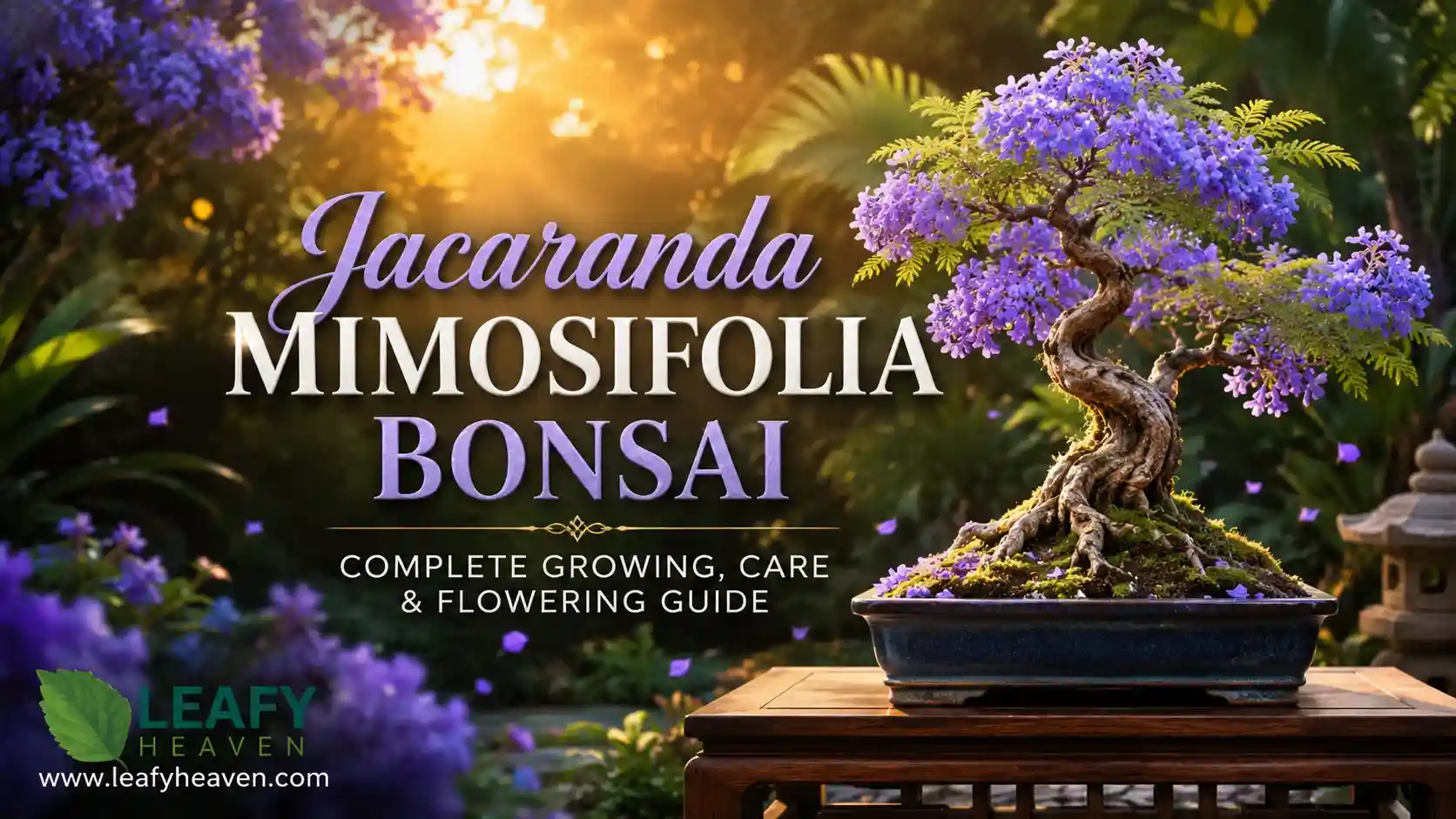
Jacaranda mimosifolia bonsai is a compact miniature version of the famous blue jacaranda tree admired for its delicate fern-like foliage and striking purple-blue flowers. This tropical flowering bonsai combines elegant canopy structure with fast-growing characteristics, making it a favorite among bonsai enthusiasts who enjoy bonsai with flowers and tropical tree species.
A jacaranda bonsai tree is created by training and pruning young jacaranda plants into a controlled miniature form while preserving the graceful appearance of the full-sized tree. The soft textured leaves, airy branching, and seasonal flowering potential give the blue jacaranda bonsai a highly ornamental appearance suitable for decorative bonsai collections.
Many growers prefer bonsai jacaranda mimosifolia because it develops quickly compared to slower bonsai species. Its rapid branching helps create dense canopy structure, while the naturally elegant foliage improves the visual balance of the tree over time. With proper pruning, sunlight, and root management, a miniature jacaranda can develop into an impressive flowering bonsai tree with tropical aesthetics.
Building strong plant care knowledge before starting bonsai training makes this process significantly easier — this complete gardening and plant care guide covers all the foundational principles every grower needs.
The jacaranda bonsai is also valued for its adaptability to bonsai styling. It responds well to shaping techniques, root pruning, and container cultivation, making it suitable for growers who want a tropical bonsai species with both decorative foliage and flowering potential. Mature specimens may eventually produce the famous blue-purple blooms that make the jacaranda bonsai tree especially attractive among flowering bonsai collections.
What Is a Jacaranda Mimosifolia Bonsai?
A jacaranda mimosifolia bonsai is a miniature trained version of the tropical jacaranda tree species known for its fern-like foliage and vibrant blue-purple flowers. Through pruning, root control, and bonsai styling techniques, growers transform this fast-growing ornamental tree into a compact bonsai form while preserving the graceful appearance of the original species.
The jacaranda tree bonsai is especially valued among tropical bonsai enthusiasts because it combines soft textured leaves, elegant branching, and flowering potential in a manageable container-grown tree. Its tropical appearance and rapid growth make it one of the most visually distinctive flowering bonsai options.
Scientific Name, Plant Family & Origin
The jacaranda scientific name is Jacaranda mimosifolia. It belongs to the Bignoniaceae plant family, which contains many tropical flowering trees and ornamental species known for trumpet-shaped blooms.
The jacaranda mimosifolia scientific name is widely associated with the famous blue jacaranda tree grown in warm climates around the world. Although commonly planted in tropical and subtropical landscapes today, the jacaranda native range originates from South America.
Native regions include:
- Brazil
- Argentina
- Bolivia
- Other parts of subtropical South America
In nature, jacaranda trees grow into large ornamental shade trees with broad canopies and seasonal flowering displays. Bonsai cultivation allows growers to recreate the same tropical structure and foliage characteristics in miniature form.
Why Jacaranda Trees Make Beautiful Bonsai
Jacaranda trees naturally possess several characteristics that make them highly suitable for bonsai cultivation. Their delicate foliage and flexible branching structure help create refined tropical bonsai designs with relatively fast development.
Key reasons why bonsai blue jacaranda trees are popular include:
- Fine fern-like leaf structure
- Fast branching and canopy development
- Elegant tropical appearance
- Strong visual balance in miniature form
- Seasonal flowering potential
- Responsive growth for pruning and shaping
Among bonsai flowering plants, jacaranda is admired for creating soft airy canopies that resemble mature tropical landscape trees. Its compound leaves add texture and movement that many other flowering bonsai species cannot easily replicate.
Growers also appreciate how quickly the tree develops compared to slower bonsai species. With consistent pruning and sunlight, a jacaranda bonsai can establish attractive branch structure within a relatively short period.
Jacaranda Bonsai vs Full-Size Jacaranda Tree
Although both forms belong to the same species, the bonsai version is carefully managed to maintain miniature proportions while preserving the appearance of mature jacaranda trees.
| Feature | Full Tree | Bonsai Version |
| Height | Large landscape tree | Miniature form |
| Flowers | Heavy blooms | Controlled flowering |
| Root system | Deep spreading | Pruned compact roots |
| Growth | Fast | Controlled growth |
A full-sized blue jacaranda tree may grow several meters tall with a broad spreading canopy. In contrast, a jacaranda tree bonsai remains compact through continuous pruning, root restriction, and container cultivation.
Despite the reduced size, well-maintained bonsai specimens still preserve the tropical character, foliage texture, and branching style seen in mature jacaranda trees grown in landscapes and botanical gardens.
Jacaranda Bonsai Identification Features
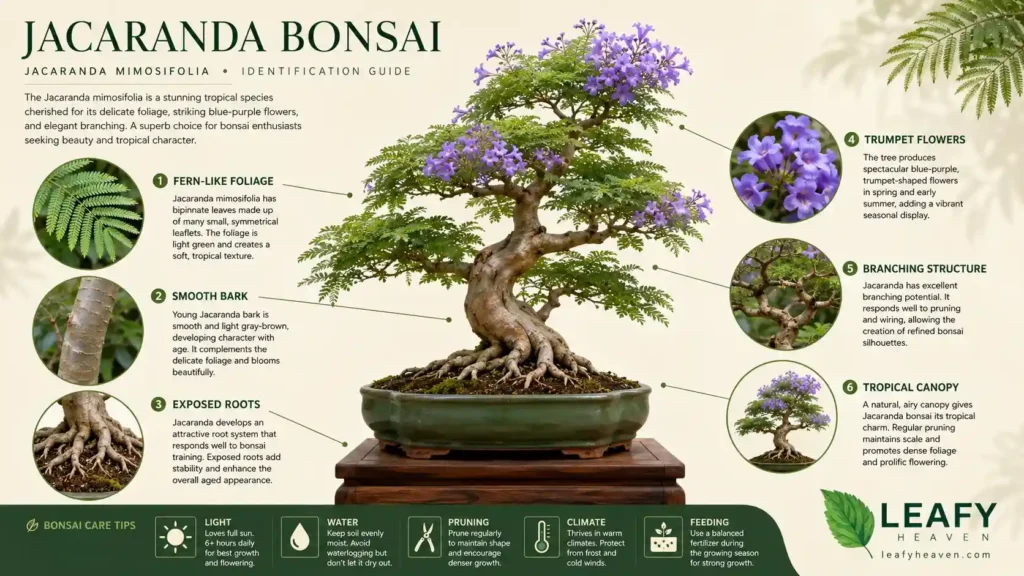
Jacaranda bonsai trees are easily identified by their soft fern-like foliage, smooth developing trunks, and striking purple-blue flowers. These features give the tree a refined tropical appearance that stands out among many flowering bonsai species.
The combination of delicate leaves, airy branching, and seasonal blooms makes the jacaranda bonsai highly recognizable even in miniature form. As the tree matures, its trunk structure and canopy shape become increasingly ornamental.
Leaf Shape & Fern-Like Foliage
One of the most distinctive features of a jacaranda bonsai is its finely divided bipinnate foliage. Each jacaranda leaf contains multiple rows of tiny leaflets that create a soft feathery texture across the canopy.
The jacaranda tree leaf structure gives the bonsai a light tropical appearance that looks elegant even without flowers. Unlike heavier broadleaf bonsai species, jacaranda mimosifolia leaves create an airy canopy with natural movement and visual softness.
Key foliage characteristics include:
- Bipinnate compound leaves
- Soft fern-like texture
- Bright to medium green coloration
- Lightweight tropical appearance
- Dense canopy potential with pruning
Young growth often appears especially delicate and vibrant during active growing seasons. Proper pruning can also help maintain smaller leaf size and improve overall bonsai proportions.
Blue-Purple Jacaranda Flowers
The famous jacaranda flower is one of the primary reasons this species is valued as a flowering bonsai tree. Mature trees produce clusters of trumpet-shaped blue-purple blooms that create a dramatic ornamental display.
A jacaranda mimosifolia flower typically develops in seasonal blooming cycles under warm sunny conditions. Flower production depends heavily on tree maturity, sunlight exposure, and balanced pruning practices.
Common flower characteristics include:
- Bell-shaped or trumpet-like blooms
- Purple-blue coloration
- Clustered flowering habit
- Seasonal bloom cycles
- Tropical ornamental appearance
Many young bonsai specimens do not flower immediately. A flowering jacaranda tree generally requires several years of healthy growth before developing reliable blooming behavior.
Indoor cultivation may also reduce flowering frequency because limited sunlight can slow floral development. Outdoor tropical conditions usually produce stronger bloom potential.
Trunk Structure, Bark & Root System
Young jacaranda bonsai trees usually develop smooth light-colored bark with flexible branches that respond well to shaping and wiring. As the tree ages, the trunk gradually thickens and develops stronger visual character.
The bonsai blue jacaranda root system grows aggressively under favorable conditions, which is why regular root pruning is important for maintaining compact bonsai size. Controlled root reduction also helps balance canopy growth and container health.
Important structural features include:
- Smooth bark during early growth
- Gradual trunk thickening with maturity
- Flexible young branches
- Compact managed root system
- Strong surface root development potential
Although full-sized jacaranda tree size can become very large in landscape settings, bonsai cultivation restricts both root spread and canopy dimensions through pruning and container control.
Growth Rate & Mature Bonsai Size
Jacaranda is considered a fast-growing tropical bonsai species. Under warm conditions with strong sunlight, active pruning, and proper feeding, the tree can develop rapidly compared to many traditional bonsai species.
The bonsai blue jacaranda growth rate is especially vigorous during spring and summer growing periods. Young trees quickly produce new shoots, foliage, and branch extensions.
Typical growth characteristics include:
- Rapid canopy expansion
- Fast branch development
- Strong root growth
- Quick response to pruning
- Seasonal growth surges
The jacaranda mimosifolia growth rate varies depending on climate and growing conditions. Outdoor bonsai trees in warm environments generally grow faster and healthier than indoor specimens.
Indoor cultivation may slow growth because of reduced sunlight and lower humidity. Outdoor trees exposed to full sun usually develop thicker trunks, denser foliage, and improved flowering potential over time.
How To Grow Jacaranda Bonsai From Seed
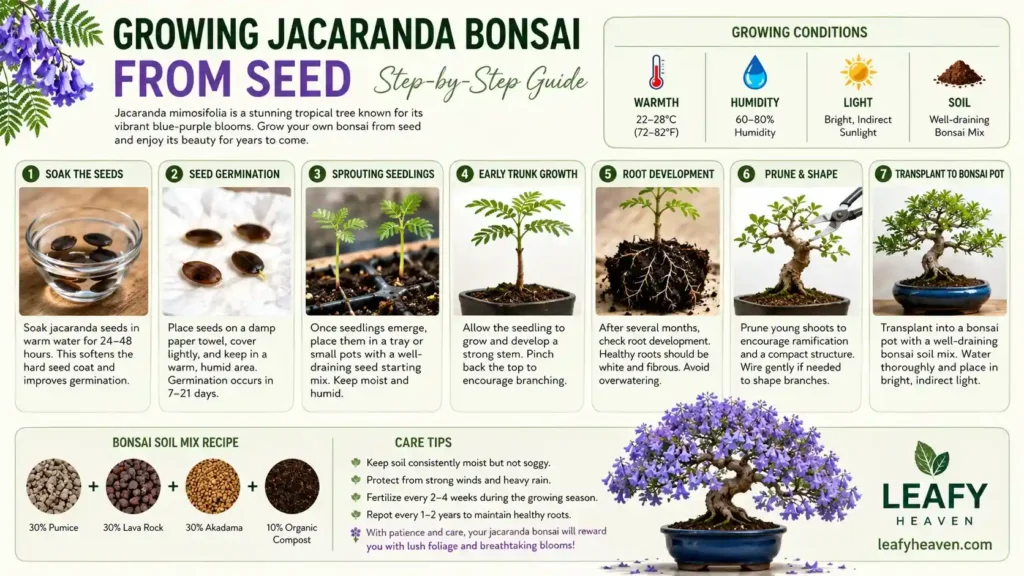
Jacaranda bonsai can be grown successfully from seed when warm temperatures, consistent moisture, and well-draining bonsai soil are provided during early development. Healthy seedlings grow relatively fast and can begin forming miniature bonsai structure within the first year under proper care.
Growing from seed allows better trunk shaping, root development, and long-term bonsai training. It is also one of the most affordable ways to develop a blue jacaranda bonsai from the earliest growth stage.
Best Jacaranda Seeds for Bonsai
Healthy seed quality is essential for successful germination and vigorous bonsai development. Fresh jacaranda seeds usually germinate faster and produce stronger seedlings than old or poorly stored seeds.
When selecting jacaranda seed for bonsai cultivation, look for:
- Fresh viable seeds
- Dry undamaged seed pods
- Clean seed surfaces without mold
- Reliable tropical tree seed suppliers
- Recently harvested seeds when possible
Many growers prefer fresh jacaranda mimosifolia bonsai seed because germination rates decline as seeds age. Proper storage in cool dry conditions can help preserve viability before planting.
Blue jacaranda bonsai seeds are commonly available through:
- Bonsai nurseries
- Tropical plant seed suppliers
- Online bonsai stores
- Botanical seed collections
- Mature jacaranda tree seed pods
Choosing quality jacaranda seeds improves early growth strength and reduces seedling losses during germination.
How To Germinate Jacaranda Seeds
Jacaranda seeds germinate best in warm humid conditions with light moisture and loose soil structure. Most seeds sprout relatively quickly when temperature and humidity remain stable.
Follow this step-by-step process to germinate jacaranda seeds successfully:
- Soak the seeds
Place jacaranda tree seed material in room-temperature water for 12–24 hours before planting. This softens the outer coating and encourages faster sprouting. - Prepare fast-draining soil
Use a light bonsai soil mix containing organic matter and aeration material. Avoid heavy compact soil that traps excess moisture. - Plant the seeds shallowly
Plant jacaranda seeds slightly below the soil surface. Light covering helps maintain moisture while allowing airflow. - Maintain warmth
Warm temperatures improve germination speed. Most seeds sprout best in consistently warm tropical conditions. - Keep humidity stable
Use light misting or humidity covers to prevent soil from drying too quickly during early germination. - Provide indirect light
Bright indirect sunlight supports healthy sprouting without overheating young seedlings.
Most growers who plant jacaranda seeds see early germination within several weeks under proper conditions.
Blue Jacaranda Bonsai Seedling Care
Young jacaranda seedlings require balanced moisture, airflow, and sunlight to develop strong trunks and healthy foliage. Early care directly affects long-term bonsai quality and future branch structure.
A healthy blue jacaranda bonsai seedling should produce upright growth with soft green leaves and steady root development.
Important seedling care practices include:
Watering
Keep the soil lightly moist but never waterlogged. Young jacaranda seedlings are sensitive to root rot if excess water remains trapped around developing roots.
Sunlight
Provide bright filtered sunlight during early growth stages. Gradually increase direct sun exposure as seedlings strengthen.
Early Pruning
Light pruning encourages branching and prevents weak elongated growth. Structural shaping usually begins once seedlings establish stable root systems.
Airflow
Good ventilation reduces fungal problems and improves stronger stem development. Crowded humid conditions may weaken young jacaranda mimosifolia seedling growth.
Healthy jacaranda seedlings usually grow quickly during warm seasons and respond well to consistent bonsai training practices.
Jacaranda Bonsai Stages From Seedling To Mature Tree
Jacaranda bonsai development occurs gradually over several growth stages. The tree changes significantly as trunk thickness, branching, and canopy structure improve over time.
| Stage | Timeline | Development |
| Germination | 1–3 weeks | Seed sprout |
| Seedling | 1–3 months | First leaves |
| Young bonsai | 1 year | Trunk development |
| Mature bonsai | Several years | Flowering potential |
During early jacaranda bonsai stages, most energy is directed toward root establishment and vertical growth. By the jacaranda mimosifolia bonsai 1 year stage, many trees begin showing stronger branching structure and noticeable trunk thickening.
Mature bonsai development requires patience, repeated pruning, root management, and long-term canopy shaping. Flowering potential usually appears only after several years of healthy growth and proper sunlight exposure.
Jacaranda Bonsai Care Guide
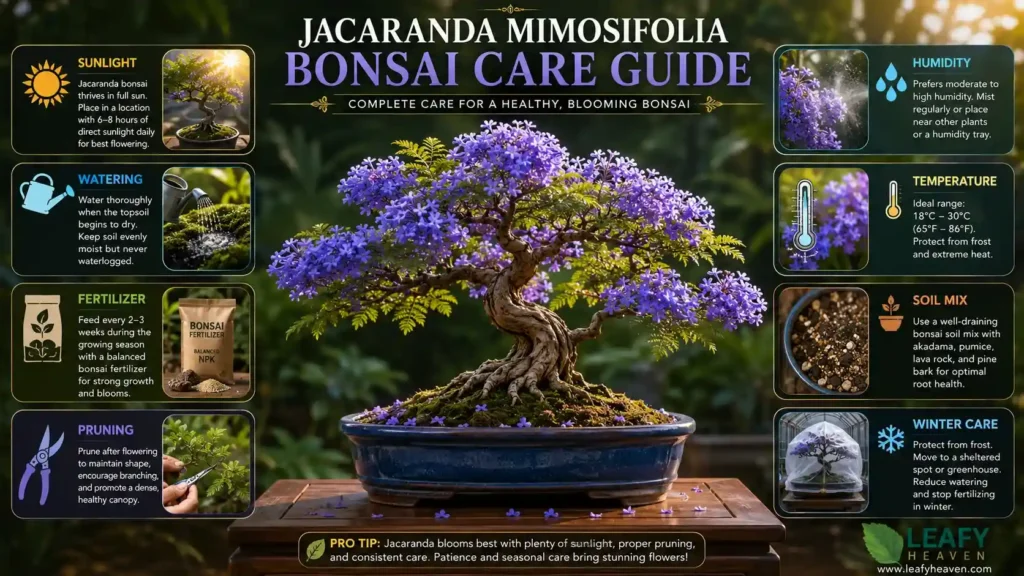
Jacaranda bonsai care depends on strong sunlight, balanced watering, warm temperatures, and regular pruning. This tropical bonsai species grows best when provided with stable growing conditions, fast-draining soil, and proper airflow throughout the year.
Consistent care improves foliage density, trunk development, and long-term flowering potential. Because jacaranda is a fast-growing tropical tree, regular monitoring helps maintain healthy compact bonsai structure.
Sunlight Requirements
Jacaranda bonsai performs best in full sun conditions with several hours of direct light daily. Strong sunlight supports compact growth, stronger branching, healthier foliage, and improved flowering potential.
Outdoor placement is usually ideal for a potted jacaranda tree because natural sunlight intensity is much higher than indoor conditions. Trees grown outdoors typically develop thicker trunks and denser canopies.
Important sunlight guidelines include:
- Full sun preferred during active growth
- Outdoor growing conditions produce stronger development
- Morning sun and afternoon airflow improve foliage health
- Gradual acclimation prevents leaf burn after relocation
An indoor bonsai tree environment may limit growth if lighting is weak. Indoor cultivation often results in:
- Slower branch development
- Reduced flowering potential
- Larger leaf growth
- Leggy stems reaching toward light
If grown indoors, place the tree near the brightest available window or use supplemental grow lighting to maintain healthy growth.
Best Soil Mix for Jacaranda Bonsai
Jacaranda bonsai requires fast-draining soil that balances moisture retention with strong aeration. Heavy compact soil can suffocate roots and increase the risk of fungal problems.
An effective bonsai soil mix should provide:
- Rapid water drainage
- Good oxygen circulation
- Moderate organic matter
- Stable root support
- Moisture balance without waterlogging
Most growers use bonsai mixes containing:
- Akadama or similar granular material
- Pumice or perlite
- Coarse sand
- Organic compost in moderation
Proper aeration is especially important because jacaranda roots grow aggressively in warm conditions. Loose soil structure encourages healthier root spread and prevents excessive moisture buildup.
Watering Requirements
Jacaranda bonsai prefers evenly moist soil but should never remain constantly soggy. Watering balance is essential because both underwatering and overwatering can damage foliage and roots.
Basic watering guidelines include:
- Water thoroughly when the upper soil layer begins drying
- Reduce watering during cooler inactive periods
- Increase watering during hot active growth seasons
- Avoid standing water in trays or containers
Seasonal conditions strongly affect moisture requirements. During warm summer weather, fast-growing jacaranda bonsai trees may require more frequent watering due to rapid evaporation and foliage growth.
Preventing root rot is especially important in container-grown bonsai. Root rot commonly develops when:
- Soil remains waterlogged
- Drainage holes become blocked
- Containers retain excess moisture
- Air circulation is poor
Healthy watering habits help maintain vigorous foliage and stable bonsai growth throughout the year.
Temperature & USDA Zones
Jacaranda bonsai thrives in warm tropical and subtropical climates. This species grows actively during warm temperatures and is sensitive to prolonged cold exposure.
Many growers asking what zones do jacaranda trees grow in should check the official USDA Plant Hardiness Zone Map — jacaranda performs best in zones with mild winters and long warm growing seasons.
Ideal growing conditions include:
- Warm daytime temperatures
- Mild winter climates
- Protection from hard frost
- Stable humidity and airflow
The jacaranda tree Florida climate is often suitable because warm temperatures and seasonal humidity support active tropical growth.
However, frost sensitivity remains one of the biggest care challenges for this species. Cold exposure may cause:
- Leaf drop
- Branch damage
- Root stress
- Slowed growth
- Severe decline in freezing conditions
Outdoor trees should be protected whenever temperatures drop significantly during winter.
Fertilizer Requirements
Jacaranda bonsai benefits from regular feeding during active growth periods. Balanced fertilizer supports foliage production, branch development, root health, and flowering strength.
A proper feeding schedule should focus on:
- Balanced nitrogen levels
- Moderate phosphorus support
- Controlled potassium supplementation
- Seasonal adjustment based on growth rate
Excess nitrogen may produce overly aggressive foliage growth while reducing flowering potential. Balanced feeding usually creates healthier canopy structure and more controlled development.
General fertilizer recommendations include:
- Feed regularly during spring and summer
- Reduce feeding during cool dormant periods
- Use diluted bonsai fertilizer to avoid root stress
- Support flowering with balanced nutrient ratios
Healthy nutrient management helps maintain vigorous tropical growth while preserving compact bonsai proportions.
Jacaranda Bonsai Care in Winter
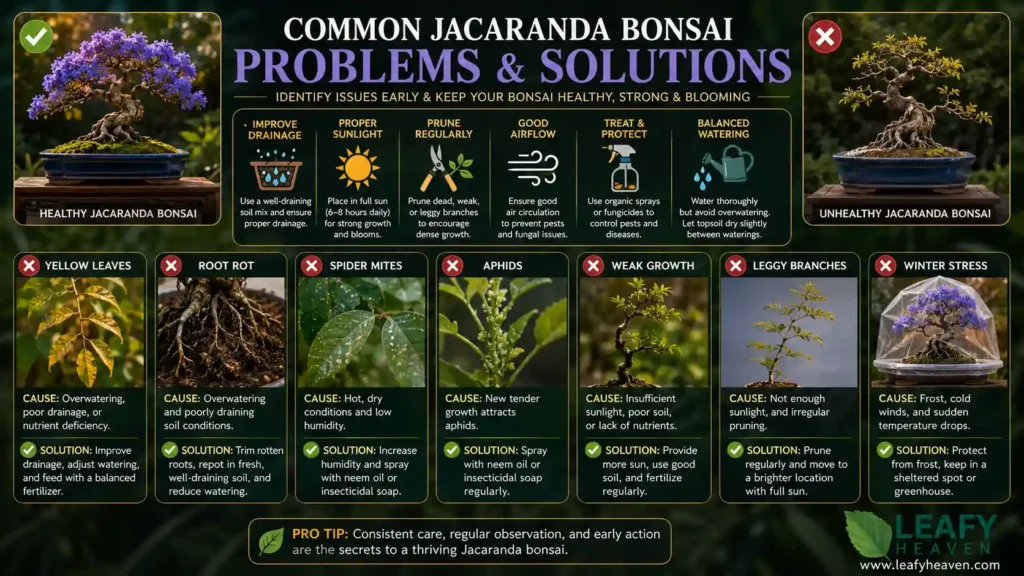
Jacaranda bonsai may slow growth significantly during winter, especially in cooler climates. Although not fully dormant in tropical regions, reduced temperatures often decrease water usage and foliage production.
Winter care focuses mainly on protecting the tree from cold damage and maintaining stable growing conditions.
Important winter care practices include:
- Protect from frost exposure
- Reduce watering frequency slightly
- Maintain airflow around foliage
- Avoid freezing temperatures
- Provide bright light indoors if relocated
Indoor winter care becomes necessary in colder regions where outdoor temperatures fall below the tree’s tolerance range. When moved indoors, place the bonsai in the brightest available location away from cold drafts and indoor heating vents.
Some temporary leaf drop may occur during seasonal adjustment, but healthy trees usually recover once warm active growth conditions return in spring.
Pruning & Styling Jacaranda Bonsai
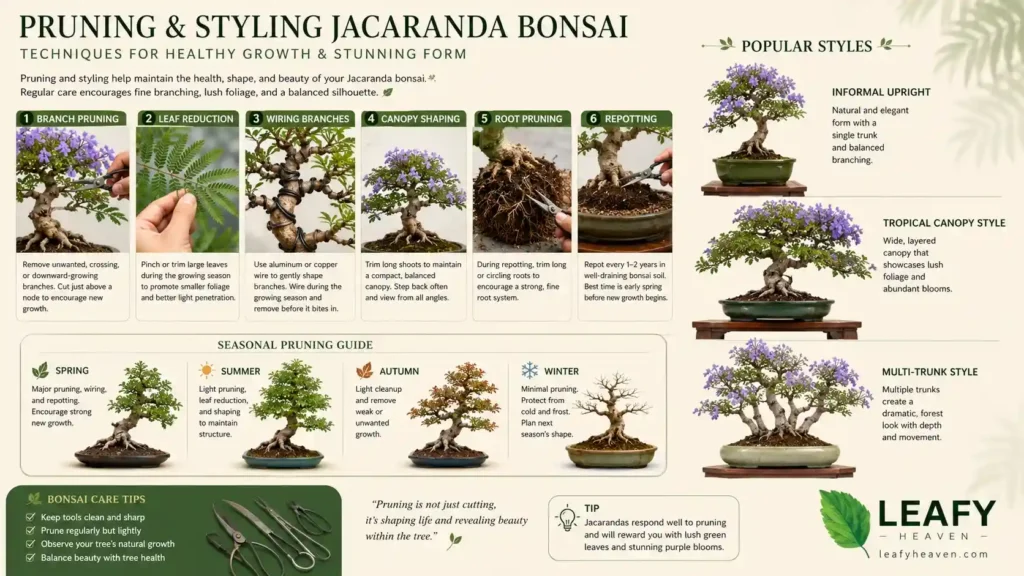
Frequent pruning is essential for maintaining compact growth, improving branch structure, and preserving the refined tropical appearance of a jacaranda bonsai. Because this species grows quickly, regular shaping helps prevent excessive vertical growth and encourages balanced canopy development.
Proper pruning and styling also improve airflow, leaf density, and long-term bonsai proportions. With consistent maintenance, jacaranda bonsai can develop graceful branching patterns that resemble mature tropical landscape trees.
How To Prune Jacaranda Bonsai
Jacaranda bonsai responds well to regular pruning throughout the active growing season. Controlled trimming encourages denser branching while helping maintain miniature proportions.
The main goals of pruning include:
- Reducing oversized foliage
- Encouraging compact branch growth
- Improving canopy balance
- Developing trunk structure
- Maintaining bonsai shape
Leaf Reduction
Jacaranda trees naturally produce delicate compound leaves, but vigorous growth can still create oversized foliage in bonsai form. Selective leaf pruning helps maintain proportion and improves sunlight penetration throughout the canopy.
Light foliage reduction may also encourage:
- Smaller replacement leaves
- Better branch ramification
- Denser canopy appearance
- Improved airflow
Avoid removing excessive foliage at once because heavy defoliation can weaken the tree.
Branch Trimming
Fast-growing shoots should be trimmed regularly to maintain compact branching. Long unchecked growth can quickly disrupt the bonsai silhouette.
Branch trimming helps:
- Control height expansion
- Improve branch spacing
- Encourage side branching
- Preserve balanced structure
Most growers prune back new shoots after several leaf sets develop during active growth periods.
Structural Pruning
Structural pruning focuses on long-term branch placement and trunk design. Larger branches are selectively removed to improve movement, taper, and overall bonsai aesthetics.
Structural corrections are usually performed:
- During strong active growth
- Before major styling work
- When overcrowding develops
- To improve canopy balance
Clean pruning tools reduce stress and improve healing after larger cuts.
Wiring Techniques for Blue Jacaranda Bonsai
Young jacaranda branches remain flexible during early development, making them suitable for bonsai wiring and shaping techniques. Wiring helps guide branch direction and improves overall canopy structure.
Blue jacaranda bonsai styling often focuses on creating soft tropical movement rather than rigid geometric shapes.
Important wiring practices include:
- Wire young flexible branches early
- Bend gradually to avoid cracking
- Monitor branch thickening regularly
- Remove wire before scarring develops
Avoiding bark damage is especially important because young jacaranda bark remains relatively smooth and sensitive. Tight wiring left too long may leave permanent marks on developing branches.
Common canopy shaping goals include:
- Open airy branch structure
- Rounded tropical canopy form
- Balanced branch spacing
- Natural flowing movement
Frequent monitoring is necessary because jacaranda branches can thicken rapidly during active growth seasons.
Best Bonsai Styles for Jacaranda
Jacaranda bonsai adapts well to several tropical bonsai styles due to its fine foliage, fast branching, and elegant canopy development.
Some styles complement the species especially well.
Informal Upright Style
This is one of the most popular jacaranda bonsai forms. The trunk develops gentle curves while maintaining a natural upright structure.
Benefits include:
- Natural tropical appearance
- Balanced branch distribution
- Easy long-term maintenance
- Strong canopy development
Tropical Canopy Style
The tropical canopy style emphasizes broad layered foliage pads and soft branching movement similar to mature tropical shade trees.
This style works particularly well because jacaranda foliage naturally creates light airy texture.
Multi-Trunk Style
Multiple trunks create a miniature grove-like appearance that resembles mature tropical jacaranda clusters in nature.
This style enhances:
- Visual depth
- Canopy complexity
- Natural forest aesthetics
Miniature Jacaranda Forms
Smaller compact bonsai forms are also possible with consistent pruning and root restriction. Miniature jacaranda bonsai often develop dense foliage and refined branch detail while remaining highly decorative.
Root Pruning & Repotting
Jacaranda bonsai develops vigorous roots that require regular pruning and periodic repotting to maintain healthy compact growth.
Without root maintenance, aggressive root expansion can:
- Reduce soil aeration
- Limit drainage
- Slow canopy health
- Cause root binding
Repotting Intervals
Young fast-growing bonsai usually require more frequent repotting than mature specimens.
General repotting guidelines include:
- Young trees: every 1–2 years
- Mature bonsai: every 2–3 years
- Repot during active growth recovery periods
Signs that repotting may be needed include:
- Roots circling the container
- Reduced drainage
- Slower growth
- Soil compaction
Root Reduction
Root pruning helps maintain compact root systems suitable for bonsai containers. Excessively long or thick roots are trimmed carefully during repotting.
Proper root reduction encourages:
- Fine feeder root development
- Better nutrient absorption
- Improved container balance
- Controlled tree size
Excessive root removal should be avoided because aggressive pruning may weaken tropical species like jacaranda.
Bonsai Container Selection
Container choice affects drainage, root health, and overall bonsai aesthetics.
An ideal bonsai container should provide:
- Strong drainage holes
- Stable root space
- Balanced visual proportion
- Adequate airflow around roots
Shallow bonsai pots are commonly used to maintain compact growth while highlighting the elegant tropical structure of jacaranda bonsai trees.
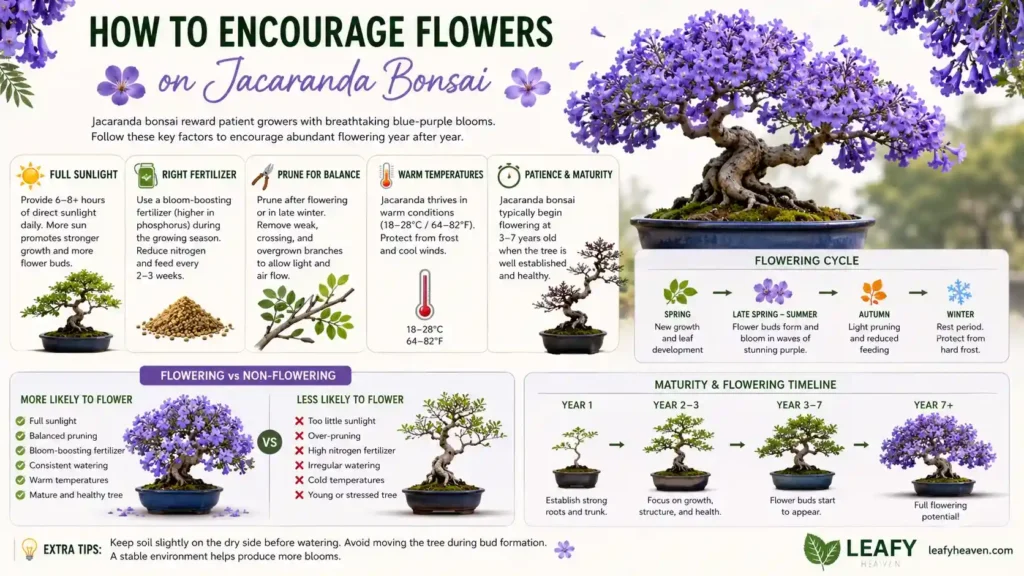
How To Encourage Flowers on Jacaranda Bonsai
Strong sunlight, proper maturity, balanced pruning, and warm growing conditions play the biggest role in encouraging flowers on jacaranda bonsai trees. Healthy mature trees grown outdoors in tropical or subtropical environments usually develop better blooming potential than weak indoor specimens.
Because flowering depends heavily on energy reserves and sunlight exposure, long-term care consistency is essential for reliable bloom production.
When Does Jacaranda Bonsai Bloom?
Jacaranda bonsai typically flowers only after reaching sufficient maturity. Young trees focus most of their energy on root development, trunk thickening, and branch growth before bloom production begins.
The flowering age varies depending on:
- Sunlight exposure
- Climate conditions
- Tree health
- Pruning habits
- Seed-grown vs propagated trees
Many seed-grown bonsai may require several years before producing their first bonsai flower display. Trees grown under strong outdoor sunlight usually mature faster than indoor-grown specimens.
The seasonal blooming cycle generally occurs during warm active growing periods when environmental conditions remain stable. Mature bonsai tree blooming behavior improves when the tree receives:
- Full sun exposure
- Balanced fertilizer
- Warm temperatures
- Controlled pruning
- Healthy root development
Flower production may vary yearly depending on overall tree vigor and seasonal weather conditions.
Why Some Jacaranda Bonsai Trees Never Flower
Many jacaranda bonsai trees fail to bloom because environmental conditions do not fully support flowering development. Even healthy foliage growth does not always guarantee flower production.
Several common issues can prevent blooming.
Lack of Sunlight
Insufficient light is one of the biggest causes of poor flowering. Jacaranda bonsai requires strong direct sunlight to build enough energy for bloom production.
Low light conditions often cause:
- Weak growth
- Sparse branching
- Larger leaves
- Reduced flowering potential
Outdoor cultivation usually provides better blooming conditions than indoor growing environments.
Excess Pruning
Over-pruning can remove developing flower sites and redirect the tree’s energy toward replacing foliage instead of producing blooms.
Heavy pruning may lead to:
- Delayed flowering
- Excess vegetative growth
- Reduced seasonal bloom cycles
Balanced maintenance pruning is more effective than constant aggressive trimming.
Immaturity
Young bonsai trees often lack the maturity needed for flowering. Many specimens require several years of healthy growth before bloom development begins.
Immature trees prioritize:
- Root expansion
- Trunk thickening
- Branch formation
- Canopy establishment
Patience is necessary when growing seed-raised jacaranda bonsai.
Indoor Stress
Indoor conditions can reduce overall flowering performance due to limited sunlight, dry air, and weaker seasonal growth cycles.
Common indoor stress factors include:
- Restricted light intensity
- Low humidity
- Poor airflow
- Temperature fluctuations
These conditions often reduce bonsai tree blooming consistency compared to outdoor-grown tropical bonsai.
Flowering Bonsai Tree Care Tips
Proper care improves the chances of healthy flowering while maintaining balanced bonsai structure. Consistent environmental stability is especially important for tropical flowering bonsai tree types like jacaranda.
Several techniques help improve bloom potential.
Fertilizer Timing
Balanced feeding supports both foliage health and flowering strength. Excess nitrogen should be avoided because it may encourage aggressive leaf growth while reducing flower production.
Many growers use:
- Moderate nitrogen feeding during growth
- Balanced bloom-support fertilizer before flowering season
- Reduced fertilizer during inactive periods
Dormancy Management
Although jacaranda is tropical, seasonal rest periods still influence flowering behavior. Slight winter slowdown may help the tree prepare for stronger spring growth and future blooms.
Proper seasonal management includes:
- Reduced winter watering
- Stable warm protection
- Avoiding severe stress
- Maintaining healthy root conditions
Bloom Enhancement Strategies
Several long-term strategies can improve flowering consistency in jacaranda bonsai.
Helpful bloom enhancement practices include:
- Provide full outdoor sunlight whenever possible
- Avoid excessive pruning before flowering season
- Maintain healthy root systems
- Use fast-draining bonsai soil
- Support steady seasonal growth
- Protect from cold stress
Among flowering bonsai tree types, jacaranda requires patience, maturity, and strong growing conditions before producing reliable seasonal flowers. Well-maintained mature specimens can eventually develop striking purple-blue blooms that make the species highly valued among tropical bonsai collections.
Common Jacaranda Bonsai Problems & Solutions
Most jacaranda bonsai problems develop because of watering imbalance, insufficient sunlight, poor airflow, pests, or cold stress. Since jacaranda is a tropical fast-growing bonsai species, unhealthy growing conditions can quickly affect foliage, roots, and branch development.
Early identification and proper care adjustments usually help the tree recover before serious damage occurs.
Yellow Leaves & Leaf Drop
Yellow leaves and sudden leaf drop are among the most common jacaranda bonsai issues. These symptoms usually indicate environmental stress or watering problems.
Several factors may cause foliage decline.
Overwatering
Excess water is one of the biggest causes of yellow foliage in jacaranda bonsai. Constantly wet soil reduces oxygen around the roots and weakens overall tree health.
Common signs include:
- Soft yellow leaves
- Mushy roots
- Slow growth
- Soil remaining wet for long periods
Improving drainage and reducing watering frequency often helps stabilize the tree.
Underwatering
Dry soil can also cause leaf curling, browning, and premature leaf drop. Fast-growing jacaranda bonsai trees may dry out quickly during hot weather.
Symptoms of underwatering include:
- Crispy leaf edges
- Drooping foliage
- Rapid soil drying
- Weak new growth
Consistent moisture management helps maintain healthier foliage balance.
Seasonal Stress
Some temporary leaf loss may occur during seasonal transitions, temperature fluctuations, or relocation between indoor and outdoor conditions.
Seasonal stress is more common when:
- Temperatures suddenly change
- Trees are moved indoors for winter
- Light conditions shift rapidly
- Humidity drops significantly
Healthy trees usually recover once stable growing conditions return.
Root Rot Problems
Root rot is a serious issue caused primarily by poor drainage and excessive soil moisture. Tropical bonsai species like jacaranda require oxygen around the roots to maintain healthy growth.
Common root rot causes include:
- Waterlogged soil
- Poor drainage holes
- Heavy compact soil
- Excessive watering frequency
Signs of root rot often include:
- Persistent yellow foliage
- Weak growth
- Blackened roots
- Foul soil odor
- Wilting despite wet soil
Fast-draining bonsai soil is essential for preventing root disease.
Soil Drainage
Proper soil structure helps excess water move quickly through the container while maintaining healthy airflow around the roots.
Good drainage practices include:
- Using coarse bonsai soil mixes
- Avoiding compact garden soil
- Keeping drainage holes open
- Preventing standing water in trays
Healthy drainage significantly reduces fungal root problems.
Root Pruning Mistakes
Improper root pruning during repotting may weaken the tree and increase susceptibility to infection.
Common mistakes include:
- Removing too many roots at once
- Using unclean pruning tools
- Repotting during stress periods
- Damaging fine feeder roots excessively
Balanced root reduction helps maintain vigorous recovery after repotting.
Pests & Diseases
Jacaranda bonsai may occasionally attract pests and fungal issues, especially in warm humid environments with weak airflow.
Routine inspection helps identify problems early before severe damage develops.
Spider Mites
Spider mites are tiny sap-feeding pests that thrive in dry conditions. They commonly attack indoor bonsai trees with low humidity.
Signs include:
- Tiny webbing
- Speckled leaves
- Weak foliage color
- Gradual leaf decline
Improved humidity and regular foliage cleaning often help reduce infestations.
Aphids
Aphids feed on tender new growth and may cluster around soft stems and developing shoots.
Symptoms include:
- Sticky residue on leaves
- Curled new growth
- Distorted shoots
- Reduced vigor
Early treatment prevents large infestations from spreading.
Fungus Issues
Fungal problems usually develop when airflow is poor and soil remains excessively wet.
Common fungal triggers include:
- Constant humidity
- Overwatering
- Crowded foliage
- Poor drainage
Removing infected material and improving ventilation helps reduce fungal spread.
Weak Growth & Leggy Branches
Weak elongated growth often indicates insufficient light or unbalanced care conditions. Jacaranda bonsai naturally grows quickly, but poor environmental conditions can produce thin unstable branches.
Insufficient Sunlight
Low light exposure is one of the main causes of leggy growth. Branches stretch toward available light instead of developing compact structure.
Common symptoms include:
- Long thin stems
- Sparse foliage
- Weak branching
- Pale leaves
Outdoor full sun conditions usually produce stronger growth and better canopy density.
Poor Pruning
Inconsistent pruning allows uncontrolled extension growth that weakens overall bonsai structure.
Without regular trimming, trees may develop:
- Unbalanced canopies
- Overextended shoots
- Reduced branch density
- Poor ramification
Frequent maintenance pruning encourages compact branching and healthier bonsai proportions.
Nutrient Deficiency
Lack of balanced nutrients may slow growth and weaken foliage production.
Deficiency symptoms can include:
- Pale foliage
- Thin stems
- Slow recovery after pruning
- Reduced canopy density
Regular balanced fertilizer applications help maintain vigorous healthy development throughout the growing season.
Indoor vs Outdoor Jacaranda Bonsai
Jacaranda bonsai grows far better outdoors where it receives strong sunlight, natural airflow, and warm temperatures throughout the growing season. Although the tree can survive indoors under bright conditions, indoor cultivation often reduces flowering potential and slows overall development.
Because jacaranda is a tropical species, outdoor environments usually produce healthier foliage, stronger trunks, and denser branching structure.
| Condition | Indoor | Outdoor |
| Flowering | Limited | Better |
| Growth speed | Moderate | Fast |
| Sunlight | Restricted | Ideal |
| Humidity | Controlled | Natural |
Outdoor cultivation is generally recommended for long-term bonsai health and flowering performance.
Indoor Jacaranda Bonsai Growing Conditions
An indoor bonsai environment can work temporarily if strong lighting and stable warmth are maintained. However, indoor conditions rarely match the intensity of natural outdoor sunlight needed for vigorous tropical growth.
Common indoor growing challenges include:
- Limited direct sunlight
- Reduced airflow
- Lower humidity
- Slower trunk development
- Weaker flowering potential
A bonsai tree indoor setup should place the jacaranda near the brightest available window with several hours of strong light daily. Supplemental grow lights may also help maintain healthier foliage and compact growth.
Indoor trees often produce:
- Larger leaves
- Longer stems
- Sparse branching
- Less frequent blooms
Among indoor flowering bonsai trees, jacaranda is considered more demanding because of its strong sunlight requirements.
Outdoor Jacaranda Bonsai Growing Conditions
Outdoor cultivation provides the best conditions for healthy jacaranda bonsai growth. Natural sunlight intensity supports faster canopy development, stronger root systems, and improved flowering potential.
Outdoor benefits include:
- Better sunlight exposure
- Faster growth rate
- Improved branch density
- Healthier root activity
- More reliable flowering cycles
Warm tropical and subtropical climates are especially suitable for outdoor jacaranda bonsai care. Full sun exposure helps maintain compact branching and vibrant foliage color throughout the growing season.
Natural outdoor humidity and airflow also reduce many common indoor stress problems associated with weak growth and pest issues.
Can Jacaranda Bonsai Be Kept Indoors Permanently?
Jacaranda bonsai can survive indoors for limited periods, but permanent indoor cultivation is usually less successful than outdoor growing.
Long-term indoor conditions may gradually weaken the tree because of:
- Insufficient light intensity
- Reduced seasonal growth cycles
- Dry indoor air
- Limited ventilation
If indoor growing is necessary, improve conditions by:
- Using strong grow lights
- Maintaining warm temperatures
- Increasing humidity
- Rotating the tree for even light exposure
- Providing outdoor sunlight whenever possible
Most growers achieve the best results by treating jacaranda as an outdoor tropical bonsai that can occasionally be protected indoors during cold winter periods.
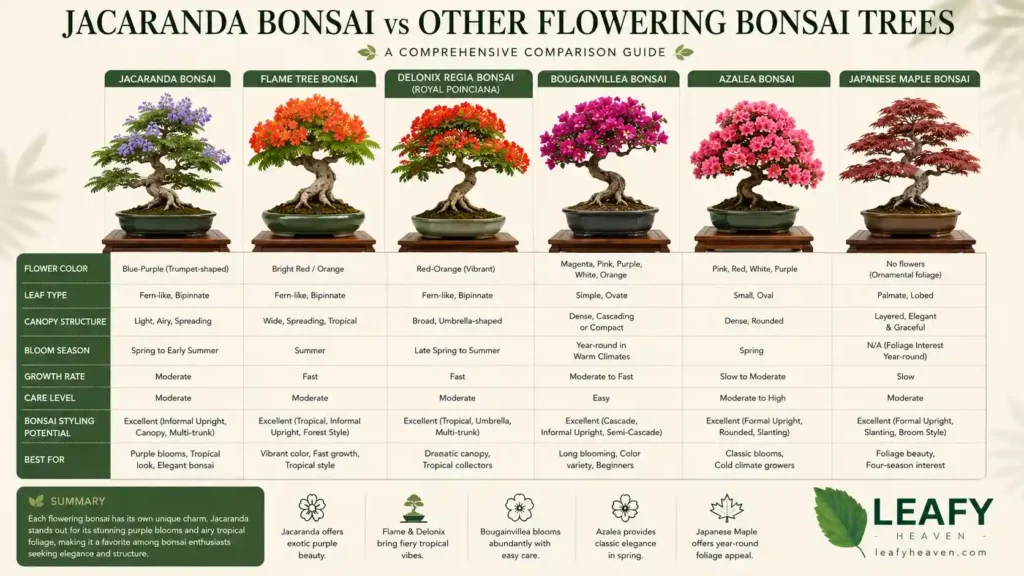
Jacaranda Bonsai vs Other Flowering Bonsai Trees
Jacaranda bonsai is highly valued among tropical flowering bonsai species because of its soft fern-like foliage and distinctive blue-purple flowers. Compared to many other bonsai trees with flowers, jacaranda creates a lighter tropical canopy with elegant texture and airy branching.
Its fast growth and ornamental appearance make it a popular choice for growers who want a flowering bonsai with a refined tropical aesthetic.
Jacaranda Bonsai vs Flame Tree Bonsai
Jacaranda bonsai and flame tree bonsai are both tropical flowering species with attractive compound foliage and fast growth habits. However, they differ significantly in flower color, canopy appearance, and growth characteristics.
The bonsai flame tree, also known as delonix regia bonsai or royal poinciana bonsai, is famous for its bright red-orange flowers and dramatic tropical canopy.
The flame tree bonsai, also known as delonix regia bonsai or royal poinciana bonsai, is famous for its bright red-orange flowers and dramatic tropical canopy.
Jacaranda, in contrast, produces softer blue-purple blooms with a more delicate visual texture.
Flower Color
Jacaranda bonsai produces:
- Blue-purple flowers
- Cooler tropical color tones
- Softer ornamental appearance
Flame tree bonsai produces:
- Red-orange flowers
- Intense tropical color contrast
- More dramatic flowering displays
Leaf Texture
Jacaranda foliage appears:
- Fine-textured
- Soft and fern-like
- Light airy in appearance
Flame tree bonsai foliage appears:
- Larger and broader
- More tropical and dense
- Slightly heavier in structure
Growth Rate
Both species are considered fast-growing tropical bonsai trees. However, delonix regia bonsai may produce especially vigorous extension growth in warm climates.
Jacaranda often develops:
- Faster canopy refinement
- Softer branch density
- More delicate ramification
Royal poinciana bonsai usually develops:
- Aggressive seasonal growth
- Wider branch spread
- Strong tropical canopy structure
Jacaranda Bonsai vs Delonix Regia Bonsai
Although both species belong to tropical flowering bonsai categories, their visual appearance differs considerably.
| Feature | Jacaranda | Delonix Regia |
| Flower Color | Blue-purple | Red-orange |
| Leaf Style | Fern-like | Tropical compound |
| Bonsai Difficulty | Moderate | Moderate |
Jacaranda bonsai creates a softer refined appearance because of its finer foliage and cooler flower coloration. Delonix regia bonsai produces a bolder tropical effect with intense flowering displays and wider canopy structure.
Both trees require:
- Strong sunlight
- Warm temperatures
- Regular pruning
- Fast-draining soil
- Frost protection
Growers often choose between the two species based on personal preference for flower color and canopy style.
Best Flowering Bonsai Species for Beginners
Several tropical and ornamental bonsai species are considered suitable for beginners who want bonsai trees with flowers.
Popular beginner-friendly flowering bonsai options include:
Jacaranda
Jacaranda bonsai offers:
- Fast growth
- Elegant foliage
- Tropical appearance
- Moderate bonsai difficulty
It is ideal for growers wanting a refined tropical bonsai with flowering potential.
Bougainvillea
Bougainvillea bonsai is popular because of:
- Bright colorful bracts
- Strong heat tolerance
- Fast recovery after pruning
- Excellent flowering potential
Azalea
Azalea bonsai is widely grown for:
- Dense flowering displays
- Compact growth habit
- Traditional bonsai aesthetics
- Seasonal ornamental value
Delonix Regia
Delonix regia bonsai is favored by tropical bonsai enthusiasts because of:
- Fiery red-orange flowers
- Exotic tropical structure
- Rapid growth
- Dramatic canopy shape
Among flowering bonsai species, jacaranda remains one of the most distinctive choices for growers seeking soft fern-like foliage combined with striking blue-purple seasonal blooms.
Growers who enjoy fast-growing deciduous alternatives may also find honey locust bonsai rewarding for its elegant fine foliage and strong outdoor bonsai performance.
Buying & Choosing a Healthy Jacaranda Bonsai
A healthy jacaranda bonsai should have strong roots, balanced branch structure, healthy foliage, and stable overall growth. Whether purchasing a young seedling or a mature flowering specimen, careful inspection helps avoid weak or poorly maintained trees.
Choosing a healthy bonsai improves long-term development, styling potential, and flowering performance.
What To Look for When Buying
Before purchasing a jacaranda bonsai, inspect the tree carefully for structural quality and overall health. A visually attractive bonsai may still contain hidden root or pest problems if not examined properly.
Important features to evaluate include:
Root Health
Healthy roots are essential for vigorous bonsai growth.
Look for:
- Proper drainage
- Stable trunk anchoring
- No foul soil odor
- No visible root rot
- Healthy fine feeder roots
Avoid trees sitting in constantly wet compact soil because root problems can quickly weaken tropical bonsai species.
Trunk Taper
Good trunk taper creates a more natural mature bonsai appearance. The trunk should gradually narrow from the base upward.
Strong taper improves:
- Visual age appearance
- Bonsai proportions
- Structural balance
- Overall aesthetics
A thick stable lower trunk is usually preferred over thin straight growth.
Branch Structure
Balanced branching is important for future styling and canopy refinement.
Look for:
- Even branch distribution
- Multiple healthy branches
- No severe crossing branches
- Compact internode spacing
- Strong canopy potential
Well-developed structure reduces the amount of corrective pruning needed later.
Pest-Free Foliage
Healthy jacaranda bonsai foliage should appear vibrant and free from visible pest damage.
Inspect leaves carefully for:
- Spider mites
- Aphids
- Fungus spots
- Yellowing leaves
- Weak or curling growth
Healthy foliage usually indicates better overall tree condition and root health.
Seedlings vs Mature Bonsai
Both seedlings and mature bonsai trees offer advantages depending on the grower’s goals, budget, and patience level.
| Type | Advantages | Drawbacks |
| Seedling | Affordable | Slow training |
| Mature Bonsai | Ready shape | Expensive |
Seedlings
Young jacaranda seedlings are ideal for growers who enjoy long-term bonsai development and trunk training from the earliest stages.
Benefits include:
- Lower purchase cost
- Greater styling flexibility
- Early root shaping opportunities
- Long-term bonsai customization
However, seedlings require patience because trunk thickening and mature canopy development take time.
Mature Bonsai
Mature jacaranda bonsai trees already possess developed structure and refined branching.
Advantages include:
- Established bonsai shape
- Faster display quality
- Potential flowering maturity
- Advanced trunk development
The main drawback is higher pricing, especially for mature flowering specimens with strong tropical styling.
Average Jacaranda Bonsai Prices
Jacaranda bonsai prices vary depending on age, trunk thickness, styling quality, and flowering maturity.
Typical pricing categories include:
Seedlings
Small jacaranda seedlings are usually the most affordable option for beginners and long-term bonsai training.
Pricing depends on:
- Seedling size
- Root quality
- Early trunk development
Young Bonsai
Young trained bonsai specimens often cost more because initial pruning and shaping work has already been completed.
Price factors include:
- Branch structure
- Pot quality
- Trunk thickness
- Styling progress
Many online listings advertising jacaranda bonsai for sale fall into this category.
Mature Flowering Bonsai
Large mature flowering bonsai specimens command the highest prices due to years of training and advanced development.
Premium bonsai blue jacaranda tree for sale listings may include:
- Thick mature trunks
- Refined canopy structure
- Advanced ramification
- Seasonal flowering capability
- Decorative bonsai containers
Collectors searching for a jacaranda bonsai tree for sale should prioritize overall health and structural quality rather than focusing only on size or age.
Specialty tropical bonsai nurseries and online bonsai sale platforms often provide the best selection of trained jacaranda bonsai trees.
Quick Jacaranda Bonsai Care Summary
| Care Factor | Requirement |
| Sunlight | Full sun |
| Watering | Moderate |
| Soil | Fast-draining |
| Growth Rate | Fast |
| Flowering | Seasonal |
| Indoor Suitability | Limited |
Conclusion
Jacaranda mimosifolia bonsai is one of the most visually impressive tropical flowering bonsai trees thanks to its soft fern-like foliage, elegant canopy structure, and seasonal blue-purple blooms. Its combination of fast growth and refined tropical appearance makes it a rewarding species for bonsai enthusiasts who enjoy ornamental flowering trees.
A well-maintained bonsai jacaranda can develop beautiful branching patterns, compact foliage, and strong bonsai character with regular pruning and proper sunlight exposure. Although flowering may take time, mature trees can eventually produce the striking blooms that make jacaranda bonsai especially attractive among tropical bonsai collections.
Successful jacaranda bonsai tree care depends on several key factors:
- Full sunlight exposure
- Fast-draining bonsai soil
- Balanced watering habits
- Regular pruning and shaping
- Warm growing conditions
- Seasonal root maintenance
Blue jacaranda bonsai care also requires patience because flowering usually develops only after years of healthy growth and maturity. However, growers who provide consistent long-term care are often rewarded with one of the most elegant flowering bonsai species available for tropical bonsai cultivation.
FAQs
How long does it take for jacaranda bonsai to flower?
Jacaranda bonsai usually takes several years to flower, especially when grown from seed. Flowering depends on tree maturity, strong sunlight exposure, warm temperatures, and proper pruning balance. Outdoor-grown trees in tropical climates generally bloom faster than indoor specimens.
Can jacaranda bonsai grow indoors?
Jacaranda bonsai can survive indoors if provided with very bright light and warm conditions, but it performs best outdoors. Indoor growing may reduce flowering potential and slow overall growth because natural sunlight intensity is limited.
How often should I water jacaranda bonsai?
Jacaranda bonsai should be watered whenever the upper soil layer begins to dry slightly. The soil should remain evenly moist but never waterlogged. During hot growing seasons, watering may be needed more frequently because jacaranda is a fast-growing tropical species.
Is jacaranda bonsai easy for beginners?
Jacaranda bonsai is considered moderately beginner-friendly because it grows quickly and responds well to pruning. However, beginners must still manage sunlight, watering, and winter protection carefully to maintain healthy growth and future flowering potential.
Can you grow blue jacaranda bonsai from seed?
Yes, blue jacaranda bonsai can be grown successfully from seed. Fresh viable seeds usually germinate well in warm humid conditions with fast-draining soil and indirect light. Seed-grown bonsai also allow growers to shape the tree from an early stage.
Why are my jacaranda bonsai leaves turning yellow?
Yellow leaves are commonly caused by overwatering, underwatering, weak sunlight, seasonal stress, or poor drainage. Root problems and sudden environmental changes may also trigger foliage discoloration and leaf drop.
What is the best soil for jacaranda bonsai?
The best soil for jacaranda bonsai is a fast-draining bonsai mix with good aeration and moderate organic matter. Soil should allow excess water to drain quickly while still retaining enough moisture for healthy root growth.
How fast does jacaranda bonsai grow?
Jacaranda bonsai is considered a fast-growing tropical bonsai species. Under warm sunny conditions, it develops branches, foliage, and roots quickly. Regular pruning is usually necessary to maintain compact bonsai structure and balanced canopy growth.

Written by the LeafyHeaven Editorial Team
LeafyHeaven shares practical gardening tips and simple plant care guides to help you grow, nurture, and enjoy your plants with ease. Our goal is to make gardening feel natural, approachable, and rewarding for everyone.