

Introduction
A pigeon pea bonsai is a miniature version of the fast-growing Cajanus cajan plant trained using bonsai techniques to create a tropical-style ornamental tree with delicate foliage, woody stems, and compact growth.
The pigeon pea plant is a tropical legume species commonly grown for edible peas, soil improvement, and warm-climate agriculture. In its natural form, the pigeon pea tree grows as a woody shrub or small semi-perennial tree with soft branching and compound green foliage. Many gardeners also refer to it as the pigeon peas plant because of its edible seed pods and agricultural value.
In recent years, the pigeon pea bonsai tree has gained attention among experimental bonsai growers. Its rapid growth, flexible branches, and tropical appearance make it an interesting alternative to slower traditional bonsai species. Unlike many conventional bonsai trees that require years of trunk development, pigeon pea can produce noticeable structure and branching within a relatively short time.
The scientific name of pigeon pea is Cajanus cajan. It belongs to the Fabaceae family, which includes beans, peas, and other nitrogen-fixing legumes. Common names include pigeon pea, red gram, Congo pea, and tropical pigeon pea depending on the region. Because of its tropical legume background, the plant naturally prefers warm temperatures, full sun, and fast seasonal growth.
Many bonsai enthusiasts compare pigeon pea bonsai with tropical species such as flame tree bonsai, delonix regia bonsai, jacaranda bonsai, and locust bonsai because they all share fine foliage and fast-growing tropical characteristics. However, pigeon pea stands out for its beginner-friendly training response, lightweight branching, and easy seed propagation.
What Is a Pigeon Pea Bonsai?
A pigeon pea bonsai is a trained miniature form of the pigeon pea shrub or small tree that combines edible legume characteristics with tropical bonsai styling. Growers shape the fast-growing Cajanus cajan plant into compact bonsai forms using pruning, root control, and branch training techniques.
Unlike many slow-growing bonsai species, pigeon pea develops structure quickly. Its lightweight branching, fine foliage, and tropical appearance make it popular among gardeners experimenting with unusual bonsai trees.
Botanical Profile of the Pigeon Pea Plant
The Cajanus cajan plant is a tropical legume species widely cultivated in warm regions for food production, soil enrichment, and ornamental use. The pigeon pea botanical name is Cajanus cajan, and it belongs to the Fabaceae family.
The species is believed to have originated in South Asia and later spread throughout tropical Africa, the Caribbean, Australia, and South America. In agricultural settings, pigeon pea is valued for nitrogen fixation, drought tolerance, and edible seed pods.
The plant naturally grows as a fast-growing woody shrub with semi-soft stems that gradually harden with age. Depending on climate and pruning habits, it may behave as either a bush or a small tree.
Key botanical characteristics include:
- Compound green foliage
- Rapid seasonal growth
- Deep root development
- Yellow to orange pea-like flowers
- Edible seed pods
- Semi-woody branching structure
The difference between a pigeon pea bush and a pigeon pea tree mainly comes down to growth habit and pruning style.
| Growth Form | Characteristics |
| Pigeon Pea Bush | Dense, multi-stem shrub with spreading growth |
| Pigeon Pea Tree | Taller structure with visible trunk formation |
| Pigeon Peas Tree | Common informal term used for mature pigeon pea plants |
Although pigeon pea is technically a short-lived perennial shrub, older specimens can develop surprisingly woody trunks suitable for bonsai training.
Why Pigeon Pea Works as a Bonsai Tree
Pigeon pea works well as a bonsai tree because it grows quickly, responds strongly to pruning, and develops tropical-style branching within a short time.
One of its biggest advantages is rapid trunk development. Young plants can thicken noticeably during a single growing season under warm conditions. This allows beginners to see structural progress much faster than with many traditional bonsai species.
Its small compound foliage also helps create a miniature tree appearance. The delicate leaf structure resembles tropical bonsai species such as jacaranda and flame tree bonsai.
Other reasons growers experiment with pigeon pea bonsai include:
- Fast recovery after pruning
- Flexible young branches for shaping
- Strong adaptation to containers
- Attractive tropical canopy appearance
- Seasonal flowers and decorative seed pods
- Easy propagation from seed
The species performs best in tropical and subtropical climates where long warm seasons encourage vigorous growth. In frost-free areas, pigeon pea bonsai can grow aggressively and produce mature-looking branching relatively quickly.
Is Pigeon Pea a Traditional Bonsai Species?
Pigeon pea is not considered a traditional bonsai species. It is classified as an experimental or non-traditional bonsai tree used mainly by tropical plant enthusiasts and creative bonsai growers.
Traditional bonsai species usually include long-lived woody trees such as juniper bonsai and ficus bonsai. These trees have centuries of bonsai history and are widely used in Japanese and Chinese bonsai traditions.
Pigeon pea differs because it has a shorter lifespan, softer wood structure, and agricultural origins rather than ornamental bonsai heritage.
Compared with black locust bonsai and honey locust bonsai, pigeon pea grows faster but develops less durable hardwood structure over time. However, its speed and easy pruning response make it attractive for beginners wanting quick visual development.
Here is the main difference between traditional and experimental bonsai species:
- Traditional bonsai species focus on longevity, refined ramification, and hardwood aging
- Experimental bonsai species prioritize creativity, unusual foliage, rapid growth, or tropical styling
Pigeon pea bonsai fits strongly into the experimental tropical bonsai category.
Quick Summary
| Feature | Pigeon Pea Bonsai |
| Scientific Name | Cajanus cajan |
| Growth Speed | Fast |
| Bonsai Difficulty | Beginner-Friendly |
| Indoor Suitability | Limited |
| Best Climate | Tropical/Subtropical |
How to Grow Pigeon Pea Bonsai From Seed
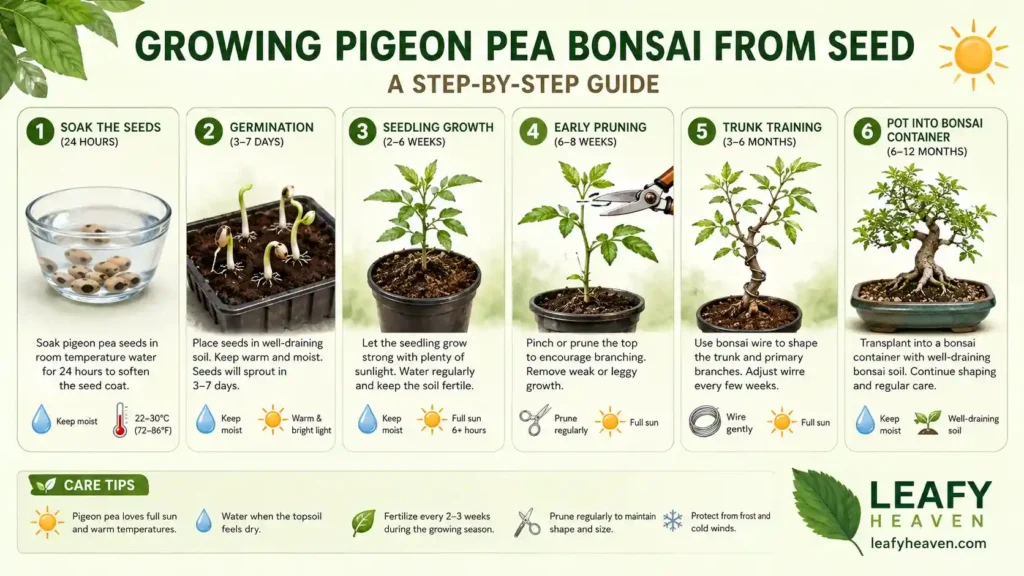
You can grow pigeon pea bonsai from seed by germinating healthy pigeon pea seeds and starting early structural pruning while the seedlings are young. Because Cajanus cajan grows quickly, seedlings can develop bonsai potential within the first growing season under warm conditions.
Growing pigeon pea bonsai from seed also gives better control over trunk movement, root structure, and early branch placement compared to older nursery plants.
Choosing Healthy Pigeon Pea Seeds
Healthy pigeon pea seeds are essential for strong germination and vigorous bonsai development. Fresh seeds usually sprout faster and produce healthier seedlings than old dried storage seeds.
Both pigeon pea seeds and cajanus cajan seeds are commonly available through garden suppliers, seed exchanges, and agricultural stores. When selecting seeds, choose clean, firm, and fully mature seeds without cracks, mold, or insect damage.
Good seed viability signs include:
- Smooth outer seed coat
- Uniform color
- Hard but healthy texture
- No fungal smell
- Recent harvest date if available
Fresh seeds generally germinate more reliably because they retain higher internal moisture and energy reserves. Very old dried seeds may still sprout, but germination rates often decline over time.
For best results:
- Use seeds less than 1–2 years old
- Store seeds in cool dry conditions
- Avoid shriveled or lightweight seeds
- Test a few seeds before large planting batches
How to Germinate Pigeon Pea Seedlings
Pigeon pea seedlings germinate best in warm, moist conditions with loose soil and good airflow. Warm temperatures accelerate root activity and encourage faster sprouting.
Start with a light seed-starting soil that drains well while still holding moderate moisture. Heavy compacted soil can slow germination and increase fungal problems.
Basic germination requirements include:
| Requirement | Ideal Condition |
| Temperature | 22–30°C |
| Soil Moisture | Lightly moist |
| Sunlight | Bright indirect light initially |
| Germination Time | 7–14 days |
| Soil Depth | Shallow planting |
Plant the seeds approximately 1–2 cm deep in small containers or seed trays. Keep the soil evenly moist but never waterlogged.
During the germination phase:
- Maintain consistent warmth
- Avoid cold drafts
- Provide airflow around seedlings
- Prevent standing water in trays
Most pigeon pea seedlings emerge within one to two weeks under ideal tropical conditions. Growth becomes very rapid once the first true leaves appear.
Best Soil Mix for Pigeon Pea Bonsai
The best soil mix for pigeon pea bonsai is a fast-draining bonsai substrate that allows strong root oxygenation while retaining moderate moisture.
Because pigeon pea grows aggressively, poorly drained soil can quickly lead to root rot and weak development. The roots require both moisture and oxygen for healthy growth.
A balanced bonsai soil mix may include:
- Coarse sand
- Perlite or pumice
- Pine bark fines
- Compost in small amounts
- Akadama or granular bonsai particles
Organic bonsai mixes hold moisture longer and provide nutrients naturally. Inorganic mixes improve drainage and root aeration. Many growers use a hybrid blend combining both approaches.
Important soil characteristics include:
- Excellent drainage
- Loose root structure
- Good oxygen circulation
- Moderate moisture retention
- Low compaction risk
Avoid dense garden soil because it restricts root oxygen and slows bonsai root development.
Early Training for Young Seedlings
Early training is one of the biggest advantages of growing pigeon pea bonsai from seed. Young seedlings are flexible, fast-growing, and easier to shape than mature plants.
Initial pruning can usually begin once the seedling develops several sets of true leaves and the stem becomes slightly woody. Early structural pruning encourages branching and prevents tall weak growth.
Basic early training methods include:
- Pinching new growth tips
- Selecting the future trunk line
- Removing weak lower shoots
- Encouraging side branching
- Managing overall height early
Root reduction should remain minimal during the first growth stage. Aggressive root pruning too early can weaken young seedlings.
When wiring young pigeon pea seedlings:
- Use soft bonsai wire carefully
- Avoid tight wrapping
- Monitor rapid stem thickening
- Remove wire early to prevent scarring
Because pigeon pea stems grow quickly, wires can cut into bark within a short period if left unchecked.
Common Seedling Problems
Young pigeon pea bonsai seedlings can experience several early-stage problems, especially under poor moisture or light conditions.
Weak stems are usually caused by insufficient sunlight or overcrowding. Seedlings become thin and unstable when grown in dark indoor conditions.
Damping off is a fungal issue that attacks young stems near the soil line. It commonly occurs in overly wet soil with poor airflow.
Other common seedling issues include:
| Problem | Common Cause |
| Weak Stems | Low sunlight |
| Damping Off | Excess moisture |
| Overwatering | Poor drainage |
| Leggy Growth | Insufficient direct light |
Leggy growth occurs when seedlings stretch excessively toward light sources. This produces weak trunk structure unsuitable for bonsai training.
To reduce seedling problems:
- Use fast-draining soil
- Provide strong sunlight early
- Water carefully
- Improve airflow
- Avoid overcrowding containers
Step-by-Step Guide
- Soak pigeon pea seeds in water for several hours
- Plant seeds shallowly in loose soil
- Maintain warm growing conditions
- Allow healthy seedling growth to establish
- Begin early trunk training and pruning
- Transfer the plant into a bonsai container once roots strengthen
Pigeon Pea Bonsai Care Guide
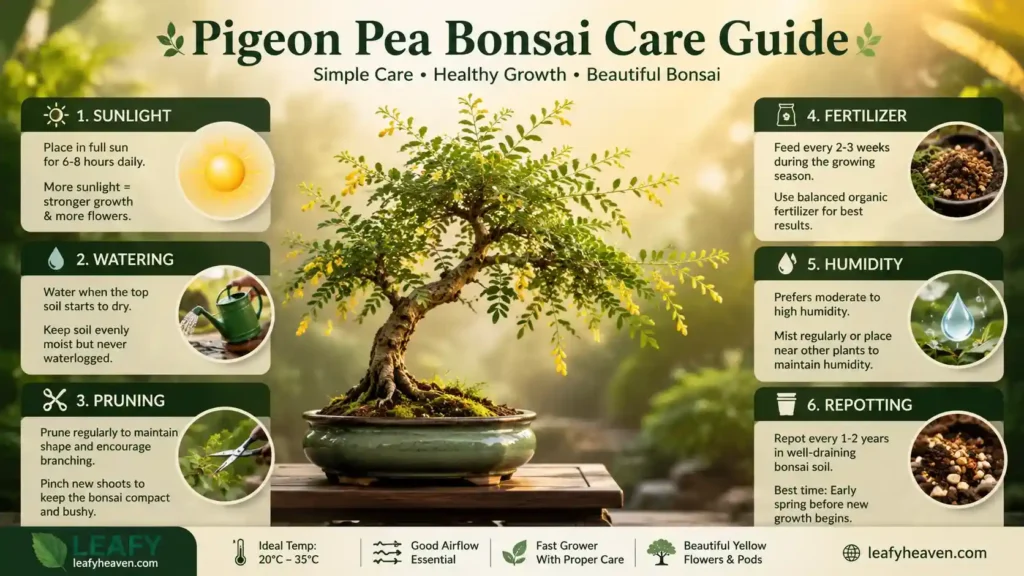
Proper pigeon pea bonsai care requires full sun, regular pruning, warm temperatures, moderate watering, and seasonal root maintenance. Because Cajanus cajan is a fast-growing tropical species, consistent care is essential for maintaining compact growth and balanced bonsai structure.
Unlike slow-growing traditional bonsai trees, pigeon pea responds quickly to both good and poor care conditions. Proper light, watering, and pruning directly affect trunk development, foliage density, and branch ramification.
Sunlight Requirements
Pigeon pea bonsai grows best in full sun conditions with several hours of direct sunlight daily. Strong light encourages compact foliage, thicker stems, and healthy branching.
Outdoor growing provides the best environment because natural sunlight intensity is usually much stronger than indoor lighting. In warm climates, outdoor exposure also improves airflow and overall plant vigor.
Benefits of outdoor growing include:
- Faster trunk thickening
- Better branch development
- Reduced fungal problems
- Improved leaf density
- Stronger root growth
Pigeon pea struggles indoors because indoor conditions often lack sufficient sunlight and air circulation. Low light commonly causes weak stems, pale leaves, and stretched leggy growth.
If temporary indoor placement is necessary:
- Use south-facing windows
- Provide grow lights if needed
- Improve airflow around the plant
- Rotate the bonsai regularly for even growth
Watering Requirements
Pigeon pea bonsai prefers moist but well-drained soil that never stays constantly saturated. Consistent watering supports rapid tropical growth, but excessive moisture can damage roots quickly.
During active summer growth, watering frequency may increase significantly because the plant consumes water rapidly in heat and full sun.
General watering guidelines include:
| Season | Watering Frequency |
| Summer | Frequent monitoring and regular watering |
| Spring | Moderate watering |
| Autumn | Slightly reduced watering |
| Winter | Lower watering frequency |
The soil should dry slightly between watering sessions while still retaining mild moisture below the surface.
To avoid root rot:
- Use fast-draining bonsai soil
- Never allow standing water
- Empty drip trays quickly
- Avoid overly large containers
- Reduce watering during cool weather
Healthy watering practices help maintain vigorous foliage and stable root development.
Fertilizer Needs
Pigeon pea bonsai benefits from balanced fertilization because of its rapid growth rate and high nutrient demand. Regular feeding encourages dense foliage, branch development, and overall bonsai vigor.
Nitrogen management is especially important. Excess nitrogen can cause overly soft growth and long internodes, while nutrient deficiency may slow development and weaken foliage color.
Organic fertilizer options commonly used for tropical bonsai include:
- Fish emulsion
- Compost-based pellets
- Seaweed extract
- Worm castings
- Organic bonsai fertilizer blends
Seasonal feeding usually works best during active growth periods.
Basic feeding approach:
- Increase feeding in spring and summer
- Reduce fertilizer during slower winter growth
- Avoid heavy fertilization immediately after root pruning
- Use diluted liquid fertilizers for young trees
Balanced nutrition supports healthy branching without creating excessive uncontrolled growth.
Temperature & Humidity
Pigeon pea bonsai requires warm tropical conditions for healthy long-term growth. The species performs best in consistently warm temperatures with moderate humidity and strong sunlight.
Because Cajanus cajan is a tropical legume, it has very limited frost tolerance. Cold exposure can damage foliage, weaken roots, and slow recovery.
Important climate characteristics include:
| Factor | Preferred Condition |
| Temperature | Warm tropical conditions |
| Humidity | Moderate humidity |
| Frost Tolerance | Very low |
| Climate Type | Tropical/Subtropical |
Pigeon pea bonsai grows most reliably in USDA warm-climate zones where freezing temperatures are rare.
During cold periods:
- Move the bonsai to protected areas
- Reduce cold wind exposure
- Avoid waterlogged winter soil
- Maintain stable warmth when possible
Tropical bonsai species generally decline quickly under repeated frost stress.
Pruning Techniques for Compact Growth
Regular pruning is essential for maintaining compact pigeon pea bonsai growth. Because the species grows aggressively, unpruned branches can quickly become long and weak.
Structural pruning shapes the primary trunk and major branch framework. This type of pruning is usually performed during active growth when recovery is fastest.
Maintenance pruning focuses on:
- Controlling branch length
- Improving canopy density
- Encouraging fine branching
- Maintaining bonsai proportions
Branch ramification improves when new shoots are repeatedly trimmed back after extending several leaf sets.
Effective pruning practices include:
- Removing crossing branches
- Shortening elongated shoots
- Encouraging side branching
- Reducing heavy vertical growth
- Maintaining balanced canopy structure
Frequent light pruning generally produces better tropical bonsai structure than infrequent heavy cutting.
Wiring and Shaping Tips
Pigeon pea bonsai responds well to early shaping because young branches remain flexible during rapid growth stages. Wiring is easiest while stems are still soft and green.
The informal upright style is one of the most suitable forms for pigeon pea bonsai because it complements the plant’s natural tropical growth habit.
Other suitable shaping styles include:
- Broom style
- Small tropical canopy forms
- Open branching structures
- Naturalistic tropical silhouettes
Tropical canopy shaping focuses on creating layered foliage pads with soft branching movement rather than rigid conifer styling.
Important wiring precautions include:
- Check wires frequently
- Avoid deep wire marks
- Remove wire before bark swelling
- Use gentle branch movement
Fast-growing stems can scar quickly if wire remains attached too long.
Repotting and Root Pruning
Pigeon pea bonsai may require relatively frequent repotting because of its vigorous root growth. Fast-growing tropical species can fill containers quickly during warm seasons.
Repotting intervals depend on tree age, root growth speed, and container size. Younger plants often require more frequent root maintenance than mature specimens.
General repotting guidelines include:
| Tree Age | Typical Repotting Interval |
| Young Bonsai | Every 1–2 years |
| Mature Bonsai | Every 2–3 years |
Root trimming is usually safest during active warm-season growth when recovery is strongest.
During root pruning:
- Remove overly long roots
- Preserve healthy feeder roots
- Avoid excessive root reduction
- Use sterile pruning tools
Pot size selection also affects bonsai growth behavior. Smaller containers slow excessive vigor and help maintain compact proportions, while overly large pots may encourage uncontrolled root expansion.
Best Bonsai Styles for Pigeon Pea Trees
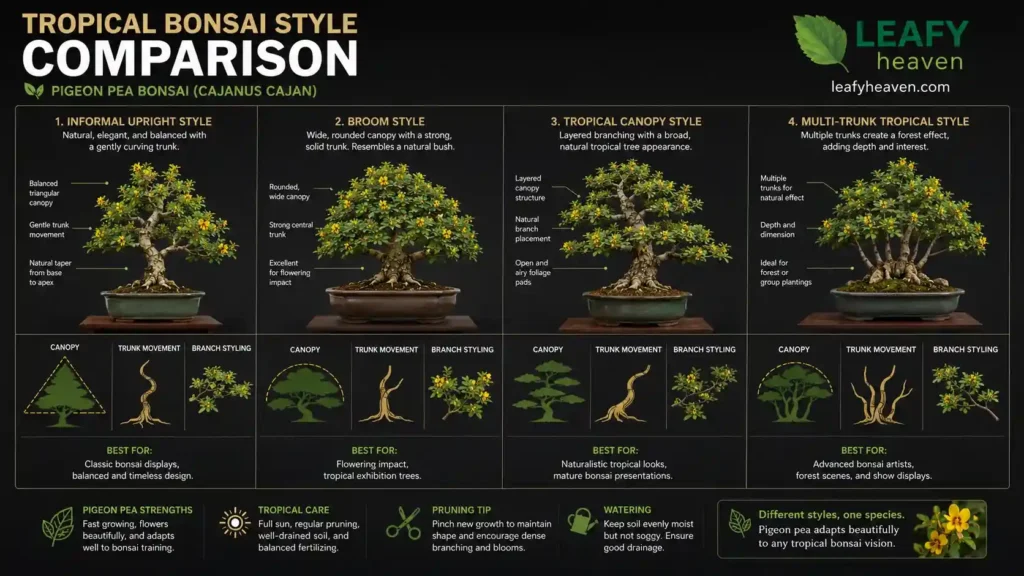
Pigeon pea bonsai trees respond best to informal upright, broom, and tropical canopy bonsai styles because of their fast-growing branching habit. The species naturally develops soft tropical movement, lightweight foliage, and flexible stems that adapt well to creative bonsai shaping.
Unlike rigid conifer bonsai forms, pigeon pea bonsai styling usually focuses on natural tropical tree structure with open branching and soft canopy balance.
Informal Upright Style
The informal upright style is one of the most suitable bonsai styles for pigeon pea trees. This design features a gently curved trunk with balanced branching that mimics the appearance of naturally growing tropical trees.
Because pigeon pea develops flexible young stems quickly, growers can create trunk movement early during development.
Key features of the informal upright style include:
- Slightly curved trunk line
- Visible trunk taper
- Alternating branch placement
- Rounded tropical canopy
- Natural asymmetrical appearance
This style works especially well for beginner bonsai growers because it allows natural growth patterns without requiring extreme shaping techniques.
Regular pruning helps maintain compact proportions while encouraging branch ramification over time.
Multi-Trunk Tropical Style
The multi-trunk tropical style reflects the natural growth habit of many pigeon pea plants. In warm climates, Cajanus cajan often produces multiple stems from the base, making this bonsai design feel highly natural.
This style creates a miniature tropical grove appearance with several trunks emerging from a shared root base.
Advantages of the multi-trunk style include:
- Faster canopy development
- Fuller visual structure
- Natural tropical appearance
- Better balance for vigorous growth
- Easier recovery after pruning
Growers usually select one dominant trunk while allowing smaller secondary trunks to support overall composition and canopy depth.
The spacing between trunks should appear natural rather than symmetrical.
Small Tree Canopy Design
Small tree canopy design focuses on creating a dense miniature tropical crown with soft branching and compact foliage pads.
Pigeon pea responds well to this approach because its compound leaves naturally produce fine-textured greenery suitable for scaled-down tropical bonsai aesthetics.
Important canopy design goals include:
- Rounded upper branching
- Balanced foliage density
- Open interior airflow
- Controlled branch extension
- Visible trunk structure beneath foliage
Frequent maintenance pruning is essential for keeping the canopy compact. Without trimming, pigeon pea can quickly become oversized and lose bonsai proportions.
This design style often resembles miniature tropical shade trees found in warm coastal or subtropical landscapes.
Naturalistic Bonsai Styling
Naturalistic bonsai styling emphasizes realistic tree movement and less formal shaping. Instead of highly controlled branch pads, the tree is trained to resemble a naturally weathered tropical shrub or small tree.
Pigeon pea works especially well for this style because of its relaxed growth pattern and soft branching structure.
Naturalistic styling often includes:
- Uneven branching
- Organic canopy movement
- Slight trunk irregularities
- Open tropical silhouettes
- Softer pruning lines
This approach allows the tree to retain a more authentic tropical appearance while still maintaining bonsai scale and balance.
Many experimental bonsai growers prefer naturalistic styling for pigeon pea because it complements the species better than highly formal Japanese bonsai structures.
Training a Flowering Pigeon Pea Bonsai
Flowering pigeon pea bonsai can become highly decorative when properly maintained. Mature plants may produce small yellow to orange pea-like flowers followed by ornamental seed pods.
Training a flowering bonsai requires balancing vigorous growth with controlled pruning. Excessive trimming can reduce flowering potential because blooms often form on newer mature shoots.
To encourage flowering:
- Provide full sun exposure
- Maintain warm temperatures
- Avoid excessive nitrogen fertilizer
- Allow selective branch maturity
- Use moderate pruning during flowering periods
Flowering and pod production add seasonal visual interest and help distinguish pigeon pea bonsai from many non-flowering bonsai species.
Growers often combine tropical canopy styling with flowering branch structure to create a more natural ornamental appearance.
Comparing Pigeon Pea Bonsai With Other Tropical Bonsai Species
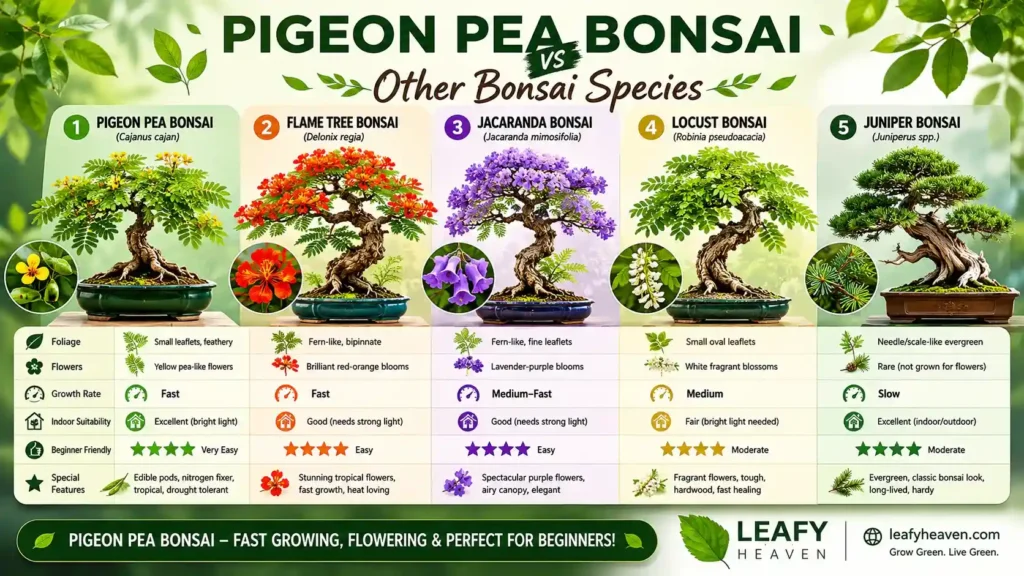
Pigeon pea bonsai grows faster than many traditional bonsai species but has a shorter lifespan and softer wood structure. Its rapid growth and tropical foliage make it attractive for experimental bonsai growers, especially beginners who want quick development and visible shaping progress.
Compared to slower hardwood bonsai trees, pigeon pea produces faster trunk thickening and branching but usually requires more frequent pruning and maintenance.
Pigeon Pea Bonsai vs Flame Tree Bonsai
Pigeon pea bonsai and flame tree bonsai both produce tropical-style foliage and fast seasonal growth, but they differ significantly in flowering behavior, trunk structure, and bonsai difficulty.
The flame tree bonsai, also known as royal poinciana bonsai or delonix regia bonsai, is famous for its dramatic red-orange flowers and fern-like foliage.
The flame tree bonsai, also known as royal poinciana bonsai or delonix regia bonsai, is famous for its dramatic red-orange flowers and fern-like foliage.
It develops a broader canopy and stronger visual impact in mature bonsai form.
Pigeon pea bonsai differs by producing softer growth, smaller flowers, and faster beginner-friendly development.
Main differences include:
| Feature | Pigeon Pea Bonsai | Flame Tree Bonsai |
| Growth Speed | Very fast | Fast |
| Flower Size | Small | Large ornamental blooms |
| Bonsai Difficulty | Easier | More advanced |
| Wood Strength | Softer | Stronger |
| Foliage Style | Compact compound leaves | Fern-like tropical foliage |
Flame tree bonsai usually requires more advanced pruning and canopy control techniques because of its aggressive tropical growth pattern.
Pigeon Pea Bonsai vs Jacaranda Bonsai
Pigeon pea bonsai and jacaranda bonsai share several similarities, including fine foliage and tropical appearance. However, their growth behavior and long-term bonsai structure differ noticeably.
The blue jacaranda bonsai, also called jacaranda mimosifolia bonsai, develops more refined woody branching over time and may produce purple-blue flowers under favorable conditions.
Pigeon pea grows faster during early development, while jacaranda typically forms more elegant mature branch structure with age.
Important growth differences include:
- Pigeon pea thickens faster
- Jacaranda develops harder wood
- Pigeon pea requires more frequent pruning
- Jacaranda often creates finer ramification
- Both species prefer warm climates and strong sunlight
Jacaranda bonsai is often selected for ornamental elegance, while pigeon pea bonsai is commonly grown for rapid tropical experimentation and beginner practice.
Pigeon Pea Bonsai vs Locust Bonsai
Locust bonsai species generally produce stronger hardwood structure than pigeon pea bonsai. However, pigeon pea grows faster and responds more quickly to pruning during early development stages.
A typical locust bonsai tree develops durable branching and textured bark over time. Popular species include black locust bonsai tree and robinia pseudoacacia bonsai.
Popular species include black locust bonsai tree and robinia pseudoacacia bonsai.
Compared with pigeon pea:
- Locust bonsai forms harder wood
- Pigeon pea grows more rapidly
- Locust species may tolerate cooler climates better
- Pigeon pea creates softer tropical styling
- Black locust bonsai often lives significantly longer
Pigeon pea bonsai works better for tropical aesthetics, while locust bonsai is often preferred for stronger trunk character and long-term aging potential.
Pigeon Pea Bonsai vs Juniper Bonsai
Pigeon pea bonsai and juniper bonsai represent two very different bonsai categories. Pigeon pea is a tropical legume species, while juniper belongs to the conifer bonsai group traditionally associated with Japanese bonsai art.
Juniper bonsai develops slowly compared to pigeon pea but produces long-lasting refined structure and deadwood potential.
Key tropical vs conifer bonsai differences include:
| Characteristic | Pigeon Pea Bonsai | Juniper Bonsai |
| Climate Preference | Tropical/Subtropical | Temperate |
| Growth Style | Fast tropical growth | Slow conifer growth |
| Foliage Type | Compound leaves | Needle or scale foliage |
| Lifespan | Shorter | Very long-lived |
| Pruning Frequency | High | Moderate |
For beginners, pigeon pea bonsai offers faster visible results and easier experimentation. Juniper bonsai requires more patience and long-term structural planning.
There is also a common misconception that juniper bonsai can thrive indoors permanently. In reality, most juniper bonsai require outdoor conditions and seasonal climate changes for long-term survival. Pigeon pea bonsai also performs poorly indoors because both species need strong natural sunlight and airflow.
Comparison Table
| Species | Growth Rate | Indoor Use | Flowering | Beginner Friendly |
| Pigeon Pea Bonsai | Fast | Limited | Yes | Yes |
| Juniper Bonsai | Moderate | No | No | Moderate |
| Jacaranda Bonsai | Moderate | Limited | Yes | Moderate |
| Flame Tree Bonsai | Fast | No | Yes | Advanced |
Can Pigeon Pea Bonsai Grow Indoors?
Pigeon pea bonsai is not considered one of the best indoor bonsai trees because it requires intense sunlight and warm outdoor conditions. As a tropical legume species, Cajanus cajan grows most successfully in bright open environments with strong airflow and direct sun exposure.
Although temporary indoor placement is possible, long-term indoor growth usually leads to weak stems, leggy growth, reduced branching, and poor overall bonsai structure.
Indoor vs Outdoor Bonsai Conditions
Tropical legumes like pigeon pea naturally prefer outdoor growing environments because outdoor conditions provide stronger sunlight intensity, better humidity balance, and natural air movement.
Outdoor bonsai conditions support:
- Faster photosynthesis
- Stronger trunk thickening
- Better foliage density
- Improved root health
- Reduced fungal risk
Indoor environments often limit healthy tropical bonsai development because windows rarely provide enough direct sunlight for vigorous growth.
Air circulation is also extremely important. Poor airflow can increase problems such as:
- Fungal diseases
- Weak stems
- Pest infestations
- Excess moisture retention
- Slow drying soil
Pigeon pea bonsai performs best outdoors during warm seasons where it receives full sun for several hours daily.
If grown indoors temporarily:
- Place near the brightest window available
- Use supplemental grow lights if needed
- Improve ventilation around the plant
- Avoid dark rooms and cold air conditioning drafts
Best Indoor Bonsai Alternatives
Several bonsai species adapt much better to indoor conditions than pigeon pea bonsai. These species tolerate lower light levels and stable indoor temperatures more successfully.
One of the most popular indoor bonsai species is ficus bonsai. Ficus trees handle indoor humidity fluctuations well and respond strongly to pruning.
Another common choice is the ginseng bonsai tree, which is widely sold as a beginner-friendly indoor bonsai because of its thick roots and tolerance for indoor environments.
Popular indoor bonsai species include:
| Indoor Bonsai Species | Indoor Adaptability |
| Ficus Bonsai | Excellent |
| Ginseng Bonsai Tree | Excellent |
| Chinese Elm Bonsai | Moderate |
| Jade Bonsai | Good |
| Fukien Tea Bonsai | Moderate |
These tropical and subtropical bonsai species generally adapt better to indoor light conditions than pigeon pea.
What Bonsai Trees Can Live Indoors?
Only certain bonsai trees can live indoors long term. Most successful indoor bonsai species are tropical or subtropical plants rather than temperate outdoor trees.
Beginner-friendly indoor bonsai species usually share several characteristics:
- Tolerance for stable indoor temperatures
- Adaptation to reduced humidity
- Lower sunlight requirements
- Strong recovery after pruning
- Ability to grow in containers year-round
Common tropical bonsai tree species suitable for indoor environments include:
- Ficus bonsai
- Ginseng ficus
- Jade bonsai
- Fukien tea bonsai
- Hawaiian umbrella bonsai
Indoor bonsai tree types should still receive strong indirect light or supplemental grow lighting whenever possible.
Many beginners mistakenly assume all bonsai trees are indoor plants. In reality, numerous bonsai species such as juniper, pine, maple, and pigeon pea require outdoor conditions for long-term survival.
Which Bonsai Is Best for Indoors?
Ficus bonsai is often considered one of the best bonsai trees for indoors because it tolerates indoor humidity, moderate light, and regular pruning very well.
For beginners, indoor bonsai recommendations usually include:
| Bonsai Species | Light Requirement | Beginner Friendly |
| Ficus Bonsai | Bright indirect to direct light | Yes |
| Ginseng Bonsai Tree | Bright indoor light | Yes |
| Jade Bonsai | Bright light | Yes |
| Fukien Tea Bonsai | Strong indirect light | Moderate |
Compared with these indoor species, pigeon pea bonsai has much higher sunlight requirements and performs far better outdoors in tropical or subtropical climates.
For growers specifically interested in tropical bonsai styling indoors, ficus species are generally more reliable than pigeon pea for long-term container cultivation.
Common Problems With Pigeon Pea Bonsai
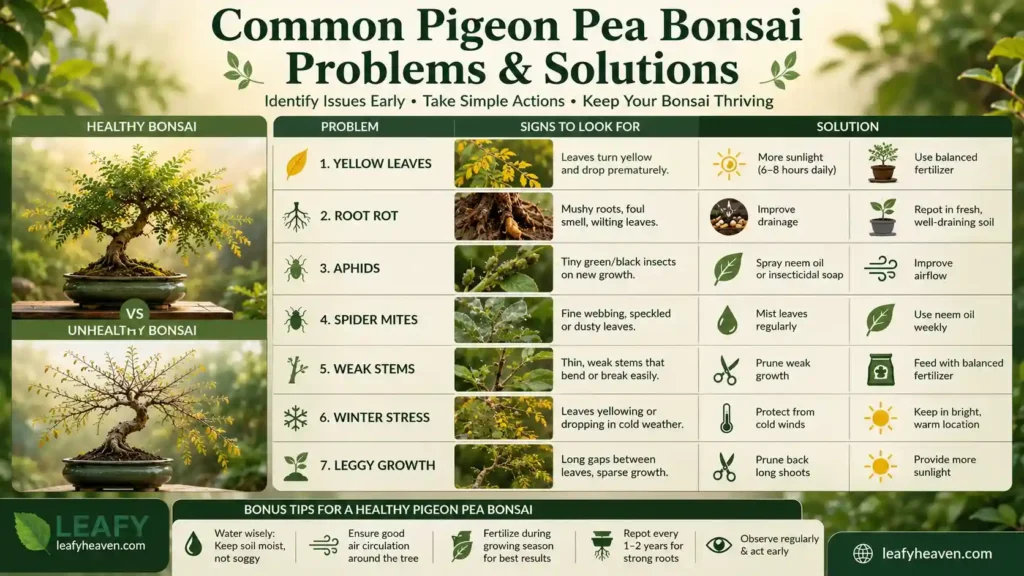
The most common pigeon pea bonsai problems include yellow leaves, weak branching, root rot, pests, and winter stress. Because Cajanus cajan grows rapidly, environmental problems can appear quickly when light, watering, or temperature conditions become unbalanced.
Most pigeon pea bonsai issues are manageable when identified early. Proper sunlight, drainage, pruning, and seasonal care greatly reduce long-term health problems.
Yellow Leaves and Nutrient Deficiency
Yellow leaves are one of the most common pigeon pea bonsai problems. In many cases, the issue is linked to nutrient deficiency, poor soil conditions, or watering imbalance.
Nitrogen deficiency often causes pale green or yellow foliage because pigeon pea is a fast-growing species with high nutrient demand.
Other possible causes include:
- Poor drainage
- Root stress
- Overwatering
- Compact soil
- Insufficient sunlight
Signs of nutrient deficiency may include:
- Pale leaves
- Slow growth
- Weak branching
- Reduced foliage density
Balanced fertilization and improved soil health usually restore healthy green foliage over time.
Root Rot From Overwatering
Root rot develops when pigeon pea bonsai remains in constantly wet soil with limited oxygen circulation around the roots.
Because tropical bonsai roots require airflow, saturated soil conditions can quickly damage the root system and weaken the entire tree.
Common signs of root rot include:
- Yellowing leaves
- Wilting despite wet soil
- Black or soft roots
- Foul soil odor
- Sudden leaf drop
Root rot risk increases when:
- Soil drains poorly
- Pots lack drainage holes
- Watering frequency is excessive
- Temperatures become cool and wet
To reduce root rot problems:
- Use fast-draining bonsai soil
- Allow slight drying between watering
- Improve container drainage
- Avoid oversized pots
- Remove damaged roots during repotting if necessary
Healthy root oxygenation is essential for vigorous pigeon pea bonsai growth.
Pest Problems
Pigeon pea bonsai can attract several common tropical plant pests, especially during warm active growing periods. Weak indoor airflow and stressed plants often increase pest activity.
Aphids
Aphids commonly attack tender new shoots and soft foliage. These small insects feed on plant sap and may cause distorted growth or sticky residue on leaves.
Common aphid symptoms include:
- Curled young leaves
- Sticky honeydew residue
- Clusters of small insects on shoots
- Weak new growth
Spider Mites
Spider mites become more common in hot dry conditions with low humidity. They are extremely small but can rapidly damage foliage.
Signs of spider mite infestation include:
- Tiny pale spots on leaves
- Fine webbing
- Dry brittle foliage
- Gradual leaf decline
Improved humidity and regular foliage inspection help reduce outbreaks.
Caterpillars
Caterpillars may chew pigeon pea leaves aggressively, especially on outdoor bonsai during warm seasons.
Damage symptoms include:
- Holes in foliage
- Missing leaf sections
- Visible chewing marks
- Rapid foliage loss
Manual removal and regular inspection are often enough for minor infestations.
Weak Trunk Development
Weak trunk development usually occurs when pigeon pea bonsai receives insufficient sunlight or excessive nitrogen without structural pruning.
Plants grown in low light conditions often become tall and thin rather than developing thick bonsai-style trunks.
Common causes include:
- Indoor low-light growth
- Overcrowded branches
- Excessive soft fertilizer growth
- Lack of trunk pruning
- Oversized containers
To encourage stronger trunk formation:
- Increase direct sunlight exposure
- Allow controlled sacrifice growth
- Prune strategically
- Use smaller bonsai containers when appropriate
- Encourage outdoor seasonal growth
Rapid outdoor growth typically improves trunk thickening significantly.
Winter Protection Tips
Pigeon pea bonsai has limited cold tolerance and may suffer during cool winter conditions. Frost exposure can damage foliage, weaken roots, and slow recovery.
Winter stress commonly causes:
- Leaf drop
- Yellow foliage
- Slowed growth
- Branch dieback
- Root weakening
Important winter protection methods include:
- Moving the bonsai to sheltered areas
- Protecting roots from freezing temperatures
- Reducing excessive winter watering
- Avoiding cold wind exposure
- Maintaining moderate warmth
In tropical and subtropical climates, winter damage is usually less severe than in colder temperate regions.
Leggy Growth and Poor Ramification
Leggy growth occurs when pigeon pea bonsai produces long weak stems with excessive spacing between leaves. This issue is usually linked to low light and insufficient pruning.
Poor ramification develops when the plant grows too freely without branch management.
Common causes include:
- Inadequate sunlight
- Lack of pruning
- Excess nitrogen fertilizer
- Indoor weak-light conditions
- Overly aggressive upward growth
Improving ramification requires:
- Frequent tip pruning
- Strong direct sunlight
- Controlled fertilization
- Encouraging lateral branching
- Removing weak elongated shoots
Consistent pruning cycles help create denser branching and more refined bonsai structure.
Troubleshooting Table
| Problem | Cause | Solution |
| Yellow Leaves | Nutrient deficiency | Balanced fertilizer |
| Root Rot | Excess water | Improve drainage |
| Weak Branches | Low sunlight | Increase sun exposure |
| Leaf Drop | Temperature stress | Maintain warmth |
Growth Rate, Flowers, and Long-Term Development
Pigeon pea bonsai grows extremely fast and can develop a thick trunk, seasonal flowers, and mature branching within a few years. Compared with many traditional bonsai species, Cajanus cajan produces visible structural progress very quickly under warm tropical conditions.
Its rapid growth makes it popular among beginners and experimental bonsai growers who want faster styling results and quicker canopy development.
Growth Timeline
Pigeon pea bonsai develops much faster than most conifer or hardwood bonsai species. Warm temperatures, full sun, and regular pruning can accelerate trunk thickening and branch formation significantly.
Seedling Stage
During the seedling stage, pigeon pea grows aggressively once germination begins. Young plants quickly produce soft green stems and compound foliage.
Early seedling development usually includes:
- Rapid vertical growth
- Flexible young stems
- Fast root establishment
- Early branching potential
- Soft green bark formation
This stage is important for trunk direction, root spread, and initial structural pruning.
1-Year Development
Within the first year, pigeon pea bonsai can already develop noticeable trunk thickness and basic canopy structure under ideal conditions.
Typical first-year development may include:
| Development Feature | First-Year Progress |
| Trunk Thickening | Moderate to fast |
| Branch Formation | Strong |
| Height Growth | Rapid |
| Root Development | Vigorous |
| Pruning Response | Excellent |
Frequent pruning during this stage helps prevent oversized growth and encourages compact bonsai structure.
Mature Bonsai Appearance
A more mature pigeon pea bonsai can develop within a few years, especially in tropical climates with long growing seasons.
Mature appearance characteristics often include:
- Woody trunk texture
- Rounded tropical canopy
- Dense branching
- Layered foliage pads
- Semi-mature bark appearance
- Seasonal flowering potential
Although pigeon pea bonsai matures faster visually than many traditional species, its softer wood and shorter lifespan create different long-term aging characteristics.
Flowering and Pod Production
Pigeon pea bonsai may produce seasonal blooms and decorative seed pods when grown under healthy warm conditions. Flowering usually occurs after the plant reaches sufficient maturity and receives strong sunlight.
The flowers are typically small yellow to yellow-orange pea-like blooms that appear along mature branches.
Flowering is encouraged by:
- Full sun exposure
- Warm temperatures
- Healthy root growth
- Balanced fertilization
- Moderate pruning practices
After flowering, the tree may produce edible pods containing pigeon pea seeds.
Decorative features include:
- Tropical flowering appearance
- Hanging seed pods
- Seasonal color contrast
- Ornamental legume structure
- Wildlife-friendly flowers in outdoor gardens
Many growers appreciate the combination of edible pod production and tropical bonsai aesthetics.
Lifespan Expectations
Pigeon pea bonsai generally has a shorter lifespan than many traditional bonsai trees. While species such as juniper or pine bonsai may survive for decades or centuries, pigeon pea behaves more like a short-lived tropical shrub.
Average lifespan depends heavily on:
- Climate conditions
- Root health
- Winter protection
- Disease control
- Overall bonsai maintenance
In warm tropical environments with proper care, pigeon pea bonsai may remain attractive for several years while continuously developing new growth and branching.
Because the species grows quickly, many growers periodically restart new plants from seed to continue experimenting with improved trunk movement and styling techniques.
Maintenance Level Over Time
Pigeon pea bonsai requires moderate to high maintenance because of its vigorous growth rate. Fast growth creates rapid branch extension, frequent pruning needs, and active root development.
Long-term maintenance usually includes:
- Regular trimming
- Seasonal repotting
- Root pruning
- Fertilization management
- Pest monitoring
- Structural branch correction
Compared with slower bonsai species, pigeon pea may require more frequent attention during active warm seasons.
However, many beginners still find it rewarding because rapid growth produces faster visual progress and quicker bonsai training results.
Is Pigeon Pea Bonsai Good for Beginners?
Pigeon pea bonsai can be a good beginner bonsai because it grows quickly, tolerates pruning, and develops fast visual results. Unlike many slow-growing traditional bonsai trees, Cajanus cajan responds rapidly to training, allowing new growers to see structural progress within a short period.
Its fast growth and flexible branching make it useful for learning basic bonsai techniques such as pruning, shaping, root control, and canopy development.
“rowers who want to build stronger plant care foundations before attempting bonsai training will benefit from this complete gardening and plant care guide covering essential outdoor plant maintenance principles.
Beginner Advantages
One of the biggest beginner advantages of pigeon pea bonsai is its rapid growth speed. New growers can practice bonsai training techniques without waiting years for visible development.
Important beginner-friendly features include:
- Fast trunk thickening
- Strong pruning response
- Easy growth from seed
- Flexible young branches
- Quick canopy formation
- Tropical bonsai appearance
Because the species recovers quickly after pruning, beginners can experiment with shaping techniques while learning how bonsai structure develops over time.
Pigeon pea bonsai is also relatively inexpensive to start from seed compared with some specialty bonsai species.
Other beginner benefits include:
| Beginner Benefit | Why It Helps |
| Rapid Growth | Faster learning results |
| Easy Seed Germination | Simple propagation |
| Strong Recovery | Tolerates beginner pruning mistakes |
| Flexible Stems | Easier early wiring |
| Tropical Styling | Attractive visual appearance |
For warm-climate growers, pigeon pea can become a practical practice bonsai species for developing long-term bonsai skills.
Challenges New Growers Should Know
Despite its beginner-friendly growth, pigeon pea bonsai still presents several challenges that new growers should understand before starting.
The species grows very aggressively, which means pruning and maintenance may become frequent during active seasons.
Common beginner challenges include:
- Overgrown branches
- Leggy growth in low light
- Rapid root expansion
- Shorter lifespan compared to traditional bonsai
- Sensitivity to frost and cold weather
Indoor growing is another common problem area. Many beginners mistakenly assume pigeon pea bonsai can thrive permanently indoors, but the species usually performs much better outdoors with full sun and airflow.
Its softer wood structure also differs from traditional hardwood bonsai species, meaning branch aging and long-term refinement may look less mature over time.
Best Tools and Containers for Beginners
Simple bonsai tools are usually enough for beginner pigeon pea bonsai training. Because the species grows quickly, tools should focus on pruning, shaping, and basic root maintenance.
Useful beginner bonsai tools include:
- Bonsai pruning scissors
- Concave branch cutters
- Root rake
- Soft aluminum bonsai wire
- Watering can with fine nozzle
For containers, shallow bonsai pots with strong drainage work best once the plant develops a stable root system.
Good beginner container features include:
| Container Feature | Importance |
| Drainage Holes | Prevent root rot |
| Shallow Depth | Encourages compact roots |
| Stable Base | Supports trunk growth |
| Breathable Soil Space | Improves root oxygenation |
Young seedlings may initially grow better in training pots before being transferred into smaller decorative bonsai containers.
Beginner Mistakes to Avoid
Several common mistakes can slow pigeon pea bonsai development or weaken the tree during early training stages.
One major mistake is insufficient sunlight. Low light conditions quickly produce weak stems and stretched growth unsuitable for bonsai structure.
Other beginner mistakes include:
- Overwatering the soil
- Using dense garden soil
- Delaying pruning too long
- Leaving bonsai wire on branches excessively
- Allowing uncontrolled vertical growth
- Keeping the plant indoors permanently
Excessive root pruning on very young seedlings can also slow recovery and weaken development.
For best beginner results:
- Grow outdoors in warm weather
- Use fast-draining bonsai soil
- Prune consistently
- Monitor rapid branch growth
- Repot before roots become severely crowded
Consistent maintenance and observation usually produce better long-term bonsai structure than aggressive shaping all at once.
Conclusion
Pigeon pea bonsai is a unique tropical bonsai option that combines rapid growth, ornamental foliage, and easy training for growers who want an unusual bonsai species. Its fast development, flexible branches, and tropical canopy potential make it especially appealing for beginners and experimental bonsai enthusiasts.
Successful pigeon pea bonsai care mainly depends on providing full sun, warm temperatures, fast-draining soil, regular pruning, and controlled watering. Because Cajanus cajan grows vigorously, consistent maintenance helps maintain compact structure and healthy branching.
For tropical and subtropical growers, pigeon pea bonsai can develop quickly into an attractive miniature tree with woody stems, seasonal flowers, and decorative seed pods. The species also offers a rewarding learning experience for gardeners interested in tropical bonsai styling and fast-growing bonsai experimentation.
Growing pigeon pea bonsai from seed is one of the easiest ways to shape trunk movement and root structure from an early stage. Young seedlings respond well to pruning and basic bonsai techniques, allowing growers to practice shaping methods without the long waiting periods required by many traditional bonsai trees.
Although pigeon pea is not considered a classic bonsai species like juniper or ficus, it remains a creative option for growers who enjoy tropical bonsai styling, flowering bonsai trees, and fast visual progress.
For beginners, the most important step is simply starting early, pruning consistently, and learning how the tree responds over time. With patience, sunlight, and regular care, pigeon pea bonsai can become a highly rewarding tropical bonsai project.
Frequently Asked Questions About Pigeon Pea Bonsai
How fast does pigeon pea bonsai grow?
Pigeon pea bonsai grows very fast compared to many traditional bonsai species. Under warm tropical conditions with full sun and regular feeding, young plants can develop noticeable trunk thickness and branching within a single growing season. Rapid growth is one of the main reasons beginners experiment with Cajanus cajan as a bonsai tree.
Can pigeon pea bonsai grow indoors?
Pigeon pea bonsai can survive indoors temporarily, but it is not considered an ideal indoor bonsai species. The plant requires strong sunlight, warmth, and good airflow for healthy growth. Long-term indoor conditions often cause weak stems, leggy growth, and poor branch development. Outdoor growing is usually much more successful.
How do you prune a pigeon pea bonsai tree?
You prune a pigeon pea bonsai tree by trimming long shoots, removing weak branches, and shaping the canopy regularly to maintain compact growth. Structural pruning helps form the trunk and major branch layout, while maintenance pruning encourages dense branching and ramification. Frequent light pruning generally works better than occasional heavy cutting.
Is pigeon pea bonsai edible?
Yes, pigeon pea bonsai is technically edible because it comes from the same Cajanus cajan plant grown for food production. The pods and peas may still be edible if the tree has not been treated with harmful chemicals or non-edible bonsai products. However, ornamental bonsai specimens are usually grown mainly for decorative purposes rather than food harvesting.
How long does pigeon pea bonsai live?
Pigeon pea bonsai usually has a shorter lifespan than traditional bonsai species such as juniper or pine. Depending on climate, care, and overall health, the tree may live several years while continuing to produce vigorous growth and seasonal flowers. Warm tropical environments generally improve longevity.
Can you grow pigeon pea bonsai from seed?
Yes, pigeon pea bonsai can be grown easily from seed. Many growers prefer seed propagation because it allows early control over trunk shape, root structure, and branch placement. Fresh pigeon pea seeds typically germinate quickly in warm moist soil.
What is the scientific name of pigeon pea?
The scientific name of pigeon pea is Cajanus cajan. It belongs to the Fabaceae family, which includes legumes, peas, and beans. The species is widely grown in tropical and subtropical regions for agriculture, soil improvement, and ornamental uses.
Is pigeon pea a real tree or a bush?
Pigeon pea is usually classified as a woody shrub or small semi-perennial tree rather than a large true tree. Depending on pruning and growing conditions, it may appear as either a dense bush or a small upright tree. In bonsai cultivation, growers typically train it into a miniature tree form.

Written by the LeafyHeaven Editorial Team
LeafyHeaven shares practical gardening tips and simple plant care guides to help you grow, nurture, and enjoy your plants with ease. Our goal is to make gardening feel natural, approachable, and rewarding for everyone.