
Introduction
Mango Tree in Florida Overview
A mango tree in Florida thrives because the state’s warm climate, sandy soil, humidity, and long growing season create ideal tropical conditions for healthy growth and fruit production. The success of a mango tree in Florida is closely linked to its natural compatibility with the region’s tropical climate, especially in areas like South Florida, where conditions closely resemble native mango-growing environments.
In Florida, both mango trees in Florida and commercial plantings benefit from consistent warmth, high sunlight exposure, and well-draining soils typical of tropical fruit trees. This makes growing mangoes in Florida highly successful compared to many other parts of the United States.
The combination of Florida weather, subtropical humidity, and USDA-recommended USDA zones for tropical plants supports strong vegetative growth and reliable fruit production. As a result, the Florida mango tree has become one of the most popular choices in tropical gardening and home orchards across the subtropical climate regions of the state.
Overall, Florida provides one of the most favorable environments in the U.S. for cultivating mango trees naturally and efficiently.
Why Mango Trees Thrive in Florida
Florida provides the perfect combination of heat, humidity, sunlight, and well-draining soil that mango trees need for healthy growth and fruiting. This balance makes the state one of the most reliable regions for cultivating a productive florida mango tree, especially in warm southern areas.
Florida Climate & USDA Growing Zones
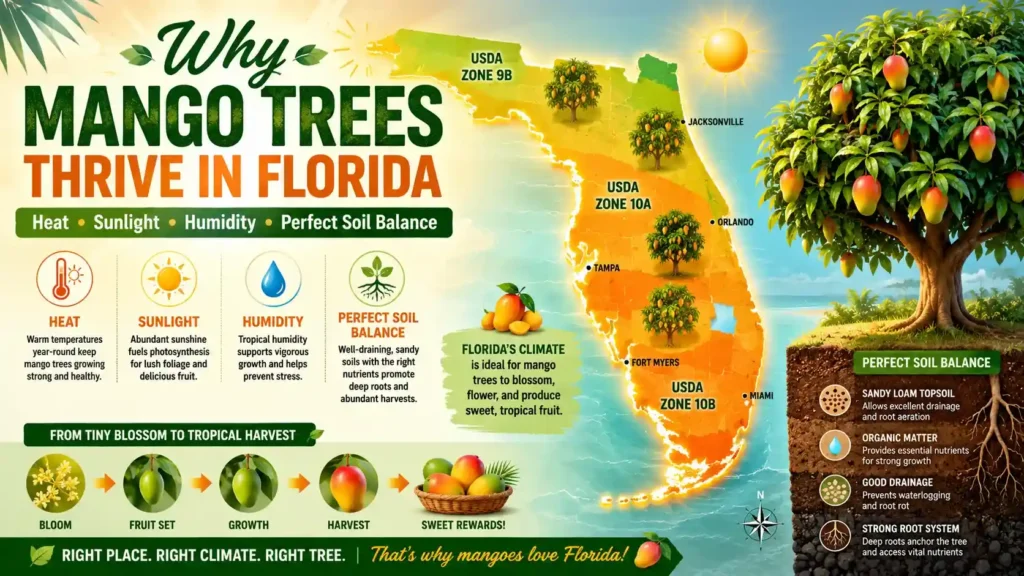
Florida’s climate and USDA classification create ideal conditions for mango cultivation.
Florida falls mainly within USDA zones 9–11, which define regions suitable for tropical and subtropical plants. You can verify regional growing conditions using the official USDA Plant Hardiness Zone Map before selecting a mango variety for planting. These zones are critical because they determine whether a plant like mango can survive winter temperatures and maintain consistent growth.
The mango growing zone requirement typically aligns with warm, frost-free environments, making South and Central Florida highly suitable. In fact, the mango tree growing zone preference is closely matched by Florida’s long warm season.
Key climate advantages include:
- Warm temperatures throughout most of the year
- Minimal frost risk in South Florida
- High humidity supporting tropical plant health
- Long growing season for flowering and fruiting
This makes Florida one of the best examples of a climate for mango trees in a subtropical climate region.
Gardeners interested in growing other tropical crops alongside mangoes can also explore this tropical fruit trees grow guide for broader climate and care insights.
The mango tree planting zone in Florida allows trees to grow vigorously without major seasonal stress.
Can Mango Trees Grow Throughout Florida?
Yes, mango trees can grow in most parts of Florida, but success varies depending on the region’s temperature patterns.
In general:
- South Florida: Best conditions for mango cultivation
- Central Florida: Possible with frost protection
- North Florida: Limited success due to colder winters
Common search queries reflect this interest:
- do mangoes grow in florida → Yes, especially in southern regions
- can mangoes grow in florida → Yes, widely cultivated
- can you grow mangoes in florida → Yes, with proper care and variety selection
However, outside Florida:
- can mango trees grow in georgia → Only in protected microclimates or containers
- can mango trees grow in texas → Yes, but mainly in southern Texas with frost protection
Florida’s advantage comes from its consistent warmth and reduced freeze risk, which many other U.S. states cannot provide.
Coastal vs Inland Growing Conditions
Mango tree performance in Florida also depends on whether the tree is planted in coastal or inland areas.
Coastal regions benefit from:
- Stable tropical environment
- Higher humid weather
- Reduced temperature extremes
- Strong influence of oceanic climate
In contrast, inland Florida areas experience slightly more temperature variation, especially during winter cold fronts. However, florida weather still remains favorable for mango growth in most inland regions of Central and South Florida.
Overall:
- Coastal areas → more stable tropical growth conditions
- Inland areas → good growth but slightly higher frost risk
Both environments fall within a broader tropical region influence, but coastal zones provide the most consistent conditions for long-term mango productivity.
Mango Tree Identification & Characteristics
Mango trees are evergreen tropical fruit trees known for their dense canopy, glossy leaves, fragrant flowers, and sweet stone fruits. These mango tree characteristics make them easy to recognize in warm climates like Florida, where they grow as long-living tropical fruit trees in home gardens and orchards.
Scientific Name & Plant Family
The mango tree belongs to a well-defined botanical classification that explains many of its growth traits.
The scientific name of the mango tree is Mangifera indica, and it belongs to the Anacardiaceae family, which also includes cashew and pistachio.
Key characteristics of a mango tree include:
- Evergreen foliage (stays green year-round in warm climates)
- Strong taproot system for drought tolerance
- Broad canopy for shade and fruit protection
- Aromatic flowering clusters that attract pollinators
As a tropical fruit tree, mango is adapted to warm climates, making it highly compatible with regions like Florida.
What Do Mango Trees Look Like?
A mango tree has a distinct appearance that helps in quick identification.
If you are wondering what do mango trees look like, they typically appear as large, spreading trees with a rounded canopy and dense foliage.
Main identification features:
- Long, narrow, glossy green leaves
- Thick, woody branches forming a wide canopy
- Clusters of small flowers before fruit development
- Hanging fruit that grows in varying sizes depending on variety
To understand how to identify a mango tree, look for its combination of:
- Evergreen dense crown
- Smooth-edged leaves with a leathery texture
- Visible mango branches spreading outward
- Developing mango tree and fruit during warm seasons
These features make mango trees visually distinct from most other fruit trees.
Mango Tree Size, Height & Growth Habit
Mango trees can grow into large, long-lived fruit trees with expansive canopies.
So, how tall does a mango tree get? On average, a mature tree reaches:
- Height: 30 to 100 feet depending on variety and pruning
- Width: 25 to 50 feet canopy spread
The mango tree height and mango tree width depend heavily on variety and care practices. In managed gardens, pruning can significantly reduce size.
At full maturity, a mango tree full grown becomes a broad, dome-shaped tree with strong structural branches. In natural conditions, how big do mango trees get can vary widely, especially in tropical regions where growth is unrestricted.
Key growth traits:
- Rapid early vertical growth
- Wide lateral canopy expansion
- Long-term structural thickening of branches
Mango Tree Lifespan & Growth Rate
Mango trees are known for their longevity and steady growth over decades.
The mango tree lifespan is one of its most impressive traits, as many trees live for 40–100 years or more under ideal conditions.
So, how long do mango trees live?
With proper care, irrigation, and disease control, mango trees can remain productive for generations.
The mango tree growth rate is:
- Fast during early years (juvenile stage)
- Moderate as the tree matures
- Slower but stable in older trees
Growth depends on:
- Climate conditions
- Soil quality
- Pruning practices
- Variety selection
Overall, mango trees combine long lifespan with consistent fruiting potential, making them valuable long-term additions to tropical and subtropical landscapes.
Best Mango Varieties to Grow in Florida
Florida supports dozens of mango cultivars, but disease resistance, fruit quality, climate adaptability, and tree size determine the best variety for home gardens. Selecting the right cultivar is essential for success, especially in regions like South Florida, where conditions strongly influence fruit production and tree health.
Best Florida Mango Varieties
Florida offers a wide range of cultivars suited for both home gardeners and commercial growers.
For example, gardeners interested in classic Florida cultivars often start with growing a Haden mango tree because of its strong tropical flavor and reliable productivity.
The most successful florida mango varieties are those that perform well in humidity, resist fungal diseases, and produce high-quality fruit. These mango tree varieties in florida are often selected based on flavor, growth habit, and seasonal yield.
Common varieties of mangoes in florida include both traditional and modern hybrids developed for improved performance.
Key selection factors for mango cultivars:
- Disease resistance (especially against anthracnose)
- Adaptability to mango varieties south florida climate
- Tree size management for home gardens
- Consistent fruit production
Popular Mango Cultivars for Home Gardens
Florida home gardeners often prefer specific cultivars due to flavor, size, and reliability.
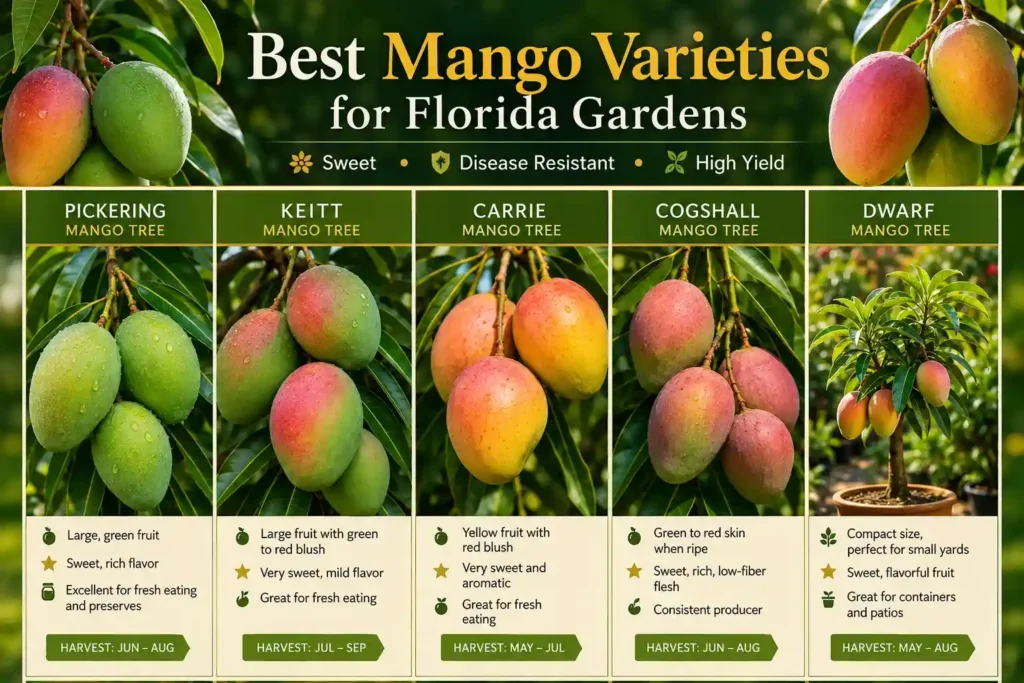
Some of the most widely grown varieties include:
- Pickering mango tree – Compact growth, ideal for small yards
- Keitt mango tree – Late-season fruiting, large and juicy mangoes
- Cogshall mango tree – Excellent flavor, dwarf-friendly growth
- Fairchild mango tree – Sweet tropical flavor, reliable production
- Rosigold mango tree – Early ripening variety, good for small spaces
- Bailey’s Marvel mango – Strong disease resistance and rich taste
- Sunrise mango tree – Attractive fruit with balanced sweetness
- Carrie mango tree – Fiberless, aromatic fruit with strong flavor
These cultivars are chosen for their balance of taste, productivity, and adaptability to Florida’s climate conditions.
Dwarf Mango Trees for Small Spaces
For limited garden areas, compact varieties are highly recommended.
A dwarf mango tree is ideal for patios, backyards, or container growing. These trees are often referred to as:
- Condo mango tree
- Miniature mango tree
- Mini mango tree
Despite their smaller size, many still produce full-sized fruit, making them highly efficient.
Benefits of small mango tree with fruits:
- Easier pruning and maintenance
- Suitable for container gardening
- Faster fruit production in controlled environments
- Ideal for urban gardening spaces
Popular dwarf mango varieties are specially bred to stay compact while maintaining high fruit quality.
Cold Hardy & Disease-Resistant Varieties
Not all mango trees tolerate cooler conditions equally, which is important in parts of Florida.
Cold hardy mango varieties are developed to withstand occasional temperature drops without severe damage. These cold tolerant mango varieties are especially useful in Central and Northern Florida regions.
Important concept: mango cold tolerance determines how well a tree survives brief cold spells and winter stress.
Key advantages of resistant cultivars:
- Better survival in unpredictable winters
- Reduced risk of fungal infections
- More stable fruit production year after year
Additionally, modern breeding has produced several disease-resistant mangoes, which reduce dependency on chemical treatments and improve long-term orchard health.
These varieties are essential for sustainable mango cultivation across Florida’s varying climate zones.
Choosing the Best Location for Planting
Mango trees grow best in locations with full sun, warm temperatures, protection from frost, and excellent soil drainage. Choosing the correct site is one of the most important steps for long-term success of a healthy mango tree florida garden.
Where to Plant a Mango Tree
The best location is a sunny, open area where the tree can grow without shade or obstruction.
If you are wondering where to plant mango tree, the ideal spot should have:
- At least 6–8 hours of direct sunlight daily
- Protection from strong cold winds
- Slight elevation or well-drained ground
- Enough space for long-term expansion
For planting a mango tree in florida, South Florida is especially suitable due to its warm tropical climate and minimal frost risk. These conditions help young trees establish quickly and support consistent fruit production.
Avoid planting near:
- Large buildings that block sunlight
- Low-lying areas with water accumulation
- Areas prone to frost pockets in colder months
A properly chosen site significantly improves survival rate and long-term productivity of mango trees.
Ground Planting vs Container Growing
Mango trees can grow both in open soil and containers, depending on space and climate control.
A mango tree container setup is ideal for small spaces, patios, or controlled environments. Container growing allows easier movement and better protection during cold weather.
Key container options include:
- Indoor mango tree cultivation for decorative or experimental growth
- Mango indoor plant setups using dwarf varieties
- Condo mango types designed specifically for compact spaces
Ground planting, on the other hand, allows:
- Stronger root expansion
- Higher long-term fruit production
- Larger canopy development
Comparison:
- Container → space-saving, controlled growth
- Ground → natural growth, higher yield potential
Both methods are effective depending on garden size and climate management.
Spacing Requirements & Airflow
Proper spacing is essential for healthy growth and disease prevention.
Good tree spacing ensures that mango trees receive enough sunlight and do not compete for nutrients. Without proper spacing, growth can become restricted and fruit production may decline.
Key spacing guidelines:
- Small varieties: 10–15 feet apart
- Standard trees: 20–30 feet apart
- Large varieties: 30–40 feet apart
Adequate airflow is equally important because it reduces fungal disease risk and improves leaf health.
Spacing also supports:
- Better root growth without competition
- Full canopy spread development
- Improved sunlight penetration into lower branches
When mango trees are properly spaced, they develop stronger structures, healthier foliage, and more consistent fruit production over time.
Best Soil Requirements for Mango Trees
Mango trees prefer sandy, well-draining soil rich in organic matter to prevent root rot and encourage healthy fruit production. Proper soil conditions are essential for a strong mango tree florida setup, especially in areas with variable rainfall and humidity.
Ideal Soil Type & Drainage
The foundation of healthy mango growth starts with correct soil composition and drainage.
Mango trees perform best in sandy soil that allows excess water to move away quickly. Poor drainage can severely affect root health and long-term productivity.
Key soil requirements include:
- Loose, sandy structure for airflow
- Excellent soil drainage to avoid waterlogging
- Light, fertile composition
- Natural compatibility with tropical soil conditions
A well-draining soil environment ensures roots remain oxygenated, which is critical for healthy growth and fruit development in warm climates like Florida.
Soil pH & Organic Matter
Soil quality directly influences nutrient absorption and overall tree health.
Mango trees prefer slightly acidic to neutral soil, where nutrients are easily available. Maintaining good soil quality improves flowering and fruit production over time.
Important soil improvement practices:
- Add organic matter regularly
- Use compost for long-term fertility
- Improve soil enrichment before planting
- Maintain balanced moisture levels
Incorporating compost helps improve soil structure, increases microbial activity, and supports steady nutrient release for the tree.
Healthy soil ensures consistent growth and better fruit quality season after season.
Preventing Root Rot Problems
Root rot is one of the most common issues affecting mango trees, especially in poorly drained areas.
The main cause of root rot is excessive moisture trapped around the root system. This often occurs when drainage issues are ignored during planting.
To prevent problems:
- Avoid overwatering the soil
- Ensure proper soil moisture balance
- Plant in raised beds if drainage is weak
- Use sandy, loose soil instead of heavy clay
Proper water management and soil structure significantly reduce the risk of root diseases and help maintain a healthy, productive mango tree over time.
Sunlight & Temperature Requirements
Mango trees need at least 6–8 hours of direct sunlight daily and thrive in consistently warm tropical temperatures. These conditions are essential for strong growth, flowering, and reliable fruit production, especially in a mango tree florida environment.
Daily Sunlight Needs
Sunlight is one of the most critical factors for healthy mango growth.
If you are asking do mango trees need full sun, the answer is yes—mango trees perform best in full sun conditions without shade competition.
Key sunlight requirements include:
- Minimum 6–8 hours of direct sunlight daily
- Strong sunlight exposure for flower and fruit development
- Open garden placement without shading from buildings or large trees
Insufficient sunlight leads to:
- Weak flowering
- Reduced fruit yield
- Slow overall growth
In Florida’s tropical climate, consistent sunlight supports vigorous canopy development and stable fruiting cycles.
Temperature Tolerance & Frost Protection
Temperature plays a major role in mango tree survival and productivity.
The mango tree temperature tolerance generally ranges from warm tropical conditions, ideally between 24°C to 35°C (75°F to 95°F). Mango trees are sensitive to cold and require protection during temperature drops.
Key points:
- mango tree cold hardiness is limited compared to other fruit trees
- Young trees are more vulnerable to cold damage
- Mature trees tolerate mild short-term cold stress
To improve survival in cooler regions:
- Use proper frost protection methods (covers, mulch, wind barriers)
- Plant in warmer microclimates such as south-facing areas
- Choose suitable mango hardiness varieties for local conditions
Even in Florida, occasional cold fronts in Central or North regions may require protection for young trees.
How Cold Weather Affects Mango Trees
Cold weather can significantly impact mango tree health, especially during early growth stages.
Understanding mango cold tolerance is important for preventing damage during winter months.
Effects of cold exposure include:
- Leaf burn or blackening
- Flower drop and reduced fruiting
- Growth slowdown or dormancy stress
Some cold resistant mango trees and specially bred cultivars show better survival in marginal climates, but they still prefer warm conditions.
A cold tolerant mango tree may survive brief cold spells, but prolonged exposure to freezing temperatures can cause irreversible damage.
Overall, maintaining warmth and protecting the tree from cold stress is essential for consistent fruit production and long-term health.
Watering Schedule & Irrigation Tips
Young mango trees require regular watering for root establishment, while mature trees need controlled irrigation to prevent overwatering. Proper watering schedule management is essential for long-term health, fruit quality, and strong root establishment in a mango tree florida environment.
Understanding the correct mango tree water requirement can help prevent both overwatering and drought stress during different growth stages.
Watering Young vs Mature Trees
Water requirements change significantly as mango trees grow.
For young trees:
- Frequent watering supports strong root establishment
- Keep soil slightly moist but not soggy
- Consistent irrigation is needed during the first 1–2 years
For mature trees:
- Water less frequently but deeply
- Allow soil to dry slightly between watering cycles
- Avoid excessive irrigation to maintain root health
General watering schedule guidelines:
- Young trees: 2–3 times per week (depending on heat)
- Mature trees: once every 7–14 days in dry conditions
Proper watering encourages deep root growth and improves drought resistance over time.
Signs of Overwatering & Underwatering
Mango trees clearly show stress when watering is not balanced.
Common signs of overwatering:
- Yellow leaves
- Soft or weak growth
- Increased risk of root rot
- Waterlogged soil moisture conditions
Common signs of underwatering:
- Leaf curling or drying
- Drooping branches
- Reduced flowering and fruiting
Monitoring soil moisture regularly helps maintain the correct balance between hydration and aeration.
Avoiding extremes is key to keeping mango trees healthy and productive.
Seasonal Watering Adjustments
Watering needs change with Florida’s seasonal climate patterns.
During the rainy season:
- Reduce manual watering
- Rely on natural rainfall
- Ensure proper drainage to prevent water buildup
During the dry season:
- Increase irrigation frequency
- Deep water to support root health
- Prevent soil from drying out completely
In subtropical weather, mango trees respond strongly to seasonal shifts, so irrigation must be adjusted accordingly to maintain consistent growth.
Seasonal adaptation ensures better flowering, improved fruit quality, and reduced plant stress throughout the year.
Fertilizer & Nutrient Management
Balanced fertilization improves mango tree growth, flowering, fruit development, and long-term tree health. Proper nutrient management is essential for maintaining a productive mango tree florida, especially in sandy soils where nutrients leach quickly.
Best Fertilizer for Mango Trees
Choosing the right fertilizer directly affects tree vigor and fruit quality.
The most effective mango fertilizer florida options are those that provide balanced nutrition without excessive nitrogen. A well-formulated mango tree fertilizer florida supports steady growth and fruiting.
Recommended fertilizer types:
- Balanced fertilizer (e.g., 10-10-10 or 8-3-9 blends)
- Slow-release formulations for steady nutrient supply
- Organic fertilizer for long-term soil improvement
Key benefits of proper fertilization:
- Stronger canopy development
- Improved flowering and fruit set
- Better resistance to stress and disease
Balanced nutrition ensures mango trees remain productive across multiple growing seasons.
When to Fertilize Mango Trees in Florida
Timing plays a crucial role in nutrient efficiency.
Knowing when to fertilize mango trees in florida helps maximize growth and fruit yield.
General fertilization schedule:
- Early spring: Encourage new growth
- Mid-summer: Support fruit development
- Early fall: Strengthen tree before cooler months
This approach follows seasonal fertilization principles, aligning nutrient application with natural growth cycles.
Avoid over-fertilizing during dormancy or cold periods, as trees absorb fewer nutrients during those times.
Important Nutrients for Fruit Production
Mango trees require a combination of macro and micronutrients for optimal fruiting.
Key nutrients include:
- Potassium – Improves fruit size, sweetness, and overall quality
- Nitrogen – Supports leafy growth and canopy development
- Micronutrients – Essential for flowering and enzymatic functions
Understanding mango nutrition helps ensure balanced growth between vegetative development and fruit production.
Deficiencies in these nutrients may lead to:
- Poor flowering
- Reduced fruit set
- Weak overall tree structure
A well-managed nutrient program ensures consistent productivity and healthier mango trees over time.
How to Care for a Mango Tree
Consistent pruning, seasonal care, pest monitoring, and soil management help mango trees stay healthy and productive. Proper care ensures a stable and long-lasting mango tree florida that produces high-quality fruit year after year.
Pruning Mango Trees Properly
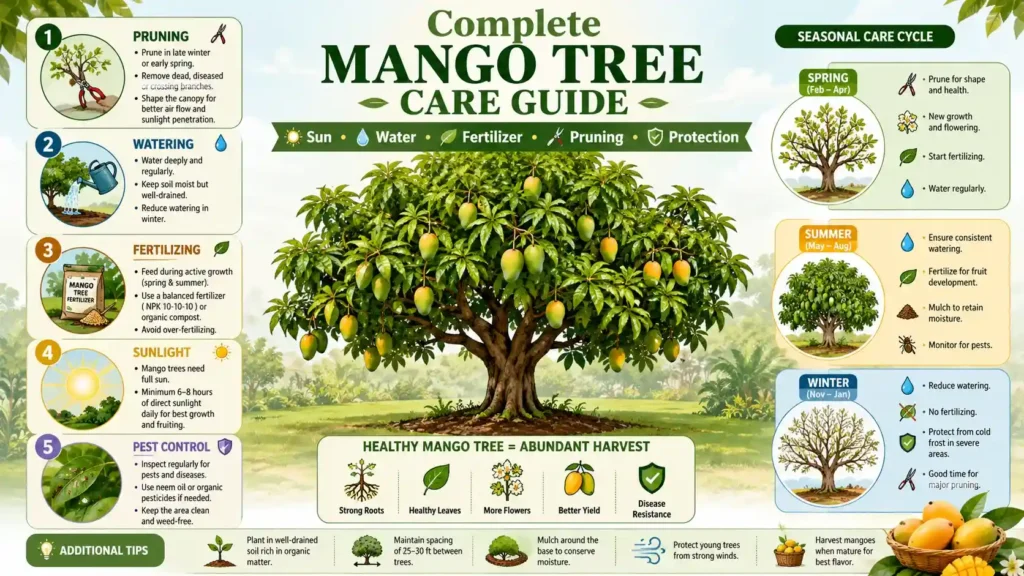
Pruning is essential for maintaining structure, improving airflow, and supporting fruit production.
Knowing when to prune mango trees in florida is important for avoiding stress during flowering and fruiting cycles. The best time is typically after harvest or during the dormant period.
Key pruning practices include:
- Removing dead or weak branches
- Shaping the canopy for better sunlight exposure
- Preventing overcrowding through regular pruning
- Encouraging balanced tree maintenance
Proper canopy management improves light penetration and reduces the risk of fungal diseases, resulting in healthier growth and better fruit quality.
Seasonal Mango Tree Care
Mango trees respond strongly to seasonal changes, especially in tropical and subtropical regions.
Effective seasonal care ensures stable growth and fruiting throughout the year.
Key practices in tropical gardening include:
- Adjusting watering based on rainfall patterns
- Monitoring nutrient needs during active growth phases
- Protecting trees during temperature drops
- Maintaining soil health through organic amendments
Following proper horticultural practices helps align tree care with natural growth cycles, improving both yield and tree longevity.
Indoor vs Outdoor Mango Care
Mango trees can be grown in different environments, but care methods vary significantly.
An indoor mango tree requires:
- Strong light exposure (often supplemented)
- Controlled watering schedules
- Container-based soil management
In contrast, outdoor gardening allows natural growth conditions and better fruit production, especially in warm climates.
Key differences:
- Indoor mango trees → limited growth, controlled environment
- Outdoor mango trees → full growth potential, natural fruiting cycles
Both methods fall under broader tropical plants care principles, but outdoor cultivation generally results in healthier and more productive trees when climate conditions are favorable.
Common Mango Tree Problems & Solutions
Most mango tree problems are caused by poor drainage, fungal diseases, pests, or nutrient deficiencies. Identifying issues early is key to maintaining a healthy and productive mango tree florida, especially in humid tropical conditions.
Common Pest Problems
Pests can significantly reduce fruit quality and overall tree health if not managed properly.
Effective pest management is essential for protecting mango trees throughout the growing season.
Common pests include:
- Fruit flies – Damage developing fruit and reduce harvest quality
- Mealybugs – Suck plant sap and weaken growth
- Mites – Cause leaf discoloration and stress
- Mango borers – Attack stems and branches, disrupting nutrient flow
Control strategies:
- Regular inspection of leaves and fruit
- Use of natural or targeted pest control methods
- Maintaining proper sanitation around the tree
Early detection is critical to prevent infestations from spreading.
Fungal Diseases & Prevention
Fungal infections are common in warm and humid climates like Florida.
Major fungal diseases affecting mango trees include:
- Anthracnose – Causes black spots on leaves, flowers, and fruit
- Powdery mildew – White fungal growth on leaves and buds
These diseases can severely reduce flowering and fruit production if not controlled.
Effective disease control methods:
- Ensure good airflow through proper pruning
- Avoid overhead watering during humid periods
- Apply preventive fungicides when necessary
- Remove infected plant material immediately
Proper hygiene and canopy management significantly reduce disease pressure.
Yellow Leaves, Root Rot & Slow Growth
Physiological issues often indicate underlying care problems.
Common symptoms include:
- Yellow leaves – Often linked to nutrient deficiency or poor drainage
- Root rot – Caused by excessive moisture and poor soil conditions
- Slow growth – May result from nutrient imbalance or environmental stress
Key causes:
- Poor soil drainage leading to water accumulation
- Lack of essential nutrients in the soil
- Overwatering or inconsistent irrigation practices
Correcting nutrient deficiency, improving soil structure, and managing watering habits can restore healthy growth over time.
Proper diagnosis and timely action are essential for maintaining a strong, productive mango tree.
How Fast Mango Trees Grow & Produce Fruit
Most mango trees begin producing fruit within 3–5 years, depending on variety, climate, and care practices. Growth speed and fruiting success in a mango tree florida environment are strongly influenced by sunlight, soil health, and consistent maintenance.
Mango Tree Growth Timeline
Mango trees follow a predictable but variable growth pattern based on conditions.
If you are asking how fast do mango trees grow, the answer depends on early care and environmental stability.
Typical mango time to grow stages:
- Year 1–2: Establishment phase (root and canopy development)
- Year 3–5: Rapid vegetative growth and first flowering in some varieties
- Year 5+: Stable fruit production phase
The mango tree growth rate is fastest during the early years when the tree is developing its structure. After maturity, growth slows but becomes more focused on fruit production.
Healthy trees in tropical climates grow faster due to:
- Consistent warmth
- High humidity
- Strong sunlight exposure
When Mango Trees Flower & Fruit
Flowering is a critical stage that determines fruit production success.
So, when do mango trees flower?
Mango trees typically flower in late winter to early spring, depending on climate and variety.
Related cycles:
- when do mango trees bloom → Usually during cooler dry months
- when do mango trees produce fruit → Fruit develops in late spring and matures through summer
Flowering is highly sensitive to temperature and weather stability. In Florida, the transition from dry to warm conditions triggers consistent blooming cycles in many cultivars.
Factors That Affect Fruit Production
Several biological and environmental factors influence yield quality and quantity.
Key drivers of fruit production include:
- Healthy flowering phase with strong bud development
- Effective pollination by insects and wind
- Proper nutrient balance during fruit development
- Adequate sunlight and irrigation management
Fruit development depends heavily on tree health during flowering. Stress, poor nutrition, or pest pressure can reduce fruit set significantly.
Pollination is another critical factor. While mango trees are self-pollinating to some extent, insect activity greatly improves fruit yield and quality.
Overall, consistent care and optimal growing conditions directly determine how quickly mango trees mature and how productive they become.
Mango Season & Harvesting in Florida
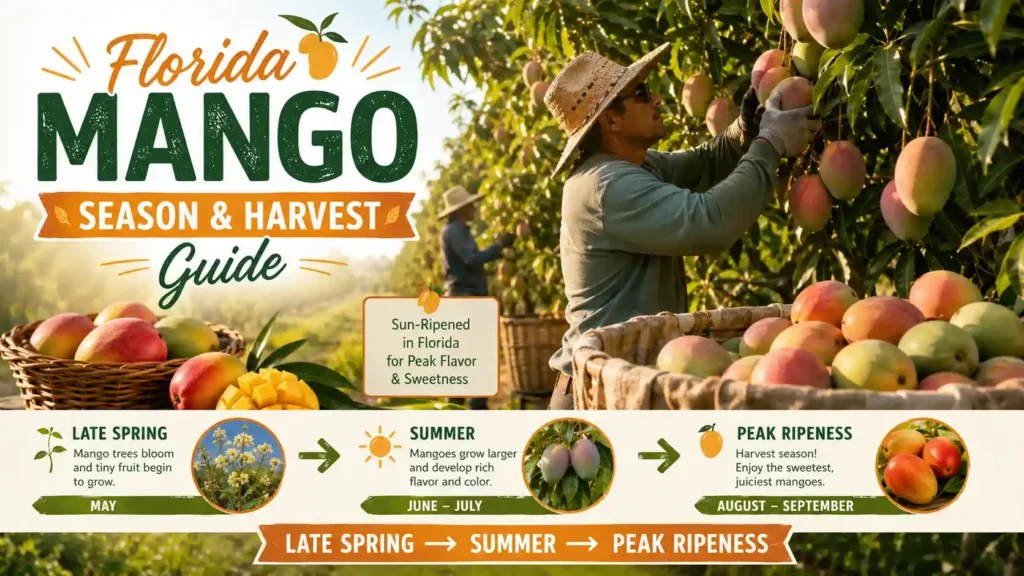
Florida mango season usually runs from late spring through summer, depending on the mango variety and regional climate.
Understanding the full mango tree harvest cycle can also help growers improve picking timing, fruit quality, and seasonal yield management.
In a typical mango tree florida setting, fruit production peaks when warm temperatures and humidity support full fruit development.
When Mangoes Ripen in Florida
Mango ripening in Florida follows a predictable seasonal pattern influenced by variety and weather conditions.
The mango season florida generally begins in late May and can extend through August or even September for late varieties.
Key timing insights:
- Florida mango season starts with early cultivars like Rosigold
- Mid-season varieties peak in June and July
- Late-season types like Keitt extend harvest into August–September
So, when are mangoes ripe in florida?
They typically ripen when the fruit reaches full size, changes color slightly (depending on variety), and begins to soften naturally on the tree.
The overall mango fruit season is closely tied to consistent tropical warmth, which supports proper fruit maturation.
How to Pick a Ripe Mango
Harvesting mangoes at the right time is essential for flavor and texture.
If you are wondering how to pick a ripe mango, focus on natural indicators rather than color alone.
Best practices for selection:
- Gently squeeze to check softness (should yield slightly)
- Look for a fruity aroma near the stem
- Observe natural color changes based on variety
- Avoid fruit that feels overly hard or too soft
To understand how to pick a sweet mango, choose fruit that is fully mature on the tree and shows a strong fragrance. Sweetness develops during the final ripening stage.
So, how do you pick a mango?
You gently twist or cut the fruit from the stem when it is mature, ensuring minimal damage to both fruit and tree.
Harvesting & Storage Tips
Proper handling after harvest is important for maintaining quality.
For successful fruit harvest, mangoes should be picked at the correct maturity stage to ensure optimal flavor and shelf life.
Key guidelines:
- Harvest when fruit reaches full size and maturity
- Handle ripe mangoes carefully to avoid bruising
- Keep harvested fruit in a cool, shaded area
- Allow natural fruit ripening at room temperature
Maintaining good handling practices preserves fruit quality and extends shelf life without artificial ripening methods.
Correct harvesting techniques ensure better taste, texture, and long-term storage performance.
Benefits of Growing Mango Trees in Florida
Mango trees provide fresh tropical fruit, landscape beauty, shade, and long-term value for home gardens. In a mango tree florida environment, they also contribute to year-round greenery and productive fruit production, making them one of the most valuable tropical fruit trees for homeowners.
Nutritional Benefits of Mangoes
Mangoes are not only delicious but also highly nutritious fruits that support overall health.
The nutritional value of mangoes is one of the main reasons they are considered premium tropical fruits.
Key nutritional benefits include:
- High in vitamins A for eye health and immunity
- Rich in vitamins C for skin repair and immune support
- Natural antioxidants that support overall wellness
- Hydrating fruit with essential minerals
Regular consumption of mangoes can support a balanced diet while offering natural sweetness and energy.
Landscaping & Backyard Orchard Benefits
Mango trees are widely used in home landscaping due to their beauty and productivity.
A well-grown mango tree enhances a backyard orchard with both aesthetic and functional value.
Key advantages include:
- Dense canopy providing natural shade
- Attractive evergreen foliage year-round
- Seasonal flowering and fruit display
- Continuous supply of homegrown fruits
In tropical gardening, mango trees are often considered centerpiece plants because they combine ornamental value with food production.
They also increase property appeal while offering long-term gardening rewards.
Environmental & Shade Benefits
Beyond fruit production, mango trees contribute positively to the environment.
They play an important role in maintaining a healthy tropical ecosystem by supporting biodiversity and improving local microclimates.
Key environmental benefits:
- Natural cooling through large canopy shade
- Improved air quality through oxygen production
- Habitat support for birds and pollinators
- Contribution to sustainable gardening practices
Additional environmental benefits include reduced soil erosion and improved land stability due to strong root systems.
Overall, mango trees provide a balanced combination of ecological value, shade, and sustainable long-term landscaping benefits.
Commercial Mango Farming & Groves in Florida
Florida is home to commercial mango groves that support local fruit production and tropical agriculture. These farms play an important role in supplying fresh mangoes across the state and contributing to the broader mango tree florida industry, especially in South Florida’s warm growing regions.
Mango Groves & Plantation Farming
Commercial mango production in Florida is centered around large-scale orchards designed for consistent fruit output.
mango groves in florida are typically located in warm, frost-free areas where tropical conditions support stable flowering and fruit development.
Key features of commercial farming include:
- Organized planting in large orchards
- High-density cultivation for maximum yield
- Advanced irrigation and nutrient management systems
- Regular pruning and pest control practices
A mango plantation focuses on structured production systems where tree spacing, variety selection, and soil management are carefully controlled.
The concept of plantation mango production ensures:
- Uniform fruit quality
- Efficient harvesting operations
- Consistent seasonal supply
- Better disease and pest management
Florida’s commercial mango industry benefits from ideal climate conditions and strong demand for fresh tropical fruit.
Mango Production in the United States
Mango cultivation in the U.S. is limited to specific warm regions, primarily due to climate requirements.
So, are mangoes grown in the united states?
Yes, but mainly in tropical and subtropical areas such as Florida, Hawaii, and parts of southern Texas and California.
When discussing mangoes grown in usa, Florida stands out as the primary commercial producer due to its suitable climate and established agricultural systems.
Key growing regions include:
- Florida (largest producer of commercial mangoes)
- Hawaii (small-scale tropical production)
- Southern Texas (limited cultivation in protected zones)
- Southern California (home gardens and experimental orchards)
So, where do mangoes grow in the us?
They grow primarily in regions with warm winters, minimal frost risk, and long growing seasons, with Florida being the most significant hub for both commercial and home cultivation.
Overall, U.S. mango production remains niche compared to global producers, but Florida plays a central role in supplying fresh domestic mangoes.
Safety, Toxicity & Precautions
Mango trees are generally safe, but sap exposure may cause irritation for sensitive people and pets. While a mango tree florida is widely grown for home gardens and landscapes, proper handling is important to avoid minor health issues related to plant sap and skin sensitivity.
Mango Tree Sap Irritation
Mango trees produce a natural sap that can cause reactions in some individuals.
The main concern is sap irritation, which occurs when contact is made with certain compounds found in the plant, especially in the bark, leaves, and unripe fruit.
Key points about mango sap:
- It may cause mild skin irritation in sensitive individuals
- Reactions are similar to poison ivy for some people
- Unripe fruit and freshly cut branches contain more active sap
People with higher skin sensitivity should take precautions when pruning or harvesting mango trees.
Safety tips:
- Wear gloves during pruning or harvesting
- Avoid direct contact with sap
- Wash skin immediately after exposure
- Be cautious when handling freshly cut branches
These simple steps reduce the risk of irritation while maintaining safe garden safety practices.
Pet & Child Safety
Mango trees are generally safe for home environments, but basic precautions are still important.
In terms of pet safety, mango fruit is safe for dogs and cats in small amounts, but seeds and large quantities should be avoided due to choking hazards or digestive issues.
For child safety, the main concerns include:
- Falling fruit from tall branches
- Contact with sap during harvesting
- Slippery ground under fruiting trees
General garden safety recommendations:
- Supervise children near fruiting trees
- Keep pets away from fallen fruit and seeds
- Harvest fruit regularly to prevent hazards
- Maintain clean ground around the tree
Overall, mango trees are considered safe additions to home gardens when proper handling and awareness are maintained.
Conclusion
With proper planting, sunlight, watering, fertilization, and pest management, mango trees can thrive beautifully in Florida’s tropical climate for decades. A well-maintained mango tree in florida becomes a long-term source of reliable harvests, landscape value, and sustainable fruit production.
When grown under the right conditions, florida mango trees consistently perform well due to the region’s warm weather and supportive environment for tropical gardening. Successful growing mangoes in florida depends on choosing the right variety, maintaining soil health, and following proper seasonal care practices.
Over time, mango trees reward growers with stable yields, attractive canopy growth, and high-quality fruit. With consistent attention to environmental needs, mango cultivation becomes one of the most rewarding practices in tropical and subtropical home landscapes.
FAQs
What is the best mango variety to grow in Florida?
The best mango varieties for Florida include disease-resistant and climate-adapted cultivars like Carrie, Keitt, Pickering, and Cogshall. These perform well in warm mango tree florida conditions and offer strong fruit quality.
How long does it take for a mango tree to bear fruit?
Most mango trees take about 3–5 years to produce fruit, depending on variety, care, and climate conditions.
Can mango trees grow in pots indoors?
Yes, mango trees can grow in containers as an indoor mango tree, especially dwarf types like condo mango varieties. However, they require strong light and careful watering.
Do mango trees need full sun?
Yes, mango trees need full sun with at least 6–8 hours of direct sunlight daily for healthy growth and fruit production.
When are mangoes ripe in Florida?
Mangoes in Florida typically ripen from late spring through summer, depending on the variety and local mango season florida conditions.
How tall do mango trees grow?
Mango trees can grow 30–100 feet tall, depending on variety and pruning practices. Dwarf types stay much smaller.
What fertilizer is best for mango trees in Florida?
A balanced fertilizer such as 10-10-10 or 8-3-9, along with organic compost, works best for mango trees in Florida.
Can mango trees survive cold weather?
Mango trees have limited cold tolerance. Young trees are especially sensitive and may require frost protection in cooler regions.
Why are mango tree leaves turning yellow?
Yellow leaves are often caused by overwatering, poor drainage, or nutrient deficiencies, especially in sandy soils.
How often should mango trees be watered?
Young trees should be watered 2–3 times per week, while mature trees need deep watering every 7–14 days depending on weather and soil moisture.

Written by the LeafyHeaven Editorial Team
LeafyHeaven shares practical gardening tips and simple plant care guides to help you grow, nurture, and enjoy your plants with ease. Our goal is to make gardening feel natural, approachable, and rewarding for everyone.


[…] For practical insights on zone-specific tropical cultivation, check out 5+ Secrets to Growing a Thriving Mango Tree in Florida […]
[…] for scaling your cultivation goals. If you’re thinking about expanding beyond papaya, learning how to grow mango trees successfully can help you strengthen your tropical fruit production strategy with another high-value […]
[…] and you’ll have fresh-squeezed juice or margaritas in 1-3 years. In warmer regions like Florida, adding a mango tree can further strengthen your tropical garden and provide long-term fruit production alongside citrus […]