
Introduction
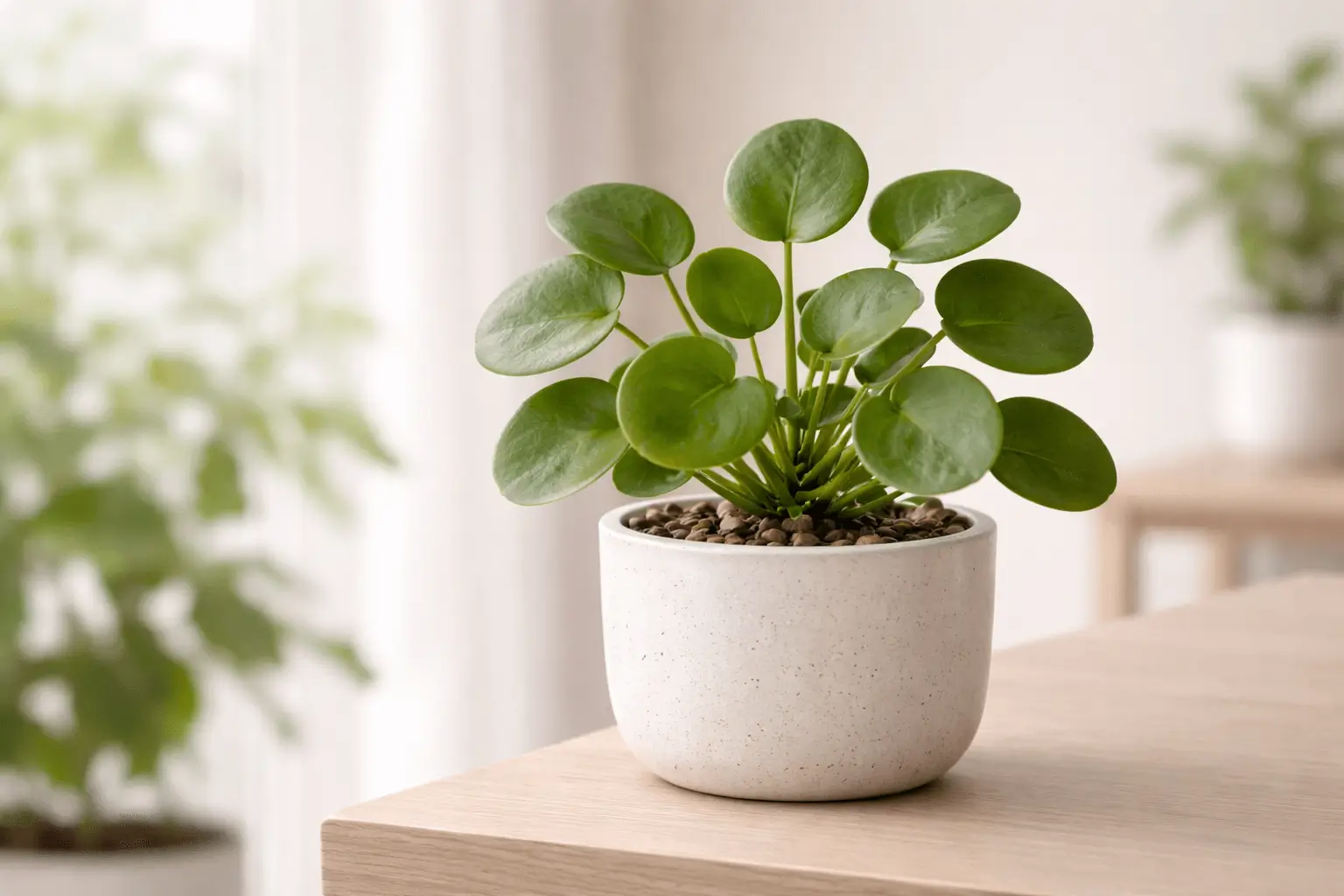
Mini pilea plant care involves meeting a few essential needs—balanced light, careful watering, suitable soil, and simple ongoing maintenance—to keep this compact houseplant healthy indoors. The mini pilea, often called a miniature pilea, is popular as an indoor plant because of its small size, tidy growth, and decorative leaves that fit easily into modern living spaces. It works well on shelves, desks, and windowsills without overwhelming the room. In this care guide, readers will learn how to create the right growing conditions, avoid common care mistakes, and understand what this plant needs at each stage of growth. The goal is to help you maintain a neat, thriving mini pilea plant with consistent, practical care.
What Is a Mini Pilea Plant
A mini pilea plant is a compact version of the traditional pilea, grown and maintained for its smaller size and tidy indoor form. It belongs to the same plant group as standard pilea but is favored for limited spaces because it stays shorter and more controlled. Mini pilea plant care focuses on maintaining this compact structure while supporting healthy leaf growth and steady development indoors.
Mini Pilea vs Regular Pilea
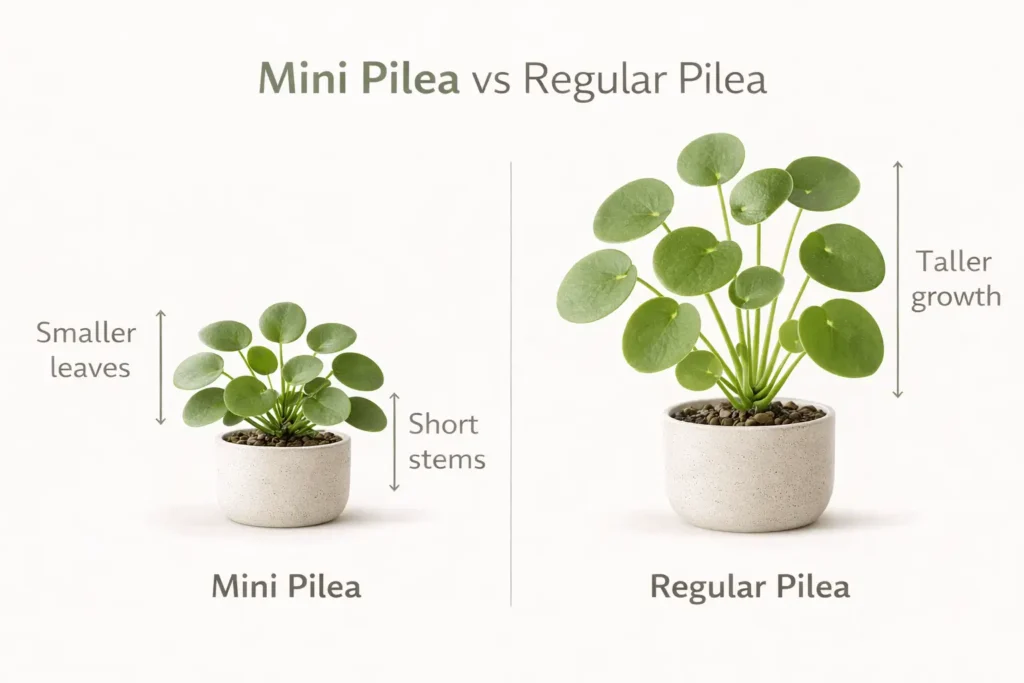
The main difference between a mini pilea and a standard pilea lies in growth size and overall appearance. A regular pilea typically grows taller with a wider spread, producing larger leaves and longer stems over time. In contrast, a mini pilea remains noticeably smaller, with shorter stems and a more contained shape. Its leaves are also slightly reduced in size, giving the plant a denser, more refined look that suits indoor settings where space is limited.
Miniature Pilea Plant Characteristics
Miniature pilea plants are known for their rounded to slightly oval leaves, smooth leaf surfaces, and balanced growth habit. The leaves grow closely along the stems, creating a compact, bushy appearance rather than a tall or sprawling form. This controlled growth makes the plant easy to manage and visually appealing. Because it stays small and adapts well to indoor conditions, the mini pilea is especially suitable for shelves, desks, and small rooms where larger plants may feel overwhelming.
Ideal Light Conditions for Mini Pilea Plant Care
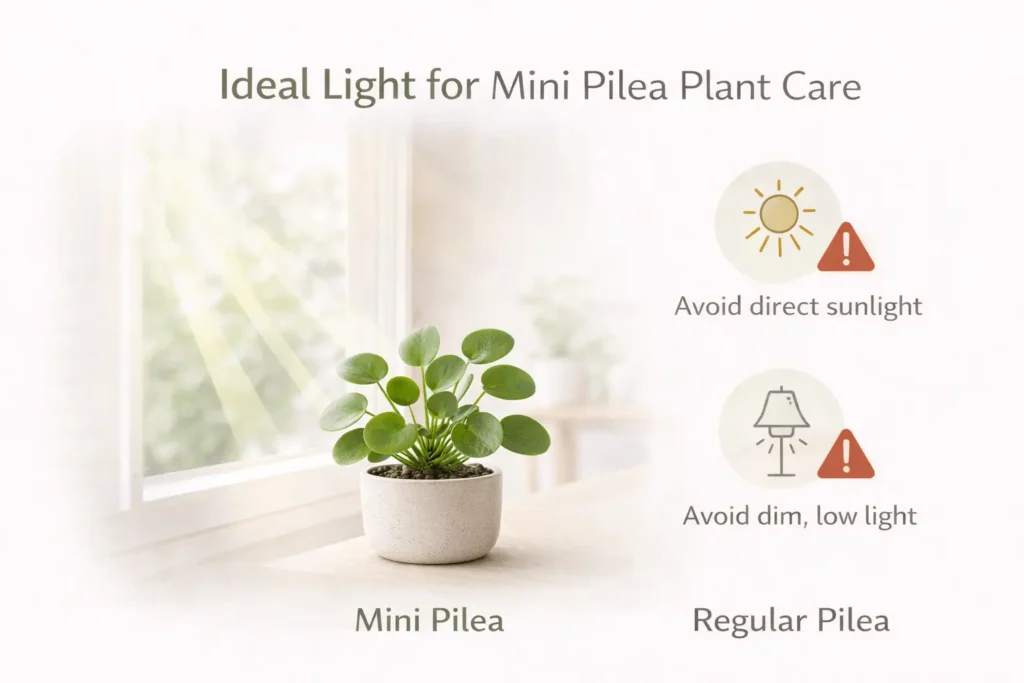
Providing the right light is a key part of successful mini pilea plant care. Light directly affects leaf color, growth speed, and overall plant shape. When light conditions are balanced, the plant maintains compact growth and healthy foliage without stress or damage.
Pilea Light Requirements Explained
The best light type for healthy growth is bright, indirect light. Mini pilea plants naturally grow in environments where sunlight is filtered, not harsh or direct. Indirect light supports steady photosynthesis while protecting the leaves from scorching. Direct sun, especially during midday hours, can be too intense and may cause leaf discoloration or burning. Low light, on the other hand, slows growth and weakens the plant structure. Indirect light works best because it provides enough energy for growth without overwhelming the plant.
Pilea Lighting Requirements Indoors
For indoor placement, position the mini pilea near a window that receives bright but filtered light. East-facing windows are ideal, while south- or west-facing windows should be used with sheer curtains to soften direct sun. North-facing windows may work if the light is consistent but not too dim. Signs of too much light include faded leaves, brown edges, or crispy spots. Too little light often leads to dull leaf color, stretched stems, and uneven growth. Adjusting placement early helps maintain healthy, balanced development.
Other indoor plants such as dracaena fragrans also benefit from stable lighting and positioning to maintain strong, upright growth.
Watering Guidelines for Mini Pilea
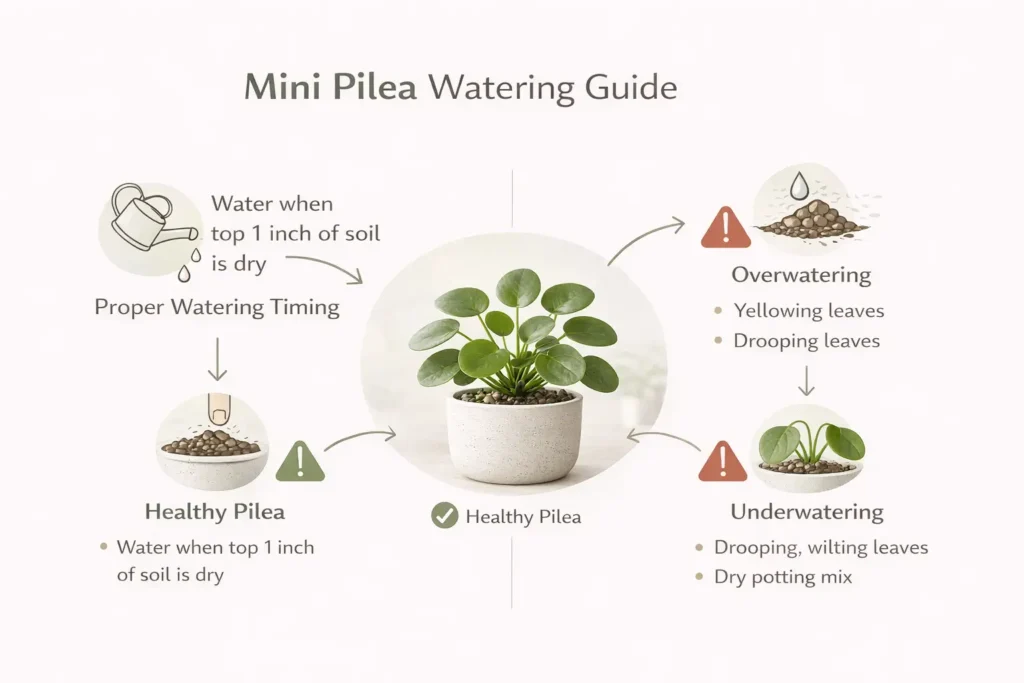
Proper watering is essential for maintaining healthy roots and consistent growth in mini pilea plant care. This plant prefers evenly moist soil but does not tolerate excess water sitting around its roots. A balanced approach helps prevent stress, leaf problems, and long-term root damage.
How Often to Water Mini Pilea
Mini pilea should be watered when the top layer of soil feels dry to the touch. In most indoor environments, this means watering once the upper one to two inches of soil have dried out. During warmer months, the plant uses water more quickly and may need more frequent watering. In cooler seasons, growth slows, so watering should be reduced to prevent soggy soil. Always adjust the schedule based on temperature, light, and indoor humidity rather than following a fixed routine.
Common Watering Mistakes to Avoid
Overwatering is the most common issue and occurs when soil stays wet for extended periods, leading to poor oxygen flow and root rot. Underwatering, while less severe, causes roots to dry out, resulting in drooping or curling leaves. Healthy root systems need moisture and air at the same time. Using well-draining soil and allowing excess water to drain completely helps protect root health and supports stable plant growth.
Understanding how watering, soil, and light work together becomes easier when you follow the fundamentals in a complete gardening and plant care guide, especially for compact indoor plants.
Best Soil and Potting Setup
A proper soil and potting setup plays a major role in successful mini pilea plant care. The right combination supports healthy roots, prevents water-related issues, and allows steady growth in an indoor environment.
Ideal Soil Mix for Miniature Pilea
Miniature pilea requires well-draining soil to prevent excess moisture from building up around the roots. Good drainage helps maintain airflow and reduces the risk of root rot. The soil texture should be light and loose, allowing water to pass through easily while still holding enough moisture for the plant. Proper aeration is important because compacted soil restricts oxygen, which can weaken the root system and slow growth.
Choosing the Right Pot
The pot size for a mini pilea should match its compact root system. A pot that is slightly larger than the root ball is ideal, as oversized containers can hold excess water and delay drying. Drainage holes are essential because they allow excess water to escape after watering. Without proper drainage, water collects at the bottom of the pot, increasing the risk of root damage and long-term plant stress.
Temperature and Humidity Needs
Maintaining stable temperature and humidity conditions supports consistent growth and prevents stress in mini pilea plant care. This plant adapts well to normal indoor environments when extremes are avoided.
Ideal Indoor Temperature Range
Mini pilea prefers moderate indoor temperatures that remain consistent throughout the day. For healthy growth, typical room temperatures are suitable, as sudden temperature changes can slow growth or cause leaf stress. Keeping the plant away from cold drafts, heating vents, and direct airflow helps maintain balanced conditions. Stable temperatures support steady development and reduce the risk of leaf drop or wilting.
Humidity Requirements
Mini pilea does not require high humidity and generally performs well in average indoor humidity levels. Extra humidity is usually unnecessary unless the air becomes extremely dry. If indoor air feels dry for extended periods, simple steps such as grouping plants together or placing the plant away from direct heat sources can help maintain comfortable moisture levels. Consistent humidity supports healthy leaves without encouraging excess moisture around the roots.
Fertilizing Mini Pilea Plants
Fertilizing supports steady growth and healthy foliage when done correctly as part of mini pilea plant care. Because this plant has modest nutrient needs, a light and controlled approach works best.
When and How to Fertilize
Mini pilea benefits from a balanced, diluted fertilizer applied during its active growing period. Fertilizing at regular but spaced intervals helps supply essential nutrients without overwhelming the roots. During periods of slow growth, fertilization should be reduced or paused, as the plant uses fewer nutrients. Applying fertilizer to already moist soil helps protect the roots and allows nutrients to distribute evenly.
Signs of Over-Fertilization
Excess nutrients can cause visible leaf problems, including browning edges, yellow patches, or leaf curling. Salt buildup in the soil may also interfere with water absorption, leading to stressed roots. If these signs appear, reducing fertilizer frequency and flushing the soil with water can help restore balance and protect long-term plant health.
Common Problems in Mini Pilea Plant Care
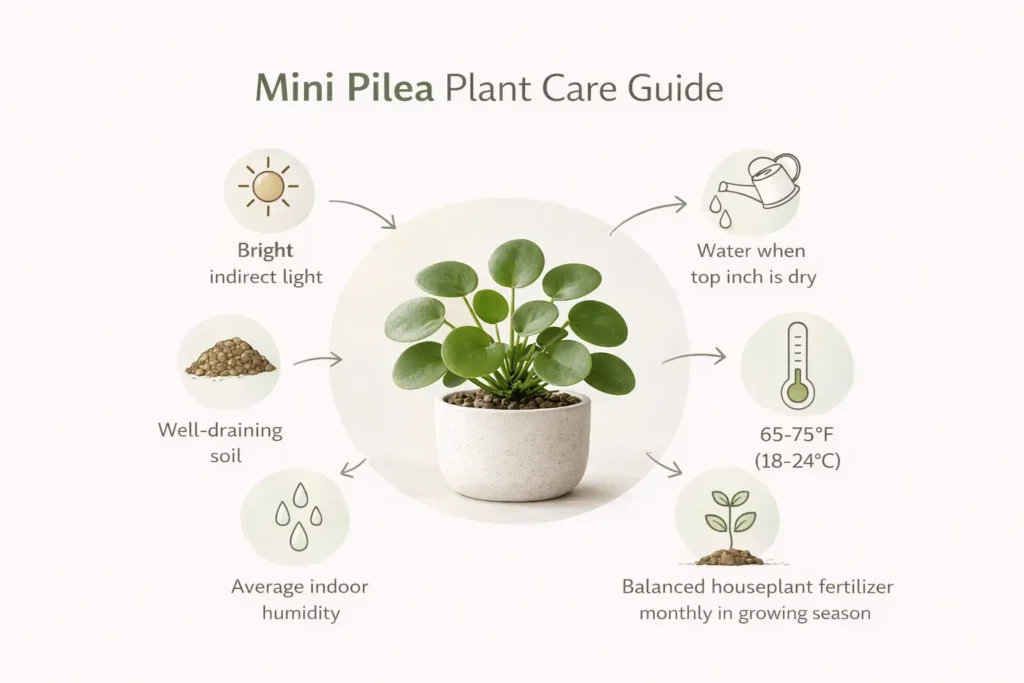
Even with proper care, mini pilea plants can show signs of stress when growing conditions are slightly off. Identifying problems early helps correct issues before they affect long-term plant health.
Yellow or Drooping Leaves
Yellow or drooping leaves are often linked to light, water, or soil conditions. Insufficient light can cause leaves to lose color, while excessive light may weaken leaf structure. Overwatering is a common cause of drooping, as saturated soil restricts oxygen to the roots. Poorly draining soil can worsen the issue by trapping moisture around the root system. Adjusting light exposure, improving drainage, and allowing soil to dry slightly between watering usually resolves this problem.
Similar plant stress symptoms can also be seen in other houseplants, where issues like drooping are explained in why my plant is drooping, often caused by watering imbalance.
Slow Growth or Leggy Appearance
Slow growth or a leggy appearance is typically caused by low light or inconsistent care. When light levels are too low, the plant stretches toward the light source, resulting in long, weak stems. Irregular watering or nutrient imbalance can also slow development. Providing steady indirect light and maintaining a consistent care routine encourages compact growth and a fuller, healthier appearance.
Pruning and Maintenance Tips
Regular pruning and simple maintenance help maintain shape and support long-term health in mini pilea plant care. These practices keep the plant compact, clean, and evenly developed indoors.
How to Prune Mini Pilea Safely
Pruning encourages compact growth by controlling stem length and promoting fuller development. Trimming back overly long or uneven stems helps the plant maintain its tidy form. Always use clean, sharp tools to avoid damaging healthy tissue. Light, careful pruning is usually sufficient and prevents the plant from becoming leggy over time.
General Maintenance Routine
A basic maintenance routine keeps the plant looking healthy and growing evenly. Leaves should be cleaned occasionally to remove dust, allowing better light absorption. Rotating the plant regularly helps ensure all sides receive equal light, preventing uneven growth and supporting a balanced, attractive shape.
Conclusion — Keeping Mini Pilea Healthy Long-Term
Proper mini pilea plant care depends on meeting a few core needs consistently. Providing bright indirect light, controlled watering, well-draining soil, and a stable indoor environment helps the plant maintain compact growth and healthy foliage. Each care element works together to support strong roots, balanced leaf development, and overall plant stability.
Consistency and observation are especially important. Small changes in light, moisture, or temperature can affect growth over time, so paying attention to early signs of stress allows for quick adjustments. With steady care and routine maintenance, a mini pilea can thrive indoors for years, remaining an attractive and manageable plant in any indoor space.
FAQs
How often should I water a mini pilea plant?
Water a mini pilea when the top one to two inches of soil feel dry. This prevents excess moisture around the roots while keeping the plant evenly hydrated.
What kind of light is best for mini pilea?
Bright, indirect light is best for mini pilea plant care. It supports healthy growth without causing leaf burn or stress from direct sun.
Can mini pilea grow in low light?
Mini pilea can survive in low light, but growth will slow and stems may become leggy. For best results, provide consistent indirect light.
Why are my mini pilea leaves turning yellow?
Yellow leaves are commonly caused by overwatering, poor drainage, or improper light levels. Checking soil moisture and light exposure usually resolves the issue.
Does mini pilea need fertilizer year-round?
No, mini pilea does not need fertilizer year-round. Fertilizing during active growth is sufficient, and feeding should be reduced when growth slows.

Written by the LeafyHeaven Editorial Team
LeafyHeaven shares practical gardening tips and simple plant care guides to help you grow, nurture, and enjoy your plants with ease. Our goal is to make gardening feel natural, approachable, and rewarding for everyone.