
Introduction
The snow pear tree is a widely admired ornamental tree known for its elegant structure and seasonal beauty. Botanically identified as pyrus nivalis snow pear tree or simply pyrus nivalis, it belongs to the ornamental pear group valued for decorative landscapes rather than fruit production. Gardeners and landscape designers appreciate its striking spring blossoms, dense foliage, and attractive snow pear autumn color that adds visual interest throughout the year. The tree is especially popular in regions such as snow pear tree Australia, where it performs well in urban plantings and residential gardens. With manageable size, seasonal flowers, and adaptable growth habits, the snow pear tree has become a reliable ornamental choice for streetscapes, parks, and modern garden designs.
What Is a Snow Pear Tree?
Botanical Classification and Origin
The Pyrus nivalis snow pear belongs to the Rosaceae family, the same botanical group that includes apples and traditional pear trees. Its scientific name, Pyrus nivalis, refers to a hardy ornamental species historically native to parts of Europe and western Asia.
Unlike fruit-producing pears, the pyrus snow pear tree is classified among types of pear trees ornamental, which are primarily grown for decorative purposes rather than edible harvest.
Key characteristics include:
- Compact and symmetrical canopy
- Dense green foliage
- Abundant spring blossoms
- Seasonal ornamental appeal
While it may produce small fruit, its primary value lies in its landscape aesthetics.
Why It Is Called Snow Pear
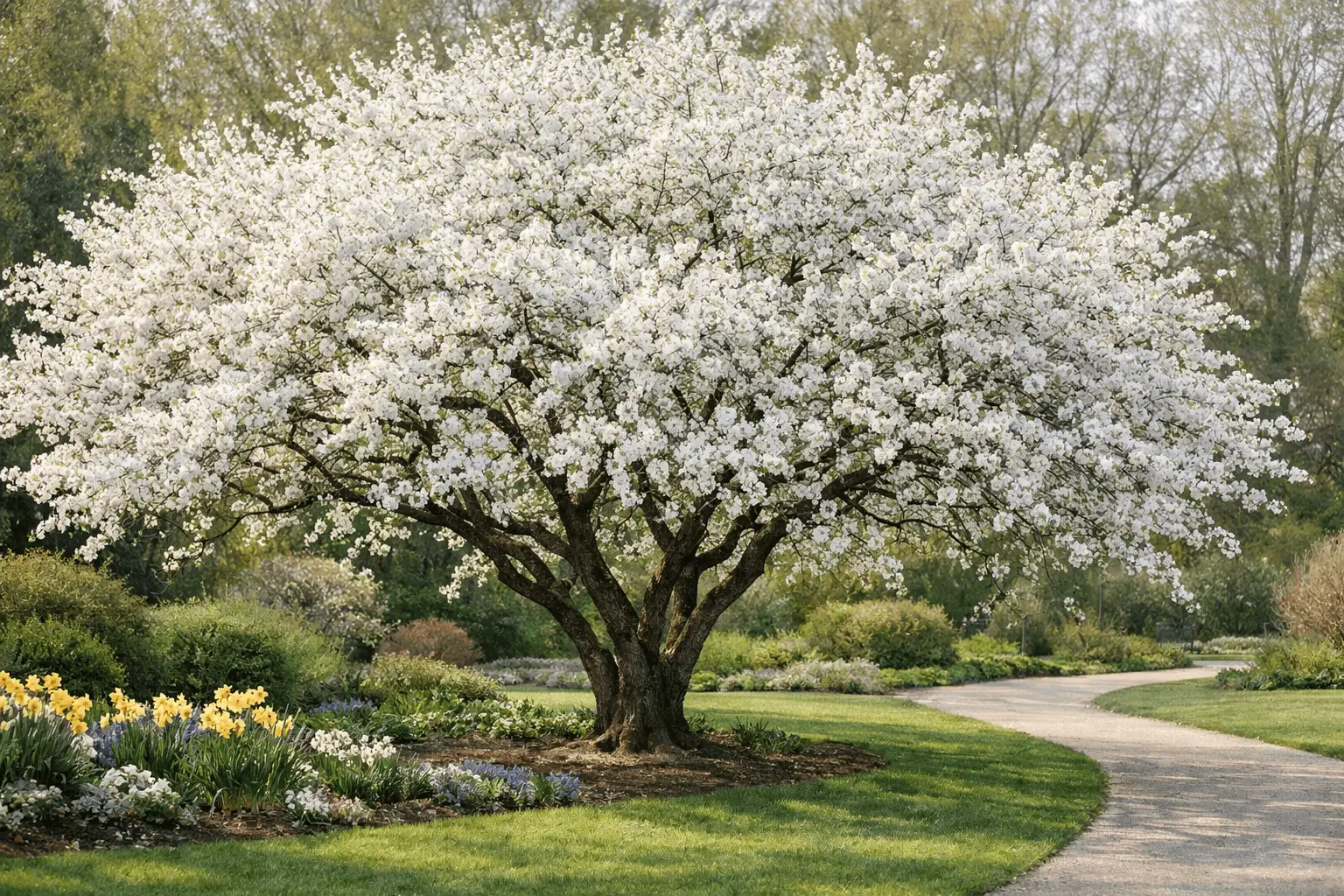
The name snow pear tree comes from the tree’s striking floral display during spring. Clusters of bright white snow pear tree flowers cover the branches, creating an appearance similar to fresh snow on the canopy.
These blossoms typically emerge before or alongside new foliage, forming a dense white layer that makes the tree visually dramatic during early spring bloom periods.
Snow Pear Tree Size, Height and Growth Rate
Average Snow Pear Tree Size and Height
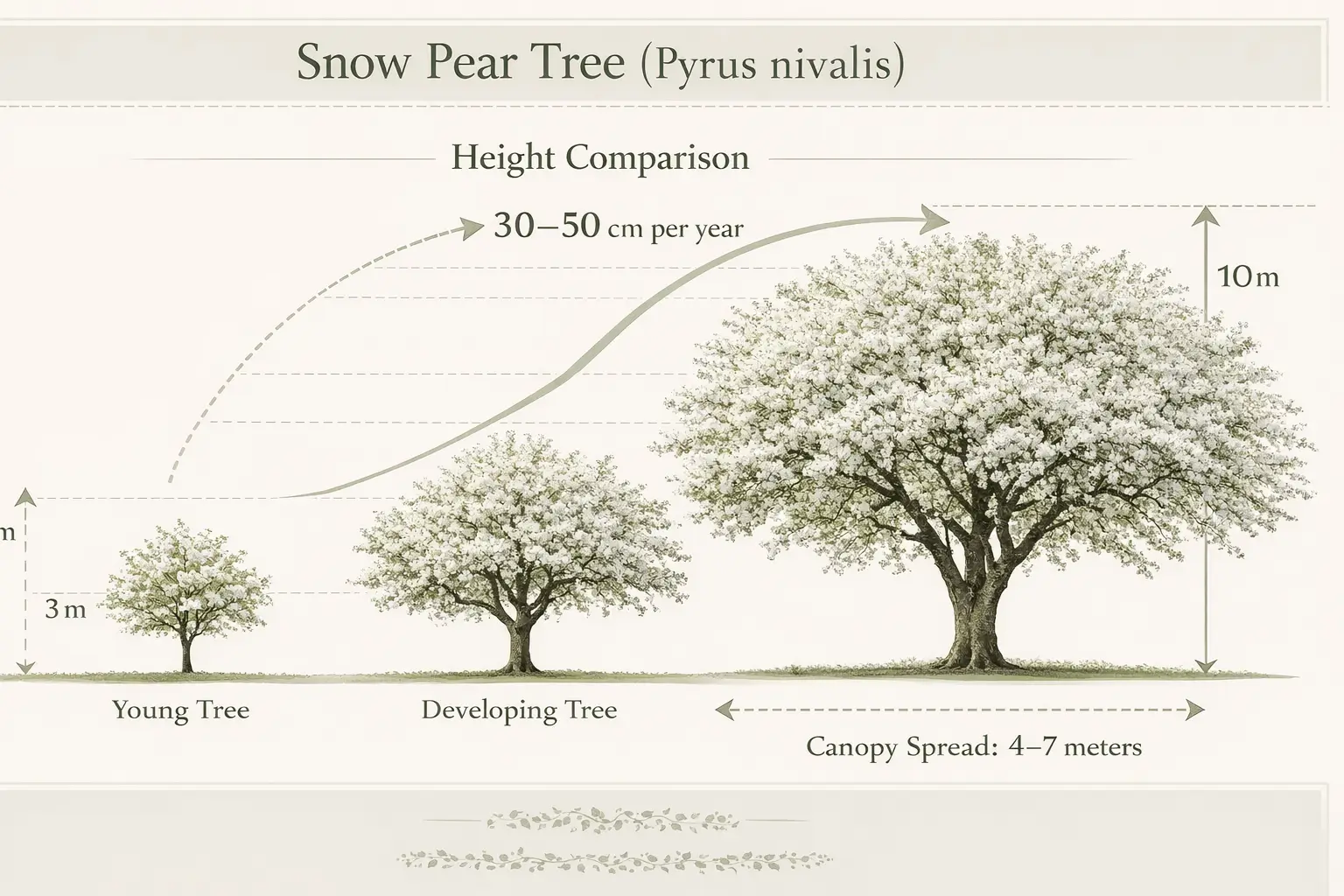
The snow pear tree size makes it suitable for both residential landscapes and urban plantings.
Typical growth characteristics include:
- Snow pear tree height: 6–10 meters (20–33 feet)
- Canopy spread: 4–7 meters (13–23 feet)
- Rounded or oval crown structure
A mature snow pear tree develops a balanced canopy that provides moderate shade while maintaining a clean architectural shape often preferred in ornamental landscapes.
Snow Pear Tree Growth Rate
The snow pear tree growth rate is considered moderate. Under favorable conditions, the tree typically grows:
- Approximately 30–50 cm (12–20 inches) per year
Growth speed depends on:
- Soil quality
- Sunlight exposure
- Water availability
- Climate conditions
With proper care, the tree reaches its mature form within a decade. Gardeners often compare ornamental trees based on growth habits, and you can also explore Fast Growing Evergreen Trees Australia to find other landscape-friendly tree options.
Dwarf Snow Pear Tree Varieties
A dwarf snow pear tree is a compact form designed for smaller spaces.
Common features include:
- Reduced height and canopy spread
- Suitable for small gardens and courtyards
- Ideal for urban landscaping or decorative plantings
These varieties maintain the same ornamental blossoms and foliage but require less space.
Snow Pear Tree Fruit and Seasonal Appearance
Does the Snow Pear Tree Produce Fruit?
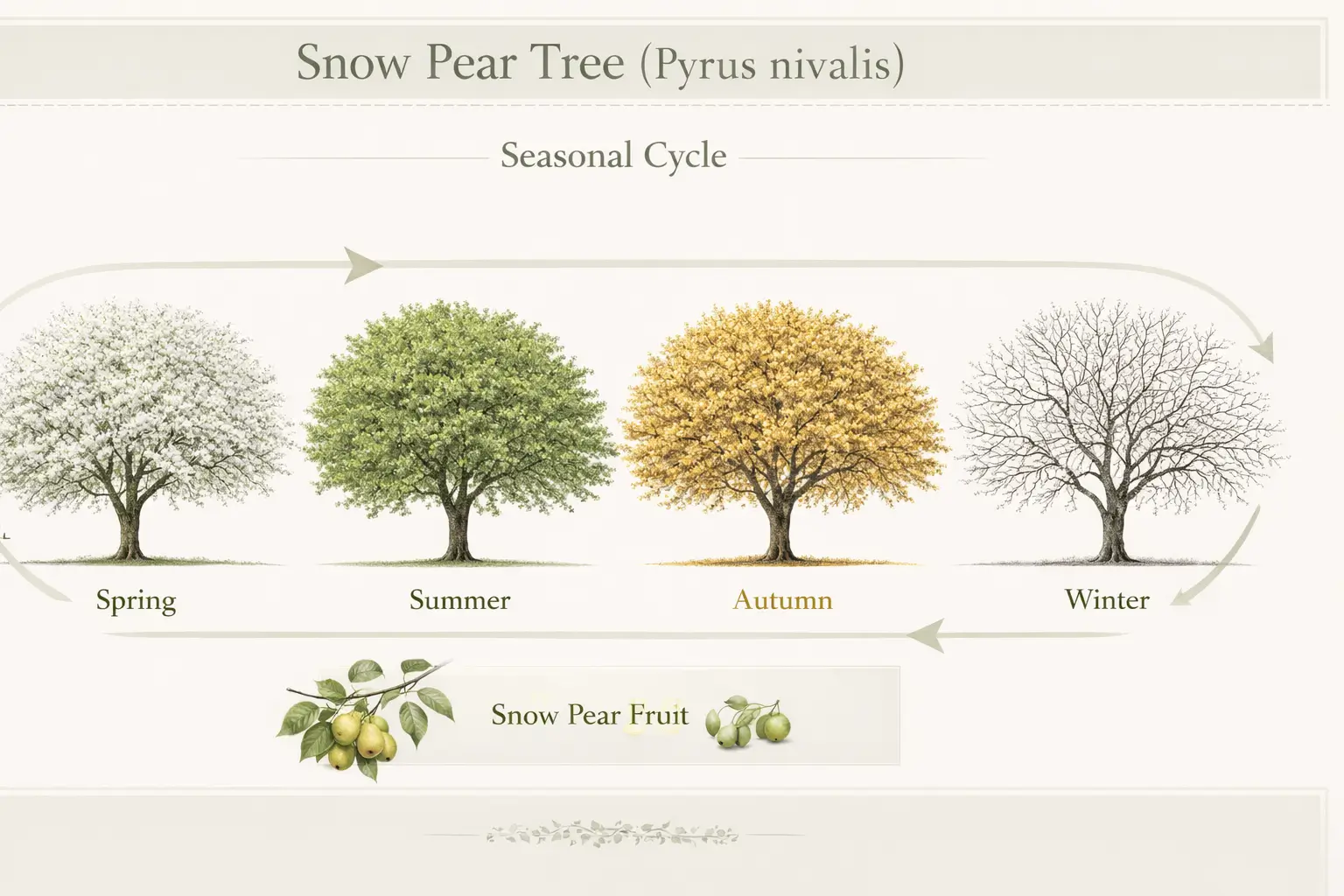
Yes, the snow pear tree fruit does develop after flowering. The small fruits produced are often referred to as snow pear fruit or pyrus nivalis fruit.
However, these fruits are typically:
- Small and hard
- Not commonly consumed
- Mainly decorative
Their primary role is ornamental rather than culinary.
Seasonal Changes and Autumn Color
The snow pear autumn display is another reason gardeners value this tree.
Seasonal progression includes:
- Spring: dense white blossoms
- Summer: lush green foliage
- Autumn: yellow, bronze, or reddish foliage tones
- Winter: clean branch structure
This seasonal transition creates year-round visual interest in landscapes.
Snow Pear Tree Root System
Structure of the Snow Pear Root System
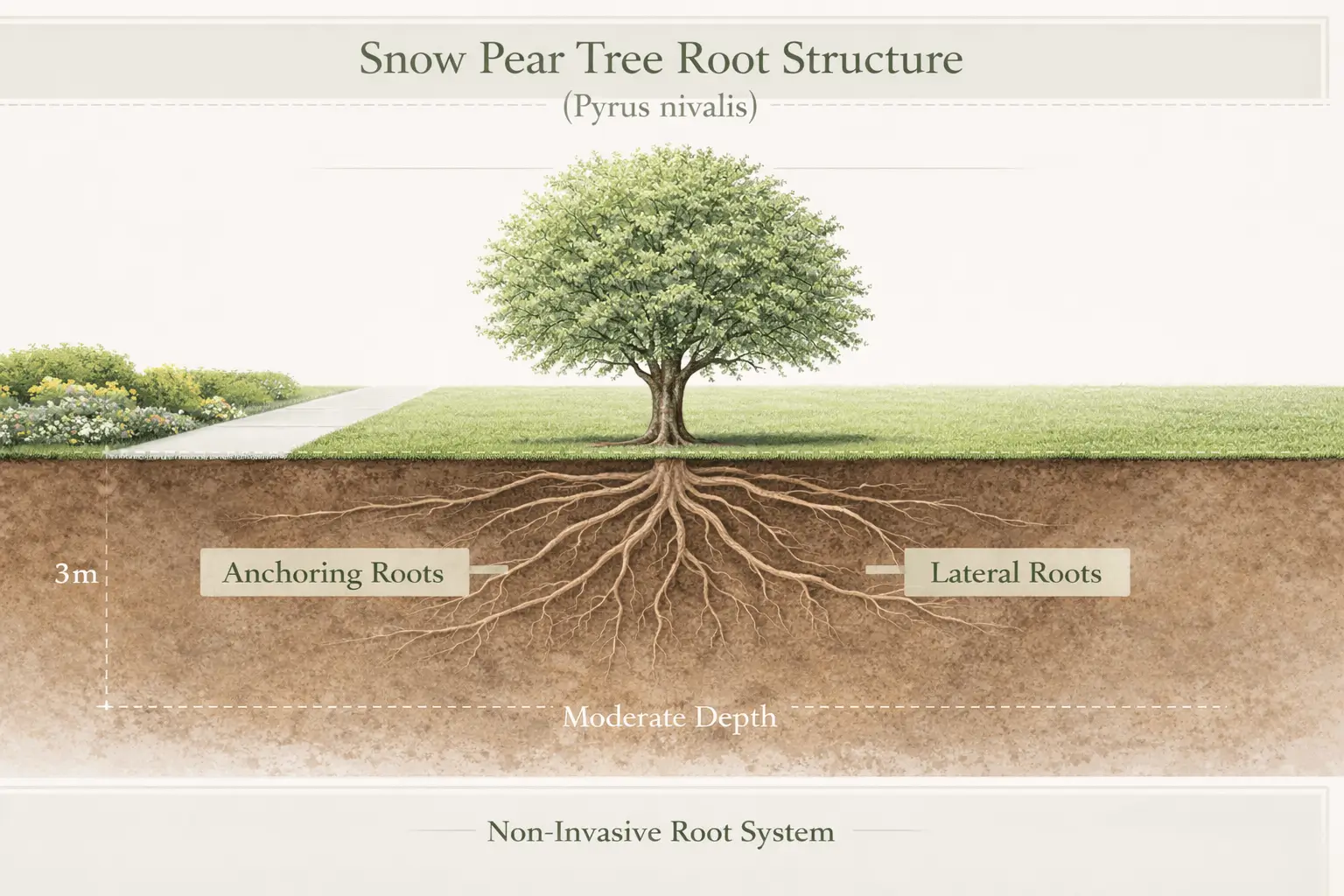
The snow pear tree root system is generally moderate in depth and spread.
Typical characteristics:
- Strong anchoring roots
- Moderate lateral root spread
- Adaptable to different soil conditions
Roots usually develop well in well-drained soil environments.
Is the Root System Invasive?
The snow pear root system is not considered highly invasive.
When planted correctly:
- It rarely damages sidewalks or foundations
- Safe for residential garden planting
- Suitable for street tree installations
Proper spacing from structures ensures healthy growth and minimal root interference.
Snow Pear Tree Smell and Flower Characteristics
Why the Snow Pear Tree Has a Strong Smell
During peak flowering, the snow pear tree smell becomes noticeable. The blossoms release a distinct scent produced by compounds that help attract pollinators.
Although some people describe the scent as strong or unusual, it typically lasts only during the flowering period.
Flowering Season and Pollination
The snow pear tree flowers appear in early to mid-spring.
These blossoms provide several ecological benefits:
- Attract bees and pollinators
- Support early seasonal insect activity
- Contribute to biodiversity in gardens
The mass blooming effect also enhances the tree’s ornamental appeal.
Common Snow Pear Tree Problems
Diseases and Environmental Stress
Like many ornamental trees, snow pear tree problems may occur due to environmental conditions.
Common pyrus nivalis problems include:
- Fungal leaf spots
- Drought stress
- Poor soil drainage
- Heat stress in extreme climates
Proper planting conditions reduce most disease risks.
Maintenance Issues
Some additional maintenance challenges may include:
- Leaf discoloration from nutrient deficiencies
- Pest presence such as aphids or scale insects
- Reduced flowering if pruning is incorrect
Regular inspection and balanced soil nutrition help maintain tree health.
How to Prune a Snow Pear Tree
Best Time to Prune
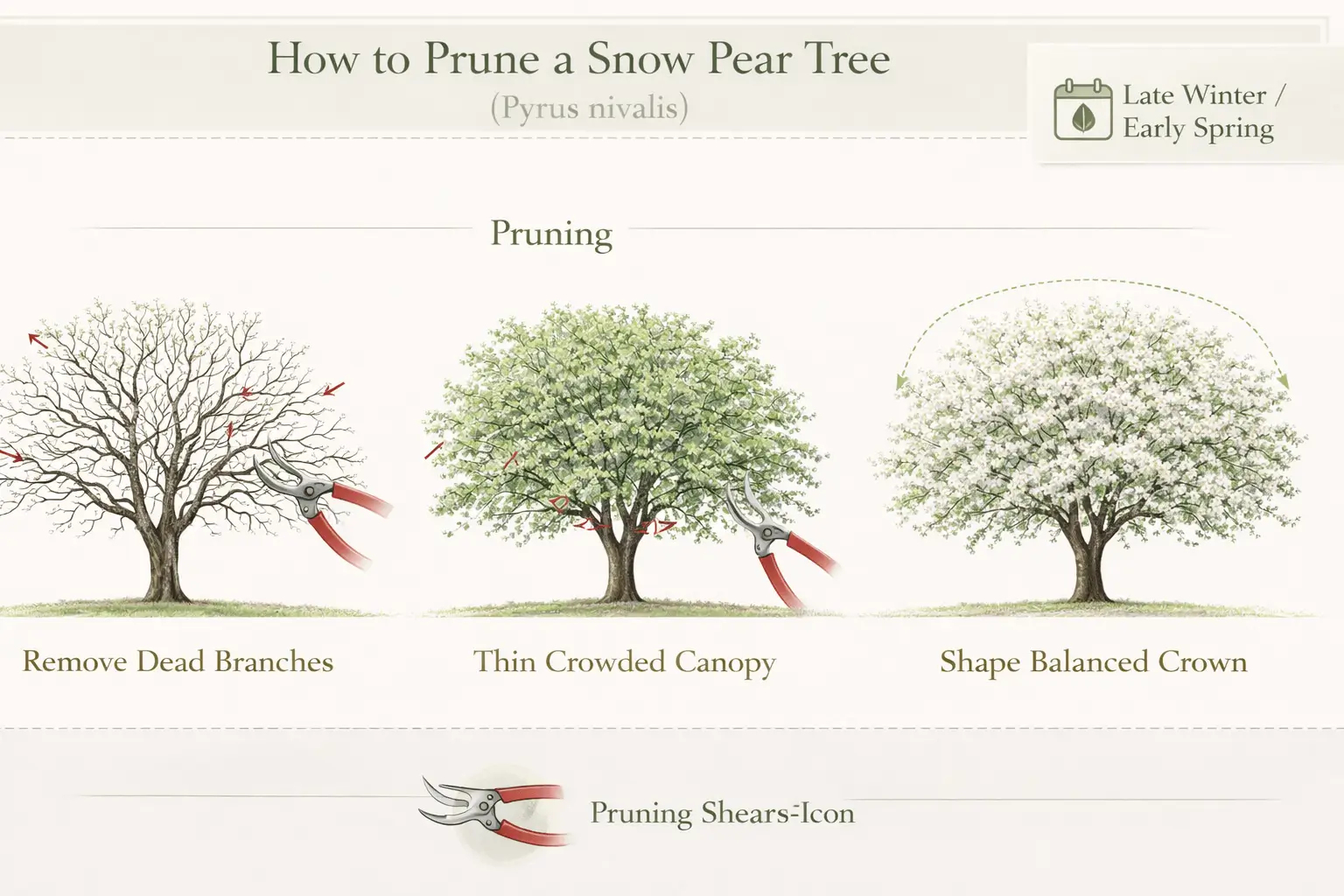
Understanding how to prune a snow pear tree begins with choosing the right timing.
The best pruning periods are:
- Late winter
- Early spring before new growth begins
This timing reduces stress and encourages healthy development.
Proper Pruning Technique
To maintain shape and structure:
- Remove dead or damaged branches
- Thin crowded interior growth
- Maintain a balanced canopy
- Avoid excessive cutting during one season
Careful pruning supports airflow, sunlight penetration, and long-term tree health.
Growing Snow Pear Trees in Australia
Climate Suitability
The snow pear tree Australia climate conditions support healthy growth because the tree adapts well to temperate regions.
It performs best in:
- Full sun exposure
- Well-drained soils
- Mild to warm climates
These conditions promote strong flowering and consistent seasonal foliage.
Landscaping Uses
The ornamental snow pear is widely used in landscape design due to its clean shape and reliable seasonal display.
Common uses include:
- Street tree plantings
- Garden focal points
- Residential yard landscaping
- Urban park tree lines
Its balanced canopy and decorative flowers make it a practical and attractive ornamental choice. If you are exploring more ornamental trees suited to Australian gardens, you may also enjoy discovering Small Trees Australia that thrive in modern landscapes.
Conclusion
The snow pear tree is valued as an ornamental landscape tree due to its elegant form, seasonal flowers, and manageable growth habits. With spring blossoms that resemble snowfall, attractive foliage, and vibrant snow pear autumn colors, it provides year-round visual interest in gardens and urban landscapes. Its moderate height, adaptable pyrus nivalis growth characteristics, and relatively non-invasive root system make it suitable for residential planting and streetscapes. Whether used in decorative garden designs or city plantings, the snow pear tree remains a dependable choice for landscapers and gardeners seeking a visually striking yet practical ornamental tree. For more practical growing tips and plant maintenance advice, explore our complete Gardening & Plant Care Guide for Thriving Plants to build a healthier and more beautiful garden.
FAQs
How tall does a snow pear tree grow?
A snow pear tree usually grows about 6–10 meters (20–33 feet) tall, with branches spreading about 4–7 meters wide.
Does a snow pear tree produce edible fruit?
It produces small fruits, but they are not usually eaten. The tree is mainly grown for decoration.
Is the snow pear tree root system invasive?
No, the roots are usually not invasive and normally do not damage sidewalks or foundations when planted at a proper distance.
Why does the snow pear tree smell during flowering?
The flowers release a natural smell in spring that helps attract pollinators like bees.
How fast does a snow pear tree grow?
It grows at a moderate rate, usually about 30–50 cm per year.
When should you prune a snow pear tree?
The best time to prune it is in late winter or early spring before new growth starts.

Written by the LeafyHeaven Editorial Team
LeafyHeaven shares practical gardening tips and simple plant care guides to help you grow, nurture, and enjoy your plants with ease. Our goal is to make gardening feel natural, approachable, and rewarding for everyone.