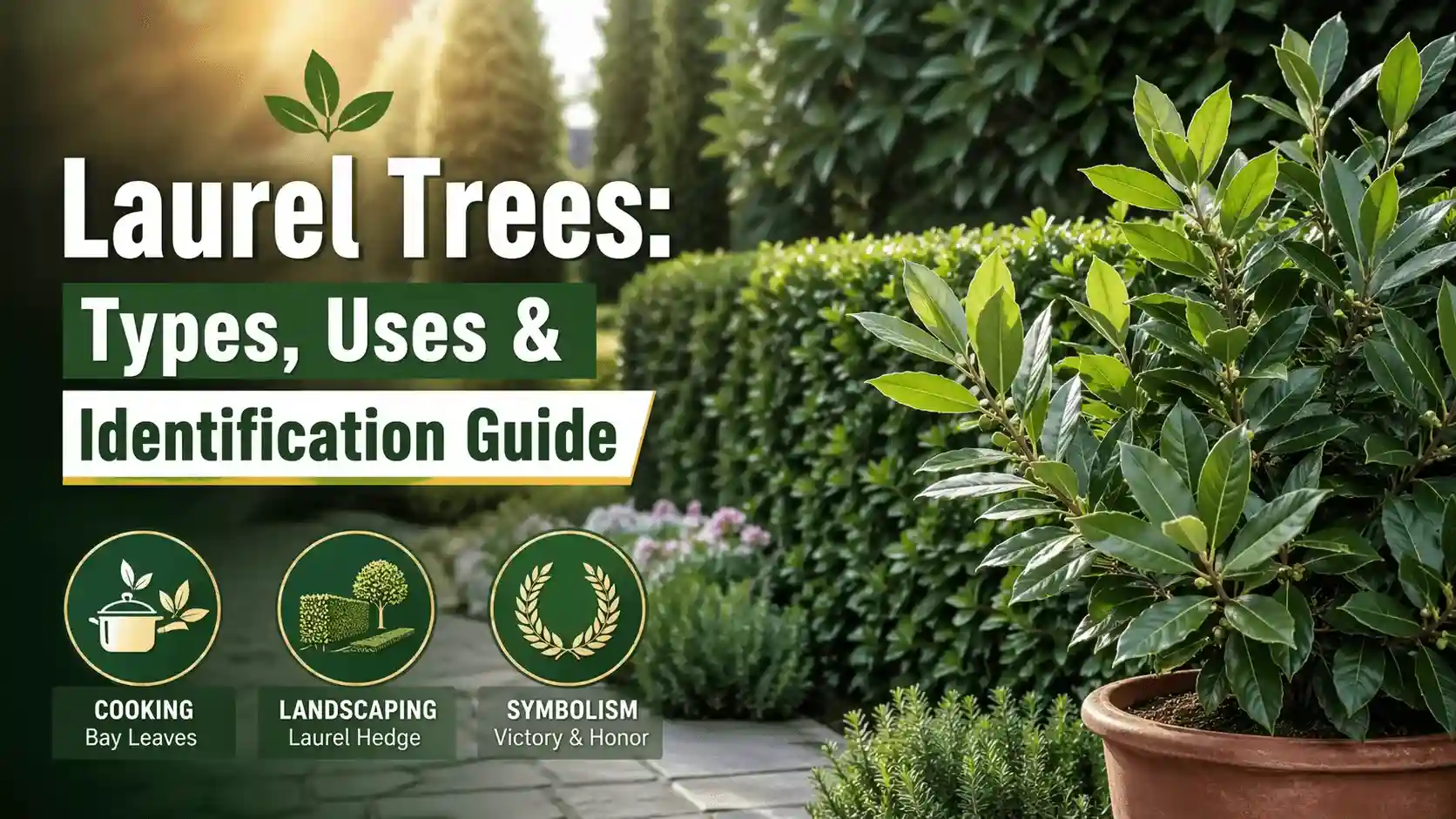

Introduction to Laurel Trees
Laurel trees are a group of evergreen plants widely valued for their aromatic leaves, ornamental appeal, and cultural symbolism. When people ask what is a laurel tree, they are typically referring to the well-known laurel plant used in cooking and landscaping, especially the bay laurel. However, the term also covers several shrubs and trees with similar leaf structures. The laurel tree meaning is deeply rooted in history, symbolizing honor and victory. These plants play important roles in gardening, culinary traditions, and decorative landscaping, making them both practical and meaningful additions to outdoor and indoor spaces.
Types of Laurel Trees (Main Varieties Explained)
Bay Laurel (Laurus nobilis)
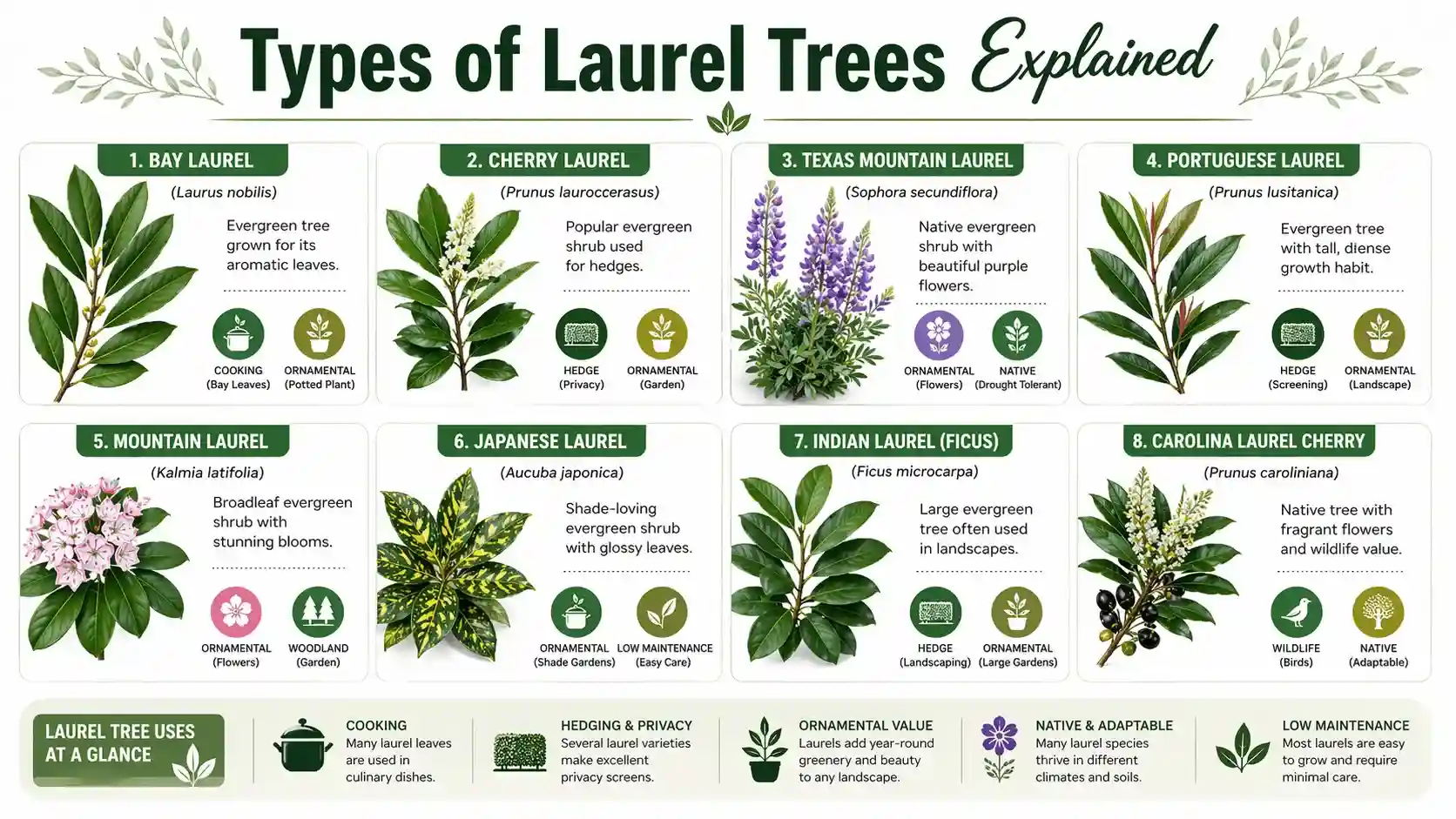
The bay laurel laurus nobilis (also called laurus nobilis bay laurel) is the most recognized species.
- Common names: bay leaf tree, bay tree, sweet bay tree
- Evergreen tree with glossy, aromatic leaves
- Leaves are used as bay leaves in cooking
- Slow-growing but long-lived
The bay laurel, scientifically known as Laurus nobilis, is one of the most widely used culinary herbs worldwide.
Cherry Laurel
Cherry laurel is popular in landscaping.
- Common as cherry laurel hedge or cherry laurel hedging
- Dense foliage ideal for privacy
- Fast-growing shrub or small tree
- Not suitable for culinary use
Texas Mountain Laurel
A decorative flowering tree known for:
- Purple-blue blooms
- Strong, grape-like fragrance
- High ornamental value
Other Laurel Variants
General terms include:
- Laurel bushes / laurel bush
- Laurels plant / laurels tree
⚠️ Note: Not all plants called “laurel” belong to the same botanical family. Some are true laurels, while others are unrelated but share similar leaf shapes.
Where Do Laurel Trees Grow? (Habitat & Climate)
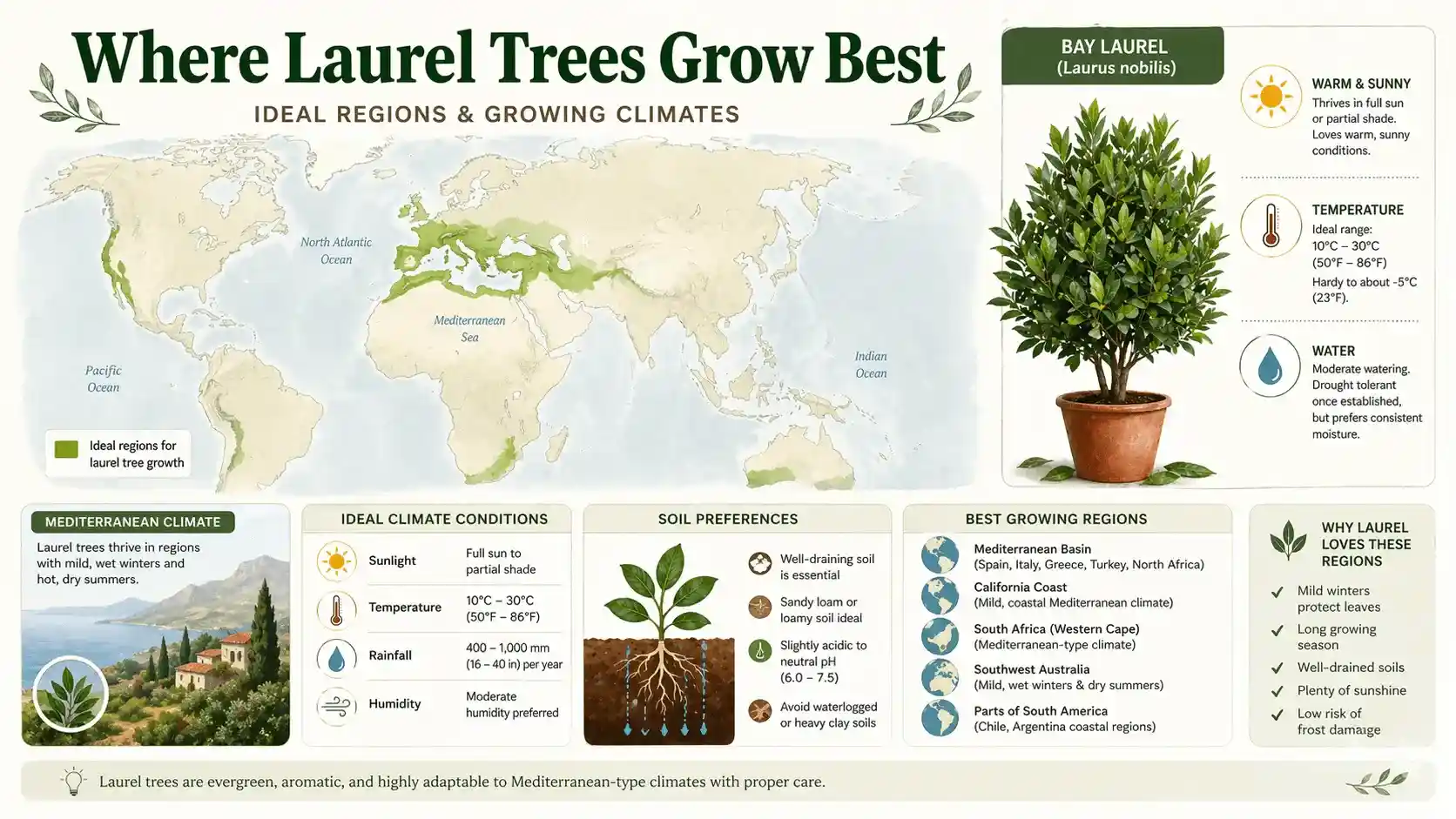
Bay laurel originates from Mediterranean regions, thriving in warm, temperate climates.
Ideal growing conditions:
- Mild winters, warm summers
- Well-drained soil
- Full sun to partial shade
Adaptability:
- Grows in containers indoors
- Can adapt to cooler climates with protection
In regions like laurel tree australia / laurel trees australia, they grow well in coastal and temperate zones with proper drainage and sunlight.
How to Identify a Bay Leaf Tree (Complete Identification Guide)
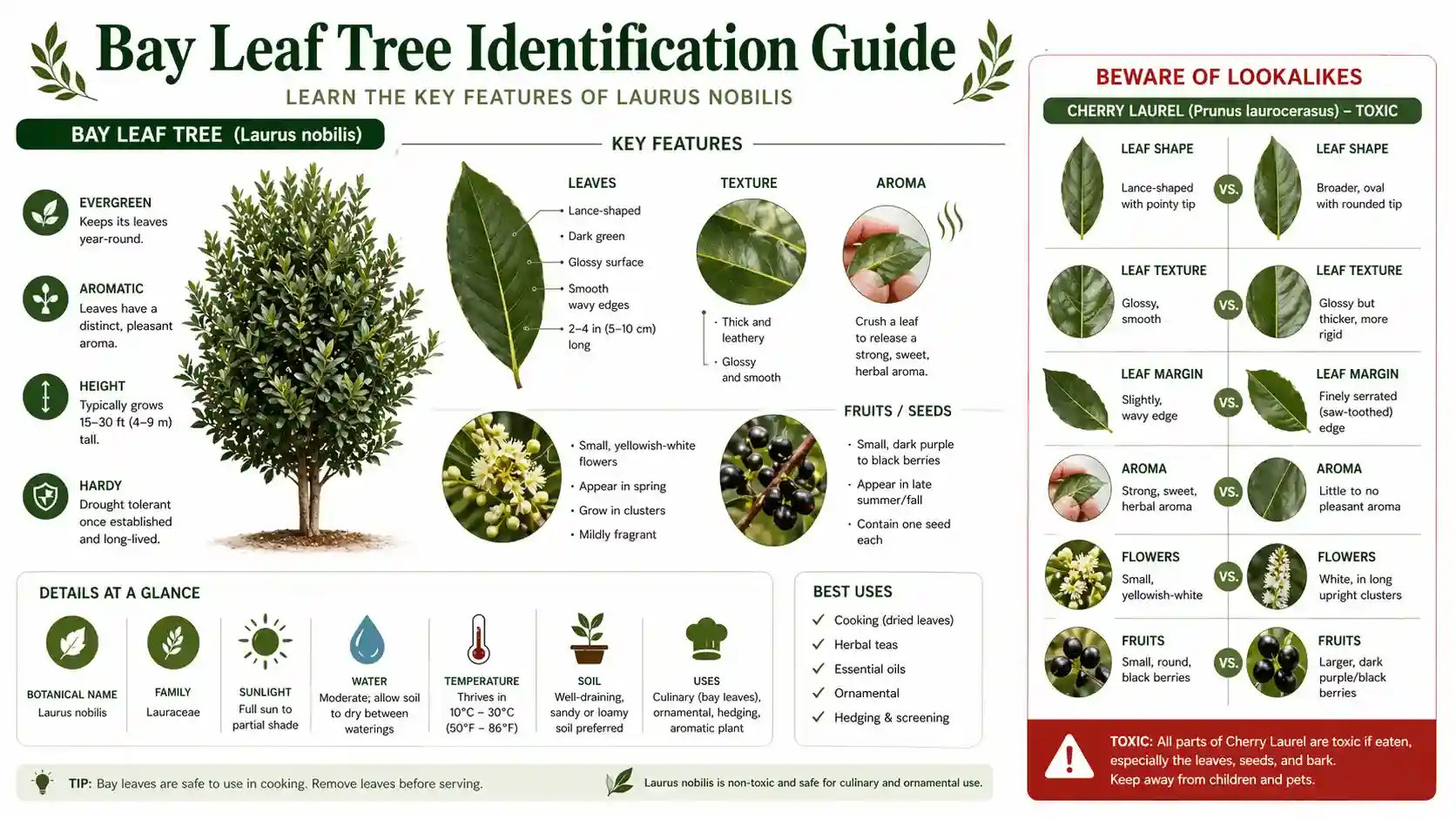
Leaf Identification
Key features for bay leaf tree identification:
- Dark green, glossy leaves
- Oval shape with pointed ends
- Strong aromatic scent when crushed
- Smooth edges
👉 Important for how to identify a bay leaf tree:
Avoid confusing it with toxic lookalikes like cherry laurel.
Flowers and Growth Features
- Small yellowish flowers (bay tree flower / bay tree flowers)
- Dense evergreen structure
- Upright branching pattern
Seeds and Fruit Identification
- Small black or purple berries
- Seeds inside are smooth and oval
Common terms:
- Bay leaf seeds
- Bay leaves seeds
- Laurel seeds
Are Laurel Trees Poisonous? (Safety Guide)
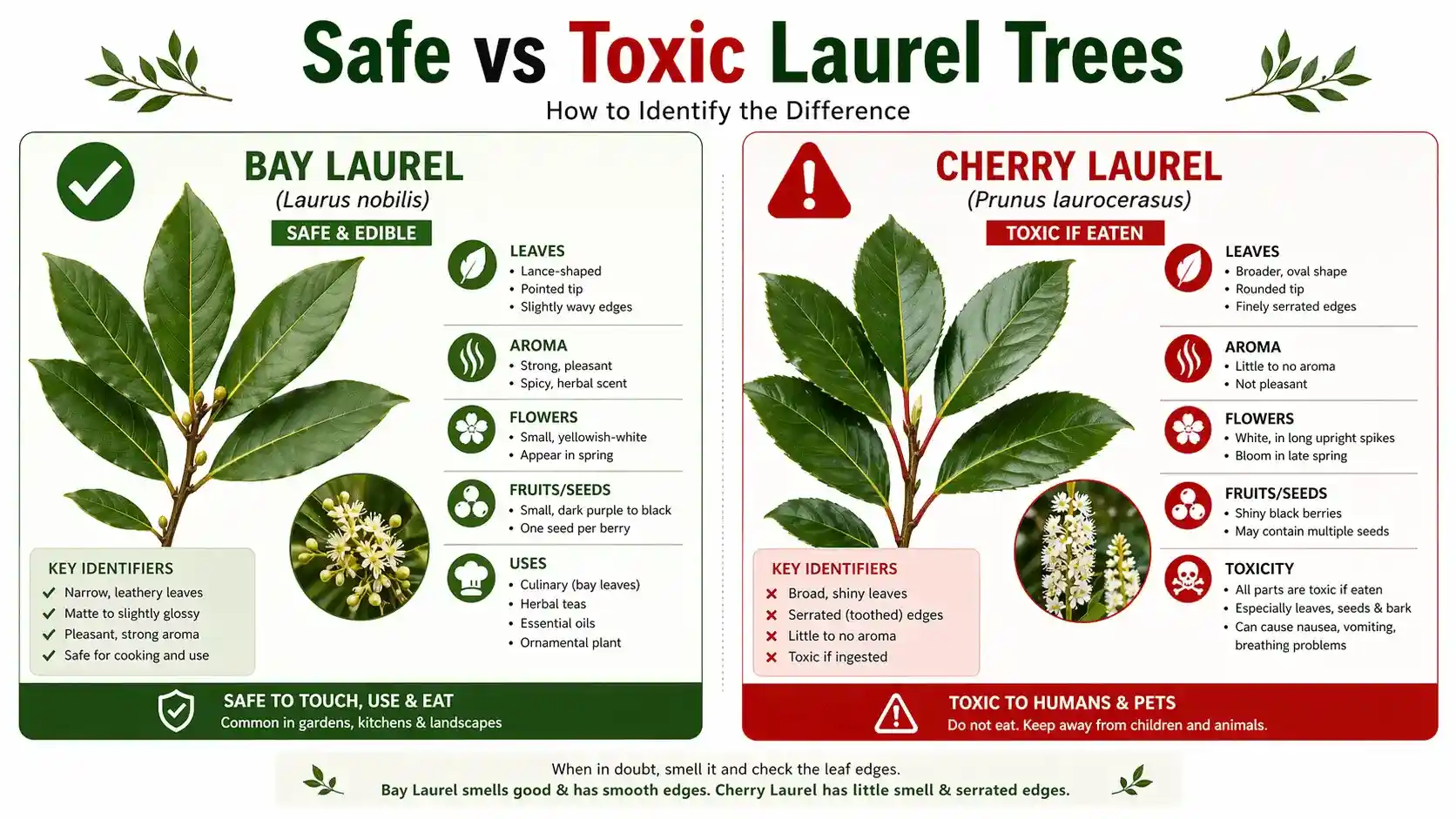
Not all laurel trees are safe.
✅ Safe:
- Bay laurel (used in cooking)
❌ Toxic:
- Cherry laurel (contains harmful compounds)
Safety Tips:
- Do not consume unidentified leaves
- Keep toxic varieties away from pets
- Always confirm plant identity before use
Bay Laurel Uses (Culinary, Medicinal & Decorative)

Culinary Uses
Bay leaves growing on the plant are widely used in cooking.
- Adds depth to soups and stews
- Used in sauces and marinades
- Subtle herbal flavor
For a similar aromatic plant used in cooking, explore how the curry leaf plant grows and is used in kitchens.
Medicinal & Traditional Uses
Historically used in herbal remedies.
- May support digestion
- Used in traditional teas
⚠️ Disclaimer: Not a substitute for medical advice.
Landscaping & Decorative Uses
- Ideal for laurel hedge or hedging laurel
- Suitable for containers (baytree plant, baytree plants, bay plant)
- Adds structure and greenery to gardens
Laurel Tree Meaning & Symbolism

Laurel Wreath History
The laurel wreath dates back to Ancient Greece and Rome.
- Used to crown victors
- Known as the roman laurel wreath
- Represents achievement and status
Symbolism
Common meanings:
- Victory and honor
- Achievement and success
- Wisdom and protection
Related terms:
- Laurel wreath symbolism
- Laurel wreath symbol
- Laurel crown meaning
- Define laurel wreath
- Wreath of laurel
Laurel Tree Growth, Size & Features
| Feature | Details |
| Height | 10–40 feet (depending on pruning) |
| Growth Rate | Slow to moderate |
| Lifespan | Long-lived |
| Structure | Shrub or tree form |
| Foliage | Evergreen and dense |
How to Grow Laurel Trees (Step-by-Step Guide)
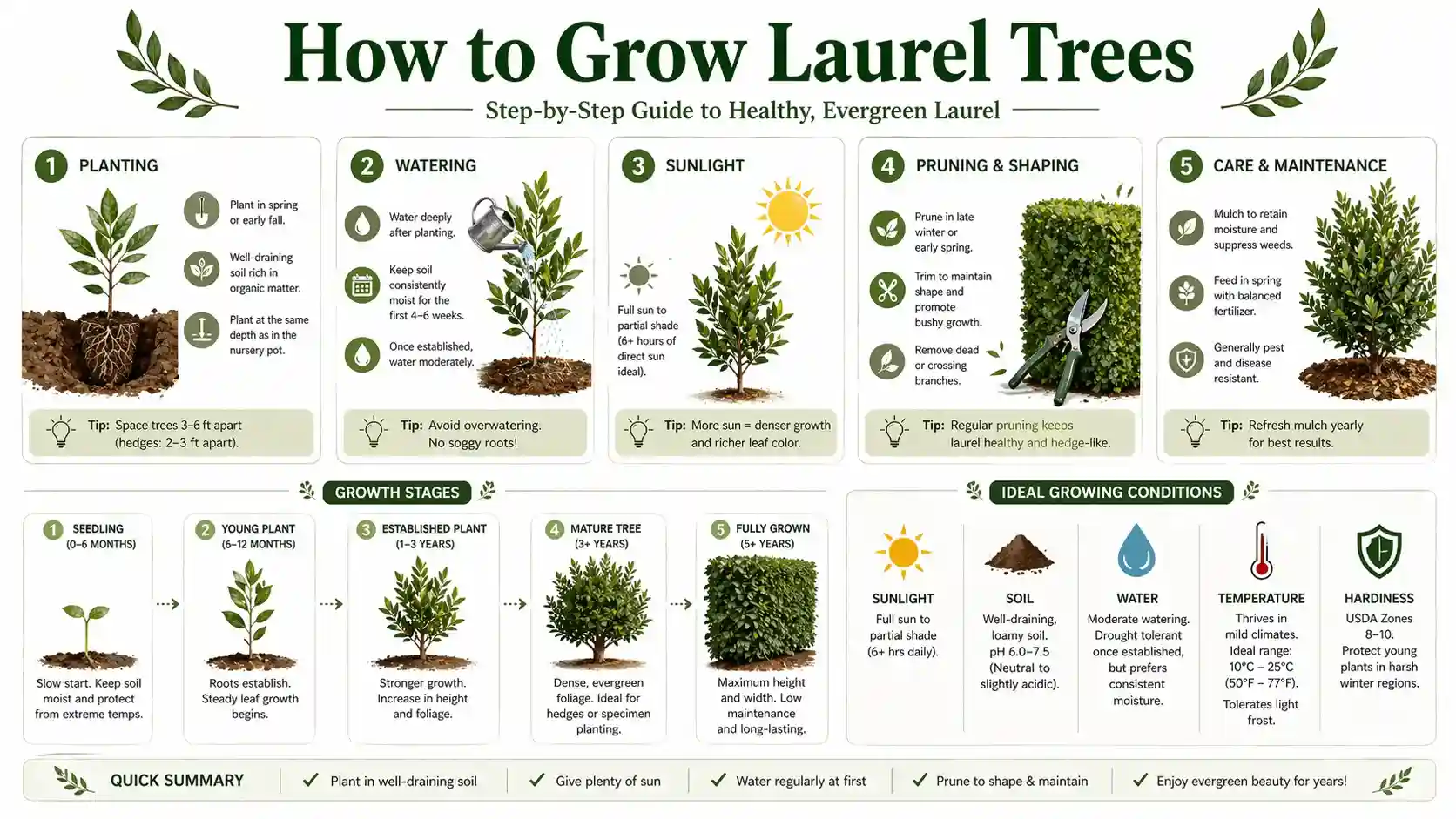
Planting Laurel
- Use well-drained soil
- Plant in ground or containers
- Space properly for airflow
If you’re interested in growing other useful plants, this complete guide explains how to plant lemongrass step by step.
Care Requirements
- Sunlight: Full sun to partial shade
- Watering: Moderate, avoid overwatering
- Fertilizer: Balanced feeding during growth
- Pruning: Shape for laurel hedging
Growing from Seeds
Using bay leaf seeds / laurel seeds:
- Soak seeds before planting
- Use moist, well-drained soil
- Germination may take several weeks
Buying Laurel Trees (What to Know)
Before purchasing:
- Look for bay laurel tree for sale from reputable sources
- Choose healthy, pest-free plants
- Decide indoor vs outdoor placement
Conclusion (Final Thoughts on Laurel Trees)
Laurel trees are versatile plants valued for their culinary, ornamental, and symbolic importance. From the edible bay laurel to decorative hedging varieties, each type serves a unique purpose. Understanding the difference between edible and toxic species is essential for safe use. Whether grown for cooking, landscaping, or cultural significance, laurel trees remain a practical and meaningful addition to any garden or home. To build a strong foundation in plant care, follow this complete gardening and plant care guide for thriving plants.
FAQs About Laurel Trees
What is a laurel tree used for?
Laurel trees are used for cooking (bay leaves), landscaping, and symbolic purposes such as wreaths representing victory.
Are all laurel trees safe to eat?
No. Only bay laurel is safe. Other types like cherry laurel are toxic and should not be consumed.
How do you identify a bay leaf tree?
Look for glossy, aromatic leaves, smooth edges, and a strong scent when crushed.
Where do laurel trees grow best?
They grow best in warm, temperate climates with well-drained soil and moderate sunlight.
Can you grow a bay laurel tree at home?
Yes. It can be grown indoors in containers or outdoors in suitable climates.
What does a laurel wreath symbolize?
It symbolizes victory, honor, achievement, and success, especially in ancient Greek and Roman traditions.

Written by the LeafyHeaven Editorial Team
LeafyHeaven shares practical gardening tips and simple plant care guides to help you grow, nurture, and enjoy your plants with ease. Our goal is to make gardening feel natural, approachable, and rewarding for everyone.