
Introduction
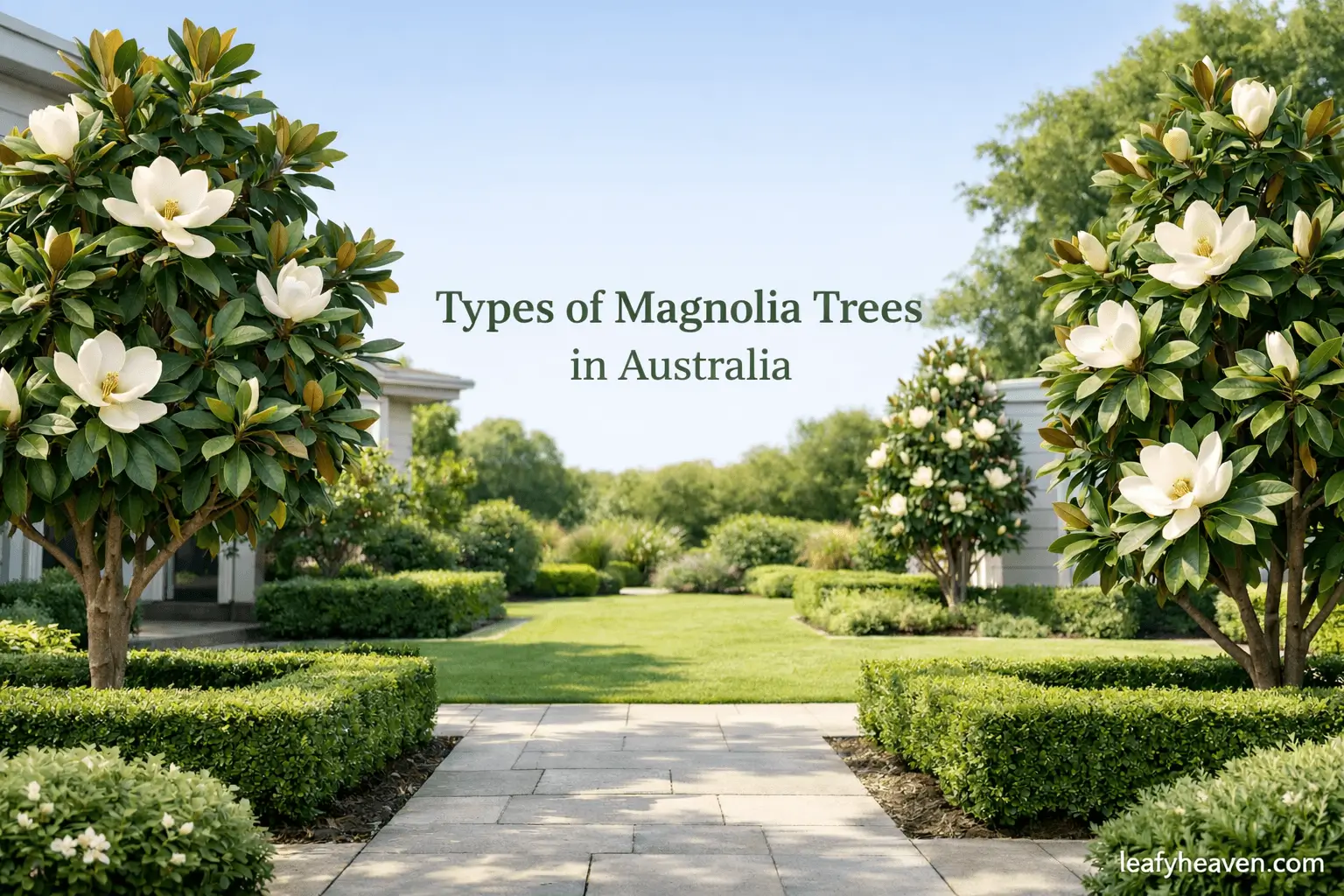
Types of magnolia trees in Australia are widely appreciated for their elegant appearance, glossy evergreen foliage, and large fragrant blooms that add a refined touch to landscapes. Many Australian homeowners and landscape designers choose magnolias because they combine ornamental beauty with year-round greenery. These trees are especially valued in residential gardens, parks, and urban landscapes. Gardeners often search for the best types of magnolia trees in Australia depending on available space, climate conditions, and landscaping goals. Many popular varieties belong to Magnolia grandiflora, a species known for its strong growth and evergreen leaves. Modern cultivars include compact forms that fit well in smaller gardens, making magnolia trees a versatile and attractive option for contemporary Australian landscapes. Many widely planted magnolia varieties in Australian gardens are cultivars of Magnolia grandiflora, a species known for its glossy evergreen foliage and large fragrant white flowers.
How Many Types of Magnolia Trees Are There?
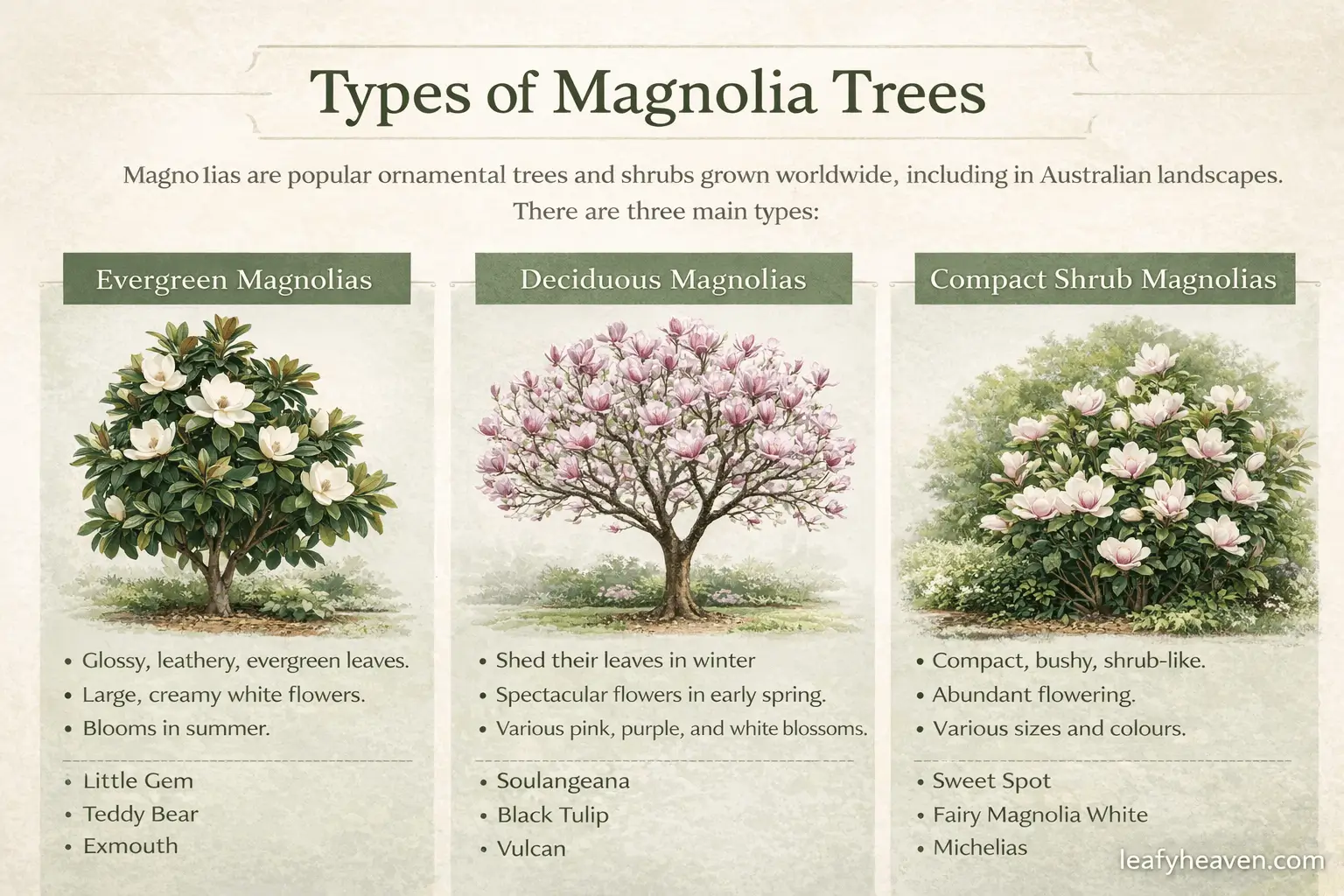
Many gardeners ask how many types of magnolia trees are there, especially when choosing the right variety for their garden. Globally, the magnolia family includes more than 200 species, along with numerous cultivars developed for ornamental landscaping. These trees and shrubs are grown in many regions due to their attractive flowers and unique foliage.
Magnolia plants can generally be grouped into several major categories:
- Evergreen magnolias – Trees that keep their leaves throughout the year, commonly grown in warmer climates.
- Deciduous magnolias – Trees that lose their leaves in winter and often produce dramatic spring blooms before new foliage appears.
- Compact shrub magnolias – Smaller varieties developed for modern gardens and limited spaces.
In Australian landscapes, evergreen magnolia varieties Australia are particularly popular because they tolerate local climate conditions and provide year-round greenery. Cultivars of Magnolia grandiflora dominate residential gardens because of their durability, strong structure, and ornamental value.
Best Types of Magnolia Trees in Australia
Magnolia Teddy Bear
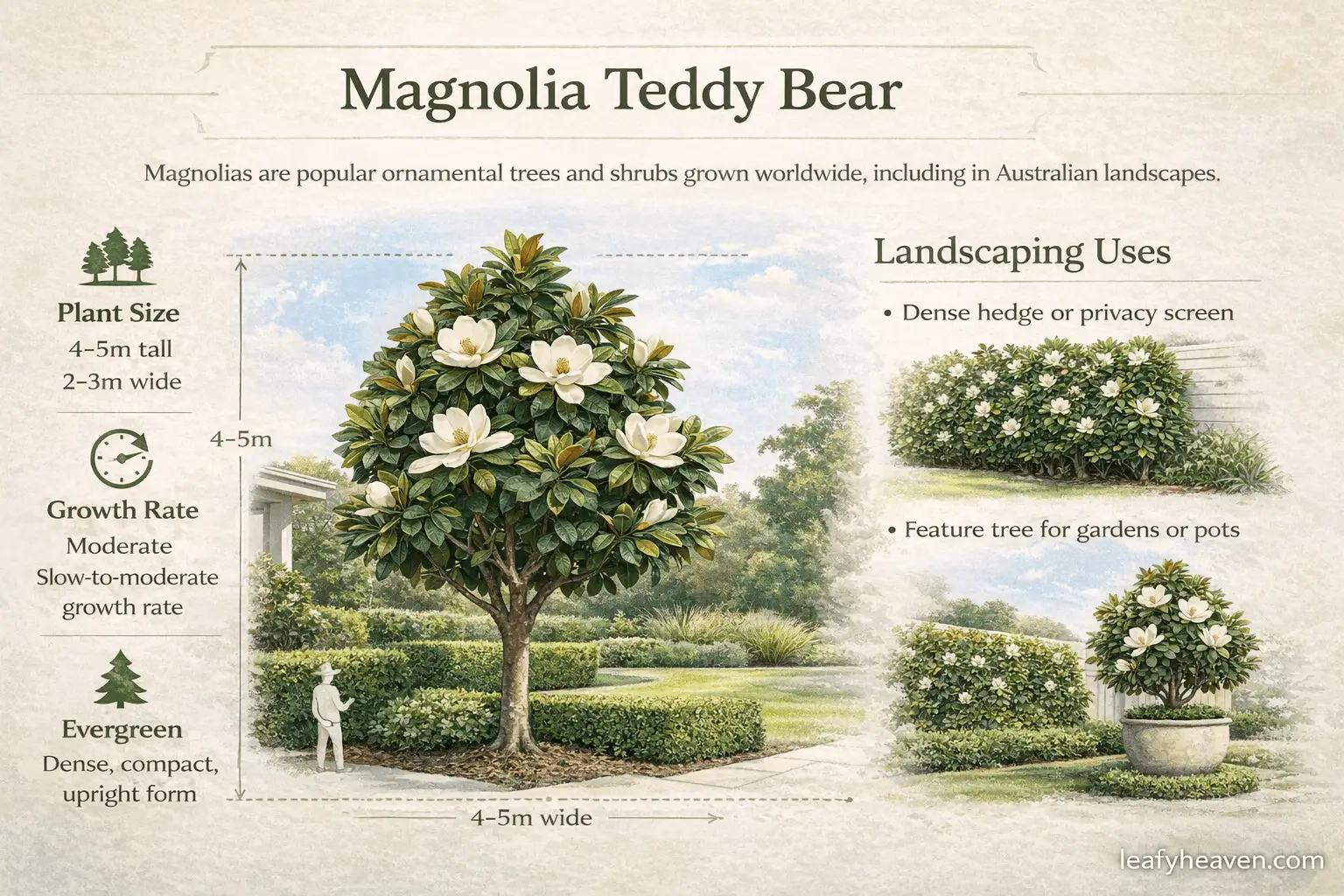
The magnolia teddy bear is one of the most recognized evergreen magnolia cultivars used in Australian residential landscapes. Often called the teddy bear magnolia, this variety belongs to Magnolia grandiflora teddy bear, a compact cultivar developed for modern gardens.
Key characteristics of the evergreen magnolia teddy bear include:
- Dense and upright growth habit
- Thick glossy green leaves with brown undersides
- Large white fragrant flowers typical of southern magnolias
- Ideal for hedging, screening, and feature planting
The teddy bear southern magnolia is widely considered one of the best magnolia tree Australia choices for homeowners because it offers the classic magnolia appearance in a more compact form.
Plant Size of Teddy Bear Magnolia
A full grown teddy bear magnolia remains relatively compact compared to traditional magnolia trees. The full grown teddy bear magnolia tree typically reaches:
- Height: about 4–6 meters
- Width: about 2–3 meters
Its naturally dense form makes it suitable for hedges, privacy screens, and smaller residential landscapes.
Growth Rate of Teddy Bear Magnolia
The teddy bear magnolia has a moderate growth rate, allowing it to establish steadily without becoming difficult to manage. This growth habit makes it well suited to compact landscapes and controlled garden designs.
With proper care, the tree gradually develops a thick canopy and strong central structure while maintaining its tidy shape.
Magnolia Little Gem
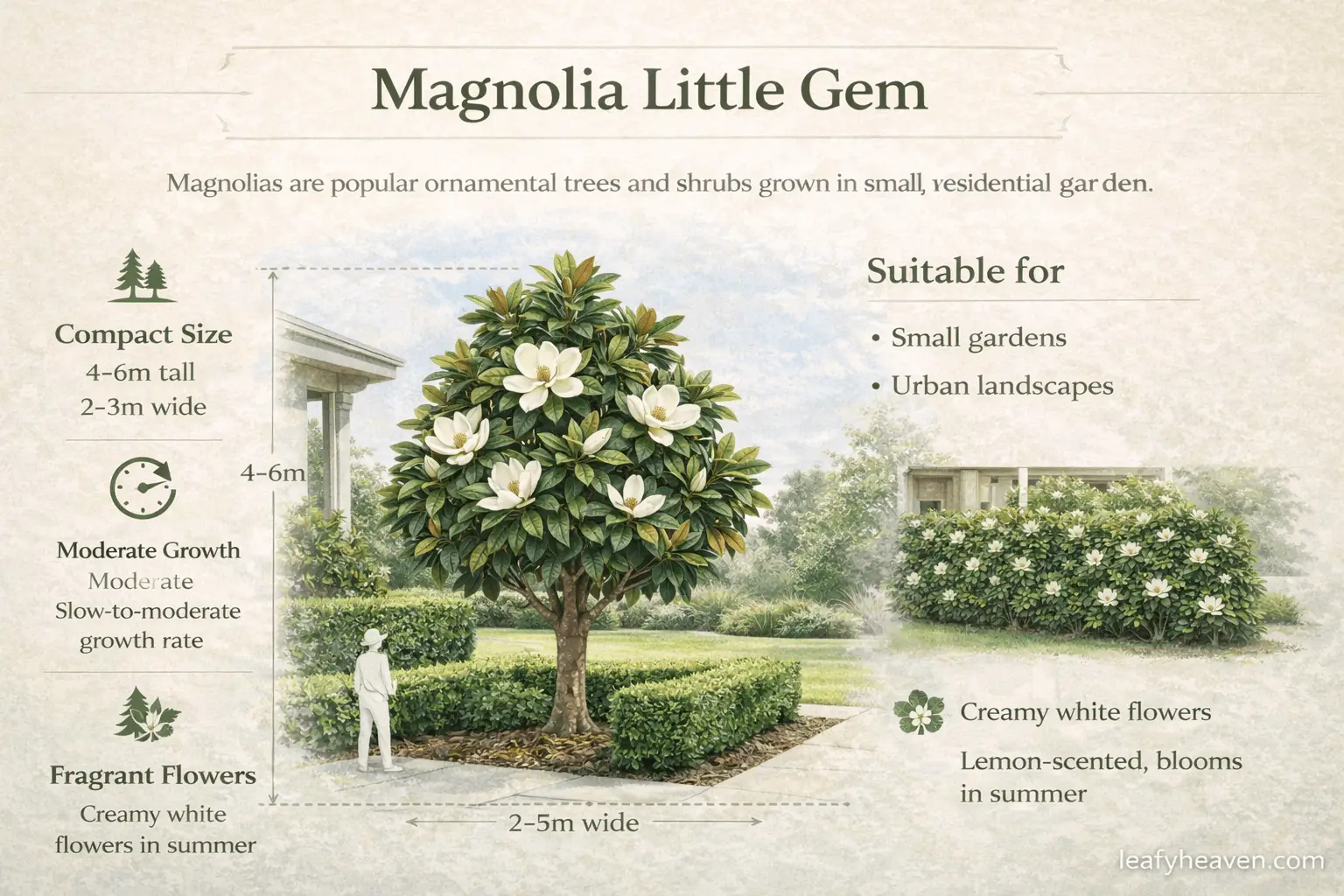
The magnolia little gem is another widely planted evergreen magnolia cultivar in Australia. Known as the little gem magnolia tree, it is valued for its compact growth and frequent flowering.
Key characteristics include:
- Compact growth habit
- Evergreen foliage with glossy leaves
- Frequent flowering throughout warm seasons
- Excellent suitability for urban landscapes
The magnolia little gem tree, also known as the little gem southern magnolia, remains one of the most popular small magnolia varieties Australia for residential gardens.
Plant Size of Little Gem Magnolia
The little gem magnolia size is slightly larger than Teddy Bear but still suitable for most gardens.
Typical little gem tree dimensions include:
- Height: 6–8 meters
- Width: 3–4 meters
Its upright shape allows it to be planted along fences, driveways, or garden borders.
Growth Rate of Little Gem Magnolia
The Little Gem magnolia has a moderate growth rate similar to other Magnolia grandiflora cultivars. With suitable soil, sunlight, and watering, the tree develops into a compact evergreen feature tree over time.
Flower Characteristics
One of the most attractive features of the magnolia little gem flowers is their fragrance and elegant appearance.
Flower traits include:
- Large creamy white blossoms
- Strong sweet fragrance
- Blooming throughout the warmer seasons
- Classic magnolia flower shape
These flowers add strong ornamental value to both residential and landscape gardens.
Small Magnolia Varieties for Australian Gardens
Small magnolia varieties Australia are increasingly popular as modern gardens become smaller and more structured. Compact magnolia cultivars provide the beauty of traditional magnolia trees without requiring large planting spaces.
Common compact varieties include:
- Teddy Bear Magnolia
- Little Gem Magnolia
- Other compact types of magnolia trees and shrubs
These varieties are ideal for:
- Small residential gardens
- Courtyard landscapes
- Hedging and screening
- Feature tree planting
Their manageable size and evergreen foliage make them practical choices for contemporary landscape design.
Evergreen Magnolia Varieties Australia
Evergreen magnolia varieties Australia are among the most widely planted ornamental trees in Australian landscapes. Their ability to retain foliage year-round provides consistent visual appeal and practical landscaping benefits.
Common uses include:
- Privacy screens
- Formal hedges
- Feature garden trees
- Structured landscape planting
Many of these trees belong to Magnolia grandiflora cultivars, including popular choices like Teddy Bear Magnolia and Little Gem Magnolia, which combine evergreen foliage with fragrant flowers. Many gardeners prefer evergreen magnolias because they maintain dense foliage throughout the year, similar to other trees featured in Fast Growing Evergreen Trees Australia that provide reliable structure and privacy in landscape design.
Plant Size and Mature Growth of Magnolia Trees
Average Height of Magnolia Trees
Magnolia trees vary in height depending on the species and cultivar. Standard Magnolia grandiflora trees may reach 20 meters, while compact varieties remain much smaller.
Dwarf cultivars such as magnolia teddy bear tree and little gem magnolia tree are designed to maintain a manageable height suitable for residential gardens.
Mature Width and Tree Shape
Magnolia trees can develop different growth forms depending on the variety.
Typical shapes include:
- Upright columnar forms
- Narrow pyramidal trees
- Broad spreading canopies
Compact varieties typically maintain a dense upright structure, making them suitable for hedges and screening.
Choosing the Right Size for Your Garden
Selecting the right magnolia tree size depends on:
- Available garden space
- Landscape design goals
- Desired tree height and width
- Proximity to buildings or fences
Compact cultivars are often preferred for smaller properties and modern landscaping.
Magnolia Tree Growth Rate
Magnolia trees generally grow at a steady, moderate pace compared with many fast-growing landscape trees.
Typical Growth Rate of Magnolia Grandiflora
Most Magnolia grandiflora cultivars grow approximately:
- 30–60 cm per year under suitable conditions.
This steady growth allows the tree to develop strong structure and dense foliage.
Factors Affecting Growth Rate
Several environmental factors influence magnolia growth:
- Soil quality – fertile, well-drained soil supports strong development
- Sunlight – magnolias grow best in full sun to partial shade
- Watering – consistent moisture encourages healthy growth
- Climate – warm climates support evergreen magnolia development
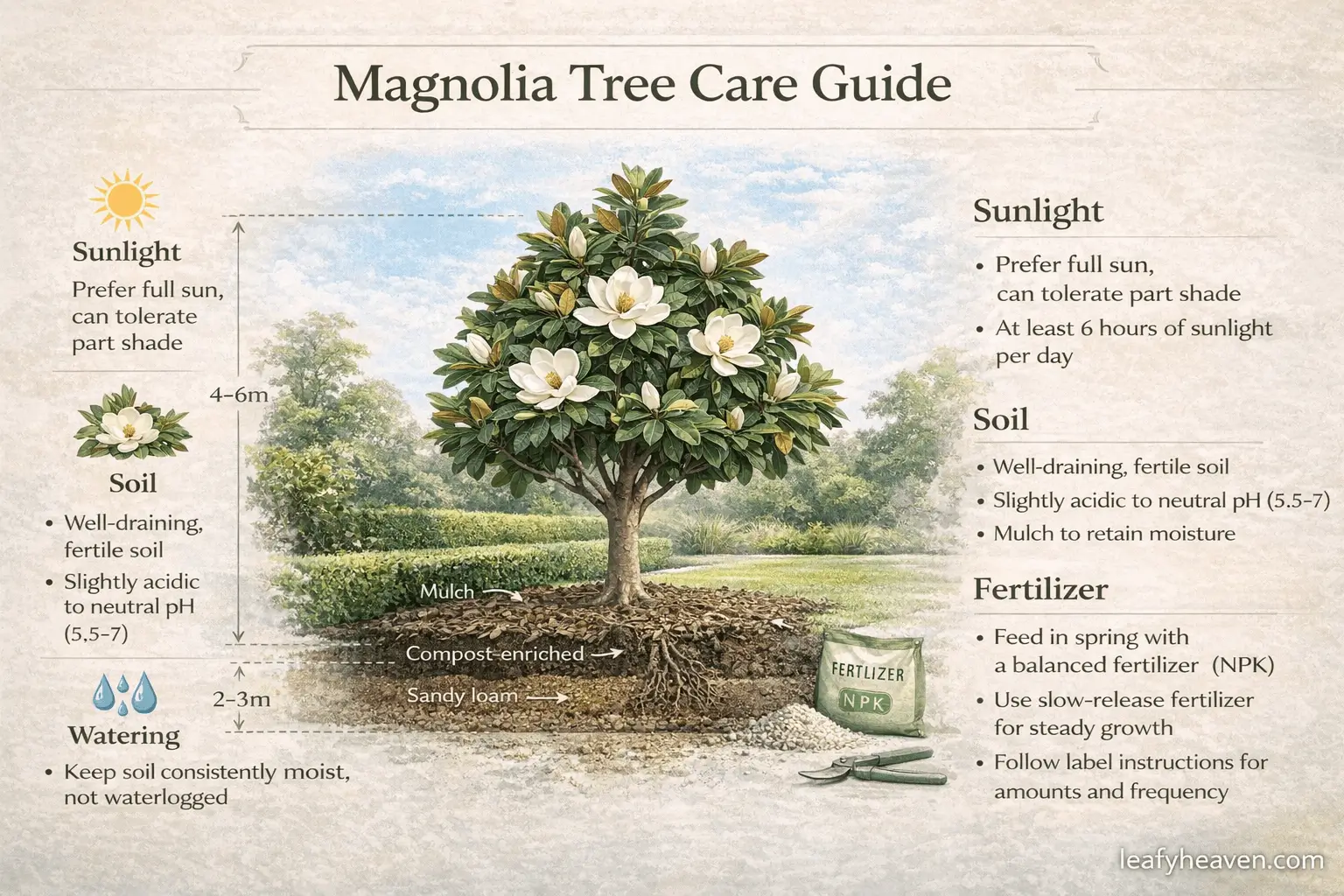
Magnolia Tree Care Guide
Sunlight Requirements
Magnolia trees grow best in full sun to partial shade. Adequate sunlight encourages flowering and healthy foliage.
Soil Conditions
Magnolias prefer:
- Well-drained soil
- Slightly acidic to neutral pH
- Organic matter for improved fertility
Watering Needs
Young trees require regular watering to establish strong roots. Once mature, magnolia trees tolerate moderate drought but benefit from occasional deep watering.
Fertilizer and Nutrients
Balanced slow-release fertilizers can improve:
- Leaf growth
- Flower production
- Overall plant health
Fertilizing in early spring is typically recommended.
Pruning and Maintenance
Magnolia trees require minimal pruning. Maintenance usually involves:
- Removing dead branches
- Light shaping when necessary
- Maintaining spacing for air circulation
Choosing the Best Magnolia Tree for Your Garden
When selecting the best magnolia tree Australia, gardeners should consider several factors:
- Garden size – compact varieties suit smaller spaces
- Evergreen vs deciduous – evergreen types provide year-round foliage
- Landscaping purpose – hedging, screening, or feature planting
- Flowering preference – frequency and fragrance of blooms
Varieties like Teddy Bear Magnolia and Little Gem Magnolia are often recommended for residential landscapes because they combine compact size with ornamental value.
If you are deciding between the two most popular cultivars, comparing their size and growth habits can help. This detailed guide on Teddy Bear Magnolia vs Little Gem explains how these varieties differ in structure, growth rate, and landscaping use.
Conclusion
The types of magnolia trees in Australia include several beautiful and practical varieties suitable for different landscape designs. Evergreen cultivars of Magnolia grandiflora are especially popular because they offer glossy foliage, fragrant flowers, and strong ornamental presence throughout the year.
Among the best options for Australian gardens are Magnolia Teddy Bear and Magnolia Little Gem, both of which provide compact growth, manageable plant size, and attractive flowering displays. By considering factors such as mature tree size, growth rate, and available garden space, gardeners can choose the most suitable magnolia variety for their landscape.
FAQs
What are the best types of magnolia trees in Australia?
Some popular magnolia trees in Australia are Magnolia Teddy Bear, Magnolia Little Gem, and other Magnolia grandiflora varieties. These trees grow well in Australian climates.
Which magnolia tree is best for small gardens?
Small varieties like Teddy Bear Magnolia and Little Gem Magnolia are great for small gardens because they do not grow too big.
How fast do magnolia trees grow?
Magnolia trees usually grow at a medium speed, about 30–60 cm each year in good conditions.
What size does a teddy bear magnolia tree reach?
A full-grown Teddy Bear Magnolia tree usually grows about 4–6 meters tall and 2–3 meters wide.
Are magnolia trees evergreen in Australia?
Yes, many magnolia trees in Australia are evergreen, especially Magnolia grandiflora types, which keep their leaves all year.

Written by the LeafyHeaven Editorial Team
LeafyHeaven shares practical gardening tips and simple plant care guides to help you grow, nurture, and enjoy your plants with ease. Our goal is to make gardening feel natural, approachable, and rewarding for everyone.