
Introduction
The sago palm is a popular ornamental plant widely used in gardens, landscapes, and indoor décor. Despite its palm-like appearance, the cycas revoluta sago palm, commonly known as the japanese sago palm or sago cycad, is not a true palm tree. Instead, it belongs to an ancient group of plants called cycads. Many homeowners and gardeners search for information about sago palm tree care, common sago palm problems, whether the sago palm poisonous, and how sago palm seeds grow and reproduce. Due to its symmetrical structure, slow growth, and long lifespan, the sago palm remains one of the most recognizable decorative plants used in tropical and subtropical landscapes.
What Is a Sago Palm Tree?
Sago Palm Scientific Classification
The Cycas revoluta, commonly known as the sago palm, belongs to the ancient plant group called cycads. According to Wikipedia, this species is one of the most widely cultivated cycads in ornamental landscaping. These plants are often mistaken for palms because of their similar appearance, but they are actually part of a completely different plant lineage.
To understand what are cycads, it is important to know that cycads are primitive seed plants that existed millions of years before modern flowering plants evolved. A cycas plant typically has a thick trunk and a crown of stiff, feather-like leaves that resemble palm foliage.
Common characteristics of a cycad tree include:
- Slow growth rate
- Long lifespan, often exceeding several decades
- Tough, evergreen leaves
- Cone-based reproduction rather than flowers
Although people often refer to cycad palm trees, the term is technically incorrect because cycads and palms belong to entirely separate plant groups.
Why Sago Palms Are Not True Palm Trees
Although the sago palm resembles many palm species, it is not part of the palm family. True palms belong to the botanical family Arecaceae, while cycads belong to Cycadophyta.
Key differences between cycad palms vs palm tree species include:
- Cycads reproduce using cones, while palms produce flowers and fruit
- Cycads grow much more slowly than most types of palm trees
- The trunk structure of cycads is thicker and more compact
- Palm trees grow taller and faster than cycads
Among the different types of palm, the sago palm only mimics the appearance of palms but is evolutionarily unrelated. Unlike cycads, true palms belong to the Arecaceae family and have completely different growth habits. If you want to learn about caring for a real palm species, see our guide on Christmas Palm Tree Care.
Appearance of a Full Grown Sago Palm Tree
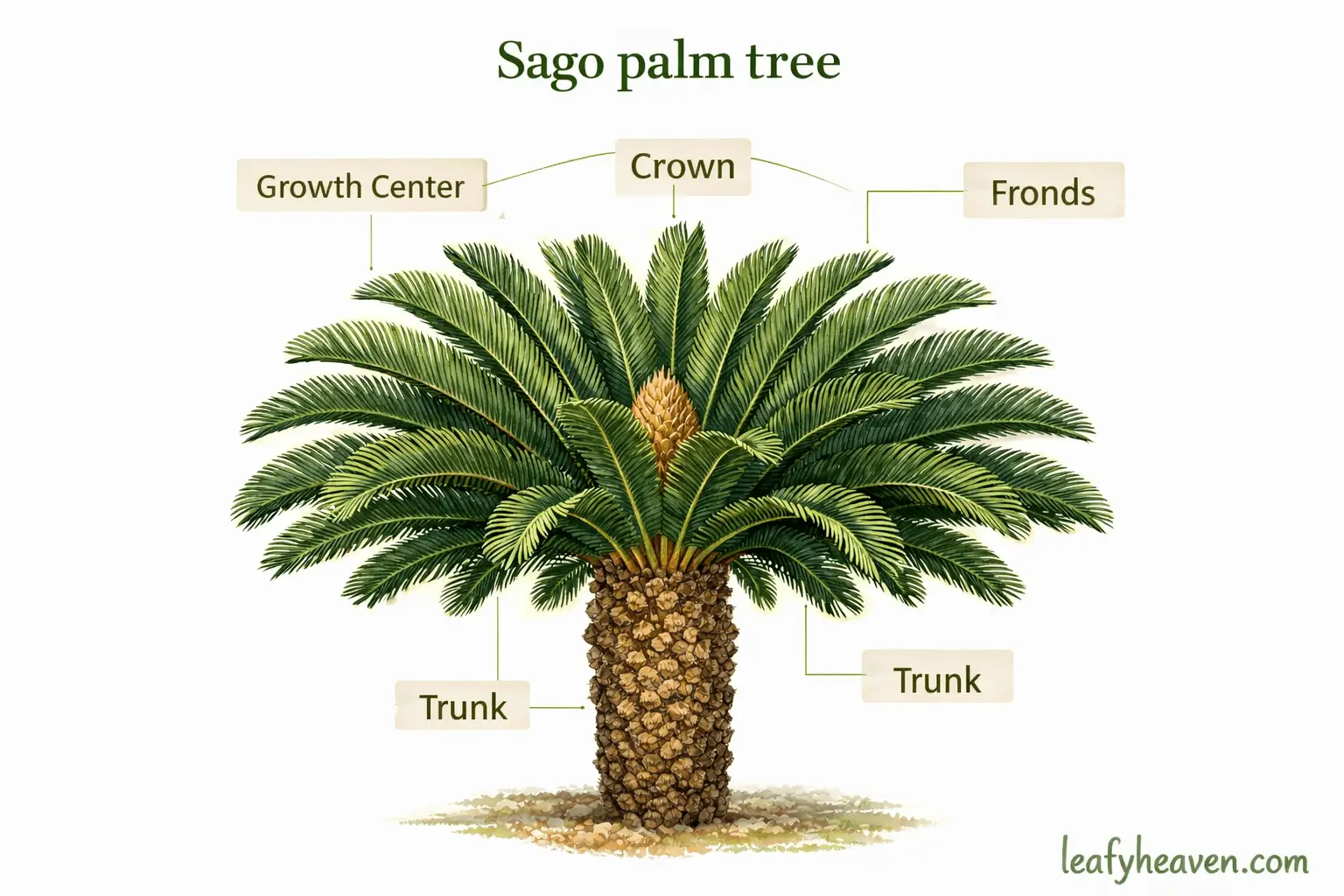
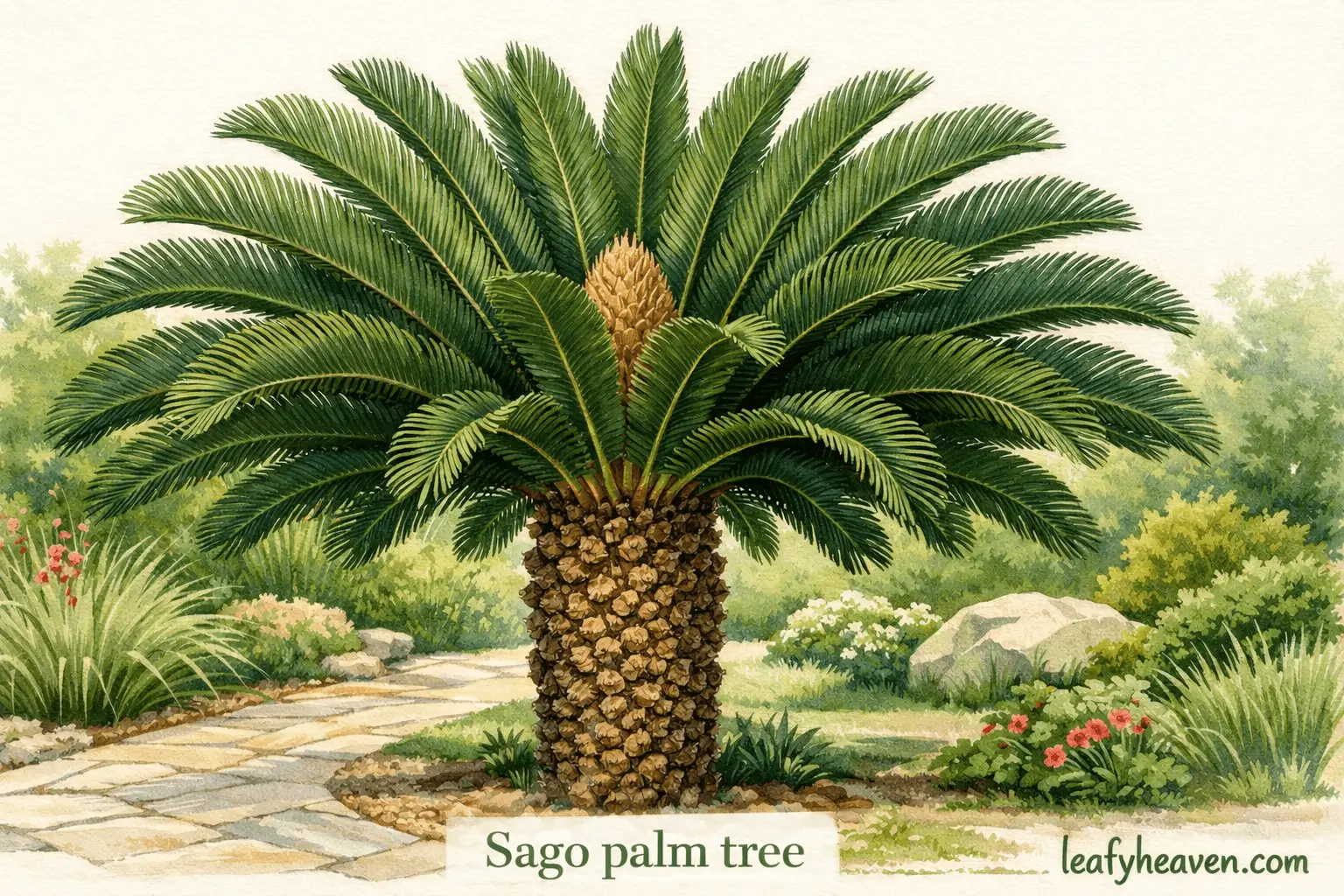
A full grown sago palm forms a symmetrical structure with a thick trunk and a circular crown of stiff leaves. The plant develops a rosette of glossy, dark green fronds that extend outward in a radial pattern.
Key characteristics include:
- Height typically between 3 to 10 feet
- Thick, textured trunk
- Stiff, spiky leaves arranged in a crown
Some gardeners refer to the plant as a sago palm bush when it grows with multiple stems close to the ground. Mature sago palm trees can live for over 100 years in the right conditions, making them extremely long-lasting landscape plants.
Sago Palm Tree Care Guide
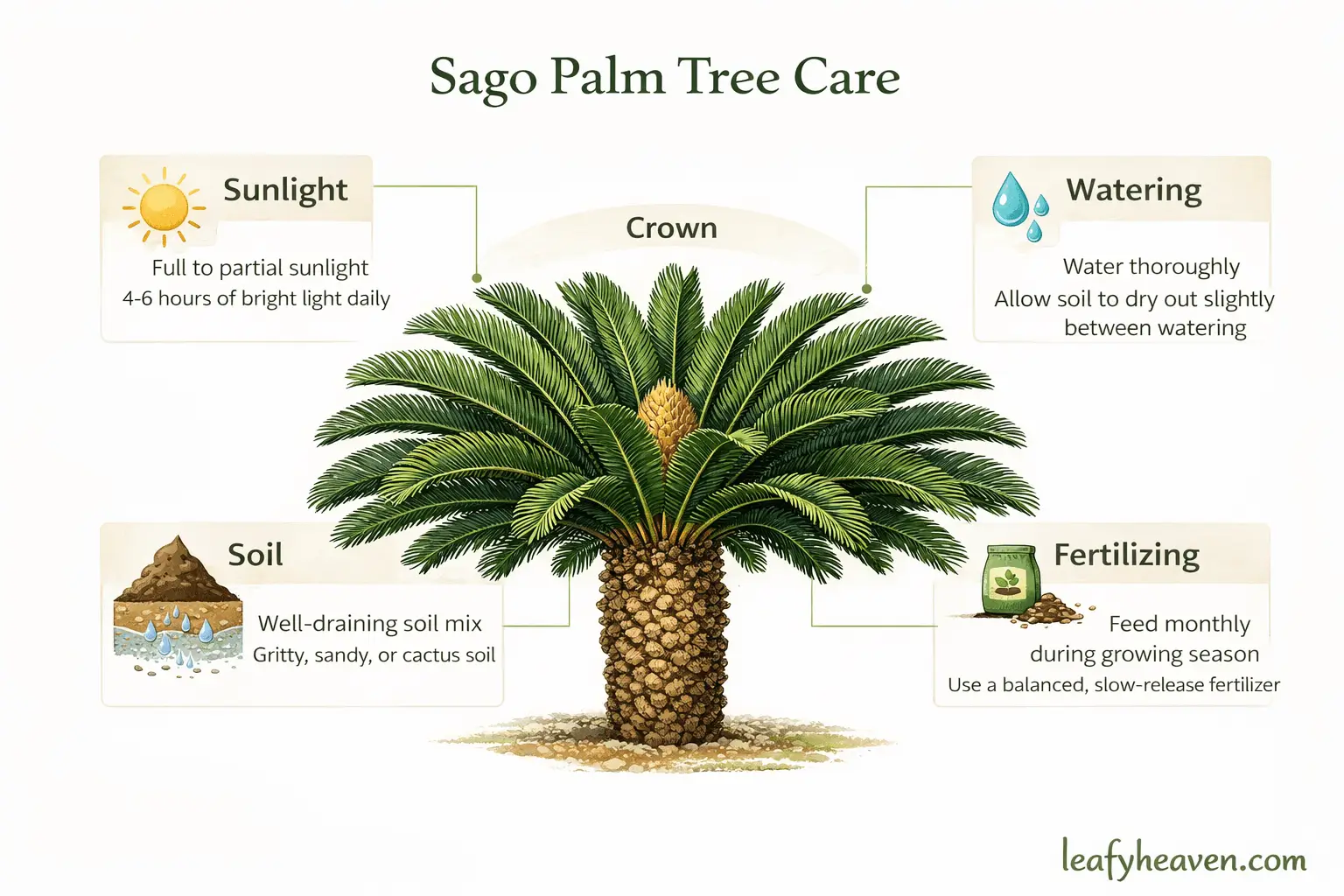
Sunlight Requirements
Proper lighting plays a major role in successful sago palm tree care. These plants thrive in bright environments and tolerate full sun once established.
Recommended sunlight conditions include:
- Full sun outdoors in warm climates
- Partial shade in extremely hot regions
- Bright indirect light for sago palm indoor growing
In regions like sago palm australia, the plant performs well in subtropical climates where winters are mild and sunlight is abundant.
Soil Requirements
Sago palms prefer soil that drains quickly and prevents water accumulation around the roots.
Ideal soil characteristics:
- Sandy or loamy soil
- Excellent drainage
- Slightly acidic to neutral pH
Poor drainage often leads to root rot, which is one of the most common causes of plant decline.
Watering Schedule
Sago palms are drought tolerant once established. Overwatering is one of the most frequent mistakes gardeners make.
General watering guidelines:
- Allow soil to dry slightly between watering
- Water deeply but infrequently
- Reduce watering during cooler months
Because cycads store moisture in their trunks, they can survive dry conditions better than many tropical plants.
Fertilizing and Maintenance
Consistent feeding improves plant health and leaf growth. Good sago palm maintenance ensures long-term plant vitality.
Basic fertilization and care routine:
- Use slow-release palm fertilizer
- Apply fertilizer 2–3 times during the growing season
- Remove old yellow leaves to improve plant appearance
Proper sago palm care, sago palms care, and japanese sago palm care often include balanced micronutrients such as magnesium and manganese. This helps prevent leaf discoloration. Similar care principles apply to cycas palm care, sago cycad care, king sago palm care, and general sago palm tree care practices. Understanding the basics of plant care helps ensure long-term plant health. For broader guidance, explore our Gardening & Plant Care Guide for Thriving Plants.
How Fast Does a Sago Palm Tree Grow?
Growth Rate of Cycas Revoluta
The Cycas revoluta is considered one of the slowest-growing ornamental plants. In many cases, the plant produces only one new set of leaves each year.
Typical growth rate:
- 1–2 inches of trunk growth annually
- New leaves once per growing season
Because of this slow growth, mature sago palms are often valuable landscape specimens.
When Do Cycads Grow New Leaves?
Many gardeners wonder when do cycads grow new leaves. Sago palms typically produce a flush of new fronds during late spring or early summer.
During this stage:
- A circular group of soft leaves emerges from the center
- The leaves gradually harden and darken
- Growth stops until the following year
Why Is My Sago Palm Not Growing New Leaves?
If a sago palm fails to produce new leaves, several factors may be responsible.
Common causes include:
- Nutrient deficiencies, especially manganese
- Cold weather damage
- Root stress or poor soil drainage
- Insufficient sunlight
Correcting these conditions usually restores healthy growth.
Common Sago Palm Problems and Diseases
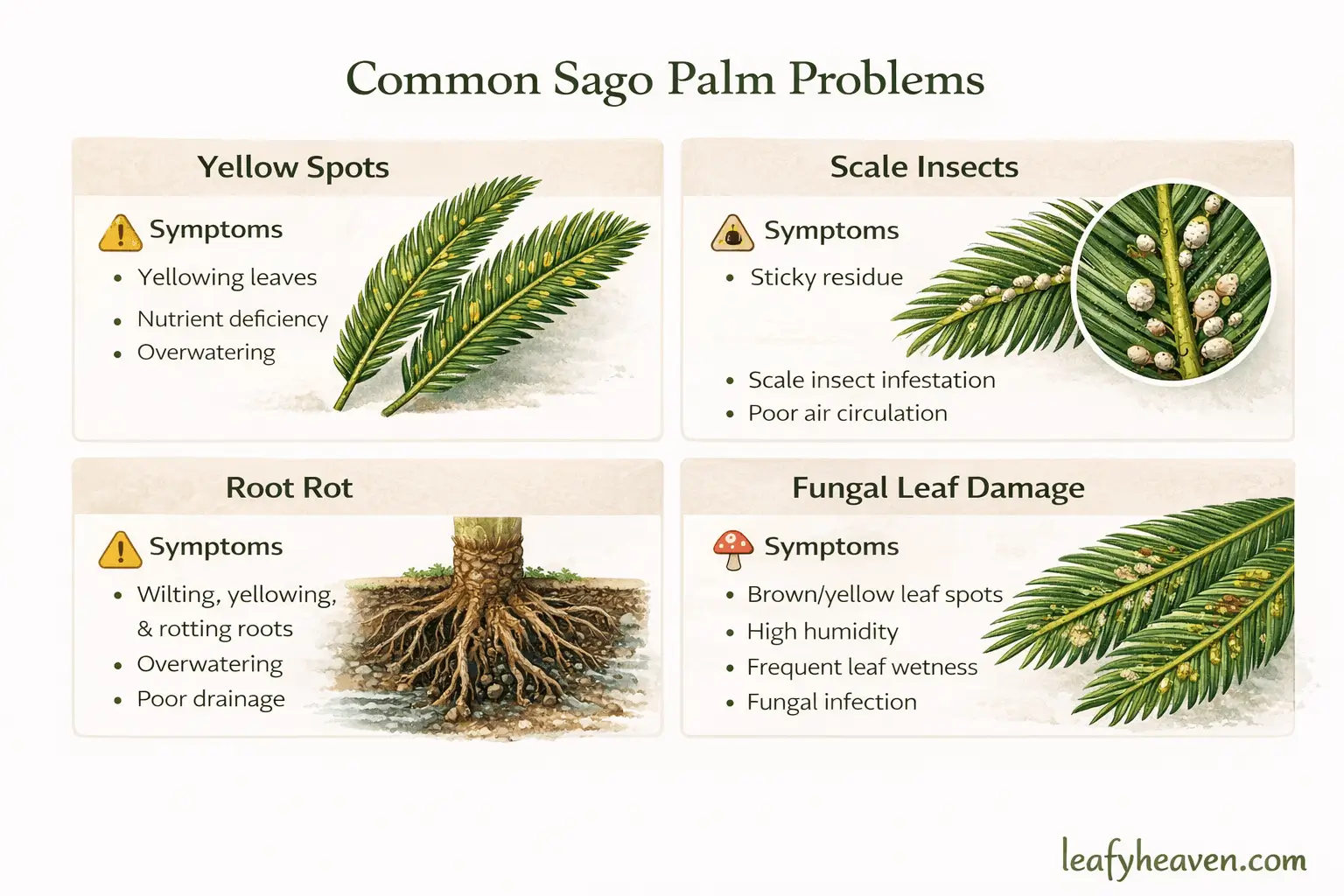
Yellow Spots on Cycad Leaves
Yellow spots on leaves often indicate a nutrient deficiency, particularly magnesium or manganese. However, insect infestations can also cause similar symptoms.
Possible causes include:
- Scale insects
- Poor soil nutrients
- Overwatering
Sago Palm Diseases
Although relatively hardy, sago palms can suffer from certain diseases.
Common sago palm disease issues include:
- Root rot from excess moisture
- Fungal infections affecting leaves
- Soil-borne pathogens
Some sago palm diseases may resemble other cycad diseases, and gardeners often search for cycad diseases pictures to identify symptoms correctly.
Signs Your Sago Palm May Be Dying
It can be difficult to determine how to tell if sago palm is alive. Several warning signs indicate serious health problems.
Indicators include:
- Soft or rotting trunk
- Completely brown crown
- No leaf growth for several years
Healthy cycads normally maintain firm trunks and evergreen foliage.
Other Common Sago Palm Problems
Several additional sago palm problems may occur in gardens.
These include:
- Pest infestations
- Leaf discoloration
- Slow growth due to poor nutrients
- Damage from extreme cold
Early detection helps prevent long-term damage.
Sago Palm Flowers, Seeds, and Reproduction
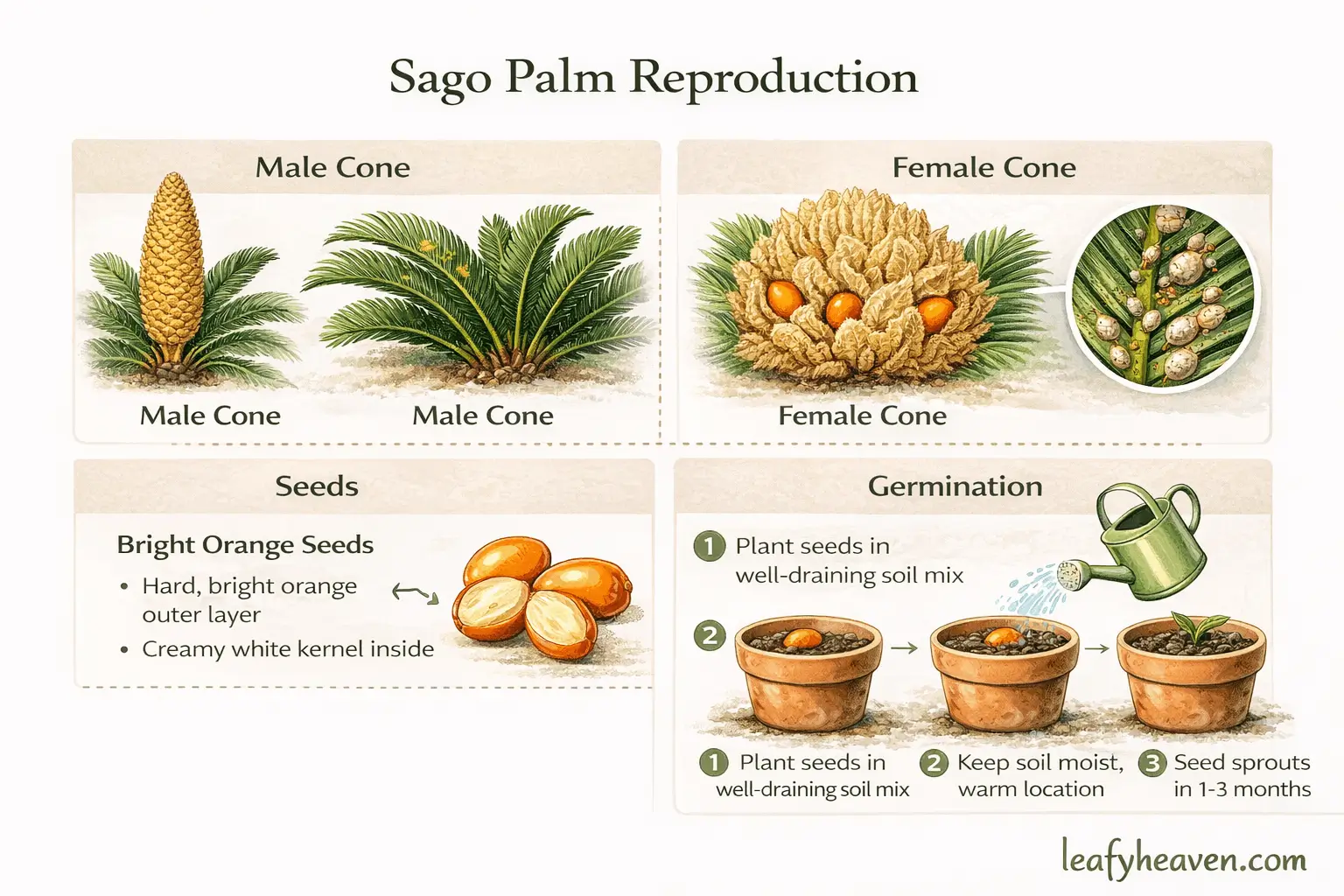
Male vs Female Sago Palm Plants
Sago palms are dioecious plants, meaning individual plants are either male or female.
Key differences include:
- Male plants produce a tall cone
- A female sago palm forms a round, woolly flower structure
The sago palm female structure eventually produces seeds when pollinated.
Sago Palm Seeds and Fruit
The bright orange seeds produced by female plants are often referred to as sago palm fruit.
Important characteristics:
- Large round seeds
- Bright orange or red color
- Contain reproductive embryos
Each sago palm seed develops after pollination. Mature sago palm seeds are similar to other cycads seeds used for plant propagation.
Planting Sago Palm Seeds
Gardeners interested in propagation often try planting sago palm seeds.
Basic steps include:
- Harvest mature seeds from female cones
- Remove the outer pulp
- Plant seeds in well-drained soil
- Keep soil lightly moist
- Maintain warm temperatures
Learning how to harvest sago palm seeds properly increases germination success when planting sago palm.
Are Sago Palm Trees Poisonous?
Sago Palm Toxicity Explained
One important safety concern is sago palm toxicity. All parts of the plant contain toxic compounds, especially the seeds.
The plant contains cycasin, which can cause severe poisoning. For this reason, the sago palm toxic reputation is well documented.
Sago Palm Toxicity in Dogs
Pets are particularly vulnerable to sago palm toxicity dogs incidents.
Dogs may chew on leaves or seeds, leading to poisoning. Symptoms include:
- Vomiting
- Liver failure
- Weakness
- Seizures
Because sago palm poisonous to dogs, many veterinarians warn homeowners about sago palms and dogs interactions. Cases of cycad poisoning in dogs can become life-threatening if untreated. Therefore, many pet owners ask are sago palms poisonous before planting them. Many ornamental plants used in landscaping also contain toxic compounds. For example, the Firestick plant has a dangerous sap that can irritate skin and eyes. Learn more in our guide on Firestick Plant.
Are Other Palm Trees Toxic to Dogs?
Not all palms pose the same risk. Some pet owners ask which palms are toxic to dogs or are palms poisonous to dogs.
Unlike cycads, most true palm species are not highly toxic. However, proper plant identification is essential to avoid accidental poisoning.
Where to Buy Sago Palm Trees
Sago Palm Prices and Availability
The sago palm price varies depending on plant size and maturity.
Typical price ranges:
- Small plants: $20–$50
- Medium plants: $100–$300
- Mature landscape specimens: several hundred dollars or more
Older plants are more expensive due to their slow growth.
Different Types of Cycads and Palm-Like Plants
Popular Cycad Varieties
The most widely grown cycad is Cycas revoluta, also known as the Japanese sago palm.
Other cycad varieties exist but are less common in ornamental landscapes.
Other Palm-Like Plants Often Confused With Cycads
Several plants resemble cycads and are sometimes mistaken for them.
Examples include:
- Cardboard plant
- Zamia species
- Dioon cycads
Gardeners comparing palm bushes types, palm bush types, and palm trees varieties often encounter confusion between cycads and types of palms. Some ornamental shrubs even resemble palmetto tree types or other types of palmetto trees.
Conclusion
The sago palm tree is a unique ornamental plant valued for its striking structure and prehistoric origins. Although it resembles a palm, the cycas revoluta sago palm is actually a cycad species with extremely slow growth and impressive longevity. With proper sago palm care, the plant can thrive for decades in gardens and landscapes. Understanding potential issues such as sago palm problems, nutrient deficiencies, and pest infestations helps maintain plant health. However, it is equally important to recognize the risks associated with sago palm toxicity, particularly for pets. When maintained correctly, sago palms remain durable, visually striking plants that enhance both indoor and outdoor spaces.
FAQs
How do I know if my sago palm tree is still alive?
A living sago palm typically has a firm trunk and may eventually produce new leaves. If the trunk becomes soft or completely hollow, the plant may be dead.
Why is my sago palm not producing new leaves?
This often occurs due to nutrient deficiencies, cold damage, or poor growing conditions. Providing balanced fertilizer and proper sunlight usually encourages new growth.
Are sago palm trees poisonous to dogs?
Yes. Sago palms contain toxic compounds that can cause severe poisoning in dogs. Even small amounts of seeds or leaves may lead to serious illness.
Can sago palms grow indoors?
Yes. Sago palms can grow indoors if they receive bright indirect light, well-draining soil, and minimal watering.
How long does a sago palm tree take to grow?
Sago palms grow extremely slowly. It may take several decades for the plant to reach full maturity.
How do you plant sago palm seeds?
Remove the outer seed coating, plant seeds in well-drained soil, keep them warm and slightly moist, and allow several months for germination.

Written by the LeafyHeaven Editorial Team
LeafyHeaven shares practical gardening tips and simple plant care guides to help you grow, nurture, and enjoy your plants with ease. Our goal is to make gardening feel natural, approachable, and rewarding for everyone.