
Introduction
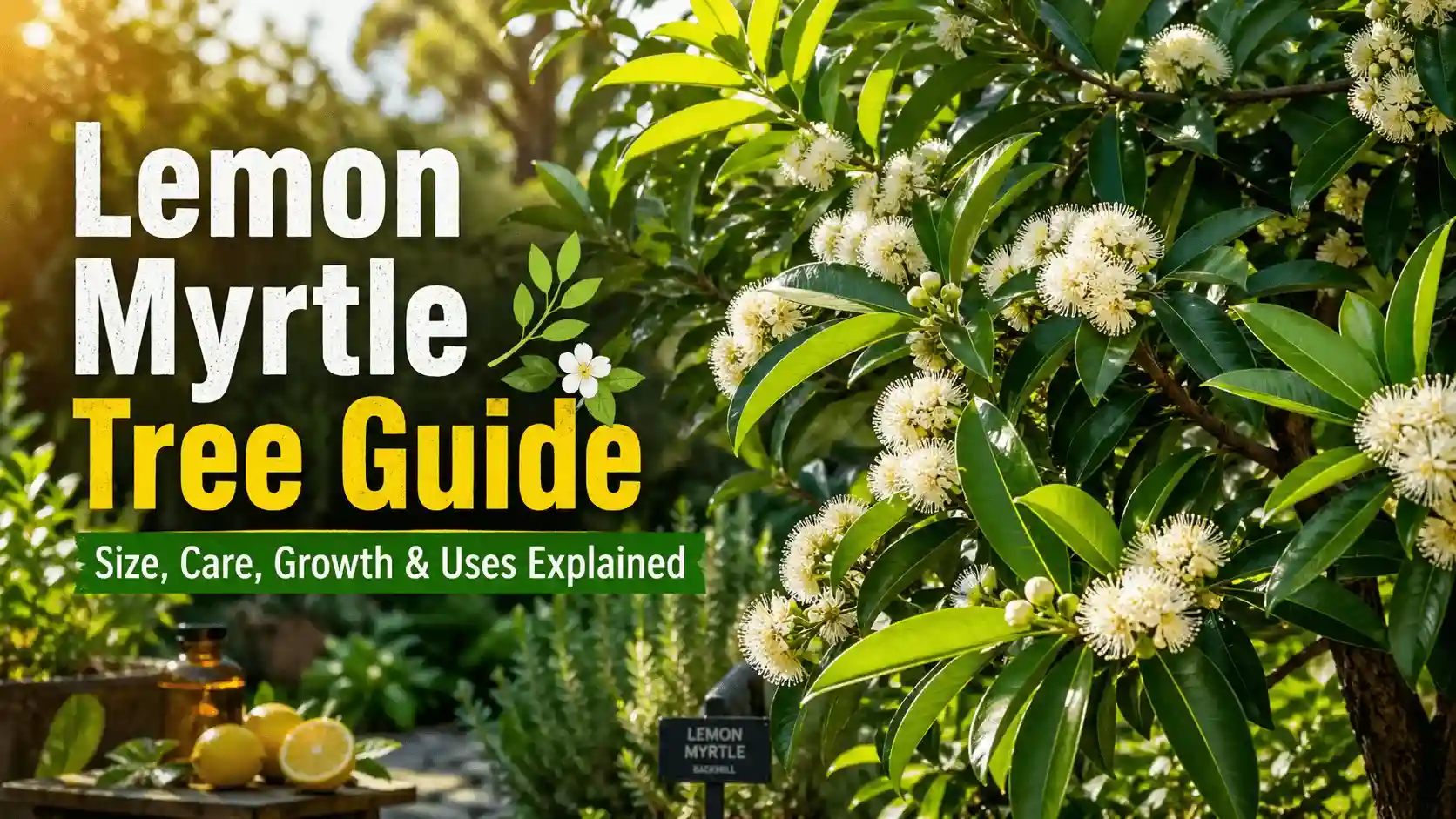
The lemon myrtle tree is a popular Australian native plant valued for its intense citrus fragrance and versatile uses. Scientifically known as Backhousia citriodora, and often called lemon scented myrtle, this plant is widely used in culinary applications, natural medicine, and landscaping. It typically grows as a medium-sized tree or dense shrub, making it suitable for hedging and garden design. With proper care, including well-drained soil and warm conditions, it grows steadily and requires moderate maintenance. Its attractive foliage, strong aroma, and adaptability make it a preferred choice for both home gardens and commercial planting. The lemon myrtle tree, scientifically known as Backhousia citriodora, is widely recognized for its strong citrus aroma and is detailed in botanical references such as Wikipedia.
For a deeper understanding of plant care fundamentals, explore our complete gardening and plant care guide to build a thriving garden ecosystem.
What Does a Lemon Myrtle Tree Look Like?
Key Identification Features
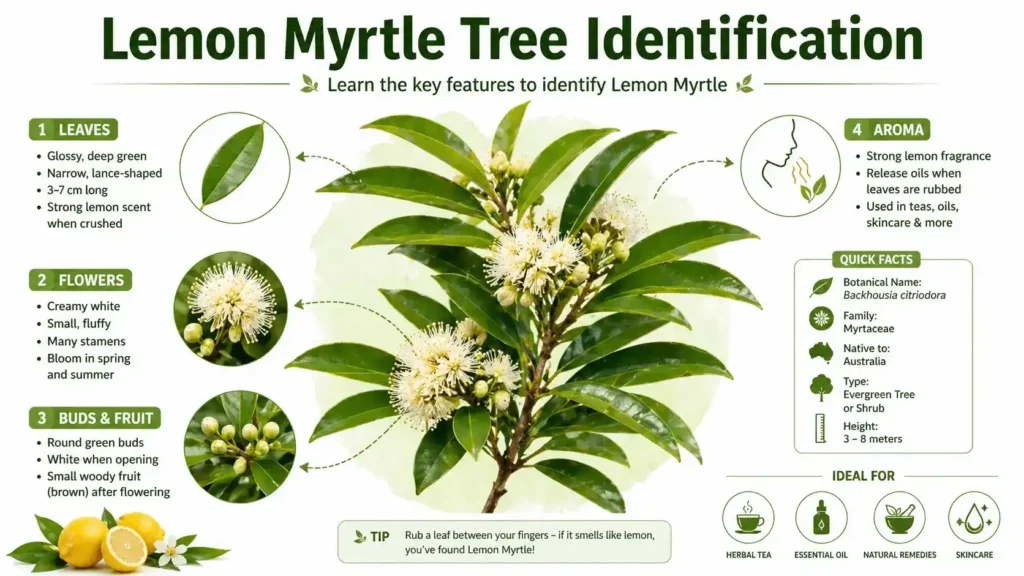
When identifying what does lemon myrtle look like or what does a lemon myrtle tree look like, the plant has very distinct features:
- Glossy, bright green leaves with a strong lemon aroma when crushed
- Smooth bark and upright growth habit
- Clusters of creamy white flowers known as lemon myrtle flowers
- Dense foliage, making it suitable for hedging
Quick summary:
| Feature | Description |
| Leaves | Glossy, aromatic |
| Flowers | Creamy white, fluffy |
| Aroma | Strong lemon scent |
| Shape | Upright, dense |
Native Origin & Botanical Details
The native myrtle / australian lemon myrtle tree originates from coastal regions of eastern Australia. The species Backhousia citriodora belongs to the myrtle family and thrives in warm, humid climates.
For those asking where does lemon myrtle grow in Australia:
- Found naturally in Queensland rainforests
- Prefers subtropical and tropical climates
- Grows well in sheltered garden environments
Lemon Myrtle Tree Size, Height & Growth Rate
How Big Does a Lemon Myrtle Tree Grow?
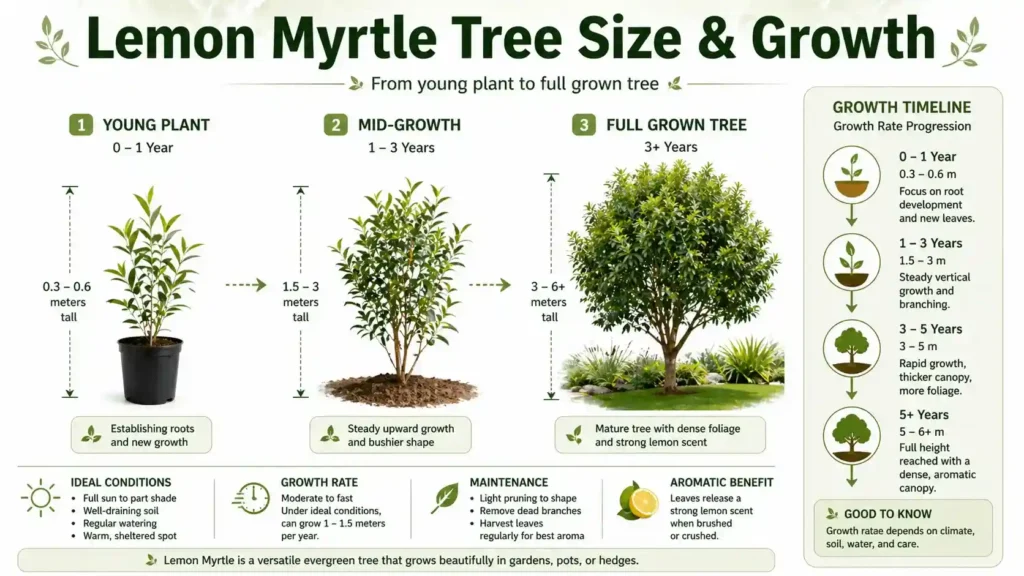
If you’re wondering how big do lemon myrtle trees grow or how tall does a lemon myrtle tree grow, the size depends on conditions:
- Average height: 3–8 meters
- Can reach up to 10–12 meters in ideal conditions
- Width: 2–4 meters
Lemon myrtle tree size overview:
| Growth Stage | Height |
| Young plant | 0.5–1.5 m |
| Mid growth | 2–5 m |
| Mature tree | 6–12 m |
Full Grown Lemon Myrtle Tree
A full grown lemon myrtle tree or mature lemon myrtle tree can be shaped as:
- A tall single-trunk tree
- A multi-stem shrub
Tree vs shrub form:
- Tree form: Taller, structured landscape feature
- Shrub form: Dense, ideal for hedges
Lemon Myrtle Growth Rate
The lemon myrtle growth rate is considered moderate to fast:
- Growth rate: 0.5–1 meter per year
- Faster in warm, humid climates
- Slower in cooler or dry regions
For gardeners comparing options, explore other fast growing evergreen trees Australia to find the best fit for your landscape needs.
Lemon Myrtle Varieties & Dwarf Options
Dwarf Lemon Myrtle Tree
The dwarf lemon myrtle tree is ideal for small spaces:
- Compact growth habit
- Suitable for pots and small gardens
- Easier to manage height
The term dwarf lemon myrtle tree bunnings is commonly searched, referring to nursery availability.
Common Lemon Myrtle Tree Varieties
Different lemon myrtle tree varieties vary in:
| Variety Type | Characteristics |
| Standard | Tall, fast-growing |
| Dwarf | Compact, slow-growing |
| Cultivated forms | Improved leaf density |
How to Grow Lemon Myrtle (Step-by-Step Guide)
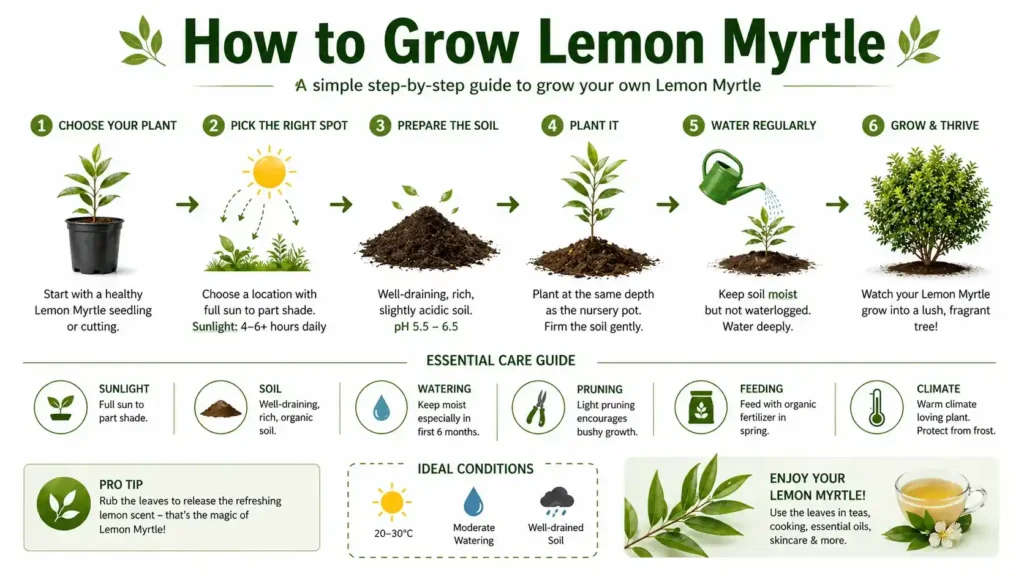
Ideal Growing Conditions
For optimal lemon myrtle growing conditions:
- Climate: Warm, subtropical
- Soil: Well-draining, slightly acidic
- Sunlight: Full sun to partial shade
Planting & Propagation
To understand how to grow lemon myrtle:
Steps:
- Choose a sunny location
- Prepare well-draining soil
- Plant at same depth as pot
- Water thoroughly after planting
Lemon myrtle propagation methods:
- Cuttings (most common)
- Seeds (less reliable)
Lemon myrtle pot growing tips:
- Use large containers
- Ensure drainage holes
- Repot as plant grows
Watering & Fertilizing
Basic care includes:
- Water regularly during establishment
- Reduce watering once mature
- Apply balanced fertilizer in growing season
If you’re exploring other aromatic plants with similar care needs, you can also learn how to plant lemongrass for a complete citrus-scented garden setup.
Lemon Myrtle Tree Care Guide
Pruning & Maintenance
For how to prune lemon myrtle trees:
- Prune lightly to shape
- Remove dead or damaged branches
- Trim regularly for hedge form
Common Problems & Solutions
Common lemon myrtle tree problems:
| Problem | Solution |
| Leaf drop | Improve watering balance |
| Pests | Use natural insect control |
| Slow growth | Check soil and sunlight |
Lemon Myrtle Hedge & Screening Uses
Lemon Myrtle Hedge Benefits
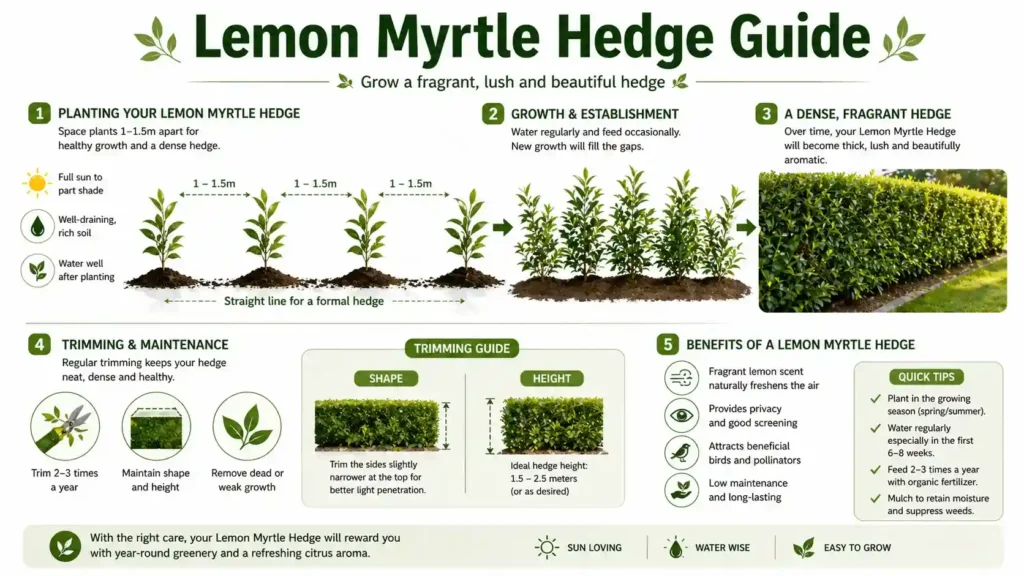
A lemon myrtle hedge offers:
- Dense foliage for privacy
- Strong fragrance
- Attractive green coverage
Also used as:
- Screening lemon myrtle hedge
- Backhousia citriodora hedge
How to Grow a Screening Hedge
Key tips:
- Spacing: 1–1.5 meters apart
- Regular pruning for density
- Maintain height for privacy
Uses of Lemon Myrtle Tree
Culinary Uses
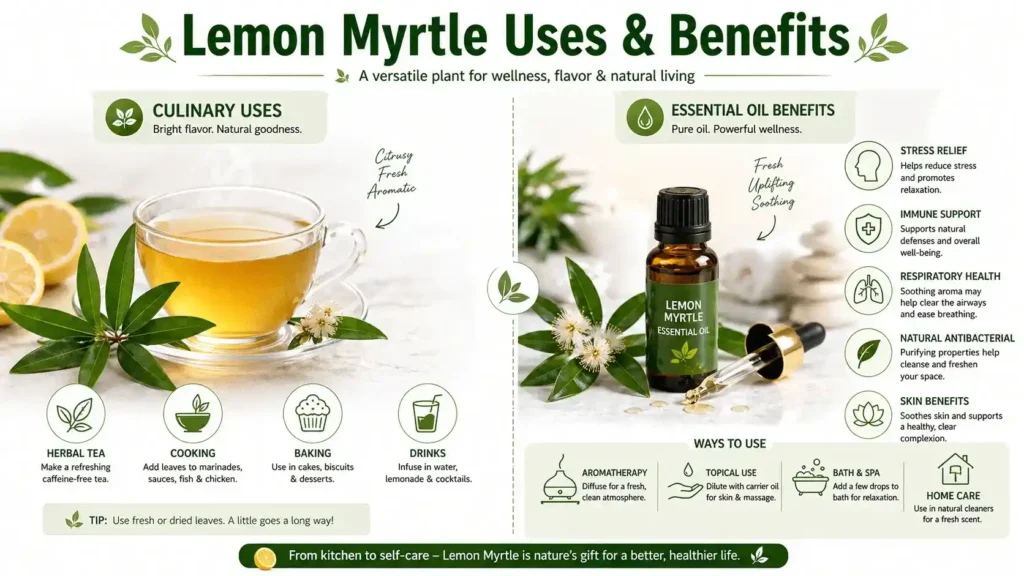
The plant is widely used for lemon myrtle tea and cooking.
Lemon myrtle tea recipe:
- Use fresh leaves
- Steep in hot water for 5–10 minutes
How to make lemon myrtle tea from fresh leaves:
- Crush leaves
- Add boiling water
- Steep and strain
Lemon myrtle taste: strong citrus, refreshing
Essential Oil & Health Benefits
Lemon myrtle essential oil is known for:
- Antibacterial properties
- Aromatherapy use
- Skin care benefits
Benefits of lemon myrtle essential oil:
- Supports relaxation
- Helps with minor skin issues
- Provides natural fragrance
Where to Buy Lemon Myrtle Tree
Availability & Buying Tips
When searching lemon myrtle tree for sale:
- Check local nurseries
- Buy healthy, pest-free plants
- Choose size based on space
Location-Based Buying
Common searches include:
- lemon myrtle tree perth
- brisbane / sydney / melbourne
- lemon myrtle tree bunnings
Availability depends on local climate and nurseries.
Conclusion
The lemon myrtle tree is a versatile plant offering strong fragrance, practical uses, and landscape value. With proper care, suitable growing conditions, and regular maintenance, it grows into a productive tree or dense hedge. Its adaptability makes it an excellent choice for home gardens, culinary use, and natural wellness applications. Whether grown in the ground or in pots, it remains a reliable and attractive addition to any garden space.
FAQs
How fast does a lemon myrtle tree grow?
It grows at a moderate to fast rate, typically 0.5–1 meter per year in ideal conditions.
How tall does a lemon myrtle tree get?
It can reach 6–12 meters when fully grown, depending on environment and care.
Can lemon myrtle be grown as a hedge?
Yes, it is commonly used as a dense, fragrant hedge for privacy screening.
What are the benefits of lemon myrtle leaves?
They are used in tea, cooking, and essential oils with antibacterial and aromatic properties.
How do you care for a lemon myrtle tree?
Provide well-drained soil, regular watering, sunlight, and occasional pruning.
Can lemon myrtle grow in pots?
Yes, dwarf varieties and young plants grow well in containers with proper care.

Written by the LeafyHeaven Editorial Team
LeafyHeaven shares practical gardening tips and simple plant care guides to help you grow, nurture, and enjoy your plants with ease. Our goal is to make gardening feel natural, approachable, and rewarding for everyone.