
Introduction to Indoor Plants Australia
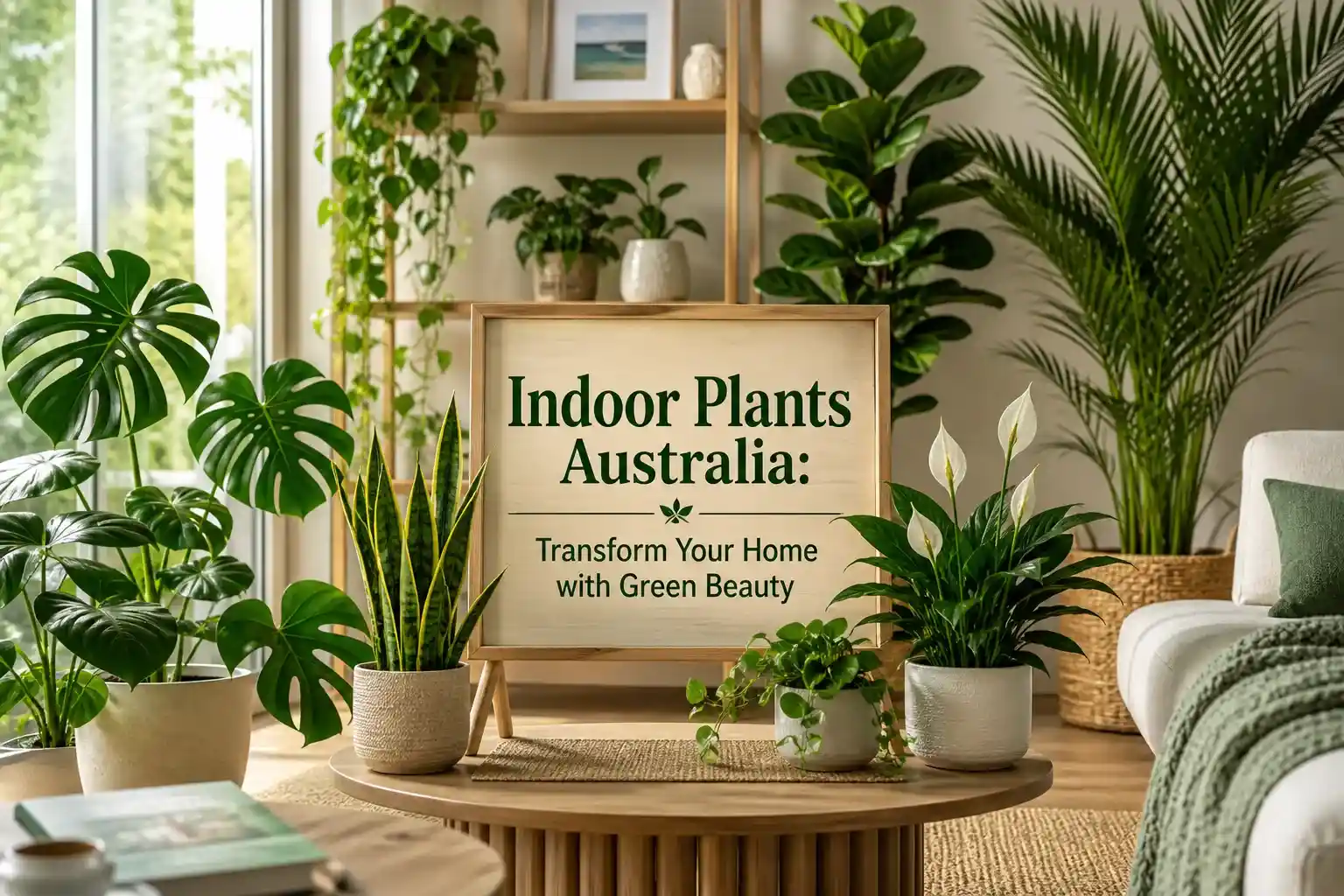
Indoor plants australia have become a staple in modern homes due to their versatility, low maintenance needs, and ability to enhance indoor environments. From compact apartments to spacious houses, homeowners are increasingly incorporating greenery to improve both aesthetics and well-being. With a wide range of options available, selecting the best indoor plants australia depends on factors like light, space, and care requirements.
One of the primary reasons for their popularity is air purification. Many indoor plants that purify air help remove toxins and improve indoor air quality, making air purifying plants indoor a practical addition to living spaces. Beyond functionality, indoor greenery significantly enhances visual appeal. Living room plants and carefully chosen plants for interior design add texture, color, and a natural touch to any room.
Indoor plants are also widely recognized for their health benefits. Studies suggest that indoor plants good for health can help reduce stress, boost mood, and support overall well-being. Choosing the best indoor plants for health ensures a balance between beauty and functionality, making indoor gardening a smart and sustainable choice for Australian homes.
Popular Indoor Plants Australia (Top Choices for Homes)
Choosing from the wide range of popular indoor plants australia offers homeowners flexibility in design, care level, and functionality. Many common indoor plants australia are selected for their adaptability to indoor conditions and their ability to thrive with minimal effort. This curated list of indoor plants highlights reliable options that suit different lifestyles, especially for those seeking practicality and visual appeal.
| Plant Name | Light Needs | Maintenance | Air Purifying |
| Snake Plant (Sansevieria) | Low to bright indirect light | Very low | Yes |
| ZZ Plant (Zamioculcas zamiifolia) | Low light | Very low | Moderate |
| Peace Lily (Spathiphyllum) | Low to medium light | Low | Yes |
| Monstera (Monstera deliciosa) | Bright indirect light | Medium | No |
| Fiddle Leaf Fig (Ficus lyrata) | Bright indirect light | High | No |
| Rubber Plant (Ficus elastica) | Medium to bright light | Low to medium | Moderate |
| Spider Plant (Chlorophytum comosum) | Low to medium light | Low | Yes |
| Pothos / Devil’s Ivy | Low to bright indirect light | Very low | Moderate |
| Areca Palm (Dypsis lutescens) | Bright indirect light | Medium | Yes |
| Kentia Palm (Howea forsteriana) | Low to medium light | Low | Moderate |
| Aloe Vera | Bright light | Low | No |
| Jade Plant (Crassula ovata) | Bright light | Low | No |
| Dracaena | Low to bright indirect light | Low | Yes |
| Bamboo Palm | Medium light | Medium | Yes |
| Bird of Paradise (Strelitzia reginae) | Bright light | Medium | No |
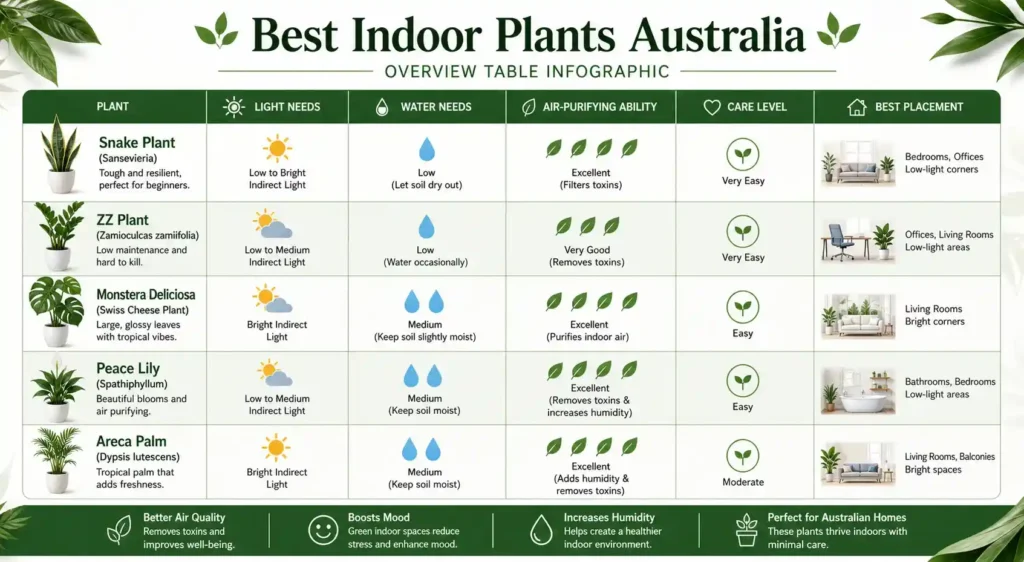
Below is a quick comparison of the best indoor plants in Australia based on care level, light, and air-purifying ability.
Low-Maintenance Indoor Plants
For beginners and busy households, low maintenance indoor plants australia are the ideal starting point. These easy indoor plants require minimal attention while still delivering strong aesthetic and health benefits.
- Snake Plant (Sansevieria)
A top choice for snake plant indoors, known for its resilience in low light and irregular watering. Proper snake plant care involves allowing the soil to dry between watering. If you’re learning how to care for snake plant, focus on well-draining soil and indirect light for optimal growth. - ZZ Plant (Zamioculcas zamiifolia)
Highly drought-tolerant and adaptable, the ZZ plant thrives in low-light environments. Its glossy leaves make it a popular decorative and functional option. - Cast Iron Plant (Aspidistra elatior)
True to its name, this plant is extremely hardy. It tolerates neglect, low light, and varying temperatures, making it one of the most reliable easy indoor plants. - Aloe Vera
A functional succulent valued for both décor and medicinal use. It requires bright light and minimal watering, making it perfect for low-maintenance indoor setups. - Jade Plant (Crassula ovata)
A compact succulent that stores water in its leaves, reducing watering needs. It thrives in bright indoor spaces and adds a clean, structured look to interiors.
These low-maintenance options are ideal for anyone looking to build a thriving indoor plant collection without complex care routines.
Decorative & Stylish Indoor Plants
For homeowners focused on interior aesthetics, these options are considered among the best indoor plants australia due to their bold structure, vibrant foliage, and strong visual impact. Each best house plant in this category enhances modern interiors while remaining suitable for indoor environments.
- Fiddle Leaf Fig (Ficus lyrata)
A statement plant with large, glossy leaves that elevate any living space. Proper fiddle leaf fig care includes bright, indirect light and consistent watering. Effective indoor fig tree care also requires stable temperatures and minimal movement to prevent leaf drop. - Monstera (Monstera deliciosa)
Known for its iconic split leaves, Monstera is a popular decorative choice. It thrives in indirect light and adds a tropical, contemporary feel to interiors. - Rubber Plant (Ficus elastica)
Featuring thick, dark green leaves, this plant offers a sleek and polished look. It adapts well to indoor conditions and grows steadily with moderate care. - Bird of Paradise (Strelitzia reginae)
A bold plant with large, banana-like leaves that create a dramatic indoor focal point. It prefers bright light and works well in spacious interiors. - Croton (Codiaeum variegatum)
Recognized for its colorful foliage, Croton adds vibrant tones to indoor spaces. It requires bright light to maintain its striking leaf patterns.
These decorative plants combine visual appeal with indoor adaptability, making them strong choices for enhancing home interiors.
Indoor Plants for Small Spaces & Living Rooms
Selecting the right indoor plants for living room areas requires compact, adaptable species that enhance space without overcrowding. These living room indoor plants are ideal for small apartments, corners, shelves, and tabletops while still offering visual and functional benefits.
- Spider Plant (Chlorophytum comosum)
A compact, fast-growing plant with arching leaves. It works well in hanging baskets or shelves and adapts easily to various light conditions.If you want to explore more options, different spider plant varieties offer unique leaf patterns and growth styles suitable for indoor spaces.
- Peace Lily (Spathiphyllum)
A popular indoor plant known for its white blooms and air-purifying qualities. It thrives in low to medium light and adds a clean, elegant touch to living rooms. - Pothos / Devil’s Ivy (Epipremnum aureum)
A trailing plant ideal for shelves and wall décor. It grows quickly, tolerates low light, and is highly versatile for indoor styling. - Chinese Evergreen (Aglaonema)
Known for its patterned foliage, it performs well in low-light environments and requires minimal care, making it perfect for compact spaces. - Parlour Palm (Chamaedorea elegans)
A classic indoor palm with soft, feathery fronds. It fits well in small spaces and adds a subtle tropical feel without requiring much maintenance.
Large & Statement Indoor Plants
For spacious interiors, large indoor plants australia create bold visual impact and act as natural focal points. These tall indoor plants australia are ideal for filling empty corners, enhancing high ceilings, and bringing structure to indoor design.
- Areca Palm (Dypsis lutescens)
A lush, full plant that adds brightness and texture. It thrives in indirect light and is commonly used to create a tropical indoor atmosphere. - Kentia Palm (Howea forsteriana)
A slow-growing, elegant palm suited for indoor environments. It adapts well to lower light and maintains a refined appearance over time. - Banana Plant (Musa)
Known for its large, dramatic leaves, this plant creates a strong statement. It requires bright light and consistent care to thrive indoors. - Bamboo Palm (Chamaedorea seifrizii)
A tall, airy plant that works well for adding height and greenery. It is also valued for its air-purifying properties and adaptability.
These larger plants are ideal for homeowners looking to create a bold, structured indoor plant display.
Flowering & Exotic Indoor Plants
This category represents some of the most visually striking indoor plant types, offering bold foliage, unique textures, and vibrant blooms. These selections are often considered the coolest indoor plants due to their exotic appearance and decorative appeal, making them ideal for enhancing modern interiors with a distinctive natural touch.
- Anthurium
Known for its glossy, heart-shaped flowers, Anthurium adds long-lasting color indoors. It thrives in bright, indirect light and prefers humid conditions, making it a strong ornamental choice. - Hibiscus (Hibiscus rosa-sinensis)
A tropical flowering plant that produces large, vibrant blooms. It requires bright light and consistent care, making it suitable for well-lit indoor spaces or sunrooms. - Alocasia (Elephant Ear)
Recognized for its dramatic, oversized leaves, Alocasia is a bold statement plant. It prefers warm, humid environments and adds a sculptural element to interiors. - Calathea
Famous for its patterned leaves and dynamic leaf movement, Calathea is highly decorative. It thrives in indirect light and high humidity, making it ideal for indoor tropical setups.
These exotic selections stand out among various indoor plant types, offering a mix of texture, color, and form that enhances interior spaces with a premium botanical feel.
Indoor Plants That Purify Air (Best Choices for Clean Indoor Air)
Indoor plants that purify air are increasingly used in modern homes to improve indoor environments naturally. These air purification indoor plants help filter common household toxins while also adding greenery and freshness to interiors. Many homeowners prefer the best air purifying plants because they combine aesthetic value with functional health benefits, making them a practical choice for bedrooms, living rooms, and office spaces.
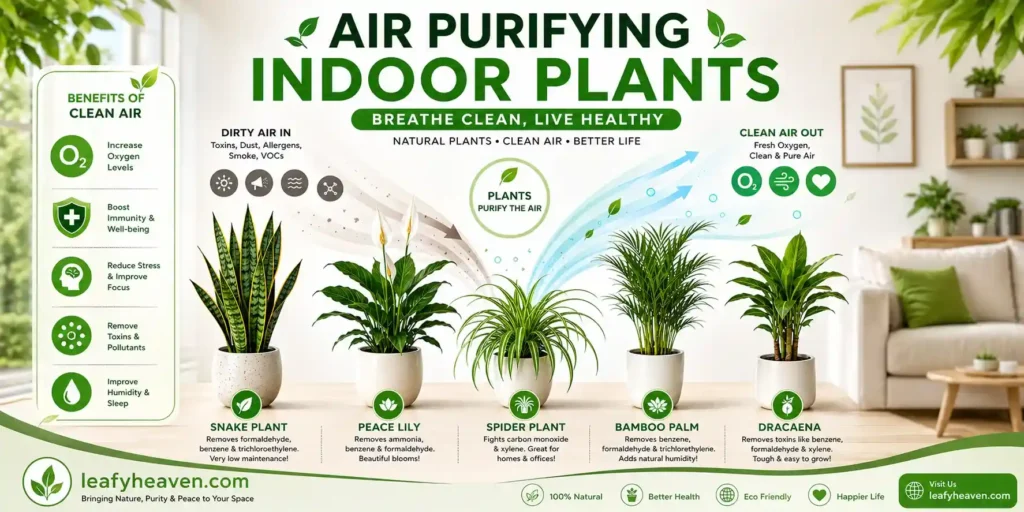
Top Air-Purifying Indoor Plants
These plants are widely recognized as the best indoor plants for clean air, known for their ability to remove toxins and improve overall air quality indoors.
- Snake Plant
A highly efficient air purifier that converts carbon dioxide into oxygen at night, making it ideal for bedrooms. - Peace Lily
Known for removing pollutants like formaldehyde and benzene while also producing elegant white flowers. - Spider Plant
A low-maintenance plant that helps reduce airborne toxins and improves indoor freshness. - Bamboo Palm
Effective in filtering indoor pollutants and adding humidity to dry environments, making it suitable for living spaces. - Dracaena
A versatile plant species that helps remove multiple toxins while enhancing interior aesthetics with its upright foliage.To keep it healthy indoors, following a proper dracaena fragrans care routine will ensure steady growth and long-term plant health.
These selections are commonly ranked among the best indoor plants that clean the air, offering both health and visual benefits.
Benefits of Air-Purifying Plants
Air-purifying indoor plants contribute significantly to healthier indoor environments and improved living conditions.
- Improve indoor air quality by filtering harmful chemicals and increasing oxygen levels
- Reduce toxins commonly found in household materials, paints, and furniture
- Boost health by supporting cleaner breathing environments and promoting relaxation
These plants that are healthy for you are often referred to as healthy plants indoor due to their positive impact on wellness. Incorporating them into home design ensures not only decorative value but also functional health support.
Australian Native Indoor Plants
Native indoor plants australia are becoming increasingly popular as homeowners look for resilient, climate-adapted greenery. These australian native indoor plants naturally suit local conditions, making them easier to grow indoors compared to many exotic species. They also support a more sustainable approach to home gardening while maintaining strong decorative value.
Best Native Plants for Indoors
Selecting the right native species ensures better adaptability and long-term indoor performance.
- Kentia Palm
One of the most reliable indoor palms, known for its graceful fronds and tolerance to low light. It is widely used in Australian interiors for its elegant structure and durability. - Bird of Paradise
A bold native-inspired plant with large, upright leaves. It thrives in bright indoor spaces and adds a tropical architectural look to interiors. - Native Ferns
Various Australian fern species adapt well to indoor humidity levels. They are ideal for shaded corners and bring soft, natural texture to home environments.
Why Choose Native Indoor Plants
Choosing native indoor plants australia offers several practical and environmental advantages:
- Adapted to Australian climate
These plants are naturally suited to local temperature and humidity conditions, making them more resilient indoors. - Low maintenance
Many native species require less water and care, making them easier to manage for beginners and busy households. - Sustainable choice
Growing australian native indoor plants supports ecological balance and reduces reliance on high-maintenance exotic species.
These benefits make native plants a practical and environmentally responsible option for indoor greenery.
How to Choose the Best Indoor Plants for Your Home
Selecting the best plants for indoor spaces requires understanding your home environment, available space, and how much care you can realistically provide. Not all plants adapt the same way indoors, so knowing what are good indoor plants helps ensure long-term success and healthier growth. Choosing the right good plants indoor improves both aesthetics and plant survival, making your indoor greenery more sustainable and visually balanced. The goal is to select plants good indoors that match your lifestyle and home conditions.
For a deeper understanding of plant selection, watering, and long-term care, following a complete gardening and plant care guide can help you make better decisions for your indoor garden.
Based on Light Conditions
Light availability is one of the most important factors when selecting indoor plants.
- Low light plants
Suitable for shaded corners, hallways, and rooms with minimal natural sunlight. Examples include Snake Plant, ZZ Plant, and Peace Lily. - Bright light plants
Require strong, indirect or direct sunlight near windows. Examples include Fiddle Leaf Fig, Croton, and Bird of Paradise.
Matching plants with proper light conditions ensures healthy growth and reduces maintenance issues.
Based on Space
Space availability directly influences plant size and placement.
- Small indoor plants
Ideal for desks, shelves, and compact areas. Examples include Spider Plant, Pothos, and Chinese Evergreen. - Large indoor plants
Best for open spaces, corners, and high ceilings. Examples include Kentia Palm, Areca Palm, and Banana Plant.
Choosing the right size ensures a balanced interior layout without overcrowding.
Based on Maintenance Level
Maintenance requirements vary significantly between plant types.
- Easy-care plants
Perfect for beginners or busy lifestyles. They require minimal watering and attention, such as Snake Plant and ZZ Plant. - High-maintenance plants
Need regular watering, humidity control, and light monitoring. Examples include Calathea and Fiddle Leaf Fig.
Understanding care levels helps in selecting plants good indoors that align with your routine and experience.
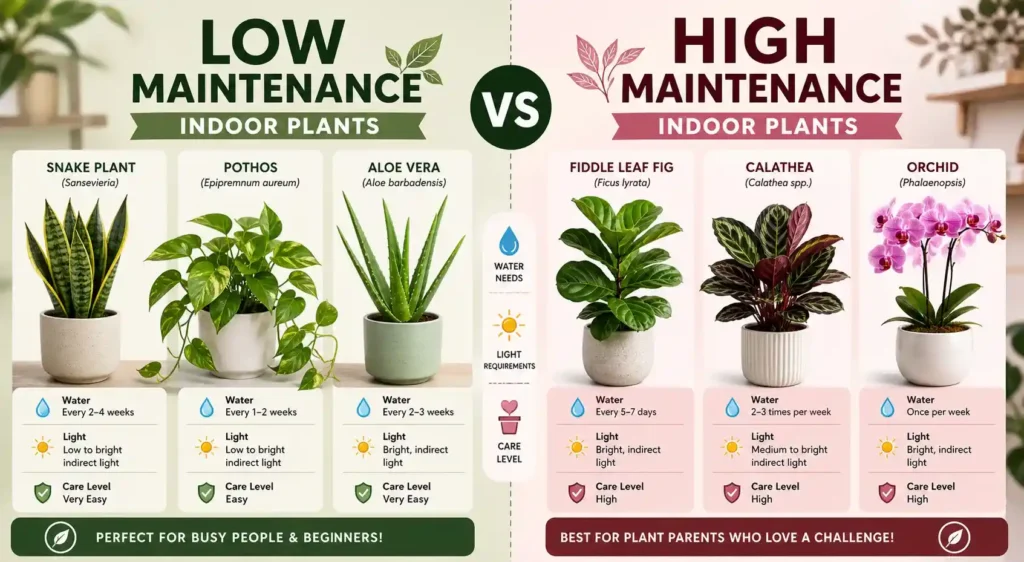
| Category | Examples | Light Requirements | Water Needs | Care Level | Best For |
| Low Maintenance Plants | Snake Plant, ZZ Plant, Cast Iron Plant, Pothos (Devil’s Ivy), Spider Plant, Aloe Vera, Jade Plant, Chinese Evergreen, Rubber Plant | Low to bright indirect light (varies by plant) | Low (allow soil to dry between watering) | Very easy | Beginners, busy lifestyles, offices, low-effort home setups |
| High Maintenance Plants | Fiddle Leaf Fig, Calathea, Alocasia (Elephant Ear), Croton, Orchid, Maidenhair Fern, Boston Fern, Gardenia | Bright indirect light with stable conditions | Medium to high (needs consistent monitoring) | Advanced | Experienced plant owners, aesthetic-focused interiors, humidity-controlled spaces |
This comparison helps you choose indoor plants based on your lifestyle and available time for care.
Indoor Plant Care Guide (Australia-Specific Tips)
Proper care is essential for maintaining healthy indoor greenery in Australian homes, where climate conditions, indoor heating, and seasonal changes can affect plant growth. Understanding watering, placement, and species-specific needs helps ensure long-term plant health and stability.
Watering & Soil Needs
Watering is one of the most common areas where indoor plant care goes wrong. The key balance is avoiding both extremes.
- Overwatering
Leads to root rot, yellowing leaves, and fungal issues. It is especially harmful in pots without proper drainage. - Underwatering
Causes dry soil, wilting, and brittle leaves. Plants may stop growing or lose vitality over time.
For most indoor plants in Australia, well-draining soil is essential. A mix that allows airflow and prevents water retention is ideal, especially in humid or air-conditioned environments.
Light & Placement
Correct placement plays a major role in plant health and growth performance.
- Indoor plant living room placement
Living rooms are ideal for medium to bright indirect light plants. Positioning near windows ensures balanced exposure without direct harsh sunlight. - Plants for indoor living room styling
Decorative plants should be placed in corners, near furniture, or as focal points to enhance interior aesthetics while still receiving adequate light.
Rotating plants occasionally ensures even growth and prevents leaning toward light sources.
Common Care Examples
Understanding plant-specific care improves survival rates and reduces maintenance issues.
- Snake Plant care (how to take care of snake plant)
Requires minimal watering and thrives in low to moderate light. Allow soil to dry completely between watering sessions. It is highly tolerant of neglect, making it one of the easiest indoor plants. - Fiddle Leaf Fig care (how to care for fiddle leaf fig)
Needs consistent indirect light and stable conditions. Avoid overwatering and keep humidity levels moderate. Sudden changes in environment can cause leaf drop, so stable placement is important.
These care practices help maintain healthy indoor plants that adapt well to Australian home environments.
Types of Indoor Plants (Classification Overview)
Understanding indoor plant types helps in selecting the right greenery based on purpose, maintenance level, and aesthetic preference. Different type of house plants offer unique benefits, from decorative appeal to air quality improvement. Classifying home plant types also makes it easier to design balanced indoor spaces that combine beauty and functionality.
Foliage Plants
Foliage plants are grown primarily for their leaves rather than flowers. They are one of the most common indoor plant types used in modern homes.
- Examples include Monstera, Fiddle Leaf Fig, and Rubber Plant
- Known for large, textured, or patterned leaves
- Ideal for adding visual structure and greenery to interiors
- Require moderate to bright indirect light depending on species
These plants are widely used for interior styling due to their bold visual impact.
Flowering Plants
Flowering type of house plants bring color and vibrancy into indoor spaces. They are often used as decorative highlights in home décor.
- Examples include Peace Lily, Anthurium, and Hibiscus
- Provide seasonal or continuous blooms depending on care
- Require balanced light and proper humidity levels
- Add freshness and natural color contrast to interiors
These plants are preferred for enhancing aesthetic appeal in living spaces.
Succulents
Succulents are low-maintenance home plant types that store water in their leaves, making them highly drought-resistant.
- Examples include Aloe Vera, Jade Plant, and Echeveria
- Require minimal watering and well-draining soil
- Thrive in bright light conditions
- Perfect for beginners and busy households
Their compact size and durability make them ideal for small indoor setups.
Air-Purifying Plants
Air-purifying plants are valued for their ability to improve indoor air quality while enhancing décor.
- Examples include Snake Plant, Spider Plant, and Peace Lily
- Help filter toxins and improve oxygen levels indoors
- Suitable for bedrooms, offices, and living rooms
- Combine functional health benefits with aesthetic value
These plants are essential for creating healthier indoor environments while maintaining natural beauty.
Benefits of Indoor Plants
Indoor plants are more than just decorative elements; they contribute significantly to overall well-being and home environment quality. Many studies and practical observations highlight that indoor plants good for health can positively influence both physical and mental wellness. Choosing the best indoor plants for health ensures that homeowners enjoy both aesthetic and functional advantages in daily living spaces.
Improve Air Quality
One of the most important benefits of indoor plants is their ability to naturally improve indoor air conditions.
- Absorb carbon dioxide and release oxygen
- Help filter common indoor pollutants
- Support a fresher and cleaner indoor environment
Certain plant varieties also contribute to humidity balance, making indoor air more comfortable and breathable.
Reduce Stress
Indoor greenery has a calming effect on the human mind.
- Helps lower stress levels and anxiety
- Promotes relaxation in home and work environments
- Creates a natural, peaceful atmosphere
Being around greenery has been linked to improved mood and emotional balance, especially in urban living spaces.
Enhance Décor
Indoor plants are widely used as natural design elements in modern interiors.
- Add color, texture, and depth to rooms
- Complement different interior styles
- Serve as focal points in living areas
From minimal setups to lush green corners, plants enhance visual appeal without requiring major design changes.
Increase Productivity
Indoor plants also play a role in improving focus and efficiency.
- Support better concentration in workspaces
- Create a more engaging and comfortable environment
- Reduce mental fatigue during long tasks
This makes them especially valuable in home offices and study areas, where productivity matters most.
Conclusion
Choosing the right indoor plants australia is essential for creating a healthy, visually appealing, and balanced indoor environment. From air-purifying varieties to decorative statement plants, each option serves a specific purpose based on space, light, and maintenance needs. Selecting wisely ensures long-term growth and maximum benefits for your home.
To build a successful indoor garden, it is important to:
- Select plants based on your space, lighting, and lifestyle needs
- Start with low-maintenance options if you are a beginner
- Gradually expand your collection as your confidence and experience grow
Starting simple with easy-care varieties helps you maintain consistency and avoid common plant care mistakes. Over time, you can introduce more decorative or exotic species to enhance your indoor setup.
Explore your options and begin building your own indoor green space today to enjoy a healthier, more refreshing home environment.
FAQs
What are the best indoor plants in Australia?
Some of the best options include Snake Plant, Monstera, Peace Lily, Fiddle Leaf Fig, and Kentia Palm. These indoor plants australia choices are popular because they adapt well to indoor environments, offer strong visual appeal, and require varying levels of care suitable for different experience levels.
Which indoor plants purify air the most?
The most effective indoor plants that purify air include Snake Plant, Peace Lily, Spider Plant, Bamboo Palm, and Dracaena. These plants help filter common indoor toxins and are widely recommended as best air purifying plants for improving indoor air quality naturally.
What are low-maintenance indoor plants in Australia?
Low-maintenance options include Snake Plant, ZZ Plant, Cast Iron Plant, Aloe Vera, and Jade Plant. These easy indoor plants require minimal watering and care, making them ideal for beginners and busy households looking for low maintenance indoor plants australia.
Which indoor plants are best for living rooms?
The best indoor plants for living room spaces include Monstera, Peace Lily, Pothos, Spider Plant, and Parlour Palm. These living room indoor plants are chosen for their adaptability, decorative value, and ability to thrive in indoor lighting conditions.
How often should indoor plants be watered?
Watering depends on plant type, season, and indoor conditions. Most indoor plants should be watered when the topsoil becomes dry. Overwatering is a common mistake, especially for plants like Snake Plant and ZZ Plant, which prefer dry intervals between watering.
What are the easiest indoor plants for beginners?
Some of the easiest options include Snake Plant, Pothos, Spider Plant, and ZZ Plant. These plants are highly resilient, tolerate irregular watering, and adapt well to different indoor lighting conditions.
Can indoor plants survive in low light conditions?
Yes, many indoor plants like Snake Plant, ZZ Plant, Peace Lily, and Chinese Evergreen can survive in low light. However, growth may slow down, so occasional exposure to indirect light is still beneficial for overall health.

Written by the LeafyHeaven Editorial Team
LeafyHeaven shares practical gardening tips and simple plant care guides to help you grow, nurture, and enjoy your plants with ease. Our goal is to make gardening feel natural, approachable, and rewarding for everyone.