
Introduction
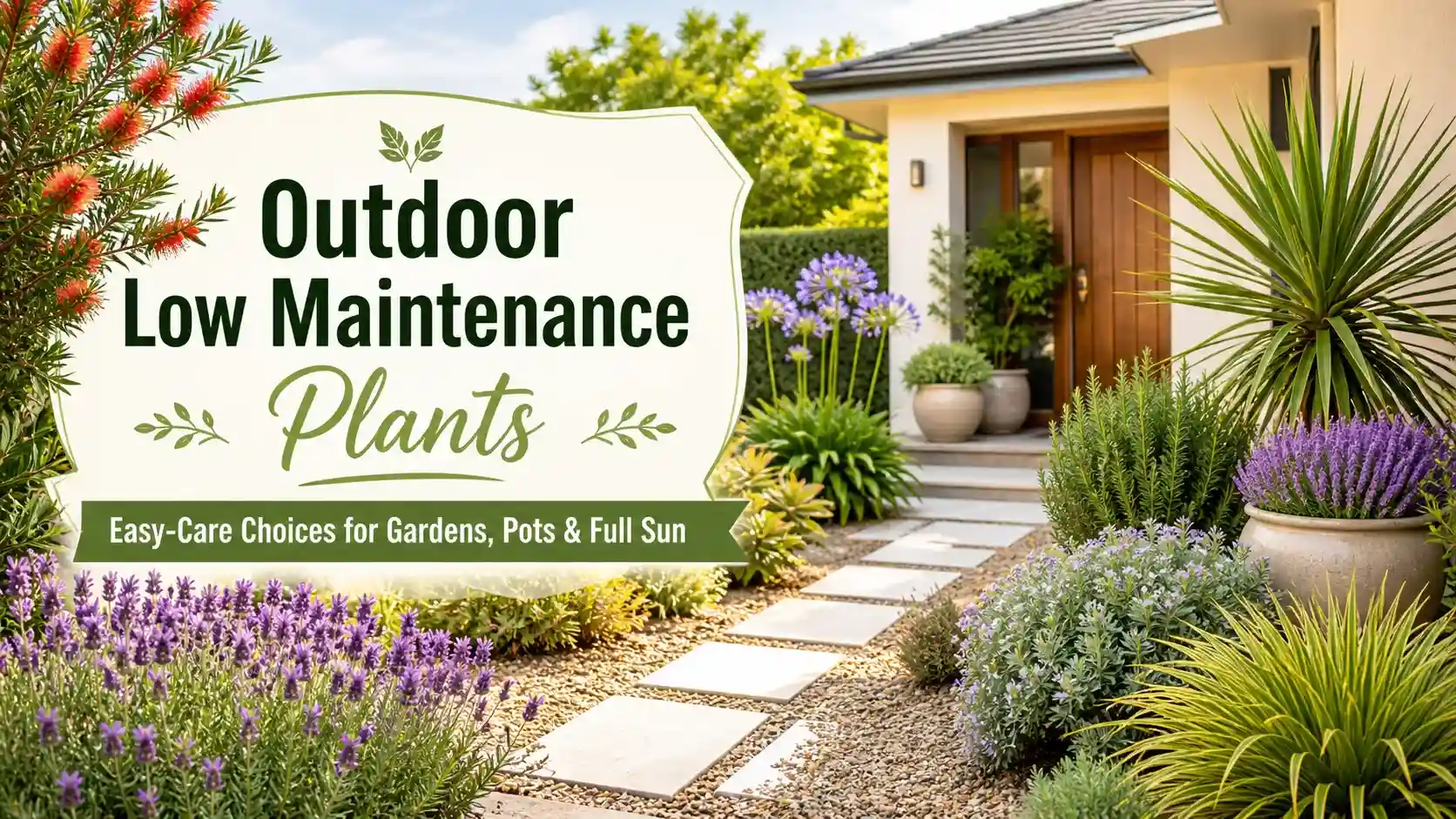
Outdoor low maintenance plants are ideal for homeowners who want a beautiful, healthy garden without spending every weekend watering, pruning, feeding, or managing pest problems. The right low maintenance outdoor plants can handle changing weather, grow well with basic care, and keep outdoor spaces looking fresh through different seasons. This guide covers the best low maintenance outdoor plants for full sun areas, Australian-friendly gardens, front yards, shrubs, flowers, tall plants, screening plants, and potted outdoor plants. Whether you need easy outdoor plants for a small patio, a sunny front garden, or a privacy border, choosing hardy and climate-suitable plants will make garden care much simpler.
What Makes a Plant Low Maintenance Outdoors?
Key Features of Low Maintenance Outdoor Plants
Low-maintenance outdoor plants are not plants that need no care at all. They are plants that stay healthy with basic, consistent care once they are established. The best choices are usually hardy, climate-suitable, and able to grow without constant attention.
Good garden low maintenance plants usually have these features:
- Drought tolerant once established: They can handle dry periods after their roots have settled into the soil.
- Hardy in changing weather: They tolerate seasonal changes, heat, wind, and occasional stress better than delicate plants.
- Resistant to common pests and diseases: Strong plants reduce the need for regular pest control or chemical treatment.
- Slow to moderate growing: They do not become overgrown too quickly, which means less pruning and shaping.
- Able to grow with minimal pruning: Many low maintenance yard plants keep a naturally neat shape without frequent trimming.
- Suitable for local soil and climate: Plants that naturally match the garden conditions usually need less watering, feeding, and protection.
A plant becomes easier to manage when it is placed in the right position from the beginning. Even tough outdoor plants can struggle if they are planted in unsuitable soil, too much shade, or a climate they cannot tolerate.
Why Climate and Location Matter
Climate and location are two of the most important factors when choosing low maintenance outdoor plants australia gardeners can rely on. A plant that grows easily in one region may need extra care in another if the heat, frost, rainfall, or soil type is different.
Plant choice depends on several outdoor conditions:
- Full sun vs partial shade: Some plants need direct sunlight for strong growth and flowering, while others may burn in harsh afternoon sun.
- Soil drainage: Well-drained soil helps prevent root rot, especially for drought-tolerant plants.
- Wind exposure: Open gardens, coastal areas, and balconies may need tougher plants that can handle drying winds.
- Heat tolerance: Hot gardens need plants that can cope with strong sun and dry spells.
- Frost sensitivity: In cooler regions, frost-tender plants may need protection or should be replaced with hardier options.
- Local Australian climate zones: Hardy outdoor plants australia gardeners choose should suit local conditions, whether the garden is coastal, dry inland, humid, or temperate.
Low maintenance australian plants are often easier to grow because many are naturally adapted to local heat, seasonal dryness, and lower-water conditions. However, even native or hardy plants still perform best when matched correctly to sunlight, soil, space, and climate.
Quick Summary Table: Best Outdoor Low Maintenance Plants
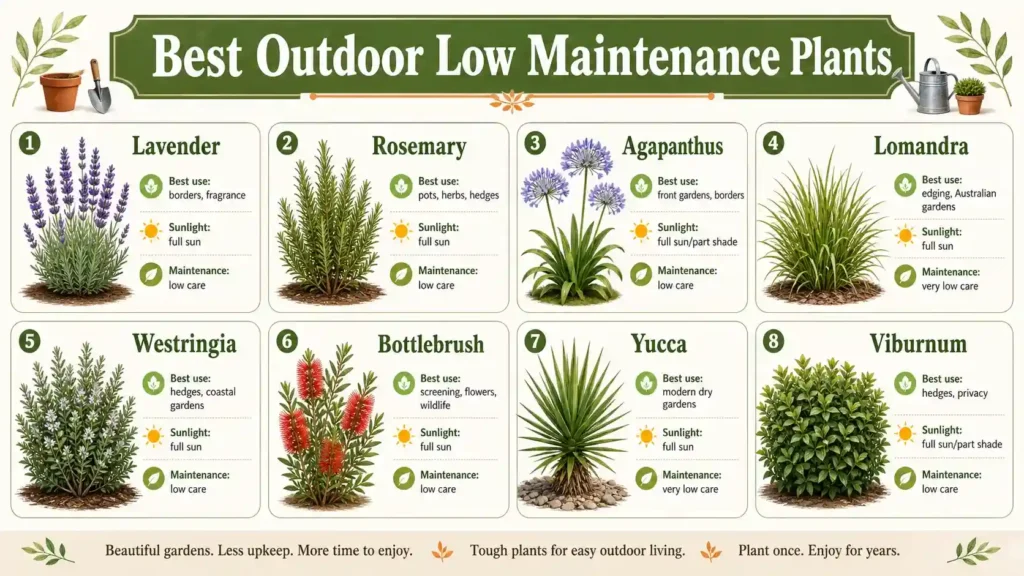
The best low maintenance outdoor plants are usually hardy, drought tolerant once established, and suitable for the garden’s sunlight, soil, and climate. This quick table highlights easy plants outdoor gardeners can use for borders, pots, screening, front yards, flowers, and low maintenance garden plants all year round.
|
Plant Type |
Best For | Sunlight Need | Maintenance Level |
Notes |
|
Lavender |
Borders, flowers, fragrance | Full sun | Low | Drought tolerant once established and ideal for dry, sunny garden beds |
|
Rosemary |
Herb garden, hedges, pots | Full sun | Low | Hardy, useful, fragrant, and suitable for both garden beds and containers |
| Agapanthus | Borders, front gardens | Full sun/part shade | Low |
Good flowering option with strong clumps and attractive seasonal blooms |
| Lomandra | Australian gardens, edging | Full sun/part shade | Very low |
Hardy native-style grass that handles heat, dry periods, and poor conditions well |
|
Westringia |
Hedges, coastal gardens | Full sun | Low | Great Australian shrub for neat borders, hedges, and windy coastal areas |
|
Bottlebrush |
Screening, flowers, wildlife | Full sun | Low-medium |
Attracts birds and adds bright flowers while staying relatively easy to maintain |
| Yucca | Modern gardens, dry areas | Full sun | Very low |
Architectural look with excellent tolerance for dry, sunny outdoor spaces |
|
Viburnum |
Screening, hedges | Full sun/part shade | Low-medium |
Good privacy plant for hedges, boundaries, and structured garden designs |
Best Low Maintenance Outdoor Plants for Full Sun
Low Maintenance Full Sun Plants for Hot Gardens
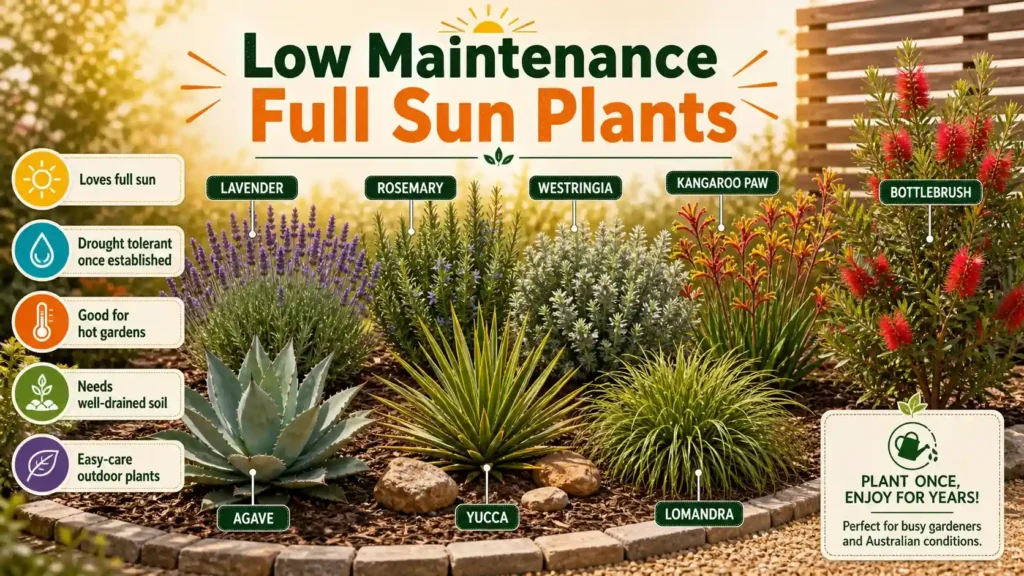
Low maintenance full sun plants are the best choice for open garden beds, exposed front yards, dry borders, and outdoor areas that receive strong direct sunlight. These plants are naturally better suited to heat and brightness, so they can stay attractive with less watering and less constant care once established.
Some of the best low-maintenance full sun plants for hot gardens include:
- Lavender: A fragrant flowering plant that performs well in full sun and well-drained soil. It is drought tolerant once established and works beautifully in borders, cottage gardens, and dry garden beds.
- Rosemary: One of the most useful low maintenance plants for full sun. It grows well in hot, sunny positions and can be used as a herb, hedge, or container plant.
- Westringia: A hardy Australian shrub that handles sun, wind, and coastal conditions. It is suitable for hedging, borders, and structured garden designs.
- Kangaroo paw: A striking flowering plant that enjoys sunny positions and adds bold color to outdoor full sun plants collections.
- Agave: A very tough plant for dry, sunny gardens. Its sculptural form makes it ideal for modern landscapes and low-water garden designs.
- Yucca: A strong architectural plant that tolerates heat, dryness, and bright sun with very little attention.
- Lomandra: A hardy grass-like plant that works well for edging, mass planting, and low maintenance garden beds.
- Bottlebrush: A tough flowering shrub or small tree that grows well in full sun and attracts birds with its bright blooms.
For the best results, low maintenance plants full sun gardeners choose should be planted in suitable soil with good drainage. Even hardy full sun outdoor plants need regular watering while young, but once established, many can handle dry spells and hot conditions with minimal care.
Best Full Sun Plants for Australian Gardens
Australian gardens often need plants that can handle strong sun, dry periods, heat, and changing seasonal conditions. The best low maintenance full sun plants australia gardeners choose are usually heat-tolerant, drought-tolerant, and hardy enough to grow without constant watering or feeding.
Good full sun plants australia gardeners can consider include:
- Lomandra: A very hardy option for borders, edging, mass planting, and native-style gardens. It tolerates heat, dry conditions, and many soil types.
- Westringia: A reliable shrub for sunny gardens, coastal areas, hedges, and low-maintenance front yards.
- Grevillea: A popular Australian plant that enjoys sunny positions, attracts birds, and offers beautiful flowers with relatively low care.
- Callistemon: Also known as bottlebrush, this is one of the best plants that like full sun australia gardeners can grow for flowers, screening, and wildlife-friendly gardens.
- Kangaroo paw: A sun-loving flowering plant with bold upright blooms, ideal for adding color to dry or sunny beds.
- Dianella: A hardy strappy-leaf plant that can handle sun or part shade and works well in mass planting, borders, and modern garden designs.
When choosing plants for full sun australia conditions, it is important to consider local climate as well as sunlight. Heat tolerant plants australia gardens need in Brisbane or Queensland may differ from what performs best in cooler parts of Melbourne. In general, sun loving plants australia gardeners select should have good drought tolerance, strong roots, and the ability to cope with bright outdoor exposure.
Best Low Maintenance Plants for Front Yards and Front Gardens
Easy Front Yard Plants That Look Good Year-Round
Low maintenance plants for front yard Australia gardens should create curb appeal without needing constant trimming, watering, or seasonal replacement. The best choices usually have neat growth habits, attractive foliage, reliable flowers, or strong structure that keeps the front garden looking clean throughout the year.
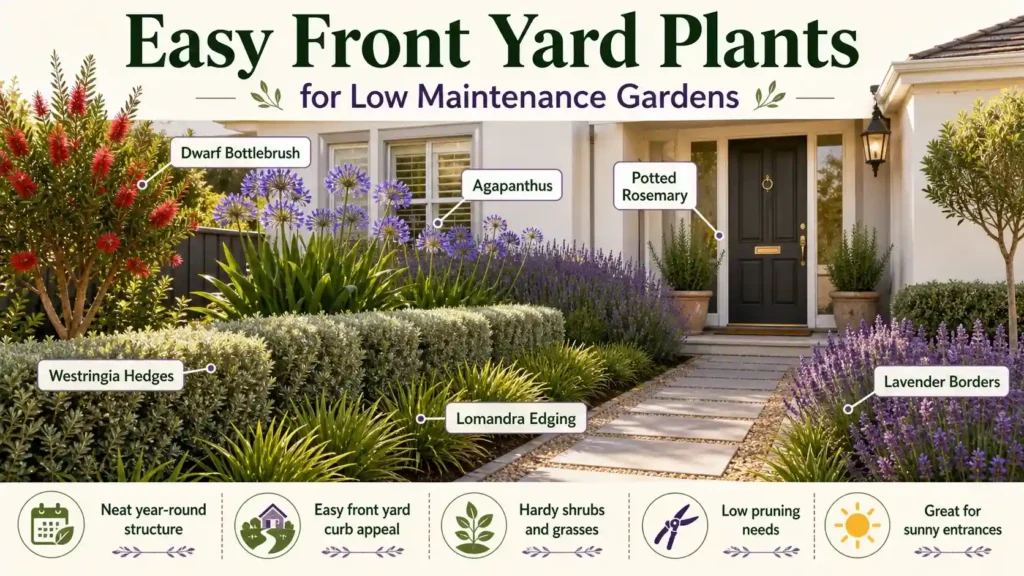
Good plants for front yard low-maintenance designs include:
- Boxwood or Japanese box alternatives: These are useful for formal borders, low hedges, and neat entry paths. In warmer or drier regions, choose hardy alternatives that suit the local climate better.
- Westringia: A reliable choice for low maintenance plants for front garden areas because it has soft grey-green foliage, handles sun well, and can be lightly shaped into hedges.
- Agapanthus: A strong flowering plant for front borders, driveway edges, and garden beds. It gives seasonal flowers with very little effort.
- Lavender: A fragrant, full-sun plant that adds flowers, texture, and a soft cottage-garden look to front yards.
- Lomandra: One of the best plants for front garden Australia conditions because it is hardy, neat, and useful for edging, mass planting, and modern landscapes.
- Gardenia: A beautiful option for fragrance and glossy foliage if the climate, soil, and moisture levels suit it.
- Dwarf bottlebrush: A compact flowering shrub that suits sunny front gardens and adds bright color while attracting birds.
For a front yard, choose plants with the right mature size. Compact shrubs, hardy grasses, and drought-tolerant flowering plants reduce pruning and help the garden stay tidy with less work.
Front Door and Entryway Plant Ideas
Front door plants should look welcoming, stay manageable, and handle the conditions around paths, porches, patios, and entry spaces. Many people search for front door plants Bunnings-style ideas because they want practical, easy-to-find options that work well in pots or small garden beds.
Good entryway and low maintenance plants for patio areas include:
- Potted rosemary: A hardy, fragrant, and useful plant for sunny entryways and patio pots.
- Dwarf citrus: A good choice for large pots in sunny positions if regular watering, feeding, and drainage are managed properly.
- Yucca: A strong architectural plant for modern entrances, dry patios, and sunny outdoor spaces.
- Cordyline: A colorful foliage plant that adds height and structure near doors, steps, and patio corners.
- Agapanthus: A reliable option for pots or entry garden beds, especially where a clean shape and seasonal flowers are needed.
- Compact flowering shrubs: Small grevillea, dwarf bottlebrush, lavender, and other compact shrubs can add color without taking over the space.
Low-maintenance plants for patio and entry areas should be chosen according to sunlight, pot size, drainage, and heat exposure. Plants in containers may dry out faster than garden-bed plants, so even easy-care patio plants need suitable potting mix and steady watering during hot weather.
Low Maintenance Shrubs for Outdoor Gardens
Best Low Maintenance Shrubs for Structure
Shrubs are useful in outdoor gardens because they create borders, hedges, privacy, shape, and year-round structure. The best low maintenance shrubs Australia gardeners choose are usually hardy, naturally compact, and able to grow well without constant pruning or special care. They help define garden spaces while keeping maintenance simple.
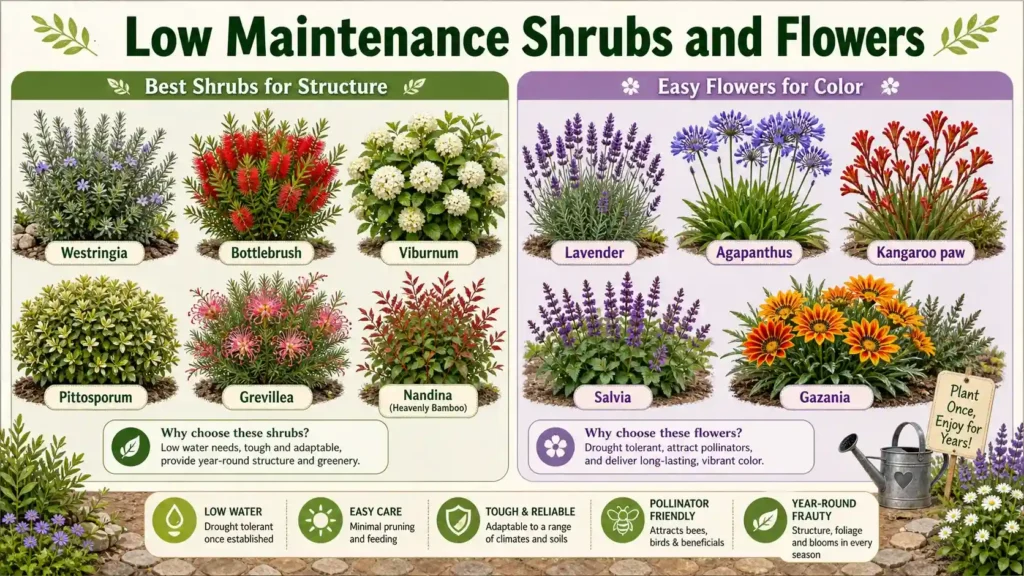
Recommended low-maintenance shrubs Australia gardens can use include:
- Westringia: A tough Australian shrub for hedges, coastal gardens, borders, and neat front yard planting. It responds well to light pruning and stays attractive in sunny positions.
- Bottlebrush: A hardy flowering shrub or small tree that works well for screening, wildlife-friendly gardens, and bright seasonal flowers.
- Viburnum: A reliable shrub for hedges, privacy screens, and structured garden beds. It grows well in many conditions and can be shaped when needed.
- Lavender: A compact flowering shrub for sunny borders, pathways, and dry garden beds. It adds fragrance, flowers, and soft texture.
- Nandina: A neat foliage shrub with attractive color changes through the seasons. It works well in borders and low-maintenance landscape designs.
- Pittosporum: A strong hedging shrub for privacy, boundaries, and formal garden structure.
- Grevillea: One of the best low maintenance flowering shrubs Australia gardeners can grow for color, wildlife value, and drought tolerance once established.
Low-maintenance flowering shrubs Australia gardens should be matched to sunlight, soil drainage, and mature size. This helps reduce pruning, watering stress, and overcrowding later.
Low Maintenance Flowering Shrubs and Flowers
Low maintenance flowering plants Australia gardeners choose should provide color without needing constant feeding, deadheading, or pest control. Hardy flowering shrubs and easy outdoor flowers are especially useful for front gardens, sunny borders, cottage-style beds, and native-inspired landscapes.
Good low maintenance flowers Australia gardens can include:
- Lavender: A fragrant full-sun option with purple flowers, silvery foliage, and excellent drought tolerance once established.
- Agapanthus: A strong clumping plant with tall flower stems, ideal for borders, driveways, and front gardens.
- Kangaroo paw: A bold Australian flowering plant that performs well in sunny, well-drained positions.
- Grevillea: A hardy flowering shrub that attracts birds and suits many low-water garden designs.
- Bottlebrush: A bright, wildlife-friendly plant with red, pink, or cream brush-like flowers, depending on the variety.
- Salvia: A colorful, long-flowering option for warm, sunny gardens with good drainage.
- Gazania: One of the easiest full sun flowers Australia gardeners can use for dry borders, groundcover-style planting, and bright seasonal color.
Flowers that like full sun Australia conditions usually perform best in open positions with good airflow and well-drained soil. Even easy-care flowering plants need regular watering during establishment, but once settled, many can provide reliable color with only light seasonal care.
Low Maintenance Shrubs for Outdoor Gardens
Best Low Maintenance Shrubs for Structure
Shrubs are one of the most useful choices for creating borders, hedges, privacy, and strong garden structure. The right low maintenance shrubs Australia gardeners choose can keep outdoor spaces looking neat without frequent pruning, watering, or pest control. They also help separate garden zones, frame pathways, soften fences, and add year-round greenery.
Recommended low-maintenance shrubs Australia gardens can include:
- Westringia: A hardy Australian shrub with soft grey-green foliage. It works well for hedges, coastal gardens, front yards, and low borders.
- Bottlebrush: A tough flowering shrub or small tree that provides color, screening, and wildlife value with relatively simple care.
- Viburnum: A reliable shrub for hedges, privacy, and garden structure. It can be shaped when needed and suits many outdoor spaces.
- Lavender: A compact flowering shrub for sunny borders, pathways, and dry garden beds. It adds fragrance, flowers, and texture.
- Nandina: A neat foliage shrub with attractive seasonal color, useful for borders and low-maintenance landscape designs.
- Pittosporum: A strong hedging shrub often used for screening, boundaries, and structured planting.
- Grevillea: One of the best low maintenance flowering shrubs Australia gardeners can grow for flowers, bird attraction, and drought tolerance once established.
Low-maintenance flowering shrubs Australia gardens should always be matched to the right sunlight, soil drainage, and mature size. This helps reduce overcrowding, heavy pruning, and unnecessary plant stress.
Low Maintenance Flowering Shrubs and Flowers
Low maintenance flowering plants Australia gardeners choose should bring color to the garden without needing constant feeding, watering, or deadheading. These plants are especially useful for front gardens, sunny borders, cottage-style beds, native-inspired gardens, and dry outdoor spaces.
Colorful but easy-care options include:
- Lavender: A fragrant, drought-tolerant flowering shrub for full sun and well-drained soil.
- Agapanthus: A hardy clumping plant with tall flower stems, ideal for borders, driveways, and front gardens.
- Kangaroo paw: A bold Australian flowering plant that performs well in sunny, well-drained locations.
- Grevillea: A hardy flowering shrub that attracts birds and suits many low-water garden designs.
- Bottlebrush: A bright flowering plant with brush-like blooms that adds color and supports wildlife.
- Salvia: A long-flowering option for warm gardens, sunny borders, and pollinator-friendly planting.
- Gazania: One of the easiest low maintenance flowers Australia gardeners can use for dry, sunny areas and bright ground-level color.
Full sun flowers Australia gardens need should be tough enough to handle heat, direct light, and dry periods once established. Flowers that like full sun Australia conditions usually grow best in open positions with good airflow and well-drained soil. Even easy-care flowering plants need regular watering at first, but once their roots are established, many can provide reliable color with only light seasonal care.
Low Maintenance Tall Outdoor Plants for Height and Privacy
Tall Outdoor Plants That Need Less Care
Low maintenance tall outdoor plants are useful for adding height, structure, shade, and vertical interest without making the garden difficult to manage. They work well along fences, beside pathways, in large garden beds, and in areas where a taller feature plant is needed. The best low-maintenance tall outdoor plants should suit the local climate, stay manageable at maturity, and need only light pruning once established.
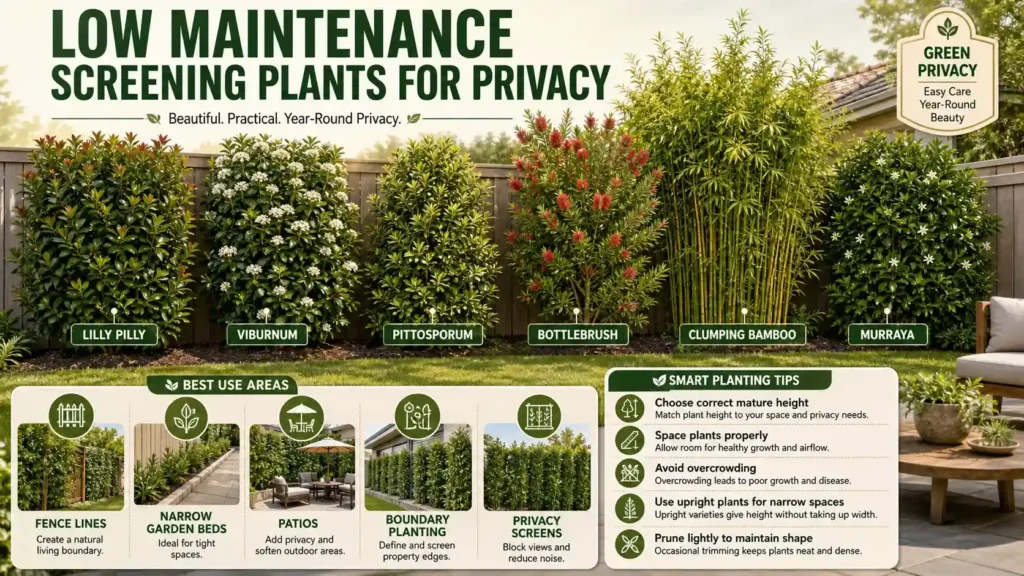
Good options include:
- Lilly pilly: A popular tall shrub or small tree for hedging and privacy. It can be clipped into shape and works well in many Australian gardens.
- Viburnum: A reliable choice for height, screening, and dense green structure. It suits hedges, boundaries, and larger garden beds.
- Pittosporum: A strong evergreen option for tall hedges and privacy planting. It grows well as a screen when spaced correctly.
- Clumping bamboo: A useful bamboo alternative where a fast, upright screen is needed. Choose clumping types instead of running bamboo to reduce spreading problems.
- Bottlebrush: A hardy tall shrub or small tree with attractive flowers, wildlife value, and good tolerance for sunny outdoor conditions.
- Olive tree: A stylish option for dry, sunny gardens. It adds height and a Mediterranean look with relatively low water needs once established.
- Yucca: A strong architectural plant for dry areas, modern landscapes, and full sun positions. It gives height without needing frequent care.
Tall plants that like full sun Australia gardens need should be heat tolerant, wind resistant, and suitable for the available space. For small areas, a tall narrow plant is often better than a wide-growing tree because it provides height without overcrowding paths, fences, or nearby plants.
Low Maintenance Screening Plants for Privacy
Low maintenance screening plants are ideal for creating privacy, softening fences, blocking views, and adding greenery to outdoor living areas. They work best where height and coverage are needed but regular heavy pruning is not practical.
Screening plants are commonly used along:
- Fence lines
- Narrow garden beds
- Patios
- Boundary planting
- Privacy screens
Recommended low maintenance screening plants Australia gardeners can consider include:
- Lilly pilly: One of the best screening plants Australia gardens use for dense hedges and privacy. It responds well to trimming and can create a clean green screen.
- Viburnum: A strong option for screening plants for privacy, especially where a thick, leafy hedge is needed.
- Pittosporum: A reliable evergreen choice for boundary planting, hedges, and screen plants Australia gardens.
- Bottlebrush: A hardy native-style plant that provides screening, flowers, and bird attraction in sunny positions.
- Clumping bamboo: A good option for narrow spaces where upright privacy is needed, but it should be selected carefully to avoid invasive spreading types.
- Murraya: A glossy-leaved screening shrub that can work well in warmer climates where conditions suit it.
The best screen plants Australia gardeners choose should match the site’s sunlight, soil, width, and height needs. Plants for screening Australia conditions should also be spaced correctly from fences, walls, and paths so they can grow naturally without becoming high maintenance later.
Low Maintenance Outdoor Plants for Pots and Patios
Best Easy Outdoor Plants for Pots
Low maintenance outdoor potted plants are ideal for patios, balconies, entryways, courtyards, and small gardens where planting directly in the ground is not possible. The best container plants stay attractive in limited soil space, tolerate outdoor conditions, and do not need constant pruning or special care.
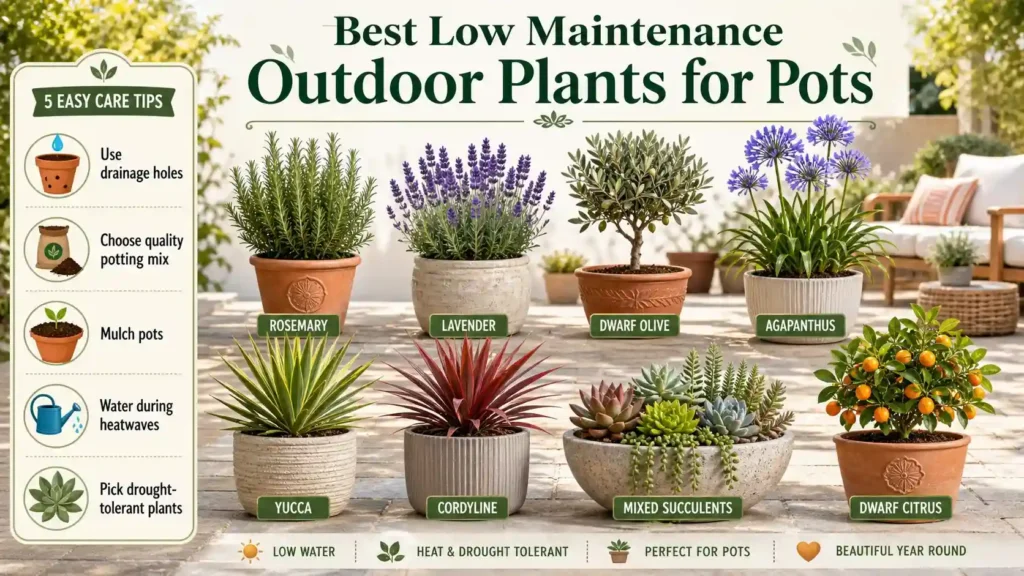
Good low maintenance outdoor potted plants Australia gardeners can use include:
- Rosemary: A hardy herb for sunny pots, patios, and entryways. It needs good drainage and can handle dry periods once established.
- Lavender: A fragrant flowering plant for full sun containers. It performs best in well-drained potting mix and should not sit in wet soil.
- Dwarf olive: A stylish choice for large pots, sunny patios, and Mediterranean-style outdoor spaces. It needs full sun and well-drained soil.
- Agapanthus: A strong container plant with neat foliage and seasonal flowers. It suits patios, front entries, and sunny garden corners.
- Yucca: A very tough potted plant with an architectural look. It is one of the easiest hardy outdoor pot plants for hot, dry spaces.
- Cordyline: A colorful foliage plant that adds height and structure to pots. It works well near doors, patios, and outdoor seating areas.
- Succulents: Excellent for dry, sunny containers because they store water in their leaves and need very little regular care.
- Dwarf citrus: A useful and attractive option for large pots, but it is not completely care-free. It needs full sun, regular watering, feeding, and good drainage to fruit well.
Low-maintenance outdoor potted plants Australia conditions require should be chosen according to sunlight, pot size, wind exposure, and water needs. The best plants for outdoor pots Australia gardeners select are usually compact, hardy, and able to grow well without becoming root-bound too quickly.
Full Sun Potted Plants for Outdoor Spaces
Full sun pots can dry out faster than garden beds, especially during hot weather. Even low-maintenance outdoor potted plants full sun Australia gardeners choose need the right setup to stay healthy with less effort. A tough plant can still struggle if the container has poor drainage, weak potting mix, or too little water during heatwaves.
For better results with full sun potted plants, focus on these basics:
- Use drainage holes: Every outdoor pot should have drainage holes so excess water can escape. This helps prevent root rot.
- Choose quality potting mix: Garden soil can become heavy and compacted in pots. A good potting mix supports root growth and drainage.
- Mulch the top of pots: A thin mulch layer helps reduce moisture loss and keeps roots cooler during hot days.
- Water during heatwaves: Potted plants need extra attention in extreme heat because their roots cannot reach deeper soil moisture.
- Choose drought-tolerant plants: Rosemary, lavender, yucca, succulents, dwarf olive, and some cordylines are practical choices for sunny containers.
People searching for Bunnings full sun plants for pots often need plants that are easy to find, hardy, and suitable for hot outdoor spaces. Tall plants for outdoor pots Australia gardens can include yucca, dwarf olive, cordyline, and compact screening shrubs, depending on pot size and exposure. For low maintenance tall plants for outdoor pots Australia conditions, always choose stable containers, use good-quality potting mix, and match the plant’s mature size to the available patio or balcony space.
Best Low Maintenance Australian Garden Plants
Native and Climate-Friendly Options
Low maintenance Australian garden plants are often easier to grow because many are naturally suited to local heat, dry periods, and changing outdoor conditions. Many native and climate-friendly plants can survive with less water once established, support local wildlife, and fit well into low-water garden designs.
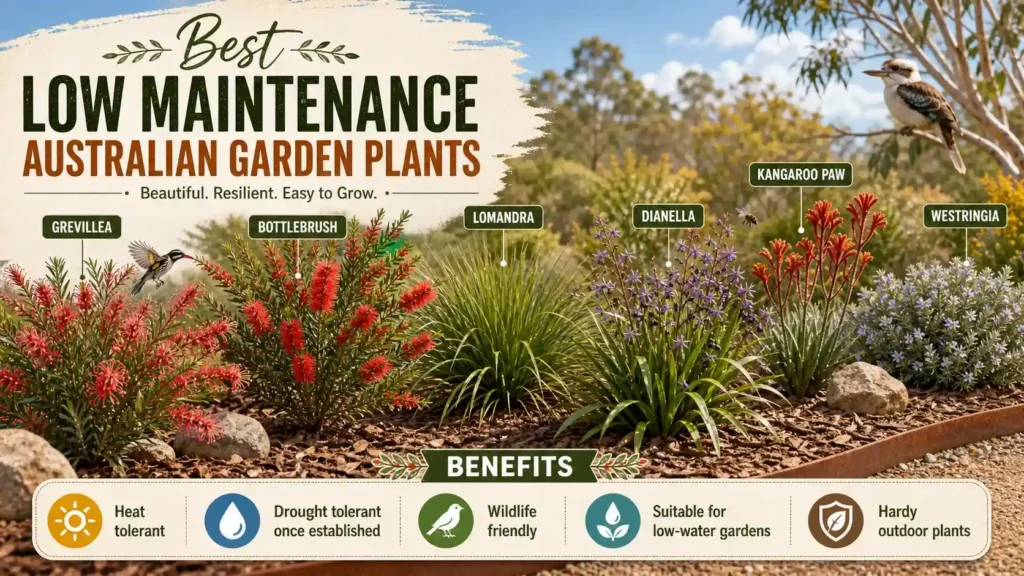
Good low maintenance Australian plants are usually:
- Better adapted to heat: Many can handle strong sun and warm weather better than delicate ornamental plants.
- Often drought tolerant: Once established, many need less frequent watering than high-maintenance garden plants.
- Wildlife friendly: Flowering natives can attract birds, bees, and other pollinators.
- Suitable for low-water gardens: Many low-maintenance Australian plants work well in dry, sunny, or water-wise landscapes.
Recommended hardy outdoor plants Australia gardeners can use include:
- Grevillea: A flowering shrub that attracts birds and handles sunny, well-drained areas well.
- Bottlebrush: Also known as Callistemon, this hardy plant offers bright flowers and works well for screening or feature planting.
- Lomandra: A tough grass-like plant for edging, mass planting, slopes, and low-care borders.
- Dianella: A strappy-leaf plant that suits borders, mass planting, and modern garden designs.
- Kangaroo paw: A bold flowering plant for sunny gardens with good drainage.
- Westringia: A reliable shrub for hedges, coastal gardens, front yards, and dry landscapes.
These plants still need care during establishment, but once their roots settle, they usually become easier to manage than plants that are not suited to the local climate.
For compact yards, courtyards, and smaller native-style landscapes, choosing Australian natives for small gardens can help you create a climate-friendly outdoor space that stays attractive without needing constant pruning, watering, or replacement.
Low Maintenance Plants for Different Australian Conditions
Australia has many different garden conditions, so the best plant choice depends on local climate, sun exposure, rainfall, wind, and soil type. A plant that performs well in Brisbane full sun may not behave the same way in a cooler Melbourne garden or a dry inland area.
For different Australian conditions, consider these plant choices:
- Coastal gardens: Westringia, lomandra, bottlebrush, and some grevillea varieties can handle wind, sun, and exposed conditions when suited to the site.
- Dry inland gardens: Yucca, agave, rosemary, lavender, lomandra, and drought-tolerant native shrubs are good choices for low-water landscapes.
- Humid Queensland gardens: Full sun plants Queensland gardeners choose should tolerate heat, humidity, and seasonal rainfall. Bottlebrush, lomandra, dianella, cordyline, and some tropical-friendly shrubs may work well.
- Melbourne-style temperate gardens: Full sun plants Melbourne gardens can include lavender, rosemary, westringia, pittosporum, viburnum, agapanthus, and hardy native grasses.
- Brisbane full sun areas: Full sun plants Brisbane gardens need should cope with heat and strong sunlight. Lomandra, bottlebrush, grevillea, dianella, yucca, and agapanthus can be practical choices.
Plants that like afternoon sun Australia conditions should be especially tough because afternoon sunlight is usually hotter and harsher than morning sun. For these areas, choose heat-tolerant plants with strong root systems, good drought tolerance, and a proven ability to handle direct outdoor exposure.
How to Choose Outdoor Low Maintenance Plants for Your Garden
Match Plants to Sunlight
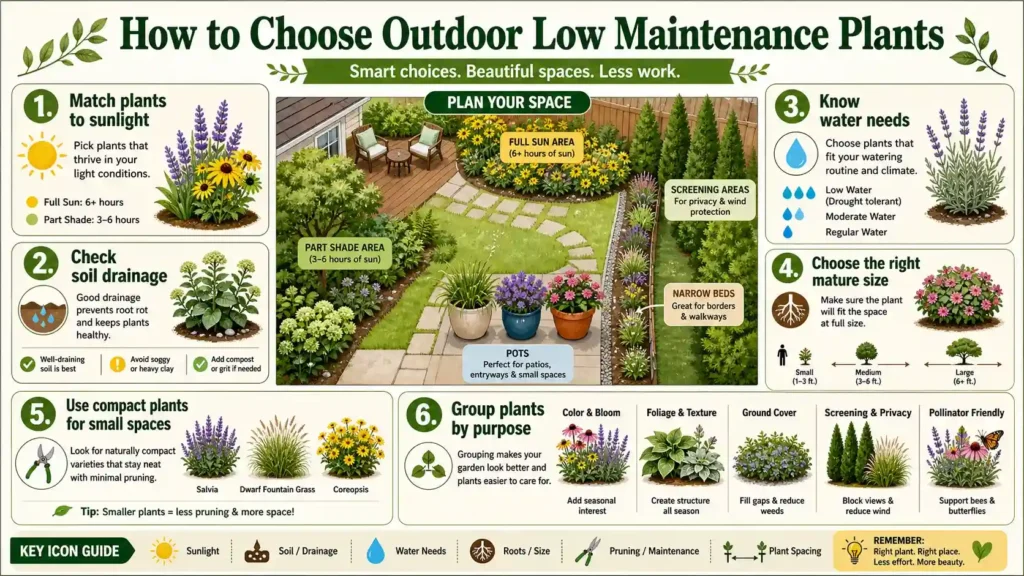
Choosing the right plant starts with understanding how much sunlight the garden receives. Full sun means an area gets at least 6 hours of direct sunlight each day. Many full sun plants need this light to grow strongly, flower well, and stay compact.
For better long-term results, follow basic garden care principles such as matching plants to sunlight, checking soil drainage, watering correctly, and giving each plant enough space to reach its mature size.
A full sun plant is best for open areas such as exposed front yards, driveways, sunny borders, and garden beds with little shade. Common sun plants like lavender, rosemary, yucca, lomandra, and bottlebrush usually perform better when they receive strong daily light.
However, afternoon sun is usually harsher than morning sun. Plants in west-facing areas may experience stronger heat, drier soil, and more stress during summer. For these areas, choose hardy plants for full sun that can tolerate both brightness and heat. A hardy plant for full sun should have strong drought tolerance, good root strength, and the ability to handle hot outdoor exposure.
Shade-loving plants should not be placed in full sun because their leaves may burn, wilt, or turn yellow. They may also need more water and care than expected if grown in the wrong position. Matching sunlight correctly reduces plant stress and keeps the garden easier to maintain.
Check Soil, Drainage, and Water Needs
Soil quality affects how much care outdoor plants need. Even low maintenance plants can fail if the soil stays too wet, dries out too quickly, or lacks structure. Before planting, check whether the garden has sandy soil, clay soil, or a balanced soil type.
- Sandy soil: Drains quickly and can dry out fast. It may need compost, mulch, or organic matter to hold moisture better.
- Clay soil: Holds water for longer and can become compacted. It may need drainage improvement, gypsum where suitable, compost, or raised beds.
- Raised beds: Useful where soil drainage is poor or roots need better airflow.
- Mulch: Helps reduce water loss, control weeds, and protect soil temperature.
- Drainage improvement: Important for plants such as lavender, rosemary, succulents, yucca, and agave, which dislike wet roots.
- Watering during establishment: Even drought-tolerant plants need regular watering while young. Once roots are established, watering can usually be reduced.
The best low maintenance gardens are built around plants that match the natural soil and water conditions. This reduces the need for constant correction, feeding, and replacement.
Choose the Right Mature Size
Mature size is one of the most important factors when choosing outdoor low maintenance plants. A plant may look small in a nursery pot, but it can become too wide, too tall, or too dense for the space as it grows. Choosing the right size from the beginning helps avoid future problems.
Correct mature size helps to:
- Avoid overcrowding: Plants need enough space for airflow, root growth, and natural shape.
- Reduce pruning: A plant that fits the space will not need constant trimming.
- Protect fences, pipes, walls, and paths: Large roots and branches can cause problems if planted too close to structures.
- Choose compact varieties for small spaces: Smaller gardens, courtyards, and patios need plants that stay naturally controlled.
For tight spaces, choose plants for narrow garden beds Australia gardeners can manage easily, such as upright shrubs, compact grasses, and narrow screening plants. Good plants for narrow space areas should provide height or greenery without spreading too far. Plants for narrow spaces Australia conditions may include compact westringia, slim pittosporum varieties, lomandra, dwarf bottlebrush, and suitable tall narrow plants.
Screening plants for narrow spaces should be selected carefully because privacy plants can quickly become high maintenance if they grow too wide. Narrow screening plants and screening plants for narrow spaces Australia gardens should have an upright habit, manageable roots, and a mature size that suits the width of the bed.
If your garden has slim side yards, tight fence lines, or narrow beds, selecting tall plants for narrow spaces
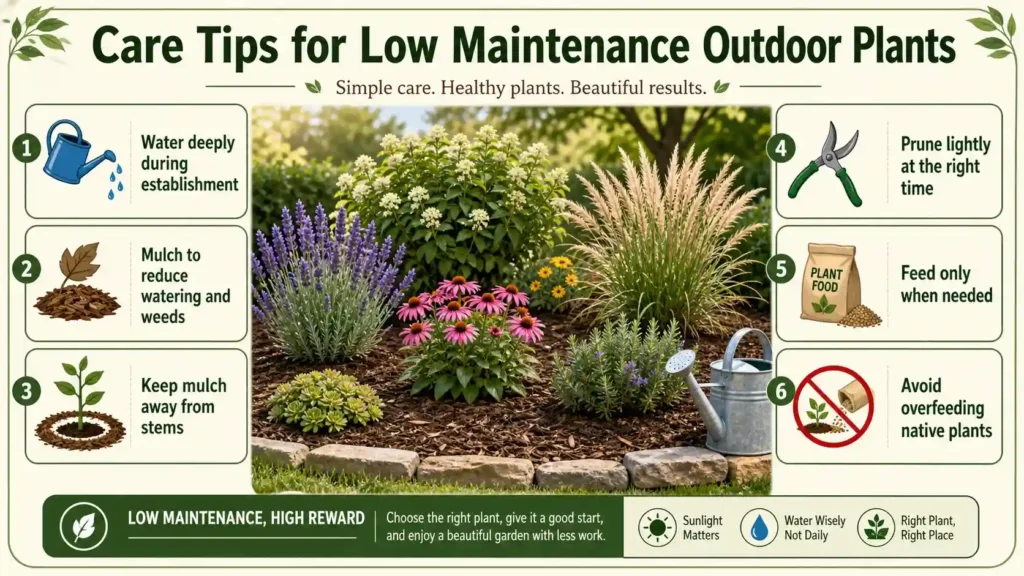
Care Tips for Keeping Outdoor Plants Low Maintenance
Water Deeply During Establishment
Even low maintenance plants need regular water at first. During the establishment stage, roots are still growing into the surrounding soil, so the plant cannot fully handle dry conditions yet. Deep watering encourages roots to grow downward, which helps plants become stronger, more drought tolerant, and easier to care for later.
Shallow watering only wets the top layer of soil and can lead to weak surface roots. A better approach is to water less often but more deeply, especially during warm weather. Once plants are established, many outdoor plants easy to maintain will need far less attention, depending on rainfall, soil type, and climate.
Mulch to Reduce Watering and Weeds
Mulch is one of the simplest ways to keep low maintenance garden plants all year round healthier with less effort. It protects the soil, reduces water loss, and helps control weeds before they compete with garden plants.
Useful mulching tips include:
- Use organic mulch: Bark chips, straw, sugar cane mulch, composted leaves, and wood chips can improve soil as they break down.
- Keep mulch away from stems: Leave a small gap around plant stems or trunks to reduce rot and pest problems.
- Control soil temperature: Mulch keeps roots cooler in hot weather and helps protect soil during colder periods.
- Reduce weeds: A good mulch layer blocks light from weed seeds and reduces the need for regular weeding.
Mulch is especially helpful around shrubs, flowering plants, screening plants, and dry garden beds where moisture conservation is important.
Prune Lightly and at the Right Time
Correct pruning helps plants stay healthy, shaped, and manageable. Many low-maintenance garden plants all year round only need light pruning to remove dead growth, improve airflow, or maintain a tidy form.
Heavy or poorly timed pruning can stress plants, reduce flowering, and encourage weak new growth. Light pruning at the right season keeps shrubs, hedges, and flowering plants easier to manage. For hedging plants, regular small trims are usually better than waiting until the plant becomes overgrown.
Pruning should focus on:
- Removing dead, damaged, or diseased branches
- Keeping paths, windows, and entrances clear
- Improving airflow through dense growth
- Maintaining natural shape instead of forcing the plant into an unsuitable size
Feed Only When Needed
Low maintenance plants usually do not need heavy feeding. In many cases, compost, mulch, and occasional slow-release fertilizer are enough to support healthy growth. Overfeeding can create soft, fast growth that may attract pests, require more pruning, or reduce the natural hardiness of the plant.
Slow-release fertilizers can be useful for many shrubs, potted plants, and flowering plants, but they should be applied according to the plant’s needs. Compost can improve soil structure and provide gentle nutrients over time.
Native Australian plants should be fed carefully because some are sensitive to high-phosphorus fertilizers. For these plants, use a native-safe fertilizer if feeding is needed. The goal is to support steady, healthy growth without making the garden more demanding to maintain.
Common Mistakes to Avoid with Low Maintenance Outdoor Plants
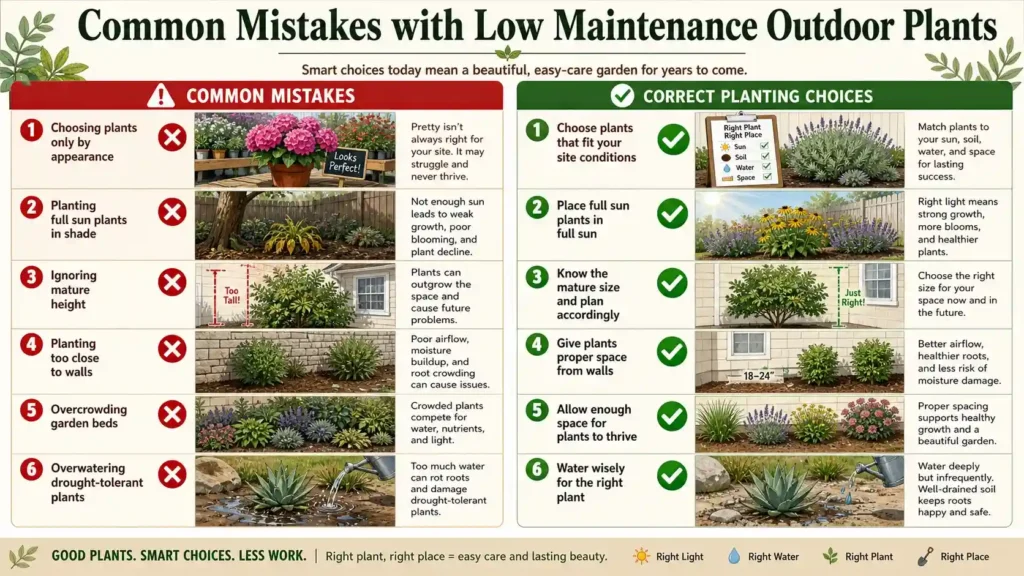
Choosing Plants Only by Appearance
A beautiful plant is not always a low maintenance plant. Some plants look attractive in nurseries or photos but need very specific soil, regular watering, frequent pruning, frost protection, or pest control to stay healthy. If a plant dislikes the local climate, sun exposure, or soil type, it can quickly become difficult to manage.
Before choosing any outdoor plant, check its sunlight needs, water requirements, mature size, soil preference, and tolerance to heat, wind, or frost. A plant that naturally suits the garden conditions will usually stay healthier with less effort.
Planting Full Sun Plants in Shade
Full sun plants need strong direct light to grow properly. When they are planted in too much shade, they may become weak, stretched, and less attractive. Many flowering plants also produce fewer blooms when they do not receive enough sunlight.
Planting full sun plants in shade can lead to:
- Poor flowering
- Weak or leggy growth
- Damp foliage and poor airflow
- Higher risk of fungal disease
- Slower overall growth
For best results, place sun-loving plants in open areas where they receive enough direct sunlight each day. If the garden has partial shade or heavy shade, choose plants that are naturally suited to those conditions instead.
Ignoring Mature Height and Root Spread
One common mistake is choosing plants based only on their nursery size. Small plants can become large shrubs, wide clumps, or trees over time. If their mature height and root spread are ignored, the garden can become crowded and harder to maintain.
This can cause problems such as:
- Root competition: Plants may compete for water, nutrients, and growing space.
- Planting too close to walls: Roots and branches may interfere with fences, walls, paths, or nearby structures.
- Overcrowding: Dense planting reduces airflow and can increase pest or disease issues.
- Extra pruning: Plants that outgrow their space need frequent trimming, which makes the garden less low maintenance.
Always check the mature size before planting. Choose compact varieties for small spaces, narrow garden beds, and areas near paths, pipes, fences, or walls.
Overwatering Drought-Tolerant Plants
Drought-tolerant plants are designed to handle dry periods once established, but they can suffer if they are watered too often. In poorly drained soil, excess water can stay around the roots and increase the risk of root rot.
Plants such as lavender, rosemary, agave, yucca, and many succulents usually prefer well-drained soil and do not like sitting in wet conditions. Their roots need air as well as moisture. If the soil remains constantly soggy, leaves may yellow, growth may slow, and the plant may eventually decline.
To avoid overwatering, check soil moisture before watering, improve drainage where needed, and use mulch carefully without covering the plant’s crown or stems.
Comparison Block: Best Plant Types by Garden Need
Different garden areas need different types of low maintenance plants. A sunny border, front yard, privacy screen, patio pot, or Australian native-style garden will not always need the same plant type. This comparison block helps match the garden need with the most suitable easy-care plant group.
|
Garden Need |
Best Plant Type |
Examples |
|
Full sun |
Drought-tolerant plants | Lavender, rosemary, yucca |
|
Front yard |
Neat shrubs and grasses | Westringia, lomandra, agapanthus |
|
Privacy |
Tall shrubs and screening plants | Lilly pilly, viburnum, bottlebrush |
| Pots | Compact hardy plants |
Rosemary, lavender, cordyline |
| Flowers | Hardy flowering plants |
Kangaroo paw, grevillea, salvia |
| Australian gardens | Native/adapted plants |
Lomandra, dianella, bottlebrush |
Conclusion: Choosing the Best Outdoor Low Maintenance Plants
The best outdoor low maintenance plants are the ones matched correctly to your garden’s sunlight, soil, climate, and available space. A plant that suits its location will usually need less watering, pruning, feeding, and pest control once established. This makes the garden easier to manage and more reliable through changing seasons.
Instead of choosing plants only by appearance, focus on hardy, drought-tolerant, and climate-suitable options that can handle your local conditions. Check whether each plant needs full sun or partial shade, whether the soil drains well, and how large the plant will become at maturity.
Before planting, plan your garden by grouping plants according to sunlight, water needs, and purpose. This simple step can help you create a beautiful outdoor space that stays healthier with less ongoing care.
FAQs About Outdoor Low Maintenance Plants
What are the best outdoor low maintenance plants?
The best outdoor low maintenance plants include lavender, rosemary, lomandra, westringia, agapanthus, yucca, bottlebrush, and hardy shrubs that suit the local climate. These plants are popular because they can handle outdoor conditions well and usually need less watering, pruning, and feeding once established. For the lowest maintenance results, choose plants that match your garden’s sunlight, soil drainage, and mature space.
What low maintenance outdoor plants grow well in full sun?
Good low maintenance full sun plants include lavender, rosemary, yucca, agave, kangaroo paw, and bottlebrush. These plants can tolerate strong sunlight and warm outdoor conditions better than shade-loving plants. Most full sun plants still need regular watering when young, but once established, many become drought tolerant and easier to care for.
What are the best low maintenance plants for front yards in Australia?
The best low maintenance plants for front yard Australia gardens include lomandra, westringia, agapanthus, grevillea, and bottlebrush. These plants help improve curb appeal while staying relatively easy to manage. They are useful for borders, edging, flowering displays, and structured front garden designs. Always choose varieties that suit your local climate, soil, and available space.
Which low maintenance plants are good for outdoor pots?
Good low maintenance plants for outdoor pots include rosemary, lavender, dwarf olive, yucca, cordyline, and agapanthus. These plants can grow well in containers if the pot has drainage holes, quality potting mix, and enough sunlight. Drought-tolerant plants are often easier in pots, but they still need extra watering during hot weather because containers dry out faster than garden beds.
What are the best low maintenance tall outdoor plants for privacy?
The best low maintenance tall outdoor plants for privacy include lilly pilly, viburnum, pittosporum, bottlebrush, and clumping bamboo where suitable. These plants can work well along fences, boundaries, patios, and privacy screens. Choose the mature height and width carefully so the plants provide coverage without becoming overcrowded or needing constant pruning.
Are native Australian plants low maintenance?
Many native or climate-adapted Australian plants are low maintenance once established because they are often better suited to local heat, rainfall patterns, and soil conditions. Plants such as grevillea, bottlebrush, lomandra, dianella, kangaroo paw, and westringia can need less water and care than plants that are poorly matched to the climate. However, they still need correct planting, watering during establishment, and suitable drainage.
How do I make an outdoor garden low maintenance?
To make an outdoor garden low maintenance, choose drought-tolerant plants, match each plant to the right sunlight, improve soil where needed, and use mulch to reduce watering and weeds. Proper spacing is also important because overcrowded plants need more pruning and can develop airflow problems. Group plants by sunlight, water needs, and purpose so the garden is easier to manage long term.
What outdoor plants need the least care?
Outdoor plants that need the least care are usually hardy, drought-tolerant, and slow to moderate growing. Good examples include yucca, lomandra, rosemary, lavender, westringia, agave, and some succulents. These plants are easier to maintain when planted in the right soil and sunlight conditions.
Can low maintenance plants survive without watering?
Low maintenance plants cannot survive without water forever, especially when newly planted. Most need regular watering during establishment so their roots can grow properly. Once established, drought-tolerant plants can handle dry periods better, but they may still need occasional deep watering during long heatwaves or very dry weather.
What is the easiest way to reduce garden maintenance?
The easiest way to reduce garden maintenance is to choose the right plant for the right place. A plant that suits the sunlight, soil, climate, and available space will need less pruning, watering, feeding, and pest control. Adding mulch, improving drainage, and avoiding overcrowding also help keep the garden easier to care for.

Written by the LeafyHeaven Editorial Team
LeafyHeaven shares practical gardening tips and simple plant care guides to help you grow, nurture, and enjoy your plants with ease. Our goal is to make gardening feel natural, approachable, and rewarding for everyone.