
Introduction
The red dragon fruit plant is a climbing tropical cactus valued for its striking red-fleshed fruit, spectacular night-blooming flowers, and adaptability to warm growing regions. Unlike many fruit crops, this fast-growing dragon fruit cactus plant combines ornamental appeal with reliable fruit production, making it a popular choice for home gardens across Australia, the southern United States, and other subtropical climates.
As a member of the cactus family, the dragon fruit plant develops long climbing stems, aerial roots, and large edible fruits rich in antioxidants, fiber, and vitamins. The plant is commonly known as a pitaya plant, while the fruit itself is often called red dragon fruit or pitaya. Whether grown in the ground or containers, a healthy dragonfruit plant can produce abundant harvests when provided with sunlight, well-drained soil, and proper support.
This guide covers everything you need to know about the dragon fruit cactus, including identification, growing requirements, planting methods, propagation, care, flowering, fruiting, harvesting, common problems, and the most popular red-fleshed varieties for Australian and USA gardeners.
What Is a Red Dragon Fruit Plant?
A red dragon fruit plant is a fruit-producing cactus species cultivated for its sweet, vibrant red-fleshed pitaya fruit. Known for its climbing growth habit, aerial roots, and large night-blooming flowers, this tropical plant combines ornamental beauty with high fruit production. Red-fleshed varieties are especially valued for their richer color, higher antioxidant content, and sweeter flavor compared to many white-fleshed types.
Gardeners exploring a wider range of tropical fruit trees will find detailed growing guides for many other warm-climate species suited to Australian and USA conditions.
Scientific Name and Botanical Classification
The dragon fruit scientific name depends on the species being grown, as several closely related cactus species produce dragon fruit. The most widely cultivated red-fleshed varieties belong to Hylocereus polyrhizus, while some commercial and home-grown varieties are associated with Hylocereus undatus and related hybrids.
The dragon fruit botanical name has undergone taxonomic revisions in recent years, with some species now classified under the genus Selenicereus. However, names such as Hylocereus undatus and Hylocereus polyrhizus remain commonly used in horticulture and gardening references.
A simplified classification is shown below:
| Classification Level | Details |
| Kingdom | Plantae |
| Order | Caryophyllales |
| Family | Cactaceae |
| Genus | Hylocereus / Selenicereus |
| Common Species | Hylocereus undatus |
| Red-Fleshed Species | Hylocereus polyrhizus |
| Common Name | Dragon Fruit, Pitaya |
| Scientific Reference | Pitaya Hylocereus undatus and related species |
Is Dragon Fruit a Cactus?
Yes, dragon fruit is a cactus. The answer to the common question is dragon fruit a cactus is straightforward: dragon fruit belongs to the cactus family (Cactaceae) and shares many characteristics with other cactus species.
Unlike desert cacti, the dragon fruit cactus is a climbing tropical cactus that naturally grows on trees, rocks, and support structures in warm environments. Its thick green stems store water, helping the plant tolerate short dry periods.
The dragonfruit cactus develops aerial roots that allow it to climb vertically while absorbing moisture from humid air. Because of these traits, it is often referred to as a cactus pitaya, pitahaya cactus, or pitaya cactus plant in gardening and agricultural literature.
Key cactus characteristics include:
- Succulent water-storing stems
- Reduced or absent leaves
- Drought tolerance
- Aerial root development
- Large cactus-type flowers
- Adaptation to warm climates
Plant Family, Origin and Native Range
The red dragon fruit plant belongs to the Cactaceae family, which contains more than 1,700 cactus species. For gardeners asking what plant family does dragon fruit belong to, the answer is the cactus family.
The dragon fruit origin can be traced to tropical and subtropical regions of Central America and parts of southern Mexico. These areas are considered the natural home of wild dragon fruit species.
When people ask where is dragon fruit from or where does dragon fruit originate from, the most accurate answer is Central America. From there, cultivation spread throughout Southeast Asia, Australia, the Pacific Islands, and warm regions of the Americas.
For those wondering where are dragon fruits native to, native populations occur primarily in:
- Southern Mexico
- Guatemala
- Nicaragua
- Honduras
- Costa Rica
- El Salvador
Today, dragon fruit is commercially cultivated across Australia, the United States, Vietnam, Thailand, Malaysia, Taiwan, Israel, and many other warm-climate regions.
Red Dragon Fruit vs White Dragon Fruit
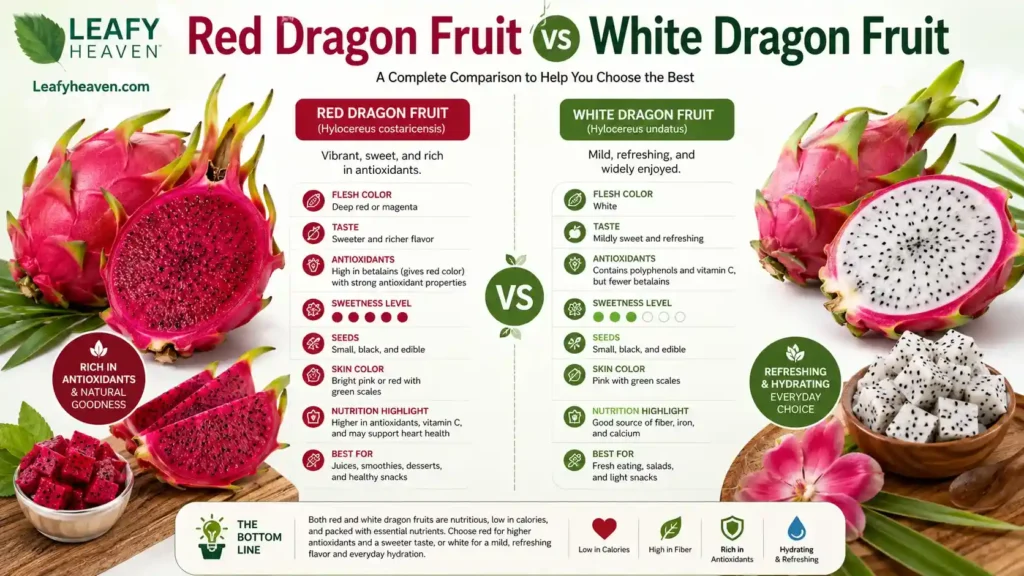
The main difference between red and white dragon fruit is the color of the flesh, sweetness level, and antioxidant concentration. In most cases, red-fleshed varieties produce a richer flavor and higher levels of beneficial plant pigments.
| Feature | Red Dragon Fruit | White Dragon Fruit |
| Flesh Color | Deep red to magenta | White |
| Sweetness | Generally sweeter | Usually milder |
| Antioxidant Content | Higher | Lower |
| Betalain Pigments | Abundant | Minimal |
| Flavor Intensity | Richer and fruitier | More subtle |
| Common Species | Hylocereus polyrhizus | Hylocereus undatus |
The comparison of red dragon fruit vs white often comes down to taste preference. Many gardeners and consumers prefer red dragon fruit vs white dragon fruit because of its stronger sweetness and vibrant appearance.
When comparing white dragon fruit vs red, red-fleshed cultivars typically contain more natural pigments that contribute to their deep coloration and nutritional value. In discussions about white dragon fruit vs red dragon fruit or dragon fruit red vs white, the red-fleshed types are frequently favored for fresh eating and smoothies.
A key identifying feature is the red dragon fruit red flesh, which ranges from bright crimson to deep magenta, while white dragon fruit contains pale white flesh with black edible seeds.
How to Identify a Red Dragon Fruit Plant
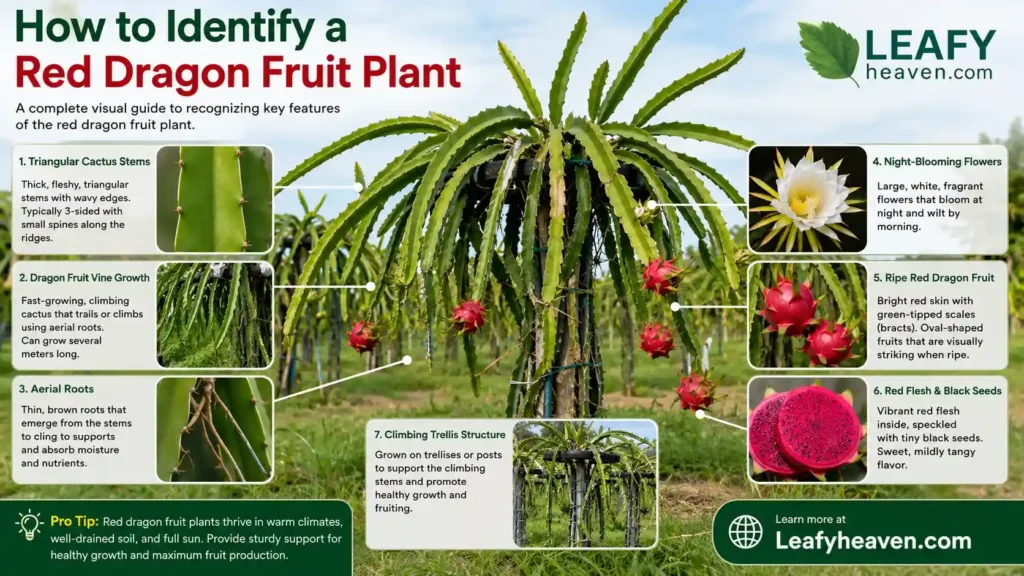
Red dragon fruit plants are easy to recognize by their triangular climbing stems, aerial roots, spectacular night-blooming flowers, and brightly colored red-fleshed fruit. As the plant matures, it develops long cascading branches that grow over trellises, posts, and support structures, creating a distinctive cactus-like appearance unlike most fruit crops.
Stem, Vine and Aerial Root Characteristics
The stem structure is one of the easiest ways to identify a red dragon fruit plant. Unlike traditional trees or shrubs, the plant grows as a climbing cactus with thick, fleshy stems that function as both vines and water-storage organs.
A typical dragon fruit vine consists of green, triangular segments with slightly wavy edges. These stems are succulent and capable of storing moisture during dry periods.
As the plant grows, multiple dragon fruit vines emerge from the main stem and begin climbing nearby supports. Along the stem edges, small aerial roots develop at regular intervals.
These dragon fruit aerial roots help the plant anchor itself to trellises, fences, posts, and other structures. In humid conditions, the roots can also absorb small amounts of moisture from the surrounding environment.
Key identifying stem features include:
- Thick triangular green stems
- Three-sided cactus segments
- Wavy stem margins
- Fast climbing growth habit
- Numerous dragon fruit air roots
- Branching stems that cascade downward when mature
The presence of dragon fruit cactus aerial roots is a strong indicator that the plant belongs to the climbing cactus group rather than a traditional vine species.
Dragon Fruit Flower Identification
The flowers are among the most spectacular features of the dragon fruit plant. A mature dragon fruit flower is large, fragrant, and typically blooms at night.
Individual flowers often measure 20–30 cm (8–12 inches) across, making them some of the largest flowers produced by cultivated fruit crops. The blooms usually open in the evening and begin closing the following morning.
Most dragon fruit flowers have creamy white petals with greenish-yellow outer bracts. Their strong fragrance attracts nocturnal pollinators such as moths and bats in their native habitats.
Characteristics of a typical dragonfruit flower include:
- Large trumpet-shaped bloom
- White inner petals
- Green to yellow outer bracts
- Strong sweet fragrance
- One-night flowering cycle
- Prominent central reproductive structures
Mature plants may produce dozens of dragonfruit flowers during the flowering season. Each pitaya flower has the potential to develop into fruit after successful pollination.
A healthy red dragon fruit flower is usually followed by rapid fruit development within a few weeks during warm growing conditions.
Fruit Appearance and Red Flesh Characteristics
The fruit is the most recognizable feature of the plant. A ripe red flesh dragon fruit typically has bright pink to red outer skin covered with overlapping leaf-like scales.
Depending on the cultivar, fruit size can range from small palm-sized specimens to large fruits weighing more than 500 grams.
The interior of a dragon fruit with red flesh varies from crimson to deep magenta and contains numerous small black edible seeds distributed throughout the pulp.
Common fruit characteristics include:
- Bright red or pink skin
- Smooth waxy surface
- Green-tipped scales
- Juicy flesh texture
- Numerous edible black seeds
- Sweet, mildly tropical flavor
A ripe red pitaya fruit often develops a rich, uniform skin color before harvest. Some cultivars produce intensely colored flesh that stains easily because of naturally occurring pigments.
Many gardeners refer to deeply colored varieties as magenta dragon fruit because of their vibrant internal coloration. When cut open, a dragon fruit with red inside immediately reveals its distinctive crimson or magenta flesh, separating it from white-fleshed varieties.
How Big Does a Dragon Fruit Plant Get?
Dragon fruit plants can become surprisingly large when grown under favorable conditions. For gardeners asking how big does dragon fruit plant get, a mature specimen can easily reach 3–6 meters (10–20 feet) in height when supported by a sturdy trellis.
The answer to how big do dragon fruit plants get depends on climate, growing conditions, pruning practices, and support systems. Unpruned plants can develop extensive branching canopies that spread several meters wide.
Typical size characteristics of mature dragon fruit plants include:
| Growth Feature | Mature Size |
| Plant Height | 3–6 m (10–20 ft) |
| Canopy Spread | 2–4 m (6–13 ft) |
| Main Stem Diameter | Up to 10 cm (4 in) |
| Individual Stem Length | 1–3 m (3–10 ft) |
| Productive Lifespan | 15–20+ years |
Proper pruning helps control plant size while improving airflow, light penetration, and fruit production. Most home gardeners train the plant onto a central post or trellis to maintain a manageable structure and maximize harvests.
Best Growing Conditions for Red Dragon Fruit Plant
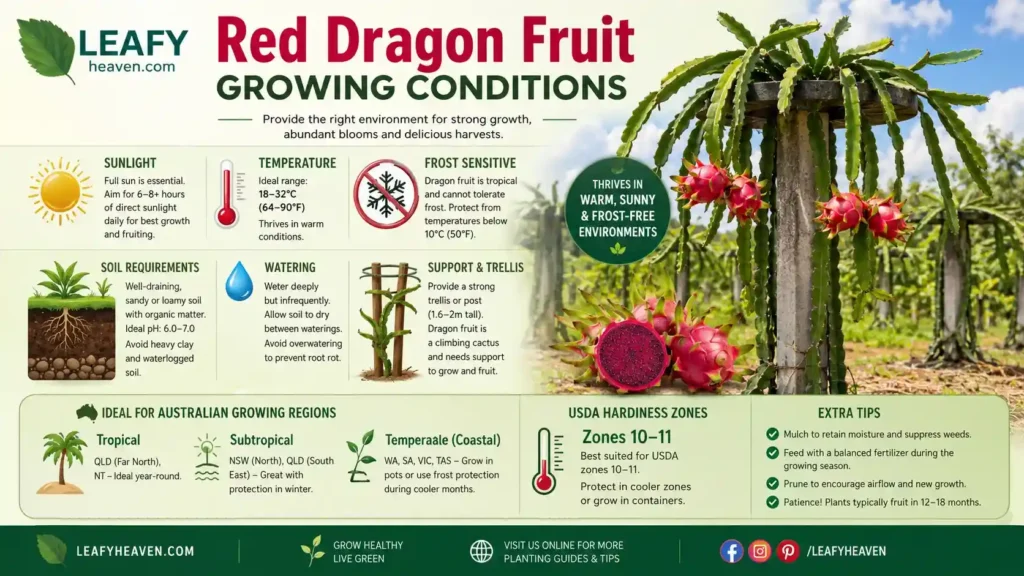
Red dragon fruit grows best in warm, frost-free climates with abundant sunlight, fast-draining soil, moderate watering, and strong support structures. As a tropical climbing cactus, the plant performs exceptionally well when heat, sunlight, and drainage are balanced correctly throughout the growing season.
USDA Zones and Australian Climate Suitability
Red dragon fruit thrives in warm subtropical and tropical regions where winter temperatures rarely fall below freezing. Understanding the correct dragon fruit growing zone is one of the most important factors for long-term success.
For dragon fruit Australia growers, the best production areas are found in northern and coastal regions where winters remain mild. Commercial and home cultivation is expanding throughout Queensland, northern New South Wales, the Northern Territory, and parts of Western Australia.
The suitability of dragonfruit Australia growing conditions comes from warm temperatures, high sunlight levels, and relatively low frost risk. Many gardeners successfully grow a dragon fruit plant Australia wide in protected microclimates and containers.
The table below summarizes ideal growing regions.
| Region | Suitability |
| Tropical Queensland | Excellent |
| Coastal Queensland | Excellent |
| Northern NSW | Very Good |
| Northern Territory | Excellent |
| Coastal WA | Good |
| Southern Australia | Protected Locations Only |
| Southern USA | Excellent |
| Florida | Excellent |
| Southern Texas | Excellent |
| Southern California | Good |
The ideal dragon fruit hardiness zone is USDA Zones 10–11, although protected plants may survive in Zone 9. Most successful Australia dragon fruit cultivation occurs in warm frost-free areas.
For gardeners researching a suitable dragon fruit grow zone, warm regions with long summers and minimal winter frost provide the best results. Commercial growers typically operate within favorable dragon fruit growing zones that allow year-round plant growth.
Sunlight Requirements
Dragon fruit requires abundant sunlight for vigorous growth, flowering, and fruit production. In most climates, the plant performs best with full sun exposure for much of the day.
For gardeners asking how much sunlight does dragon fruit need, the ideal range is 6–8 hours of direct sunlight daily. Mature plants can tolerate even more sunlight when adequately watered.
A common question is how much sun does dragon fruit need during peak summer. Established plants generally thrive in full sun, while young plants may benefit from light afternoon protection during extreme heat.
For those wondering how much sun do dragon fruit need, the answer depends on climate:
- Cool climates: Full sun all day
- Mild climates: Full sun preferred
- Extremely hot climates: Morning sun with light afternoon protection
- Indoor plants: Brightest possible location
Insufficient sunlight often results in:
- Slow growth
- Weak stems
- Reduced flowering
- Poor fruit production
- Fewer branches
Strong light exposure encourages healthier growth and higher yields throughout the season.
Temperature and Cold Tolerance
Red dragon fruit grows most actively in warm temperatures and has limited resistance to freezing conditions. Consistent warmth promotes rapid stem development, flowering, and fruit formation.
The optimal temperature range is:
| Growth Stage | Preferred Temperature |
| Active Growth | 20–32°C (68–90°F) |
| Flowering | 22–35°C (72–95°F) |
| Fruit Development | 24–35°C (75–95°F) |
| Winter Survival | Above 5°C (41°F) |
Although the plant is relatively hardy for a tropical fruit crop, dragon fruit cold tolerance is limited. Short exposure to temperatures near freezing may damage stems, flowers, and young fruit.
Extended frost can cause:
- Stem discoloration
- Tissue collapse
- Growth setbacks
- Flower loss
- Plant death in severe cases
For gardeners asking where can dragon fruit grow, the plant performs best in tropical, subtropical, and warm temperate regions with long summers and minimal frost.
Soil Requirements
Proper soil drainage is essential for healthy dragon fruit growth. As a cactus species, the plant dislikes waterlogged conditions and performs best in loose, aerated growing media.
The ideal dragon fruit soil should drain quickly while retaining enough moisture to support active growth. Heavy clay soils often require significant amendment before planting.
A high-quality dragon fruit soil mixture generally contains:
- Coarse sand
- Perlite or pumice
- Compost
- Aged organic matter
- Well-draining garden soil
For container cultivation, selecting the right dragon fruit plant soil is especially important because roots remain confined to a limited space.
Recommended growing media include:
| Component | Percentage |
| Quality Potting Mix | 40% |
| Coarse Sand | 20% |
| Perlite or Pumice | 20% |
| Compost | 20% |
A well-draining potting soil for dragon fruit reduces the risk of root diseases while supporting strong root development.
Many growers also create a specialized potting mix for dragon fruit that combines cactus-growing principles with the nutrient needs of a fruit-producing plant.
Watering Requirements
Although dragon fruit is a cactus, it requires more water than many desert cactus species. Consistent moisture supports healthy growth, flowering, and fruit production, but excessive watering can quickly lead to root problems.
For gardeners asking how often to water dragon fruit, the answer depends on temperature, soil type, rainfall, and plant age.
General watering guidelines include:
| Season | Watering Frequency |
| Spring | Every 7–10 Days |
| Summer | Every 3–7 Days |
| Autumn | Every 7–14 Days |
| Winter | Every 2–4 Weeks |
The question how often to water dragonfruit is best answered by checking soil moisture rather than following a rigid schedule. The upper few centimeters of soil should dry slightly before watering again.
Effective watering dragon fruit practices include:
- Water deeply rather than lightly
- Allow excess water to drain freely
- Reduce watering during cool weather
- Increase watering during flowering and fruiting
- Avoid constantly saturated soil
When you water dragon fruit, focus on maintaining evenly moist but never soggy soil. Proper watering combined with good drainage helps prevent root rot while encouraging strong growth and productive harvests.
How to Plant a Red Dragon Fruit Plant
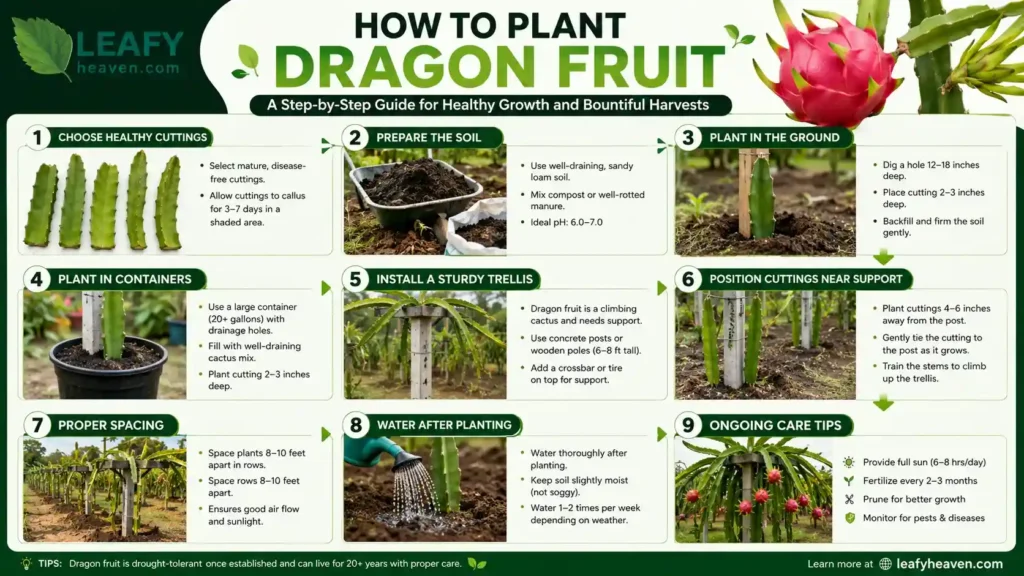
Dragon fruit can be planted from either seeds or cuttings, but cuttings are the preferred method because they establish faster and produce fruit much sooner. Successful planting depends on well-drained soil, adequate sunlight, and a strong support structure that allows the climbing cactus to develop properly.
How to Plant Dragon Fruit in the Ground
Learning how to plant dragon fruit correctly in the ground gives the plant the space needed to develop a large root system and high fruit production potential.
Before dragon fruit planting, select a sunny location with excellent drainage. Avoid low-lying areas where water collects after rain.
Follow these basic planting steps:
- Prepare well-draining soil enriched with compost.
- Install a sturdy support post or trellis before planting.
- Dig a hole slightly larger than the root ball or cutting base.
- Position the plant upright beside the support structure.
- Backfill with soil and firm gently around the roots.
- Water thoroughly after planting.
When planting dragon fruit, leave enough space between plants to ensure good airflow and future growth. Most home gardeners plant dragon fruit approximately 2–3 meters (6–10 feet) apart.
Proper spacing helps reduce disease pressure while allowing the canopy to receive sufficient sunlight.
How to Plant Dragon Fruit in Containers
Growing dragon fruit in containers is an excellent option for gardeners with limited space or those living in cooler climates where plants may need winter protection.
A healthy dragon fruit plant in a pot can produce flowers and fruit when provided with adequate sunlight, drainage, and support.
For successful dragon fruit in a pot cultivation:
- Choose a container at least 50–75 cm (20–30 inches) wide.
- Ensure multiple drainage holes are present.
- Use a fast-draining cactus-friendly growing mix.
- Install a central support post or trellis.
A well-maintained dragon fruit potted specimen can remain productive for many years.
Best practices for growing dragon fruit in pots include:
| Container Requirement | Recommendation |
| Minimum Pot Size | 50–75 cm (20–30 in) |
| Drainage | Excellent |
| Sunlight | Full Sun |
| Support Structure | Required |
| Potting Mix | Fast Draining |
Many gardeners achieve excellent results growing dragon fruit in a pot on patios, balconies, and small backyard spaces.
Because roots remain confined, growing dragon fruit in containers requires more frequent monitoring of water and nutrient levels than in-ground cultivation.
When planting dragon fruit in containers, select a durable pot capable of supporting the increasing weight of the mature plant and trellis system.
Best Trellis and Support Systems
Dragon fruit is a climbing cactus that requires vertical support to maximize growth and fruit production. Without support, stems often sprawl across the ground, increasing disease risks and reducing productivity.
A sturdy dragon fruit trellis encourages upward growth and makes maintenance easier.
Popular support systems include:
- Concrete posts
- Treated timber posts
- Metal trellis frames
- Pergolas
- Fence-mounted supports
An effective dragon fruit support structure should withstand the weight of mature stems, flowers, and fruit.
The most common commercial design uses a central post with a circular frame at the top. Once stems reach the top, they cascade downward, creating a productive fruiting canopy.
For gardeners wondering how to support dragon fruit plants, the goal is to encourage vertical growth early while preventing stems from bending or breaking under their own weight.
Key support features include:
- Strong anchoring
- Weather resistance
- Adequate height
- Easy access for pruning and harvesting
- Space for hanging branches
Proper support installation before planting simplifies long-term management and improves overall fruit production.
Where to Plant Dragon Fruit
Choosing the right location is essential for healthy growth and reliable fruiting. The best planting site provides warmth, sunlight, airflow, and well-drained soil throughout the year.
For gardeners asking where to plant dragon fruit, select a location that receives at least 6–8 hours of direct sunlight daily.
Ideal planting locations include:
- Sunny backyard gardens
- South-facing areas in cooler regions
- Raised garden beds
- Patio containers
- Courtyards with full sun exposure
- Protected tropical and subtropical sites
For USA gardeners, a dedicated guide to growing dragon fruit in Florida covers region-specific soil, climate, and pest management tips for successful cultivation.
When deciding where to grow dragon fruit, avoid locations that experience:
- Frequent frost
- Poor drainage
- Heavy shade
- Standing water
- Strong cold winds
A warm, sunny, and well-drained location combined with a strong support structure provides the foundation for vigorous growth, abundant flowering, and long-term fruit production.
How to Grow Red Dragon Fruit From Seed
Growing dragon fruit from seed is possible, but it requires significantly more time than propagation from cuttings. Seed-grown plants can take several years to reach maturity and fruiting age, yet they offer an interesting way to observe the complete development of the plant from germination to harvest.
How to Germinate Dragon Fruit Seeds
Successful germination begins with fresh, viable seeds and consistently warm conditions. The process is straightforward, but patience is essential because seedlings develop gradually during their early stages.
For gardeners wondering how to germinate dragon fruit seeds, follow these basic steps:
- Collect seeds from a ripe dragon fruit.
- Rinse away all fruit pulp.
- Allow seeds to dry briefly.
- Fill a shallow tray with a sterile seed-starting mix.
- Scatter seeds evenly across the surface.
- Lightly press seeds into the soil without burying them deeply.
- Mist gently and maintain consistent moisture.
- Place the tray in a warm, bright location.
When germinating dragon fruit seeds, temperatures between 22–30°C (72–86°F) generally provide the best results.
To successfully germinate dragon fruit seeds, keep the growing medium lightly moist but never waterlogged. Under favorable conditions, seedlings often emerge within one to three weeks.
How to Plant Dragon Fruit Seeds
After germination, seedlings require adequate light, moisture, and space for healthy development. Young plants initially grow slowly but gradually establish stronger root systems and thicker stems.
Fresh dragon fruit seeds can be planted directly into seed trays, propagation containers, or small pots filled with a well-draining growing medium.
Important steps for dragon fruit seeds planting include:
- Using clean containers
- Selecting a fast-draining seed mix
- Maintaining warm temperatures
- Providing bright indirect light
- Avoiding overwatering
When planting dragon fruit seeds, transplant seedlings only after they develop several healthy stem segments and stronger roots.
A young dragon fruit seed plant typically begins as a small succulent seedling before gradually developing the triangular stems characteristic of mature plants.
Growing a dragon fruit plant from seeds requires patience because development occurs much more slowly than with rooted cuttings. However, seed propagation can be rewarding for gardeners interested in experiencing the complete life cycle of the plant.
Growth Timeline From Seed
The development of dragon fruit from seed follows several distinct stages. Understanding these dragon fruit growth stages helps gardeners set realistic expectations for long-term cultivation.
The table below outlines typical development milestones.
| Growth Stage | Approximate Time |
| Seed Germination | 1–3 Weeks |
| Seedling Development | 1–3 Months |
| Juvenile Plant Growth | 3–12 Months |
| Climbing Stem Formation | 1–2 Years |
| Mature Vegetative Growth | 2–4 Years |
| First Flowering | 3–7 Years |
| Fruit Production | 4–7+ Years |
These dragon fruit plant growth stages vary depending on climate, sunlight, nutrition, and growing conditions.
For gardeners studying dragon fruit plant growth stages from seed, the longest period typically occurs during juvenile development, when plants focus on building roots and vegetative growth before flowering.
The complete life cycle of dragon fruit begins with seed germination, progresses through seedling and climbing stages, and eventually reaches flowering and fruit production once the plant attains maturity.
How Long Does Dragon Fruit Take to Grow From Seed?
Dragon fruit grown from seed usually requires several years before producing flowers and fruit. While growth rates vary, seed-grown plants are considerably slower than those propagated from mature cuttings.
For gardeners asking how long does dragon fruit take to grow, most plants require approximately 4–7 years before consistent fruit production begins.
The answer to how long does it take dragon fruit to grow depends on several factors, including:
- Climate
- Sunlight exposure
- Soil quality
- Fertilization
- Water availability
- Variety selection
Many gardeners also ask how long does dragonfruit take to grow from seed to a productive size. Under ideal tropical or subtropical conditions, vigorous plants may flower sooner, while cooler climates can extend the timeline.
In general, how long does it take for dragon fruit to grow from seed to fruiting maturity is measured in years rather than months. Because of this extended timeline, most commercial growers and home gardeners prefer cuttings when the goal is faster harvests and earlier fruit production.
How to Propagate Red Dragon Fruit From Cuttings
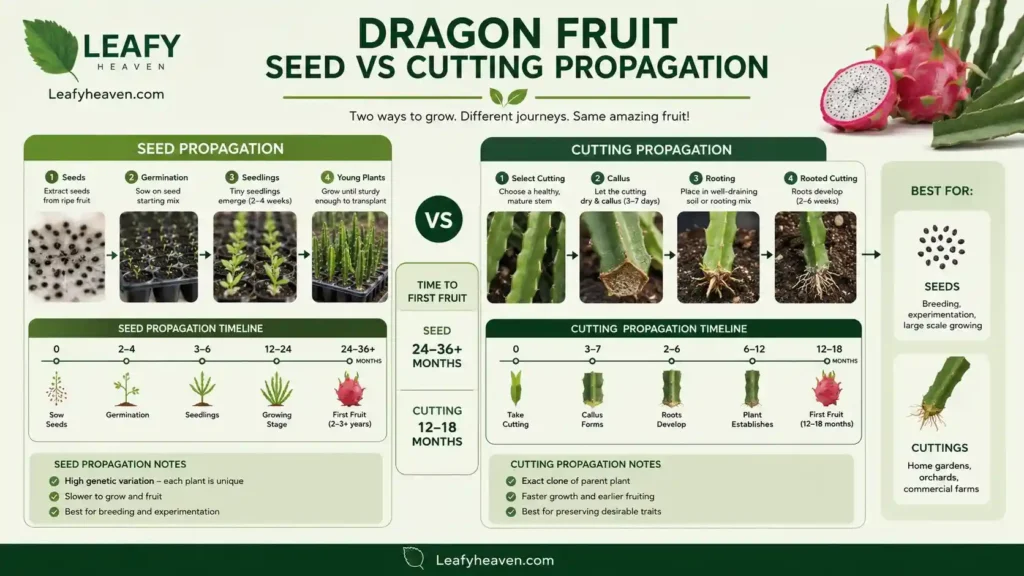
Propagation from cuttings is the fastest and most reliable method for growing red dragon fruit plants. Unlike seed-grown plants, cuttings develop quickly, establish faster root systems, and often produce flowers and fruit within a much shorter timeframe. This method also preserves the characteristics of the parent plant, ensuring consistent fruit quality and productivity.
Choosing Healthy Dragon Fruit Cuttings
The success of propagation begins with selecting vigorous, disease-free planting material. Healthy dragon fruit cuttings root more quickly and develop into stronger, more productive plants.
Choose cuttings from mature plants that show active growth and no signs of disease, rot, or pest damage. The stems should be firm, green, and well-developed.
Ideal characteristics include:
- Healthy green stem segments
- No soft or rotting areas
- No pest infestations
- Mature but not overly old stems
- Thick, vigorous growth
Most growers prefer dragonfruit cuttings measuring 30–50 cm (12–20 inches) long because they establish rapidly and contain enough stored energy to support root development.
A quality dragon fruit cutting should have several healthy stem sections and no visible damage before planting.
How to Root Dragon Fruit Cuttings
Rooting cuttings is a simple process when proper preparation techniques are followed. Allowing the cut end to dry before planting helps reduce the risk of fungal infections and stem rot.
For gardeners wondering how to root dragon fruit cuttings, follow these steps:
- Cut a healthy stem segment from a mature plant.
- Allow the cut end to dry and callus for 3–7 days.
- Prepare a container with well-draining growing media.
- Insert the lower end several centimeters into the soil.
- Place the container in a bright location with indirect sunlight.
- Water lightly until roots develop.
Proper dragon fruit cutting planting begins with a well-draining mix and moderate moisture levels. Excess water during the rooting stage is one of the most common causes of failure.
When planting dragon fruit cuttings, avoid burying large portions of the stem. Only the lower section should be placed beneath the soil surface while the majority of the cutting remains exposed.
Root formation usually begins within several weeks under warm growing conditions.
How to Grow Dragon Fruit From Cuttings
Once roots have developed, the cutting enters an active growth phase. New shoots, aerial roots, and stem segments begin forming as the plant establishes itself.
For gardeners researching how to grow dragon fruit from cutting, the key factors are sunlight, drainage, support structures, and consistent care.
After rooting:
- Move the plant to a sunnier location.
- Gradually increase watering as growth accelerates.
- Install a support post or trellis.
- Apply balanced fertilizer during active growth.
- Train stems upward as they elongate.
The process of how to grow dragon fruit from cuttings is significantly faster than seed propagation because the plant begins with mature tissue rather than starting from a juvenile seedling stage.
Successful growing dragon fruit from cuttings often results in vigorous stem development within the first year. In favorable climates, flowering may occur much sooner than with seed-grown plants.
Many commercial producers rely on growing dragon fruit from cutting methods because they provide predictable growth, consistent fruit quality, and earlier harvests.
Seed vs Cutting Comparison
Cuttings are generally preferred for home gardens and commercial production because they reduce the time required to reach fruiting maturity.
| Feature | Seed Propagation | Cutting Propagation |
| Ease of Propagation | Moderate | Easy |
| Germination Required | Yes | No |
| Root Development Speed | Slow | Fast |
| Growth Rate | Slow | Fast |
| Time to Flowering | 3–7 Years | 1–3 Years |
| Time to Fruiting | 4–7+ Years | 1–3 Years |
| Parent Plant Traits Preserved | Not Always | Yes |
| Commercial Use | Limited | Widely Used |
| Reliability | Moderate | High |
| Recommended for Beginners | Less Suitable | Highly Suitable |
For most gardeners seeking faster results, propagation from cuttings remains the most practical and efficient method for establishing productive red dragon fruit plants.
Red Dragon Fruit Plant Care Guide
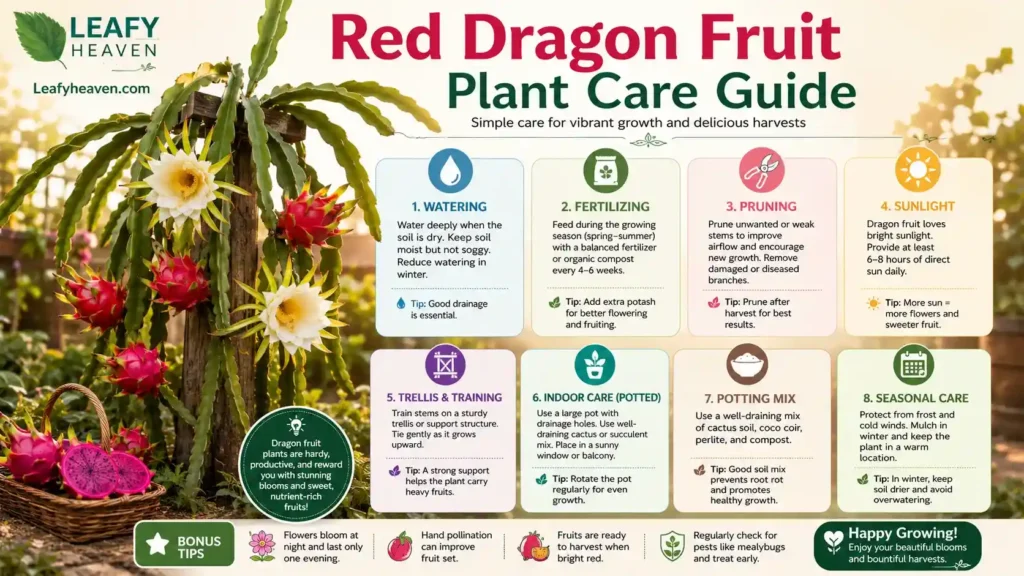
Consistent watering, balanced fertilization, proper pruning, and adequate sunlight are the foundation of successful red dragon fruit cultivation. While dragon fruit is relatively easy to grow, regular maintenance helps maximize flowering, fruit production, plant health, and long-term productivity.
Dragon Fruit Plant Care Schedule
A simple seasonal routine helps maintain vigorous growth and consistent harvests. Effective dragon fruit plant care focuses on adjusting watering, feeding, and pruning practices throughout the year.
The table below provides a general maintenance schedule.
| Season | Care Tasks |
| Spring | Fertilize, increase watering, train new growth |
| Summer | Monitor moisture, support flowering and fruiting |
| Autumn | Reduce fertilization, harvest fruit, light pruning |
| Winter | Minimize watering, protect from frost, inspect supports |
Good dragon fruit care includes regular observation of plant growth, stem condition, and soil moisture levels.
When caring for dragon fruit plant specimens, prioritize:
- Adequate sunlight
- Proper drainage
- Structural support
- Timely pruning
- Balanced nutrition
Consistent care for dragon fruit plant growth encourages stronger stems, healthier flowers, and increased fruit production over time.
Best Fertilizer for Dragon Fruit
Dragon fruit benefits from regular feeding during active growth. Proper nutrition supports stem development, flowering, fruit set, and overall plant vigor.
A balanced dragon fruit fertilizer containing nitrogen, phosphorus, and potassium is suitable for most growth stages. As flowering approaches, slightly higher phosphorus and potassium levels may improve fruit production.
The best fertilizer for dragon fruit depends on plant age and growing conditions, but common options include:
- Balanced granular fertilizers
- Controlled-release fertilizers
- Compost and aged manure
- Organic fruit tree fertilizers
- Specialized cactus fertilizers
General fertilizer recommendations:
| Plant Stage | Fertilizer Focus |
| Young Plants | Balanced Growth Formula |
| Vegetative Growth | Moderate Nitrogen |
| Flowering Stage | Higher Phosphorus |
| Fruiting Stage | Higher Potassium |
A quality fertilizer for dragon fruit should be applied according to label directions to avoid nutrient imbalances.
Many growers use a combination of organic matter and commercial fertilizer for dragon fruit plant cultivation to maintain steady growth throughout the season.
Specialized pitaya fertilizer products are also available in some regions and are formulated specifically for flowering and fruiting cactus crops.
Pruning and Training
Pruning improves airflow, light penetration, plant structure, and fruit production. Without regular maintenance, dragon fruit plants can become overcrowded and difficult to manage.
Effective pruning dragon fruit practices focus on removing weak, damaged, diseased, or excessively crowded stems.
Benefits of pruning include:
- Better sunlight distribution
- Improved air circulation
- Easier harvesting
- Stronger support structure
- Increased fruiting potential
For gardeners wondering how to prune dragon fruit, follow these basic guidelines:
- Remove damaged or unhealthy stems.
- Eliminate overcrowded growth.
- Maintain a manageable canopy size.
- Train healthy stems onto supports.
- Remove stems growing in unwanted directions.
Training should begin while stems are young and flexible. Secure developing shoots to posts or trellises to encourage upward growth before allowing branches to cascade from the top of the support structure.
Indoor Dragon Fruit Plant Care
Dragon fruit can be grown indoors when sufficient light and space are available. Although outdoor cultivation generally produces better results, container-grown plants can thrive inside bright environments.
For gardeners interested in growing dragon fruit indoors, the most important requirement is strong light exposure. A south-facing window or supplemental grow lights often provide the best results.
An indoor dragon fruit plant should be placed in the brightest available location and protected from cold drafts.
Successful indoor cultivation involves:
- Bright direct sunlight
- Fast-draining soil
- Moderate watering
- Good air circulation
- Strong support structures
A healthy dragon fruit indoor plant can continue growing year-round when temperatures remain warm and lighting conditions are adequate.
Because of its unique appearance, some gardeners maintain a dragon fruit houseplant primarily for ornamental purposes, even before fruit production begins.
For those asking can you grow dragon fruit indoors, the answer is yes. However, indoor plants typically require more attention to lighting, support, and container size than outdoor specimens. With proper care, indoor-grown dragon fruit can develop into attractive climbing plants and may eventually produce flowers and fruit.
Flowering, Pollination and Fruiting
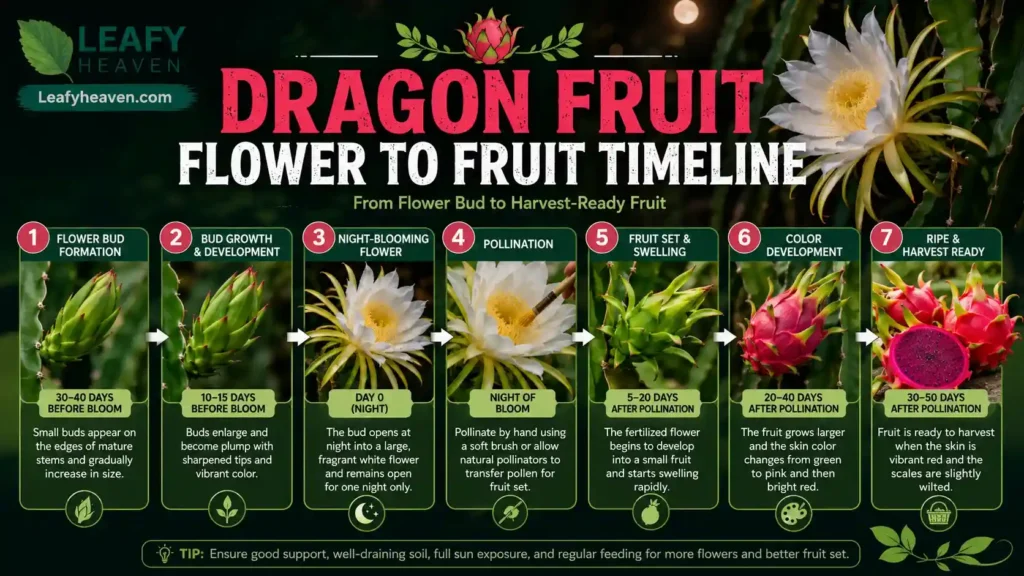
Mature dragon fruit plants typically bloom during warm months, and fruit develops several weeks after successful pollination. Flower production is strongly influenced by temperature, sunlight, plant maturity, and overall growing conditions. Healthy, well-maintained plants can produce multiple flowering cycles throughout the growing season.
When Does Dragon Fruit Bloom?
Dragon fruit usually blooms during late spring, summer, and early autumn when temperatures remain warm and growth is active. Flowering periods vary slightly depending on climate, variety, and local growing conditions.
For gardeners asking when does dragon fruit bloom, most plants begin producing flower buds once they reach maturity and experience favorable temperatures.
The answer to when do dragon fruit flower depends largely on the growing region:
| Region | Typical Blooming Period |
| Tropical Australia | Spring to Autumn |
| Subtropical Australia | Late Spring to Early Autumn |
| Southern USA | Late Spring to Summer |
| Warm Coastal Areas | Multiple Bloom Cycles Possible |
Dragon fruit flowers develop through several recognizable dragon fruit flowering stages:
- Flower bud formation
- Rapid bud enlargement
- Bud elongation
- Night bloom opening
- Pollination
- Flower closure
These dragon fruit flower stages often occur over a period of several weeks before the flower fully opens for a single night.
From Flower to Fruit Development
After successful pollination, the flower begins transforming into developing fruit. This stage is one of the most rewarding parts of dragon fruit cultivation because visible fruit growth occurs relatively quickly.
The process of dragon fruit from flower to fruit begins when the flower withers and the ovary at its base starts expanding.
Typical development stages include:
- Flower opening
- Pollination
- Petal drop
- Fruit swelling
- Color development
- Ripening
The average dragon fruit flower to fruit time ranges from approximately 30–50 days, depending on variety, temperature, and growing conditions.
Warm temperatures and adequate moisture generally accelerate fruit development, while cooler conditions may extend the ripening period.
When Does Dragon Fruit Produce Fruit?
Dragon fruit produces fruit after flowering and successful pollination. Mature plants can often generate multiple harvest cycles during the warm season when growing conditions remain favorable.
For gardeners wondering when does dragon fruit produce fruit, fruit production usually follows flowering by several weeks.
The answer to when do dragon fruit produce fruit depends on:
- Plant maturity
- Variety
- Climate
- Pollination success
- Nutrient availability
A healthy dragon fruit plant fruiting cycle typically includes:
| Growth Phase | Approximate Timing |
| Flower Bud Formation | Early Warm Season |
| Flower Opening | Several Weeks Later |
| Pollination | Bloom Night |
| Fruit Development | 30–50 Days |
| Harvest | After Full Color Development |
Established plants may continue flowering and fruiting multiple times during a favorable growing season.
How Long Until a Plant Fruits?
The time required for fruit production depends heavily on whether the plant was grown from seed or propagated from cuttings.
For gardeners asking how long for dragon fruit to fruit, cutting-grown plants generally produce fruit much sooner than seed-grown plants.
The table below summarizes typical timelines.
| Propagation Method | Time to First Fruit |
| Cuttings | 1–3 Years |
| Seeds | 4–7+ Years |
The answer to how long does it take dragon fruit to produce fruit varies according to climate, sunlight exposure, nutrition, and overall plant health.
A common question is dragon fruit how long to fruit under ideal conditions. In warm tropical and subtropical regions, vigorous cutting-grown plants may begin flowering within the first few years, while seed-grown plants require significantly longer to reach reproductive maturity.
Proper care, consistent sunlight, balanced fertilization, and strong support structures help shorten the time required for flowering and fruit production.
When and How to Harvest Red Dragon Fruit
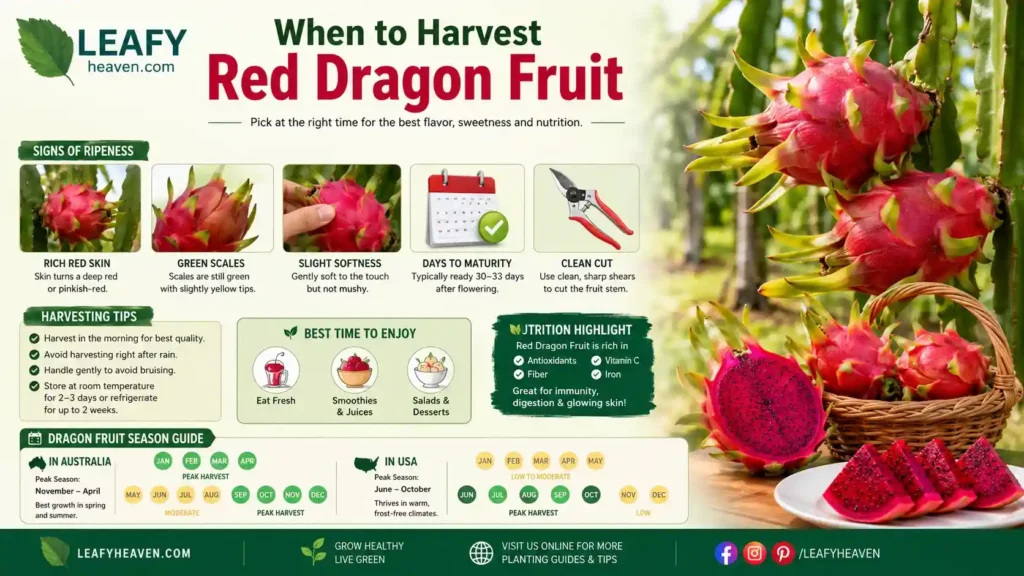
Dragon fruit should be harvested when the skin develops its full color and the fruit becomes slightly soft when gently squeezed. Harvesting too early can result in poor flavor and lower sweetness, while leaving fruit on the plant too long may reduce quality and shelf life.
Signs Dragon Fruit Is Ready to Pick
Recognizing ripeness is essential for obtaining the best flavor and texture. The most reliable indicators are skin color, fruit firmness, and the appearance of the outer scales.
For gardeners wondering when to harvest dragon fruit, ripe fruit typically develops a bright, uniform skin color with minimal green remaining on the surface.
Common signs of maturity include:
- Full red or pink skin coloration
- Slight softness when gently pressed
- Healthy-looking scales
- Plump fruit shape
- Sweet aroma near the fruit
A successful dragon fruit harvest depends on picking fruit at peak ripeness rather than relying solely on a specific calendar date.
The ideal dragon fruit harvest time generally occurs several weeks after flowering and fruit development are complete.
For those asking dragon fruit when to pick, monitor color changes closely during the final stages of ripening. Most varieties are ready once the skin reaches its mature color and the fruit gives slightly under gentle pressure.
If you are unsure when to pick a dragon fruit, it is usually better to wait until the fruit is fully colored rather than harvesting while significant green patches remain.
To harvest:
- Hold the fruit carefully.
- Use clean pruning shears or a sharp knife.
- Cut the stem just above the fruit.
- Avoid pulling the fruit from the plant.
- Store harvested fruit in a cool location.
Dragon Fruit Season in Australia vs USA
Harvest timing varies depending on climate, variety, and local growing conditions. Warm regions often experience longer production periods and multiple harvest cycles throughout the year.
The table below compares the typical dragon fruit season Australia and dragon fruit season in USA growing periods.
| Region | Typical Harvest Season |
| Tropical Queensland | December–May |
| Coastal Queensland | January–May |
| Northern NSW | January–April |
| Northern Territory | December–May |
| Florida | June–November |
| Southern Texas | July–October |
| Southern California | July–November |
The exact dragonfruit season can vary from year to year based on weather patterns, temperature, and rainfall.
In Australia, the primary season of dragon fruit generally occurs during the warmer months, with tropical regions often producing fruit over an extended period.
The pitaya season in the USA typically peaks during summer and early autumn, especially in Florida, Texas, and Southern California where growing conditions are most favorable.
Because flowering can occur multiple times in warm climates, mature plants may produce several harvests during a single growing season.
Common Problems and Solutions
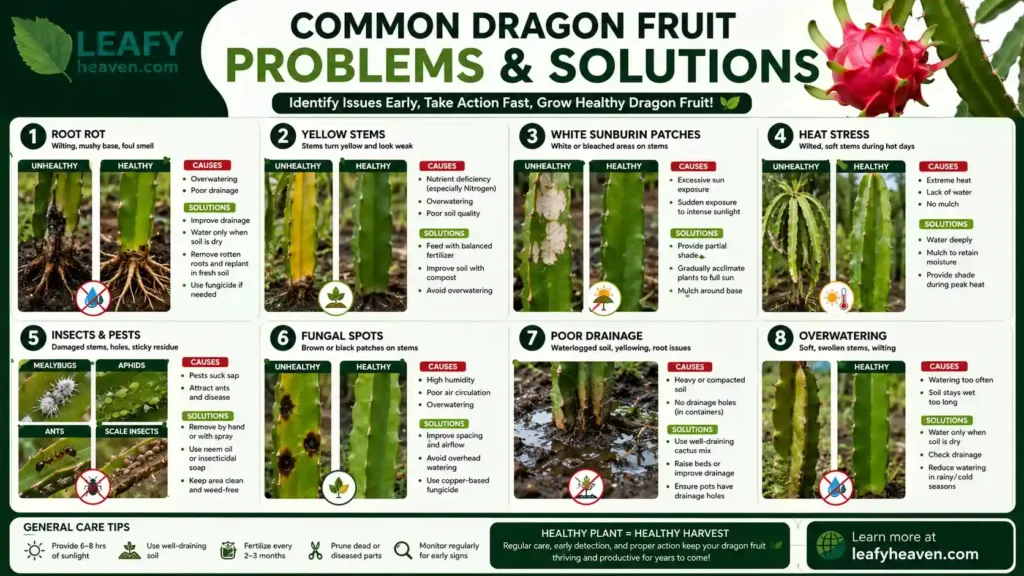
Most dragon fruit problems are caused by excess moisture, poor drainage, nutrient imbalances, pest infestations, or environmental stress. Early identification and corrective action can prevent serious damage and help maintain healthy growth, flowering, and fruit production.
Dragon Fruit Root Rot
Dragon fruit root rot is one of the most common and serious problems affecting dragon fruit plants. It usually develops when roots remain in waterlogged soil for extended periods.
Common symptoms include:
- Soft, black, or brown roots
- Yellowing stems
- Wilting despite moist soil
- Slow growth
- Stem collapse in severe cases
| Cause | Solution |
| Poor Drainage | Improve soil drainage |
| Overwatering | Reduce watering frequency |
| Heavy Clay Soil | Amend with coarse materials |
| Standing Water | Plant in raised beds |
Prevention is the best strategy. Always use well-drained soil and allow the growing medium to partially dry between watering sessions.
Dragon Fruit Plant Turning Yellow
A dragon fruit plant turning yellow is usually a sign of stress rather than a disease itself. The underlying cause may be related to watering, nutrition, roots, or environmental conditions.
Common causes include:
- Overwatering
- Root rot
- Nitrogen deficiency
- Poor drainage
- Cold stress
- Insufficient sunlight
The table below can help diagnose the issue.
| Symptom | Likely Cause |
| Entire Plant Yellowing | Excess Water |
| Pale New Growth | Nutrient Deficiency |
| Yellow Lower Stems | Root Problems |
| Yellow After Cold Weather | Temperature Stress |
Correcting watering practices and providing balanced nutrition typically restores healthy green growth.
Dragon Fruit Plant Turning White
A dragon fruit plant turning white often indicates environmental damage rather than a nutrient problem. White patches may appear on stems after exposure to excessive sunlight, heat, cold injury, or fungal issues.
Potential causes include:
- Sun exposure damage
- Tissue scarring
- Cold injury
- Fungal infections
- Natural stem aging
Inspect affected areas carefully. If stems remain firm, the damage is often cosmetic. Soft or spreading white patches may require treatment and removal of damaged tissue.
Good airflow, proper watering, and balanced sunlight exposure help minimize whitening problems.
Sunburn and Heat Stress
Although dragon fruit enjoys warm conditions, excessive heat can still damage stems and developing fruit. Sunburn dragon fruit symptoms are most common during extreme summer temperatures or when previously shaded stems are suddenly exposed to intense sunlight.
Typical symptoms include:
- White or bleached patches
- Brown scorch marks
- Stem cracking
- Reduced growth
- Fruit surface damage
Management strategies include:
- Gradual exposure to stronger sunlight
- Mulching around the root zone
- Consistent watering during heat waves
- Providing temporary shade during extreme temperatures
- Maintaining healthy canopy coverage
Young plants are generally more vulnerable to heat stress than established specimens.
Common Insects and Diseases
Several pests and diseases can affect dragon fruit plants, particularly in warm and humid environments. Regular monitoring helps detect problems before they become severe.
Common dragon fruit insects include:
- Mealybugs
- Scale insects
- Aphids
- Ants
- Spider mites
- Thrips
These pests may cause:
- Stunted growth
- Sticky residue
- Stem damage
- Reduced flowering
- Lower fruit production
Several dragon fruit plant diseases may also occur under unfavorable conditions.
Common examples include:
| Disease | Main Symptoms |
| Stem Rot | Soft, decaying tissue |
| Anthracnose | Dark lesions on stems and fruit |
| Fungal Spot Diseases | Discolored patches |
| Root Rot | Root decay and yellowing |
| Bacterial Soft Rot | Water-soaked tissue |
Many diseases of dragon fruit become more severe when plants experience poor airflow, excessive humidity, overcrowding, or overwatering.
To reduce pest and disease pressure:
- Maintain proper plant spacing
- Improve air circulation
- Avoid overwatering
- Remove infected plant material
- Inspect stems regularly
- Keep growing areas clean
Healthy plants grown under proper conditions are generally more resistant to insects, diseases, and environmental stress.
Red Dragon Fruit Nutrition, Benefits and Uses
Red dragon fruit is rich in antioxidants, fiber, vitamins, minerals, and beneficial plant compounds that support overall health. Its vibrant red flesh contains natural pigments known as betalains, which contribute to both its distinctive color and nutritional value. In addition to being enjoyed fresh, red dragon fruit is widely used in smoothies, desserts, juices, fruit salads, and other culinary applications.
Red Dragon Fruit Nutrition Profile
Red dragon fruit is a low-calorie fruit that provides fiber, hydration, and several important nutrients. Its nutrient content can vary slightly by variety and growing conditions, but it is generally considered a nutritious addition to a balanced diet.
The table below highlights a typical dragon fruit nutrition profile per 100 grams of fresh fruit.
| Nutrient | Approximate Amount |
| Calories | 50–60 |
| Water | 80–90% |
| Carbohydrates | 11–13 g |
| Dietary Fiber | 2–3 g |
| Protein | 1–2 g |
| Fat | Less than 1 g |
| Calcium | Small Amount |
| Magnesium | Moderate Amount |
| Iron | Small Amount |
| Potassium | Moderate Amount |
Among the most notable dragon fruit vitamins are:
- Vitamin C
- B1 (Thiamine)
- B2 (Riboflavin)
- B3 (Niacin)
The fruit also contains antioxidants, betalains, flavonoids, and other plant compounds that contribute to its nutritional value.
Health Benefits of Red Dragon Fruit
Red dragon fruit provides several nutritional advantages due to its combination of fiber, antioxidants, vitamins, and hydration.
Some of the most recognized red dragon fruit benefits include support for digestive health, hydration, and overall wellness.
The major benefits of red dragon fruit may include:
- Provides dietary fiber for digestive support
- Supplies antioxidant compounds
- Supports hydration due to high water content
- Contributes vitamins and minerals to the diet
- Contains beneficial plant pigments such as betalains
Many of the reported health benefits of red dragon fruit are linked to its antioxidant content. The deep red flesh contains natural pigments that help protect plant tissues and contribute to the fruit’s nutritional profile.
Additional red dragon fruit health benefits may include:
| Potential Benefit | Supporting Nutrients |
| Digestive Support | Fiber |
| Hydration | High Water Content |
| Antioxidant Intake | Betalains & Flavonoids |
| Nutrient Support | Vitamins & Minerals |
| General Wellness | Combination of Nutrients |
As part of a balanced diet, red dragon fruit can be a refreshing and nutrient-rich fruit choice.
Is Dragon Fruit Good for You?
Yes, dragon fruit can be a healthy addition to many diets because it provides fiber, antioxidants, vitamins, minerals, and hydration while remaining relatively low in calories.
For those asking is dragon fruit good for you, the answer is generally yes when consumed as part of a varied and balanced eating pattern.
Many people also wonder what is dragon fruit good for. Its primary nutritional strengths include:
- Supporting digestive health through fiber
- Providing antioxidant compounds
- Contributing hydration
- Supplying beneficial vitamins and minerals
- Offering a naturally sweet, low-calorie fruit option
The nutritional advantages often associated with pitaya benefits stem from the fruit’s combination of fiber, antioxidants, and naturally occurring plant compounds.
Commonly cited pitaya fruit benefits include:
- Easy incorporation into healthy diets
- Versatile culinary uses
- High water content
- Nutrient density relative to calories
- Natural antioxidant content
Whether eaten fresh, blended into smoothies, added to fruit bowls, or used in desserts, red dragon fruit offers both nutritional value and visual appeal while contributing a range of beneficial nutrients to the diet.
Red Dragon Fruit Varieties
Several red-fleshed dragon fruit cultivars vary in sweetness, fruit size, productivity, growth habit, and climate adaptability. Gardeners interested in exploring other dragon fruit varieties beyond red-fleshed types may also consider yellow dragon fruit, which offers distinct flavor characteristics and growing requirements. While all belong to the broader group of red-fleshed pitaya types, each variety offers unique characteristics that may make it better suited for specific growing conditions or gardener preferences.
Among the many cultivated dragon fruit varieties, red-fleshed selections are especially popular because of their vibrant color, sweet flavor, and high antioxidant content.
Hylocereus polyrhizus
Hylocereus polyrhizus is one of the most widely grown red-fleshed dragon fruit types and serves as the foundation for many commercial and home-grown cultivars.
This species is known for:
- Deep red to magenta flesh
- Sweet flavor
- Strong climbing growth
- Good productivity
- Attractive fruit appearance
Among all recognized dragon fruit species, Hylocereus polyrhizus is one of the most important for red-fleshed fruit production.
Key characteristics include:
| Feature | Description |
| Flesh Color | Deep Red |
| Skin Color | Bright Pink to Red |
| Sweetness | High |
| Growth Rate | Fast |
| Productivity | Good to Excellent |
Robles Red Dragon Fruit
Robles Red Dragon Fruit is a productive red-fleshed cultivar valued for its attractive fruit, vigorous growth, and reliable yields.
Many growers choose robles red dragon fruit because it combines strong plant performance with flavorful fruit.
Notable characteristics include:
- Rich red flesh
- Good sweetness levels
- Consistent fruit production
- Vigorous climbing growth
- Attractive fruit size
This variety performs well in warm tropical and subtropical growing regions where frost is minimal.
Taiwan Red Dragon Fruit
Taiwan Red Dragon Fruit is widely recognized for its exceptional sweetness and intensely colored flesh. It is often considered one of the more flavorful red-fleshed selections available to growers.
Features of taiwan red dragon fruit include:
- Deep red flesh coloration
- Excellent sweetness
- Attractive fruit shape
- Strong productivity
- High fresh-eating quality
Many growers value this variety for premium fruit production and rich flavor development under warm growing conditions.
| Characteristic | Taiwan Red Dragon Fruit |
| Flesh Color | Deep Red |
| Sweetness | Very High |
| Fruit Quality | Excellent |
| Productivity | High |
| Market Appeal | High |
Frankie’s Red Dragon Fruit
Frankie’s Red Dragon Fruit is a well-known cultivar that originated in Hawaii and has gained popularity among dragon fruit enthusiasts.
The appeal of frankies red dragon fruit comes from its combination of productivity, vigorous growth, and flavorful fruit.
Common characteristics include:
- Bright red flesh
- Sweet flavor profile
- Reliable fruit set
- Strong climbing habit
- Adaptability to warm climates
Under favorable conditions, this variety can produce abundant harvests and develop into a highly productive mature plant.
Red Scarlet Rose Dragon Fruit
Red Scarlet Rose Dragon Fruit is admired for its striking appearance and richly colored flesh. It is often grown by collectors and enthusiasts seeking distinctive red-fleshed cultivars.
Characteristics of red scarlet rose dragon fruit include:
- Intense red flesh
- Attractive fruit coloration
- Sweet flavor
- Vigorous growth habit
- Ornamental appeal
Like many premium red dragon fruit plants, this cultivar performs best in warm regions with excellent sunlight, drainage, and support structures.
The growing popularity of red-fleshed dragon fruit varieties continues to expand as gardeners discover their combination of ornamental beauty, impressive productivity, and excellent fruit quality.
Quick Summary Table
| Feature | Details |
| Scientific Name | Hylocereus polyrhizus (commonly associated with red-fleshed varieties) |
| Plant Type | Climbing tropical fruiting cactus |
| Mature Size | 3–6 m (10–20 ft) tall with a 2–4 m (6–13 ft) spread when supported |
| Climate | Tropical, subtropical, and warm frost-free regions |
| USDA Zones | USDA Zones 10–11 (protected cultivation possible in Zone 9) |
| Australia Growing Regions | Tropical Queensland, Coastal Queensland, Northern NSW, Northern Territory, warm coastal Western Australia |
| Fruiting Time | Typically 30–50 days after successful pollination; usually fruits in warm seasons |
| Propagation Methods | Stem cuttings, seeds, grafting (less common) |
| Care Difficulty | Easy to Moderate |
Conclusion
The red dragon fruit plant is one of the most rewarding fruiting cacti for gardeners in Australia, the southern United States, and other warm-climate regions. Its attractive climbing growth habit, spectacular night-blooming flowers, and vibrant red-fleshed fruit make it both an ornamental and productive garden plant.
With proper sunlight, well-drained soil, regular care, and a sturdy support system, a healthy dragon fruit plant can provide years of reliable growth and harvests. Whether grown in the ground or containers, propagation from cuttings offers the fastest path to fruit production, while seed-grown plants allow gardeners to experience the complete life cycle of this unique cactus.
From identification and planting to flowering, fruiting, harvesting, and troubleshooting, understanding the basic requirements of the plant greatly improves success. For gardeners seeking a low-maintenance tropical fruit crop with impressive visual appeal and nutritious fruit, the red dragon fruit plant remains an excellent choice.
FAQs
Is a red dragon fruit plant a cactus?
Yes, a red dragon fruit plant is a cactus. It belongs to the Cactaceae family and is classified as a tropical climbing cactus rather than a desert cactus. The plant has thick succulent stems that store water, aerial roots that help it climb support structures, and large night-blooming flowers. Unlike many traditional cacti, it prefers warm, humid environments and regular moisture while still requiring excellent drainage.
How long does a red dragon fruit plant take to produce fruit?
The time required for fruit production depends on the propagation method. Plants grown from cuttings typically begin producing fruit within 1–3 years under favorable conditions. Seed-grown plants usually take much longer, often requiring 4–7 years or more before reaching fruiting maturity. Adequate sunlight, proper nutrition, and warm temperatures can help accelerate growth and flowering.
Can you grow red dragon fruit in pots?
Yes, red dragon fruit grows very well in containers when provided with proper care. A large pot with excellent drainage, a sturdy support structure, and a well-draining growing medium are essential. Container-grown plants are especially useful in cooler regions because they can be moved to protected locations during cold weather. With sufficient sunlight and maintenance, potted plants can produce flowers and fruit successfully.
What is the difference between red and white dragon fruit?
The primary difference is the color of the flesh. Red dragon fruit contains deep red or magenta flesh, while white dragon fruit has white flesh with black edible seeds. Red-fleshed varieties are generally sweeter and contain higher levels of antioxidant pigments known as betalains. Both types have similar growth habits, nutritional value, and cultivation requirements, but many people prefer red varieties for their richer flavor and vibrant appearance.
How much sunlight does a red dragon fruit plant need?
A red dragon fruit plant performs best with 6–8 hours of direct sunlight each day. Full sun encourages stronger growth, improved flowering, and better fruit production. In extremely hot climates, young plants may benefit from light afternoon shade during periods of intense summer heat. Insufficient sunlight often results in slower growth and reduced fruit yields.
Can red dragon fruit be grown indoors?
Yes, red dragon fruit can be grown indoors if adequate light is available. The plant should be placed near a bright sunny window or under high-quality grow lights. Indoor cultivation also requires a well-draining potting mix, proper watering practices, and a support structure for climbing stems. While fruit production is usually easier outdoors, healthy indoor plants can still grow successfully and may eventually flower and fruit.
When is dragon fruit season in Australia?
Dragon fruit season in Australia varies by region, but harvesting generally occurs from summer through autumn. In tropical Queensland and other warm northern areas, fruit is commonly harvested between December and May. Climate, variety, and local weather conditions can influence exact harvest dates, and mature plants may produce multiple harvest cycles during a single growing season.
What is the best way to propagate a red dragon fruit plant?
Propagation from stem cuttings is considered the best method. Cuttings root quickly, maintain the characteristics of the parent plant, and produce fruit much sooner than seed-grown plants. Healthy mature stem sections are allowed to callus before planting in a well-draining growing medium. Under warm conditions, roots typically develop within a few weeks, making cuttings the fastest and most reliable propagation technique.

Written by the LeafyHeaven Editorial Team
LeafyHeaven shares practical gardening tips and simple plant care guides to help you grow, nurture, and enjoy your plants with ease. Our goal is to make gardening feel natural, approachable, and rewarding for everyone.