
Introduction
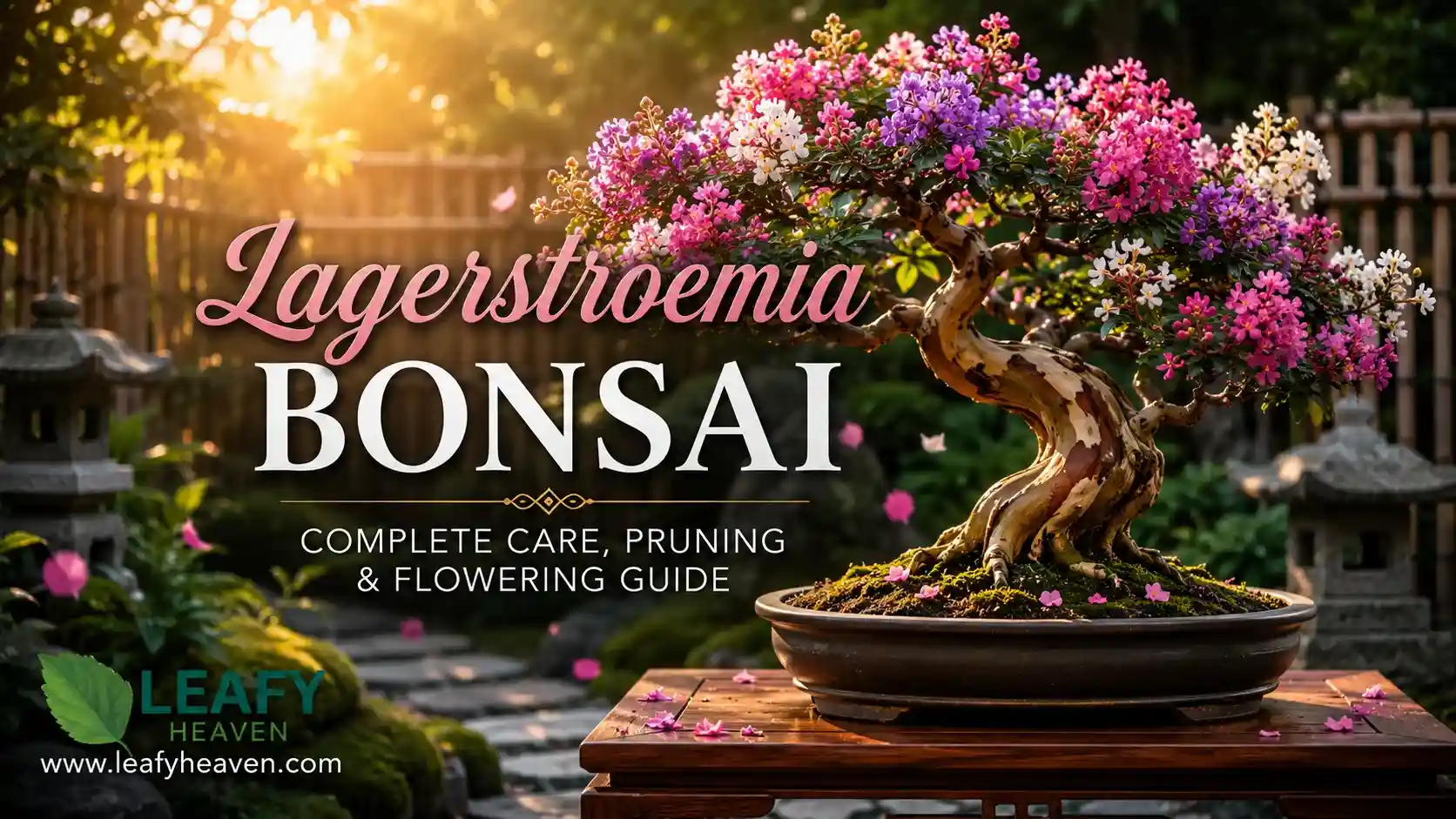
Lagerstroemia bonsai, commonly known as crepe myrtle bonsai, is one of the most admired flowering bonsai trees because of its vibrant summer blooms, smooth peeling bark, compact branching, and strong seasonal character. The tree combines ornamental beauty with reliable growth, making it highly popular among both beginner and experienced bonsai growers.
A well-developed bonsai crepe myrtle can produce dense clusters of pink, purple, red, or white flowers while maintaining an elegant miniature tree structure. Its naturally small foliage, fast ramification, and decorative trunk texture make the crepe myrtle bonsai tree ideal for outdoor bonsai displays and flowering bonsai collections.
Many enthusiasts also prefer the crape myrtle bonsai tree because it responds well to pruning, wiring, and shaping techniques. The species develops attractive branch structure quickly and creates impressive canopy designs in relatively short time compared to many traditional bonsai species.
Most bonsai varieties are developed from botanical species such as Lagerstroemia indica, Lagerstroemia fauriei, and modern hybrid cultivars bred for improved flowering, bark texture, disease resistance, and seasonal performance. These species are widely appreciated for their adaptability in warm climates and outdoor bonsai gardens.
One of the biggest attractions of lagerstroemia bonsai is its year-round visual interest. During the growing season, the tree produces colorful flowers and glossy green foliage. In autumn, the leaves often turn shades of orange, yellow, or red before dropping for winter dormancy. Mature trees also develop smooth exfoliating bark with striking multicolored patterns that enhance the bonsai’s aged appearance.
Because of its manageable growth habits, strong flowering ability, and excellent styling potential, crepe myrtle bonsai remains one of the best choices for growers who want a visually dynamic flowering bonsai with long-term artistic value.
What Is Lagerstroemia Bonsai?
Lagerstroemia bonsai is a miniature form of the crepe myrtle tree that is trained and maintained using bonsai cultivation techniques. It is valued for its colorful flowers, smooth decorative bark, compact canopy growth, and strong seasonal appearance. Unlike many flowering bonsai species, lagerstroemia bonsai combines vigorous growth with reliable blooming, making it suitable for both beginners and experienced bonsai enthusiasts.
The tree is especially popular in outdoor bonsai collections because it develops fine branching, attractive trunk movement, and vibrant summer flowers while remaining relatively easy to shape and maintain.
Scientific Name & Botanical Classification
The scientific name for crape myrtle most commonly used in bonsai cultivation is Lagerstroemia indica. In botanical classification, it may also appear as Lagerstroemia indica L., where the “L.” refers to Carl Linnaeus, the scientist who formally classified the species.
The crape myrtle scientific name belongs to the genus Lagerstroemia, which includes several flowering tree and shrub species known for ornamental blooms and exfoliating bark. The latin name for crape myrtle is widely recognized in horticulture, bonsai cultivation, and landscape gardening.
Common botanical references include:
- Lagerstroemia indica
- Lagerstroemia indica L.
- Lagerstroemia fauriei
- Hybrid Lagerstroemia cultivars
The crepe myrtle latin name is strongly associated with flowering ornamental trees adapted to warm climates and subtropical growing regions.
Common Names of Lagerstroemia Bonsai
Lagerstroemia bonsai is known by several common names depending on region, spelling preference, and bonsai style terminology. The words “crepe” and “crape” are both widely accepted spellings in horticulture.
Common names include:
- crepe myrtle bonsai
- crape myrtle bonsai
- myrtle bonsai
- bonsai myrtle tree
- myrtle tree bonsai
Among bonsai collectors, “crepe myrtle bonsai” is the most commonly used name because it directly connects the tree with its flowering ornamental characteristics.
Origin & Native Habitat
Lagerstroemia species originated in Asia and have been cultivated for centuries in countries with warm and humid climates. The tree is especially associated with China, Korea, Japan, and parts of Southeast Asia.
Japanese crepe myrtle and Japanese crape myrtle varieties became highly valued in ornamental gardening because of their refined branching patterns, smooth bark texture, and extended flowering period.
In nature, lagerstroemia trees thrive in:
- Tropical regions
- Subtropical climates
- Warm temperate zones
- Sunny open landscapes
These trees prefer areas with long summers, strong sunlight, and good airflow. Their natural adaptability to heat and seasonal growth cycles makes them highly suitable for outdoor bonsai cultivation.
Why Crepe Myrtle Makes an Excellent Bonsai
Crepe myrtle is considered one of the best flowering bonsai species because it combines ornamental beauty with manageable growth habits. The tree responds extremely well to pruning and develops refined bonsai structure within a relatively short period.
Several characteristics make it ideal for bonsai cultivation:
- Naturally small leaves suitable for miniature proportions
- Strong flowering ability during summer
- Beautiful exfoliating bark with mature appearance
- Fast branch ramification for dense canopy development
- Excellent seasonal interest throughout the year
During the growing season, the tree produces colorful blooms and glossy foliage. In autumn, many varieties display orange, yellow, or red foliage before entering winter dormancy. Mature trunks also develop smooth peeling bark with multicolored patterns that enhance the aged bonsai appearance.
Because of these features, lagerstroemia bonsai is widely used in flowering bonsai exhibitions, outdoor bonsai gardens, and decorative seasonal bonsai displays.
Growers who want to build strong foundational knowledge before starting bonsai training will find this complete gardening and plant care guide an essential starting point for healthy plant management.
Types of Lagerstroemia Bonsai Varieties
Several crepe myrtle varieties are highly suitable for bonsai cultivation because they combine strong flowering performance, attractive bark texture, manageable leaf size, and adaptable growth habits. Some varieties are preferred for rapid canopy development, while others are chosen for their superior bark color, disease resistance, or long flowering season.
Different species and hybrid cultivars also vary in growth speed, trunk thickness, flower color, and beginner friendliness.
Lagerstroemia Indica Bonsai
Lagerstroemia indica is the most commonly used species for flowering bonsai cultivation. The lagerstroemia indica crape myrtle is valued for its compact growth, reliable blooming, and excellent response to pruning techniques.
The lagerstroemia indica tree naturally develops fine branching and dense canopy structure, making it ideal for miniature bonsai styling. Many growers choose indica crepe myrtle varieties because they produce colorful flowers while maintaining manageable internode spacing.
Popular characteristics of indica crape myrtle bonsai include:
- Small to medium foliage size
- Strong summer flowering
- Fast branch development
- Smooth decorative bark
- Excellent pruning response
This species is widely recommended for beginners because it tolerates shaping, repotting, and structural pruning very well.
Lagerstroemia Muskogee Bonsai
Lagerstroemia x Muskogee is a hybrid cultivar known for vigorous growth and improved disease resistance. Lagerstroemia muskogee varieties are especially popular in warm climates where long flowering periods are desired.
The crape myrtle muskogee develops soft lavender-purple flowers and attractive light-colored bark as the tree matures. Muskogee crape myrtle cultivars also grow faster than many compact varieties, allowing quicker trunk thickening and canopy formation.
Key features include:
- Rapid growth rate
- Long flowering season
- Strong heat tolerance
- Smooth bark texture
- Excellent outdoor adaptability
Because of its vigorous growth, Lagerstroemia x Muskogee is often selected for larger bonsai styles and advanced flowering canopy designs.
Lagerstroemia Natchez Bonsai
Lagerstroemia Natchez is one of the most visually striking flowering bonsai varieties because of its bright white flowers and exceptional exfoliating bark.
The lagerstroemia natchez cultivar develops elegant branching patterns and smooth cinnamon-colored bark that peels naturally with age. Natchez crape myrtle is especially admired for its strong ornamental appearance during all seasons.
Characteristics of crape myrtle natchez bonsai include:
- Pure white flower clusters
- Decorative peeling bark
- Vigorous branch development
- Strong trunk movement potential
- High ornamental value
Many growers prefer lagerstroemia hybrid natchez for exhibition-style bonsai because the contrast between flowers, bark, and foliage creates dramatic visual appeal.
Lagerstroemia Fauriei Bonsai
Lagerstroemia fauriei is highly respected for its superior bark texture and disease resistance. Unlike some compact flowering varieties, lagerstroemia fauriei focuses heavily on trunk beauty and mature bark aesthetics.
The fauriei crape myrtle produces smooth exfoliating bark with attractive cream, brown, and gray color variations. It also shows improved resistance to powdery mildew and humid climate stress.
Important features include:
- Exceptional bark texture
- Strong disease resistance
- Durable outdoor performance
- Elegant trunk appearance
- Reliable branching structure
Some cultivars, including lagerstroemia fauriei fantasy, are specifically grown for decorative trunk development and long-term bonsai refinement.
Best Variety for Beginners vs Advanced Growers
| Variety | Flower Color | Bark Beauty | Growth Speed | Beginner Friendly |
| Lagerstroemia indica | Pink, red, purple, white | Good | Moderate | Yes |
| Lagerstroemia x Muskogee | Lavender-purple | Very Good | Fast | Yes |
| Lagerstroemia Natchez | White | Excellent | Fast | Moderate |
| Lagerstroemia fauriei | White to pale tones | Exceptional | Moderate | Moderate |
| Hybrid cultivars | Multiple colors | Varies by cultivar | Moderate to fast | Yes |
Identification Features of Crepe Myrtle Bonsai
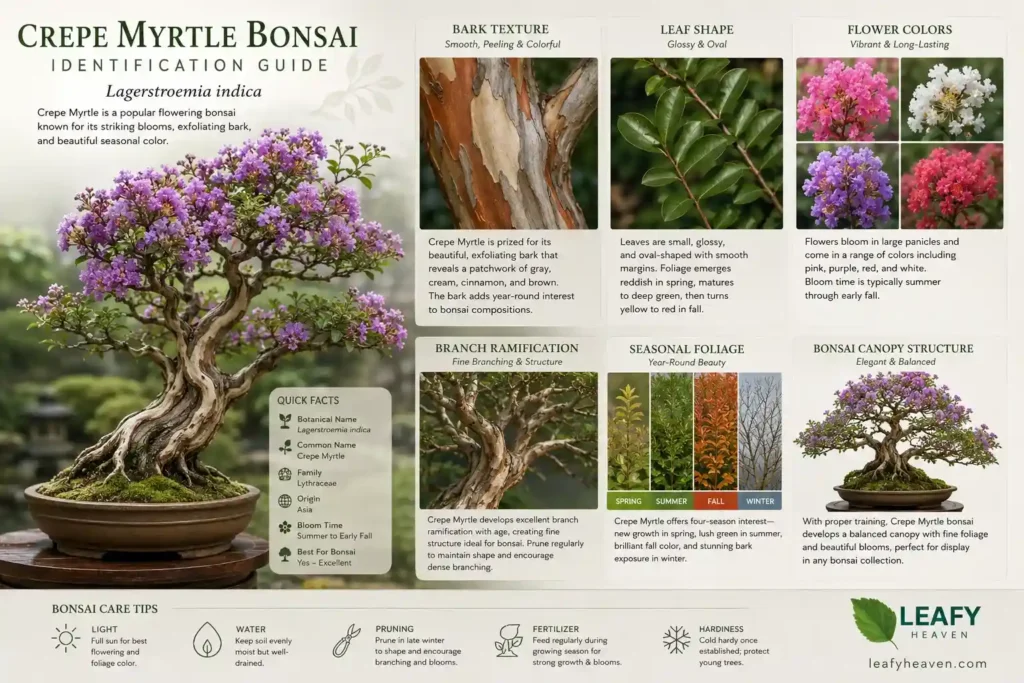
Crepe myrtle bonsai is easily identified by its smooth peeling bark, colorful summer flowers, glossy foliage, and refined branching structure. The tree develops a graceful canopy with strong seasonal character, making it one of the most visually recognizable flowering bonsai species.
As the bonsai matures, it gains attractive trunk texture, dense ramification, and vibrant seasonal foliage changes that increase its ornamental value throughout the year.
Leaf Structure & Seasonal Changes
The crape myrtle leaf is typically small, oval-shaped, smooth-edged, and slightly glossy. These naturally compact leaves make the species highly suitable for bonsai cultivation because they maintain balanced miniature proportions without excessive leaf reduction techniques.
Crape myrtle tree leaves usually emerge light green during spring before turning darker and more glossy in summer. Mature lagerstroemia leaves create dense canopy pads that improve overall bonsai refinement and visual balance.
Common characteristics of lagerstroemia indica leaves include:
- Oval to elliptical shape
- Smooth leaf margins
- Compact leaf size
- Slightly leathery texture
- Glossy green appearance
Seasonal foliage changes are also an important identification feature. During autumn, many trees develop shades of:
- Yellow
- Orange
- Red
- Bronze
After leaf drop in winter, the bonsai reveals its branch structure and decorative bark more clearly.
Flower Colors & Blooming Season
The lagerstroemia indica flower is famous for its crinkled, crepe-like petals and dense flower clusters that appear during warm weather. These blooms are one of the defining features of crepe myrtle bonsai.
Lagerstroemia indica flowers can appear in several colors depending on the cultivar, including:
- Pink
- Purple
- Red
- White
- Lavender
Most flowering occurs during summer when the tree receives strong sunlight and warm temperatures. Healthy bonsai specimens may bloom repeatedly over several weeks if properly pruned and fertilized.
Typical summer blooming behavior includes:
- Dense flower cluster production
- Long flowering duration
- Continuous blooming cycles
- Strong flowering under full sun
- Better blooms after balanced pruning
The combination of flowers and compact canopy structure gives the bonsai a highly ornamental appearance during peak growing season.
Bark Texture & Trunk Appearance
One of the most distinctive features of crepe myrtle bonsai is its decorative bark. Mature trees develop smooth peeling bark that naturally exfoliates over time, creating dramatic trunk texture and aged bonsai character.
The peeling bark reveals multiple color layers underneath, producing attractive multicolored bark patterns in shades of:
- Gray
- Brown
- Cream
- Cinnamon
- Soft orange tones
As the bonsai matures, the trunk gains more visual complexity and refined surface texture. Mature trunk aesthetics are especially valued in exhibition bonsai because they create the appearance of age and natural weathering.
Older trees often display:
- Smooth polished trunk surfaces
- Natural bark peeling layers
- Elegant trunk taper
- Fine branch ramification
- Strong nebari development
These bark characteristics help distinguish lagerstroemia bonsai from many other flowering bonsai species.
Mature Size & Growth Rate
Lagerstroemia bonsai is known for compact bonsai growth combined with relatively fast branch development. The species responds quickly to pruning and can form dense canopy structure within a few growing seasons.
Internode behavior is generally favorable for bonsai training, especially when the tree receives strong sunlight and balanced fertilization. Shorter internodes help create tighter branch structure and improved canopy refinement.
Growth characteristics typically include:
- Moderate to fast growth speed
- Rapid branch ramification
- Strong canopy development
- Compact leaf production
- Easy structural shaping
Depending on variety and training style, mature bonsai trees may range from small shohin forms to medium-sized flowering display bonsai with wide umbrella-like canopies.
Ideal Growing Conditions for Lagerstroemia Bonsai
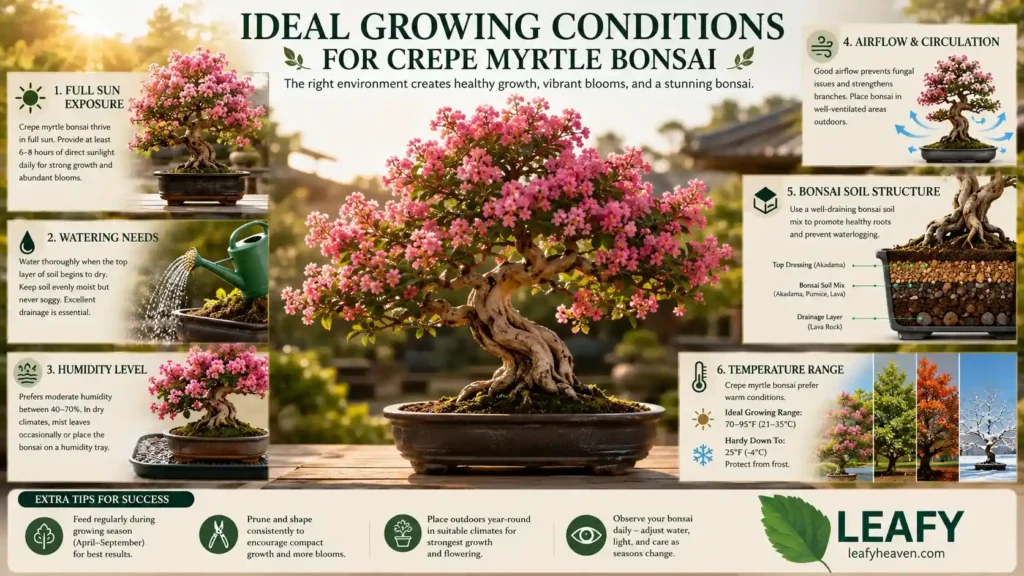
Lagerstroemia bonsai grows best in warm outdoor conditions with strong sunlight, balanced moisture, well-draining soil, and consistent airflow. Proper environmental conditions directly affect flowering strength, foliage density, bark health, and overall bonsai structure.
Because crepe myrtle is a sun-loving flowering species, poor lighting or excessive moisture often leads to weak growth, reduced blooms, and fungal problems.
Sunlight Requirements
Crepe myrtle is an outdoor flowering bonsai that requires direct sunlight for healthy development and reliable flowering. The tree performs best when it receives at least 6–8 hours of strong sunlight daily.
Full sun exposure supports:
- Dense canopy growth
- Better branch ramification
- Strong trunk development
- Rich foliage color
- Increased bloom production
Insufficient light usually causes:
- Weak flowering
- Leggy branches
- Larger leaves
- Poor internode control
- Sparse canopy structure
For best results, place the bonsai in a bright outdoor location with maximum morning and afternoon sun exposure during the active growing season.
Best Soil Mix for Crepe Myrtle Bonsai
Crepe myrtle bonsai requires a fast-draining bonsai soil structure that retains moderate moisture without becoming waterlogged. Good drainage is essential because overly compact soil can quickly cause root problems and fungal disease.
An effective soil mix should provide:
- Strong drainage
- Root aeration
- Moisture balance
- Nutrient retention
- Stable root support
Most growers use a combination of organic vs inorganic mix materials depending on climate and watering frequency.
Common inorganic components include:
- Akadama
- Pumice
- Lava rock
- Coarse sand
Organic materials may include:
- Pine bark
- Compost
- Coconut coir
In hotter climates, slightly higher organic content helps retain moisture during summer. In humid regions, more inorganic material improves drainage and airflow around roots.
Watering Requirements
Lagerstroemia bonsai prefers evenly moist soil during active growth but should never remain constantly soggy. Proper watering frequency depends on sunlight intensity, temperature, pot size, and soil composition.
During peak summer watering periods, the tree may require daily watering because flowering and active foliage growth increase moisture demand.
Important watering guidelines include:
- Water thoroughly until excess drains out
- Allow slight surface drying between watering
- Increase watering during hot weather
- Reduce watering during dormancy
- Avoid permanently wet soil
Although mature crepe myrtle trees show moderate drought tolerance in landscapes, bonsai containers dry much faster and require closer monitoring.
Underwatering symptoms may include:
- Wilting leaves
- Flower drop
- Crispy foliage edges
- Weak growth
Overwatering commonly causes:
- Yellow leaves
- Root rot
- Fungal disease
- Weak root oxygenation
Balanced watering is one of the most important factors for healthy flowering bonsai growth.
Temperature & USDA Zones
Lagerstroemia bonsai is considered a heat-loving species that thrives in warm climates and long growing seasons. Most varieties perform best in USDA Zones 7–10, although some hybrids tolerate slightly cooler conditions.
Warm temperatures encourage:
- Faster branch development
- Better flowering
- Strong root growth
- Improved bark development
Despite its heat tolerance, the tree still experiences winter dormancy and benefits from seasonal rest periods. Dormancy helps regulate healthy spring growth and future flowering cycles.
Cold-climate concerns include:
- Frost sensitivity in shallow bonsai pots
- Root damage during freezing temperatures
- Branch dieback in severe cold
In colder regions, winter protection may include:
- Cold frames
- Unheated garages
- Mulching around pots
- Wind protection
Mature trees generally tolerate light frost better than young bonsai specimens.
Humidity & Airflow Needs
Proper humidity and airflow are essential for maintaining healthy foliage and preventing fungal disease in crepe myrtle bonsai.
Good airflow improves:
- Leaf drying after watering
- Stronger branch growth
- Fungal prevention
- Pest reduction
- Healthy flowering cycles
Poor air circulation commonly increases the risk of:
- Powdery mildew
- Black spot issues
- Weak foliage
- Moisture-related disease
To maintain healthy conditions:
- Avoid overcrowded bonsai placement
- Provide open outdoor exposure
- Prune dense interior growth
- Water early in the day
- Maintain balanced humidity
Outdoor growing conditions naturally provide better airflow than indoor environments, which is one reason lagerstroemia bonsai performs significantly better outside.
How To Grow Lagerstroemia Bonsai
Crepe myrtle bonsai can be grown successfully from cuttings, branches, seeds, or nursery stock. Most growers prefer propagation from cuttings or young nursery plants because they develop faster and preserve the parent tree’s flowering characteristics.
With proper pruning, root management, and training, lagerstroemia bonsai develops strong trunks, compact branching, and reliable flowering within a few growing seasons.
Growing From Cuttings
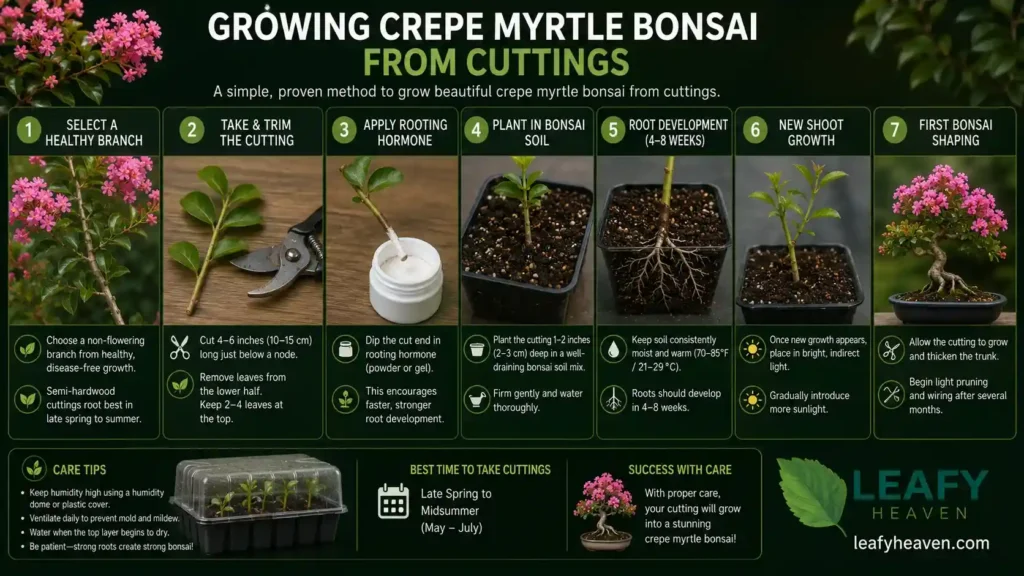
Growing a crepe myrtle bonsai from cutting is one of the fastest and most reliable propagation methods. Softwood and semi-hardwood cuttings root relatively easily during warm growing conditions.
For growers learning how to grow a crepe myrtle tree from a branch, healthy young stems produce the best results.
Basic cutting propagation steps include:
- Select a healthy non-flowering branch
- Cut a 4–8 inch stem section
- Remove lower leaves
- Apply rooting hormone if desired
- Plant in moist well-draining propagation soil
- Keep warm with indirect bright light
- Maintain moderate humidity until roots develop
Rooting usually occurs within several weeks during active growing season.
Best conditions for successful rooting:
- Warm temperatures
- High humidity
- Bright filtered light
- Consistent moisture
- Good airflow
Once roots become established, the young tree can gradually transition into bonsai training containers.
How To Propagate Crepe Myrtle
Growers researching how to propagate crepe myrtle often use several different methods depending on available plant material and desired development speed.
The most common propagation techniques include:
- Stem cuttings
- Air layering
- Seed germination
- Nursery transplant development
For gardeners learning how to propagate a crepe myrtle, cuttings remain the easiest method because they preserve cultivar traits such as flower color, bark texture, and growth habit.
Air layering is another effective method for producing thicker bonsai trunks more quickly. This technique encourages root formation directly on mature branches before separation from the parent tree.
Successful propagation depends on:
- Healthy parent material
- Warm growing conditions
- Sterile cutting tools
- Moist but airy soil
- Consistent watering
Propagation is usually most successful during spring and early summer when active growth is strongest.
Growing From Seed
Growing lagerstroemia bonsai from seed takes longer than propagation from cuttings, but it allows full control over trunk shaping and root development from an early stage.
The seed germination process typically begins in spring under warm conditions.
Basic seed growing steps include:
- Collect or purchase mature seeds
- Soak seeds in water for several hours
- Prepare light well-draining soil
- Sow seeds shallowly
- Keep soil lightly moist
- Maintain warm temperatures and bright light
- Transplant seedlings after strong root development
Most beginner propagation tips focus on maintaining stable warmth and avoiding overwatering during early seedling growth.
Young seedlings initially develop:
- Thin green stems
- Small oval leaves
- Rapid vertical growth
- Fine root systems
Seed-grown trees require patience because flowering and trunk maturity may take several years to develop fully.
Nursery Plant to Bonsai Conversion
Converting nursery stock into bonsai is one of the fastest ways to create an attractive crepe myrtle bonsai tree. Many nursery plants already possess thicker trunks and mature branching that accelerate bonsai development.
The first step is trunk selection. Growers usually choose trees with:
- Strong trunk taper
- Natural movement
- Low branching potential
- Healthy bark texture
- Balanced root spread
After selecting the tree, growers perform controlled root reduction to fit the plant into a bonsai container while encouraging compact root growth.
The first styling stage often includes:
- Removing unwanted branches
- Establishing trunk direction
- Creating primary branch structure
- Reducing excessive height
- Selecting future canopy shape
Because crepe myrtle responds well to pruning, nursery stock can transform into early bonsai structure relatively quickly.
Growth Timeline & Development Stages
| Stage | Approx Time | Key Tasks |
| Seed Germination | 1–4 Weeks | Warmth, moisture control, seedling care |
| Early Seedling Growth | 2–6 Months | Root development, initial pruning |
| Young Training Stage | 1–2 Years | Trunk shaping, branch selection, wiring |
| Structural Development | 2–4 Years | Ramification, canopy formation, root refinement |
| Early Flowering Bonsai | 3–5 Years | Flower management, refinement pruning |
| Mature Bonsai Refinement | 5+ Years | Fine ramification, bark development, exhibition styling |
Lagerstroemia Bonsai Care Guide
Proper watering, pruning, fertilizing, and seasonal maintenance are essential for keeping lagerstroemia bonsai healthy, compact, and heavily flowering. Consistent care improves canopy density, flower production, bark quality, and long-term bonsai structure.
Because crepe myrtle is a vigorous flowering species, balanced maintenance throughout the year helps control growth while supporting strong seasonal performance.
Fertilizer Schedule for Maximum Flowers
Crepe myrtle bonsai requires regular feeding during the growing season to maintain healthy foliage and support continuous flowering. Proper flowering fertilizers improve bloom size, flower quantity, and overall tree vigor.
Balanced nutrition is especially important because excessive nitrogen can produce large leaves and aggressive branch growth while reducing flower production.
A healthy nitrogen balance typically includes:
- Moderate nitrogen during spring growth
- Increased phosphorus before flowering
- Balanced potassium for root and flower health
Many growers use bloom boosters during late spring and summer to encourage stronger flowering cycles.
General feeding schedule:
| Season | Fertilizer Focus | Purpose |
| Early Spring | Balanced fertilizer | Support new growth |
| Late Spring | Slightly higher phosphorus | Encourage flower formation |
| Summer | Bloom boosters | Maintain flowering |
| Early Autumn | Balanced low-nitrogen feed | Prepare for dormancy |
| Winter | Minimal or no fertilizer | Dormant period |
Overfertilizing can cause:
- Excessive leafy growth
- Weak flowering
- Long internodes
- Reduced canopy refinement
Organic fertilizers are commonly preferred because they release nutrients gradually and reduce the risk of root burn in bonsai containers.
Pruning Techniques
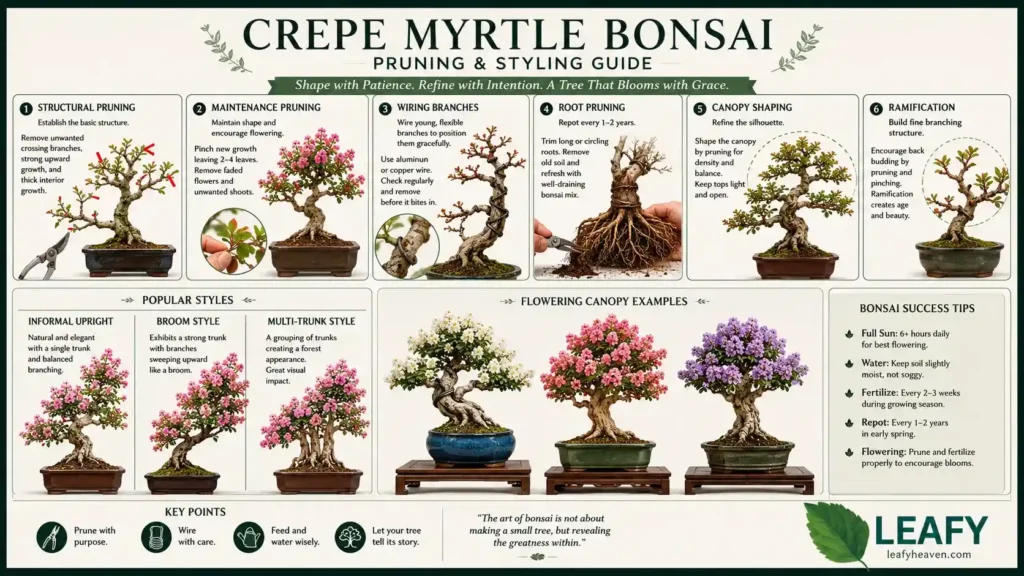
Regular pruning is essential for maintaining compact structure and improving flowering performance in crepe myrtle bonsai. The species responds aggressively to pruning and quickly develops dense branch ramification.
Several pruning methods are used during different growth stages.
Structural Pruning
Structural pruning shapes the primary trunk and branch framework of the bonsai. This heavier pruning is usually performed during dormancy or early spring before vigorous growth begins.
Structural pruning focuses on:
- Removing unwanted thick branches
- Improving trunk movement
- Creating taper
- Establishing primary branch structure
- Opening canopy spacing
Maintenance Pruning
Maintenance pruning controls ongoing growth during the active season. This process helps maintain compact foliage pads and refined branch structure.
Maintenance pruning typically includes:
- Trimming long shoots
- Reducing excessive extension growth
- Encouraging ramification
- Preserving canopy balance
Frequent light pruning produces finer branching and better bonsai proportions.
Flower Cycle Pruning
Flower cycle pruning is important because crepe myrtle flowers develop on new growth. Correct timing helps maximize bloom production without weakening the bonsai structure.
Good flower pruning practices include:
- Pruning after flowering cycles
- Avoiding excessive late-season trimming
- Preserving healthy flowering shoots
- Encouraging secondary blooms
Poor pruning timing may reduce seasonal flower production significantly.
Wiring & Styling Methods
Lagerstroemia bonsai adapts well to multiple bonsai styles because of its flexible young branches, rapid growth, and elegant flowering canopy.
Young branches can be wired relatively easily, although regular monitoring is important because fast growth may cause wire marks.
Popular styling methods include:
Informal Upright
The informal upright style is one of the most common designs for crepe myrtle bonsai. It features gentle trunk curves with balanced branching and rounded canopy structure.
This style highlights:
- Natural trunk movement
- Flowering canopy shape
- Mature bark texture
- Seasonal branch ramification
Broom Style
Broom style works especially well for mature flowering specimens with dense branching. The trunk rises upright before dividing into fine radial branches that form a rounded crown.
This style emphasizes:
- Symmetrical canopy development
- Dense flowering structure
- Elegant winter silhouette
- Fine ramification
Multi-Trunk Style
Multi-trunk style creates a natural grove-like appearance using several trunks growing from a shared root base.
This design enhances:
- Visual depth
- Flowering mass effect
- Natural landscape appearance
- Mature bonsai aesthetics
Because crepe myrtle develops vigorous shoots, multi-trunk compositions can become highly dramatic over time.
Repotting Guide
Repotting maintains root health, improves soil aeration, and controls overall tree size. Lagerstroemia bonsai generally tolerates repotting well when performed during the correct season.
Most repotting is done during late winter or early spring before strong new growth begins.
Root Pruning
Root pruning keeps the root system compact and encourages fine feeder root development.
Typical root pruning includes:
- Removing circling roots
- Reducing oversized roots
- Preserving fine feeder roots
- Improving radial root spread
Excessive root removal should be avoided because it may weaken flowering performance temporarily.
Repotting Frequency
Repotting frequency depends on tree age and growth speed.
General guidelines:
| Tree Age | Repotting Frequency |
| Young Trees | Every 1–2 years |
| Mature Bonsai | Every 2–3 years |
| Large Established Bonsai | Every 3–4 years |
Fast-growing trees may require more frequent root maintenance.
Bonsai Containers
Crepe myrtle bonsai performs best in shallow bonsai containers with strong drainage and adequate airflow.
Ideal bonsai containers should provide:
- Drainage holes
- Root aeration
- Stability for flowering canopy
- Balanced visual proportions
Flowering bonsai are often paired with glazed containers that complement bloom colors and bark texture.
Seasonal Care Routine
Seasonal maintenance helps synchronize growth, flowering, dormancy, and structural refinement throughout the year.
Spring Growth
Spring is the primary growth period for:
- Bud expansion
- Shoot development
- Fertilizing
- Repotting
- Structural pruning
Strong spring care establishes healthy flowering potential for summer.
Summer Flowering
Summer flowering season requires:
- Full sunlight
- Increased watering
- Bloom-support fertilizer
- Light maintenance pruning
- Pest monitoring
Healthy summer care encourages repeated flowering cycles.
Autumn Leaf Drop
During autumn leaf drop, growth slows and foliage color changes begin appearing.
Important autumn tasks include:
- Reducing fertilizer
- Gradually lowering watering frequency
- Cleaning fallen leaves
- Preparing winter protection
This transition period prepares the bonsai for dormancy.
Winter Dormancy
Winter dormancy is essential for long-term tree health and future flowering performance.
Dormant care usually includes:
- Reduced watering
- Frost protection
- Minimal pruning
- Shelter from severe freezing
- Monitoring root moisture
Although dormant, the bonsai still requires occasional care to prevent root dehydration and cold damage.
How To Encourage More Flowers on Crepe Myrtle Bonsai
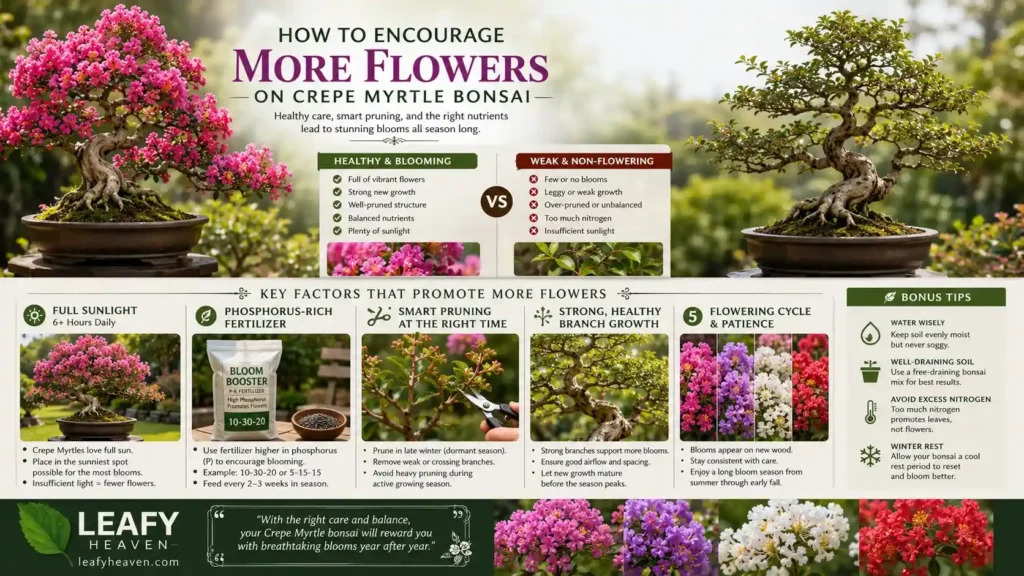
Full sun, balanced pruning, and proper fertilization are the most important factors for increasing flower production in lagerstroemia bonsai. Healthy flowering depends on strong seasonal growth, correct pruning timing, and adequate sunlight throughout the active growing season.
When environmental conditions and maintenance routines are optimized, crepe myrtle bonsai can produce dense flower clusters repeatedly during summer.
Why Some Bonsai Trees Fail To Bloom
Many flowering problems in crepe myrtle bonsai are caused by environmental stress or improper maintenance. Weak blooming usually develops gradually when the tree receives poor sunlight, excessive fertilizer, or incorrect pruning.
Insufficient Sunlight
Insufficient sunlight is one of the most common causes of poor flowering. Crepe myrtle requires strong direct sunlight for healthy bud formation and flower production.
Low-light conditions often cause:
- Reduced flower buds
- Weak branch growth
- Larger leaves
- Sparse canopy development
- Leggy shoots
For reliable flowering, the bonsai should receive at least 6–8 hours of direct sunlight daily.
Excessive Nitrogen
Too much nitrogen encourages aggressive foliage growth instead of flowers. Trees fed heavily with high-nitrogen fertilizer often develop dense green shoots but produce very few blooms.
Excessive nitrogen may lead to:
- Long internodes
- Large leaves
- Soft weak shoots
- Reduced flowering cycles
Balanced feeding with increased phosphorus during flowering season produces better bloom performance.
Over-Pruning
Over-pruning removes developing flower buds and weakens flowering shoots. Since crepe myrtle blooms on new growth, incorrect pruning timing can significantly reduce seasonal flowers.
Common pruning mistakes include:
- Heavy pruning during active bud formation
- Constant trimming of flowering shoots
- Excessive summer pruning
- Removing new healthy growth too early
Balanced pruning helps preserve flowering potential while maintaining bonsai structure.
Best Fertilizers for Flowering Bonsai
Flowering bonsai require balanced nutrition to support both structural growth and bloom production. Crepe myrtle bonsai responds especially well to phosphorus-rich feeding during late spring and summer.
Phosphorus supports:
- Flower bud development
- Bloom strength
- Root health
- Energy storage
Good fertilizer options for flowering bonsai often contain:
- Moderate nitrogen
- Higher phosphorus
- Balanced potassium
Organic slow-release fertilizers are commonly preferred because they provide stable nutrient availability without causing sudden growth surges.
For maximum flowers:
- Use balanced fertilizer in early spring
- Shift to bloom-support fertilizer before flowering
- Reduce nitrogen-heavy feeding during summer
- Avoid overfertilizing during extreme heat
Consistent feeding combined with strong sunlight usually produces the best flowering results.
Pruning Timing for Better Blooms
Correct pruning timing directly affects flower quantity and bloom duration. Crepe myrtle bonsai flowers on fresh seasonal shoots, so pruning should encourage healthy new growth before flowering begins.
The best approach involves:
- Structural pruning during dormancy
- Light pruning before active flowering
- Maintenance trimming after bloom cycles
Pruning before active flowering helps stimulate fresh shoots that later produce flower clusters. However, excessive late pruning may delay or reduce blooming.
Good flowering pruning practices include:
- Removing weak interior growth
- Preserving healthy flowering shoots
- Improving canopy airflow
- Encouraging balanced branch structure
Careful timing improves both flower production and bonsai refinement.
Flowering Season Expectations
Most lagerstroemia bonsai varieties begin flowering during early to mid-summer when temperatures become consistently warm. Healthy trees may continue blooming for several weeks under ideal conditions.
Bloom duration depends on:
- Variety selection
- Sunlight exposure
- Fertilizer balance
- Watering consistency
- Climate conditions
Typical flowering behavior includes:
| Feature | Expected Performance |
| Main Bloom Season | Summer |
| Bloom Duration | Several weeks |
| Flower Colors | Pink, white, red, purple, lavender |
| Rebloom Potential | Moderate to high |
| Peak Flowering Trigger | Full sun + balanced feeding |
Many healthy bonsai trees also show rebloom potential after light pruning and continued summer care. Removing faded flower clusters may encourage additional flowering cycles later in the season.
Common Problems & Solutions
Most crepe myrtle bonsai problems develop because of improper watering, weak airflow, fungal disease, pest infestations, or insufficient sunlight. Early diagnosis and consistent maintenance are important for keeping lagerstroemia bonsai healthy, compact, and heavily flowering.
Many common issues can be corrected quickly when environmental conditions and care routines are adjusted properly.
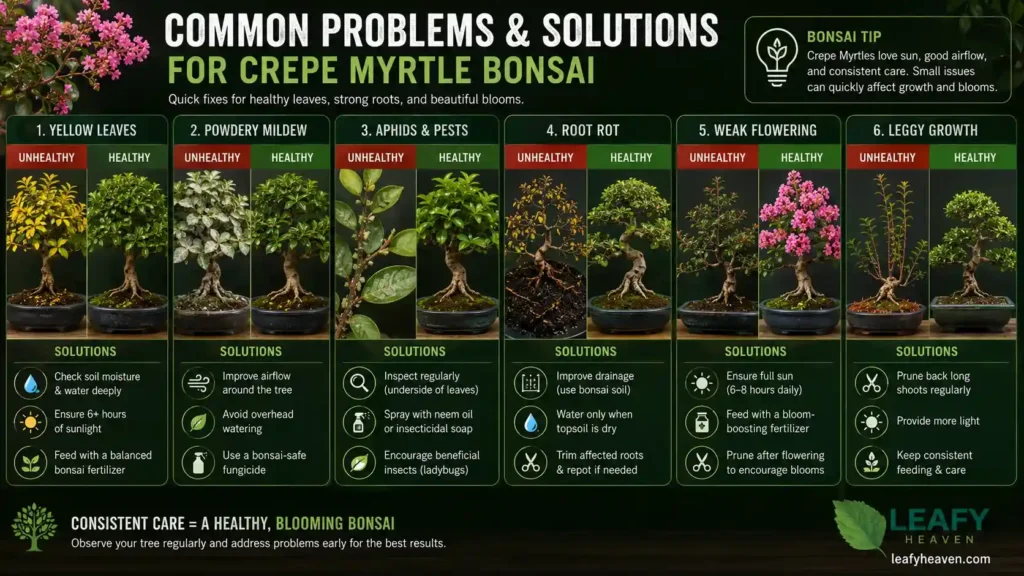
Yellow Leaves & Leaf Drop
Yellow leaves are one of the most common warning signs in crepe myrtle bonsai. In many cases, the problem is linked to watering imbalance, root stress, or seasonal dormancy confusion.
Watering Imbalance
Both overwatering and underwatering can cause yellow foliage and premature leaf drop.
Overwatering symptoms include:
- Soft yellow leaves
- Wet compact soil
- Weak growth
- Root odor
- Blackened roots
Underwatering symptoms often include:
- Dry crispy leaves
- Wilting foliage
- Browning leaf edges
- Flower drop
Balanced watering is essential. The soil should remain lightly moist but never constantly soggy.
Dormancy Confusion
Many beginners mistake normal autumn dormancy for disease. During seasonal transition, lagerstroemia bonsai naturally sheds leaves before winter rest.
Normal dormancy signs include:
- Gradual yellowing
- Autumn color changes
- Seasonal leaf drop
- Slower growth
If leaf drop occurs during autumn and the branches remain healthy, the tree is usually entering winter dormancy naturally.
Powdery Mildew & Fungal Problems
Powdery mildew is one of the most common fungal problems affecting crepe myrtle bonsai, especially in humid conditions with poor airflow.
Symptoms may include:
- White powdery coating on leaves
- Distorted foliage
- Weak flowering
- Reduced growth
- Early leaf drop
Humidity Management
Excessive moisture around foliage increases fungal risk. Proper humidity management helps reduce disease pressure while maintaining healthy growth.
Helpful prevention practices include:
- Avoiding overhead watering late in the day
- Keeping foliage dry overnight
- Reducing excessive humidity buildup
- Using fast-draining soil
Airflow Improvement
Good airflow improvement is essential for fungal prevention and healthy flowering.
To improve air circulation:
- Space bonsai properly
- Thin dense interior branches
- Avoid overcrowded benches
- Place trees outdoors in open air
Fungal infections are usually less severe when the bonsai receives strong sunlight and consistent ventilation.
Aphids, Spider Mites & Scale Insects
Several insect pests commonly attack flowering bonsai during warm weather. Aphids, spider mites, and scale insects weaken foliage, reduce flowering strength, and damage young shoots.
Common pest symptoms include:
- Sticky residue on leaves
- Tiny webbing
- Curled foliage
- Yellow spotting
- Weak branch growth
Natural Pest Control
Natural pest control methods are often effective during early infestations.
Common approaches include:
- Spraying water to remove pests
- Neem oil treatments
- Insecticidal soap
- Encouraging beneficial insects
- Removing heavily infested leaves
Regular inspection helps prevent large infestations from developing.
Bonsai-Safe Treatments
When stronger treatment becomes necessary, bonsai-safe treatments should be used carefully to avoid damaging delicate foliage and flowers.
Safe treatment guidelines include:
- Applying sprays during cooler hours
- Avoiding excessive chemical concentration
- Testing products on small areas first
- Following product instructions carefully
Healthy trees with proper sunlight and airflow usually resist pests more effectively.
Root Rot Problems
Root rot is one of the most dangerous issues for lagerstroemia bonsai and is usually caused by poor drainage and constantly wet soil.
Poor Drainage Symptoms
Common poor drainage symptoms include:
- Persistent wet soil
- Yellowing leaves
- Weak growth
- Foul root smell
- Black mushy roots
- Sudden branch dieback
Heavy compact soil and oversized containers often worsen root problems.
Recovery Methods
Successful recovery methods focus on restoring root oxygen and improving drainage conditions.
Recovery steps may include:
- Remove the bonsai from wet soil
- Trim damaged black roots
- Repot into fast-draining bonsai soil
- Reduce watering temporarily
- Improve airflow and sunlight exposure
Severe root rot may require aggressive root pruning and temporary shade protection during recovery.
Weak Flowering & Leggy Growth
Weak flowering and elongated growth usually indicate insufficient sunlight, poor pruning management, or improper fertilization.
Common symptoms include:
- Sparse blooms
- Long weak shoots
- Large leaves
- Thin canopy structure
- Reduced branch ramification
Sunlight Correction
Sunlight correction is often the fastest solution for improving flowering strength.
Crepe myrtle bonsai should receive:
- Full outdoor sun
- At least 6–8 hours of direct light
- Warm growing conditions
- Open airflow exposure
Better lighting encourages compact growth and stronger flower production.
Pruning Solutions
Proper pruning solutions help control leggy growth while improving canopy density.
Useful pruning practices include:
- Shortening overly long shoots
- Encouraging side branching
- Removing weak interior growth
- Performing regular maintenance pruning
Balanced pruning combined with strong sunlight usually restores compact flowering growth over time.
Indoor vs Outdoor Lagerstroemia Bonsai
Lagerstroemia bonsai performs far better outdoors because it requires strong direct sunlight, natural airflow, seasonal temperature changes, and winter dormancy. Although temporary indoor placement is possible for display purposes, long-term indoor growing usually weakens flowering, reduces growth quality, and affects overall tree health.
Outdoor conditions allow crepe myrtle bonsai to develop stronger trunks, denser branching, healthier foliage, and more reliable seasonal flowering.
Can Crepe Myrtle Bonsai Grow Indoors?
Crepe myrtle bonsai can survive indoors temporarily, but it is not considered a true indoor bonsai species. The tree naturally depends on outdoor environmental cycles for healthy growth and flowering performance.
Several indoor bonsai limitations make indoor cultivation difficult over long periods.
Common indoor problems include:
- Weak sunlight exposure
- Poor airflow
- Reduced humidity balance
- Weak flowering
- Leggy branch growth
- Limited dormancy conditions
Light requirements are especially important because lagerstroemia bonsai needs intense direct sunlight for proper flowering and compact growth.
Indoor environments often provide:
- Insufficient light intensity
- Shorter sunlight duration
- Poor seasonal variation
- Dry artificial air
If temporary indoor placement is necessary:
- Use the brightest south-facing window possible
- Provide supplemental grow lights
- Maintain airflow around foliage
- Return the bonsai outdoors regularly
Even with artificial lighting, outdoor cultivation remains significantly healthier for long-term development.
Outdoor Growing Advantages
Outdoor growing conditions provide the environmental balance needed for vigorous flowering and healthy bonsai refinement.
One of the biggest outdoor growing advantages is better flowering performance. Full natural sunlight encourages stronger flower bud formation and longer blooming periods.
Outdoor cultivation also improves:
- Leaf density
- Bark texture
- Root strength
- Pest resistance
- Canopy refinement
Better Flowering
Trees grown outdoors typically produce:
- More flower clusters
- Richer flower color
- Longer blooming cycles
- Stronger rebloom potential
Consistent direct sunlight is one of the main reasons outdoor bonsai flower more heavily than indoor specimens.
Trunk Development
Outdoor conditions support faster trunk development because the tree experiences stronger seasonal growth cycles and increased energy production.
Healthy outdoor growth encourages:
- Better trunk taper
- Stronger bark texture
- Faster ramification
- Improved root spread
- Mature bonsai appearance
Wind exposure and natural environmental stress also help strengthen branch structure over time.
Seasonal Growth Cycles
Natural seasonal growth cycles are essential for healthy long-term bonsai performance.
Outdoor trees experience:
- Vigorous spring growth
- Summer flowering
- Autumn leaf color changes
- Winter dormancy
These seasonal transitions help regulate flowering energy, growth rhythm, and long-term structural health.
Winter Protection Tips
Although lagerstroemia bonsai tolerates moderate cold better than many tropical bonsai species, shallow bonsai containers expose roots to freezing damage more easily than landscape trees.
Proper cold-climate bonsai care becomes important in regions with strong frost or extended freezing temperatures.
Frost Prevention
Effective frost prevention methods help protect roots and branches during winter dormancy.
Common winter protection techniques include:
- Moving bonsai into cold frames
- Using unheated garages or greenhouses
- Mulching around pots
- Shielding trees from freezing wind
- Elevating pots from frozen surfaces
During winter dormancy:
- Water less frequently
- Keep soil slightly moist
- Avoid heavy fertilization
- Monitor for extreme freezing
Healthy mature trees generally tolerate cold better than young bonsai or recently repotted specimens.
Best Bonsai Styles for Lagerstroemia Bonsai
Crepe myrtle bonsai looks especially attractive in broom, informal upright, clump, and flowering canopy bonsai styles because of its fine branching, colorful blooms, smooth bark, and naturally spreading growth habit. The species adapts well to artistic shaping and quickly develops elegant flowering silhouettes when properly trained.
Its flexible young branches and fast ramification make it suitable for both traditional bonsai forms and modern flowering exhibition designs.
Informal Upright Style
The informal upright style is one of the most popular choices for lagerstroemia bonsai because it highlights the tree’s natural movement and balanced canopy structure.
In this style, the trunk develops gentle curves while gradually tapering toward the apex. Branches are arranged asymmetrically to create a realistic mature tree appearance.
Key characteristics include:
- Curved natural trunk movement
- Balanced branch spacing
- Rounded flowering canopy
- Strong visual taper
- Elegant seasonal silhouette
This style works especially well for trees with attractive peeling bark and colorful summer flowers. Informal upright designs also allow better visibility of trunk texture and branch ramification during winter dormancy.
Multi-Trunk Style
The multi-trunk style creates the appearance of several connected trees growing together from a shared root base. Because crepe myrtle naturally produces multiple shoots, this style develops very naturally in lagerstroemia bonsai.
Multi-trunk compositions create:
- Strong visual depth
- Dense flowering displays
- Natural landscape appearance
- Layered canopy structure
- Powerful mature aesthetics
Different trunk thicknesses help create age variation and improve realism. During flowering season, the combined canopy can produce dramatic masses of colorful blooms.
This style is especially effective for larger outdoor bonsai displays and flowering garden compositions.
Broom Style
Broom style is highly suited to crepe myrtle bonsai because the species develops fine branch ramification quickly. In this design, the trunk grows upright before dividing into many smaller branches that form a rounded crown.
The broom style emphasizes:
- Dense branching structure
- Symmetrical canopy formation
- Elegant winter silhouette
- Fine twig ramification
- Balanced flowering display
Mature broom-style crepe myrtle bonsai often resemble miniature flowering park trees with soft umbrella-shaped canopies.
This style becomes particularly attractive after leaf drop when the branch structure is fully visible.
Flowering Exhibition Style
Flowering exhibition style focuses heavily on maximizing bloom impact while maintaining refined bonsai proportions. These trees are often trained specifically for bonsai shows and seasonal flowering displays.
The style prioritizes:
- Large flower coverage
- Wide balanced canopy
- Clean trunk visibility
- Strong branch spacing
- Seasonal visual impact
Exhibition-style trees are commonly developed with:
- Open canopy architecture
- Refined ramification
- Controlled internode length
- Strong sunlight exposure
- Balanced flowering cycles
During peak bloom season, flowering exhibition bonsai become highly dramatic focal points in outdoor bonsai collections.
Choosing the Right Bonsai Pot
The right bonsai pot improves both tree health and overall visual presentation. Pot selection should complement the flowering color, bark texture, trunk movement, and bonsai style.
Important factors when choosing bonsai containers include:
- Proper drainage
- Stable root space
- Balanced proportions
- Visual harmony with flowers
- Seasonal display aesthetics
Glazed bonsai pots are commonly preferred for flowering species because they enhance bloom color and decorative presentation.
Popular pot choices include:
| Bonsai Style | Recommended Pot Shape | Common Pot Finish |
| Informal Upright | Oval or rectangular | Glazed |
| Multi-Trunk | Wide shallow oval | Soft earth-tone glaze |
| Broom Style | Round or oval | Neutral glaze |
| Flowering Exhibition Style | Elegant shallow oval | Decorative glazed finish |
Pot color is often selected to complement flower tones such as pink, white, purple, or red while still maintaining visual balance with the trunk and foliage.
Lagerstroemia Bonsai vs Other Flowering Bonsai Trees
Lagerstroemia bonsai stands out among flowering bonsai trees because of its long blooming season, colorful flower clusters, attractive peeling bark, and excellent seasonal character. Compared to many flowering species, crepe myrtle bonsai combines easier maintenance with strong flowering performance and fast branch refinement.
Its balance of beauty, adaptability, and beginner friendliness makes it one of the most versatile flowering bonsai choices for outdoor collections.
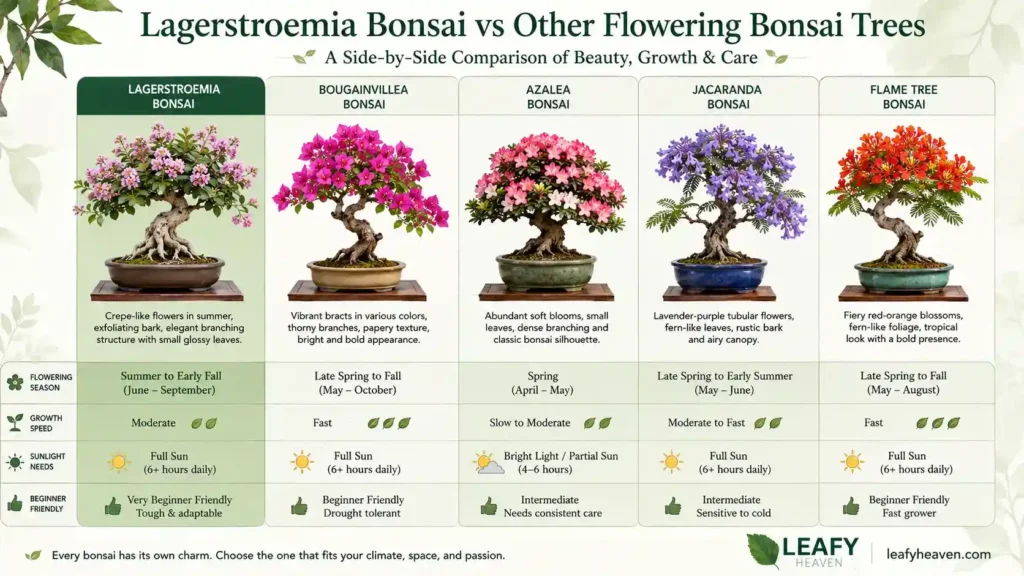
Crepe Myrtle Bonsai vs Bougainvillea Bonsai
Both crepe myrtle bonsai and bougainvillea bonsai are highly decorative flowering species, but they differ significantly in growth behavior, climate preference, and styling characteristics.
The bonsai bougainvillea plant is known for vibrant bracts and tropical appearance, while crepe myrtle bonsai is valued for its refined bark texture and balanced seasonal growth.
Crepe Myrtle Bonsai Advantages
- Better cold tolerance
- Strong winter dormancy cycle
- Decorative peeling bark
- Easier branch ramification
- More structured bonsai silhouette
Bougainvillea Bonsai Advantages
- Extremely vibrant flower colors
- Tropical styling appearance
- Aggressive heat tolerance
- Fast flowering cycles
Bougainvillea usually requires hotter climates and stronger protection from cold weather, while lagerstroemia bonsai adapts more easily to temperate outdoor environments.
Crepe Myrtle Bonsai vs Azalea Bonsai
The azalea bonsai comparison mainly focuses on flowering style, foliage texture, and maintenance requirements.
Azalea bonsai produces dramatic spring blooms with dense flower coverage, while crepe myrtle offers longer summer flowering periods and stronger bark aesthetics.
Flowering Behavior Differences
Crepe myrtle bonsai typically produces:
- Summer flowers
- Longer blooming duration
- Repeated flowering potential
- Better heat tolerance
Azalea bonsai usually offers:
- Intense spring bloom displays
- Compact evergreen foliage
- Softer branch texture
- Dense floral coverage
Azaleas often require more careful watering and acidic soil management, while lagerstroemia bonsai is generally more forgiving for beginners.
Crepe Myrtle Bonsai vs Jacaranda Bonsai
Jacaranda bonsai and blue jacaranda bonsai are admired for their soft fern-like foliage and striking blue-purple flowers.
Jacaranda bonsai and blue jacaranda bonsai are admired for their soft fern-like foliage and striking blue-purple flowers.
However, jacaranda mimosifolia bonsai differs greatly from crepe myrtle in overall structure and maintenance needs.
Crepe Myrtle Bonsai Characteristics
- Compact leaf structure
- Decorative bark texture
- Dense branch ramification
- Strong pruning response
- Easier size control
Jacaranda Bonsai Characteristics
- Delicate tropical foliage
- Soft airy canopy
- Blue-purple flowers
- Faster vertical growth
- More tropical appearance
Jacaranda bonsai creates a softer tropical silhouette, while crepe myrtle bonsai develops a more refined and structured flowering bonsai appearance.
Crepe Myrtle Bonsai vs Flame Tree Bonsai
Flame tree bonsai, including royal poinciana bonsai and delonix regia bonsai, is known for dramatic tropical flowering and umbrella-shaped canopies.
Flame tree bonsai, including royal poinciana bonsai and delonix regia bonsai, is known for dramatic tropical flowering and umbrella-shaped canopies.
Compared to lagerstroemia bonsai, flame tree bonsai usually grows more aggressively and requires warmer tropical conditions.
Crepe Myrtle Bonsai Benefits
- Better beginner suitability
- Easier pruning management
- More compact growth
- Strong winter dormancy adaptation
- Decorative exfoliating bark
Flame Tree Bonsai Benefits
- Extremely exotic flowering appearance
- Tropical canopy structure
- Fast trunk thickening
- Large dramatic blooms
Delonix regia bonsai performs best in consistently warm climates, while crepe myrtle adapts more effectively to seasonal outdoor bonsai environments.
| Bonsai Species | Flowering | Beginner Friendly | Sun Needs | Growth Speed |
| Lagerstroemia Bonsai | Long summer flowering | Yes | Full sun | Moderate to fast |
| Bougainvillea Bonsai | Tropical repeated blooms | Moderate | Full sun | Fast |
| Azalea Bonsai | Heavy spring flowering | Moderate | Partial to full sun | Moderate |
| Jacaranda Bonsai | Blue-purple seasonal flowers | Moderate | Full sun | Fast |
| Flame Tree Bonsai | Tropical red-orange flowers | Moderate to advanced | Strong full sun | Very fast |
Landscaping & Display Ideas
Lagerstroemia bonsai works beautifully in patios, bonsai benches, flowering displays, and tropical bonsai collections because of its colorful blooms, decorative bark, and elegant seasonal appearance. The tree creates strong visual impact during flowering season while still maintaining refined bonsai aesthetics throughout the year.
Its versatility allows it to blend naturally into both modern outdoor spaces and traditional Japanese-inspired garden settings.
Patio & Balcony Bonsai Displays
Crepe myrtle bonsai performs exceptionally well in patio and balcony environments where it can receive strong sunlight and open airflow. Flowering bonsai displays add seasonal color and artistic structure to outdoor living spaces.
Popular patio display ideas include:
- Single flowering centerpiece bonsai
- Elevated bonsai bench arrangements
- Multi-level bonsai shelving
- Decorative ceramic container groupings
- Balcony corner flowering displays
The tree’s colorful blooms and smooth bark create strong visual contrast against:
- Stone pathways
- Wooden decking
- Modern furniture
- Minimalist outdoor décor
- Tropical container plants
For best visual presentation:
- Position the bonsai in full sun
- Use clean uncluttered backgrounds
- Elevate the tree slightly above eye level
- Rotate the bonsai periodically for balanced growth
During peak summer flowering, crepe myrtle bonsai becomes a highly attractive focal point in outdoor spaces.
Japanese Garden Styling
Lagerstroemia bonsai adapts beautifully to Japanese garden styling because of its elegant branch structure, seasonal foliage changes, and refined trunk aesthetics.
Traditional display concepts often combine the bonsai with:
- Stone lanterns
- Gravel pathways
- Moss accents
- Bamboo screens
- Low wooden benches
The tree’s peeling bark and flowering canopy create a soft balance between structural bonsai design and natural seasonal beauty.
Japanese-inspired layouts frequently emphasize:
- Simplicity
- Visual balance
- Negative space
- Seasonal transition
- Natural asymmetry
During winter dormancy, the exposed branch structure and bark texture continue contributing to the garden’s visual interest even without flowers.
Flowering Bonsai Collection Themes
Crepe myrtle bonsai fits naturally into flowering bonsai collection themes because of its long bloom duration and colorful seasonal performance.
It pairs especially well with:
- Azalea bonsai
- Bougainvillea bonsai
- Jacaranda bonsai
- Wisteria bonsai
- Flame tree bonsai
Mixed flowering collections create layered seasonal displays where different species bloom at different times of the year.
Popular collection concepts include:
| Collection Theme | Featured Characteristics |
| Tropical Flowering Bonsai | Bright colors and exotic foliage |
| Summer Blooming Collection | Long warm-season flowering |
| Japanese Seasonal Display | Seasonal foliage and bark contrast |
| Compact Patio Bonsai Set | Small outdoor flowering trees |
| Exhibition Flowering Collection | High ornamental impact |
Combining trees with different flower colors and canopy shapes creates visually dynamic bonsai arrangements.
Seasonal Display Ideas
Lagerstroemia bonsai changes dramatically throughout the year, making it highly suitable for rotating seasonal displays.
Spring Displays
Spring arrangements focus on:
- Fresh green foliage
- New branch growth
- Early canopy shaping
- Minimal clean presentation
Trees are often paired with simple accent plants and soft natural containers.
Summer Flowering Displays
Summer is the peak display season for crepe myrtle bonsai.
Popular summer display elements include:
- Full flowering canopy presentation
- Decorative glazed bonsai pots
- Elevated bonsai stands
- Open-air exhibition placement
- Contrasting companion plants
Bright flowers become the central visual feature during this period.
Autumn Displays
Autumn displays highlight:
- Yellow and orange foliage
- Mature bark texture
- Seasonal leaf transition
- Warm-toned display accents
Natural wood stands and stone textures pair especially well with autumn colors.
Winter Dormancy Displays
Winter displays emphasize:
- Bare branch structure
- Fine ramification
- Peeling bark patterns
- Trunk movement
Without foliage, the bonsai’s structural artistry becomes the primary focus of the presentation.
Where To Buy Lagerstroemia Bonsai
Crepe myrtle bonsai can be purchased from bonsai nurseries, local garden centers, online bonsai stores, and specialty bonsai growers. Choosing a healthy tree with strong trunk structure and balanced branching is important for long-term bonsai development and successful flowering.
Many beginners start with young nursery stock, while advanced growers often look for mature specimens with developed bark texture and refined canopy structure.
What To Look For Before Buying
Before purchasing a lagerstroemia bonsai, inspect the tree carefully for overall structure, root health, and growth quality. A healthy bonsai develops more successfully and responds better to styling and seasonal maintenance.
Important features to evaluate include:
- Strong trunk taper
- Healthy branch placement
- Compact internode spacing
- Balanced root spread
- Smooth healthy bark
- Vigorous foliage growth
Flowering bonsai should also show signs of healthy seasonal development such as:
- Active buds
- Dense branching
- Healthy leaf color
- No major pest damage
- Stable root system
Avoid trees with severe scars, weak trunks, or unstable root structure unless they are intended for advanced restoration work.
Healthy Bonsai Selection Tips
Healthy crepe myrtle bonsai specimens usually display vigorous growth and balanced canopy structure.
Good selection indicators include:
| Healthy Feature | What To Look For |
| Foliage | Green, glossy, pest-free leaves |
| Branches | Strong structure with good ramification |
| Trunk | Tapered trunk with healthy bark |
| Roots | Stable surface roots without rot |
| Soil | Well-draining bonsai mix |
| Flowers | Healthy buds or seasonal blooms |
Additional healthy bonsai selection tips include:
- Check for insect infestation under leaves
- Inspect drainage holes for healthy roots
- Avoid waterlogged soil
- Look for natural trunk movement
- Choose trees with balanced proportions
Trees with strong lower trunk development usually have better long-term bonsai potential.
Beginner-Friendly Bonsai Sizes
For beginners, medium-sized crepe myrtle bonsai are often the easiest to maintain because they balance manageable care with stable growth.
Popular beginner-friendly bonsai sizes include:
- Shohin bonsai (small compact trees)
- Medium tabletop bonsai
- Young training bonsai
- Early-developed nursery bonsai
Larger bonsai generally require:
- More advanced pruning
- Stronger structural planning
- Heavier repotting work
- Increased watering management
Smaller beginner trees are easier for learning:
- Basic pruning
- Watering routines
- Wiring techniques
- Seasonal care
- Flower management
Choosing a healthy young tree often provides the best balance between affordability and long-term bonsai development potential.
Online vs Local Bonsai Nurseries
Both online and local bonsai nurseries offer advantages depending on the buyer’s experience level and variety preferences.
Online Bonsai Nurseries
Online sellers often provide:
- Larger variety selection
- Rare cultivars
- Mature bonsai options
- Specialized flowering bonsai
- Convenient shipping access
When searching for crepe myrtle bonsai for sale online, buyers should carefully review:
- Seller reputation
- Tree photos
- Shipping methods
- Root condition guarantees
- Climate compatibility
Local Bonsai Nurseries
Local bonsai nurseries allow buyers to inspect the tree directly before purchase.
Benefits include:
- Physical inspection of tree quality
- Local climate adaptation
- Immediate availability
- Personal guidance from growers
- Reduced shipping stress
Local garden centers may also carry young crepe myrtle nursery stock suitable for bonsai conversion and early training projects.
Quick Care Summary Table
| Care Factor | Recommendation |
| Sunlight | Full Sun |
| Watering | Moderate |
| Soil | Well-draining |
| Fertilizer | Balanced + Bloom Boost |
| Repotting | Every 2–3 Years |
| Difficulty | Beginner Friendly |
Conclusion
Lagerstroemia bonsai is one of the best flowering bonsai trees for growers who want vibrant seasonal blooms, elegant peeling bark, and refined bonsai structure in a single species. Its combination of colorful flowers, glossy foliage, and decorative trunk texture makes it highly attractive throughout the year.
One of the biggest advantages of crepe myrtle bonsai is its easy shaping ability. The tree responds well to pruning, wiring, and canopy refinement, allowing both beginners and experienced growers to create beautiful bonsai forms with relatively fast development.
Its beginner-friendly nature also makes it an excellent choice for learning essential bonsai techniques such as:
- Structural pruning
- Root reduction
- Seasonal maintenance
- Flower management
- Ramification development
Because it thrives best outdoors, lagerstroemia bonsai also adds strong ornamental value to patios, bonsai benches, Japanese garden settings, and flowering bonsai collections. The tree’s changing seasonal appearance provides continuous visual interest from spring growth and summer flowers to autumn foliage and winter bark display.
With proper sunlight, balanced care, and patience, crepe myrtle bonsai can continue improving for many years. Experimenting with different bonsai styles, flowering techniques, and seasonal display methods allows growers to develop highly unique and artistic specimens over time.
FAQs
How often should I water lagerstroemia bonsai?
Lagerstroemia bonsai should be watered whenever the top layer of soil begins to dry slightly. During hot summer weather, watering may be needed daily because flowering and active growth increase moisture demand. In winter dormancy, watering frequency should be reduced to prevent overly wet soil and root problems.
Can crepe myrtle bonsai grow indoors?
Crepe myrtle bonsai can stay indoors temporarily, but it performs best outdoors. The tree requires full sunlight, natural airflow, and seasonal dormancy for healthy flowering and compact growth. Long-term indoor growing often causes weak flowering, leggy growth, and reduced overall vigor.
Why is my crepe myrtle bonsai not flowering?
Poor flowering is usually caused by insufficient sunlight, excessive nitrogen fertilizer, or incorrect pruning timing. Crepe myrtle bonsai needs at least 6–8 hours of direct sun daily along with balanced fertilization and proper seasonal pruning to produce strong blooms.
What is the best soil mix for lagerstroemia bonsai?
The best soil mix for lagerstroemia bonsai is a fast-draining bonsai blend that balances moisture retention with strong root aeration. Many growers use combinations of akadama, pumice, lava rock, and small amounts of organic material to create healthy drainage and root development.
When should I prune crepe myrtle bonsai?
Structural pruning is usually performed during late winter or early spring before active growth begins. Maintenance pruning can continue during the growing season to control canopy shape and encourage ramification. Light pruning after flowering may also support additional blooms.
Can I grow crepe myrtle bonsai from cuttings?
Yes, crepe myrtle bonsai grows very well from cuttings. Softwood and semi-hardwood cuttings root relatively easily during warm weather when placed in moist well-draining soil with proper humidity and indirect bright light.
Which crepe myrtle variety is best for bonsai?
Lagerstroemia indica is widely considered the best beginner-friendly crepe myrtle variety for bonsai because of its compact growth, strong flowering, and excellent pruning response. Hybrid varieties like Muskogee and Natchez are also popular for their bark texture and ornamental flowers.
How fast does lagerstroemia bonsai grow?
Lagerstroemia bonsai has a moderate to fast growth rate, especially in warm climates with strong sunlight. Young trees can develop trunk thickness and branch ramification relatively quickly compared to many traditional bonsai species. Proper fertilization and seasonal pruning further improve development speed.

Written by the LeafyHeaven Editorial Team
LeafyHeaven shares practical gardening tips and simple plant care guides to help you grow, nurture, and enjoy your plants with ease. Our goal is to make gardening feel natural, approachable, and rewarding for everyone.