
Introduction
The black lotus plant is often described as one of the most mysterious and intriguing plants in the world, which is why so many people search for black lotus flowers and the black lotus flower online. The idea of a naturally black-colored lotus sparks curiosity, especially around the question: are black lotus flowers real? Much of this fascination comes from symbolic meanings, viral images, and spiritual references rather than confirmed botanical evidence. While the lotus flower itself is well known in nature, the concept of a black lotus sits at the intersection of mythology, symbolism, and plant science. Understanding the difference between symbolic interpretations and actual botanical reality helps clarify why the black lotus plant remains such a widely discussed topic. Scientifically, the black lotus plant does not exist as a naturally occurring botanical variety.
🌑 Black Lotus Plant — Quick Facts
• No true black lotus exists in nature
• Dark purple varieties are often mislabeled as black
• Most “black lotus” images online are digitally enhanced
• The black lotus is symbolic, not botanical
• Lotus flowers naturally grow in pink, white, yellow, or deep purple
What Is the Black Lotus Plant?
In simple terms, the black lotus refers to an idea rather than a clearly defined plant species. When people ask what is black lotus, they are usually referring to images, stories, or symbolic references of a lotus flower that appears completely black in color. In reality, no scientifically recognized lotus variety naturally produces a true black bloom. For a more detailed explanation of how black lotus flowers are commonly misrepresented, see our full guide on black lotus flowers.
The term black lotus flower plant originated from symbolic use in art, literature, and spiritual discussions, where the color black represents mystery, power, or transformation. Over time, this symbolic image became associated with real lotus plants, even though it does not exist as a distinct botanical variety.
The key difference between the symbolic concept and real plants is biological limitation. Real lotus flowers occur in shades such as white, pink, yellow, and deep purple, but not true black. The black lotus flower exists primarily as a symbolic or conceptual idea, not as a naturally occurring plant found in nature.
Are Black Lotus Flowers Real in Nature?
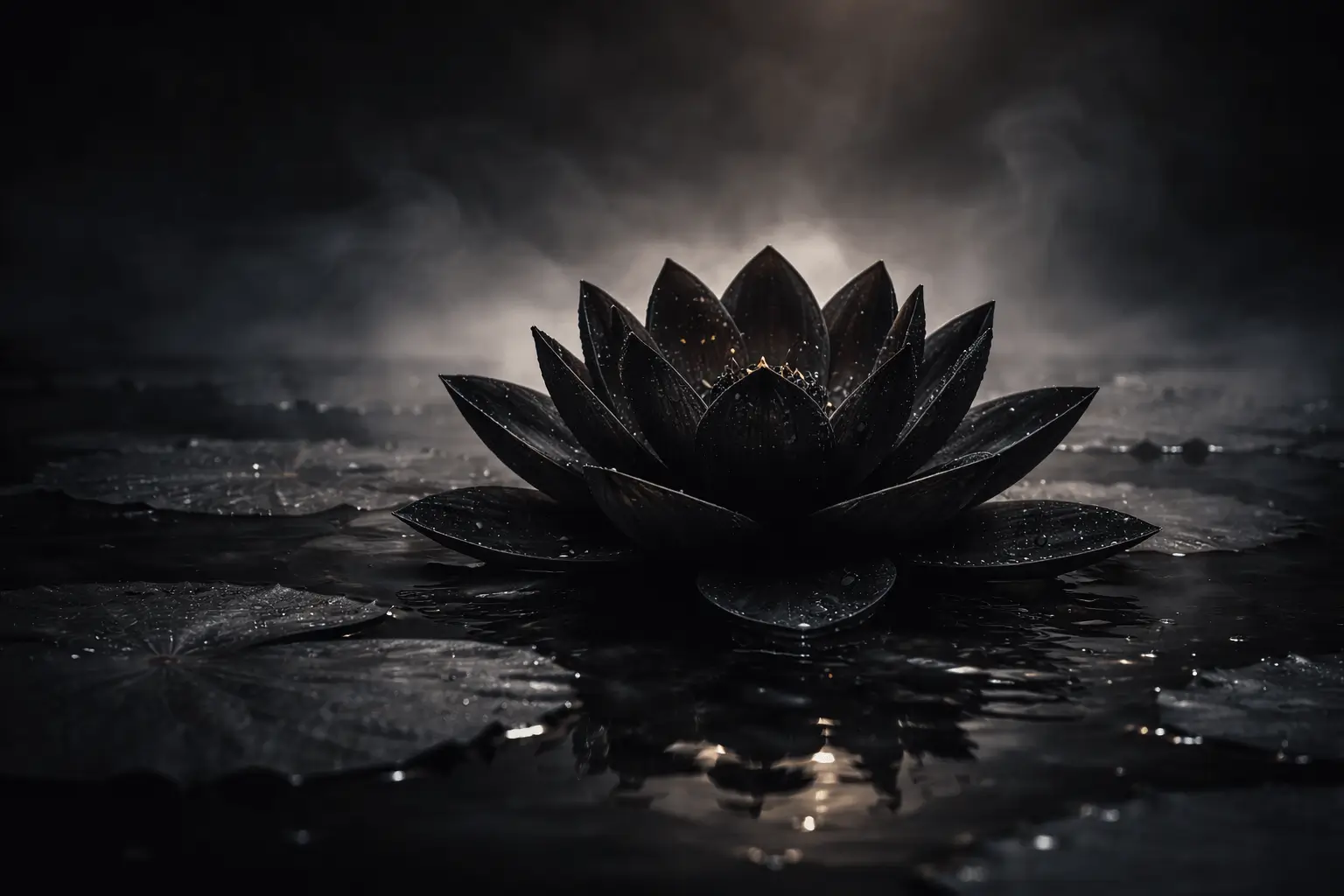
- The direct and accurate answer to are black lotus flowers real is no—there is no verified, naturally occurring real black lotus flower found in nature. Despite widespread online claims, botanical science does not recognize any lotus species that produces a truly black bloom.
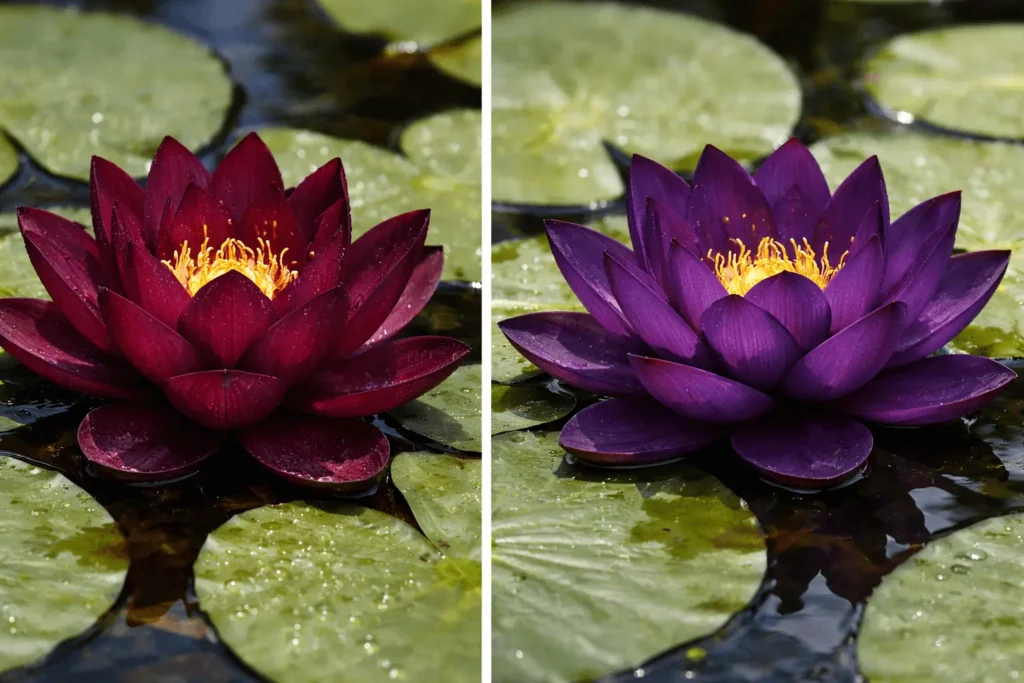
- Pure black flowers are extremely rare in the plant world because plants lack pigments that can absorb all visible light. What appears black is usually a very deep shade of purple, maroon, or red. Even the darkest flowers still reflect some light, preventing a true black color from forming naturally.
- From a scientific perspective, lotus plants (genus Nelumbo) produce flowers in white, pink, yellow, and occasionally deep purplish tones—but not black. According to the Royal Botanic Gardens, Kew, recognized species of the genus Nelumbo do not include any naturally black-flowered varieties. Claims of black-flowered lotus varieties are not supported by peer-reviewed botanical research or verified cultivation records.
- Many images labeled as a black lotus flower real are the result of digital editing, heavy filters, altered lighting, or color enhancement. These visuals often circulate on social media and online marketplaces, creating confusion between reality and manipulation. Understanding this distinction helps separate factual plant science from visually edited representations.
Black Lotus Flower vs Dark Lotus Flower
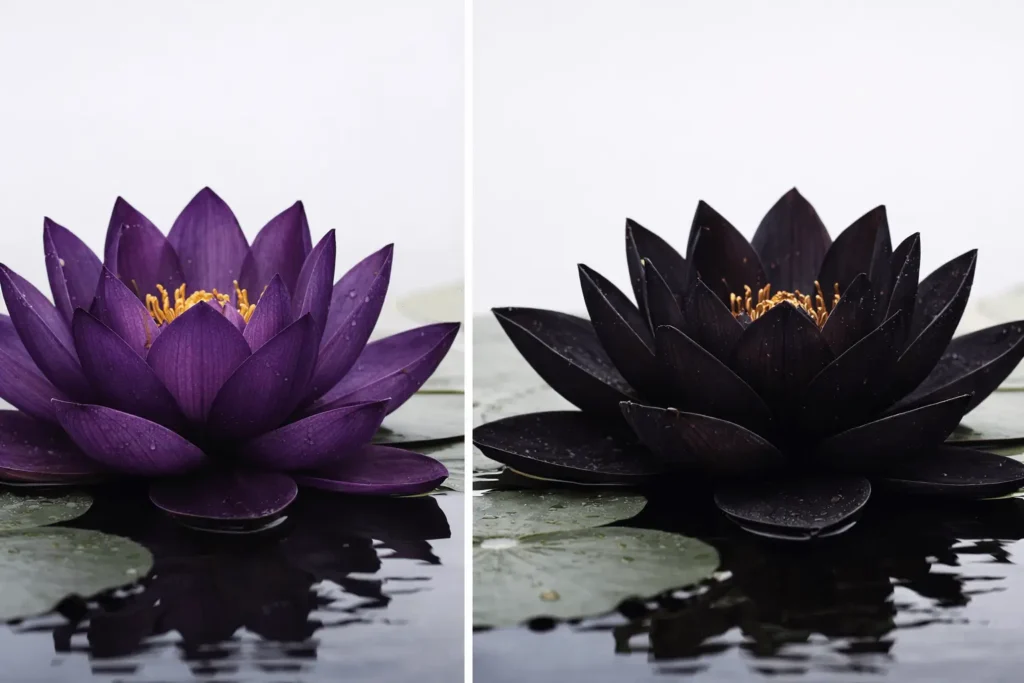
- A dark lotus flower refers to naturally occurring lotus varieties that display deep shades of purple, maroon, or reddish-brown. These darker tones are real and result from higher concentrations of natural pigments, giving the flower a much deeper appearance than common pink or white lotus blooms.
- The key difference between a dark purple or maroon lotus and a so-called black lotus flower lies in color perception. Dark lotus flowers still reflect light and show visible hues when viewed closely or in natural sunlight. A true black lotus, by contrast, would require complete light absorption, which does not occur in lotus plants or most flowering species.
- Dark-colored lotus flowers are often mislabeled because low lighting, shadow effects, or digital enhancement can make them appear nearly black in photographs. Online sellers and social media posts frequently use the term black lotus for dramatic appeal, even when the flower is simply a dark lotus flower. This mislabeling reinforces the myth of the black lotus flower rather than reflecting botanical reality.
| Feature | Dark Lotus Flower | “Black” Lotus (Myth) |
|---|---|---|
| Natural Occurrence | Yes | No |
| Color | Deep purple / maroon | Edited black appearance |
| Scientifically Recognized | Yes | No |
| Seed Authenticity | Genuine varieties | Often misleading |
Meaning of the Black Lotus Flower
Black Lotus Meaning Across Cultures
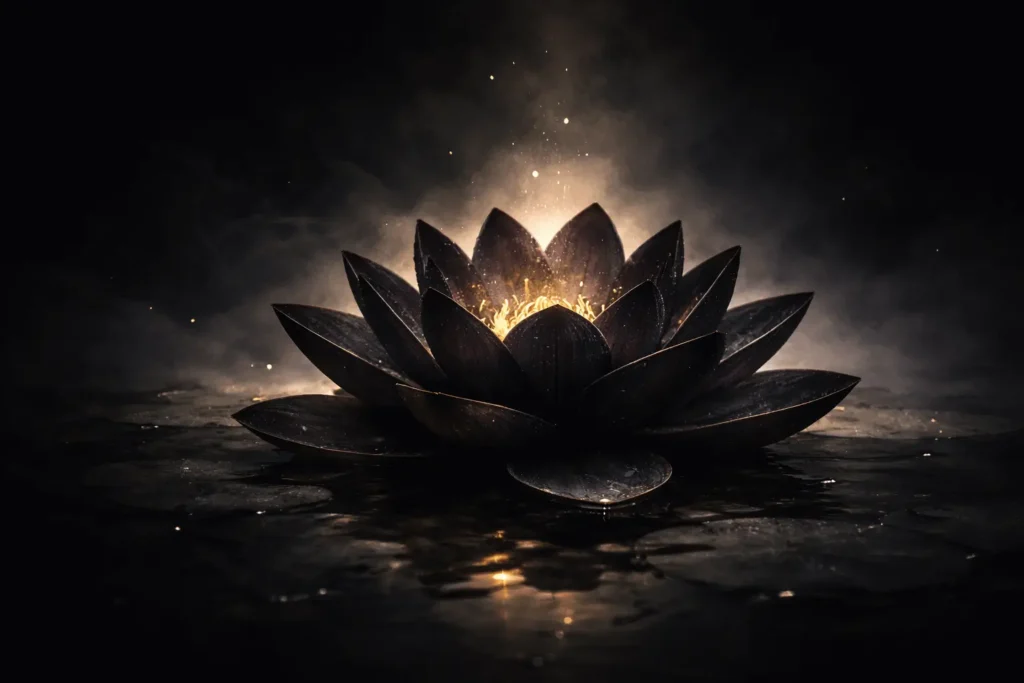
The black lotus meaning is rooted primarily in spiritual and symbolic contexts rather than botanical tradition. Across cultures, the lotus flower itself represents purity, awakening, and transcendence, and when combined with the color black, the symbolism deepens. The meaning of black lotus is often associated with rebirth after hardship, emerging stronger from darkness, and transformation through struggle. Black also symbolizes mystery, the unknown, and hidden strength, which gives the black lotus a powerful identity linked to resilience and inner power. In many symbolic interpretations, it represents overcoming suffering, emotional depth, and personal evolution rather than physical beauty.
Meaning of Black Lotus Flower in Modern Symbolism
In modern symbolism, the meaning of black lotus flower has expanded into tattoos, art, and contemporary spirituality. It is commonly used to express personal transformation, survival through difficult life phases, and strength developed through adversity. Psychologically, the black lotus is interpreted as a symbol of control, independence, and emotional depth. For many people, it reflects reclaiming power after loss, embracing one’s shadow self, or finding clarity through darkness. In artistic and spiritual expression, the black lotus flower represents self-mastery, resilience, and the courage to grow despite challenging circumstances. Symbolic plant myths are common in horticulture, similar to the confusion around moonflower blue varieties among gardeners.
These deeper symbolic connections between plants, emotion, and personal growth are also explored in a complete natural healing and herbal wellness guide, where plants are linked to mindfulness and intentional living.
The Birth of the Black Lotus — Symbolic Concept
The birth of the black lotus is a symbolic idea used to describe transformation that occurs through hardship rather than a physical flowering process. It represents the concept of something powerful emerging from darkness, emotional pain, or challenging circumstances. This idea draws inspiration from the natural behavior of real lotus plants, which grow from muddy water before blooming at the surface.
Growth from darkness is used as a metaphor to explain personal rebirth, inner strength, and spiritual awakening. The black lotus symbolizes rising above adversity, turning struggle into wisdom, and developing resilience through difficult experiences. Darkness, in this context, reflects emotional depth or life challenges rather than the absence of light.
This concept remains symbolic and not botanical because no natural process produces a true black lotus flower. The idea exists in philosophy, spirituality, and storytelling, not in plant science. While real lotus plants follow biological growth patterns, the black lotus represents a mental and emotional transformation rather than a naturally occurring plant.
Can You Grow a Black Lotus Plant at Home?
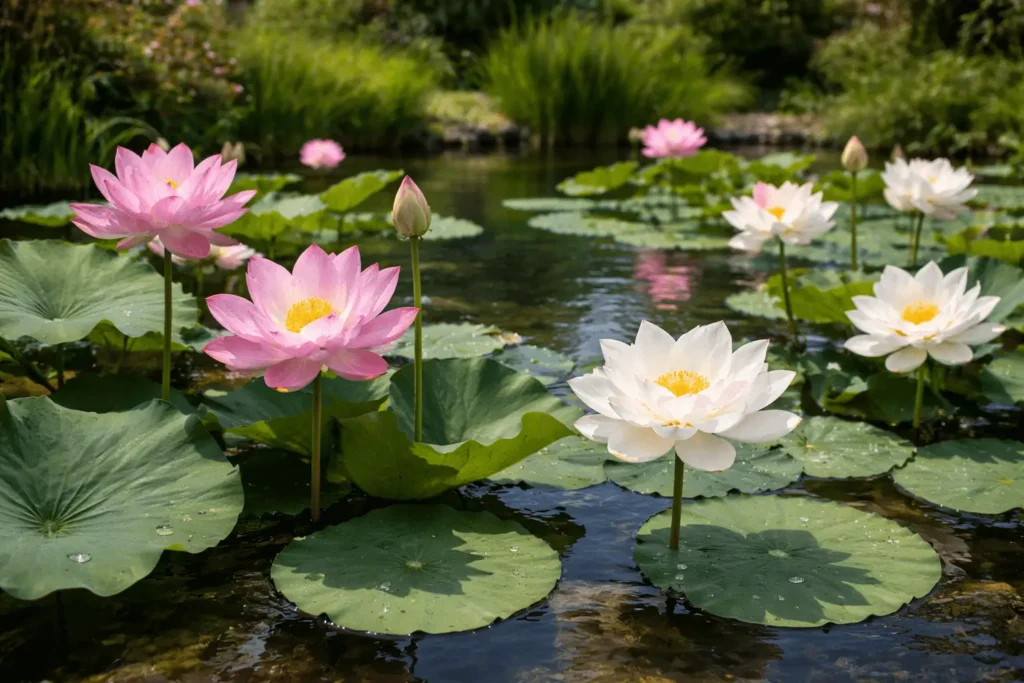
The reality is that you cannot grow a true black lotus plant at home because no naturally occurring lotus species produces black flowers. Despite claims found online, there is no verified method, seed, or cultivation technique that results in a genuine black lotus bloom.
When real lotus plants are grown at home or in ponds, they produce flowers in recognized natural colors such as white, pink, yellow, or deep purple tones. These plants follow normal lotus growth patterns, with broad floating leaves and large, brightly colored blooms that never develop a true black appearance.
Many listings advertising black lotus flower plant seeds rely on misleading images, edited photos, or exaggerated descriptions. These seeds typically grow into standard lotus varieties or fail to germinate altogether. Being aware of false marketing is essential, as authentic lotus growers and botanical sources do not recognize black lotus plants as a real, cultivable species.
Myths and Misconceptions About Black Lotus Flowers
Many viral myths claim the existence of a real black lotus flower, often supported by dramatic images and sensational descriptions. These stories spread quickly on social media, creating the impression that black lotus flowers are rare, hidden, or recently discovered, despite the lack of scientific evidence.
Fake online listings are a major source of confusion. Sellers frequently use digitally edited images or altered lighting to make dark lotus flowers appear black. These images are then used to promote seeds or plants that do not match the advertised appearance once grown. In most cases, buyers receive ordinary lotus varieties or seeds that never germinate.
Readers can avoid misinformation by relying on credible botanical sources, verified plant databases, and trusted horticultural experts. Checking scientific names, understanding natural flower pigmentation, and being cautious of exaggerated claims helps separate fact from myth when researching black lotus flowers. Botanical myths also appear in unusual succulent classifications, such as discussions around the cotyledon genus.
Conclusion
The truth about the black lotus plant lies in separating botanical facts from symbolic interpretation. Scientifically, no naturally occurring lotus produces a true black flower, and claims of real black lotus plants are not supported by plant biology. What exists instead is a powerful symbolic concept shaped by culture, spirituality, and visual storytelling.
The true meaning of black lotus centers on transformation, resilience, and growth through darkness rather than physical appearance. It represents inner strength, rebirth after struggle, and the ability to rise above challenges—ideas inspired by the natural growth of real lotus plants but expressed symbolically.
The key takeaway for readers is clarity: the black lotus is meaningful, but not botanical. Approaching the topic with informed understanding helps avoid misinformation while still appreciating the deep symbolism that makes the black lotus such a compelling concept. Relying on verified botanical sources and realistic cultivation knowledge ensures informed decisions when exploring rare plant claims.
👉 You can also review this black lotus resource hub to see a simplified breakdown with additional supporting insights.
FAQs
Are black lotus flowers real or mythical?
No, black lotus flowers are not real in botanical terms. No verified lotus species produces a naturally black bloom. This improves: Direct answer format Featured snippet potential
Why are black lotus seeds sold online?
Many online listings use digitally enhanced images to market dark lotus varieties as black. These seeds typically grow into standard lotus plants rather than true black flowers.
What is the meaning of the black lotus flower?
The black lotus flower symbolizes transformation, resilience, mystery, and rebirth. Its meaning is rooted in spiritual and symbolic interpretation rather than plant biology.
Can a black lotus plant be grown naturally?
No, a black lotus plant cannot be grown naturally. Lotus plants grow in colors like white, pink, yellow, and deep purple, but not true black.
Why do people believe black lotus flowers exist?
People believe black lotus flowers exist due to symbolic stories, edited images, viral content, and misleading online marketing that presents dark flowers as black.
Is a dark lotus flower the same as a black lotus?
No, a dark lotus flower is not the same as a black lotus. Dark lotus flowers are deep purple or maroon and still reflect light, while a true black lotus does not exist in nature.

Written by the LeafyHeaven Editorial Team
LeafyHeaven shares practical gardening tips and simple plant care guides to help you grow, nurture, and enjoy your plants with ease. Our goal is to make gardening feel natural, approachable, and rewarding for everyone.