
Introduction
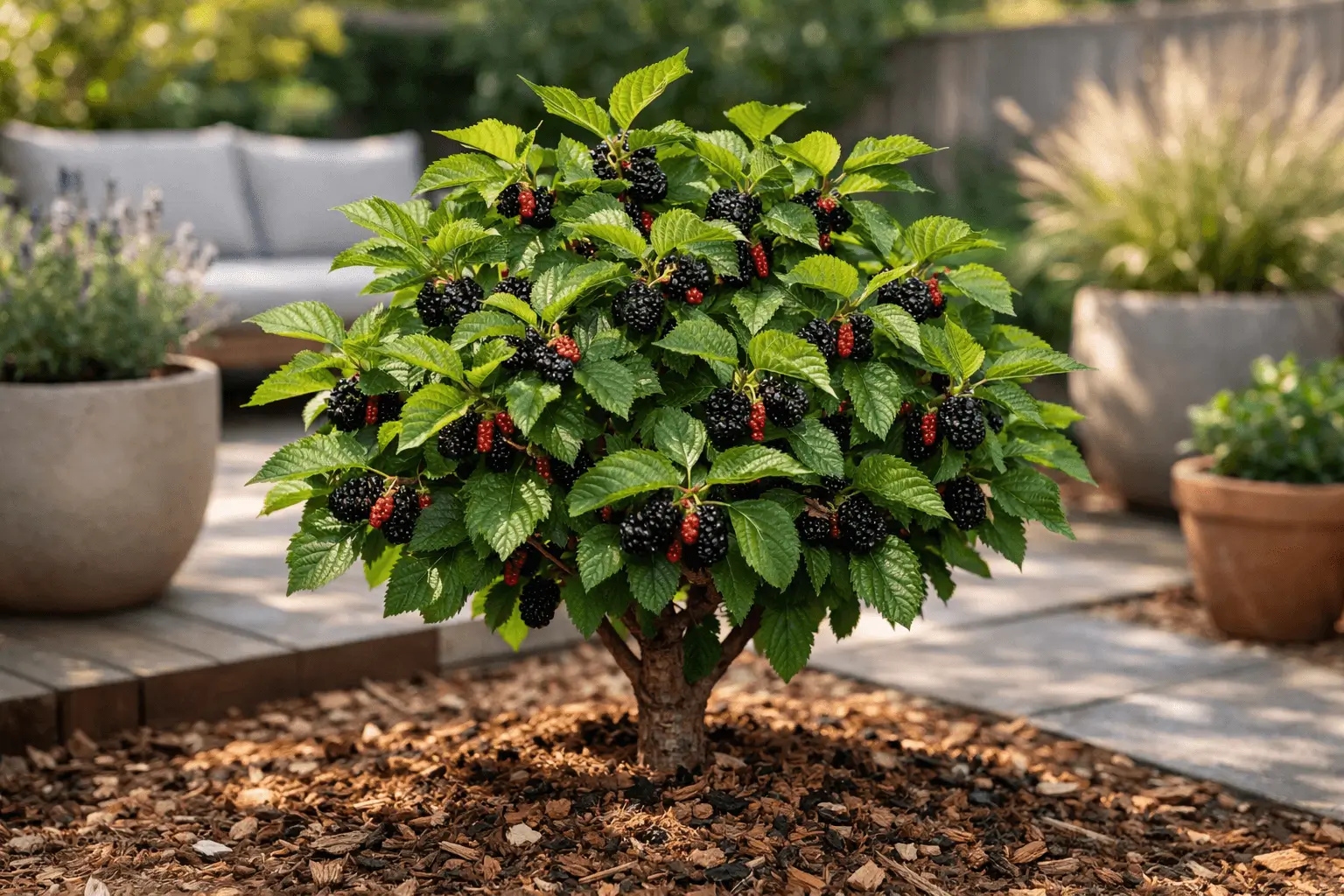
A dwarf mulberry tree is a compact, fruit-bearing version of the traditional mulberry that delivers the same sweet harvest without taking over your garden. Designed for smaller spaces, it suits courtyards, patios, and container growing while remaining easy to manage through simple pruning. This miniature mulberry tree has gained strong popularity in Australia as gardeners look for productive fruit trees that fit urban and suburban landscapes. Its adaptability to different climates, combined with reliable fruiting and low maintenance needs, makes it an appealing choice for beginners and experienced growers alike. Whether planted in the ground or grown in a pot, the dwarf mulberry offers both ornamental value and fresh homegrown fruit.
What Is a Dwarf Mulberry Tree?
Dwarf vs Standard Mulberry Trees
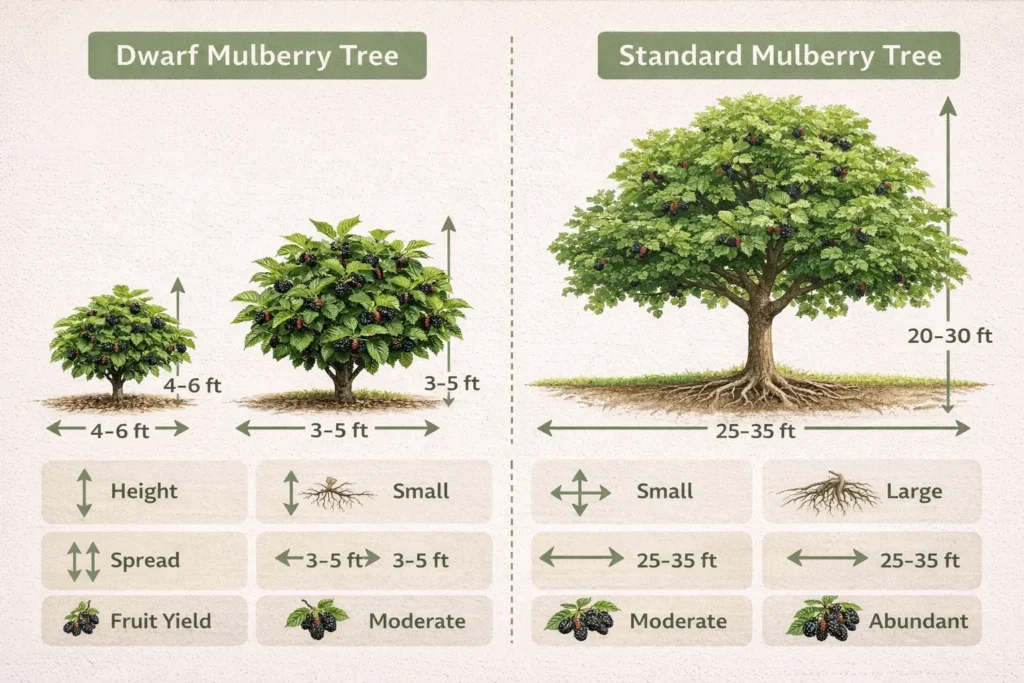
- Size comparison: Dwarf trees typically reach 2–3 metres, while standard mulberries can exceed 8 metres.
- Growth habit: Dwarf forms grow compact and controlled, making them easier to shape.
- Fruit yield differences: Although smaller, dwarf trees still produce generous crops relative to their size.
Mulberry species classification and growth patterns are documented in global botanical resources such as the Royal Botanic Gardens, Kew.
Popular Dwarf Mulberry Types
- Dwarf black mulberry: Known for rich-flavoured, dark fruit and compact growth.
- Compact white mulberry forms: Lighter fruit with strong adaptability and fast establishment.
These varieties retain the productivity of a full mulberry while staying true to the dwarf mulberry form.
Dwarf Mulberry Tree Varieties in Australia
Best Mulberry Tree Varieties Australia Offers
- Strong climate adaptability across temperate and warm regions
- Consistent fruit production under proper care
- Lower maintenance requirements than full-sized trees
These characteristics define the most reliable mulberry tree varieties Australia gardeners prefer.You can also explore when are mulberries in season to better understand fruiting timelines and harvest periods.
Dwarf Mulberry Tree Australia – What Grows Best Where
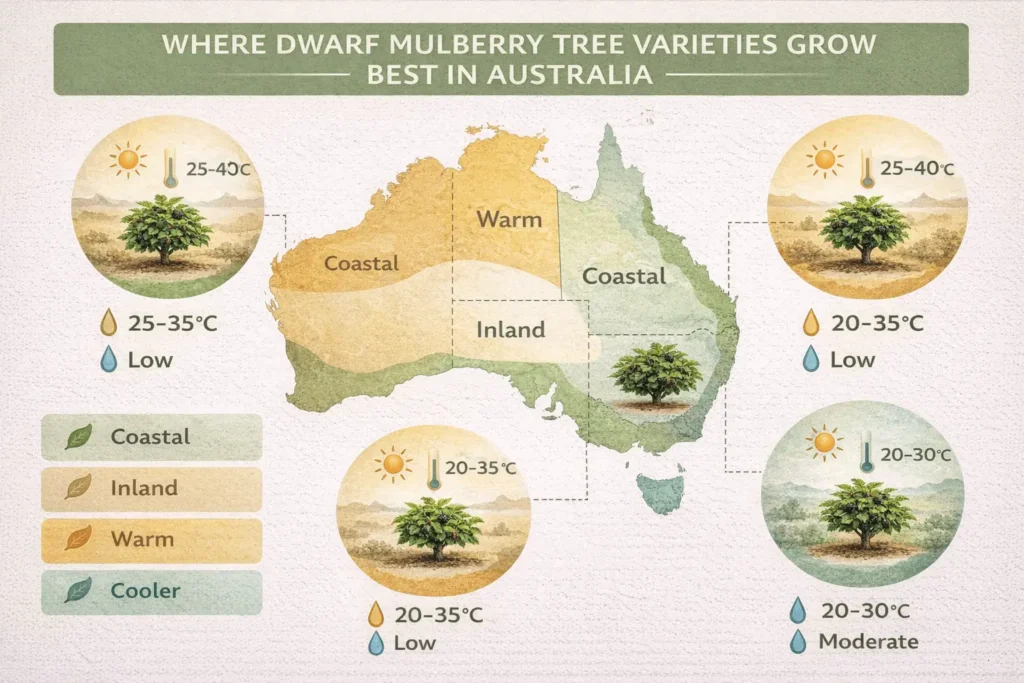
- Coastal regions: Thrive with good drainage and wind protection
- Inland areas: Perform well with deeper watering and summer mulching
- Warm zones: Excellent growth and fruiting
- Cooler zones: Slower growth but reliable harvests
Gardeners in Western Australia often select proven options like dwarf mulberry tree Perth varieties for heat resilience.
Weeping vs Dwarf Mulberry Tree — Key Differences
What Is a Weeping Mulberry Tree?
A weeping mulberry tree is grown primarily for its cascading branches and ornamental form rather than fruit yield. Its structure creates a striking visual focal point in landscapes.
Weeping Mulberry Tree Fruit & Fruiting Habits
- Common myth: all weeping mulberries fruit heavily
- Reality: many produce minimal or inconsistent fruit
- Fruiting is secondary to ornamental appeal in a weeping mulberry tree
Dwarf Mulberry vs Morus Alba Pendula
- Visual structure: Upright and compact vs cascading canopy
- Practical garden use: Dwarf types suit edible gardens; Morus alba pendula suits decorative planting
How Big Does a Dwarf Mulberry Tree Grow?
Height, Spread & Root System
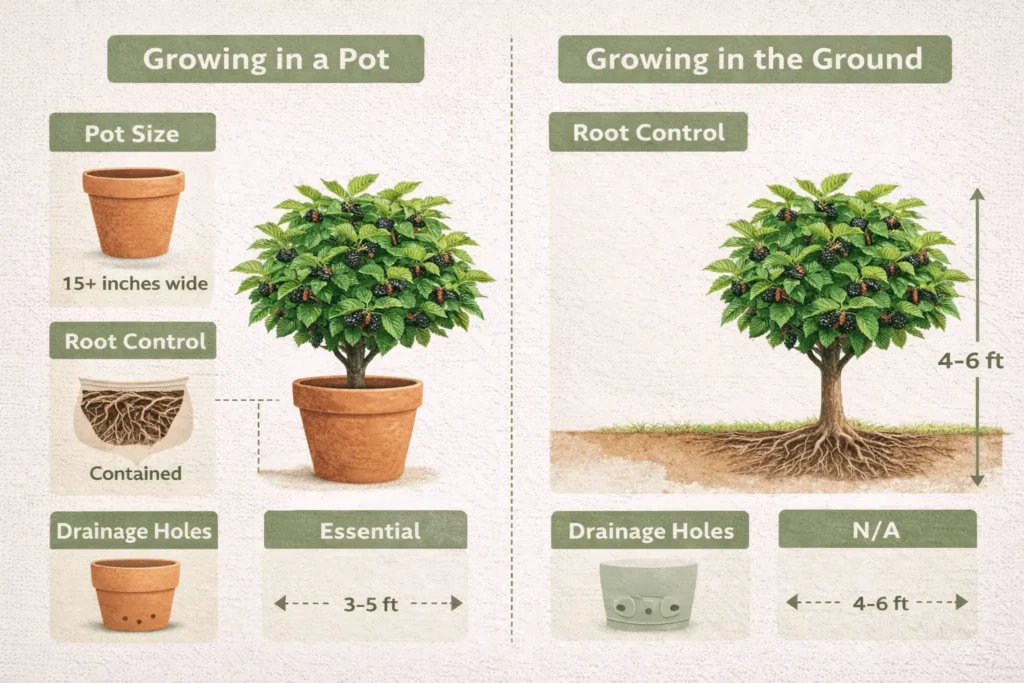
- Mature height: 2–3 metres
- Spread: 2 metres with pruning
- Roots: Non-invasive and manageable
Container-grown trees remain smaller than ground-planted specimens.
Is a Dwarf Mulberry Suitable for Pots?
- Large pots with strong drainage are essential
- Regular root trimming maintains size
A miniature mulberry tree adapts well to long-term container growth when managed correctly.
How to Grow a Dwarf Mulberry Tree Successfully
Sunlight, Soil & Water Requirements
- Full sun for best fruiting
- Well-draining soil is critical
- Consistent watering during establishment prevents stress
To improve fruit tree health and long-term productivity, it’s helpful to follow a complete gardening and plant care guide for proper soil and watering practices.
Fertilizing & Seasonal Feeding
- Organic compost improves soil health
- Balanced synthetic fertilizers boost growth in spring
Avoid overfeeding to prevent excessive leafy growth.
Dwarf Mulberry Tree Care & Maintenance
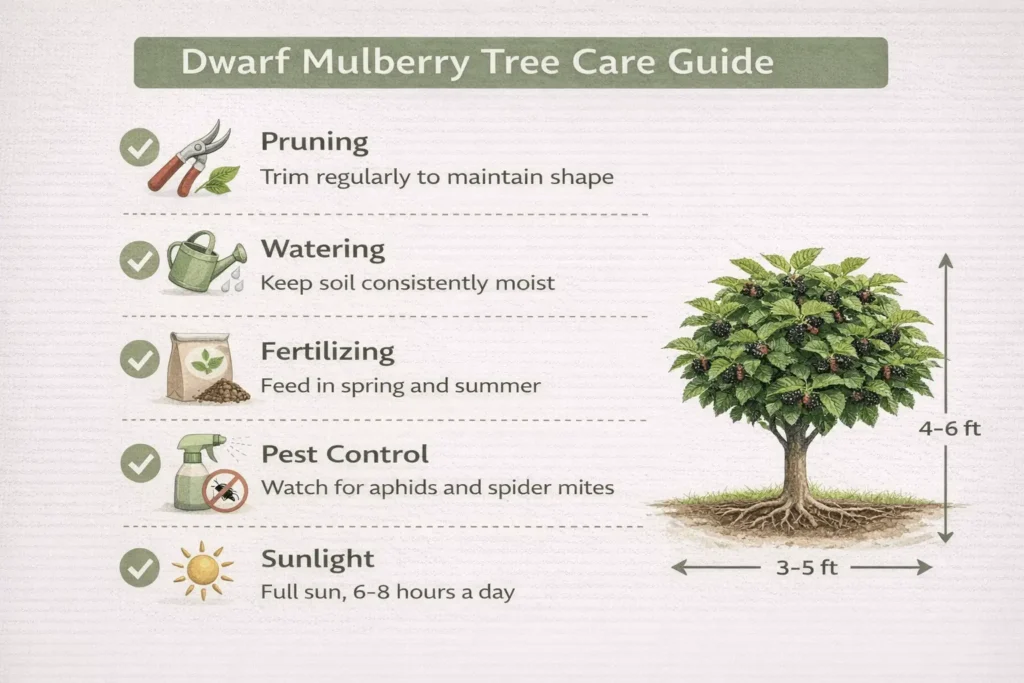
Pruning a Dwarf Mulberry Tree
- Prune in late winter
- Maintain open structure
- Control height and spread easily
Pest & Disease Management
- Watch for aphids and scale
- Maintain airflow to prevent fungal issues
Preventative care reduces long-term problems.For broader fruit tree care strategies, you may also explore fastest growing fruit trees to compare growth rates and maintenance needs.
Buying a Dwarf Mulberry Tree in Australia
Where to Buy a Dwarf Mulberry Tree for Sale
- Reputable local nurseries
- Trusted online retailers
Search terms like buy mulberry tree Australia or dwarf mulberry tree for sale Australia help locate quality stock.
Dwarf Mulberry Tree Bunnings – What to Expect
- Seasonal availability
- Check graft health and root condition before buying
Dwarf mulberry tree Bunnings options vary by location.
Dwarf Mulberry Tree Perth – Local Growing Tips
Climate Considerations for WA Gardeners
- Excellent heat tolerance
- Adjust watering schedules in summer
Dwarf mulberry tree Perth selections handle dry heat with proper care.
Is a Dwarf Mulberry Tree Worth Growing?
Benefits of Growing a Dwarf Mulberry Tree
- Fresh, homegrown fruit
- Low maintenance
- Space-saving growth habit
Any Downsides to Consider
- Fallen fruit can create mess
- Birds are attracted during ripening
Conclusion & Call to Action
A dwarf mulberry tree is a smart, space-efficient choice for Australian gardeners seeking fresh fruit without the burden of a large tree. With the right variety and proper care, it thrives in gardens, patios, and containers across diverse climates. Choose a variety suited to your region and buy from trusted Australian nurseries to ensure long-term success.
Thinking of adding a dwarf mulberry tree to your garden? Start with the right variety for your climate.
FAQs
How long does a dwarf mulberry tree take to fruit?
Most begin producing fruit within 2–3 years after planting.
Can a dwarf mulberry tree grow in a pot long-term?
Yes, with proper pot size, pruning, and feeding.
Is a dwarf mulberry tree suitable for Australian climates?
It adapts well to most Australian regions with basic care.
Does a dwarf mulberry tree need full sun?
Yes, full sun ensures healthy growth and good fruiting.
What’s the difference between dwarf and weeping mulberry trees?
Dwarf types focus on fruit production, while weeping forms are mainly ornamental.
Are dwarf mulberry tree roots invasive?
No, their root systems are generally compact and non-invasive.

Written by the LeafyHeaven Editorial Team
LeafyHeaven shares practical gardening tips and simple plant care guides to help you grow, nurture, and enjoy your plants with ease. Our goal is to make gardening feel natural, approachable, and rewarding for everyone.




[…] Read Also: 7+ Proven Reasons to Grow a Dwarf Mulberry Tree at Home […]