
Introduction:
Dried soursop leaves benefits have been recognized in traditional herbal medicine for centuries across the Caribbean, Central America, and Southeast Asia. The soursop tree (Annona muricata) — commonly known as graviola, guanábana, guyabano, sirsak, and corossol in different regions — produces leaves that are scientifically studied for their anti-inflammatory, antioxidant, and calming properties.
Both fresh and dried soursop leaves are widely used to prepare herbal tea, poultices, and natural extracts. From supporting healthy blood pressure and digestion to improving sleep and skin health, soursop leaves offer a broad range of evidence-informed wellness benefits.
This guide covers the top health benefits of soursop leaves, safe usage methods, correct dosage, potential side effects, and soursop tree growing tips — everything you need in one complete resource.
What Are Soursop Leaves? A Quick Botanical Snapshot
The soursop tree (Annona muricata) is a fast-growing tropical tree native to the Caribbean, Central America, and northern South America. It thrives in warm, humid climates and is cultivated across Southeast Asia, Africa, and parts of the Pacific for both its fruit and medicinal leaves.
Known by multiple regional names — graviola in Brazil, guanábana in Spanish-speaking countries, guyabano in the Philippines, sirsak in Indonesia, and corossol in French-speaking regions — this tree belongs to the Annonaceae family.
The leaves are the most medicinally significant part of the plant. They are harvested fresh or dried and used to prepare herbal teas, poultices, and botanical extracts.The Cleveland Clinic and WebMD both recognize soursop for its potential herbal and antioxidant value.
What Do Soursop Leaves Look Like? (Identification Guide)
Soursop plant leaves are dark green, smooth, and slightly glossy on the upper surface, with a paler underside. The leaves of soursop are oval to lance-shaped, typically 10–20 cm long and 3–7 cm wide. When crushed, soursop tree leaves release a distinct, pungent aroma — often described as sharp and earthy.
The leaf edges are smooth with no serration, and the texture feels firm and leathery to the touch. New growth appears lighter green before darkening with maturity.
| Feature | Fresh Soursop Leaves | Dried Soursop Leaves |
| Color | Dark green, glossy | Olive to brownish-green |
| Texture | Firm, leathery, smooth | Brittle, crinkled |
| Aroma | Strong, pungent, earthy | Mild, slightly musty |
| Size | 10–20 cm long | Slightly shrunk, curled edges |
| Best Use | Fresh tea, poultices | Herbal tea, powder, storage |
| Nutrient Retention | High | Moderate (heat-sensitive nutrients may reduce) |
Quick Tip: When selecting soursop leaves for tea, choose dark green, blemish-free leaves from mature branches. Avoid yellow or damaged leaves as they indicate lower potency.
Top Fresh & Dried Soursop Leaves Benefits Points
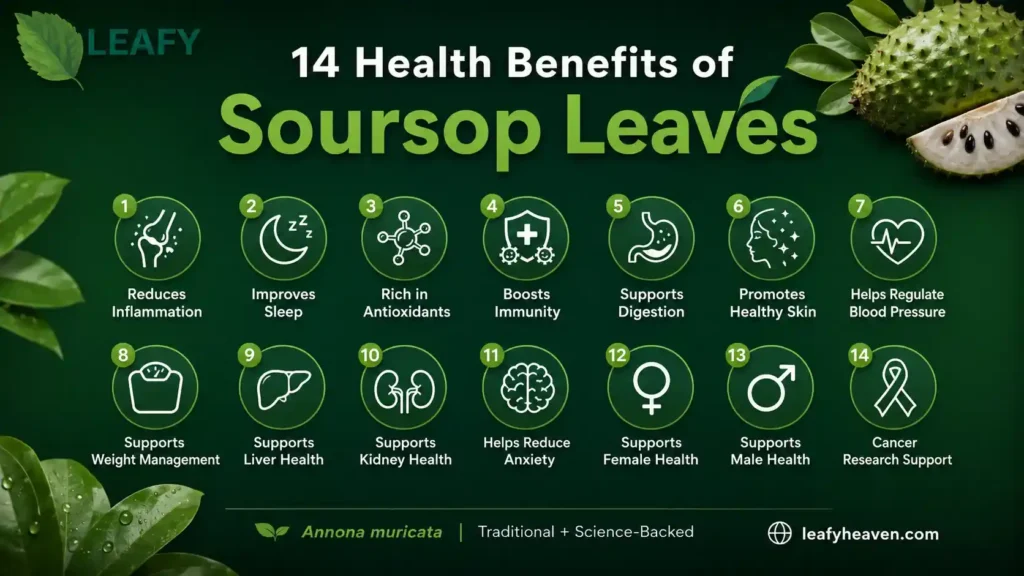
- Soursop leaves are traditionally used for their strong anti-inflammatory properties, helping reduce pain and swelling naturally.
- Drinking tea made from these leaves promotes better sleep because it’s naturally sedative and helps calm the nervous system.
- According to WebMD, soursop leaves are rich in antioxidants that help neutralize free radicals and reduce oxidative cell damage.
- These leaves support immune health and are often used during flu or infection recovery to boost the body’s natural defenses.
Many traditional plant remedies used for immune support and herbal wellness are also covered in our natural healing and herbal wellness guide for evidence-informed natural care practices.
- They also aid digestion and soothe stomach issues such as bloating and indigestion, offering gentle digestive relief.
- For skin care, soursop leaves support healthy skin—poultices made from the leaves are applied to rashes and eczema to help heal irritation.
- In some cultures, they’re used as a folk cancer remedy, where people brew the leaves into tea believed to assist in cancer treatment, though more research is still needed. Scientific evidence is still limited, and these traditional uses should never replace professional medical treatment or guidance from a licensed healthcare provider.
- It’s always wise to consult a healthcare professional before using these leaves for medicinal purposes to ensure safe and effective use.
Keep this important note in mind if you plan to include soursop leaves in your wellness routine. - Soursop and Blood Pressure: Soursop leaf is traditionally used to support healthy blood pressure levels. A study published in Evidence-Based Complementary and Alternative Medicine (2020) confirmed the hypotensive and antihypertensive properties of Annona muricata aqueous leaf extracts, supporting its traditional use for blood pressure management.
- Soursop for Weight Loss: Soursop tea for weight loss is gaining attention due to its fiber content, low calories, and metabolism-supporting antioxidants. Regular consumption, combined with a balanced diet, may support gradual weight management. However, soursop alone is not a weight-loss solution — it works best as part of a healthy lifestyle.
- Soursop for Liver Health: Soursop is good for liver function due to its antioxidant and anti-inflammatory compounds. A study published in Animals (Basel) (2020) demonstrated that Graviola (Annona muricata) extract showed significant ameliorative effects against liver injury by reducing oxidative stress markers. Those with fatty liver concerns often include soursop leaf tea as a supportive herbal remedy.
- Soursop for Kidney Support: Is soursop good for kidneys? Traditionally, yes — soursop leaves have been used in herbal medicine to support kidney function and flush toxins. However, excessive consumption may put strain on the kidneys, so moderation is essential.
- Soursop for Inflammation: Soursop is good for inflammation due to its rich content of acetogenins, flavonoids, and tannins. These compounds help reduce inflammatory markers in the body. People dealing with joint pain, arthritis, or chronic inflammation often find soursop leaf tea a gentle natural option.
- Soursop for Anxiety and Sleep: Soursop tea makes you sleepy because it naturally calms the nervous system through its mild sedative properties. It is also used by those asking does soursop help with anxiety — the calming alkaloids in the leaves promote relaxation and may ease stress-related restlessness before sleep.
- Soursop Tea for Digestion: Soursop tea for digestion works by soothing the gut lining and supporting healthy bowel movement. Some people notice soursop tea makes you poop more regularly — this is due to its natural fiber and digestive enzyme stimulation. It is gentle enough for daily use in most healthy adults.
- Soursop Leaf Tea Benefits for Female: Soursop benefits for women include menstrual pain relief, hormonal balance support, and anti-inflammatory comfort. Soursop tea benefits for women also extend to skin health, stress reduction, and immune support during menstrual cycles. Soursop leaves benefits for women are widely recognized in traditional Caribbean and Southeast Asian herbal medicine.
- Soursop Benefits for Male: Soursop benefits for male health include anti-inflammatory support, antioxidant protection, and potential aid in managing blood pressure. Soursop tea benefits for men also include improved energy levels and immune function. Some traditional practitioners note soursop is good for men dealing with fatigue or chronic inflammation.
- Soursop Skin Benefits: Soursop is good for skin due to its high vitamin C, antioxidant, and antimicrobial content. Applied topically or consumed as tea, it supports collagen production and fights free radical damage. Soursop oil for skin is also used in natural skincare for its soothing and anti-aging properties.
- Soursop and Cancer: Soursop tea cancer research is ongoing and largely preliminary. Laboratory studies published in Journal of Natural Products (2002) have identified acetogenins in Annona muricata leaves as compounds with cytotoxic activity against certain cancer cell lines in vitro. However, no human clinical trials have confirmed these effects. Soursop should never be used as a cancer treatment — always consult a qualified oncologist for proper medical guidance.
Quick Summary Table — Soursop Leaves Benefits Overview
| Benefit | Key Action | Evidence Level |
| Anti-Inflammatory | Reduces pain and swelling | Moderate (traditional + early studies) |
| Better Sleep | Calms nervous system | Traditional use |
| Antioxidant Protection | Fights free radical damage | Moderate (lab studies) |
| Immune Support | Boosts natural defenses | Traditional use |
| Digestive Relief | Soothes gut, supports bowel movement | Traditional use |
| Skin Health | Supports collagen, reduces irritation | Low–Moderate |
| Blood Pressure Support | May relax blood vessels | Traditional + early studies |
| Weight Management | Low-calorie, metabolism support | Low (supportive role) |
| Liver Support | Reduces oxidative stress on liver | Early studies |
| Kidney Support | Flushes toxins, supports function | Traditional use |
| Anxiety & Sleep | Mild sedative, calming effect | Traditional use |
| Female Health | Menstrual relief, hormonal support | Traditional use |
| Male Health | Anti-inflammatory, energy support | Traditional use |
| Cancer Research | Acetogenins cytotoxic in lab | Very Low (no clinical proof) |
⚠️ Important: Scientific evidence for most soursop benefits is still in early or traditional stages. Always consult a licensed healthcare provider before using soursop leaves medicinally.
Existing “How to Use Soursop Leaves at Home” section ke baad ye content add karo — existing steps unchanged rahenge:
How to Use Soursop Leaves at Home
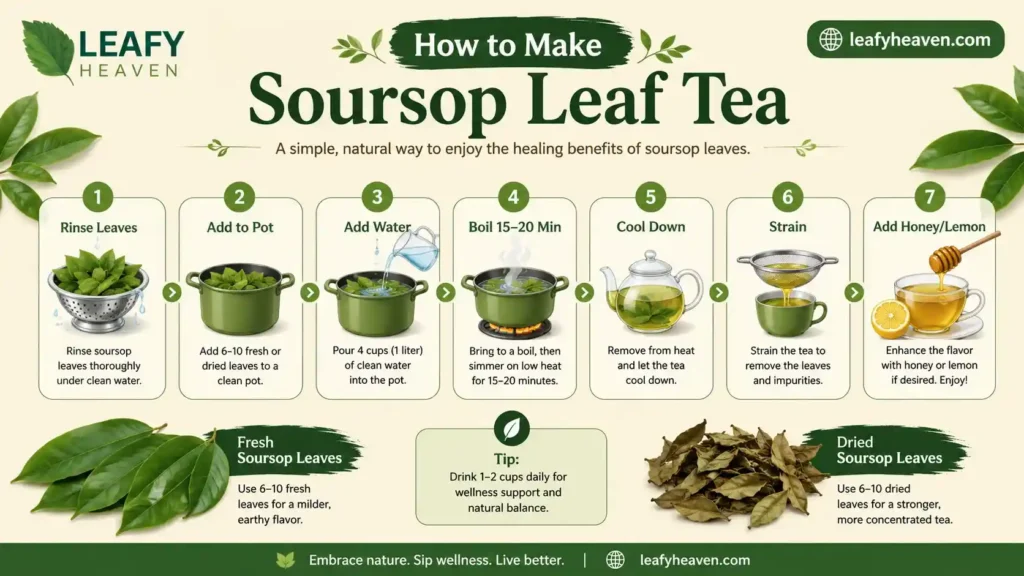
- One of the most easy and effective methods to incorporate soursop leaves into your wellness routine is to make soursop leaf tea using fresh leaves or dried leaves.
- Rinse the leaves well, place them in a pot with water, and boil for about 15–20 minutes.
- Allow it to cool, then strain and enjoy a cup. You can add honey or lemon for extra flavor.
- Regular consumption of soursop leaf tea — one to two cups daily — provides consistent anti-inflammatory and calming benefits when used as part of a structured herbal wellness routine.
- For external use, apply the leaves as a poultice or topical treatment.
- After boiling to soften, mash or bruise the leaves and apply directly to skin irritations, insect bites, or sore joints.
- You can also infuse dry leaves in a glass jar with coconut oil or olive oil, then store it in a sunny place for about 2 weeks, shaking daily.
- Once ready, use it as a natural massage oil to soothe the skin and relax the body.
- Always avoid use during pregnancy or if you have low blood pressure, and consult a doctor before any internal use for safety.
How to Prepare Soursop Leaves for Drinking
Proper preparation is key to getting the most from soursop leaves. Whether you use fresh or dried leaves, the process is straightforward and requires no special equipment.
How Many Soursop Leaves to Make Tea: Use 8–10 fresh leaves or 4–6 dried leaves per 2–3 cups of water. Avoid using too many leaves in one sitting — more is not always better with herbal teas.
How to Boil Soursop Leaves — Step-by-Step:
- Rinse leaves thoroughly under clean running water
- Add leaves to a pot with 3 cups of water
- Bring to a boil, then reduce to a simmer
- Boil soursop leaves for 15–20 minutes on medium-low heat
- Remove from heat and let cool for 5–10 minutes
- Strain the liquid into a cup
- Add honey or lemon if desired — drink warm or cold
How long to boil soursop leaves? 15–20 minutes is the ideal range. Less than 10 minutes under-extracts the beneficial compounds. More than 25 minutes may make the tea overly bitter.
How to Make Soursop Tea with Fresh Leaves vs Dried Leaves
Both fresh and dried leaves produce effective tea. Here is a direct comparison:
| Step | Fresh Leaves | Dried Soursop Leaves |
| Quantity | 8–10 leaves | 4–6 leaves (or 1 tbsp powder) |
| Preparation | Rinse and add whole | Crumble or add whole |
| Boiling Time | 15–20 minutes | 10–15 minutes |
| Color | Light golden-green | Deeper amber-brown |
| Flavor | Mild, earthy | Stronger, more concentrated |
| Shelf Life | Use immediately | Store up to 12 months |
| Availability | Requires fresh tree access | Easily available dried or powdered |
Soursop Leaf Tea: Fresh vs Dried Leaves — Which Is Better?
Both forms are effective, but the choice depends on your situation.
Fresh leaves retain higher levels of volatile compounds and produce a milder, more aromatic tea. They are ideal if you have access to a soursop tree at home.
Dry soursop leaves are more concentrated, longer-lasting, and widely available online or in herbal stores. Dried soursop leaves deliver consistent potency and are easier to store and measure.
For everyday use, dried soursop leaves are the more practical option. For maximum freshness and aroma, fresh leaves are preferred when available.
Soursop Powder: Soursop powder how to use — simply dissolve 1 teaspoon of organic graviola leaf powder in hot water, stir well, and drink like tea. It is the fastest preparation method and works well when leaves are unavailable.
Soursop Tea Dosage: How Much and How Often?
1–2 cups per day is the recommended soursop dosage for most healthy adults.
| Dosage Factor | Recommendation |
| Daily cups | 1–2 cups maximum |
| How much soursop per day | 1–2 tsp dried leaves or 8–10 fresh leaves |
| How often to drink soursop tea | Daily or every other day |
| Best time to drink soursop tea | Morning on empty stomach or evening before bed |
| Can you drink soursop tea on empty stomach | Yes, but start with small amount |
| Can I take soursop at night | Yes — its calming effect supports better sleep |
| Can you drink soursop tea cold | Yes — brew hot, refrigerate, and drink cold |
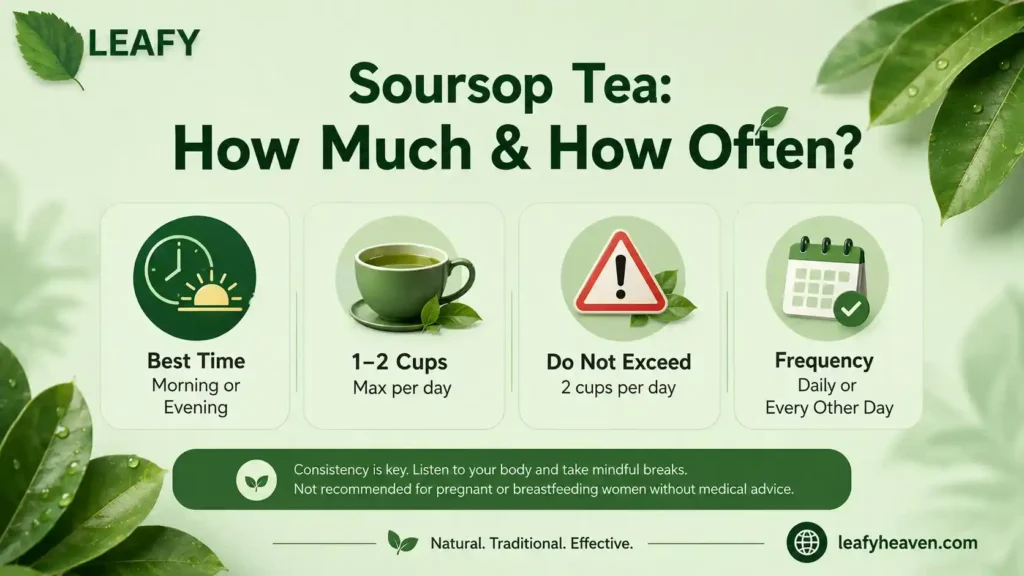
Best Time to Drink Soursop Tea:
- Morning: Boosts digestion and immunity at the start of the day
- Evening/Night: Its natural sedative properties support relaxation and sleep
Can I drink soursop tea cold? Yes. Brew the tea as normal, allow it to cool completely, then refrigerate. Cold soursop tea retains its benefits and tastes refreshing — especially in warm climates.
⚠️ Dosage Warning: Do not exceed 2 cups per day. Long-term excessive use has been linked to potential neurological concerns in some studies. Stick to recommended amounts and take breaks periodically.
Who Can Benefit (and Who Should Avoid It)?
- People with chronic inflammation or joint pain may find relief through the gentle effects of soursop leaves.
- It can help those experiencing stress or insomnia, promoting calm and relaxation.
- Herbal tea drinkers often enjoy its soothing nature and digestive support as part of their wellness habits.
- Individuals who are pregnant or breastfeeding should avoid using it.
- Those with low blood pressure are also advised to stay cautious.
- Anyone on medication should seek medical approval before use to ensure safety.
Soursop Leaves Side Effects: What You Should Know
Soursop leaves offer real health benefits, but understanding the side effects of soursop leaves is equally important. Like any herbal remedy, improper or excessive use can lead to unwanted reactions. Knowing both the soursop leaves benefits and side effects helps you use this plant safely and effectively.
Common Soursop Tea Side Effects:
- Low Blood Pressure: Soursop leaf tea side effects include a notable drop in blood pressure. Those already on blood pressure medication should use it with extreme caution.
- Nausea or Vomiting: Drinking too much soursop tea on an empty stomach may cause mild nausea in sensitive individuals.
- Digestive Discomfort: Excessive consumption may lead to loose stools or stomach cramping.
- Neurological Concerns: A study published in Movement Disorders (2005) identified a link between long-term consumption of Annona muricata and atypical Parkinsonism, attributed to annonacin — a neurotoxic compound found in the plant. This is one of the most serious soursop leaves side effects to be aware of. Moderation is strongly advised.
- Drug Interactions: Soursop tea side effects include potential interference with antidepressants, blood pressure medications, and diabetes drugs.
- Liver and Kidney Stress: Overuse may place stress on liver and kidney function over time.
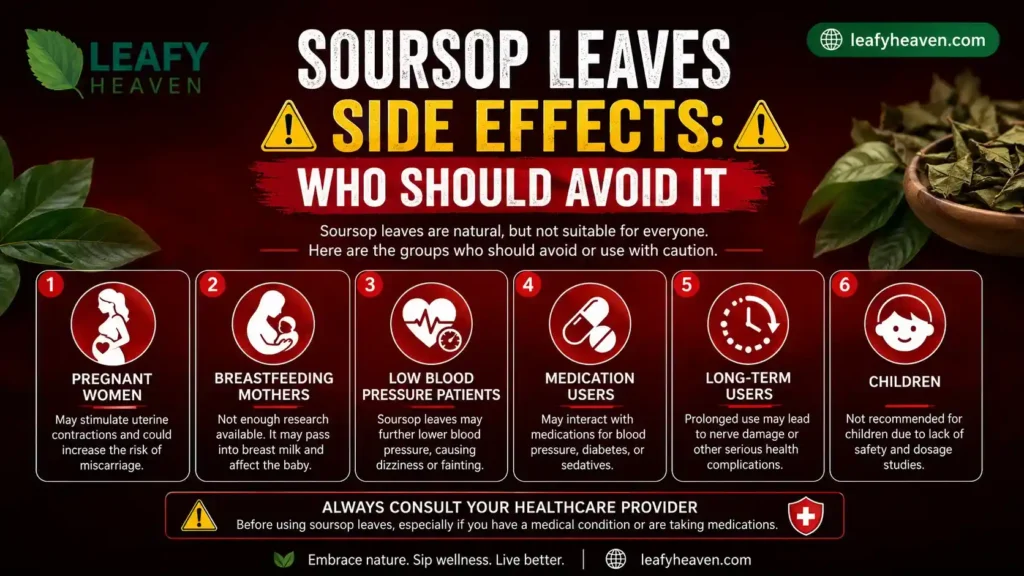
⚠️ Warning Block — Who Must Avoid Soursop Leaves:
| Group | Reason to Avoid |
| Pregnant women | May stimulate uterine contractions |
| Breastfeeding mothers | Safety not established |
| Low blood pressure patients | Can further lower BP dangerously |
| People on medications | Risk of drug interaction |
| Long-term daily users | Risk of neurological side effects |
| Children | Dosage safety not established |
Side effects of soursop tea are generally mild when consumed in moderation — 1 to 2 cups per day. The key is to avoid excessive, long-term use without medical supervision. Always consult a healthcare provider before adding soursop leaf tea to your routine, especially if you have an existing health condition.
Can You Grow a Soursop Tree at Home?
- Soursop trees are highly adaptable and can be grown in containers, making them great for small spaces. Understanding proper soursop tree care is essential if you plan to harvest fresh leaves regularly for tea or herbal use.
- They thrive in warm climates, especially in zones 9–11.
- Provide full sunlight for at least 6–8 hours a day to encourage strong growth.
- Use well-draining soil that is slightly acidic with a pH 5.5–6.5.
- Maintain consistent watering to keep the soil moist but not soggy.
- Ensure good warmth and humidity for ideal tropical growth.
The guanabana fruit tree, scientifically known as Annona muricata, is one of the most rewarding tropical trees you can grow at home. Whether you call it a guanabana soursop fruit tree, graviola, or guyabano — this is the same species with the same growing requirements.
If you enjoy growing exotic edible plants, our tropical fruit trees grow guide explores the best tropical varieties for home gardens, container growing, and warm-climate landscapes.
Where Does Graviola Grow Naturally?
Graviola grows natively in the tropical regions of Central America, the Caribbean, and northern South America. It thrives in consistently warm, humid environments.
Understanding where soursop grows naturally can help gardeners recreate the right tropical conditions for healthier plants and better fruit production.
Today, soursop plants are successfully cultivated in Florida, Hawaii, Jamaica, Southeast Asia, and parts of Africa. Soursop Hawaii and Jamaican soursop are among the most well-known regional varieties, both prized for their large, flavorful fruit and medicinal leaves.
How to Grow Soursop Plant — Propagation Basics
Soursop can be grown from seeds or cuttings. Seed propagation is most common for home growers.
- From Seed: Extract seeds from a ripe soursop fruit, rinse clean, and dry for 1–2 days. Plant soursop seeds 1–2 cm deep in moist, well-draining soil. Germination takes 15–30 days in warm conditions.
- From Cuttings: Semi-hardwood cuttings can be rooted in moist soil with rooting hormone. This method produces faster-growing soursop plants with more predictable traits.
- Container Growing: Soursop plants grow well in large containers (minimum 20-gallon pot). Container growing allows you to move the tree indoors during cold months — ideal for growers outside tropical zones.
Planting Guide — How to Plant Soursop
- Choose a location with full sun (6–8 hours daily)
- Prepare well-draining, slightly acidic soil (pH 5.5–6.5)
- Dig a hole twice the size of the root ball
- Place the sapling and fill with soil, pressing firmly around the base
- Water deeply immediately after planting
- Mulch around the base to retain moisture and regulate soil temperature
- Space multiple trees at least 4–5 meters apart
Soursop Tree Care: Soil, Water, and Sunlight Requirements
Soursop tree care requires well-draining acidic soil, full sunlight, consistent moisture, and protection from cold temperatures below 5°C (41°F).
| Care Factor | Requirement |
| Soil Type | Well-draining, slightly acidic (pH 5.5–6.5) |
| Sunlight | Full sun, 6–8 hours daily |
| Watering | Regular, keep moist but not waterlogged |
| Humidity | High humidity preferred |
| Temperature | 25–30°C (77–86°F) ideal; frost-sensitive |
| Fertilizer | Balanced NPK every 3–4 months |
| Container Size | Minimum 20-gallon for soursop plants |
| Pruning | Light pruning after fruiting season |
| USDA Zones | Zones 10–12 (can survive Zone 9 with protection) |
Trees soursop grow at a moderate rate — expect the guanabana plant to reach 4–8 meters in height over several years. Container-grown soursop plants stay smaller and more manageable, making them practical for home gardens and patios.
Watering Tips:
- Water deeply 2–3 times per week during dry seasons
- Reduce watering during cooler months
- Avoid standing water around roots — root rot is a common issue in poorly drained soil
Fertilizer Tips:
- Use a balanced fertilizer (10-10-10 NPK) every 3–4 months
- Supplement with organic compost for long-term soil health
- Avoid over-fertilizing with nitrogen — it promotes leaf growth but reduces fruiting

Quick Tip: If you live outside tropical zones, grow soursop plants in containers and bring them indoors when temperatures drop below 10°C (50°F). This is the most practical approach for growers in temperate climates.
What Does Soursop Taste Like?
Soursop has a unique flavor that is difficult to compare to any single fruit. Most people describe soursop taste as a natural blend of strawberry, pineapple, and creamy custard — sweet with a slight tangy edge.
Is Soursop Sweet?
Yes, ripe soursop fruit is naturally sweet with a mild sour note. The soursop flavour becomes more pronounced as the fruit ripens — the flesh turns creamy white and soft, delivering a tropical, refreshing taste.
| Form | Taste Profile |
| Fresh Soursop Fruit | Sweet, creamy, tangy — like pineapple + strawberry + custard |
| Soursop Juice | Light, sweet, slightly tart |
| Soursop Tea | Mild, earthy, slightly bitter with herbal notes |
| Dried Soursop | More concentrated, less sweet, stronger herbal flavor |
What Does Soursop Tea Taste Like?
Soursop leaf tea tastes earthy and mildly bitter — quite different from the sweet soursop fruit. It carries a subtle herbal aroma and a clean finish. Adding honey or lemon balances the bitterness and makes it more enjoyable.
How does soursop taste compared to other tropical fruits? It is softer and creamier than mango, less fibrous than jackfruit, and more aromatic than guava. First-time tasters are often surprised by how pleasant and refreshing soursop fruit taste actually is.
Conclusion
Soursop leaves are among the most well-researched medicinal leaves in traditional herbal medicine. Their anti-inflammatory, antioxidant, sedative, and skin-supportive properties make them a valuable natural resource for everyday wellness.
Used correctly — as herbal tea, poultices, or botanical extracts — soursop leaves offer measurable benefits for sleep, digestion, blood pressure, skin health, and immune function.
However, safe usage requires awareness. Pregnant women, those with low blood pressure, and individuals on medication must avoid soursop leaves or consult a healthcare provider before use. Moderation and medical guidance are essential for long-term use.
References & Sources
This article is based on information from the following verified medical and scientific sources:
- WebMD — Health Benefits of Soursop
- Cleveland Clinic — What Is Soursop?
- PubMed — Hypotensive and Antihypertensive Properties of Annona muricata (2020)
- PubMed — Ameliorative Effect of Graviola on Hepatic Injury — Liver & Oxidative Stress (2020)
- PubMed — Cytotoxic Acetogenins from Annona muricata — Journal of Natural Products (2002)
- PubMed — Annona muricata Annonacin Linked to Atypical Parkinsonism — Movement Disorders (2005)
Soursop vs Jackfruit: Key Differences You Should Know
Soursop and jackfruit are both large, tropical fruits often confused due to their similar spiky green exteriors. However, jackfruit vs soursop reveals significant differences in taste, appearance, uses, and health benefits.
| Feature | Soursop (Annona muricata) | Jackfruit (Artocarpus heterophyllus) |
| Taste | Sweet, creamy, tangy | Sweet, fruity, mild — like mango + banana |
| Appearance | Oval, dark green, soft spines, 1–4 kg | Very large, green-yellow, rough bumps, up to 35 kg |
| Flesh Texture | Soft, white, creamy, fibrous | Firm, yellow, chewy pods |
| Seeds | Many small white seeds | Large, edible seeds |
| Primary Use | Herbal tea, juice, fresh eating | Cooking (unripe), fresh eating (ripe), meat substitute |
| Health Benefits | Anti-inflammatory, antioxidant, sleep support | High fiber, potassium, immune support |
| Medicinal Use | Leaves used for herbal tea and poultices | Seeds and leaves have some traditional uses |
| Caloric Content | Low (66 kcal per 100g) | Moderate (95 kcal per 100g) |
| Native Region | Caribbean, Central America | South and Southeast Asia |
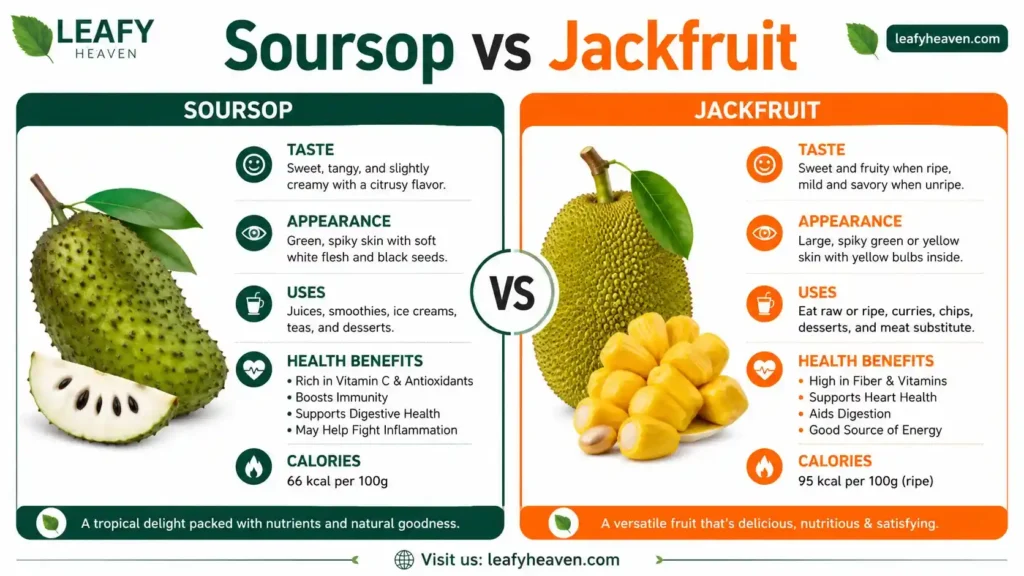
Key Takeaway — Soursop Jackfruit Comparison:
Soursop vs jackfruit comes down to purpose. Soursop is primarily valued for its medicinal leaves and refreshing fruit juice. Jackfruit is more widely used as a food ingredient — especially as a plant-based meat alternative when unripe. Both are nutritious tropical fruits, but they serve very different roles in health and cooking.
Frequently Asked Questions (FAQs)
Soursop leaves are known for their anti-inflammatory, antioxidant, and calming properties. They may help reduce pain, support better sleep, aid digestion, and promote healthy skin.
Rinse fresh or dried soursop leaves, boil them in water for 15–20 minutes, let them cool, strain, and enjoy. You can add honey or lemon for taste.
Yes. You can make a poultice by boiling and mashing the leaves, then applying them to rashes, insect bites, or sore joints for soothing relief.
Overuse may cause low blood pressure or nausea. Pregnant or breastfeeding women and those with low blood pressure should avoid using them without medical advice.
Yes, soursop trees can grow in containers and thrive in warm, humid climates. Make sure they get full sunlight and well-draining soil for healthy growth.
It’s best to drink one or two cups per day. Avoid excessive use and always check with your healthcare provider if you’re taking medications.
Not for everyone. People with low blood pressure, pregnant women, or those under certain medications should avoid it or consult a doctor first.
Some traditional remedies use soursop leaves for cancer support, but there’s not enough scientific evidence to confirm this. Always seek medical advice for proper treatment.
Yes, soursop may support healthy blood pressure levels. Its natural potassium content helps relax blood vessels, and its anti-inflammatory compounds reduce vascular stress. However, soursop should never replace prescribed blood pressure medication. People already on antihypertensive drugs must consult their doctor before use — combining both may cause blood pressure to drop too low.
Soursop can support weight loss as part of a balanced diet and active lifestyle. It is low in calories, contains dietary fiber that promotes fullness, and its antioxidants support metabolism. Soursop tea for weight loss works best as a complementary habit — not a standalone solution. No clinical evidence confirms soursop as a direct fat-burning agent.
Soursop leaf tea benefits for females include menstrual pain relief, reduced inflammation, improved sleep quality, and skin health support. Soursop benefits for women also extend to immune system strengthening and stress reduction. However, pregnant and breastfeeding women must completely avoid soursop leaf tea due to safety concerns.
The following groups should avoid soursop tea or consult a doctor first: Pregnant women — may stimulate uterine contractions Breastfeeding mothers — safety not established People with low blood pressure — soursop may lower BP further Those on medications — risk of drug interactions (antidepressants, BP drugs, diabetes medication) Long-term daily users — risk of neurological side effects due to annonacin Children — safe dosage not established What are the main benefits of soursop leaves?
How do I make soursop leaf tea at home?
Can I use soursop leaves on my skin?
Are there any side effects of using soursop leaves?
Can I grow a soursop tree at home?
How often can I drink soursop leaf tea?
Is soursop tea safe for everyone?
Does soursop help fight cancer?
Is Soursop Good for High Blood Pressure?
Does Soursop Help with Weight Loss?
What Are the Soursop Leaf Tea Benefits for Female?
Who Should Not Drink Soursop Tea?

Written by the LeafyHeaven Editorial Team
LeafyHeaven shares practical gardening tips and simple plant care guides to help you grow, nurture, and enjoy your plants with ease. Our goal is to make gardening feel natural, approachable, and rewarding for everyone.




[…] Read Also: 7 Amazing Uses of Soursop Leaves for Natural Healing […]
[…] “If you’re fascinated by the healing power of this fruit, you’ll love discovering the 7 Amazing Uses of Soursop Leaves for Natural Healing.” […]
[…] Read more: 7 Amazing Dried Soursop Leaves Benefits for Health […]
[…] more natural healing plants, explore the amazing uses of soursop leaves and their health […]