
Introduction
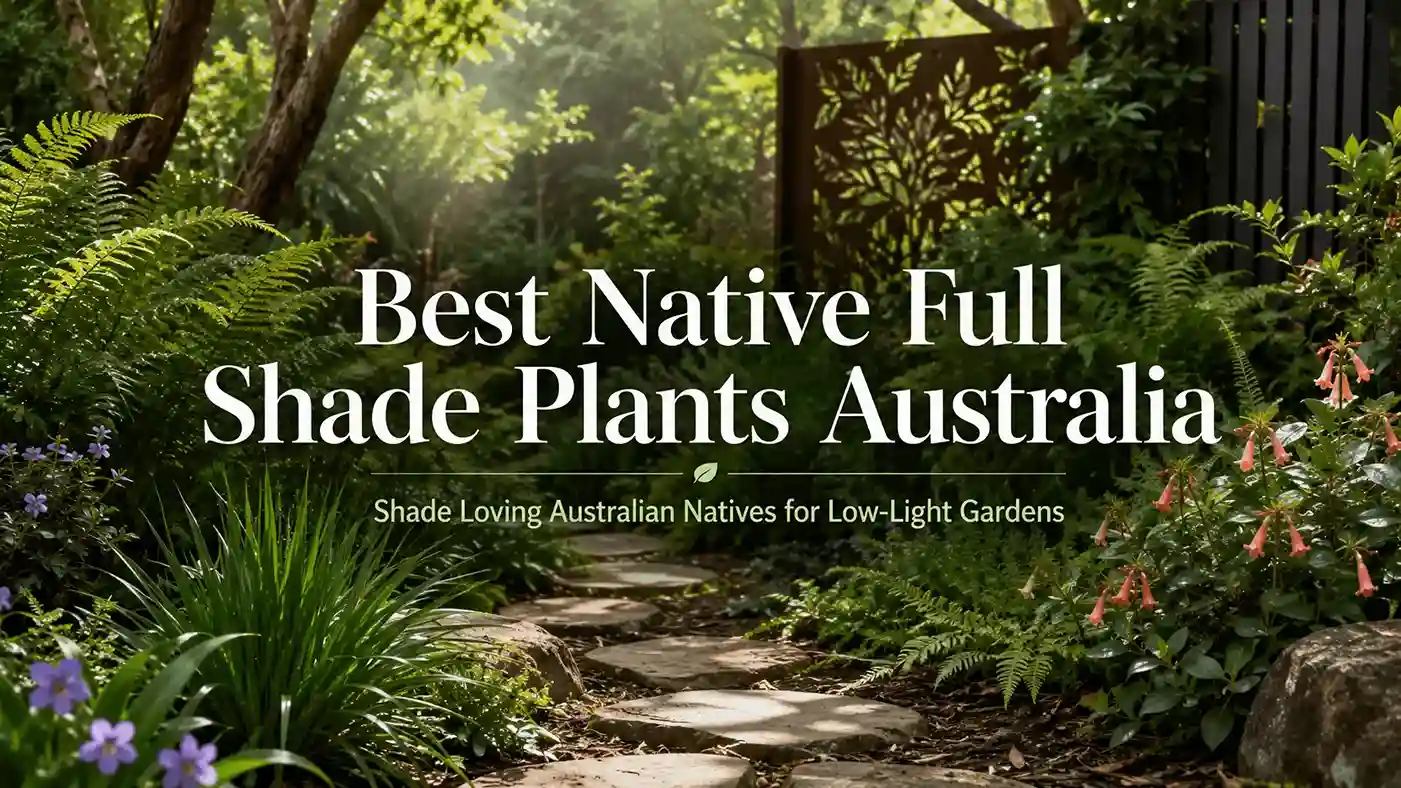
Native full shade plants Australia gardeners rely on are ideal for areas that receive little direct sunlight but still require healthy, attractive planting. Many australian native shade plants naturally grow beneath forest canopies, along moist gullies, and in sheltered bushland, making them highly adaptable to shaded residential gardens. Shade loving Australian natives offer practical benefits such as lower maintenance, reduced watering needs, erosion control, and support for birds and pollinators. Understanding the difference between part shade and full shade conditions is important because some native shade plants tolerate filtered sunlight while others thrive in deep shade. Choosing shade loving plants Australia homeowners can grow successfully also improves biodiversity and creates sustainable landscapes with minimal ongoing care.
Understanding Full Shade Conditions in Australian Gardens
What Counts as Full Shade?
Full shade refers to garden areas that receive very limited direct sunlight throughout the day. These spaces may still receive indirect light or filtered brightness, but they generally avoid strong afternoon sun.
Common full shade locations include:
- Areas beneath mature trees
- South-facing walls and fences
- Covered patios and courtyards
- Narrow side gardens
- Spaces shaded by buildings
Deep shade differs from filtered shade. Deep shade receives almost no direct sunlight, while filtered shade allows dappled light through tree canopies. Many australian natives that like shade can tolerate filtered conditions more easily than extremely dark spaces.
Gardeners choosing native plants that grow in full shade should assess soil moisture, airflow, and nearby root competition before planting. Some australian native plants that grow in full shade perform best in moist, protected environments, while others adapt well to dry shade.
Challenges of Growing Plants in Full Shade
Growing full shade Australian natives can present several challenges if site conditions are not managed properly.
Key challenges include:
- Limited sunlight reduces flowering potential
- Damp soil may increase fungal disease risks
- Tree roots compete for nutrients and moisture
- Poor air circulation can affect plant health
- Slow soil drying increases overwatering problems
Despite these issues, carefully selected native full shade plants adapt effectively to difficult conditions and often require less maintenance than non-native species.
Why Choose Australian Native Shade Plants?
Australian native shade plants are naturally adapted to local climates and soil conditions. Many species evolved in shaded bushland environments and are highly resilient once established.
Benefits of growing native full shade plants include:
- Lower water requirements
- Better tolerance to Australian weather extremes
- Strong resistance to local pests and diseases
- Improved habitat for birds, bees, and insects
- Reduced fertilizer needs
Many australian natives that like shade also support sustainable landscaping practices by reducing irrigation demands and encouraging biodiversity in urban gardens. Many native shade plants naturally grow in the forest understory, where filtered light and protected conditions support shade-adapted species.
Best Native Full Shade Plants Australia for Different Garden Types
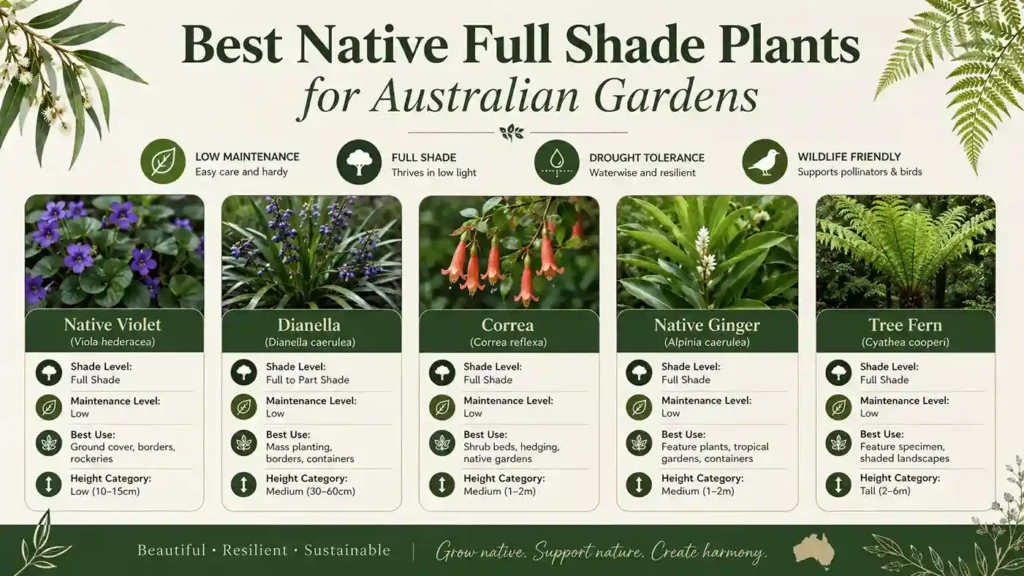
Small Native Full Shade Plants Australia
Small native full shade plants Australia gardeners prefer are ideal for compact courtyards, narrow pathways, balcony gardens, and shaded borders. These plants provide texture and greenery without overwhelming limited spaces.
Popular small australian native plants for shade include:
| Plant | Features | Best Use |
| Native Violet | Fast-spreading ground cover with purple flowers | Pathways and underplanting |
| Tasman Flax Lily | Strappy foliage with blue berries | Border planting |
| Kidney Weed | Dense mat-forming growth | Ground cover |
| Small Fern Species | Soft textured foliage | Moist shaded corners |
These shade loving native plants create layered planting schemes and help suppress weeds naturally.
Border planting ideas for shaded gardens:
- Use native violets along pathways
- Combine flax lilies with compact shrubs
- Plant ferns near retaining walls
- Add kidney weed beneath taller species
Low Maintenance Native Full Shade Plants Australia
Low maintenance native full shade plants Australia homeowners choose are typically drought-tolerant, resilient, and adaptable to varying soil conditions.
Recommended species include:
- Correa species
- Lomandra under shade
- Native ginger
- Dianella varieties
These shade tolerant Australian natives require minimal pruning and establish well in low-light areas.
Quick Summary
- Correas provide year-round structure
- Lomandra handles dry shade effectively
- Native ginger suits tropical-style gardens
- Dianellas offer attractive foliage and berries
Many shade tolerant plants survive with limited irrigation once established, making them practical choices for sustainable landscaping. Australian natives for shade also reduce the need for chemical fertilizers and intensive maintenance.
Best Flowering Shade Loving Australian Natives
Flowering shade loving Australian natives add colour and seasonal interest to darker areas of the garden. While flowering may be slightly reduced in deep shade, many species still bloom reliably in filtered light.
Recommended flowering species include:
| Plant | Flower Colour | Shade Tolerance |
| Native Fuchsia | Red and green tubular flowers | Part to full shade |
| Grevillea Varieties | Pink, orange, or red flowers | Filtered shade |
| Banksia Integrifolia | Cream flower spikes | Shade tolerant forms |
| Fan Flowers | Purple-blue blooms | Light shade |
Shade loving natives also attract nectar-feeding birds and beneficial pollinators. Australian shade loving plants such as grevilleas and correas are especially valuable for supporting local wildlife. Many compact shade loving native plants also work beautifully in smaller landscapes, especially when combined with other Australian natives for small gardens.
Native Shrubs for Shade Australia
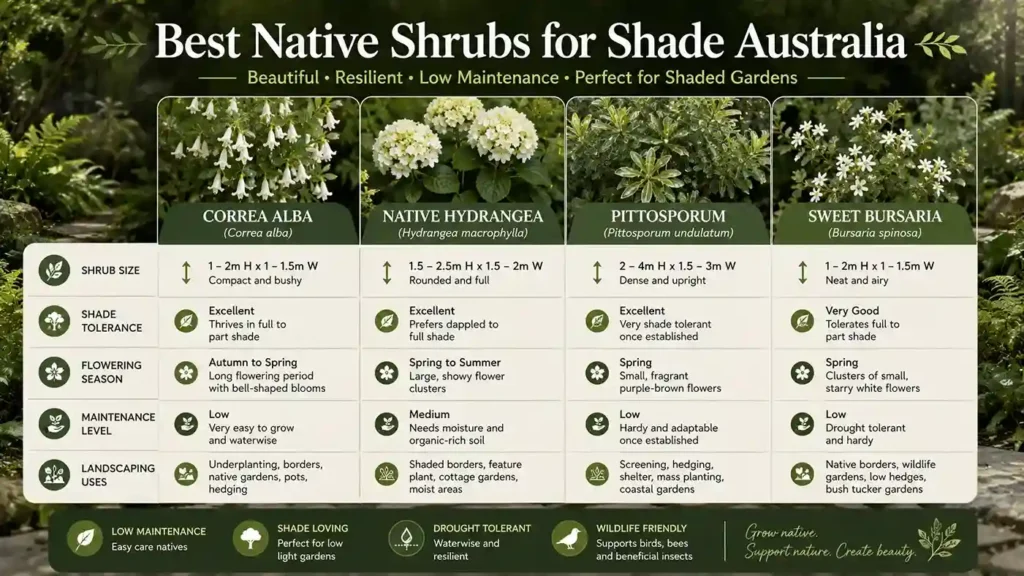
Best Shade Loving Shrubs for Privacy and Structure
Native shrubs for shade Australia gardens benefit from provide structure, screening, and year-round greenery.
Popular shade loving shrubs include:
- Correa alba
- Native hydrangea
- Sweet bursaria
- Pittosporum species
These native shrubs for shade work well for:
- Garden borders
- Privacy planting
- Wind protection
- Layered landscaping
Evergreen shrubs help shaded gardens maintain visual structure throughout the year. Small shrubs for shade are also useful beneath trees and alongside pathways.
Small Shrubs for Shade in Compact Gardens
Small shrubs for shade are suitable for courtyards, narrow side gardens, and containers.
Practical options include:
- Compact correas
- Dwarf pittosporum varieties
- Small native hydrangeas
These shade plants provide foliage texture without taking excessive space. Native shade plants grown in pots can also improve patios and undercover outdoor areas.
Australian Native Plants for Shade by Region
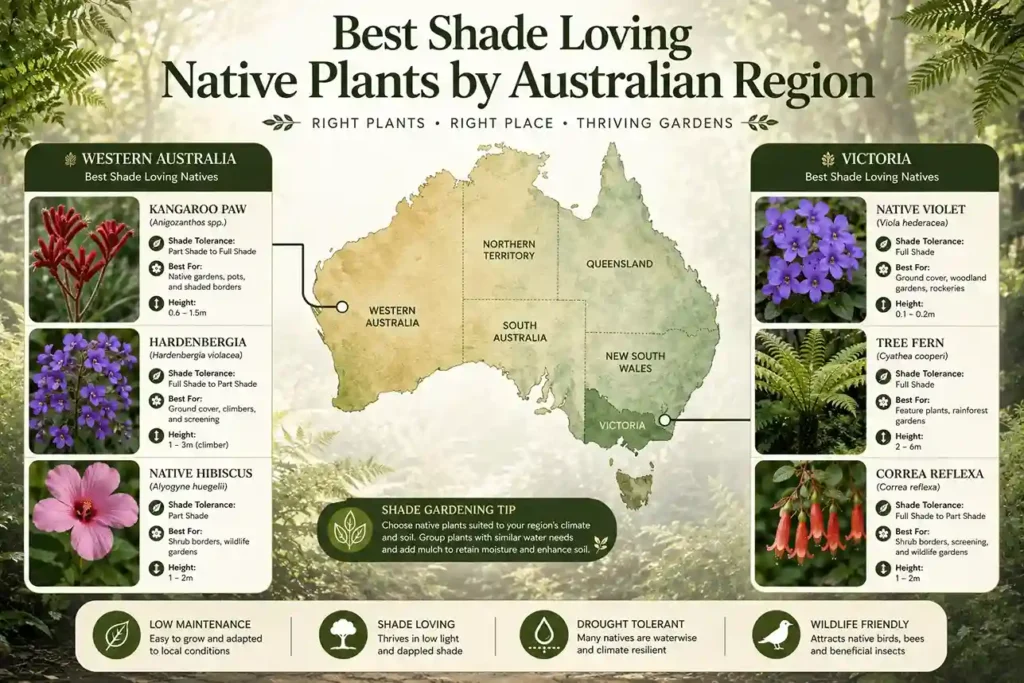
Shade Loving Native Plants Victoria
Shade loving native plants Victoria gardeners grow successfully are usually adapted to cooler temperatures and moist soils.
Recommended species include:
| Plant | Best Feature | Ideal Condition |
| Native Violet | Fast ground cover | Moist shade |
| Tree Fern | Dramatic foliage | Deep shade |
| Correa Reflexa | Bird-attracting flowers | Filtered shade |
Native plants for shade Melbourne gardeners prefer often perform best with organic mulch and consistent moisture. Shade loving plants Melbourne landscapes use commonly include ferns, violets, and compact correas.
Plants for shady areas Melbourne homeowners select should also tolerate cool winters and occasional frost.
Western Australian Native Plants for Shade
Western Australian native plants for shade often need to tolerate dry conditions and seasonal heat.
Recommended species include:
- Shade-tolerant kangaroo paw varieties
- Native hibiscus
- Hardenbergia
These Australian plants for shade perform well in filtered light and sheltered courtyards. Good drainage is especially important in Western Australian gardens where soil conditions may vary significantly.
Native Plants That Like Shade for Different Landscaping Uses
Native Ground Covers for Full Shade
Native ground covers are practical for erosion control, moisture retention, and weed suppression.
Recommended plants include:
- Kidney weed
- Native violet
- Running postman
Benefits of ground covers:
- Reduce soil erosion
- Maintain soil moisture
- Suppress weeds naturally
- Improve soil structure over time
These low-growing species spread effectively beneath shrubs and trees.
Shade Loving Plants for Pots and Indoor-Outdoor Spaces
Shade loving plants for pots are suitable for balconies, patios, and covered outdoor areas.
Best choices include:
- Ferns
- Compact dianellas
- Peaceful native foliage plants
Container-grown plants require:
- Good drainage
- Quality potting mix
- Moderate watering
- Protection from harsh winds
Shaded patios benefit from layered foliage combinations using different leaf textures and heights. Some australian native shade plants also adapt well to indoor-outdoor environments, particularly species commonly used as Australian native indoor plants.
Native Plants for Dry Shade Australia
Native plants for dry shade Australia gardeners need should tolerate root competition and low moisture.
Suitable species include:
- Lomandra
- Correa species
- Dianella varieties
- Native ginger in sheltered areas
These shade tolerant Australian natives survive well under mature trees where water availability is limited. Native plants that like shade and dry soil conditions are especially valuable in low-maintenance landscapes.
How to Grow and Care for Australian Native Shade Plants
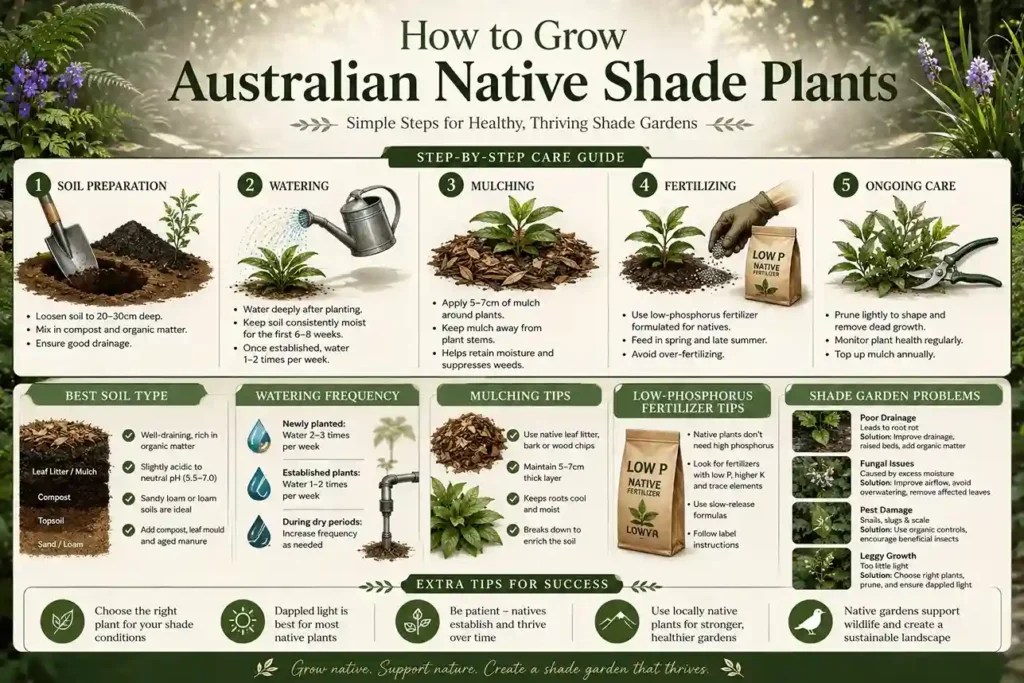
Soil Preparation for Shady Gardens
Healthy soil preparation improves the long-term success of shaded gardens.
Important soil improvement methods include:
- Adding compost or organic matter
- Improving drainage with coarse materials
- Using leaf mulch for moisture retention
- Avoiding compacted soil
Most native shade plants prefer free-draining soil with moderate organic content. For broader growing techniques, watering methods, and long-term garden maintenance, see our complete Gardening & Plant Care Guide for Thriving Plants.
Watering Requirements
Full shade affects evaporation rates and reduces soil drying speed.
Watering guidelines:
- Water deeply but less frequently
- Monitor soil moisture regularly
- Avoid constantly wet soil
- Reduce watering during cooler months
Overwatering is one of the most common problems in shaded gardens and can lead to root rot.
Fertilizing Native Shade Plants
Australian native plants generally require low-phosphorus fertilizers because excessive phosphorus may damage sensitive roots.
Best fertilizing practices include:
- Use native-specific fertilizers
- Apply mulch annually
- Avoid excessive feeding
- Fertilize lightly during active growth periods
Mulching also improves moisture retention and suppresses weed growth.
Common Problems in Full Shade Gardens
Common issues in full shade gardens include:
| Problem | Cause | Solution |
| Fungal Disease | Excess moisture | Improve airflow |
| Poor Flowering | Limited light | Move to filtered shade |
| Root Rot | Overwatering | Improve drainage |
| Weak Growth | Nutrient competition | Add compost |
Regular pruning and proper spacing improve airflow and reduce disease risks.
Best Companion Planting Ideas for Shade Loving Native Plants
Combining Ground Covers, Shrubs, and Ferns
Combining different plant layers creates balanced and visually appealing shaded gardens.
Effective combinations include:
- Native violet beneath correas
- Tree ferns with dianellas
- Kidney weed surrounding shrubs
- Lomandra mixed with flowering natives
Layering also improves biodiversity and habitat value.
Creating Layered Native Shade Gardens
Layered gardens use plants of different heights to create natural structure.
Typical planting layers include:
- Ground covers
- Medium foliage plants
- Shrubs
- Tall feature plants such as tree ferns
This approach maximizes space and creates more natural-looking landscapes.
Wildlife-Friendly Shade Gardens
Wildlife-friendly gardens support birds, bees, and beneficial insects.
Helpful planting choices include:
- Grevilleas for nectar-feeding birds
- Dense shrubs for shelter
- Flowering natives for pollinators
- Ground covers for insect habitat
Native shade gardens contribute significantly to urban biodiversity and ecological sustainability.
Quick Comparison Table of Popular Native Full Shade Plants Australia
| Plant Name | Height | Shade Level | Maintenance | Best Use |
| Native Violet | Low | Full Shade | Low | Ground Cover |
| Correa Alba | Medium | Part-Full Shade | Low | Shrub Borders |
| Dianella | Medium | Shade-Tolerant | Low | Landscaping |
| Native Ginger | Medium | Full Shade | Moderate | Tropical Gardens |
| Tree Fern | Tall | Deep Shade | Moderate | Feature Plant |
Conclusion
Native full shade plants Australia gardeners use successfully provide practical, sustainable solutions for difficult low-light spaces. From compact ground covers to structural shrubs and feature ferns, australian native plants for shade offer excellent adaptability, low maintenance requirements, and strong environmental benefits. Selecting region-appropriate species is important because climate, soil, and moisture conditions vary significantly across Australia. Shade loving native plants Australia landscapes include also help improve biodiversity by supporting birds, bees, and beneficial insects. With proper plant selection and basic soil preparation, shaded gardens can become attractive, resilient, and environmentally sustainable outdoor spaces.
FAQs
What are the best native full shade plants in Australia?
Some of the best native full shade plants in Australia include native violet, tree ferns, correa species, dianellas, native ginger, and Tasman flax lily. These plants tolerate low-light conditions while providing attractive foliage and reliable growth.
Which Australian native plants grow well in deep shade?
Australian native plants that grow well in deep shade include tree ferns, kidney weed, native violet, and certain fern species. These plants naturally occur beneath forest canopies and adapt well to limited sunlight.
Are there low maintenance native plants for shady gardens?
Yes. Low maintenance native plants for shady gardens include lomandra, dianella, correa species, and native ginger. These plants generally require minimal pruning, moderate watering, and little fertilization once established.
What native shrubs grow best in shaded areas?
Correa alba, native hydrangea, pittosporum species, and sweet bursaria are among the best native shrubs for shaded areas. They provide structure, screening, and evergreen foliage for low-light gardens.
Which native plants are suitable for shaded gardens in Melbourne?
Native violet, tree fern, and Correa reflexa are excellent choices for shaded gardens in Melbourne because they tolerate cooler temperatures and moist soil conditions commonly found in Victoria.
Can Australian native plants survive under large trees?
Many Australian native plants survive successfully under large trees if they are adapted to dry shade and root competition. Lomandra, dianella, kidney weed, and correas are commonly used beneath mature trees.
What is the difference between part shade and full shade for native plants?
Part shade usually means a plant receives several hours of filtered sunlight daily, while full shade refers to areas with very little direct sunlight. Understanding this difference helps gardeners choose suitable native plants for long-term success.

Written by the LeafyHeaven Editorial Team
LeafyHeaven shares practical gardening tips and simple plant care guides to help you grow, nurture, and enjoy your plants with ease. Our goal is to make gardening feel natural, approachable, and rewarding for everyone.