
Introduction
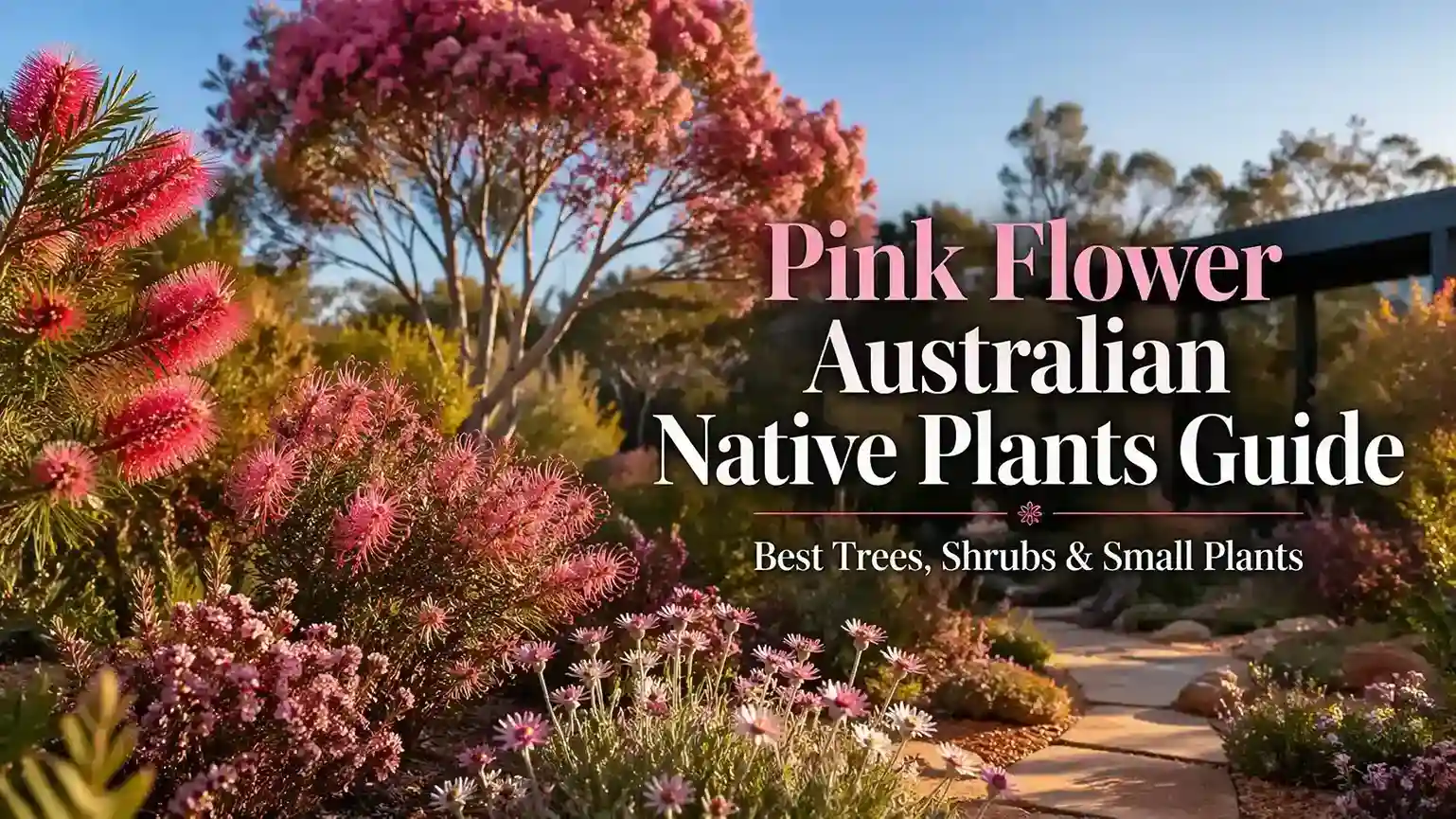
Pink flower Australian native plants are among the most versatile and visually appealing choices for modern gardens. From soft pastel blooms to vibrant magenta shades, these plants bring natural color while staying well-adapted to local conditions. Many australian native pink flowers thrive in tough environments, making them a reliable option for both beginners and experienced gardeners.
One of the main reasons pink native flowers Australia are so popular is their low maintenance nature. These plants are naturally suited to dry climates, requiring less water and care compared to non-native species. Their drought tolerance, resilience, and ability to grow in poor soils make them highly practical. At the same time, each pink australian flower adds strong aesthetic value, enhancing landscapes with seasonal color, texture, and wildlife attraction.
What Are Pink Flower Australian Native Plants?
Definition & Characteristics
Pink flower Australian native plants are species that naturally occur within Australia’s diverse ecosystems and produce blooms in shades of pink. These plants have evolved over time to survive in local conditions, making them highly resilient and efficient in resource use.
Key characteristics include:
- Native to Australian ecosystems such as coastal regions, bushlands, and arid zones
- Adapted to harsh climates, including heat, drought, and low-nutrient soils
- Wide color range, from soft blush pink to vibrant deep magenta tones
- Naturally efficient growth habits suited to local rainfall and soil conditions
These traits make them reliable and sustainable choices for landscaping and home gardens.
Why Choose Native Pink Flowers
Choosing native pink flowering plants offers both practical and environmental benefits. They are specifically suited to Australian conditions, which reduces the need for intensive care.
Main advantages:
- Low water requirements, ideal for drought-prone areas
- Attract birds and pollinators like bees, butterflies, and nectar-feeding species
- Perfectly suited for Australian gardens, requiring minimal soil modification
- Better resistance to local pests and environmental stress
Overall, pink flower Australian native plants combine beauty with functionality, making them a smart and sustainable gardening choice.
👉 Understanding the basics of plant care can further improve growth and long-term performance in your garden.
Types of Pink Flower Australian Native Plants
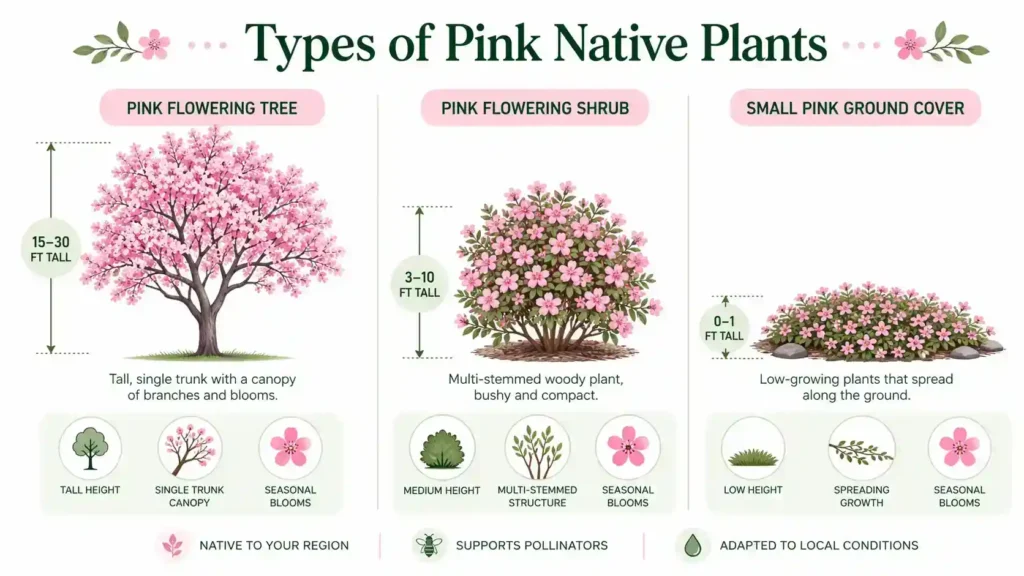
Pink flower Australian native plants are available in multiple forms, including trees, shrubs, and compact ground covers. Each type serves a different purpose in landscaping while maintaining the same resilience and adaptability.
Pink Flowering Trees Australia
A pink flowering tree Australia option is ideal for creating height, shade, and a strong visual focal point in gardens. These trees are known for their seasonal blooms and ability to thrive in Australian climates.
Common features:
- Medium to large growth size
- Suitable as feature or shade trees
- Produce vibrant blooms that attract wildlife
Examples include:
- Callistemon (Bottlebrush) – A popular tree with pink flowers Australia, known for its brush-like blooms and bird-attracting nectar
- Melaleuca – Hardy and adaptable, often used in larger landscapes with soft pink flowering varieties
- Hibiscus – Some native species produce striking pink blooms, adding a tropical look
These pink flowering trees Australia are excellent for adding vertical interest and long-term structure to outdoor spaces.
Pink Flowering Shrubs Australia
Pink flowering shrubs Australia are one of the most versatile plant types, commonly used for hedging, borders, and garden fillers. A well-chosen shrub with pink flowers can provide continuous color and dense foliage.
Key benefits:
- Easy to shape and maintain
- Suitable for hedges and screening
- Provide long flowering periods
Examples include:
- Grevillea – A highly popular pink flowering bush, known for its unique flower shapes and bird attraction
- Correa – Compact and shade-tolerant, with soft pink bell-shaped flowers
- Eremophila – Drought-tolerant shrubs producing vibrant pink blooms
These shrubs are ideal for adding structure, privacy, and seasonal color to gardens.
Small Pink Flowering Plants & Ground Covers
For low-growing areas, plants with small pink flowers are perfect for filling gaps, edging pathways, or covering ground. These species often produce clusters of tiny pink flowers, creating a soft, carpet-like effect.
Typical features:
- Compact growth habit
- Suitable for borders, rock gardens, and containers
- Low maintenance and drought-resistant
Examples include:
- Thryptomene – A delicate plant with small pink flowers, often used in decorative garden beds
- Phebalium – Produces clusters of small blooms and works well in low-growing landscapes
These plants are excellent for adding fine detail and soft color layers to any garden design.
👉 You can also explore other colorful native plant options to expand your garden design.
Popular Pink Native Flowers in Australia (Top Picks)
Several Australian native plants stand out for their distinctive pink blooms, reliability, and versatility in gardens. These top picks are widely used for landscaping, cut flowers, and ornamental value.
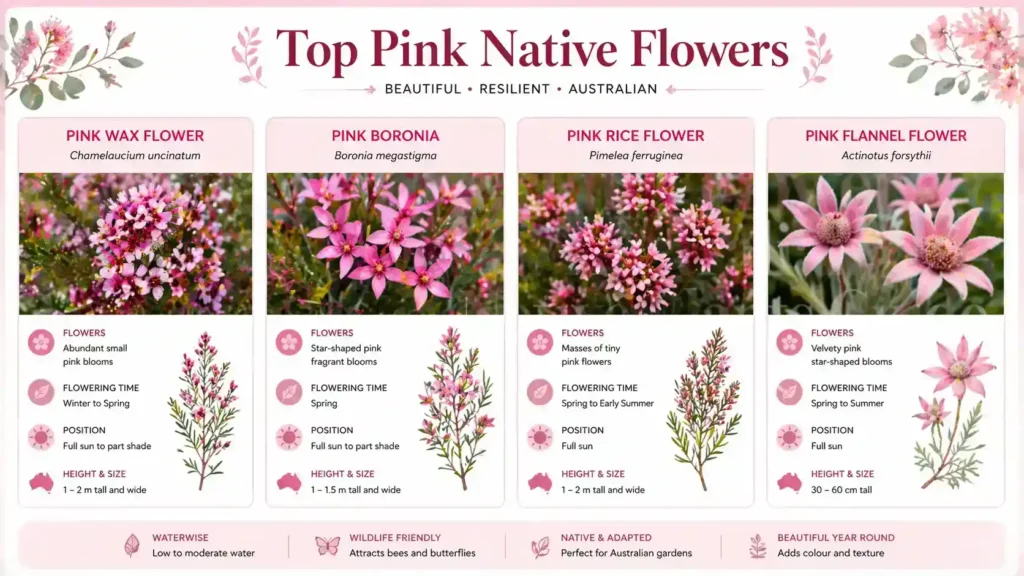
- Pink Wax Flower (Chamelaucium)
- Features: Small, star-shaped blooms with a waxy texture and long flowering season
- Uses: Popular in floral arrangements and garden borders
- Benefits: Drought-tolerant, low maintenance, and suitable for sandy soils
- Pink Boronia
- Features: Fragrant, soft pink flowers with delicate petals
- Uses: Ideal for feature planting and sensory gardens
- Benefits: Attractive scent, compact growth, and strong visual appeal
- Pink Rice Flower Plant (Ozothamnus)
- Features: Clusters of tiny pink flowers resembling grains of rice
- Uses: Common in bouquets and decorative landscaping
- Benefits: Long-lasting blooms, lightweight structure, and easy to grow
- Pink Flannel Flower (Actinotus)
- Features: Soft, velvety petals with a subtle pink tone and unique texture
- Uses: Feature plant in native gardens and natural-style landscapes
- Benefits: Distinctive appearance, attracts pollinators, and adds texture contrast
These popular pink native flowers combine beauty, practicality, and adaptability, making them excellent choices for both home gardens and professional landscaping.
How to Identify Pink Flower Australian Native Plants
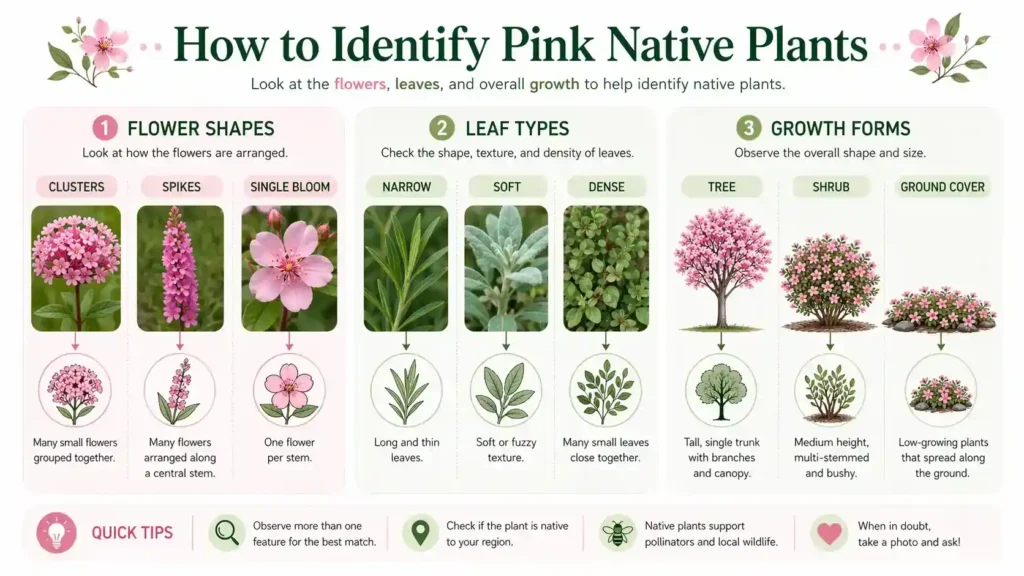
Accurate identification of pink flower Australian native plants is essential for proper care, selection, and landscaping use. Identification is based on visible traits such as flower structure, leaf form, and overall growth habit.
Flower Shape & Color Patterns
Flower appearance is the first and most noticeable identification feature. Different species display unique shapes, sizes, and color variations.
Key patterns to observe:
- Pink and white flower combinations, often seen in layered or bi-color petals
- Clusters of small pink flowers, forming dense groups or sprays
- Individual blooms vs grouped flowers (spikes, bottlebrush forms, or rounded heads)
- Color intensity ranging from pale blush to deep magenta
These variations help distinguish between species and narrow down plant types quickly.
Leaf Type & Growth Pattern
Leaf structure and plant form provide strong clues for classification. Observing how a plant grows helps determine whether it is a tree, shrub, or ground cover.
Main distinctions:
- Shrubs: Medium height, bushy structure, multiple stems
- Trees: Taller growth, defined trunk, wider canopy
- Ground covers: Low-growing, spreading habit close to the soil
Leaf characteristics may include:
- Narrow or needle-like leaves (common in dry climates)
- Soft, rounded leaves in some flowering shrubs
- Dense foliage vs open branching patterns
Combining leaf type with growth structure improves identification accuracy.
Identification Keywords to Use in Content
Using the right search terms can simplify the process of identifying plants. These keywords help match visual traits with known species.
Common identification phrases:
- pink flower identification
- pink flowering shrub identification australia
- pink flowering tree identification australia
Applying these terms when researching or comparing plants can lead to faster and more precise identification results.
Growing Pink Flower Australian Native Plants
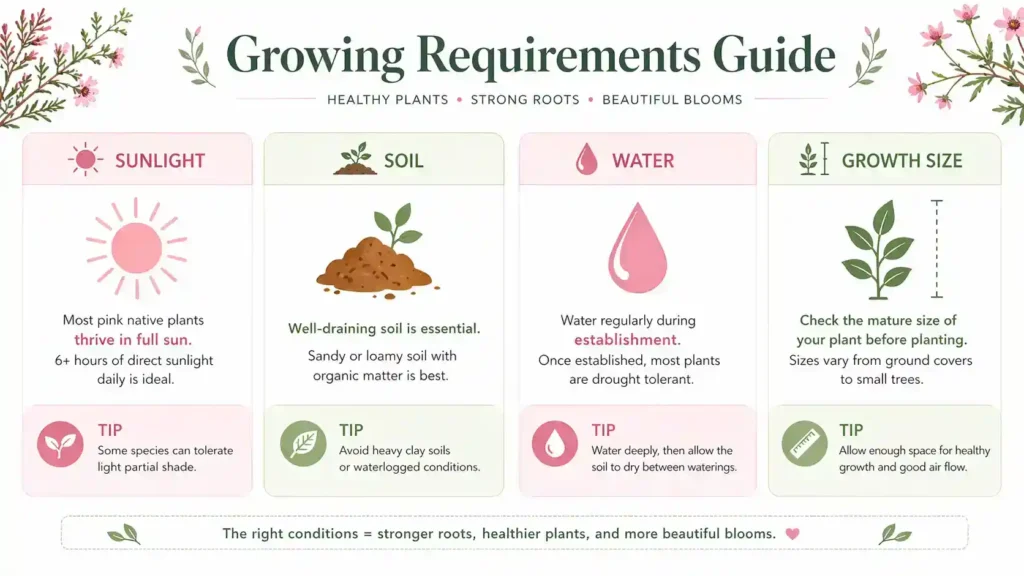
Growing pink flower Australian native plants is straightforward when their natural habitat conditions are replicated. These plants are adapted to Australian climates, making them efficient, resilient, and suitable for low-maintenance gardening.
Soil Requirements
Soil quality plays a critical role in healthy growth. Most native species prefer conditions that mimic their natural environment.
Key requirements:
- Well-drained sandy soil is ideal for preventing root rot
- Low to moderate nutrient levels—rich soils are usually unnecessary
- Slightly acidic to neutral pH works best for most species
- Avoid heavy clay unless improved with drainage materials
Proper drainage ensures roots remain healthy and supports consistent flowering.
Sunlight Needs
Light exposure directly affects flowering performance and plant health. Different species have varying sunlight preferences.
General guidelines:
- Full sun (6–8 hours daily) promotes maximum flowering and strong growth
- Partial shade suits certain shrubs and understory plants
- Reduced sunlight may lead to slower growth and fewer blooms
Choosing the correct light conditions ensures better plant establishment and long-term performance.
Watering & Climate Adaptation
Australian native plants are naturally adapted to dry conditions, making them highly water-efficient.
Important points:
- Drought-tolerant nature reduces the need for frequent watering
- Water regularly during the initial establishment phase
- Once established, most plants require minimal irrigation
- Suitable for hot, dry, and coastal climates
Overwatering should be avoided, as these plants are better adapted to dry conditions than excessive moisture.
Growth Rate & Size
Growth habits vary depending on the plant type, making it important to choose the right species for your space.
Typical growth patterns:
- Small shrubs with pink flowers grow compactly and are ideal for borders and small gardens
- Medium-sized shrubs provide structure and can be used for hedging
- Pink trees Australia options grow larger, offering shade and vertical impact
Understanding growth rate and final size helps in proper spacing, placement, and long-term garden planning.
Care & Maintenance Guide
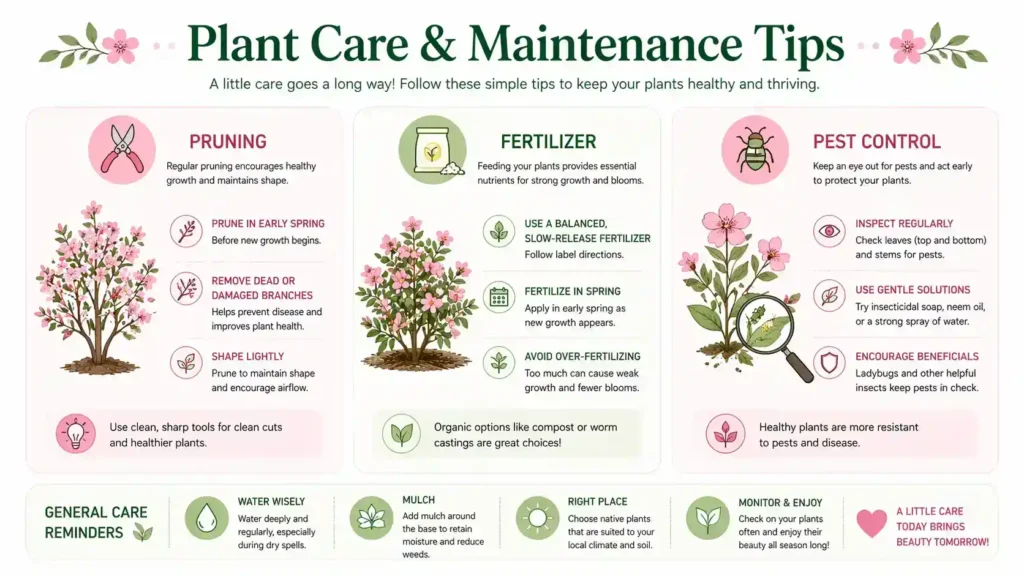
Proper care ensures pink flower Australian native plants remain healthy, maintain their shape, and produce consistent blooms. These plants are generally low maintenance, but basic upkeep improves performance and longevity.
Pruning Techniques
Pruning helps maintain plant structure and encourages new growth and flowering.
Best practices:
- Light pruning after flowering to promote fresh blooms
- Remove dead, damaged, or weak branches regularly
- Shape shrubs to maintain compact and dense growth
- Avoid heavy cutting into old wood, as some natives may not recover well
Consistent, gentle pruning keeps plants healthy without stressing them.
Fertilization Tips
Australian native plants typically require minimal fertilization due to their adaptation to low-nutrient soils.
Key guidelines:
- Use low-phosphorus fertilizers designed for native plants
- Apply fertilizer sparingly, usually during the growing season
- Avoid over-fertilizing, which can damage roots and reduce flowering
- Organic options like compost can improve soil condition without excess nutrients
Balanced feeding supports growth without disrupting natural resilience.
Pest & Disease Issues
While generally hardy, native plants can occasionally face pest or disease problems.
Common concerns:
- Leaf yellowing due to poor drainage or overwatering
- Insect pests such as scale or aphids in some species
- Fungal issues in overly влаж conditions
Important note:
- Be cautious of weeds with pink flowers Australia, which may look similar to native species but can compete for nutrients and space
Regular monitoring, proper watering, and good airflow help prevent most issues and keep plants in optimal condition.
Landscaping Uses of Pink Native Flowers
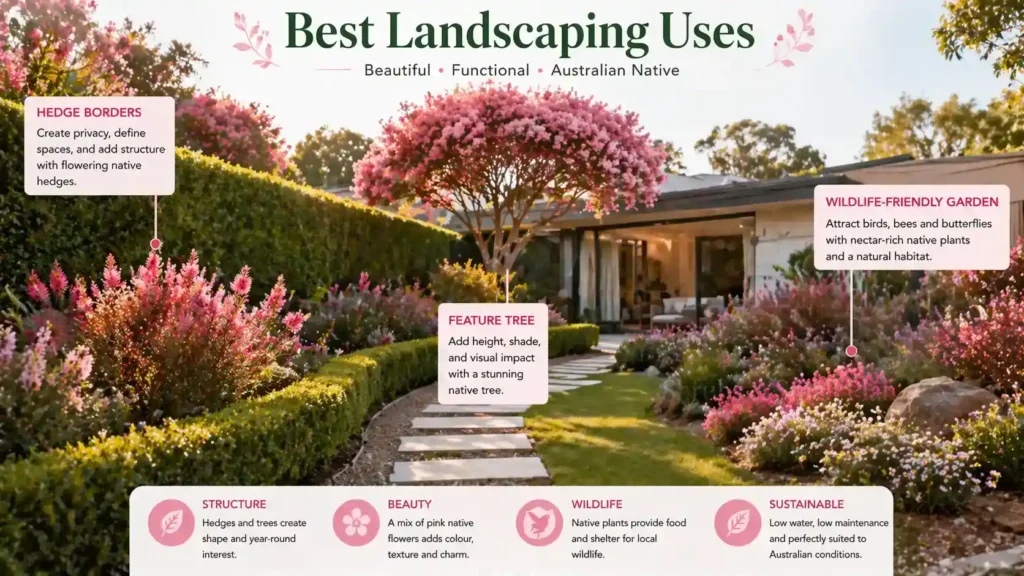
Pink flower Australian native plants are widely used in landscaping due to their versatility, color impact, and low maintenance needs. They can be integrated into different garden styles, from structured layouts to natural, wildlife-friendly designs.
Garden Borders & Hedges
Pink flowering bushes and shrubs are ideal for defining spaces and creating visual structure in gardens.
Common uses:
- Border planting along pathways and garden edges
- Dense hedges for privacy and wind protection
- Layering with other native plants for a natural look
These shrubs provide continuous color, texture, and a clean, organized appearance.
Feature Trees
A pink flower tree Australia selection works well as a focal point in outdoor spaces. These trees add height and seasonal visual interest.
Key benefits:
- Create a strong centerpiece in lawns or open areas
- Provide shade and structure
- Enhance overall landscape design with vibrant blooms
Feature trees are best placed where their flowering display can stand out.
Wildlife Gardens
Pink native flowers play an important role in supporting local ecosystems by attracting wildlife.
Main advantages:
- Attract birds such as nectar-feeding species
- Support pollinators like bees and butterflies
- Contribute to a balanced and healthy garden environment
Using native plants helps create a sustainable garden that benefits both aesthetics and biodiversity.
Benefits of Growing Pink Australian Native Flowers
Growing pink Australian native flowers offers multiple advantages, combining environmental benefits with practical gardening ease and visual appeal.
- Eco-friendly
These plants are naturally adapted to local conditions, reducing the need for excessive water, fertilizers, and chemical treatments. This makes them a sustainable choice for environmentally conscious gardening. - Low maintenance
Pink native flowers require minimal care once established. Their ability to thrive in poor soils and dry climates reduces the need for frequent watering, pruning, and feeding. - Supports biodiversity
Native plants play a key role in maintaining local ecosystems. They attract birds, bees, and other pollinators, helping to support a balanced and healthy environment. - Aesthetic appeal
With shades ranging from soft pink to vibrant magenta, these plants enhance garden design. They add color, texture, and seasonal interest, making outdoor spaces more attractive and lively.👉 For consistent garden color, you can also consider plants that bloom throughout the year.
Common Problems & Solutions
Even though pink flower Australian native plants are generally hardy, some common issues can affect their growth and appearance. Identifying the cause early helps maintain plant health and flowering performance.
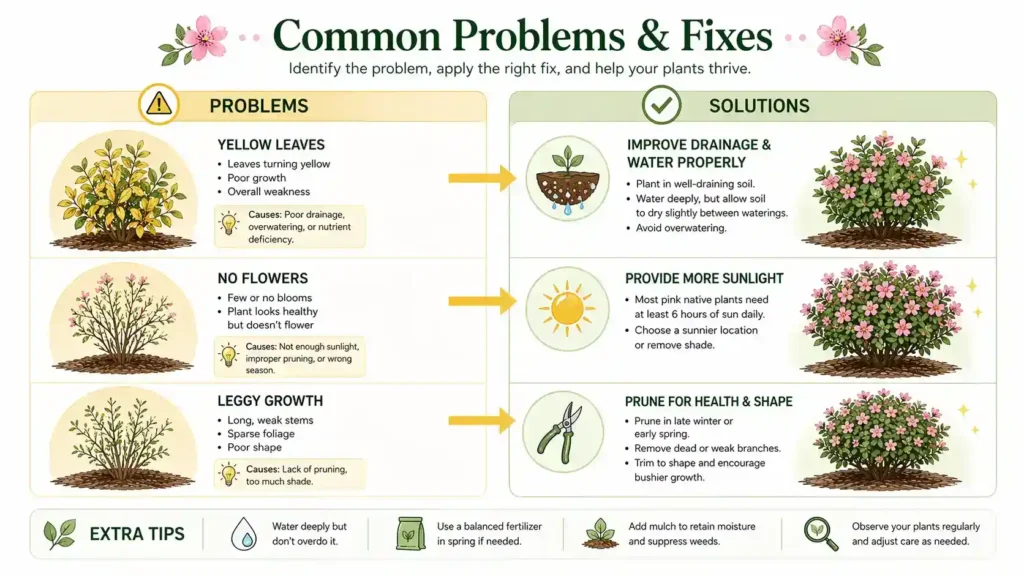
Poor Flowering
Lack of blooms is usually linked to environmental or care-related factors.
Possible causes:
- Insufficient sunlight exposure
- Over-fertilization, especially high phosphorus levels
- Incorrect pruning timing (cutting before flowering)
- Poor soil drainage affecting root health
Solutions:
- Ensure plants receive adequate sunlight (preferably full sun)
- Use low-phosphorus fertilizers designed for native plants
- Prune only after the flowering period
- Improve soil drainage to support healthy roots
Yellow Leaves
Yellowing foliage is a common sign of stress and should be addressed promptly.
Possible causes:
- Overwatering or waterlogged soil
- Nutrient imbalance
- Poor drainage conditions
- Environmental stress such as extreme heat or cold
Solutions:
- Reduce watering frequency and allow soil to dry between cycles
- Ensure soil is well-drained and not compacted
- Apply appropriate native plant fertilizer if needed
- Monitor environmental conditions and provide protection if required
Misidentification Issues
Confusion between native plants and similar-looking species can lead to improper care.
Common problems:
- Mixing up native plants with non-native species
- Confusing ornamental plants with weeds
- Incorrect care practices due to wrong identification
Solutions:
- Use accurate pink flower identification methods based on flower, leaf, and growth patterns
- Compare with reliable references using pink flowering shrub identification australia or pink flowering tree identification australia
- Verify plant type before applying care routines
Correct identification ensures the right maintenance approach and prevents avoidable plant health issues.
Conclusion
Pink flower Australian native plants offer a perfect balance of beauty, resilience, and practicality. From flowering trees and versatile shrubs to compact ground covers, these plants provide a wide range of options for different garden styles. Popular choices like wax flowers, boronia, rice flower, and flannel flower highlight the diversity and visual appeal available in native species.
Choosing native plants not only simplifies maintenance but also supports local ecosystems and sustainable gardening practices. Their natural adaptability makes them a reliable option for long-term growth and consistent flowering.
Choose the right pink flower Australian native plant for your garden and enjoy long-lasting beauty with minimal care.
FAQs
What is the most popular pink flower Australian native plant?
One of the most popular options is the pink wax flower, widely used in gardens and floral arrangements due to its long-lasting blooms and low maintenance. Other favorites include pink boronia and pink flannel flower, known for their fragrance and unique textures.
Which Australian native trees have pink flowers?
Common pink flowering trees Australia options include: Callistemon (Bottlebrush) Melaleuca Native Hibiscus varieties These trees provide height, shade, and seasonal color while attracting birds and pollinators.
Are pink native flowers easy to grow?
Yes, most pink native flowers Australia are easy to grow because they are naturally adapted to local climates. They require: Minimal watering once established Well-drained soil Basic maintenance This makes them suitable for both beginners and experienced gardeners.
How do I identify a pink flowering shrub in Australia?
To identify a pink flowering shrub identification Australia, observe: Flower structure (clusters, spikes, or single blooms) Leaf shape and density Growth habit (compact shrub vs spreading plant) Using reliable plant references and matching these features helps ensure accurate identification.
Can pink native flowers survive drought conditions?
Yes, most pink flower Australian native plants are drought-tolerant. Once established, they can survive with minimal water due to their natural adaptation to dry environments. Proper soil drainage further improves their resilience.
What are some small pink native flowers for gardens?
Popular options include: Thryptomene Phebalium Pink rice flower plant These plants produce small pink flowers and are ideal for borders, containers, and ground covers.
Do pink native flowers attract wildlife?
Yes, many pink native plants attract: Birds (especially nectar feeders) Bees and butterflies Other beneficial pollinators This makes them ideal for creating wildlife-friendly gardens.
Can I grow pink native flowers in pots?
Yes, many species such as small shrubs and compact varieties grow well in containers. Ensure: Well-drained potting mix Adequate sunlight Controlled watering Container growing is ideal for patios, balconies, and small spaces.
Why are my pink native plants not flowering properly?
Common reasons include: Lack of sunlight Over-fertilization Incorrect pruning timing Adjusting these factors usually restores healthy flowering.

Written by the LeafyHeaven Editorial Team
LeafyHeaven shares practical gardening tips and simple plant care guides to help you grow, nurture, and enjoy your plants with ease. Our goal is to make gardening feel natural, approachable, and rewarding for everyone.