
Introduction
Bald Cypress Bonsai (Taxodium distichum), often called Swamp Cypress Bonsai, is one of the most distinctive outdoor bonsai species. It is admired for its powerful buttressed trunk, soft feathery foliage, rapid growth rate, and striking seasonal color changes that bring year-round visual interest.
What makes Bald Cypress Bonsai unique is its natural adaptation to wetland environments. Unlike many bonsai trees that prefer well-drained conditions, this species thrives in consistently moist soil and can tolerate far more water than most outdoor bonsai. Its ability to develop massive trunk bases and dramatic root flare also creates an aged appearance much faster than many other bonsai species.
Among bonsai enthusiasts, Bald Cypress Bonsai is valued for its beginner-friendly nature and exceptional styling potential. It responds well to pruning, grows vigorously during the growing season, and adapts to multiple bonsai forms, including the highly sought-after Bald Cypress forest bonsai and flat-top styles inspired by mature swamp trees.
In nature, Taxodium distichum is native to the southeastern United States, where it grows in swamps, floodplains, riverbanks, and wetland ecosystems. These natural conditions influence many aspects of its bonsai care, including watering practices, soil management, and seasonal maintenance.
Successful cultivation requires full sun exposure, consistent moisture, regular feeding, and proper winter dormancy. With appropriate pruning, styling, and long-term care, Bald Cypress Bonsai can develop impressive trunk character, refined branch structure, and the majestic appearance that has made this species one of the most respected outdoor bonsai trees in the world.
What Is a Bald Cypress Bonsai?
Bald Cypress Bonsai is a miniature version of the North American Bald Cypress tree (Taxodium distichum), a deciduous conifer that naturally grows in swamps, wetlands, and floodplain environments. It is widely admired in bonsai cultivation for its fast growth, distinctive trunk development, and ability to recreate the appearance of ancient swamp trees in a compact form.
Unlike many conifers that remain evergreen throughout the year, Bald Cypress Bonsai sheds its foliage each autumn. This unique characteristic gives it seasonal interest and makes it stand out among traditional bonsai species.
Scientific Classification
Bald Cypress Bonsai belongs to a group of coniferous trees that have adapted to wet environments and long lifespans.
| Classification | Details |
| Botanical Name | Taxodium distichum |
| Family | Cupressaceae |
| Genus | Taxodium |
| Plant Type | Deciduous Conifer |
| Native Region | North America |
Common Names
- Bald Cypress
- Swamp Cypress
- Taxodium distichum Bonsai
- Taxodium Distichum Bonsai
- Swamp Cypress Bonsai
Why Is It Called a Bald Cypress?
The name “Bald Cypress” comes from its unusual seasonal behavior. Unlike most cypress species, it loses all of its foliage during autumn and remains bare throughout winter.
This leaf-shedding habit gives the tree a “bald” appearance after dormancy begins. New soft green foliage emerges again during spring growth.
As a deciduous conifer, Bald Cypress combines characteristics of both deciduous trees and conifers. It produces needle-like foliage but does not remain evergreen year-round.
This feature distinguishes it from many other cypress species that retain their foliage throughout every season.
Natural Habitat and Origin
Bald Cypress is native to the southeastern United States and is one of the most recognizable trees found in wetland ecosystems.
Its natural range extends across states including Florida, Louisiana, Mississippi, Georgia, Alabama, Texas, and the Carolinas.
The species commonly grows in:
- Swamps
- Floodplains
- Riverbanks
- Marshes
- Wetland forests
These environments experience frequent flooding and consistently moist soil conditions. As a result, Bald Cypress has evolved exceptional tolerance to water and humidity.
Understanding its native habitat helps bonsai growers provide growing conditions that closely match the tree’s natural environment.
What Does a Bald Cypress Tree Look Like?
Bald Cypress has a distinctive appearance that makes identification relatively easy.
Its foliage consists of soft, feather-like needles arranged in flat sprays along slender branches. During the growing season, the foliage displays a fresh green color before turning attractive shades of orange, copper, and reddish-brown in fall.
The trunk often develops a fluted or buttressed base, especially as the tree matures. This broad trunk flare is one of the species’ most desirable bonsai characteristics.
Bald cypress bark is fibrous, reddish-brown to gray-brown, and becomes increasingly textured with age. Mature trees develop rugged bark patterns that enhance their aged appearance.
The tree produces small rounded cones that contain seeds. These cones mature gradually and add another identifying feature to the species.
Branches typically grow in horizontal layers, creating the graceful silhouette often associated with mature swamp cypress trees.
Quick Facts About Bald Cypress Bonsai
| Feature | Bald Cypress Bonsai |
| Scientific Name | Taxodium distichum |
| Bonsai Type | Outdoor Bonsai |
| Growth Rate | Fast |
| Lifespan | Very Long |
| Foliage Type | Deciduous Conifer |
| Difficulty Level | Beginner-Friendly |
Why Is Bald Cypress Bonsai Popular Among Bonsai Growers?
Bald Cypress Bonsai is highly valued because it combines vigorous growth, impressive trunk development, and remarkable adaptability. These qualities allow beginners to achieve visible progress quickly while giving experienced bonsai artists a species capable of producing highly refined and realistic miniature trees.
Its natural ability to develop powerful trunk bases, respond well to pruning, and thrive in a wide range of outdoor conditions has made it one of the most respected outdoor bonsai species worldwide.
Growers who want to strengthen their plant care foundation before starting bonsai training will benefit from this complete gardening and plant care guide covering essential outdoor plant maintenance principles.
Unique Features
Buttressed Trunk Formation
One of the most distinctive characteristics of Bald Cypress Bonsai is its buttressed trunk. As the tree matures, the trunk base naturally widens and flares outward, creating the appearance of an ancient swamp tree.
This dramatic trunk structure adds age, stability, and visual power to bonsai compositions.
Rapid Thickening
Bald Cypress is known for its fast growth rate. Compared to many bonsai species, it can develop substantial trunk thickness within a relatively short period.
This rapid development helps growers create mature-looking bonsai trees much faster than slower-growing species.
Beautiful Fall Color
Seasonal color change is another reason for its popularity. During autumn, the soft green foliage transforms into shades of copper, orange, reddish-brown, and golden bronze.
These seasonal transitions provide year-round interest and enhance the tree’s ornamental value.
Strong Root System
Bald Cypress develops a vigorous root system that supports rapid growth and excellent recovery after pruning or repotting.
Healthy root development also contributes to strong trunk growth and long-term bonsai stability.
Benefits of Growing a Bald Cypress Bonsai
Easy Styling
Bald Cypress adapts well to various bonsai designs and training techniques. Its flexible growth habit allows growers to create natural-looking forms with relative ease.
This makes it suitable for both traditional and creative bonsai styles.
Tolerates Heavy Pruning
The species responds exceptionally well to pruning. New shoots often emerge readily after branch reduction, allowing growers to refine structure and build dense ramification over time.
Its resilience makes corrective pruning less risky than with many other bonsai trees.
Growers interested in other beginner-friendly bonsai species may also enjoy Chinese Elm bonsai, which offers similar resilience and strong pruning response in a compact deciduous form.
Excellent for Forest Plantings
Few species are as well suited to forest-style bonsai compositions as Bald Cypress. Multiple trees can be arranged to recreate natural swamp landscapes and wetland scenes.
The species’ upright growth habit and trunk character make forest plantings especially realistic.
Long Lifespan
With proper care, Bald Cypress Bonsai can live for many decades. As the tree ages, its bark texture, trunk flare, and branch structure continue to improve.
This long lifespan allows growers to develop valuable bonsai that can be enjoyed for generations.
Bald Cypress Bonsai Pros and Cons
While Bald Cypress Bonsai offers many advantages, understanding both its strengths and limitations helps growers decide whether it matches their climate and maintenance preferences.
| Pros | Cons |
| Fast growth | Requires frequent pruning |
| Beginner-friendly | Outdoor only |
| Excellent trunk development | Needs ample water |
| Beautiful seasonal changes | Winter dormancy required |
Bald Cypress Bonsai Identification Guide
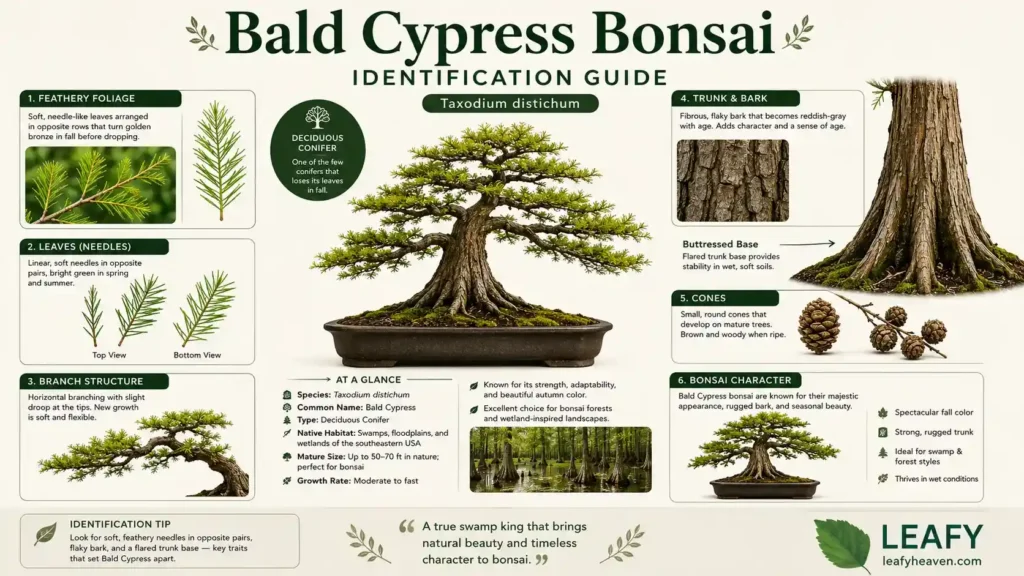
Correct identification of a Bald Cypress Bonsai depends on several key characteristics, including foliage texture, bark appearance, trunk structure, branch arrangement, and seasonal changes. These distinctive features help separate Taxodium distichum from other cypress species and outdoor bonsai trees.
Bald Cypress Leaves
Bald Cypress leaves are soft, flat, and feather-like in appearance. They grow in two rows along slender branchlets, creating a delicate and airy texture.
During the growing season, the foliage is bright green to light green. Unlike many conifers, the leaves are not stiff or prickly when touched.
The foliage contributes significantly to the tree’s elegant appearance and is one of the easiest identification features.
Bald Cypress Bark
Bald Cypress bark develops a fibrous texture that becomes more pronounced with age. Young trees typically have smoother bark, while mature specimens display rugged vertical ridges and peeling strips.
The bark color ranges from reddish-brown to gray-brown depending on age and growing conditions.
As the bonsai matures, the bark becomes increasingly textured, enhancing the impression of age and character.
Bald Cypress Trunk Characteristics
The trunk is one of the most recognizable features of Bald Cypress Bonsai. Mature trees often develop a broad, flared base known as buttressing.
This trunk flare creates a powerful and stable appearance that resembles ancient swamp trees found in nature.
Many bonsai growers specifically cultivate Bald Cypress for its ability to develop dramatic trunk thickness and impressive root flare within a relatively short time.
Bald Cypress Branch Structure
Bald Cypress branches generally grow in layered horizontal patterns. This branching habit creates a balanced and natural silhouette that is highly desirable in bonsai design.
Young shoots are flexible and extend rapidly during the growing season. As branches mature, they form a structured framework that supports fine ramification.
The branch arrangement often contributes to the species’ signature flat-top and forest-style bonsai designs.
Bald Cypress Fruit and Cones
Bald Cypress produces small rounded cones that contain seeds. These cones begin green and gradually mature to brown as they develop.
Most cones measure approximately 2–3 centimeters in diameter and eventually break apart to release seeds.
Although cone production varies, mature and healthy trees may produce them regularly under favorable outdoor conditions.
Bald Cypress Fall Color
One of the most attractive identification features appears during autumn. As temperatures cool, the foliage changes from green to rich shades of copper, orange, bronze, and reddish-brown.
This seasonal transformation distinguishes Bald Cypress from many evergreen conifers that maintain the same color throughout the year.
The vibrant fall display is a major reason why the species remains popular among bonsai enthusiasts.
Bald Cypress Appearance in Winter
During winter dormancy, Bald Cypress loses all of its foliage and becomes completely bare. The exposed trunk, branch structure, and bark texture become the primary visual features.
This leafless appearance is normal and reflects the tree’s deciduous nature.
Even without foliage, a well-developed Bald Cypress Bonsai remains highly attractive because its trunk flare, branch architecture, and aged bark continue to provide strong visual interest throughout the dormant season.
How Fast Does a Bald Cypress Bonsai Grow?
Bald Cypress is one of the fastest-growing bonsai species and is capable of developing significant trunk thickness and branch structure within just a few years. Its vigorous growth rate makes it a favorite among bonsai enthusiasts who want to see noticeable progress without waiting decades.
When provided with full sun, ample water, and regular fertilization, Bald Cypress Bonsai can grow rapidly throughout the growing season and respond exceptionally well to development techniques.
Bald Cypress Growth Rate
Bald Cypress Bonsai is considered a fast-growing outdoor bonsai tree. Young trees can produce substantial new growth each year, especially during spring and summer.
The species naturally prioritizes strong trunk and root development, which helps create mature-looking bonsai much faster than many slower-growing trees.
Growth speed can vary depending on climate, cultivation methods, and overall tree health, but Bald Cypress consistently ranks among the more vigorous bonsai species.
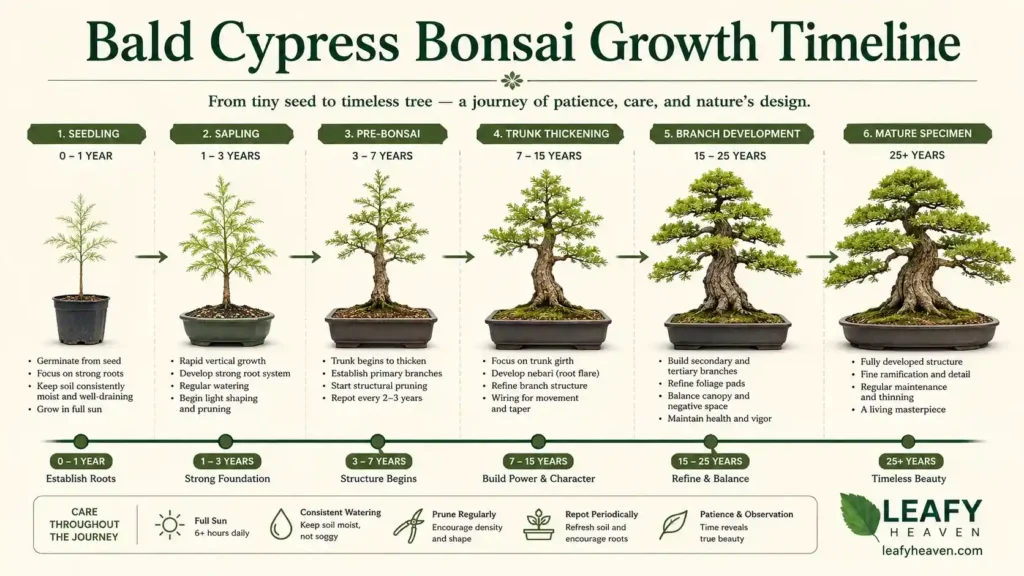
Growth Timeline from Sapling to Bonsai
The development timeline depends on the starting material and growing conditions.
| Development Stage | Approximate Time |
| Seedling Establishment | 1–2 Years |
| Young Pre-Bonsai | 2–4 Years |
| Trunk Development Phase | 4–8 Years |
| Early Styled Bonsai | 5–10 Years |
| Mature Bonsai Appearance | 10–20+ Years |
Trees grown in larger containers or field conditions often reach trunk-development goals much faster than those grown exclusively in bonsai pots.
Factors That Affect Growth
Several factors directly influence how quickly a Bald Cypress Bonsai develops.
Sunlight
Full sun is essential for strong growth and vigorous development.
Trees receiving six to eight hours of direct sunlight daily typically produce stronger shoots, denser foliage, and faster trunk thickening than those grown in partial shade.
Insufficient sunlight can slow growth and reduce overall vigor.
Water
Bald Cypress naturally grows in wetland environments and performs best when soil remains consistently moist.
Regular watering supports continuous growth throughout the growing season and helps maintain healthy foliage production.
Trees allowed to dry excessively often experience slower development and reduced vigor.
Fertilizer
Consistent feeding significantly accelerates growth.
Balanced fertilization during spring and summer encourages stronger root systems, larger trunks, and increased branch production.
Trees that receive regular nutrients generally develop much faster than unfertilized specimens.
Pot Size
Container size has a major impact on growth speed.
Larger training pots, grow boxes, and field-growing methods allow roots to expand freely, resulting in faster trunk thickening and stronger overall development.
Smaller bonsai containers restrict root growth and naturally slow the tree’s growth rate.
How Long Does It Take to Create a Mature Bald Cypress Bonsai?
A Bald Cypress Bonsai can begin looking like a recognizable bonsai within five to ten years, but achieving a truly mature appearance usually requires longer-term development.
Many growers spend several years focusing primarily on trunk thickening before refining branch structure and ramification.
Under excellent growing conditions, impressive trunk flare and aged character can begin developing within a relatively short period compared to many other bonsai species. However, highly refined specimens with mature bark, detailed ramification, and exhibition-quality structure often require ten to twenty years or more of dedicated cultivation.
The advantage of Bald Cypress is that it rewards patience quickly, providing visible progress at nearly every stage of development.
How to Grow a Bald Cypress Bonsai
Growing Bald Cypress Bonsai successfully requires full sun, consistent moisture, and true outdoor growing conditions. Because Taxodium distichum naturally thrives in wetlands and floodplains, it prefers more water and humidity than most bonsai species.
Providing the right combination of sunlight, soil, moisture, and seasonal exposure allows the tree to grow vigorously and develop the powerful trunk structure for which Bald Cypress Bonsai is famous.
Best USDA Hardiness Zones
Bald Cypress is highly adaptable and can tolerate a wide range of climates.
According to the USDA Plant Hardiness Zone Map, the species grows best in Zones 4–10, making it suitable for many temperate and subtropical regions.
Trees grown within their preferred climate range develop stronger growth, better seasonal color, and healthier root systems.
| Growing Zone | Suitability |
| USDA 4–5 | Good |
| USDA 6–8 | Excellent |
| USDA 9–10 | Very Good |
| USDA Below 4 | Winter Protection Needed |
| USDA Above 10 | Heat Monitoring Required |
Sunlight Requirements
Bald Cypress Bonsai performs best in full sun.
A minimum of six to eight hours of direct sunlight daily encourages vigorous growth, strong trunk development, and dense foliage production.
Adequate sunlight also improves branch ramification and enhances fall color intensity.
Trees grown in excessive shade often produce weak growth and elongated shoots.
Temperature Tolerance
Bald Cypress is remarkably tolerant of both heat and cold.
It can withstand hot summer temperatures while also tolerating winter freezes during dormancy.
This adaptability is one reason the species is successfully cultivated across a wide geographic range.
Although mature trees are highly resilient, young bonsai may benefit from additional protection during extreme weather events.
Humidity Needs
As a native wetland species, Bald Cypress appreciates moderate to high humidity levels.
Higher humidity supports healthy foliage growth and reduces moisture stress during warm weather.
Unlike many bonsai trees, Bald Cypress generally performs exceptionally well in humid climates and regions with abundant rainfall.
In dry climates, more frequent watering may be necessary to maintain vigorous growth.
Soil Requirements
Bald Cypress Bonsai prefers a moisture-retentive yet well-aerated soil mix.
The goal is to maintain consistent moisture while still allowing adequate oxygen to reach the roots.
A quality bonsai mix often contains components that balance drainage and water retention.
Important soil characteristics include:
- Good moisture retention
- Adequate aeration
- Stable structure
- Consistent drainage
- Organic matter for water-holding capacity
The species tolerates wetter soil conditions better than most bonsai trees.
Pot Selection
Container choice directly affects growth rate and root development.
During trunk-development stages, larger training containers encourage faster growth and thicker trunk formation.
As refinement progresses, growers often transition the tree into shallower bonsai pots that enhance aesthetics and control growth.
Suitable containers include:
- Training pots
- Grow boxes
- Nursery containers
- Traditional bonsai pots
- Forest bonsai trays
The selected pot should provide sufficient room for root growth while supporting proper moisture management.
Water Quality Considerations
Bald Cypress is generally not overly sensitive to water quality, but clean water promotes healthier long-term growth.
Rainwater is often considered ideal because it contains fewer dissolved salts and minerals.
When using tap water, occasional flushing of the soil can help prevent mineral buildup.
Regardless of the water source, consistency is more important than perfection. Maintaining evenly moist soil remains one of the most important factors for successful Bald Cypress Bonsai cultivation.
Growing Requirements Summary Table
| Requirement | Recommendation |
| USDA Hardiness Zones | 4–10 |
| Sunlight | Full Sun (6–8+ Hours Daily) |
| Temperature | Cold Hardy and Heat Tolerant |
| Humidity | Moderate to High |
| Soil Type | Moisture-Retentive, Well-Aerated Bonsai Mix |
| Watering | Consistently Moist Soil |
| Pot Type | Training Pot, Grow Box, or Bonsai Pot |
| Water Quality | Rainwater Preferred, Clean Tap Water Acceptable |
| Growing Location | Outdoor Bonsai Only |
Bald Cypress Bonsai Watering Guide
Bald Cypress Bonsai prefers consistently moist soil and can tolerate wetter conditions than most bonsai species. Because Taxodium distichum naturally grows in swamps, floodplains, and wetland habitats, maintaining adequate moisture is one of the most important aspects of successful cultivation.
Unlike many bonsai trees that suffer in constantly moist soil, Bald Cypress often thrives when provided with abundant water throughout the growing season.
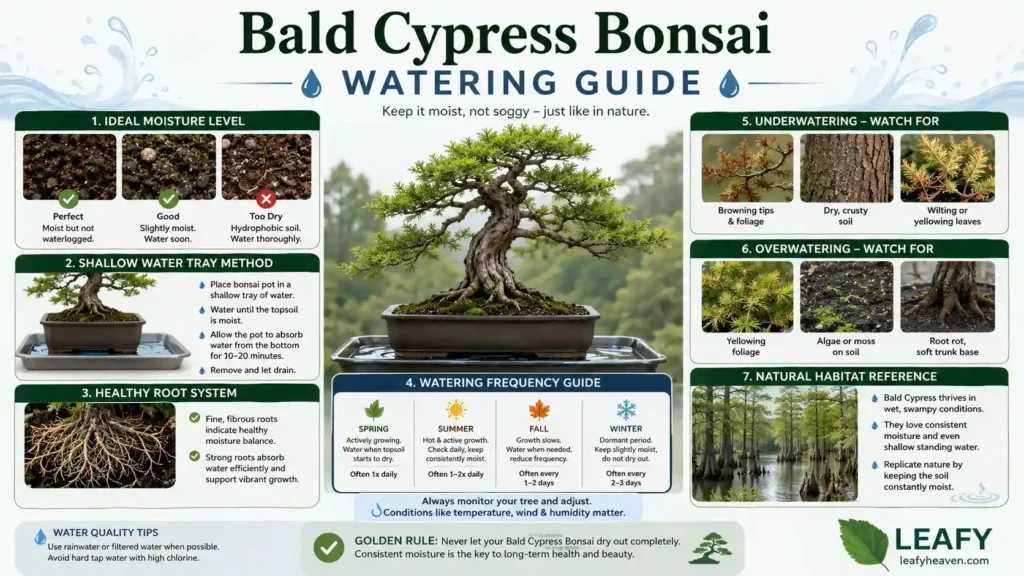
How Often Should You Water?
Bald Cypress Bonsai should be watered whenever the soil begins to lose surface moisture. The goal is to keep the root zone consistently moist without allowing the soil to become completely dry.
During active growth in spring and summer, daily watering is often necessary, especially in hot weather.
Factors that influence watering frequency include:
- Temperature
- Sunlight exposure
- Wind conditions
- Pot size
- Soil composition
- Tree size
Always check soil moisture rather than following a fixed watering schedule.
Bald Cypress Bonsai in Water — Myth vs Reality
Many growers hear that Bald Cypress Bonsai should sit permanently in water. While the species is highly tolerant of wet conditions, this recommendation is often misunderstood.
Myth
Bald Cypress Bonsai must remain submerged in water at all times to stay healthy.
Reality
Bald Cypress naturally tolerates flooding and wet soils better than most bonsai species. During the growing season, some growers successfully place pots in shallow water trays to encourage vigorous growth and trunk thickening.
However, permanent water submersion is not required for healthy development.
The most important requirement is consistently moist soil with adequate oxygen available to the roots.
During winter dormancy, standing water should generally be avoided because reduced root activity can increase the risk of root-related issues.
Signs of Underwatering
Insufficient moisture can quickly reduce growth and weaken the tree.
Common signs of underwatering include:
- Dry soil throughout the root zone
- Browning foliage tips
- Premature leaf drop
- Reduced growth rate
- Wilting or drooping foliage
- Dull foliage color
If underwatering continues, the tree may experience significant stress and loss of vigor.
Signs of Overwatering
Although Bald Cypress tolerates wet conditions exceptionally well, poor soil aeration can still create problems.
Warning signs may include:
- Persistently waterlogged soil
- Weak root development
- Slow growth despite adequate moisture
- Foul odor from the soil
- Root deterioration in compacted mixes
- Reduced foliage density
In most cases, problems blamed on overwatering are actually caused by poorly draining soil rather than excessive moisture itself.
Seasonal Watering Adjustments
Water requirements change throughout the year as growth activity fluctuates.
Spring
Water demand increases as new foliage emerges and active growth begins.
Monitor soil moisture closely and increase watering frequency as temperatures rise.
Summer
This is the period of highest water consumption.
Trees growing in full sun may require daily watering or even multiple waterings during extreme heat.
Consistent moisture supports vigorous growth and trunk development.
Fall
As temperatures cool and growth slows, water requirements gradually decrease.
Continue maintaining evenly moist soil while avoiding unnecessary saturation.
Winter
Dormant Bald Cypress Bonsai requires significantly less water than during the growing season.
The soil should remain slightly moist but not constantly saturated.
Watering frequency should be adjusted according to temperature, rainfall, and dormancy conditions.
Proper seasonal watering helps maintain healthy roots, supports vigorous growth, and ensures long-term success with Bald Cypress Bonsai.
Bald Cypress Bonsai Fertilizer Schedule
Regular feeding during the growing season promotes vigorous growth, dense foliage production, and faster trunk development. Because Bald Cypress Bonsai is a fast-growing species, it benefits from a consistent fertilizer program that supports both root health and above-ground growth.
A balanced feeding schedule helps maintain strong energy reserves, improves branch development, and accelerates the creation of mature bonsai characteristics.
Best Fertilizers for Bald Cypress Bonsai
Bald Cypress responds well to balanced fertilizers that provide essential nutrients throughout the growing season.
A fertilizer containing nitrogen, phosphorus, and potassium supports healthy foliage, root growth, and overall vigor.
Suitable fertilizer options include:
- Balanced NPK fertilizers
- Slow-release bonsai fertilizers
- Organic bonsai pellets
- Liquid bonsai fertilizers
- Fish emulsion fertilizers
- Seaweed-based supplements
Nitrogen-rich fertilizers are often used during strong growth phases to encourage trunk thickening and foliage production.
Organic vs Synthetic Fertilizers
Both organic and synthetic fertilizers can produce excellent results when used correctly.
Organic Fertilizers
Organic fertilizers release nutrients gradually and improve overall soil health.
Benefits include:
- Slow nutrient release
- Reduced risk of fertilizer burn
- Improved microbial activity
- Better long-term soil quality
Common examples include compost-based pellets, fish emulsion, and organic bonsai fertilizers.
Synthetic Fertilizers
Synthetic fertilizers provide nutrients quickly and allow precise feeding control.
Benefits include:
- Fast nutrient availability
- Predictable nutrient ratios
- Easy application
- Strong growth response
Many growers combine organic and synthetic feeding methods to balance steady nutrition with vigorous seasonal growth.
Spring Feeding Schedule
Spring is the most important feeding period because active growth resumes after winter dormancy.
Begin fertilizing once new buds open and fresh foliage starts developing.
A typical spring program includes:
- Start feeding after new growth appears
- Apply balanced fertilizer every 2–4 weeks
- Prioritize vigorous root and shoot development
- Monitor growth response regularly
Consistent spring feeding supports rapid branch extension and trunk thickening.
Summer Feeding Schedule
Bald Cypress continues growing vigorously throughout summer and benefits from regular nutrition.
Maintain a steady fertilizer routine while monitoring tree health and weather conditions.
Recommended summer practices include:
- Continue feeding every 2–4 weeks
- Maintain balanced nutrient availability
- Increase monitoring during periods of rapid growth
- Ensure adequate watering alongside fertilization
Healthy summer feeding promotes dense foliage and strong energy reserves for the remainder of the growing season.
When to Stop Fertilizing
Fertilization should gradually decrease as the growing season comes to an end.
As temperatures cool and growth slows, excessive feeding becomes less beneficial and may encourage unwanted late-season growth.
General guidelines include:
- Reduce feeding during early fall
- Stop fertilizing before winter dormancy begins
- Allow the tree to naturally prepare for dormancy
- Resume feeding when active spring growth returns
Proper timing helps Bald Cypress Bonsai transition smoothly into dormancy while preserving energy for vigorous growth in the following season.
How to Prune and Shape a Bald Cypress Bonsai
Frequent pruning helps maintain compact growth and encourages fine branch ramification. Because Bald Cypress is a vigorous species, regular pruning is essential to control size, improve structure, and develop the refined appearance expected in mature bonsai.
When performed correctly, pruning and shaping techniques create balanced branch distribution, enhance trunk visibility, and improve the overall silhouette of the tree.
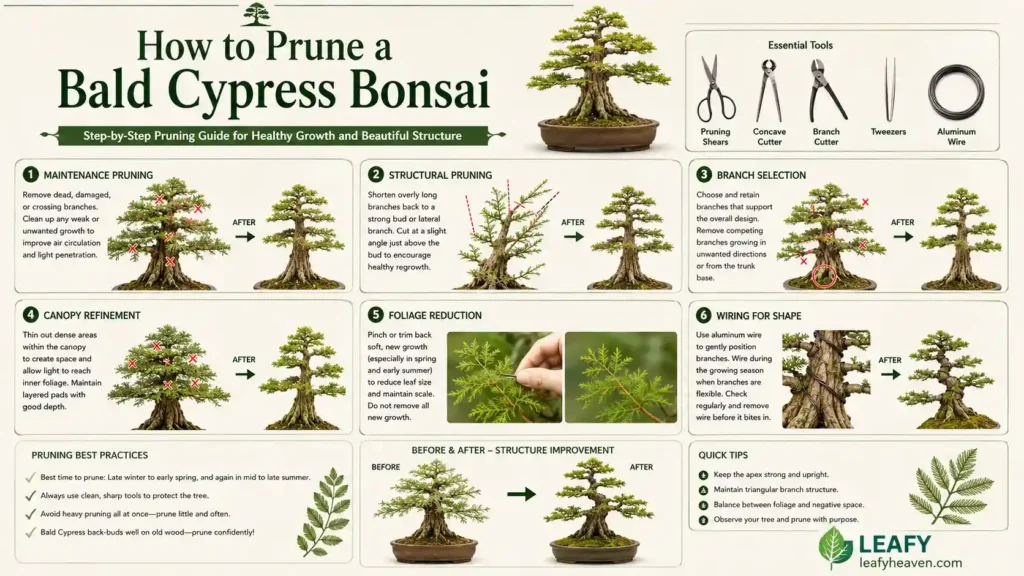
Maintenance Pruning
Maintenance pruning focuses on controlling new growth and preserving the desired bonsai shape.
As shoots extend during the growing season, they should be trimmed back regularly to encourage branching and maintain compact foliage pads.
Benefits of maintenance pruning include:
- Improved ramification
- Better canopy density
- Controlled tree size
- Enhanced light penetration
- Stronger branch structure
Regular trimming throughout the growing season keeps Bald Cypress Bonsai neat and balanced.
Structural Pruning
Structural pruning is used to establish the primary framework of the bonsai.
This process involves removing unwanted branches and directing future growth to improve the overall design.
Structural pruning is commonly performed during dormancy or before vigorous spring growth begins.
Typical objectives include:
- Creating trunk movement
- Improving branch placement
- Removing crossing branches
- Eliminating competing leaders
- Establishing the primary silhouette
Major cuts should be planned carefully because they influence the long-term appearance of the tree.
Branch Selection Techniques
Selecting the right branches is critical for developing a natural and visually balanced bonsai.
The goal is to retain branches that contribute to the design while removing those that create clutter or structural problems.
Branches commonly removed include:
- Crossing branches
- Inward-growing branches
- Weak shaded branches
- Vertically competing shoots
- Excessively crowded growth
Proper branch selection improves airflow, sunlight penetration, and overall design quality.
Leaf Reduction Methods
Leaf reduction helps create a more refined appearance and encourages denser growth.
Because Bald Cypress naturally produces soft, fine foliage, complete defoliation is rarely necessary for most trees.
Instead, growers often use selective foliage reduction techniques such as:
- Trimming excessively long shoots
- Reducing overly vigorous growth
- Thinning dense foliage areas
- Encouraging balanced energy distribution
These methods improve light penetration and help develop finer branch ramification over time.
Wiring Bald Cypress Bonsai
Wiring allows growers to position branches and refine the overall structure of the tree.
Young Bald Cypress branches are relatively flexible and respond well to wiring when applied carefully.
Important wiring guidelines include:
- Wire during active growth or dormancy
- Avoid excessive bending
- Monitor wire marks regularly
- Remove wire before scarring occurs
- Rewire as needed during development
Because the species grows quickly, wires should be checked frequently to prevent damage to the bark.
Common Styling Mistakes
Several common mistakes can slow development or reduce the natural appearance of Bald Cypress Bonsai.
Avoiding these issues helps maintain both health and aesthetics.
Common styling mistakes include:
- Over-pruning in a single session
- Removing too many primary branches
- Ignoring natural growth patterns
- Excessive wiring pressure
- Creating overly symmetrical designs
- Neglecting trunk development while focusing only on foliage
The most successful Bald Cypress Bonsai designs emphasize powerful trunk structure, natural branch placement, and a balanced canopy that reflects the appearance of mature trees growing in wetland environments.
Best Bald Cypress Bonsai Styles
Bald Cypress adapts particularly well to upright and forest bonsai styles. Its naturally straight growth habit, powerful trunk flare, layered branching, and wetland appearance make it one of the most versatile species for creating realistic landscape-inspired bonsai.
Many of the most admired Bald Cypress Bonsai specimens are designed to replicate mature swamp trees found throughout the southeastern United States.
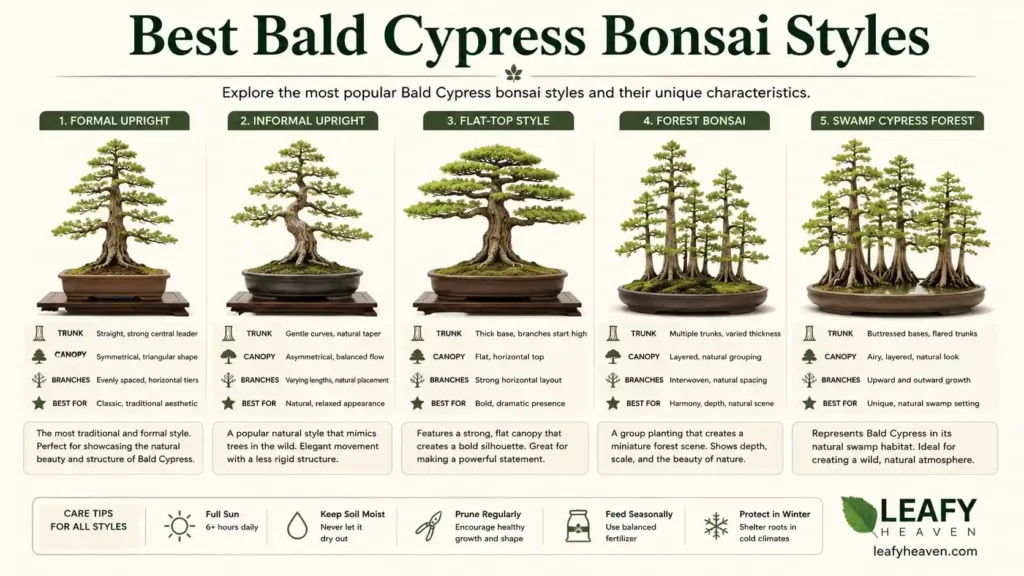
Formal Upright Style
The Formal Upright Style emphasizes a straight trunk with evenly distributed branches that gradually decrease in size toward the apex.
This style highlights the species’ natural strength and trunk development while creating a balanced and highly structured appearance.
Key characteristics include:
- Straight vertical trunk
- Symmetrical branch arrangement
- Strong taper from base to apex
- Clear central leader
- Traditional bonsai appearance
This style works particularly well for trees with naturally straight trunks and excellent trunk flare.
Informal Upright Style
The Informal Upright Style features gentle curves in the trunk while maintaining an overall upright growth pattern.
This design creates a more natural appearance and closely resembles how Bald Cypress trees often grow in nature.
Common features include:
- Slight trunk movement
- Natural branch placement
- Balanced canopy structure
- Strong visual flow
- Realistic mature-tree appearance
Many growers prefer this style because it combines elegance with a more natural landscape aesthetic.
Flat-Top Bald Cypress Style
The Flat-Top Bald Cypress Style is considered one of the species’ most iconic bonsai designs.
It replicates mature swamp cypress trees that develop broad flattened crowns after years of exposure to wetland conditions.
Characteristics of this style include:
- Wide horizontal canopy
- Flattened apex
- Strong trunk buttressing
- Layered branch structure
- Distinctive swamp-tree silhouette
This style is highly recognizable and is often associated specifically with Bald Cypress Bonsai.
Bald Cypress Forest Bonsai
Bald Cypress Forest Bonsai uses multiple trees planted together to recreate the appearance of a natural cypress grove.
The combination of varying trunk sizes and heights creates depth, realism, and visual movement.
Benefits of forest compositions include:
- Natural landscape appearance
- Enhanced visual storytelling
- Strong sense of scale
- Excellent use of the species’ growth habit
- Realistic wetland representation
Forest plantings are among the most popular Bald Cypress bonsai designs worldwide.
Swamp Cypress Bonsai Forest Plantings
Swamp Cypress Bonsai Forest Plantings take the forest concept further by recreating natural wetland scenes.
These compositions often emphasize open spacing, buttressed trunks, and the appearance of trees growing along riverbanks or swamp edges.
Design elements commonly include:
- Multiple Bald Cypress trees
- Natural spacing variations
- Strong trunk flare
- Layered canopy heights
- Wetland-inspired landscapes
- Mature swamp forest aesthetics
Because Taxodium distichum naturally grows in groups throughout wetland ecosystems, this style often appears exceptionally realistic.
Style Comparison Table
| Style | Difficulty | Best Feature | Natural Appearance |
| Formal Upright Style | Beginner to Intermediate | Strong trunk structure | Moderate |
| Informal Upright Style | Beginner to Intermediate | Natural movement | High |
| Flat-Top Bald Cypress Style | Intermediate to Advanced | Classic swamp-tree silhouette | Very High |
| Bald Cypress Forest Bonsai | Intermediate | Multi-tree landscape effect | Very High |
| Swamp Cypress Bonsai Forest Plantings | Advanced | Realistic wetland scene | Exceptional |
Bald Cypress Bonsai Forest Guide
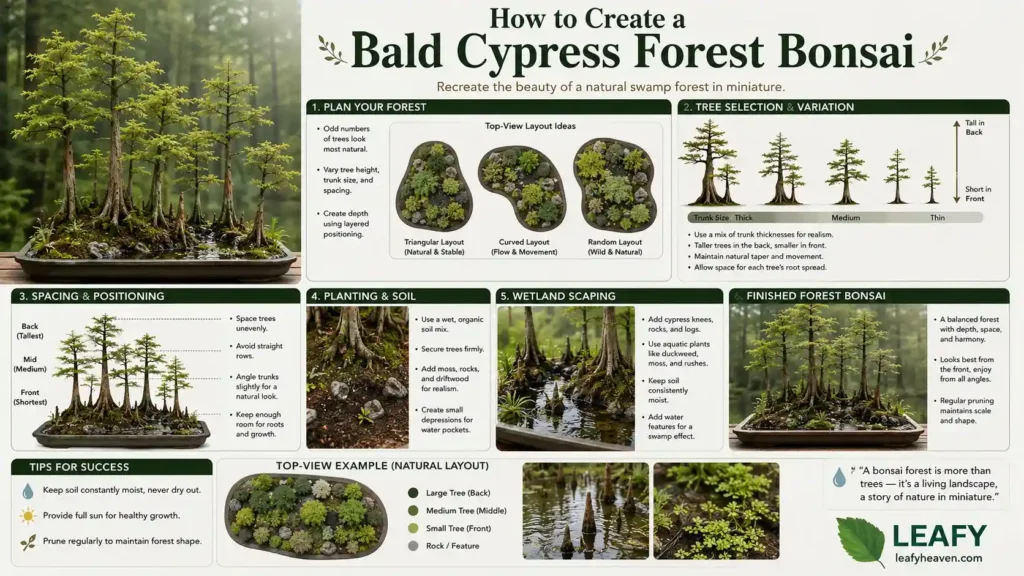
Forest-style Bald Cypress Bonsai recreates natural swamp landscapes and is one of the species’ most iconic designs. Because Taxodium distichum naturally grows in groups throughout wetlands and floodplains, it is exceptionally well suited for forest compositions.
A well-designed Bald Cypress forest bonsai captures the feeling of a mature swamp ecosystem, showcasing varying tree sizes, powerful trunk bases, and natural spacing that mirrors wild cypress groves.
Why Forest Plantings Work So Well
Bald Cypress naturally forms colonies and forested stands in wetland environments. This growth habit makes multi-tree compositions appear highly realistic.
Unlike many bonsai species that are primarily displayed as individual specimens, Bald Cypress often looks even more impressive when planted as a group.
Forest plantings offer several advantages:
- Natural landscape appearance
- Strong visual depth
- Realistic swamp-tree representation
- Enhanced trunk comparisons
- Greater artistic storytelling potential
The species’ rapid growth also allows multiple trees to develop together successfully over time.
Number of Trees to Use
The number of trees used directly affects the visual balance of the composition.
Most forest bonsai designs use odd numbers because they create a more natural and visually pleasing arrangement.
Common groupings include:
| Number of Trees | Typical Use |
| 3 Trees | Small forest composition |
| 5 Trees | Balanced beginner forest |
| 7 Trees | Traditional forest design |
| 9 Trees | Large natural grove |
| 11+ Trees | Advanced landscape composition |
Using trees of different heights and trunk diameters helps create the appearance of a naturally established forest.
Spacing and Layout Techniques
Proper spacing is essential for achieving realism.
Trees should not be positioned in straight lines or evenly spaced patterns because such arrangements appear artificial.
Effective layout principles include:
- Place the largest tree slightly off-center
- Use varying distances between trees
- Create visual depth through layering
- Avoid symmetrical positioning
- Group some trees closer together
- Leave open spaces to mimic natural clearings
The goal is to create movement and visual flow throughout the composition.
Creating Natural Swamp Scenes
A successful swamp cypress bonsai forest should evoke the appearance of a natural wetland habitat.
Design elements can be arranged to suggest riverbanks, floodplains, or mature swamp environments.
Features commonly incorporated include:
- Buttressed trunk bases
- Exposed surface roots
- Multiple tree heights
- Open forest floor areas
- Moisture-retentive planting substrates
- Natural-looking terrain variations
The flat-top growth form often seen in mature Bald Cypress trees can further enhance the authenticity of the landscape.
By combining these elements, growers can recreate the distinctive character of southeastern United States cypress swamps in miniature form.
Long-Term Maintenance
Long-term maintenance focuses on preserving balance among all trees in the forest.
Without regular management, stronger trees may dominate weaker specimens and disrupt the overall composition.
Important maintenance practices include:
- Regular pruning to maintain proportion
- Monitoring vigor across all trees
- Managing root competition during repotting
- Maintaining open canopy structure
- Removing overcrowded growth
- Preserving visual depth and spacing
Periodic refinement ensures that the forest continues to resemble a mature natural landscape rather than a collection of individual trees.
With proper care, a Bald Cypress forest bonsai can become increasingly realistic and impressive as the trunks mature, bark texture develops, and the overall composition gains age and character.
How to Propagate Bald Cypress Bonsai
Bald Cypress Bonsai can be propagated from seeds, saplings, and collected nursery stock. Each method offers different advantages depending on the grower’s experience level, development goals, and desired timeline.
While seed propagation provides complete control over development from an early stage, saplings and nursery stock can significantly reduce the time required to create an attractive bonsai.
Growing Bald Cypress from Seed
Growing Bald Cypress from seed is one of the most rewarding propagation methods because it allows complete control over trunk development, root structure, and future styling.
Seeds are typically collected from mature cones and planted during the appropriate growing season.
Basic seed propagation steps include:
- Obtain viable Bald Cypress seeds.
- Soak seeds before planting if needed.
- Use a moisture-retentive seed-starting mix.
- Maintain consistent moisture.
- Provide warmth and adequate sunlight after germination.
Seed-grown trees require patience but often develop strong root systems and excellent long-term bonsai potential.
Many growers use this method when planning future forest bonsai compositions.
Using Bald Cypress Saplings
Saplings offer a faster route to bonsai development than starting from seed.
Young Bald Cypress saplings already possess established roots and trunk growth, allowing development work to begin much sooner.
Benefits of using saplings include:
- Faster bonsai development
- Reduced germination risk
- Strong early growth
- Easier trunk training
- Earlier styling opportunities
Healthy saplings can often be sourced from nurseries, tree farms, or specialty bonsai suppliers.
Selecting specimens with good trunk movement and strong root systems provides a better foundation for future bonsai design.
Pre-Bonsai Development Techniques
Before refinement begins, Bald Cypress typically undergoes a development phase focused on building trunk size and structural strength.
This stage is often referred to as pre-bonsai development.
Common development techniques include:
- Growing in large training containers
- Using grow boxes
- Field growing for accelerated growth
- Sacrifice branch development
- Controlled pruning for trunk taper
- Root spread improvement
The primary objective during this stage is to establish a powerful trunk, strong nebari, and a solid branch framework.
Rushing into refinement too early can limit the tree’s long-term potential.
Trunk Thickening Strategies
Developing a thick trunk is one of the most important goals when creating a Bald Cypress Bonsai.
Fortunately, Taxodium distichum responds exceptionally well to trunk-building techniques.
Effective trunk-thickening methods include:
Grow in Large Containers
Larger containers allow unrestricted root growth, which directly increases trunk development.
Trees grown in spacious containers generally thicken much faster than those confined to small bonsai pots.
Field Growing
Field growing is one of the fastest methods for increasing trunk diameter.
The unrestricted root environment encourages vigorous growth and rapid trunk expansion.
Use Sacrifice Branches
Sacrifice branches are intentionally left unpruned to increase energy production and stimulate trunk thickening.
These branches are removed later once development goals have been achieved.
Heavy Feeding and Watering
Consistent fertilization combined with abundant moisture supports vigorous growth throughout the growing season.
Healthy, fast-growing trees naturally develop thicker trunks more quickly.
Allow Periods of Free Growth
Occasionally allowing the tree to grow without constant pruning helps maximize trunk expansion and overall vigor.
After the desired trunk size is achieved, refinement techniques can begin.
By combining these strategies, growers can significantly reduce the time needed to create a Bald Cypress Bonsai with impressive trunk flare, strong taper, and mature character.
Seasonal Care Calendar for Bald Cypress Bonsai
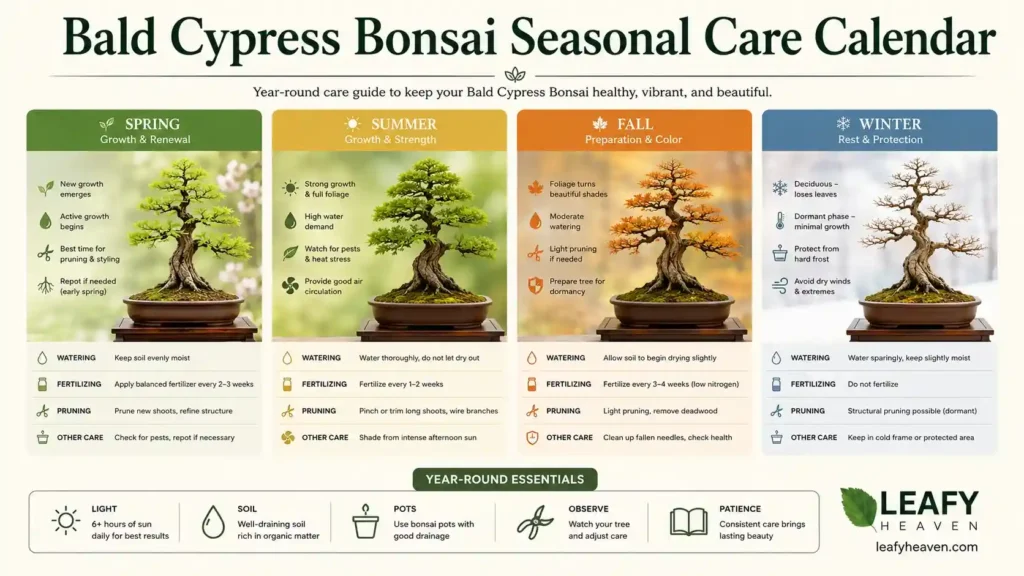
Seasonal care changes significantly because Bald Cypress is a deciduous outdoor bonsai. Its growth cycle includes vigorous spring development, active summer growth, autumn color changes, and a winter dormancy period.
Adjusting watering, fertilization, pruning, and protection practices throughout the year helps maintain tree health and supports long-term bonsai development.
Spring Care
Spring is the most active growth period for Bald Cypress Bonsai.
As temperatures rise and buds begin to open, the tree rapidly produces fresh foliage and new shoots. This is the ideal time to encourage vigorous growth and begin seasonal maintenance.
Important spring tasks include:
- Resume regular fertilization
- Increase watering frequency
- Monitor emerging buds and shoots
- Perform structural pruning if needed
- Begin wiring young flexible branches
- Repot when necessary before strong growth begins
Strong spring care lays the foundation for healthy development throughout the growing season.
Summer Care
Summer is the peak growing season for Bald Cypress Bonsai.
The tree consumes large amounts of water and nutrients during this period. Consistent moisture and adequate sunlight are essential for maintaining vigorous growth.
Key summer care practices include:
- Water frequently to maintain moist soil
- Continue regular fertilization
- Perform maintenance pruning
- Monitor wire for potential scarring
- Check for pests and diseases
- Ensure full sun exposure
Because Bald Cypress naturally thrives in warm, wet environments, it generally performs exceptionally well during summer when moisture is consistently available.
Fall Care
Fall marks the transition from active growth to dormancy.
As temperatures cool, growth gradually slows and foliage begins changing from green to attractive shades of copper, orange, bronze, and reddish-brown.
Recommended fall maintenance includes:
- Gradually reduce fertilization
- Continue moderate watering
- Remove unwanted late-season growth
- Monitor seasonal color development
- Prepare the tree for winter dormancy
- Clean fallen foliage from the soil surface
This transition period allows the tree to store energy for the upcoming dormant season.
Winter Dormancy Care
Winter dormancy is a natural and necessary part of the Bald Cypress life cycle.
After leaf drop, the tree enters a resting period during which growth largely stops. Although dormant, the tree still requires basic care and monitoring.
Essential winter care includes:
- Maintain lightly moist soil
- Reduce watering frequency
- Avoid active fertilization
- Protect roots from extreme conditions if necessary
- Monitor for winter damage
- Perform major structural evaluations
The bare trunk, branch structure, and bark texture become the primary visual features during dormancy.
Allowing Bald Cypress Bonsai to experience a proper winter rest period helps maintain long-term vigor, supports healthy spring growth, and preserves the natural seasonal cycle that makes this species unique among bonsai trees.
Common Bald Cypress Bonsai Problems and Solutions
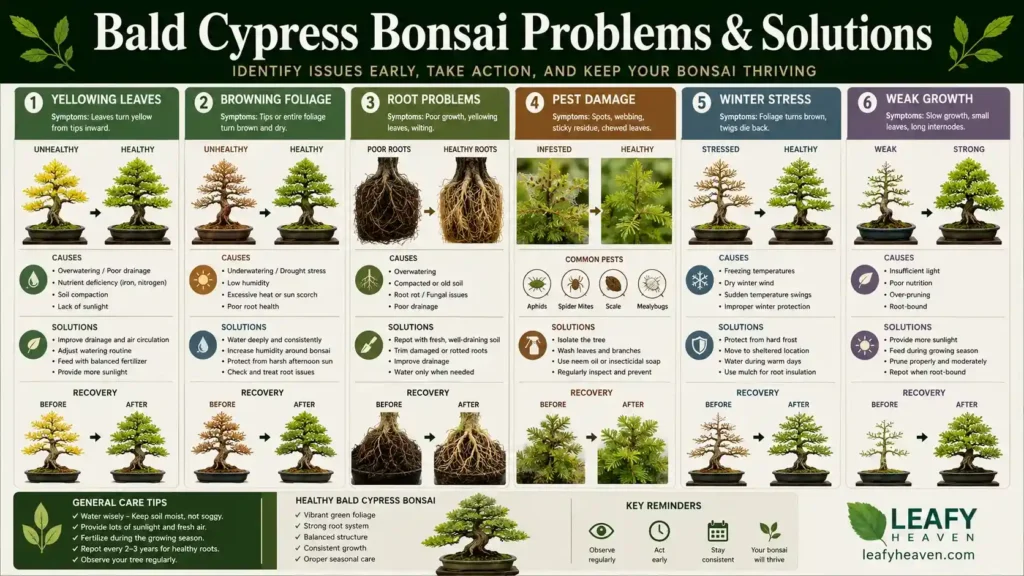
Most Bald Cypress Bonsai issues are caused by improper watering, weak sunlight, or poor seasonal management. Fortunately, Taxodium distichum is a resilient species that typically recovers well when problems are identified and corrected early.
Regular monitoring of foliage, roots, growth patterns, and seasonal behavior helps prevent minor issues from becoming serious health concerns.
Yellowing Leaves
Yellow leaves are one of the most common concerns among Bald Cypress growers.
While some yellowing is normal during autumn, out-of-season discoloration may indicate environmental stress or cultural problems.
Common causes include:
- Insufficient sunlight
- Nutrient deficiencies
- Poor watering practices
- Root stress
- Seasonal transition
Correcting growing conditions often restores healthy green foliage.
Browning Foliage
Browning foliage usually signals moisture-related stress or environmental damage.
The tips or entire foliage sprays may turn brown if the tree experiences prolonged dryness or unfavorable growing conditions.
Possible causes include:
- Underwatering
- Extreme heat stress
- Dry winds
- Root damage
- Severe nutrient imbalance
Maintaining consistent soil moisture is one of the most effective ways to prevent foliage browning.
Weak Growth
Weak growth often develops when the tree lacks the resources needed for vigorous development.
Symptoms may include slow shoot extension, sparse foliage, and reduced branch production.
Potential causes include:
- Inadequate sunlight
- Insufficient fertilization
- Restricted root growth
- Poor soil quality
- Competition from overcrowded branches
Improving light exposure and nutrition usually leads to stronger seasonal growth.
Root Problems
Healthy roots are essential for successful Bald Cypress Bonsai cultivation.
Although the species tolerates moisture exceptionally well, root issues can still occur when soil conditions become unsuitable.
Common root-related problems include:
- Compacted soil
- Poor aeration
- Root rot in poorly draining mixes
- Root damage during repotting
- Excessive root restriction
Regular repotting and the use of quality bonsai soil help maintain a healthy root system.
Bald Cypress Diseases
Bald Cypress is generally resistant to many serious diseases, but problems can occasionally develop under stressful conditions.
Disease risk often increases when airflow is poor or overall tree vigor declines.
Possible disease concerns include:
- Fungal leaf issues
- Needle blight
- Root-related fungal infections
- Canker development on weakened branches
Maintaining proper watering practices and adequate air circulation reduces disease pressure significantly.
Common Pests
Like most bonsai species, Bald Cypress may occasionally attract insect pests.
Early detection is important because small infestations are easier to control than severe outbreaks.
Common pests include:
- Aphids
- Spider mites
- Scale insects
- Caterpillars
- Mealybugs
Routine inspections help identify pests before significant damage occurs.
Winter Damage
Although Bald Cypress is cold-hardy, bonsai containers provide less root insulation than trees growing in the ground.
Severe winter conditions may occasionally damage roots, branches, or developing buds.
Possible winter issues include:
- Root freezing
- Branch dieback
- Frost injury
- Dry winter winds
- Freeze-thaw stress
Providing appropriate winter protection for the root system helps minimize seasonal damage.
Troubleshooting Table
| Problem | Likely Cause | Solution |
| Yellowing Leaves | Low sunlight, nutrient deficiency, seasonal change | Increase sunlight and review fertilization program |
| Browning Foliage | Underwatering, heat stress, root issues | Maintain consistent moisture and inspect roots |
| Weak Growth | Poor nutrition, inadequate light, restricted roots | Improve feeding, sunlight, and root conditions |
| Root Problems | Compacted soil, poor aeration, root rot | Repot into a quality bonsai soil mix |
| Fungal Diseases | Excess moisture with poor airflow | Improve air circulation and remove affected growth |
| Pest Infestations | Aphids, mites, scale, mealybugs | Monitor regularly and apply appropriate treatment |
| Winter Damage | Root freezing, frost exposure, winter stress | Protect roots and provide suitable winter care |
Most Bald Cypress Bonsai problems can be prevented through proper watering, full sun exposure, regular fertilization, and seasonal maintenance. Healthy trees are naturally more resistant to pests, diseases, and environmental stress.
Bald Cypress Bonsai vs Other Cypress Bonsai Trees
Bald Cypress differs significantly from Italian Cypress, Leyland Cypress, Monterey Cypress, False Cypress, and Montezuma Cypress in both growth habits and bonsai characteristics. Its deciduous nature, rapid trunk development, moisture tolerance, and distinctive swamp-tree appearance make it unique among cypress bonsai species.
Understanding these differences helps growers choose the species that best matches their climate, styling preferences, and maintenance expectations.
Bald Cypress vs Italian Cypress Bonsai
Italian Cypress Bonsai and Bald Cypress Bonsai create very different visual impressions.
Italian Cypress is known for its tall, narrow, columnar form and evergreen foliage. Bald Cypress, in contrast, develops a broader silhouette with softer foliage and dramatic seasonal changes.
Bald Cypress Advantages
- Faster trunk thickening
- Deciduous seasonal interest
- Better forest bonsai potential
- Strong buttressed trunk development
Italian Cypress Advantages
- Elegant vertical appearance
- Evergreen foliage
- Minimal seasonal leaf drop
- Distinct Mediterranean character
Bald Cypress is generally preferred for naturalistic and forest-style bonsai, while Italian Cypress is valued for formal upright designs.
Bald Cypress vs Leyland Cypress Bonsai
Leyland Cypress is a vigorous evergreen hybrid commonly used as a landscape tree.
Although it grows rapidly, it is generally considered less refined for bonsai compared to Bald Cypress.
Bald Cypress Advantages
- Better ramification potential
- More dramatic trunk development
- Superior seasonal character
- Easier long-term refinement
Leyland Cypress Advantages
- Fast growth
- Dense evergreen foliage
- Strong screening-tree appearance
Most bonsai enthusiasts consider Bald Cypress the more suitable species for creating high-quality bonsai specimens.
Bald Cypress vs Monterey Cypress Bonsai
Monterey Cypress Bonsai is admired for its rugged coastal appearance and naturally twisted growth habit.
The species develops dramatic movement and weathered character, while Bald Cypress is known for its powerful trunk flare and swamp-inspired designs.
Bald Cypress Advantages
- Faster trunk development
- Better forest planting suitability
- Attractive fall color
- Exceptional moisture tolerance
Monterey Cypress Advantages
- Naturally dramatic movement
- Rugged coastal character
- Distinctive bark texture
- Strong windswept styling potential
The choice often depends on whether the grower prefers wetland-inspired landscapes or coastal bonsai aesthetics.
Bald Cypress vs False Cypress Bonsai
False Cypress Bonsai includes several species within the Chamaecyparis genus that are commonly used in bonsai cultivation.
Unlike Bald Cypress, False Cypress remains evergreen throughout the year.
Bald Cypress Advantages
- Seasonal foliage changes
- Faster trunk thickening
- More pronounced buttressing
- Strong swamp-tree appearance
False Cypress Advantages
- Evergreen foliage
- Fine textured growth
- Compact appearance
- Excellent formal bonsai structure
False Cypress is often selected for refined evergreen bonsai, while Bald Cypress excels in natural landscape-style designs.
Growers who enjoy seasonal deciduous displays may also appreciate deciduous flowering bonsai like sakura bonsai, which offers delicate spring blossoms and beautiful winter branch structure.
Bald Cypress vs Montezuma Cypress Bonsai
Montezuma Cypress (Taxodium mucronatum) is the closest relative of Bald Cypress and shares many similar characteristics.
Both belong to the Taxodium genus and develop impressive trunks and strong root systems.
Bald Cypress Characteristics
- Deciduous foliage
- Strong fall color
- Reliable winter dormancy
- Excellent cold tolerance
Montezuma Cypress Characteristics
- Semi-evergreen to evergreen in warm climates
- Less pronounced fall color
- Better heat tolerance
- Faster growth in tropical and subtropical regions
Because of their close relationship, the two species are often compared by advanced bonsai growers.
Comparison Table
| Feature | Bald Cypress | Italian Cypress | Leyland Cypress | Monterey Cypress | False Cypress | Montezuma Cypress |
| Scientific Group | Taxodium distichum | Cupressus sempervirens | × Cuprocyparis leylandii | Hesperocyparis macrocarpa | Chamaecyparis spp. | Taxodium mucronatum |
| Foliage Type | Deciduous | Evergreen | Evergreen | Evergreen | Evergreen | Semi-Evergreen to Evergreen |
| Growth Rate | Fast | Moderate | Fast | Moderate | Moderate | Fast |
| Trunk Development | Excellent | Moderate | Moderate | Good | Moderate | Excellent |
| Fall Color | Excellent | None | None | Minimal | None | Limited |
| Forest Bonsai Suitability | Excellent | Fair | Fair | Good | Fair | Excellent |
| Moisture Tolerance | Very High | Moderate | Moderate | Moderate | Moderate | High |
| Beginner Friendly | Yes | Moderate | Moderate | Moderate | Yes | Yes |
| Signature Style | Flat-Top & Forest Bonsai | Formal Upright | Upright Evergreen | Coastal & Windswept | Refined Evergreen | Massive Taxodium Forms |
For most growers seeking rapid development, powerful trunk character, beautiful seasonal changes, and iconic forest-style compositions, Bald Cypress remains one of the most versatile and rewarding cypress bonsai species available.
Bald Cypress Bonsai Lifespan and Long-Term Care
Properly maintained Bald Cypress Bonsai can live for decades and continue improving with age. In fact, many of the most impressive specimens become more valuable and visually striking as their trunks thicken, bark matures, and branch structures become increasingly refined.
Unlike short-lived ornamental plants, Bald Cypress Bonsai is a long-term project that rewards consistent care and patient development over many years.
Bald Cypress Lifespan
Bald Cypress is naturally a long-lived tree species.
In nature, Taxodium distichum can survive for hundreds and sometimes even thousands of years under favorable conditions. While bonsai cultivation imposes different growing constraints, a healthy Bald Cypress Bonsai can still live for many decades.
Factors that influence lifespan include:
- Proper watering practices
- Consistent sunlight exposure
- Healthy root management
- Regular repotting
- Balanced fertilization
- Effective pest and disease control
With appropriate care, Bald Cypress Bonsai can remain vigorous and attractive for generations.
Mature Bald Cypress Bonsai Characteristics
As Bald Cypress Bonsai ages, it develops characteristics that are difficult to replicate artificially.
Mature specimens typically display stronger visual presence and greater artistic value than younger trees.
Common characteristics of mature trees include:
- Massive buttressed trunk base
- Pronounced trunk taper
- Thick textured bark
- Dense branch ramification
- Well-developed canopy structure
- Strong surface root flare
- Refined seasonal appearance
These features create the impression of an ancient tree growing in miniature form.
Older specimens often become increasingly realistic and visually powerful with each passing year.
Long-Term Maintenance Tips
Long-term success depends on maintaining both tree health and structural refinement.
Routine care should focus on preserving vigor while gradually improving the bonsai’s appearance.
Important long-term maintenance practices include:
Maintain Consistent Watering
Bald Cypress performs best when soil remains consistently moist throughout the growing season.
Avoid allowing the root system to dry excessively.
Follow a Regular Fertilization Program
Annual feeding supports continued growth, energy storage, and foliage production.
Healthy nutrition contributes directly to long-term vitality.
Repot When Necessary
Periodic repotting prevents root congestion and maintains healthy root development.
Repotting intervals vary depending on tree age and growth rate.
Continue Refinement Pruning
Regular pruning helps preserve branch structure and encourages finer ramification over time.
This gradual refinement contributes significantly to bonsai maturity.
Monitor Tree Health
Routine inspections help identify pests, diseases, or environmental stress before they become serious problems.
Preventive care is often more effective than corrective treatment.
Creating Legacy Bonsai Trees
A legacy bonsai is a tree developed with future generations in mind.
Because Bald Cypress has exceptional longevity, it is particularly well suited for long-term bonsai projects that continue evolving over decades.
Characteristics of legacy-quality Bald Cypress Bonsai include:
- Exceptional trunk development
- Strong nebari and root flare
- Mature bark texture
- Refined branch structure
- Consistent health and vigor
- Natural aged appearance
Many growers view Bald Cypress Bonsai as a lifelong artistic project rather than a short-term horticultural achievement.
With patience, proper cultivation, and ongoing refinement, a Bald Cypress Bonsai can become an heirloom specimen that gains beauty, character, and value for many years while continuing to improve with age.
Frequently Asked Facts About Bald Cypress Trees
Understanding the natural Bald Cypress tree helps bonsai growers make better decisions regarding watering, pruning, seasonal care, and long-term development. Many of the species’ unique bonsai characteristics originate directly from its behavior in the wild.
Bald Cypress Height in Nature
Bald Cypress is one of the largest native trees in North America.
In natural wetland environments, mature trees commonly reach heights of 50–70 feet (15–21 meters). Under ideal conditions, some specimens can exceed 100 feet (30 meters) tall.
The species is also known for developing massive trunk diameters and broad buttressed bases as it ages.
This natural tendency for powerful trunk development is one reason Bald Cypress is so highly valued in bonsai cultivation.
Bald Cypress Hardiness Zones
Bald Cypress is an adaptable species capable of growing across a wide range of climates.
The tree is generally suitable for USDA Hardiness Zones 4–10, making it one of the more versatile outdoor bonsai species.
Its broad climate tolerance allows successful cultivation in:
- Cool temperate regions
- Warm temperate climates
- Humid subtropical areas
- Many coastal environments
Despite this adaptability, Bald Cypress still requires winter dormancy for long-term health.
When Do Bald Cypress Trees Leaf Out?
Bald Cypress typically begins producing new foliage in early to mid-spring.
The exact timing depends on local climate and seasonal temperatures.
In most regions:
- Bud swelling occurs in early spring
- New foliage emerges after temperatures consistently warm
- Vigorous shoot growth follows shortly afterward
Healthy trees often produce fresh bright-green foliage that rapidly expands throughout spring.
Bald Cypress in Fall
Fall is one of the most attractive seasons for Bald Cypress.
As temperatures cool, the foliage changes from green to shades of:
- Copper
- Bronze
- Orange
- Cinnamon brown
- Reddish-brown
This dramatic seasonal display adds significant ornamental value and distinguishes Bald Cypress from evergreen conifers.
The colorful foliage eventually drops as the tree prepares for dormancy.
Bald Cypress in Winter
During winter, Bald Cypress enters a dormant period and sheds all of its foliage.
The tree appears completely bare, revealing its trunk structure, branch architecture, and bark texture.
Winter characteristics include:
- Leafless silhouette
- Visible branch ramification
- Exposed trunk flare
- Dormant buds awaiting spring growth
This dormant phase is normal and essential for the tree’s annual growth cycle.
Proper winter dormancy supports healthy growth during the following spring.
Interesting Facts About Bald Cypress Trees
Bald Cypress possesses several fascinating characteristics that make it unique among trees and bonsai species.
Some interesting facts include:
- Bald Cypress is one of the few deciduous conifers in the world.
- The species naturally grows in swamps, floodplains, and wetland ecosystems.
- Mature trees can live for hundreds of years and sometimes much longer.
- Bald Cypress often develops dramatic buttressed trunks with age.
- Wild trees may produce specialized root structures known as “cypress knees.”
- Taxodium distichum is native to the southeastern United States.
- The species is highly tolerant of flooding and prolonged wet conditions.
- Bald Cypress is considered one of the best trees for creating forest-style bonsai compositions.
- Its fall color display is among the most attractive of all bonsai conifers.
- Mature specimens become increasingly beautiful as bark texture and trunk character develop over time.
Understanding these natural characteristics helps growers appreciate why Bald Cypress Bonsai remains one of the most respected and iconic outdoor bonsai species in the world.
Conclusion
Bald Cypress Bonsai is one of the best outdoor bonsai species for growers seeking rapid development, powerful trunks, beautiful seasonal changes, and impressive forest-style compositions. Its unique combination of fast growth, moisture tolerance, dramatic trunk flare, and deciduous character makes Taxodium distichum a rewarding choice for both beginners and experienced bonsai enthusiasts.
From single-tree specimens to large Bald Cypress forest bonsai plantings, this species offers exceptional styling potential and long-term artistic value. With proper watering, full sun exposure, regular maintenance, and seasonal care, a Bald Cypress Bonsai can continue improving for decades while developing the appearance of an ancient wetland tree in miniature form.
Key Takeaways
- Excellent beginner-friendly outdoor bonsai species
- Thrives in consistently moist soil conditions
- Fast-growing with impressive trunk thickening potential
- Highly suitable for forest and swamp-style bonsai designs
- Produces attractive seasonal color changes in fall
- Develops strong buttressed trunks and powerful root flare
- Responds well to pruning and styling techniques
- Requires outdoor growing conditions and winter dormancy
- Long-lived species capable of becoming a legacy bonsai
- Maintains visual interest throughout every season, including winter
FAQs
Is Bald Cypress Bonsai an indoor or outdoor bonsai?
Bald Cypress Bonsai is an outdoor bonsai tree. It requires full sun, natural seasonal changes, and a winter dormancy period to remain healthy. Growing it indoors for extended periods usually leads to weak growth, poor vigor, and long-term health problems.
Can Bald Cypress Bonsai sit in water permanently?
Bald Cypress can tolerate much wetter conditions than most bonsai species, but permanent water submersion is not necessary. Many growers place the bonsai in shallow water trays during the growing season to encourage vigorous growth. However, the roots still benefit from access to oxygen, and standing water should generally be avoided during winter dormancy.
How fast does a Bald Cypress Bonsai grow?
Bald Cypress is considered one of the fastest-growing bonsai species. Under ideal conditions with full sun, consistent moisture, and regular fertilization, it can develop significant trunk thickness and vigorous branch growth within just a few years.
Why do Bald Cypress Bonsai lose their leaves in winter?
Bald Cypress is a deciduous conifer, meaning it naturally sheds its foliage during autumn before entering winter dormancy. This seasonal leaf drop is completely normal and allows the tree to conserve energy until new growth emerges in spring.
What is the best soil for Bald Cypress Bonsai?
The best soil for Bald Cypress Bonsai is a moisture-retentive but well-aerated bonsai mix. The soil should hold consistent moisture while still providing sufficient oxygen to the roots. A balanced mix that combines water retention with drainage generally produces the best results.
How often should I water a Bald Cypress Bonsai?
Bald Cypress Bonsai should be watered whenever the soil begins to lose moisture. During spring and summer, daily watering is often necessary, especially in warm climates. The goal is to keep the soil consistently moist rather than allowing it to dry out completely.
What is the difference between Bald Cypress and Swamp Cypress Bonsai?
How do you create a Bald Cypress forest bonsai?
A Bald Cypress forest bonsai is created by planting multiple trees together in a single container or forest tray. Trees of different heights and trunk sizes are arranged in a natural layout to replicate a wetland forest scene. Proper spacing, varying trunk diameters, and long-term pruning help create a realistic and visually balanced forest composition.

Written by the LeafyHeaven Editorial Team
LeafyHeaven shares practical gardening tips and simple plant care guides to help you grow, nurture, and enjoy your plants with ease. Our goal is to make gardening feel natural, approachable, and rewarding for everyone.