
Introduction:
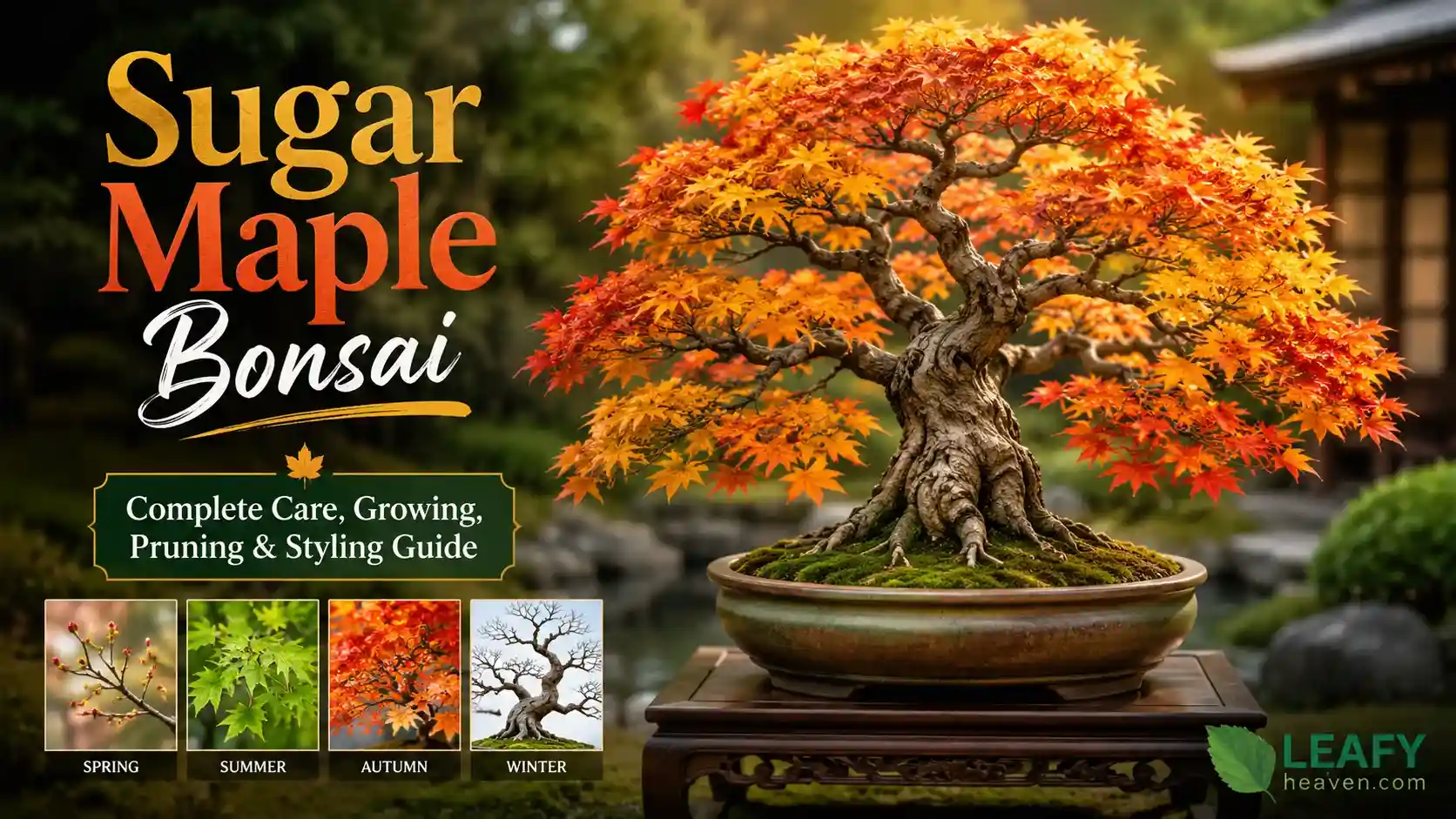
Sugar Maple Bonsai is a miniature form of Acer saccharum that captures the appearance of a mature North American maple tree in a compact bonsai container. Known for its attractive foliage, strong branching structure, and spectacular autumn colors, it is valued by bonsai enthusiasts who want to create a realistic deciduous bonsai with seasonal interest throughout the year.
A Sugar Maple bonsai offers many of the same visual qualities found in full-sized Sugar Maple trees, including a sturdy trunk, elegant branch architecture, and vibrant yellow, orange, and red fall foliage. Through careful pruning, root management, and training techniques, growers can develop a bonsai sugar maple that reflects the character of an aging tree while remaining small enough for display.
Unlike a naturally growing Sugar Maple that can reach impressive heights in forests and landscapes, a sugar maple bonsai tree is intentionally kept compact through bonsai cultivation methods. Regular pruning, controlled root growth, and container cultivation allow the tree to maintain miniature proportions without losing its natural appearance.
The sugar maple tree bonsai is appreciated for its moderate growth rate, long lifespan, and artistic potential. As a deciduous maple bonsai tree, it changes dramatically with the seasons, producing fresh green foliage in spring, dense summer growth, brilliant autumn coloration, and a striking winter silhouette.
Although an American maple bonsai can be highly rewarding, it also presents certain challenges. Leaf size management, moisture control, winter dormancy requirements, and careful branch training all play important roles in long-term success. For growers willing to invest time and patience, a maple tree bonsai developed from Sugar Maple can become an impressive living representation of one of North America’s most iconic trees.
What Is Sugar Maple Bonsai?
Sugar Maple Bonsai is a miniature version of Sugar Maple (Acer saccharum) that is trained and maintained using bonsai techniques to create the appearance of a mature maple tree in a compact container. It combines the natural beauty of one of North America’s most recognizable trees with the artistic principles of bonsai cultivation.
Sugar Maple Bonsai Definition
Sugar Maple Bonsai is created by carefully pruning, shaping, and managing the growth of Sugar Maple trees to maintain a small size while preserving their natural form. The goal is to develop a realistic miniature tree that reflects the proportions, branching patterns, and seasonal characteristics of a full-sized Sugar Maple.
From a botanical perspective, Sugar Maple belongs to the maple genus Acer and is highly valued for its ornamental qualities.
For growers who want to understand the full scope of bonsai cultivation before starting, this comprehensive guide to bonsai trees covers essential techniques from watering and pruning to styling and seasonal care.
Its moderate growth rate, attractive foliage, and strong branching structure make it suitable for long-term bonsai development.
As a deciduous bonsai, Sugar Maple sheds its leaves each autumn and enters a period of winter dormancy. This seasonal cycle creates year-round visual interest, with fresh spring growth, dense summer foliage, vibrant fall colors, and elegant winter branch structure.
Scientific Classification of Sugar Maple
Sugar Maple is a well-known deciduous tree species native to North America and widely recognized for its ornamental and ecological value.
Scientific Classification
- Scientific Name: Acer saccharum
- Family: Sapindaceae
- Genus: Acer
- Plant Type: Deciduous Broadleaf Tree
Common names include:
- Sugar Maple
- Hard Maple
- Rock Maple
The species is native to eastern and central regions of North America, where it grows naturally in forests, woodlands, and mixed hardwood ecosystems. Its adaptability and seasonal beauty have contributed to its popularity among bonsai growers.
Why Sugar Maple Is Used for Bonsai
Sugar Maple is used for bonsai because it combines attractive foliage, seasonal color changes, and strong structural characteristics that respond well to bonsai training.
One of its most desirable features is its distinctive leaf shape and rich green foliage during the growing season. With proper cultivation techniques, leaf size can gradually become more balanced with the overall bonsai design.
The tree is especially admired for its autumn display. Mature specimens can produce brilliant shades of yellow, orange, and red, creating dramatic seasonal interest that enhances the visual appeal of the bonsai.
Sugar Maple also develops a strong trunk over time. As the tree ages, trunk thickness and taper improve, helping create the appearance of a mature landscape tree in miniature form.
Another advantage is its natural branching habit. The species forms an attractive branch framework that supports ramification development, making it possible to create refined and realistic bonsai silhouettes.
Quick Facts About Sugar Maple Bonsai
| Feature | Details |
| Scientific Name | Acer saccharum |
| Common Name | Sugar Maple |
| Type | Deciduous Bonsai |
| Native Region | North America |
| Growth Rate | Moderate |
| Fall Color | Yellow, Orange, Red |
How Does a Sugar Maple Bonsai Look?
A mature Sugar Maple Bonsai develops a sturdy trunk, refined branching, and seasonal foliage that closely resembles a full-sized Sugar Maple growing in nature. As the tree matures, careful pruning and training create the proportions and character of an old maple tree while maintaining a compact bonsai size.
Leaf Characteristics
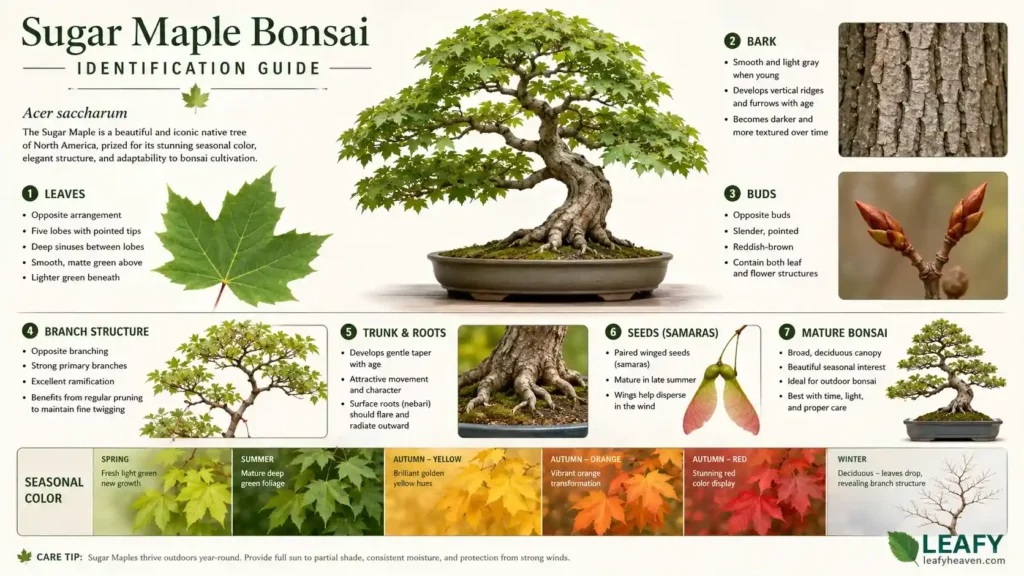
Sugar Maple leaves are one of the most recognizable features of this species. They typically have five distinct lobes, smooth margins, and a rich green color during the growing season.
In nature, Sugar Maple leaves can become quite large. However, bonsai cultivation techniques help reduce leaf size over time. Consistent pruning, controlled fertilization, healthy root management, and branch refinement encourage smaller leaves that remain visually balanced with the miniature tree.
Although Sugar Maple generally produces larger leaves than some popular bonsai species, experienced growers can achieve improved leaf proportions through proper bonsai care and development techniques.
Trunk and Bark Development
A well-developed Sugar Maple Bonsai gradually forms a thick, tapered trunk that creates the appearance of age and stability. Trunk development is one of the most important factors in creating a convincing bonsai design.
Young trees typically have smooth gray bark. As the bonsai matures, the bark becomes more textured and develops greater visual character. Combined with trunk taper and subtle movement, this aging process enhances the overall realism of the bonsai.
Strong trunk development often requires several years of careful cultivation, but it contributes significantly to the tree’s long-term beauty and value.
Branch Structure and Ramification
Sugar Maple naturally develops an attractive branching pattern that responds well to bonsai training. Through selective pruning and branch management, growers can create a balanced branch structure that mimics mature trees found in natural landscapes.
Ramification refers to the development of increasingly fine branch divisions. Over time, repeated pruning encourages dense networks of smaller branches, creating a fuller canopy and a more refined appearance.
Good ramification improves the silhouette of the bonsai during both the growing season and winter, when the branch structure becomes fully visible after leaf drop.
Seasonal Appearance
Spring
Spring brings fresh buds and new foliage growth. Young leaves emerge with a soft texture and bright green color, giving the bonsai a vibrant and energetic appearance.
Summer
During summer, the canopy becomes fuller and denser. Rich green foliage provides shade and highlights the tree’s overall structure. This is typically the period of strongest growth.
Fall
Autumn is often the most spectacular season for Sugar Maple Bonsai. Leaves transform into shades of yellow, orange, and red, creating a dramatic display that makes the tree a centerpiece of any bonsai collection.
Winter
After the leaves fall, the tree enters dormancy. Winter reveals the trunk, branch structure, and ramification in full detail. The leafless silhouette highlights the craftsmanship and maturity of the bonsai design.
Summary Block
Best Ornamental Features
- Distinctive five-lobed Sugar Maple leaves
- Strong trunk development with mature appearance
- Fine branching and ramification potential
- Elegant deciduous bonsai silhouette
- Brilliant autumn color display
Seasonal Interest Throughout the Year
- Spring: Fresh buds and new foliage
- Summer: Dense green canopy and active growth
- Fall: Vibrant yellow, orange, and red colors
- Winter: Attractive bare branch structure and trunk character
This combination of seasonal transformation, refined branching, and colorful foliage is what makes Sugar Maple Bonsai one of the most visually rewarding deciduous bonsai species.
Sugar Maple Bonsai Size and Growth Rate
Sugar Maple Bonsai grows at a moderate rate and can be maintained in a wide range of bonsai sizes through careful pruning, root control, and long-term training. While the species naturally develops into a large forest tree, bonsai techniques allow growers to create compact specimens that retain the appearance of a mature maple in miniature form.
Typical Bonsai Sizes
Sugar Maple Bonsai can be developed in several traditional bonsai size categories. The final size depends on the age of the tree, design goals, container size, and training approach.
Common Sugar Maple Bonsai sizes include:
- Shohin Bonsai: Under 8 inches (20 cm)
- Komono Bonsai: 8–12 inches (20–30 cm)
- Chumono Bonsai: 12–24 inches (30–60 cm)
- Dai Bonsai: Over 24 inches (60 cm)
Many growers prefer medium-sized Sugar Maple Bonsai because larger designs better showcase trunk development, branch structure, and seasonal foliage while maintaining realistic proportions.
Sugar Maple Growth Rate
Sugar Maple Bonsai has a moderate growth rate compared to many other deciduous bonsai species. Healthy trees produce steady annual growth and respond well to pruning during the growing season.
Growth speed is influenced by several factors:
- Tree age
- Sunlight exposure
- Soil quality
- Water availability
- Fertilization program
- Root health
- Climate conditions
Young trees typically grow faster than mature bonsai. During the development phase, growers often allow stronger growth to accelerate trunk thickening and branch formation before focusing on refinement.
How Long Does It Take to Develop a Mature Sugar Maple Bonsai?
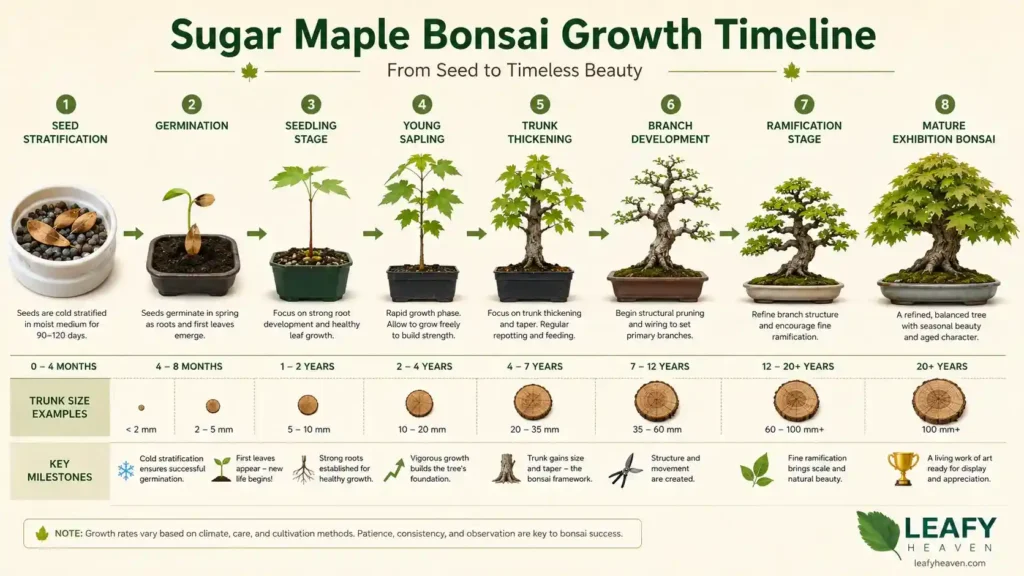
Developing a mature Sugar Maple Bonsai is a long-term process that requires patience and consistent care. While a young tree can begin to resemble a bonsai within a few years, creating a refined specimen with trunk taper, ramification, and mature character takes significantly longer.
A basic bonsai structure may be established within three to five years. However, achieving advanced refinement, detailed branching, and an aged appearance often requires ten years or more of continuous training.
Trees started from seed generally take longer to mature than those developed from nursery stock or established saplings. Regardless of the starting material, bonsai development occurs gradually through repeated cycles of growth, pruning, and refinement.
Growth Timeline Table
| Age | Development Stage |
| 1 Year | Young Seedling |
| 3 Years | Initial Structure |
| 5 Years | Trunk Development |
| 10+ Years | Mature Bonsai |
The timeline can vary depending on growing conditions, cultivation techniques, and the level of refinement desired. Consistent care and long-term training are the key factors that transform a young Sugar Maple into a mature and visually impressive bonsai.
How to Grow a Sugar Maple Bonsai
Sugar Maple Bonsai can be grown from seed, young saplings, nursery stock, or other suitable planting material. Successful development requires patience during the early years, as the tree must first establish strong roots, a healthy trunk, and a balanced branch structure before refinement begins.
Growing from Seeds
Growing Sugar Maple Bonsai from seed provides complete control over the tree’s development from the beginning. It is one of the most rewarding methods but also requires the most time.
Sugar Maple seeds typically require a period of cold stratification before germination. After sprouting, seedlings should be grown vigorously for several years to establish healthy roots and increase trunk thickness.
Benefits of growing from seed include:
- Full control over trunk development
- Strong root formation from an early age
- Opportunity to shape the tree from the beginning
- Lower initial cost
The primary disadvantage is the longer development period compared to starting with more mature plant material.
Growing from Nursery Trees
Nursery-grown Sugar Maple trees are often the fastest way to begin a bonsai project. These trees already have established root systems and trunk development, allowing growers to focus on shaping and training sooner.
When selecting nursery material, look for:
- Healthy foliage
- Strong root health
- Good trunk taper
- Low branch placement
- Interesting trunk movement
- No signs of disease or damage
Many bonsai enthusiasts use nursery stock because it can significantly reduce the time required to create a visually appealing bonsai.
Developing a Bonsai from Young Saplings
Young saplings provide a balance between seed-grown trees and mature nursery stock. They are affordable, adaptable, and easier to shape than older trees.
During the early stages, the primary goal is to encourage vigorous growth while gradually establishing the future trunk line and branch framework. Selective pruning can help guide the tree’s overall structure without slowing development excessively.
Saplings are particularly useful for growers who want more design flexibility while still shortening the development timeline compared to growing from seed.
Root Development Basics
Strong root development is the foundation of every successful Sugar Maple Bonsai. Healthy roots support nutrient uptake, water absorption, and long-term tree vigor.
Early root work focuses on creating a compact and balanced root system that can eventually fit into a bonsai container. Growers gradually encourage radial root growth while removing problematic roots that may interfere with future development.
Key root development goals include:
- Establishing a dense feeder root system
- Creating balanced root distribution
- Improving stability and anchorage
- Preparing the tree for future bonsai containers
A strong root system directly contributes to healthier foliage, improved growth, and better long-term bonsai development.
Numbered Growing Process
1. Select Healthy Material
Choose high-quality seeds, saplings, or nursery stock with good health, strong growth, and promising trunk characteristics. Starting with healthy material greatly improves long-term success.
2. Develop Roots
Focus on building a vigorous root system before major styling work begins. Healthy roots provide the energy needed for trunk thickening and branch development.
3. Train Trunk
Establish the primary trunk line through controlled growth and selective pruning. This stage creates taper, movement, and the overall character of the future bonsai.
4. Build Branch Structure
Select and develop the primary branches that will form the framework of the tree. Proper branch placement creates balance, depth, and visual harmony.
5. Refine Ramification
Once the basic structure is complete, repeated pruning encourages finer branching. This refinement stage produces the dense ramification and mature appearance associated with high-quality Sugar Maple Bonsai.
Best Growing Conditions for Sugar Maple Bonsai
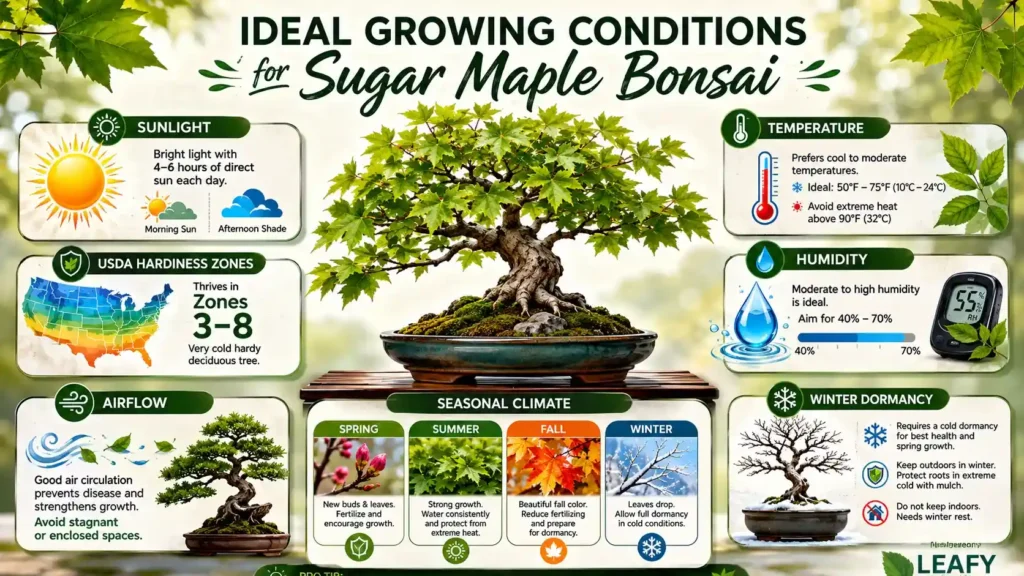
Sugar Maple Bonsai grows best with full morning sun, well-draining soil, consistent moisture, good airflow, and a proper winter dormancy period. Providing suitable environmental conditions helps maintain healthy foliage, steady growth, strong root development, and vibrant seasonal color.
Sunlight Requirements
Sugar Maple Bonsai performs best when it receives several hours of direct morning sunlight followed by partial shade during the hottest part of the afternoon.
Morning sun supports healthy photosynthesis, compact growth, and improved foliage development. In regions with intense summer heat, afternoon protection helps reduce leaf scorch and moisture stress.
General sunlight recommendations include:
- 4–6 hours of morning sun daily
- Light afternoon shade in hot climates
- Bright outdoor growing conditions
- Avoid deep shade for extended periods
Insufficient sunlight may lead to weak growth, elongated shoots, and reduced autumn coloration.
Temperature Preferences
Sugar Maple is naturally adapted to temperate climates and experiences seasonal temperature changes throughout the year. As a deciduous species, it benefits from warm growing seasons and cold winter dormancy.
Ideal temperature conditions include:
- Moderate spring temperatures
- Warm summer growing conditions
- Cool autumn weather
- Cold winter dormancy period
During extreme summer heat, additional shade and careful watering may be necessary to prevent leaf stress and dehydration.
USDA Hardiness Zones
Sugar Maple Bonsai is generally suited to USDA Hardiness Zones 3–8, reflecting the natural range of Acer saccharum throughout North America.
According to the USDA Plant Hardiness Zone Map, Sugar Maple Bonsai is generally suited to Zones 3–8, reflecting the natural range of Acer saccharum throughout North America.
Within these zones, the tree can typically experience the seasonal changes required for healthy growth and dormancy.
Growing success is highest when the bonsai experiences:
- Distinct seasonal transitions
- Cold winter temperatures
- Moderate summer conditions
- Protection from extreme environmental stress
In regions outside its preferred hardiness range, additional seasonal protection may be required.
Humidity Requirements
Sugar Maple Bonsai prefers moderate humidity levels that help support healthy foliage and steady growth.
While the species tolerates a range of humidity conditions, excessively dry environments can increase moisture loss and contribute to leaf edge browning during hot weather.
To maintain suitable humidity:
- Water consistently when needed
- Avoid prolonged drought conditions
- Group bonsai together when appropriate
- Monitor trees carefully during hot, dry periods
Balanced humidity supports healthy leaf development and reduces environmental stress.
Air Circulation Needs
Good air circulation is essential for maintaining a healthy Sugar Maple Bonsai. Proper airflow helps regulate moisture levels around the foliage and reduces the likelihood of fungal problems.
Benefits of adequate air circulation include:
- Faster drying of excess surface moisture
- Reduced disease pressure
- Stronger foliage development
- Improved overall tree health
Avoid placing the bonsai in crowded or stagnant locations where airflow is restricted for long periods.
Quick Summary Box
Ideal Environmental Requirements
| Growing Factor | Ideal Condition |
| Sunlight | Full morning sun with afternoon protection in hot climates |
| Temperature | Temperate conditions with seasonal variation |
| USDA Zones | 3–8 |
| Humidity | Moderate humidity levels |
| Airflow | Good air circulation year-round |
| Dormancy | Cold winter dormancy required |
| Soil Moisture | Consistently moist but well-drained soil |
Providing these environmental conditions helps Sugar Maple Bonsai develop healthy roots, strong branching, vibrant foliage, and reliable seasonal performance throughout the year.
Best Soil Mix for Sugar Maple Bonsai
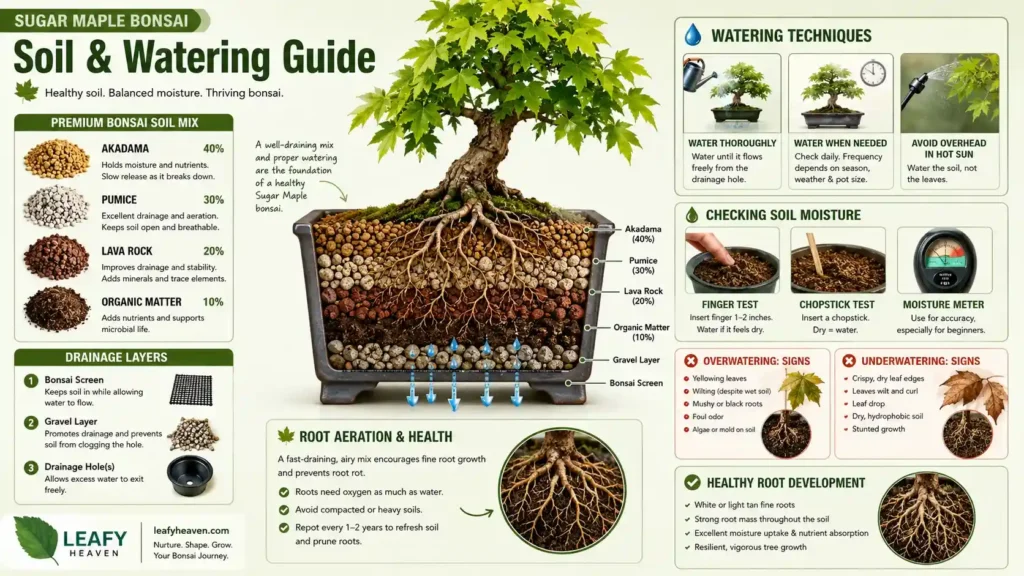
Sugar Maple Bonsai requires a free-draining bonsai soil mix that retains adequate moisture while allowing oxygen to reach the roots. A balanced soil structure promotes healthy root growth, reduces the risk of root rot, and supports steady development throughout the growing season.
Ideal Bonsai Soil Components
A quality Sugar Maple Bonsai soil mix combines inorganic and organic materials to create the proper balance between drainage, moisture retention, and aeration.
Akadama
Akadama is a popular bonsai soil component that provides excellent moisture retention while maintaining good airflow around the roots.
Benefits of akadama include:
- Holds water efficiently
- Encourages fine feeder root development
- Improves nutrient retention
- Supports healthy root growth
Because it gradually breaks down over time, regular repotting helps maintain soil structure.
Pumice
Pumice is a lightweight volcanic material that improves drainage and aeration within the soil mix.
Key advantages include:
- Prevents soil compaction
- Enhances root oxygen availability
- Retains some moisture without becoming waterlogged
- Promotes vigorous root development
Pumice is often used as a primary component in deciduous bonsai soil mixes.
Lava Rock
Lava rock improves drainage and creates air pockets that support healthy root systems.
Benefits include:
- Excellent long-term structural stability
- Increased aeration
- Improved drainage performance
- Reduced risk of waterlogged soil
Its durability makes it a valuable ingredient in bonsai soil blends.
Organic Material
Organic components help increase moisture retention and nutrient availability within the soil mix.
Common organic materials include:
- Pine bark fines
- Compost-based bonsai amendments
- Aged organic matter
Organic content should remain moderate because excessive amounts can reduce drainage and increase the risk of root problems.
Recommended Soil Ratios
The ideal soil ratio depends on climate, watering habits, and growing conditions. However, a balanced mix generally works well for most Sugar Maple Bonsai.
A commonly recommended blend includes:
- 40% Akadama
- 30% Pumice
- 20% Lava Rock
- 10% Organic Material
In hotter climates, slightly increasing moisture-retentive components may help reduce drying stress. In wetter regions, increasing drainage materials may improve root health.
The goal is to create a soil mix that stays evenly moist while allowing excess water to drain freely.
Signs of Poor Soil Conditions
Poor soil conditions can negatively affect root health, growth rate, and overall bonsai vigor.
Common warning signs include:
Compacted Soil
- Water drains slowly
- Reduced root oxygen
- Weak growth
Excessive Water Retention
- Constantly wet soil
- Yellowing leaves
- Increased risk of root rot
Poor Moisture Retention
- Soil dries too quickly
- Frequent wilting
- Leaf scorch during warm weather
Degraded Soil Structure
- Fine particles clog drainage spaces
- Reduced aeration
- Declining root performance
Monitoring soil condition regularly helps identify problems before they affect the tree’s long-term health.
Soil Comparison Table
| Soil Component | Moisture Retention | Drainage | Aeration | Primary Benefit |
| Akadama | High | Moderate | Good | Root development and moisture balance |
| Pumice | Moderate | High | Excellent | Aeration and drainage |
| Lava Rock | Low to Moderate | Excellent | Excellent | Long-term soil structure |
| Organic Material | High | Low to Moderate | Moderate | Moisture and nutrient retention |
A well-balanced soil mix creates the foundation for healthy roots, stable growth, and long-term Sugar Maple Bonsai development.
How to Water a Sugar Maple Bonsai
Water thoroughly when the upper soil begins to dry, but avoid keeping the soil constantly saturated. Sugar Maple Bonsai prefers evenly moist soil that provides adequate hydration without restricting oxygen flow to the roots. Proper watering is one of the most important factors in maintaining healthy foliage, vigorous growth, and a strong root system.
Watering Frequency by Season
Watering requirements change throughout the year because growth rates, temperatures, and moisture loss vary by season.
Spring
During spring, new shoots and leaves emerge rapidly, increasing water demand. Monitor soil moisture regularly and water whenever the upper layer begins to dry.
Summer
Warm temperatures and active growth can significantly increase moisture consumption. More frequent watering is often required, especially during hot or windy weather.
Autumn
As temperatures cool and growth slows, watering frequency can gradually decrease. Soil should remain slightly moist but not excessively wet.
Winter
Dormant trees use much less water. Water only when necessary to prevent the root system from drying out completely.
Summer Watering Needs
Summer is typically the most demanding season for Sugar Maple Bonsai watering. High temperatures, direct sunlight, and active foliage growth can cause soil to dry quickly.
Important summer watering practices include:
- Check soil moisture daily
- Water thoroughly until excess water drains from the pot
- Increase monitoring during heat waves
- Avoid allowing the root ball to become completely dry
- Provide afternoon shade if temperatures become extreme
Small bonsai containers can dry much faster than larger pots, making regular observation essential.
Winter Watering Needs
Although Sugar Maple Bonsai enters dormancy during winter, the roots still require some moisture to remain healthy.
Winter watering guidelines include:
- Water less frequently than during the growing season
- Check soil moisture before watering
- Avoid prolonged waterlogged conditions
- Prevent the root ball from completely drying out
- Reduce watering during extended cold periods
Overwatering during dormancy can be particularly harmful because reduced water usage slows soil drying.
Overwatering Symptoms
Overwatering limits oxygen availability within the root zone and can lead to serious root health problems.
Common symptoms include:
- Yellowing leaves
- Weak or slow growth
- Soft or blackened roots
- Premature leaf drop
- Constantly wet soil
- Unpleasant soil odor
- Increased risk of root rot
If overwatering is suspected, improve drainage, evaluate soil condition, and allow the upper soil layer to dry slightly between watering sessions.
Underwatering Symptoms
Underwatering deprives the tree of essential moisture and can quickly affect foliage health.
Common symptoms include:
- Wilting leaves
- Dry leaf edges
- Brown leaf tips
- Leaf scorch
- Premature leaf drop
- Stunted growth
- Rapid soil drying
Extended periods of drought stress can weaken the tree and reduce overall vigor.
Troubleshooting Table
| Problem | Common Symptoms | Likely Cause | Recommended Solution |
| Overwatering | Yellow leaves, weak growth, root decline | Excessive watering or poor drainage | Improve drainage and allow soil to partially dry |
| Root Rot | Black roots, foul odor, declining health | Constantly saturated soil | Repot into fresh well-draining soil |
| Underwatering | Wilting, dry foliage, brown leaf edges | Insufficient watering | Water thoroughly and monitor soil moisture |
| Rapid Drying | Frequent wilting between waterings | Hot weather or coarse soil mix | Increase monitoring and adjust watering schedule |
| Leaf Scorch | Brown leaf margins during summer | Heat stress and moisture deficiency | Improve watering consistency and provide afternoon shade |
Consistent monitoring is the best watering strategy. Rather than following a fixed schedule, assess soil moisture regularly and adjust watering according to season, weather conditions, and the tree’s growth stage.
Fertilizing Sugar Maple Bonsai for Healthy Growth
Balanced fertilization during the growing season supports healthy foliage, strong root development, branch growth, and gradual trunk thickening. Because Sugar Maple Bonsai grows in a limited soil volume, regular nutrient replenishment is necessary to maintain vigor and support long-term development.
Best Fertilizers
Sugar Maple Bonsai benefits from balanced fertilizers that provide essential macronutrients and micronutrients throughout the growing season.
Key nutrients include:
- Nitrogen (N): Supports leaf and shoot growth
- Phosphorus (P): Encourages root development
- Potassium (K): Improves overall health and stress tolerance
Balanced formulations such as 10-10-10, 12-12-12, or similar ratios are commonly used during active growth.
For trees in the trunk development stage, slightly higher nitrogen levels may encourage stronger growth. More refined bonsai often benefit from balanced feeding that supports controlled growth and ramification.
Additional micronutrients such as iron, magnesium, calcium, and manganese contribute to healthy foliage color and overall tree performance.
Seasonal Feeding Schedule
Fertilizer requirements change throughout the year as the tree moves through different growth stages.
Spring
Spring is the primary growth period for Sugar Maple Bonsai. Begin fertilizing after new growth has emerged and the tree is actively growing.
Spring goals include:
- Encouraging healthy foliage development
- Supporting root activity
- Promoting branch extension
Regular feeding during this period helps establish strong seasonal growth.
Summer
Continue fertilization during summer while monitoring tree health and weather conditions.
Summer feeding supports:
- Sustained growth
- Energy production
- Branch and canopy development
During periods of extreme heat, some growers slightly reduce fertilizer strength to avoid stressing the tree.
Autumn
As growth slows, reduce fertilizer frequency and shift focus toward strengthening the tree before dormancy.
Autumn fertilization can help:
- Support root health
- Improve energy storage
- Prepare the tree for winter dormancy
Heavy nitrogen applications should generally be avoided late in the season.
Winter
Sugar Maple Bonsai enters dormancy during winter and typically does not require fertilization.
Because active growth has stopped, nutrient uptake is minimal. Fertilizer applications during dormancy provide little benefit and are generally unnecessary.
Organic vs Synthetic Fertilizers
Both organic and synthetic fertilizers can be effective for Sugar Maple Bonsai when used correctly. The choice often depends on growing style, maintenance preferences, and cultivation goals.
| Factor | Organic Fertilizers | Synthetic Fertilizers |
| Nutrient Release | Slow and gradual | Fast and readily available |
| Risk of Overfeeding | Lower | Higher if misapplied |
| Soil Biology Support | Excellent | Limited |
| Application Frequency | Usually less frequent | Often more frequent |
| Nutrient Control | Moderate | Precise |
| Long-Term Soil Health | Beneficial | Depends on usage |
Organic Fertilizers
Organic fertilizers release nutrients gradually as they break down. They help support beneficial soil microorganisms and provide a steady nutrient supply.
Common examples include:
- Organic bonsai pellets
- Fish-based fertilizers
- Compost-based products
- Cottonseed meal formulations
Many bonsai growers prefer organic options because they promote stable growth and reduce the risk of nutrient spikes.
Synthetic Fertilizers
Synthetic fertilizers deliver nutrients quickly and allow precise control over feeding programs.
Common examples include:
- Water-soluble balanced fertilizers
- Granular NPK fertilizers
- Specialized bonsai fertilizer formulations
These products can be highly effective when applied correctly but require careful dosing to avoid excessive growth or root stress.
A consistent fertilization program, combined with proper watering and soil management, helps Sugar Maple Bonsai maintain healthy foliage, strong roots, and steady development throughout its life.
How to Prune and Shape a Sugar Maple Bonsai
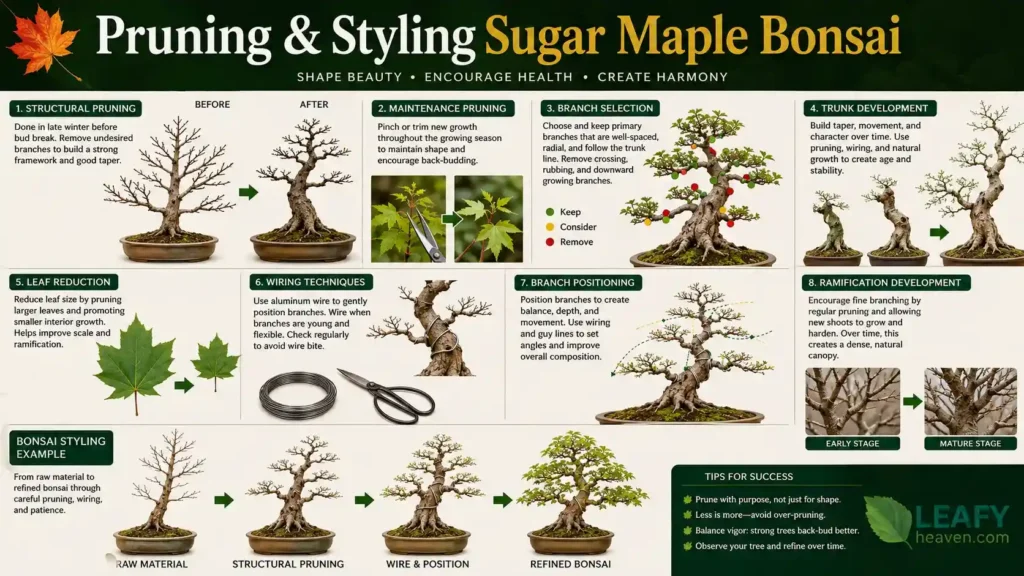
Regular pruning encourages ramification, controls overall size, improves branch structure, and helps maintain a balanced bonsai silhouette. Proper pruning is one of the most important techniques in Sugar Maple Bonsai development because it influences trunk proportions, canopy density, and long-term refinement.
Structural Pruning
Structural pruning establishes the fundamental design of the bonsai. This type of pruning focuses on creating the primary framework that will define the tree’s future appearance.
Structural pruning is typically performed during appropriate dormant or low-growth periods when the branch structure is easier to evaluate.
The main objectives include:
- Developing trunk taper
- Selecting primary branches
- Removing unwanted growth
- Improving overall tree balance
- Creating a clear bonsai design
Branches that cross, grow inward, compete with the trunk, or disrupt the intended design are usually removed during this stage.
Because structural pruning often involves significant cuts, it should be performed carefully and with a long-term design plan in mind.
Maintenance Pruning
Maintenance pruning controls ongoing growth and preserves the shape of the bonsai after the primary structure has been established.
This process is performed throughout the growing season to maintain refinement and encourage additional branching.
Benefits of maintenance pruning include:
- Maintaining compact growth
- Improving ramification
- Preserving branch proportions
- Enhancing canopy density
- Preventing excessive elongation
New shoots are typically shortened after extending beyond the desired silhouette. Consistent maintenance pruning gradually develops a more refined and realistic tree structure.
Leaf Reduction Techniques
Sugar Maple naturally produces leaves that can appear large compared to the overall size of a bonsai. Leaf reduction techniques help improve visual balance and create a more proportional appearance.
Effective leaf reduction methods include:
- Consistent maintenance pruning
- Controlled fertilization
- Balanced watering practices
- Development of dense ramification
- Appropriate sunlight exposure
As branching becomes finer, the tree distributes energy among more growing points. This often results in smaller leaves and improved overall proportions.
Leaf reduction is a gradual process that develops over multiple growing seasons rather than through a single technique.
Defoliation Considerations
Defoliation involves removing some or all leaves from a healthy tree to encourage a second flush of growth and potentially smaller foliage.
While defoliation is sometimes used on advanced deciduous bonsai, Sugar Maple Bonsai generally requires a cautious approach.
Important considerations include:
- Only healthy trees should be considered for defoliation
- Weak or recently repotted trees should not be defoliated
- Excessive defoliation can reduce vigor
- Partial defoliation is often safer than complete defoliation
- Recovery should be monitored carefully
Because Sugar Maple can be sensitive to stress, many growers focus primarily on ramification development and proper pruning rather than aggressive defoliation practices.
Common Pruning Mistakes
Several pruning mistakes can slow development or negatively affect the health and appearance of Sugar Maple Bonsai.
Over-Pruning
Removing too much foliage at one time can weaken the tree and reduce its ability to generate energy.
Ignoring Tree Health
Pruning a stressed, diseased, or weakened tree can increase recovery time and create additional problems.
Removing Important Branches Too Early
Premature removal of branches may slow trunk development and limit future design options.
Poor Timing
Pruning at inappropriate times of the year can interfere with growth cycles and reduce overall vigor.
Neglecting Ramification Development
Focusing only on major branch removal while ignoring fine branching can delay the refinement process.
Creating an Unbalanced Canopy
Excessive pruning on one side of the tree may result in uneven growth and visual imbalance.
Successful Sugar Maple Bonsai pruning relies on gradual development, careful observation, and consistent maintenance. Over time, thoughtful pruning produces stronger ramification, improved proportions, and the mature appearance that defines a high-quality deciduous bonsai.
Wiring and Styling Sugar Maple Bonsai
Wiring helps guide branch placement, improve structure, and create a more natural bonsai design. However, Sugar Maple branches can scar relatively easily, so wiring must be applied carefully and monitored regularly to prevent permanent marks on the bark.
When to Wire Sugar Maple Bonsai
The best time to wire Sugar Maple Bonsai is typically when branches are flexible enough to bend safely without excessive risk of cracking or breaking.
Many growers perform wiring during periods when branch structure is clearly visible and growth is manageable. Young branches are generally easier to shape than older, thicker branches.
When considering wiring:
- Wire healthy trees only
- Avoid wiring extremely brittle branches
- Monitor wired branches regularly
- Remove wire before it begins cutting into the bark
- Adjust timing according to local climate and growth patterns
Because Sugar Maple can grow actively during the growing season, wire marks can develop surprisingly quickly if left unattended.
Safe Wiring Techniques
Safe wiring protects both the branch structure and the appearance of the bonsai.
Important wiring practices include:
- Use appropriately sized bonsai wire
- Apply wire at a consistent angle
- Avoid wrapping too tightly
- Support branches while bending
- Make gradual adjustments rather than aggressive bends
When shaping branches, slow and controlled movement is generally safer than attempting dramatic changes in a single session.
If significant repositioning is required, multiple smaller adjustments over time often produce better results and reduce stress on the tree.
Branch Positioning Strategies
Branch positioning plays a major role in creating a mature and realistic Sugar Maple Bonsai.
The primary goal is to create a balanced branch structure that resembles a naturally growing maple tree.
Common branch positioning principles include:
- Establish a clear front view
- Create visual depth through branch placement
- Avoid excessive branch crowding
- Develop balanced spacing between branches
- Maintain an open canopy structure
- Encourage natural movement and flow
Proper positioning improves light penetration, enhances ramification development, and strengthens the overall silhouette of the bonsai.
Popular Bonsai Styles for Sugar Maple
Sugar Maple adapts well to several traditional bonsai styles due to its attractive branching pattern, deciduous growth habit, and strong seasonal appearance.
Informal Upright Style
The Informal Upright style is one of the most popular choices for Sugar Maple Bonsai.
Characteristics include:
- Slight trunk movement
- Natural appearance
- Balanced branch distribution
- Mature deciduous tree silhouette
This style closely resembles many Sugar Maple trees found in natural landscapes.
Broom Style
Broom Style is particularly well suited to deciduous species that develop fine branching and dense ramification.
Key features include:
- Straight trunk
- Rounded canopy
- Symmetrical branch structure
- Elegant winter silhouette
As ramification develops, this style becomes especially attractive during the leafless winter season.
Clump Style
Clump Style features multiple trunks emerging from a shared root base, creating the appearance of a small grove growing from a single origin.
Benefits include:
- Strong visual impact
- Natural woodland appearance
- Excellent seasonal displays
- Increased design complexity
Sugar Maple’s natural growth habits can work very effectively in this style.
Multi-Trunk Style
Multi-Trunk Style uses several trunks of varying sizes to create a mature and realistic composition.
Characteristics include:
- Dominant primary trunk
- Secondary supporting trunks
- Natural forest-like appearance
- Strong visual depth
This design can showcase the species’ beautiful branching and seasonal foliage.
Forest Style
Forest Style consists of multiple Sugar Maple trees planted together to recreate a miniature woodland scene.
Features include:
- Multiple trees of different sizes
- Natural spacing and placement
- Strong landscape effect
- Exceptional seasonal interest
During autumn, a Sugar Maple forest planting can produce a remarkable display of yellow, orange, and red foliage that closely resembles a natural maple woodland.
By combining careful wiring with thoughtful styling choices, growers can create Sugar Maple Bonsai that capture the character, elegance, and seasonal beauty of mature maples found throughout North America.
Repotting Sugar Maple Bonsai
Repotting every few years keeps roots healthy, maintains soil quality, and prevents the tree from becoming root-bound. Regular repotting is essential for Sugar Maple Bonsai because the confined environment of a bonsai container gradually limits root growth and reduces the effectiveness of the soil mix.
When to Repot
The ideal time to repot Sugar Maple Bonsai is usually just before active spring growth begins. At this stage, the tree is preparing for a new growing season and can recover more efficiently from root work.
Several signs indicate that repotting may be necessary:
- Roots circling inside the container
- Reduced drainage performance
- Water running off the surface instead of penetrating the soil
- Slower growth than normal
- Soil breakdown and compaction
- Excessive root density
Repotting frequency varies according to the tree’s age and growth rate.
General guidelines include:
- Young developing trees: Every 1–2 years
- Established bonsai: Every 2–4 years
- Mature refined specimens: Every 3–5 years, depending on root growth and soil condition
Regular inspection of the root system provides the most reliable indication of when repotting is required.
Repotting Steps
A systematic repotting process helps minimize stress and promotes successful recovery.
1. Prepare the New Pot and Soil
Select a suitable bonsai container and prepare a fresh, well-draining soil mix before removing the tree from its current pot.
2. Remove the Tree Carefully
Lift the bonsai from the container while protecting roots from unnecessary damage.
3. Inspect the Root System
Examine the roots for density, health, and overall condition. Remove old soil carefully to expose the root structure.
4. Prune and Organize Roots
Trim excessive growth while preserving a healthy balance of feeder roots.
5. Position the Tree
Place the tree securely in the container at the desired angle and location.
6. Add Fresh Soil
Work fresh bonsai soil throughout the root system to eliminate large air pockets and improve root-to-soil contact.
7. Water Thoroughly
After repotting, water deeply until excess water drains freely from the container.
Following a structured process helps reduce transplant shock and encourages faster root recovery.
Root Pruning Guidelines
Root pruning is an important part of bonsai maintenance because it keeps the root system compact and encourages the development of fine feeder roots.
The primary objectives of root pruning include:
- Maintaining a manageable root mass
- Encouraging new feeder root production
- Improving root distribution
- Preventing root circling
- Supporting long-term bonsai health
When pruning roots:
- Remove damaged or unhealthy roots
- Preserve a strong network of fine feeder roots
- Avoid excessive root removal
- Maintain balance between roots and canopy
- Use clean, sharp tools
Young vigorous trees typically tolerate more root work than older refined specimens. Conservative pruning is generally safer than aggressive root reduction.
Aftercare Following Repotting
Proper aftercare is critical because the root system requires time to recover and re-establish normal function.
Immediately after repotting:
- Water thoroughly
- Protect the tree from excessive stress
- Monitor moisture levels carefully
- Avoid allowing the soil to dry completely
During the recovery period:
- Provide bright but not excessively harsh conditions
- Protect from extreme heat and strong winds
- Observe foliage for signs of stress
- Resume normal maintenance gradually
Fertilization is typically delayed until the tree shows clear signs of renewed growth and root recovery.
Healthy Sugar Maple Bonsai usually responds well to repotting when performed at the appropriate time and followed by proper aftercare. Consistent repotting and root maintenance help preserve vigor, improve root health, and support long-term bonsai development.
Seasonal Care Calendar for Sugar Maple Bonsai
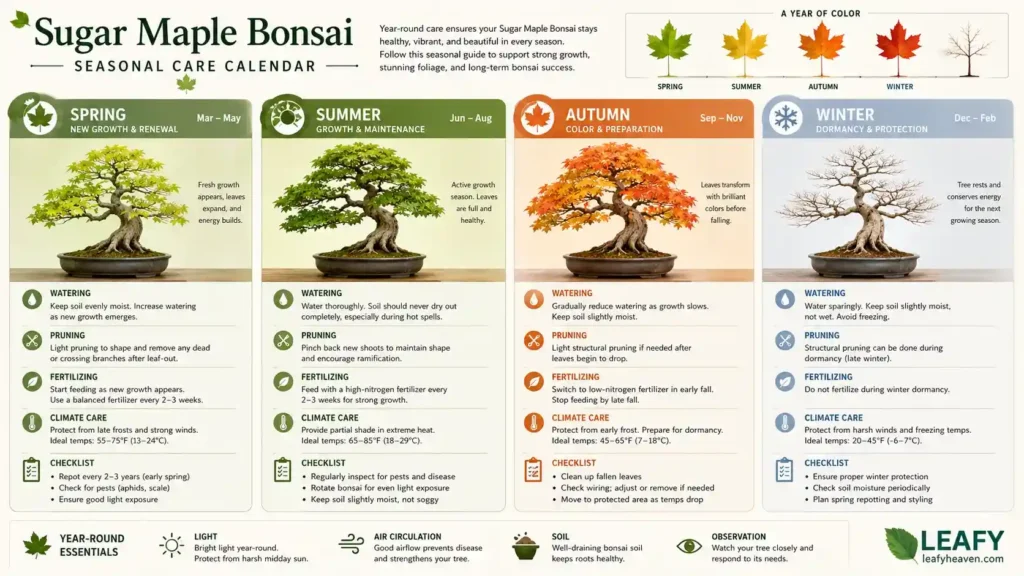
Care requirements change significantly throughout the year as Sugar Maple Bonsai moves through active growth, seasonal transitions, autumn coloration, and winter dormancy. Adjusting maintenance practices according to the season helps maintain tree health, improve growth quality, and support long-term development.
Spring Care
Spring is the most active growth period for Sugar Maple Bonsai. Buds begin to open, new leaves emerge, and the tree enters a phase of vigorous development.
Important spring care tasks include:
- Monitor new growth regularly
- Increase watering as temperatures rise
- Begin fertilization after active growth starts
- Perform repotting if required
- Inspect for early pest activity
- Start structural and maintenance pruning when appropriate
This season is critical for establishing healthy growth that will support the tree throughout the year.
Summer Care
Summer focuses on maintaining healthy foliage and protecting the tree from heat-related stress.
Key summer care practices include:
- Water consistently and monitor soil moisture daily
- Protect from intense afternoon sun in hot climates
- Maintain good air circulation
- Continue balanced fertilization
- Monitor for pests and diseases
- Perform maintenance pruning to preserve shape
High temperatures can increase water demand significantly, making regular observation essential.
Autumn Care
Autumn is known for the spectacular seasonal color display that makes Sugar Maple Bonsai highly desirable.
During this period, growth gradually slows as the tree prepares for dormancy.
Recommended autumn care includes:
- Continue moderate watering
- Reduce fertilizer applications as growth declines
- Remove fallen leaves when necessary
- Observe autumn color development
- Inspect branch structure after leaf drop
- Prepare the tree for winter conditions
This season also provides an excellent opportunity to evaluate the overall design and branch framework of the bonsai.
Winter Care
Winter is the dormancy period for Sugar Maple Bonsai. Although visible growth stops, proper care remains important for root health and long-term vigor.
Winter maintenance tasks include:
- Protect roots from extreme temperature fluctuations
- Water only when needed
- Avoid waterlogged soil
- Monitor for winter damage
- Limit unnecessary pruning
- Maintain adequate air circulation
Because Sugar Maple is a temperate deciduous species, winter dormancy is an essential part of its annual growth cycle.
Seasonal Care Table
| Season | Primary Focus | Key Care Tasks |
| Spring | Active growth and development | Repotting, fertilizing, pruning, increased watering |
| Summer | Growth maintenance and heat protection | Frequent watering, pest monitoring, maintenance pruning |
| Autumn | Dormancy preparation and color display | Reduce feeding, monitor moisture, prepare for winter |
| Winter | Dormancy and root protection | Limited watering, cold protection, health monitoring |
Following a seasonal care routine helps Sugar Maple Bonsai remain healthy, develop stronger structure, and display its full ornamental potential throughout the year.
Common Sugar Maple Bonsai Problems and Solutions
Most Sugar Maple Bonsai problems are caused by watering issues, environmental stress, poor soil conditions, root problems, or pest infestations. Early identification and corrective action can prevent minor issues from becoming serious health concerns.
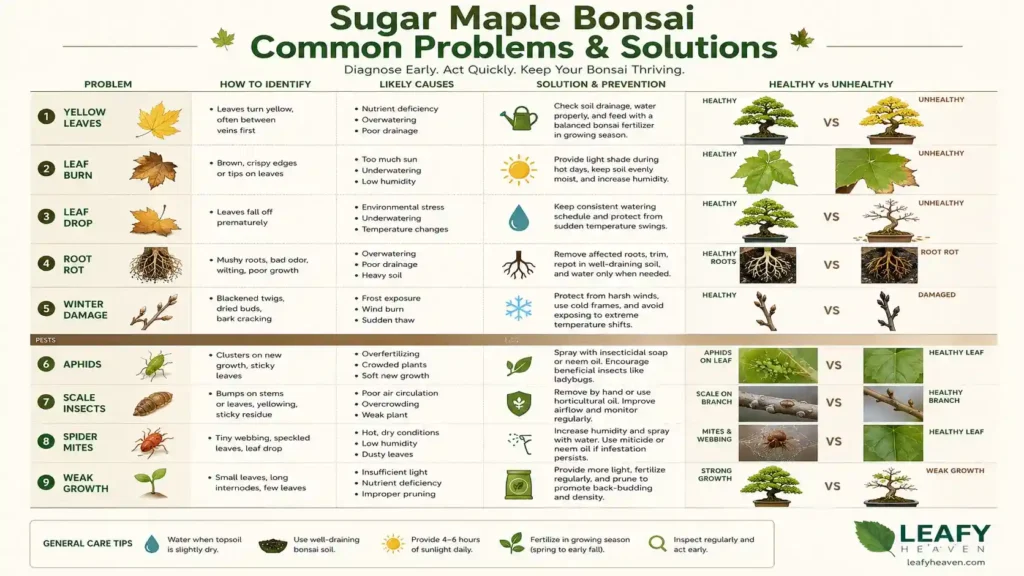
Yellow Leaves
Yellow leaves are among the most common symptoms seen in Sugar Maple Bonsai. While some yellowing is normal during autumn, unexpected yellow leaves during the growing season usually indicate a cultural or environmental problem.
Common causes include:
- Overwatering
- Poor drainage
- Nutrient deficiencies
- Root stress
- Insufficient sunlight
Correcting the underlying cause and restoring proper growing conditions often resolves the issue.
Leaf Burn
Leaf burn appears as brown, dry, or scorched leaf edges and is often associated with heat or moisture stress.
Potential causes include:
- Intense afternoon sun
- Hot, dry weather
- Inconsistent watering
- Low humidity
- Excessive fertilizer salts
Providing afternoon shade during extreme heat and maintaining consistent soil moisture can help prevent leaf burn.
Leaf Drop
Premature leaf drop can occur when the tree experiences stress or environmental changes.
Possible causes include:
- Underwatering
- Overwatering
- Sudden temperature fluctuations
- Root disturbances
- Severe pest infestations
Although occasional leaf loss may occur, persistent or excessive leaf drop should be investigated promptly.
Weak Growth
Weak growth often indicates that the tree is not receiving optimal growing conditions.
Common contributing factors include:
- Insufficient sunlight
- Poor soil quality
- Root congestion
- Nutrient deficiencies
- Inadequate watering practices
Healthy Sugar Maple Bonsai should produce steady annual growth and consistent foliage development during the growing season.
Root Rot
Root rot is one of the most serious problems affecting Sugar Maple Bonsai. It develops when roots remain in excessively wet soil for extended periods.
Warning signs include:
- Yellowing foliage
- Weak growth
- Wilting despite moist soil
- Foul-smelling soil
- Black or soft roots
Prevention focuses on:
- Using free-draining soil
- Avoiding chronic overwatering
- Maintaining proper drainage
- Repotting when soil structure deteriorates
Early intervention significantly improves recovery chances.
Winter Damage
Sugar Maple Bonsai requires winter dormancy, but severe weather conditions can sometimes cause damage.
Potential winter issues include:
- Root freezing
- Branch dieback
- Desiccation from cold winds
- Sudden temperature fluctuations
Protective measures may include:
- Sheltered overwintering locations
- Root insulation
- Wind protection
- Careful moisture monitoring
Proper winter protection helps preserve tree health while still allowing natural dormancy.
Pest Problems
Several common bonsai pests can affect Sugar Maple Bonsai if conditions become favorable for infestation.
Aphids
Aphids are small sap-feeding insects that commonly attack new growth.
Symptoms include:
- Distorted leaves
- Sticky honeydew residue
- Reduced vigor
- Clusters of insects on tender shoots
Early treatment and regular monitoring usually keep populations under control.
Scale Insects
Scale insects attach themselves to branches and stems while feeding on plant sap.
Common signs include:
- Small shell-like bumps on branches
- Yellowing foliage
- Reduced growth
- Sticky residue on leaves
Persistent infestations may weaken the tree over time if not addressed.
Spider Mites
Spider mites are extremely small pests that often become active during hot and dry conditions.
Symptoms may include:
- Fine webbing
- Speckled or stippled leaves
- Foliage discoloration
- Reduced vigor
Maintaining proper humidity and monitoring foliage regularly can help detect infestations early.
Problem-Solution Table
| Problem | Common Symptoms | Likely Cause | Recommended Solution |
| Yellow Leaves | Yellow foliage during growing season | Overwatering, nutrient issues, poor drainage | Adjust watering, improve soil, review fertilization |
| Leaf Burn | Brown or scorched leaf edges | Heat stress, drought, excessive sun | Increase moisture consistency and provide afternoon protection |
| Leaf Drop | Premature leaf loss | Environmental stress, watering issues | Identify stress source and stabilize growing conditions |
| Weak Growth | Slow development, small shoots | Poor light, nutrient deficiency, root problems | Improve growing conditions and root health |
| Root Rot | Soft roots, foul odor, declining vigor | Waterlogged soil | Repot into well-draining soil and reduce excess moisture |
| Winter Damage | Dieback, branch injury, root stress | Severe cold exposure | Provide winter protection and monitor moisture |
| Aphids | Distorted new growth, sticky residue | Sap-feeding insects | Remove infestations and monitor regularly |
| Scale Insects | Bumps on branches, reduced vigor | Scale infestation | Treat affected areas and improve monitoring |
| Spider Mites | Webbing, leaf stippling | Hot, dry conditions | Increase monitoring and maintain suitable humidity |
Regular observation, proper cultural practices, and prompt corrective action are the most effective ways to prevent and manage Sugar Maple Bonsai problems before they affect long-term health and development.
Sugar Maple Bonsai vs Other Maple Bonsai Trees
Sugar Maple Bonsai offers outstanding seasonal color, strong trunk development, and a classic North American maple appearance. However, it differs from other maple bonsai species in leaf size, growth characteristics, refinement potential, and maintenance requirements. Understanding these differences helps growers choose the species that best matches their climate, experience level, and bonsai goals.
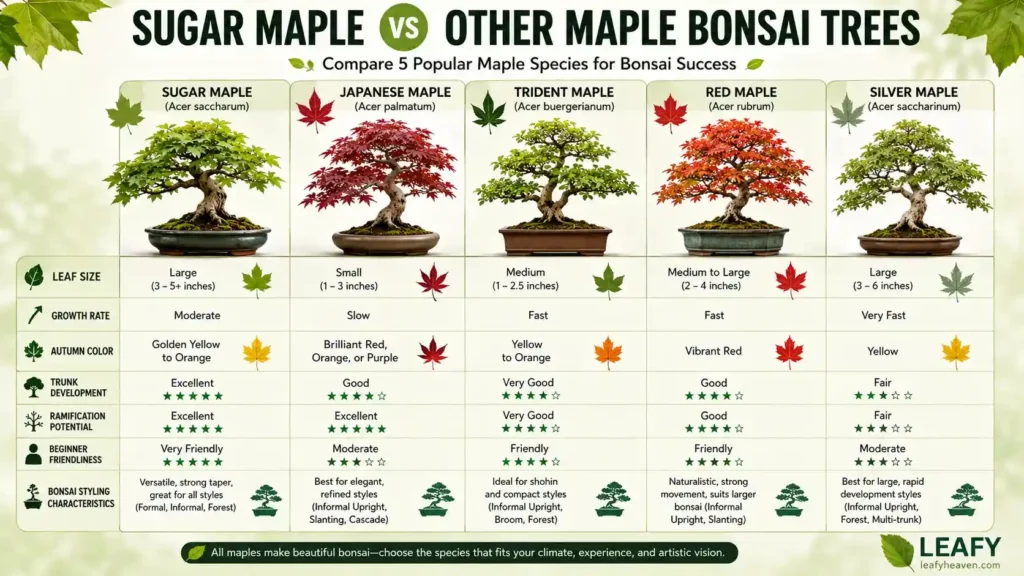
Sugar Maple vs Japanese Maple Bonsai
The most common comparison is between Sugar Maple and Japanese maple bonsai. Both species are admired for their seasonal beauty, but they offer different visual characteristics and cultivation experiences.
A Japanese Maple Bonsai typically produces smaller leaves, finer branching, and more delicate growth habits. Because of these traits, many growers find it easier to achieve refined bonsai proportions with a japanese maple bonsai tree.
Sugar Maple Bonsai, on the other hand, develops a stronger, more rugged appearance. It is valued for its sturdy trunk, natural forest-tree character, and brilliant autumn colors.
Key differences include:
- Sugar Maple generally has larger leaves
- Japanese Maple often develops finer ramification
- Sugar Maple creates a more robust appearance
- Japanese Maple is especially popular for refined exhibition bonsai
Both species provide spectacular autumn color and are highly respected among deciduous bonsai enthusiasts.
Sugar Maple vs Trident Maple Bonsai
Trident maple bonsai is widely considered one of the most bonsai-friendly maple species due to its vigorous growth and excellent response to training.
Compared to Sugar Maple:
- Trident Maple usually develops smaller leaves
- Trident Maple thickens trunks relatively quickly
- Sugar Maple provides a more traditional North American maple appearance
- Trident Maple often responds exceptionally well to pruning and ramification techniques
Many growers choose bonsai trident maple specimens because they are adaptable and relatively forgiving during development.
For growers focused on rapid refinement and strong ramification, trident bonsai trees are often preferred. For those seeking the iconic appearance of a mature Sugar Maple, Acer saccharum remains highly attractive.
Sugar Maple vs Red Maple Bonsai
Red maple bonsai shares many similarities with Sugar Maple because both are native North American deciduous trees.
However, several distinctions exist:
- Red Maple often displays brighter red autumn coloration
- Sugar Maple commonly produces yellow, orange, and red fall tones
- Sugar Maple generally develops denser branching over time
- Red Maple may grow somewhat faster under favorable conditions
A mature red maple bonsai tree can create a dramatic seasonal display, particularly during autumn when foliage color reaches its peak intensity.
Both species can become impressive deciduous bonsai when properly developed and maintained.
Sugar Maple vs Silver Maple Bonsai
Silver maple bonsai is less commonly used than Sugar Maple, Japanese Maple, or Trident Maple, but it remains an option for growers interested in native North American species.
Compared to Sugar Maple:
- Silver Maple typically grows more aggressively
- Silver Maple often produces larger leaves
- Sugar Maple generally offers superior bonsai proportions
- Sugar Maple tends to develop a more refined appearance
Many growers find that bonsai silver maple projects require additional effort to manage leaf size and vigorous growth.
Although silver maple bonsai can be attractive, Sugar Maple is often preferred because of its stronger seasonal characteristics and greater suitability for refined bonsai development.
Comparison Table
| Feature | Sugar Maple Bonsai | Japanese Maple Bonsai | Trident Maple Bonsai | Red Maple Bonsai | Silver Maple Bonsai |
| Scientific Name | Acer saccharum | Acer palmatum | Acer buergerianum | Acer rubrum | Acer saccharinum |
| Leaf Size | Medium to Large | Small to Medium | Small | Medium | Large |
| Growth Rate | Moderate | Moderate | Moderate to Fast | Moderate to Fast | Fast |
| Ramification Potential | Good | Excellent | Excellent | Good | Moderate |
| Autumn Color | Yellow, Orange, Red | Red, Orange, Yellow | Orange, Red | Bright Red | Yellow |
| Trunk Development | Strong | Moderate | Strong | Moderate | Fast |
| Beginner Friendly | Moderate | Moderate | High | Moderate | Moderate |
| Refinement Potential | Good | Excellent | Excellent | Good | Moderate |
| Overall Bonsai Popularity | High | Very High | Very High | Moderate | Lower |
Each maple species offers unique advantages. Sugar Maple Bonsai stands out for its iconic appearance, strong trunk development, and remarkable seasonal color changes, while Japanese Maple, Trident Maple, Red Maple, and Silver Maple provide alternative characteristics that may better suit specific bonsai styles and growing preferences.
Is Sugar Maple Bonsai Suitable for Beginners?
Sugar Maple Bonsai is moderately challenging and is generally better suited to growers who already have some basic bonsai experience. While it is not considered one of the most difficult bonsai species, it requires consistent care, seasonal management, and an understanding of deciduous tree cultivation to achieve the best results.
Beginner Advantages
Despite its moderate difficulty level, Sugar Maple Bonsai offers several characteristics that can benefit newer bonsai enthusiasts.
Key beginner advantages include:
- Attractive seasonal appearance throughout the year
- Strong trunk development potential
- Predictable growth pattern
- Long lifespan when properly maintained
- Excellent educational value for learning deciduous bonsai techniques
- Rewarding autumn color display
The species also provides valuable experience with pruning, branch development, root management, and seasonal care cycles that are important skills for long-term bonsai success.
For beginners who are willing to learn and follow proper care practices, Sugar Maple can become an enjoyable and highly rewarding bonsai project.
Beginner Challenges
Several characteristics make Sugar Maple Bonsai more demanding than some beginner-friendly species.
Common challenges include:
- Larger natural leaf size compared to many bonsai species
- Need for winter dormancy
- Sensitivity to prolonged drought stress
- Risk of leaf scorch during extreme summer heat
- Requirement for consistent moisture management
- Long development timeline for advanced refinement
Beginners may also find it challenging to balance growth control, ramification development, and seasonal maintenance during the early years of cultivation.
Because bonsai success often depends on observation and timely adjustments, growers must be prepared to monitor the tree regularly throughout the year.
Who Should Grow Sugar Maple Bonsai?
Sugar Maple Bonsai is best suited for growers who appreciate deciduous bonsai and are interested in developing a tree over many years.
It is an excellent choice for:
- Intermediate bonsai enthusiasts
- Growers interested in North American native tree species
- Hobbyists who enjoy seasonal color changes
- Bonsai practitioners seeking long-term development projects
- Gardeners with outdoor growing space and winter conditions suitable for dormancy
It may be less suitable for:
- Individuals seeking a low-maintenance bonsai
- Growers who can only keep bonsai indoors year-round
- Those looking for extremely fast refinement
- Beginners who prefer highly forgiving species
For dedicated growers willing to learn proper seasonal care, Sugar Maple Bonsai offers a rewarding balance of horticultural challenge, artistic development, and year-round visual interest.
Beginners who find Sugar Maple challenging may want to start with Amur Maple Bonsai, which offers similar seasonal beauty with stronger cold tolerance and faster trunk development.
Its combination of strong structure, beautiful autumn foliage, and classic maple character makes it a valuable addition to many bonsai collections.
Benefits of Growing a Sugar Maple Bonsai
Sugar Maple Bonsai provides year-round beauty, dramatic seasonal color changes, artistic satisfaction, and long-term horticultural enjoyment. Beyond its visual appeal, it offers opportunities to develop bonsai skills while cultivating one of North America’s most recognizable tree species in miniature form.
Ornamental Benefits
One of the greatest advantages of Sugar Maple Bonsai is its exceptional ornamental value throughout the year.
Its visual appeal changes with every season:
- Fresh green foliage in spring
- Dense leafy canopy during summer
- Brilliant yellow, orange, and red colors in autumn
- Elegant branch structure during winter dormancy
Additional ornamental benefits include:
- Attractive maple leaf shape
- Strong trunk development
- Natural branching patterns
- Impressive seasonal transitions
- Mature tree appearance in miniature form
These characteristics make Sugar Maple Bonsai a visually rewarding species for both casual enthusiasts and experienced bonsai growers.
Educational Benefits
Growing Sugar Maple Bonsai provides valuable learning opportunities in both bonsai cultivation and tree biology.
Through long-term care, growers gain experience with:
- Pruning techniques
- Branch development
- Root management
- Seasonal maintenance
- Watering practices
- Fertilization programs
- Repotting procedures
- Deciduous bonsai development
Because Sugar Maple follows a distinct annual growth cycle, it helps growers better understand dormancy, seasonal growth patterns, and the relationship between environmental conditions and tree health.
For students, hobbyists, and bonsai enthusiasts, it serves as an excellent educational project that continues to teach new lessons over many years.
Landscape and Display Value
Sugar Maple Bonsai offers strong display value due to its recognizable form and dramatic seasonal character.
Its landscape and presentation advantages include:
- Creates a focal point in bonsai collections
- Enhances seasonal displays
- Complements other deciduous bonsai species
- Reflects the appearance of mature woodland trees
- Provides year-round visual interest
During autumn, the tree often becomes one of the most striking specimens in a collection because of its vibrant foliage colors. In winter, the refined branch structure and trunk character become the primary visual features, offering a completely different but equally attractive display.
Whether displayed individually or as part of a larger bonsai collection, Sugar Maple Bonsai combines artistic beauty, horticultural value, and seasonal diversity in a way that few tree species can match.
Conclusion
Sugar Maple Bonsai combines the beauty of North America’s iconic maple tree with the artistry of bonsai cultivation, creating a rewarding long-term project for bonsai enthusiasts. With its distinctive foliage, strong trunk development, seasonal color transformations, and natural branching structure, it offers both horticultural interest and artistic potential throughout every stage of development.
Although Sugar Maple Bonsai requires consistent care, proper watering, seasonal maintenance, and patience during training, the results can be highly rewarding. Over time, growers can develop a miniature tree that captures the character and elegance of a mature Sugar Maple while showcasing the principles of bonsai design.
Key Takeaways
Identification
- Sugar Maple Bonsai is created from Acer saccharum
- A deciduous bonsai species native to North America
- Recognized by its lobed leaves, seasonal color changes, and strong branching structure
- Valued for its realistic mature-tree appearance
Growing Requirements
- Prefers full morning sun with protection from excessive afternoon heat
- Requires well-draining bonsai soil with balanced moisture retention
- Performs best in climates that provide natural winter dormancy
- Benefits from good airflow and consistent environmental conditions
Care Essentials
- Water thoroughly when the upper soil begins to dry
- Fertilize regularly during the growing season
- Repot periodically to maintain root health
- Monitor for pests, root problems, and environmental stress
- Adjust care practices according to seasonal needs
Styling Potential
- Responds well to pruning and branch development techniques
- Suitable for several traditional bonsai styles
- Develops strong trunks and attractive ramification over time
- Offers excellent opportunities for long-term refinement
Seasonal Beauty
- Fresh foliage emerges in spring
- Dense green canopy develops during summer
- Brilliant yellow, orange, and red colors appear in autumn
- Elegant branch structure becomes visible during winter dormancy
For growers who appreciate deciduous bonsai and enjoy watching a tree evolve over many years, Sugar Maple Bonsai offers a unique combination of natural beauty, seasonal interest, and artistic expression that continues to improve with age and careful cultivation.
Frequently Asked Questions (FAQs)
Can Sugar Maple be used as a bonsai tree?
Yes, Sugar Maple (Acer saccharum) can be successfully used as a bonsai tree. Its attractive foliage, strong trunk development, natural branching structure, and vibrant autumn colors make it a desirable deciduous bonsai species. Although it requires patience and proper seasonal care, it has excellent long-term bonsai potential.
How fast does a Sugar Maple Bonsai grow?
Sugar Maple Bonsai has a moderate growth rate. Young trees generally grow faster during the development stage, especially when grown in larger training containers. Growth speed depends on factors such as sunlight, watering, fertilization, soil quality, climate, and overall tree health. Significant trunk development often takes several years, while highly refined bonsai may require a decade or more of training.
Is Sugar Maple Bonsai suitable for beginners?
Sugar Maple Bonsai is moderately suitable for beginners but is generally easier for growers who already have some bonsai experience. The species requires proper watering, seasonal care, winter dormancy, and regular maintenance. Beginners who are willing to learn and monitor their trees consistently can still achieve success with Sugar Maple Bonsai.
Does Sugar Maple Bonsai need winter dormancy?
Yes, Sugar Maple Bonsai requires winter dormancy. As a temperate deciduous species, it naturally enters a dormant period during winter. Dormancy is important for long-term health, energy storage, and normal growth cycles. Trees that do not experience adequate dormancy may gradually weaken over time.
How often should I water a Sugar Maple Bonsai?
There is no fixed watering schedule because watering frequency depends on weather conditions, soil type, container size, and seasonal growth. In general, Sugar Maple Bonsai should be watered thoroughly when the upper layer of soil begins to dry. During summer, watering may be needed more frequently, while winter usually requires much less frequent watering.
What is the best soil mix for Sugar Maple Bonsai?
The best soil mix for Sugar Maple Bonsai is a free-draining blend that balances moisture retention with aeration. A commonly recommended mix consists of akadama, pumice, lava rock, and a small amount of organic material. This combination helps maintain healthy roots while preventing excessive water retention and soil compaction.
How does Sugar Maple Bonsai compare to Japanese Maple Bonsai?
Sugar Maple Bonsai and Japanese Maple Bonsai are both attractive deciduous bonsai species, but they differ in several ways. Sugar Maple generally develops a stronger, more rugged appearance and often has larger leaves. Japanese Maple Bonsai typically produces finer branching, smaller foliage, and a more delicate aesthetic. Both species provide excellent autumn color and strong ornamental value.
Can Sugar Maple Bonsai be grown indoors?
No, Sugar Maple Bonsai is not considered a true indoor bonsai. It is an outdoor tree that requires natural seasonal changes, including winter dormancy. Long-term indoor cultivation usually prevents the tree from receiving the environmental conditions it needs to remain healthy. Sugar Maple Bonsai performs best when grown outdoors throughout the year with appropriate seasonal protection when necessary.

Written by the LeafyHeaven Editorial Team
LeafyHeaven shares practical gardening tips and simple plant care guides to help you grow, nurture, and enjoy your plants with ease. Our goal is to make gardening feel natural, approachable, and rewarding for everyone.