
Introduction
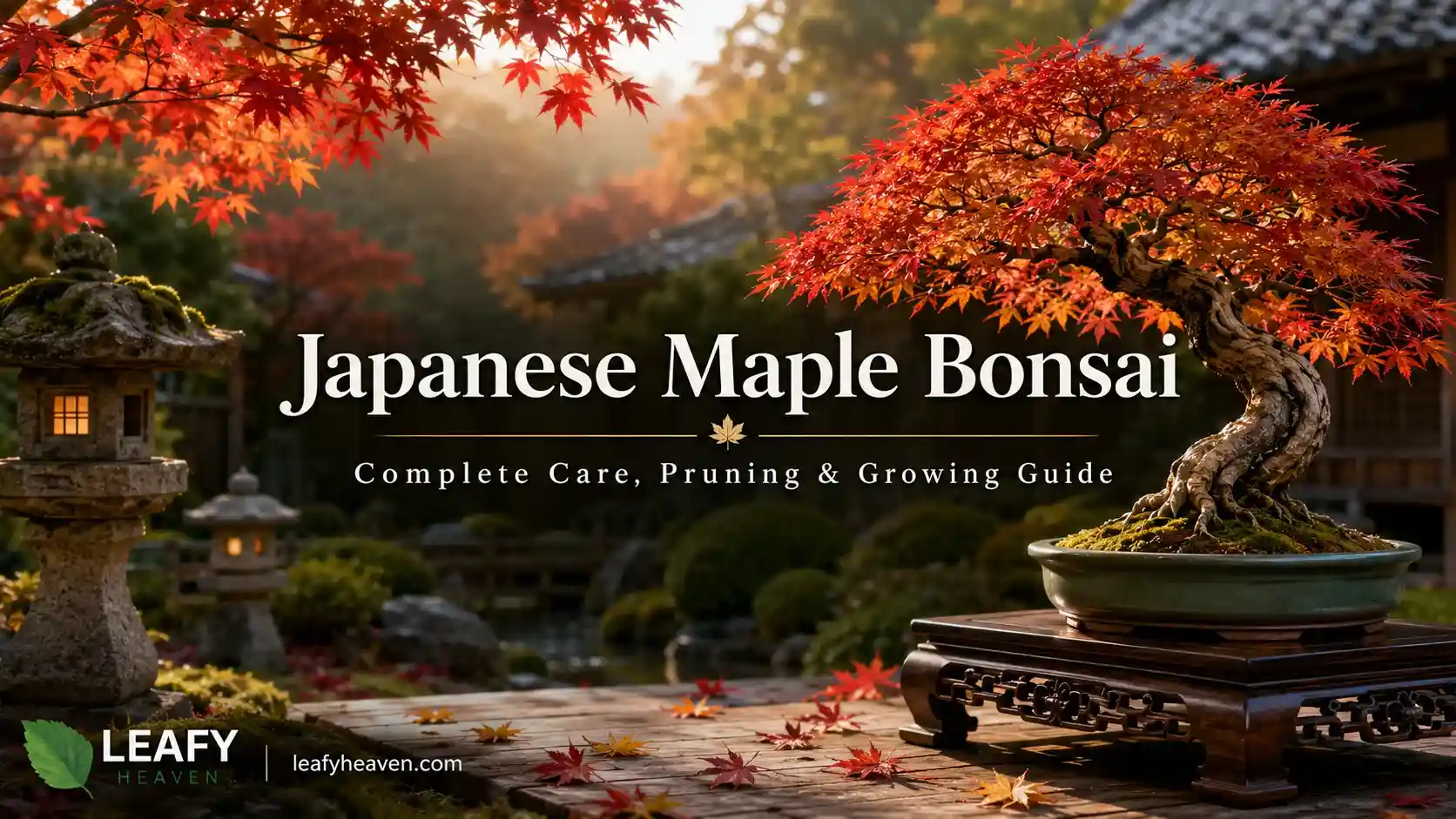
Japanese Maple Bonsai is a miniature form of Acer palmatum that combines the natural beauty of Japanese maple trees with the artistic techniques of bonsai cultivation. Known for its elegant branching patterns, delicate leaves, and spectacular seasonal color changes, it is widely regarded as one of the most attractive deciduous bonsai trees. Its refined appearance and vibrant autumn foliage make it a favorite among bonsai enthusiasts worldwide.
One reason Acer palmatum remains so popular in bonsai is its ability to develop fine ramification, graceful trunk movement, and stunning leaf colors ranging from bright green to deep red. Popular forms include red Japanese maple bonsai, green Japanese maple bonsai, and weeping Japanese maple bonsai, each offering unique visual appeal throughout the growing season.
As an outdoor bonsai, Japanese Maple Bonsai thrives when exposed to natural seasonal cycles, including spring growth, summer development, autumn color display, and winter dormancy. Successful cultivation involves proper watering, balanced fertilization, careful pruning, suitable bonsai styling, and winter protection. Understanding these core care requirements helps growers develop healthy, long-lived bonsai trees with exceptional beauty and character.
What Is a Japanese Maple Bonsai?
Japanese Maple Bonsai is a trained miniature Acer palmatum tree grown in a shallow bonsai container using pruning, wiring, and root control techniques. It is cultivated to replicate the appearance of a mature Japanese maple in a compact form while preserving its natural beauty, branching structure, and seasonal foliage changes.
Japanese Maple Bonsai is highly valued for its delicate leaves, graceful growth habit, and exceptional autumn color display. Through careful bonsai training, growers develop balanced branch structure, refined ramification, and artistic trunk movement that enhance the tree’s miniature appearance.
Scientific Name and Classification
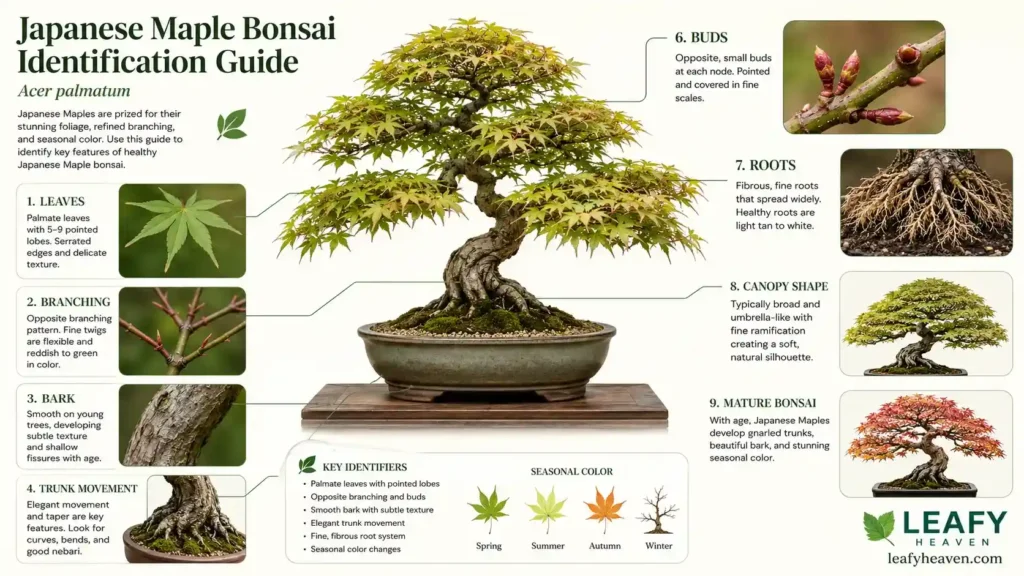
The scientific name of Japanese Maple Bonsai is Acer palmatum, a species widely recognized for its ornamental value and adaptability to bonsai cultivation. It belongs to the Sapindaceae family and is naturally found in parts of East Asia.
Key classification details include:
- Scientific Name: Acer palmatum
- Common Names: Japanese Maple, Smooth Japanese Maple, Palmate Maple
- Plant Type: Deciduous tree
- Bonsai Classification: Deciduous Bonsai
- Family: Sapindaceae
- Native Regions: Japan, Korea, and China
Because of its manageable leaf size, elegant growth pattern, and responsiveness to pruning, Acer palmatum has become one of the most respected species in traditional bonsai culture.
Key Characteristics of Japanese Maple Bonsai
Japanese Maple Bonsai is recognized for a combination of refined structural features and dramatic seasonal beauty. These characteristics make it one of the most visually appealing bonsai species.
Key characteristics include:
- Delicate Palmate Leaves: Distinct hand-shaped leaves with multiple pointed lobes.
- Seasonal Color Changes: Foliage transitions through shades of green, red, orange, yellow, and crimson depending on the cultivar and season.
- Fine Branching Structure: Naturally develops detailed ramification that enhances bonsai refinement.
- Elegant Trunk Movement: Graceful curves and balanced proportions create a mature tree appearance.
- Autumn Foliage Display: Brilliant fall colors are among the most admired features of Japanese Maple Bonsai.
These qualities allow Japanese Maple Bonsai to provide year-round interest, from fresh spring growth and summer foliage to spectacular autumn color and attractive winter branch structure.
Quick Japanese Maple Bonsai Care Summary
Japanese Maple Bonsai grows best outdoors with balanced moisture, filtered sunlight, well-draining soil, and seasonal pruning. Consistent care throughout the year helps maintain healthy foliage, strong root development, refined branching, and vibrant seasonal color.
| Care Factor | Requirement |
| Botanical Name | Acer palmatum |
| Bonsai Type | Deciduous Bonsai |
| Sunlight | Morning sun, afternoon shade |
| Watering | Evenly moist soil |
| Soil | Well-draining bonsai mix |
| Fertilizer | Balanced seasonal fertilizer |
| Repotting | Every 2–3 years |
| Indoor Growing | Not ideal long-term |
| Winter Care | Dormancy protection needed |
Japanese Maple Bonsai performs best when grown outdoors where it can experience natural seasonal changes. Proper light exposure, careful watering, and well-draining soil are essential for maintaining healthy growth and preventing common issues such as leaf scorch and root problems.
Regular pruning helps preserve the tree’s shape and encourages fine branching, while seasonal fertilization supports healthy foliage and root development. Because Acer palmatum is a deciduous bonsai, winter dormancy is an important part of its annual growth cycle and should not be skipped.
Is Japanese Maple Bonsai Indoor or Outdoor?
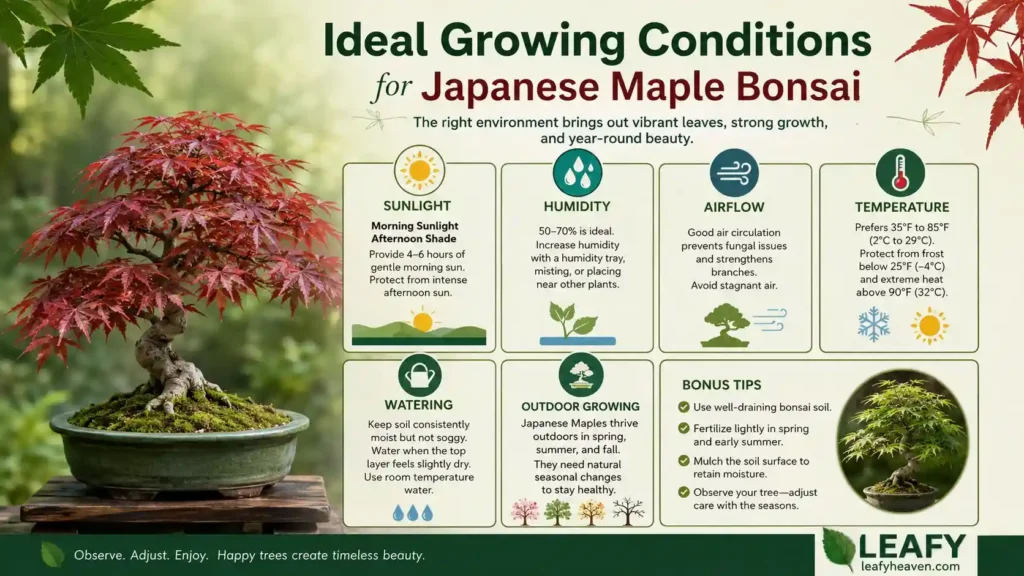
Japanese Maple Bonsai is mainly an outdoor bonsai because it requires seasonal dormancy, natural airflow, and outdoor light cycles. These natural environmental conditions support healthy growth, strong root development, proper leaf formation, and long-term tree health.
Unlike tropical bonsai species, Japanese Maple Bonsai depends on seasonal changes to complete its annual growth cycle. Outdoor placement allows the tree to experience spring growth, summer development, autumn color changes, and winter dormancy naturally.
Can Japanese Maple Bonsai Grow Indoors?
Japanese Maple Bonsai can be placed indoors for short periods, but it is not suitable as a permanent indoor bonsai tree.
Important considerations include:
- Short-term indoor placement is possible for display purposes or temporary protection.
- Long-term indoor growing weakens the tree because natural environmental conditions are missing.
- Lack of winter dormancy can disrupt the tree’s growth cycle and reduce long-term vigor.
- Low indoor humidity often causes leaf stress and foliage problems.
- Weak indoor light levels may result in poor growth, elongated shoots, and reduced leaf quality.
For healthy development, Japanese Maple Bonsai should spend most of its life outdoors rather than inside a home or office.
Best Outdoor Growing Conditions
Japanese Maple Bonsai thrives when grown in a protected outdoor location that balances sunlight, airflow, and moisture.
Ideal outdoor conditions include:
- Morning sunlight to support healthy growth and strong foliage development.
- Afternoon shade to reduce leaf scorch during hot weather.
- Wind protection to prevent leaf damage and excessive moisture loss.
- Humid but airy conditions that encourage healthy foliage while reducing disease risks.
- Protection from harsh summer heat, especially during heatwaves and extremely hot afternoons.
A location that receives gentle morning sun and filtered afternoon light typically provides the best environment for maintaining vibrant foliage, refined branching, and healthy seasonal growth.
Japanese Maple Bonsai Light Requirements
Japanese Maple Bonsai needs bright filtered light with gentle sun exposure to maintain healthy foliage and strong growth. Proper light levels help support leaf color, branch development, photosynthesis, and seasonal vigor while reducing the risk of leaf scorch and heat stress.
Because Acer palmatum naturally grows in environments with filtered sunlight, excessive direct sun can damage delicate foliage. Providing the right balance of sunlight and shade is essential for maintaining an attractive and healthy bonsai.
How Much Sunlight Does Japanese Maple Bonsai Need?
Japanese Maple Bonsai performs best when it receives several hours of gentle sunlight combined with protection from intense afternoon heat.
Key sunlight requirements include:
- Morning sun benefits include stronger growth, improved foliage health, and enhanced seasonal color development.
- Afternoon shade is important because intense midday and afternoon sunlight can scorch delicate leaves.
- Red Japanese maple bonsai varieties generally require more protection from strong sun to preserve leaf color and prevent burning.
- Green Japanese maple bonsai varieties often tolerate slightly more sunlight while maintaining healthy growth.
- Seasonal sunlight adjustments may be necessary during summer when temperatures rise and sunlight becomes more intense.
In cooler climates, Japanese Maple Bonsai can tolerate more direct sunlight, while hotter regions often require additional shade during the warmest part of the day.
Signs of Too Much Sun Exposure
Excessive sunlight can quickly damage Japanese Maple Bonsai foliage, particularly during hot and dry weather conditions.
Common signs of excessive sun exposure include:
- Crispy leaves that feel dry and brittle.
- Brown leaf edges developing around the margins of the foliage.
- Leaf scorch appearing as burned or damaged areas on leaf surfaces.
- Dry foliage caused by excessive moisture loss.
- Faded leaf color that reduces the tree’s ornamental appeal.
If these symptoms appear, move the bonsai to a location with filtered light or afternoon shade, increase moisture monitoring, and protect the tree from intense summer heat to encourage healthy recovery.
Japanese Maple Bonsai Watering Guide
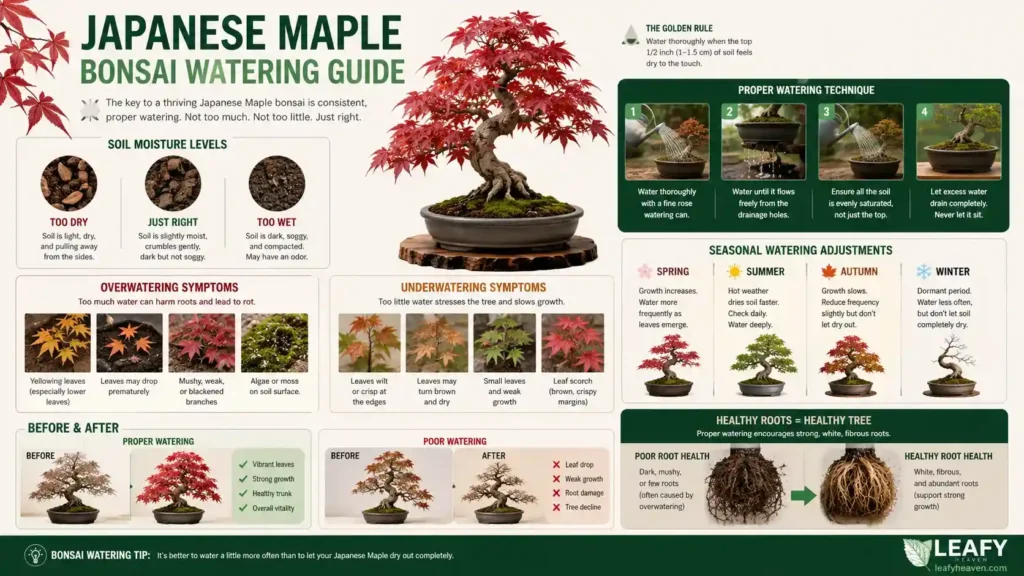
Japanese Maple Bonsai should stay evenly moist, but soggy soil must always be avoided to prevent root problems. Consistent watering helps maintain healthy foliage, supports root development, and reduces stress during active growing seasons.
Because Japanese Maple Bonsai grows in a shallow container, soil can dry faster than it does in the ground. Regular moisture monitoring is important to keep the tree healthy while avoiding both overwatering and underwatering.
How Often to Water Japanese Maple Bonsai
Japanese Maple Bonsai does not follow a fixed watering schedule. Watering frequency depends on weather conditions, season, soil composition, and container size.
Key watering considerations include:
- Seasonal watering changes are normal as growth rates and temperatures vary throughout the year.
- Summer watering is usually more frequent because warm temperatures increase moisture loss.
- Winter watering is reduced during dormancy, but the soil should never become completely dry.
- Soil moisture monitoring is the most reliable method for determining when to water. Check the upper layer of soil regularly.
- Pot size effects influence watering frequency, with smaller containers generally drying faster than larger bonsai pots.
The goal is to keep the soil consistently moist while allowing excess water to drain freely.
Signs of Overwatering
Overwatering is one of the most common causes of Japanese Maple Bonsai decline. Excess moisture reduces oxygen around the roots and encourages disease development.
Common signs of overwatering include:
- Yellow leaves appearing across the canopy.
- Root rot caused by prolonged wet conditions.
- Weak growth and reduced vigor.
- Soggy soil that remains wet for extended periods.
- Fungus issues developing around the soil surface or root zone.
If overwatering occurs, improve drainage, allow the soil to dry slightly between waterings, and inspect the root system for damage.
Signs of Underwatering
Underwatering can quickly stress Japanese Maple Bonsai, especially during warm weather and active growth periods.
Common signs of underwatering include:
- Crispy leaves with dry, brittle texture.
- Curling foliage as the tree attempts to conserve moisture.
- Dry soil throughout the root zone.
- Premature leaf drop before the normal autumn season.
When these symptoms appear, thoroughly water the bonsai and review watering practices to ensure the soil remains evenly moist without becoming waterlogged.
Best Soil for Japanese Maple Bonsai
Japanese Maple Bonsai needs airy, moisture-retentive, well-draining bonsai soil for healthy root growth. A properly balanced soil mix helps maintain consistent moisture while providing enough oxygen to the roots, reducing the risk of root rot and poor development.
Because Acer palmatum produces a fine fibrous root system, soil quality plays a major role in overall tree health. The ideal bonsai substrate should retain adequate moisture without becoming compacted or waterlogged.
Ideal Bonsai Soil Mix
Japanese Maple Bonsai performs best in a soil blend that balances moisture retention, aeration, and drainage.
Common components of an effective bonsai soil mix include:
- Akadama for moisture retention and root development.
- Pumice to improve aeration and water management.
- Lava rock for drainage and structural stability.
- Organic bark components to provide additional moisture retention and beneficial organic matter.
- Drainage-focused structure that allows excess water to leave the container quickly.
This combination creates an environment where roots can grow efficiently while avoiding excessive moisture buildup around the root zone.
Does Japanese Maple Prefer Acidic Soil?
Yes, Japanese Maple Bonsai generally prefers slightly acidic soil conditions that support healthy nutrient absorption and root function.
Important soil considerations include:
- Slightly acidic soil preference, typically within a mildly acidic pH range.
- Avoid heavy clay soils because they retain excessive water and restrict root aeration.
- Soil pH considerations are important for maintaining nutrient availability and preventing growth issues.
A well-balanced bonsai mix with good drainage and a slightly acidic profile helps Japanese Maple Bonsai develop strong roots, healthy foliage, and consistent seasonal growth.
Japanese Maple Bonsai Fertilizer Needs
Japanese Maple Bonsai benefits from moderate balanced feeding during active growth seasons. Proper fertilization supports healthy foliage, steady root development, strong branching, and vibrant seasonal color without encouraging excessive or weak growth.
Because Acer palmatum is valued for its refined structure and delicate foliage, fertilization should be consistent but controlled. Overfeeding can produce overly large leaves and vigorous shoots that reduce bonsai refinement.
Best Fertilizer for Japanese Maple Bonsai
Japanese Maple Bonsai responds well to balanced fertilizers that provide essential nutrients throughout the growing season.
Popular fertilizer options include:
- Organic fertilizer that releases nutrients gradually while improving overall soil health.
- Slow-release pellets that provide consistent feeding over an extended period.
- Liquid bonsai feed for quick nutrient absorption and flexible application schedules.
- Balanced nutrients containing appropriate levels of nitrogen, phosphorus, and potassium to support healthy growth.
A balanced feeding program encourages steady development while maintaining the fine branching and compact growth desired in bonsai cultivation.
Seasonal Fertilizing Schedule
Fertilizer requirements change throughout the year as Japanese Maple Bonsai moves through different growth stages.
Spring Feeding
Spring is the primary growth period for Japanese Maple Bonsai. Regular feeding during this season supports new shoots, leaf development, and root activity after winter dormancy.
Summer Adjustments
During summer, fertilization may be reduced or adjusted, especially in periods of extreme heat. Excessive feeding during stressful weather conditions can place additional strain on the tree.
Autumn Preparation
Autumn fertilization helps strengthen the tree before winter dormancy. Feeding during this period supports root health and energy storage for the following growing season.
Winter Dormancy Period
Japanese Maple Bonsai typically does not require fertilization during winter dormancy. Growth slows significantly, and nutrient uptake is minimal until active growth resumes in spring.
Japanese Maple Bonsai Pruning and Shaping
Pruning controls Japanese Maple Bonsai size, branch structure, ramification, and overall bonsai appearance. Regular pruning helps maintain balanced growth, encourages fine branching, and preserves the refined proportions that make Acer palmatum one of the most admired deciduous bonsai species.
Proper pruning is essential for developing a mature bonsai silhouette. By selectively removing unwanted growth and guiding branch development, growers can improve both tree health and visual appeal.
How to Prune Japanese Maple Bonsai
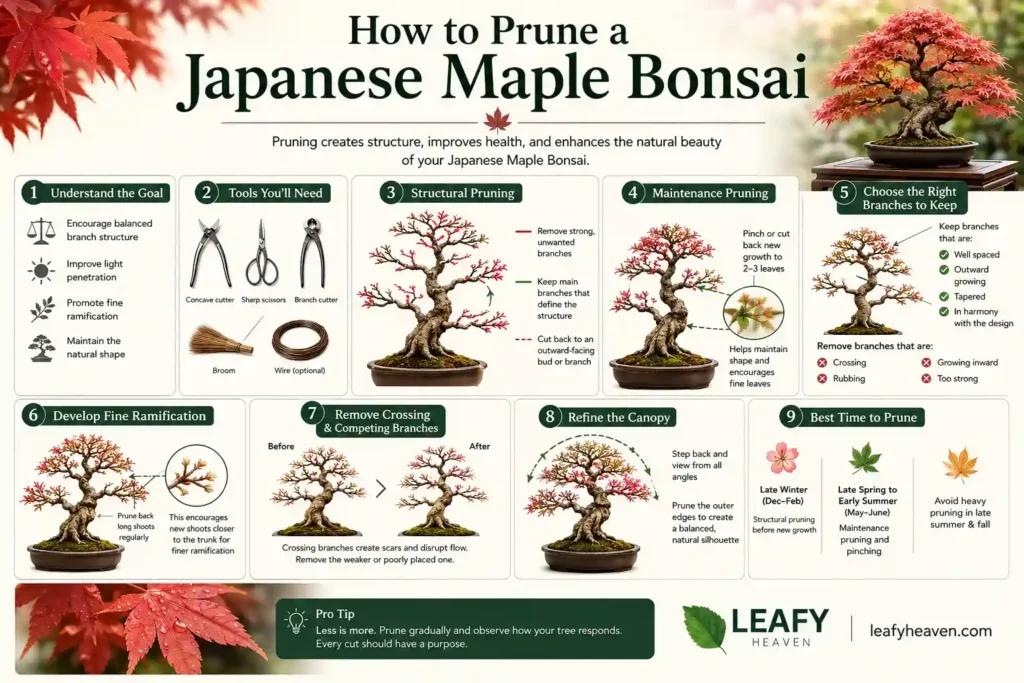
Japanese Maple Bonsai requires a combination of structural and maintenance pruning to maintain its shape and encourage refined growth.
Key pruning practices include:
- Structural pruning to establish the primary framework and long-term branch design.
- Maintenance pruning to control new growth and preserve the desired silhouette.
- Branch selection to improve balance, spacing, and overall aesthetics.
- Removing crossing branches that create congestion, rubbing points, or poor branch structure.
- Using quality pruning tools such as bonsai shears, branch cutters, and fine trimming scissors for clean cuts.
Consistent pruning encourages ramification, allowing the tree to develop dense networks of fine twigs that enhance its mature appearance.
Best Time to Prune Japanese Maple Bonsai
Pruning at the correct time helps minimize stress and promotes healthy recovery.
Important timing guidelines include:
- Late winter structural pruning is commonly performed before active spring growth begins.
- Summer maintenance trimming helps control vigorous growth and maintain the bonsai’s shape.
- Seasonal timing warnings should always be considered, as heavy pruning during periods of extreme heat, active sap flow, or late autumn can increase stress on the tree.
Careful timing allows Japanese Maple Bonsai to recover efficiently while preserving energy for healthy seasonal development.
How to Keep Japanese Maple Bonsai Small
Maintaining a compact size requires ongoing management of both root and shoot growth.
Effective size-control techniques include:
- Root pruning during repotting to limit root expansion and maintain balance between roots and foliage.
- Shoot trimming to reduce excessive growth and encourage finer branching.
- Controlled fertilizing to avoid overly vigorous growth that can enlarge leaves and internodes.
- Pot size control using an appropriately sized bonsai container to regulate overall tree development.
When these techniques are combined consistently, Japanese Maple Bonsai can remain compact, proportionate, and visually refined for many years.
Japanese Maple Bonsai Styles
Japanese Maple Bonsai can be styled into elegant forms that highlight seasonal foliage and graceful branching. Its naturally refined growth habit, delicate leaves, and attractive trunk movement make Acer palmatum suitable for a wide range of traditional bonsai styles.
The species responds well to pruning and shaping techniques, allowing growers to create artistic designs that emphasize structure, balance, and seasonal beauty.
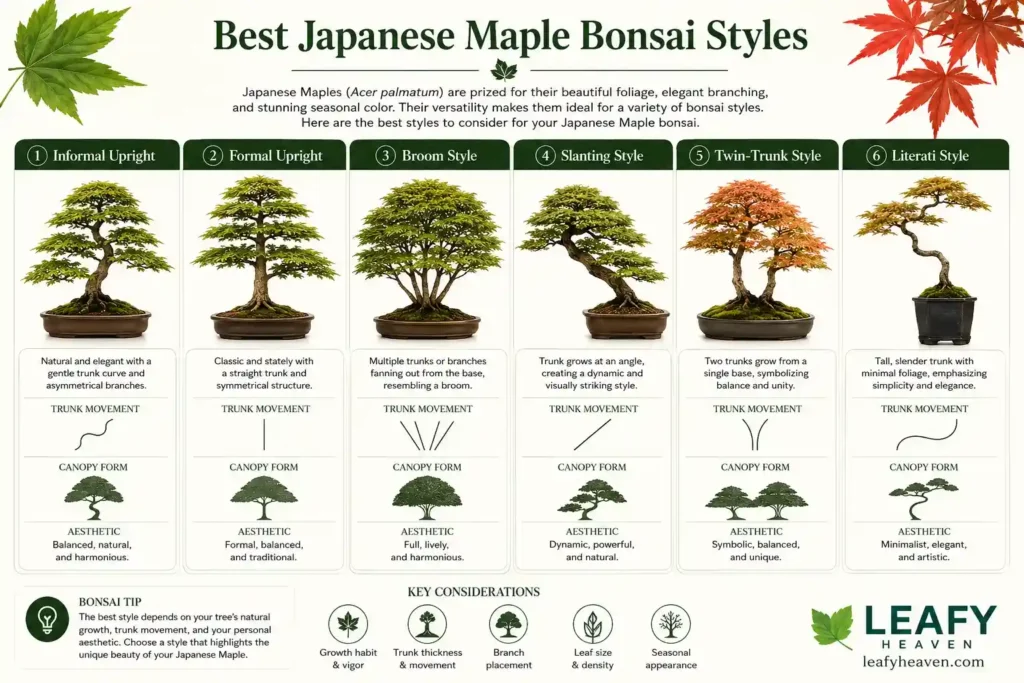
Popular Japanese Maple Bonsai Styles
Japanese Maple Bonsai can be trained into several classic bonsai forms, each showcasing different aspects of the tree’s character.
Popular styles include:
- Informal Upright Style (Moyogi): Features a gently curved trunk with natural movement and balanced branching.
- Formal Upright Style (Chokkan): Characterized by a straight trunk that gradually tapers toward the apex.
- Broom Style (Hokidachi): Displays a straight trunk with a rounded canopy of fine branches, often highlighting winter ramification.
- Slanting Style (Shakan): Creates the appearance of a tree shaped by wind or environmental conditions.
- Twin Trunk Style (Sokan): Features two trunks emerging from the same root system, creating visual depth and balance.
- Literati Style (Bunjingi): Uses a slender trunk with minimal branching to emphasize elegance and artistic simplicity.
Each style can showcase the seasonal color changes and refined branching structure that make Japanese Maple Bonsai highly desirable.
Weeping Japanese Maple Bonsai
Weeping Japanese Maple Bonsai is valued for its graceful, cascading appearance and distinctive foliage texture.
Key characteristics include:
- Cascading branch structure that creates a flowing, elegant silhouette.
- Laceleaf varieties with finely divided foliage that adds texture and visual interest.
- Elegant foliage movement that enhances the tree’s ornamental appeal throughout the growing season.
These bonsai are especially admired during autumn when colorful foliage drapes naturally from the branches, creating a dramatic display.
Japanese Maple Bonsai Forest Style
Japanese Maple Bonsai Forest Style recreates the appearance of a natural woodland scene using multiple trees arranged in a single composition.
Key features include:
- Forest group planting that mimics the structure of a natural grove.
- Multiple Acer palmatum trees of different heights and trunk thicknesses for realism.
- Natural woodland appearance with carefully planned spacing, perspective, and visual balance.
Forest-style plantings are particularly impressive during seasonal color transitions, when the collective canopy creates a miniature representation of a mature Japanese maple woodland.
Japanese Red Maple Bonsai vs Green Japanese Maple Bonsai
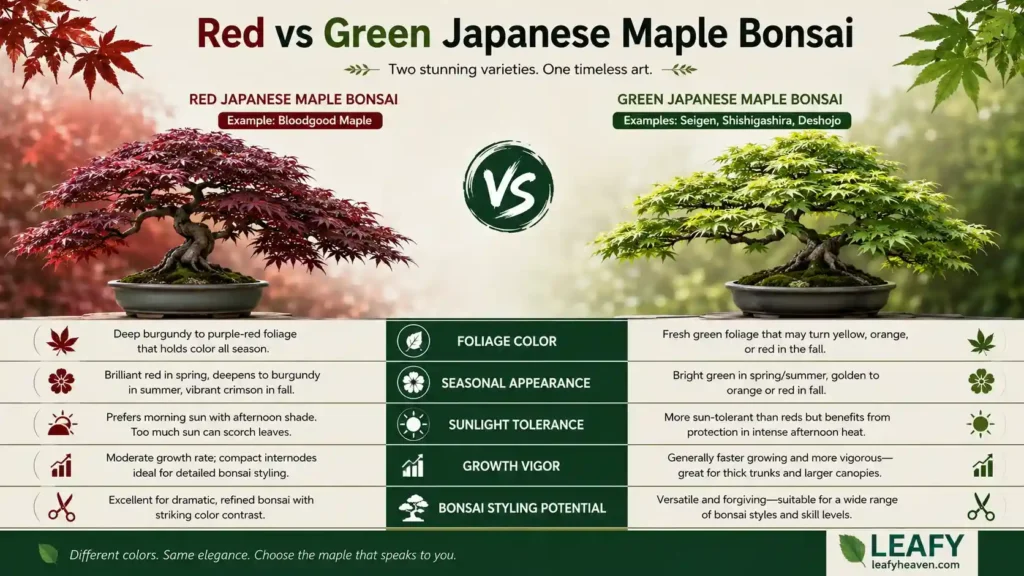
Red Japanese Maple Bonsai offers dramatic foliage color, while green varieties usually provide softer appearance and stronger growth. Both are forms of Acer palmatum, but they differ in leaf coloration, sunlight tolerance, growth habits, and visual impact throughout the growing season.
Choosing between red and green Japanese maple bonsai depends on personal preference, local climate conditions, and the desired bonsai style. Some cultivars prioritize vibrant color displays, while others are valued for vigor and ease of care.
| Type | Main Feature | Notes |
| Red Japanese Maple Bonsai | Deep red foliage | Needs shade protection |
| Green Japanese Maple Bonsai | Strong growth | Beginner friendly |
| Bloodgood Maple Bonsai | Dark red leaves | Popular cultivar |
| Weeping Maple Bonsai | Cascading form | Elegant structure |
Red Japanese Maple Bonsai varieties are often chosen for their striking foliage that can display shades of burgundy, crimson, and scarlet throughout the growing season. These cultivars can be more sensitive to intense sunlight and may require additional afternoon shade to prevent leaf scorch.
Green Japanese Maple Bonsai varieties typically produce vigorous growth and adapt well to a wider range of growing conditions. Their fresh green foliage often transforms into yellow, orange, or red tones during autumn, providing seasonal interest while remaining relatively easy to manage.
Bloodgood Maple Bonsai is one of the most recognized red-leaf cultivars due to its rich coloration, reliable performance, and strong ornamental value. It remains a favorite among bonsai enthusiasts seeking dramatic foliage contrast.
Weeping Maple Bonsai focuses on form rather than leaf color alone. Its cascading branches and graceful structure create an elegant silhouette that is especially attractive when combined with laceleaf foliage and seasonal color changes.
How to Grow Japanese Maple Bonsai from Seed
Japanese Maple Bonsai can be grown from seed, but trunk development and refinement require years of patience. Growing Acer palmatum from seed allows complete control over the bonsai’s development, but achieving a mature bonsai appearance is a long-term process that demands consistent care and training.
Although slower than starting with nursery stock or pre-bonsai material, seed-grown Japanese Maple Bonsai can develop excellent root systems, natural trunk movement, and strong long-term structure.
Japanese Maple Bonsai from Seed Process
Growing Japanese Maple Bonsai from seed involves several stages that prepare young trees for future bonsai training.
Seed Collection
Collect mature Japanese maple seeds during autumn after they have fully developed. Healthy seeds improve germination success and seedling vigor.
Cold Stratification
Japanese maple seeds require a period of cold stratification to break dormancy. Seeds are typically stored in a cool, moist environment for several weeks before planting.
Germination
After stratification, seeds can be sown in a well-draining growing medium. Germination rates vary depending on seed quality, temperature, and moisture conditions.
Seedling Development
Young seedlings should be allowed to establish healthy roots and strong growth before major bonsai work begins. During this stage, the focus remains on overall tree health rather than styling.
Early Bonsai Training
Once seedlings become established, basic bonsai techniques can begin. Early training may include root management, trunk development, branch positioning, and structural planning for future refinement.
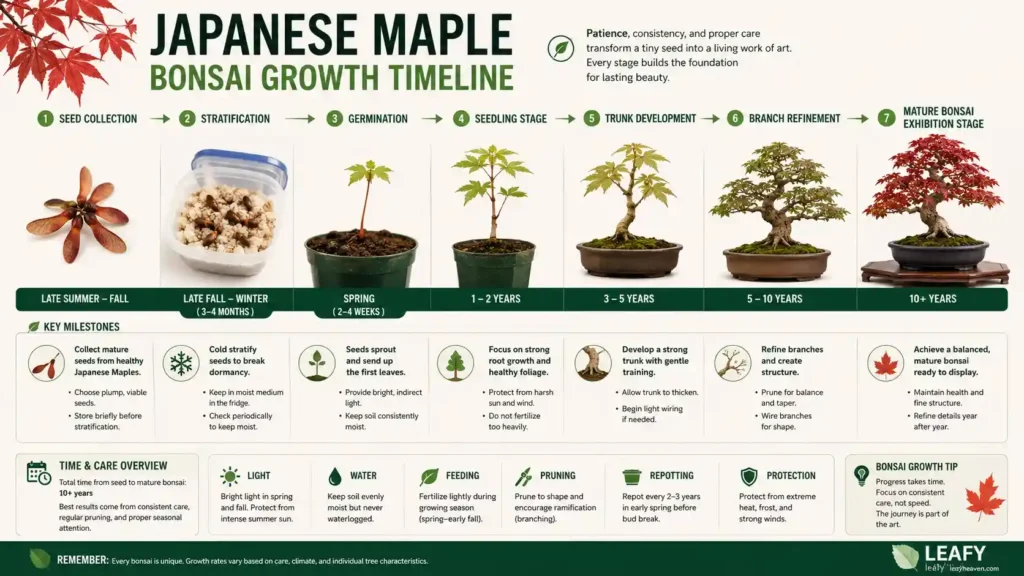
How Long Does Japanese Maple Bonsai Take to Grow?
Japanese Maple Bonsai develops gradually, and creating a refined specimen requires long-term commitment.
Seedling Stage Timeline
The first one to three years are generally focused on germination, root establishment, and basic growth. During this period, the tree is still far from a finished bonsai.
Trunk Development Years
Developing trunk thickness and character often requires several additional years. Many growers spend five to ten years building trunk structure before advanced refinement begins.
Mature Bonsai Development
As the tree matures, attention shifts toward branch ramification, canopy balance, root refinement, and overall aesthetics. This stage may continue for many years.
Long-Term Refinement Process
A highly refined Japanese Maple Bonsai often requires 8–15 years or more of cultivation and training. Ongoing pruning, repotting, wiring, and seasonal maintenance gradually transform a young tree into a mature bonsai specimen with elegance, structure, and seasonal beauty.
Repotting Japanese Maple Bonsai
Japanese Maple Bonsai should be repotted every few years to refresh soil and maintain healthy roots. Repotting prevents soil compaction, improves drainage, encourages healthy root growth, and ensures the tree continues to receive adequate water, oxygen, and nutrients.
As Acer palmatum matures, roots gradually fill the bonsai container and reduce the effectiveness of the soil mix. Regular repotting helps maintain a healthy root environment while supporting long-term bonsai development.
Best Time to Repot Japanese Maple Bonsai
Repotting at the correct time minimizes stress and allows the tree to recover quickly.
Important timing considerations include:
- Early spring timing is generally the preferred period for repotting Japanese Maple Bonsai.
- The ideal window is often during the bud swelling stage, just before vigorous new growth begins.
- Avoiding summer repotting is recommended because heat stress and increased water demand can slow recovery and damage roots.
Repotting before active growth starts allows the root system to establish itself efficiently during the growing season.
Japanese Maple Root System
Japanese Maple Bonsai develops a root system that responds well to regular maintenance and bonsai cultivation techniques.
Key root characteristics include:
- Fibrous root structure that supports efficient water and nutrient absorption.
- Root pruning importance because controlled root growth helps maintain tree size and encourages finer root development.
- Drainage requirements are critical, as roots perform best in well-draining bonsai soil with good aeration.
- Root health management involves monitoring moisture levels, preventing soil compaction, and repotting when necessary.
Healthy roots are the foundation of a successful Japanese Maple Bonsai. Proper root care improves foliage quality, branch development, seasonal vigor, and overall long-term tree health.
Japanese Maple Bonsai Winter Care
Japanese Maple Bonsai requires winter dormancy but needs protection from severe freezing and drying winter winds. As a deciduous bonsai, Acer palmatum depends on a natural dormant period each year to maintain long-term health, store energy, and prepare for vigorous spring growth.
Although Japanese Maple Bonsai is cold-hardy, roots are more vulnerable in shallow bonsai containers than they would be in the ground. Proper winter protection helps prevent root damage while allowing the tree to complete its natural dormancy cycle.
Winter Protection Tips
Japanese Maple Bonsai should remain outdoors during winter dormancy, but additional protection may be necessary during extreme weather conditions.
Important winter care practices include:
- Cold frame protection to shield the bonsai from severe frost, freezing winds, and rapid temperature fluctuations.
- Root insulation using mulch, protective coverings, or sheltered placement to reduce root-zone freezing.
- Outdoor dormancy because the tree requires natural seasonal conditions rather than indoor overwintering.
- Watering during winter when needed to prevent the root system from drying out completely.
The goal is to protect the roots from extreme cold while still allowing the tree to experience normal winter conditions.
Seasonal Dormancy Explained
Winter dormancy is a natural biological process that helps Japanese Maple Bonsai conserve energy and prepare for the next growing season.
Key stages of dormancy include:
- Leaf drop during autumn as the tree sheds foliage and enters its resting phase.
- Dormancy cycle where growth slows dramatically and energy is stored within the roots and branches.
- Reduced growth throughout winter as metabolic activity remains low.
- Spring awakening when rising temperatures and longer daylight hours trigger bud development and new growth.
This seasonal cycle is essential for the health of Japanese Maple Bonsai. Trees that receive proper dormancy generally produce stronger growth, healthier foliage, and better long-term development in future seasons.
Common Japanese Maple Bonsai Problems and Solutions
Most Japanese Maple Bonsai problems come from improper watering, intense heat, poor drainage, or weak seasonal care. Identifying problems early and correcting environmental conditions can help prevent long-term damage and keep Acer palmatum healthy throughout the year.
The following table summarizes some of the most common Japanese Maple Bonsai issues and their solutions.
| Problem | Cause | Solution |
| Brown leaf edges | Sun scorch | Afternoon shade |
| Yellow leaves | Overwatering | Improve drainage |
| Root rot | Wet soil | Repot in bonsai soil |
| Weak growth | Poor light | Better outdoor placement |
| Crispy foliage | Heat stress | Increase humidity |
Most health issues can be avoided by maintaining balanced moisture levels, providing appropriate light exposure, using well-draining soil, and following seasonal care practices.
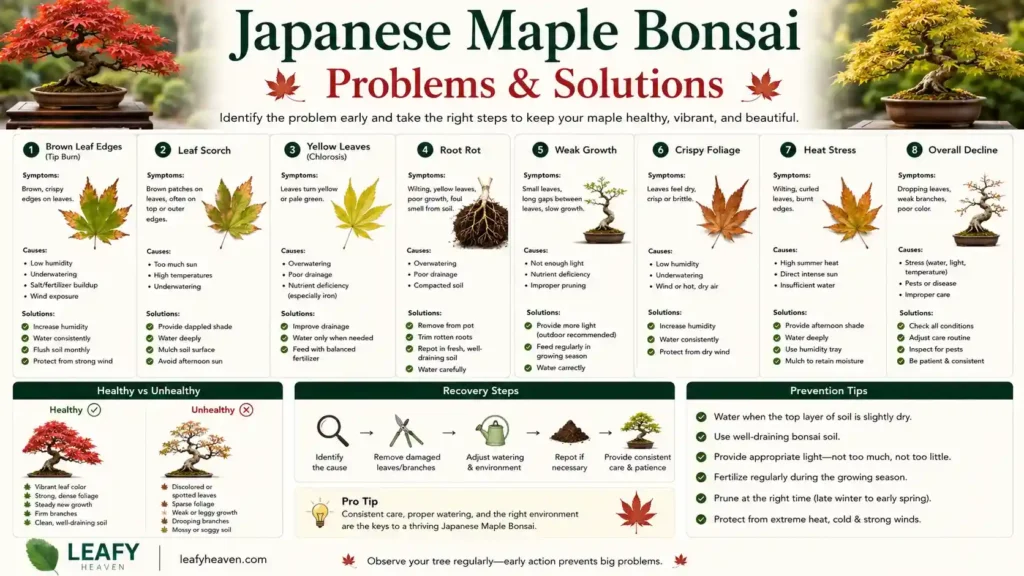
Overwatered Japanese Maple Bonsai
Overwatering is one of the most common causes of decline in Japanese Maple Bonsai. Excess moisture reduces oxygen around the roots and creates conditions that encourage disease development.
Common signs of an overwatered Japanese Maple Bonsai include:
- Yellow foliage appearing across part or all of the canopy.
- Wet soil that remains consistently saturated.
- Root damage caused by poor aeration and prolonged moisture.
- Slower growth and reduced overall vigor.
Recovery Steps
If overwatering is suspected:
- Allow the soil surface to dry slightly before watering again.
- Check that drainage holes remain unobstructed.
- Improve airflow around the bonsai.
- Reduce watering frequency based on soil moisture rather than a fixed schedule.
- Repot into a well-draining bonsai soil mix if root rot or severe soil compaction is present.
Early correction can significantly improve recovery and prevent permanent root damage.
Leaf Scorch Problems
Leaf scorch is a common foliage issue that affects Japanese Maple Bonsai during periods of intense environmental stress.
Common causes include:
- Heat stress from excessive summer temperatures.
- Dry wind exposure that increases moisture loss from delicate leaves.
- Extended periods of strong afternoon sunlight.
Summer Protection
To reduce leaf scorch and maintain healthy foliage:
- Provide afternoon shade during hot weather.
- Move the bonsai to a location with filtered sunlight.
- Protect the tree from drying winds.
- Maintain consistent soil moisture without overwatering.
- Increase humidity around the growing area when conditions become excessively hot and dry.
Proper summer protection helps preserve foliage quality, maintain leaf color, and reduce stress during the warmest part of the growing season.
Japanese Maple Bonsai Maintenance Needs
Japanese Maple Bonsai requires regular seasonal maintenance to stay healthy and visually refined. Consistent care helps maintain balanced growth, attractive foliage, strong roots, and the fine branching structure that makes Acer palmatum one of the most admired bonsai species.
Routine maintenance prevents many common problems and allows growers to monitor the tree’s condition throughout the year. Small, regular tasks are generally more effective than infrequent major corrections.
Monthly Bonsai Maintenance Checklist
A monthly maintenance routine helps ensure Japanese Maple Bonsai remains healthy and develops properly.
Key maintenance tasks include:
Water Checks
- Monitor soil moisture regularly.
- Adjust watering frequency according to weather and season.
- Avoid both prolonged dryness and waterlogged soil.
Fertilizing
- Apply fertilizer during active growing periods as needed.
- Adjust feeding schedules based on seasonal growth patterns.
- Avoid excessive fertilization that may encourage coarse growth.
Pruning
- Remove unwanted shoots and excessive growth.
- Maintain the desired bonsai silhouette.
- Encourage fine branching and balanced structure.
Pest Inspection
- Check leaves, branches, and soil surface for signs of pests.
- Monitor for insects such as aphids, scale insects, and spider mites.
- Address infestations early to prevent damage.
Soil Monitoring
- Ensure the soil remains well-draining and properly aerated.
- Watch for compaction or drainage problems.
- Evaluate when repotting may be necessary.
Following a consistent maintenance schedule helps preserve both tree health and bonsai aesthetics throughout the year.
Is Japanese Maple Bonsai Good for Beginners?
Japanese Maple Bonsai can be suitable for beginners, but success depends on understanding its seasonal care requirements and committing to regular maintenance.
Important considerations include:
- Beginner suitability: The species is manageable for dedicated beginners willing to learn proper bonsai techniques.
- Patience requirements: Developing a refined Japanese Maple Bonsai takes years of consistent care and gradual improvement.
- Outdoor care commitment: Because it requires natural seasonal cycles and winter dormancy, growers must be prepared to maintain the tree outdoors.
While Japanese Maple Bonsai is not as forgiving as some tropical bonsai species, its beauty, seasonal interest, and rewarding long-term development make it a popular choice for beginners who are committed to learning proper bonsai care.
Beginners who want to strengthen their plant care foundation before starting bonsai training will find this complete gardening and plant care guide a valuable starting point for learning essential outdoor plant maintenance.
Those looking for a more forgiving first deciduous bonsai may also enjoy Chinese Elm Bonsai, which offers similar outdoor seasonal character with stronger tolerance for beginner care mistakes.
Japanese Maple Bonsai vs Other Maple Bonsai Types
Japanese Maple Bonsai is prized for elegance and foliage quality, but several other maple species are also used for bonsai. While Acer palmatum is known for its delicate leaves and exceptional seasonal color, other maple species offer advantages such as stronger growth, improved cold tolerance, or rugged structure.
The choice of maple species often depends on climate, styling goals, maintenance preferences, and desired bonsai characteristics.
| Bonsai Type | Botanical Name | Key Feature |
| Japanese Maple Bonsai | Acer palmatum | Fine leaves |
| Trident Maple Bonsai | Acer buergerianum | Strong structure |
| Amur Maple Bonsai | Acer ginnala | Cold hardy |
| Field Maple Bonsai | Acer campestre | Rugged growth |
| Red Maple Bonsai | Acer rubrum | Native species |
Japanese Maple Bonsai (Acer palmatum) is widely considered the most ornamental maple bonsai. Its delicate foliage, elegant branching, and brilliant autumn colors make it a favorite among bonsai enthusiasts seeking refinement and seasonal beauty.
Trident Maple Bonsai (Acer buergerianum) is valued for its strong growth, durable nature, and excellent trunk development. It often tolerates pruning and bonsai training more aggressively than Japanese maple.
Amur Maple Bonsai (Acer ginnala) is known for its cold hardiness and adaptability. It produces attractive seasonal color and performs well in regions with harsh winters.
Field Maple Bonsai (Acer campestre) develops sturdy branch structure and rugged character. Its durability and tolerance for pruning make it suitable for long-term bonsai cultivation.
Red Maple Bonsai (Acer rubrum) is a North American native species appreciated for its seasonal color and natural growth habit. Although less commonly used than Acer palmatum, it can produce attractive bonsai with proper training.
Each maple species offers unique characteristics, but Japanese Maple Bonsai remains the benchmark for elegance, fine ramification, and outstanding foliage quality in bonsai cultivation.
Benefits and Uses of Japanese Maple Bonsai
Japanese Maple Bonsai is valued for ornamental beauty, artistic bonsai training, seasonal color, and Japanese garden aesthetics. Its elegant structure, delicate foliage, and dramatic autumn display make it one of the most admired deciduous bonsai trees for both display and long-term cultivation.
Beyond its visual appeal, Japanese Maple Bonsai offers year-round interest through changing seasons, refined branch structure, and artistic styling possibilities.
Decorative Use
Japanese Maple Bonsai is widely used as a decorative living artwork. Its graceful form and attractive foliage make it a focal point in outdoor living spaces, courtyards, and garden settings.
The tree provides visual interest throughout the year, from fresh spring growth and summer foliage to vibrant autumn colors and elegant winter branch structure.
Bonsai Collections
Many bonsai enthusiasts include Japanese Maple Bonsai in their collections because of its beauty, seasonal variation, and classic bonsai character.
Its ability to develop fine ramification, balanced proportions, and colorful foliage makes it a highly respected specimen in both beginner and advanced bonsai collections.
Patio Display
Japanese Maple Bonsai is well suited for patio and terrace displays where its seasonal changes can be fully appreciated.
When positioned in a location with morning sunlight and afternoon shade, it can serve as an attractive centerpiece that enhances outdoor spaces while showcasing the artistry of bonsai cultivation.
Meditation Gardens
The refined appearance of Japanese Maple Bonsai complements meditation gardens, Zen-inspired landscapes, and peaceful outdoor environments.
Its graceful branching, natural form, and changing seasonal character contribute to a calm and visually balanced atmosphere that aligns with traditional Japanese garden aesthetics.
Pairing Japanese Maple Bonsai with a flowering bonsai like wisteria creates a stunning seasonal garden display where spring blooms complement the maple’s summer foliage and autumn color.
Seasonal Landscape Value
One of the greatest benefits of Japanese Maple Bonsai is its exceptional seasonal interest.
Key seasonal highlights include:
- Fresh leaf emergence in spring.
- Dense, attractive foliage during summer.
- Brilliant red, orange, yellow, or crimson autumn colors.
- Elegant branch structure visible during winter dormancy.
These seasonal transformations provide year-round visual appeal and make Japanese Maple Bonsai a valuable addition to ornamental garden displays and bonsai collections.
Safety and Toxicity Information
Japanese Maple Bonsai is generally ornamental and should not be consumed by pets or children. While Acer palmatum is primarily grown for decorative and bonsai purposes, it is best treated as a non-edible plant and handled responsibly within the home and garden environment.
Most Japanese Maple Bonsai specimens do not pose significant risks when simply displayed, but basic safety precautions help prevent accidental ingestion and exposure to chemicals used during bonsai maintenance.
Pet Safety Precautions
Japanese Maple Bonsai should be placed where pets cannot chew on leaves, branches, seeds, or soil.
Important pet safety considerations include:
- Prevent pets from eating plant material.
- Avoid allowing animals to dig in bonsai containers.
- Monitor curious pets around newly treated bonsai.
- Consult a veterinarian if a pet consumes any part of the tree and shows unusual symptoms.
Keeping the bonsai out of reach is the safest approach for households with cats, dogs, or other pets.
Child Safety
Young children may be attracted to bonsai containers, colorful foliage, or fallen leaves.
For safe display:
- Place Japanese Maple Bonsai in a stable location.
- Discourage children from handling roots, soil, or plant material.
- Do not allow leaves, seeds, or branches to be placed in the mouth.
- Supervise interactions with bonsai displays when necessary.
Proper placement helps prevent accidental damage to both the tree and the child.
Chemical Treatment Awareness
Many bonsai growers use fertilizers, fungicides, insecticides, and other treatment products during routine maintenance.
Important precautions include:
- Follow all product label instructions carefully.
- Keep treatment products away from children and pets.
- Allow sprays and treatments to dry completely before handling the bonsai.
- Wash hands after applying fertilizers or plant protection products.
In most situations, the greatest safety concern comes from horticultural chemicals rather than the Japanese Maple Bonsai itself. Responsible use and storage of these products help create a safe growing environment.
Final Japanese Maple Bonsai Care Tips
Healthy Japanese Maple Bonsai depends on proper outdoor care, balanced watering, seasonal pruning, and patience over many years. Consistent maintenance and respect for the tree’s natural growth cycle are the foundations of long-term bonsai success.
Japanese Maple Bonsai is not a species that thrives on neglect. It rewards careful attention with beautiful foliage, refined branching, and exceptional seasonal color that improves as the tree matures.
Outdoor Growing Importance
Japanese Maple Bonsai should be grown outdoors for most of the year to benefit from natural sunlight, airflow, temperature changes, and seasonal dormancy.
Providing appropriate outdoor conditions helps maintain healthy growth, strong roots, and vibrant foliage while supporting the tree’s long-term development.
Consistent Moisture
Maintaining evenly moist soil is one of the most important aspects of Japanese Maple Bonsai care.
Key moisture management practices include:
- Monitor soil regularly rather than following a fixed watering schedule.
- Prevent the soil from becoming completely dry.
- Avoid prolonged waterlogged conditions.
- Adjust watering frequency according to season, temperature, and weather.
Balanced moisture supports healthy roots and reduces stress-related foliage problems.
Seasonal Pruning
Regular seasonal pruning helps preserve the bonsai’s shape and encourages fine ramification.
Important pruning goals include:
- Maintaining balanced branch structure.
- Controlling overall size.
- Removing unwanted growth.
- Encouraging refined twig development.
Consistent pruning over time creates the mature appearance that defines high-quality bonsai.
Winter Dormancy
Winter dormancy is an essential part of the annual life cycle of Japanese Maple Bonsai.
During this period:
- Leaves naturally drop in autumn.
- Growth slows significantly.
- Energy is stored for future development.
- The tree prepares for spring growth.
Protect the bonsai from extreme freezing conditions while still allowing it to experience normal seasonal dormancy outdoors.
Long-Term Bonsai Development
Developing a refined Japanese Maple Bonsai is a gradual process measured in years rather than months.
Long-term success depends on:
- Consistent seasonal care.
- Proper repotting and root management.
- Balanced fertilization.
- Careful pruning and styling.
- Patience throughout the refinement process.
With proper care and ongoing attention, Japanese Maple Bonsai can develop into an elegant living artwork that showcases the beauty of Acer palmatum through every season of the year.
Conclusion
Japanese Maple Bonsai combines Acer palmatum’s delicate leaves, elegant branching, and seasonal color into one of the most beautiful deciduous bonsai trees. Its refined structure, vibrant autumn foliage, and artistic styling potential have made it a favorite among bonsai enthusiasts around the world.
With proper watering, well-draining soil, balanced fertilization, seasonal pruning, and winter protection, Japanese Maple Bonsai can develop into a healthy and visually impressive long-term bonsai specimen. Consistent outdoor care and respect for its natural dormancy cycle are essential for maintaining strong growth and long-term vitality.
Key Takeaways
- Start with a healthy young Japanese maple that has good root structure and vigorous growth.
- Focus on proper care and tree health before attempting advanced bonsai styling techniques.
- Build trunk structure, branch ramification, and overall refinement gradually over time.
- Maintain consistent moisture, appropriate sunlight, and seasonal maintenance practices.
- Be patient and allow the bonsai to mature naturally through years of careful cultivation.
With dedication and long-term care, Japanese Maple Bonsai can become a stunning living artwork that showcases the beauty of nature through every season.
FAQs
Is Japanese Maple Bonsai good for beginners?
Yes, Japanese Maple Bonsai can be suitable for beginners who understand outdoor bonsai care and seasonal maintenance. While it requires regular watering, pruning, and winter dormancy management, dedicated beginners can successfully grow and develop this species with consistent care and patience.
Can Japanese Maple Bonsai grow indoors?
Japanese Maple Bonsai is not ideal for long-term indoor growing because it requires winter dormancy, natural airflow, and outdoor light cycles. Temporary indoor display is possible, but permanent indoor cultivation often leads to weakened growth and reduced long-term health.
How often should I water Japanese Maple Bonsai?
Japanese Maple Bonsai should be watered when the upper layer of soil begins to dry. The soil should remain evenly moist without becoming completely dry or waterlogged. Watering frequency varies depending on season, temperature, humidity, soil type, and container size.
When should I prune Japanese Maple Bonsai?
Major structural pruning is generally performed in late winter or early spring before active growth begins. Light maintenance pruning and shoot trimming can be carried out during the growing season to maintain shape and encourage fine branching.
What is the scientific name of Japanese Maple Bonsai?
The scientific name of Japanese Maple Bonsai is Acer palmatum. It belongs to the Sapindaceae family and is native to Japan, Korea, and China.
Why are my Japanese Maple Bonsai leaves turning brown?
Brown leaves are commonly caused by heat stress, dry winds, underwatering, leaf scorch, or excessive sunlight exposure. In many cases, providing afternoon shade, maintaining consistent soil moisture, and protecting the tree from hot drying conditions can help prevent further damage.
Can Japanese Maple Bonsai survive winter?
Yes, Japanese Maple Bonsai requires winter dormancy as part of its natural growth cycle. It can survive winter successfully when provided with appropriate protection from severe freezing temperatures, drying winds, and extreme root-zone freezing.
How long does Japanese Maple Bonsai take to mature?
A refined Japanese Maple Bonsai typically takes 8–15 years or more to fully mature. The exact timeline depends on growing conditions, trunk development goals, pruning techniques, and the level of refinement desired by the grower.

Written by the LeafyHeaven Editorial Team
LeafyHeaven shares practical gardening tips and simple plant care guides to help you grow, nurture, and enjoy your plants with ease. Our goal is to make gardening feel natural, approachable, and rewarding for everyone.