
Introduction
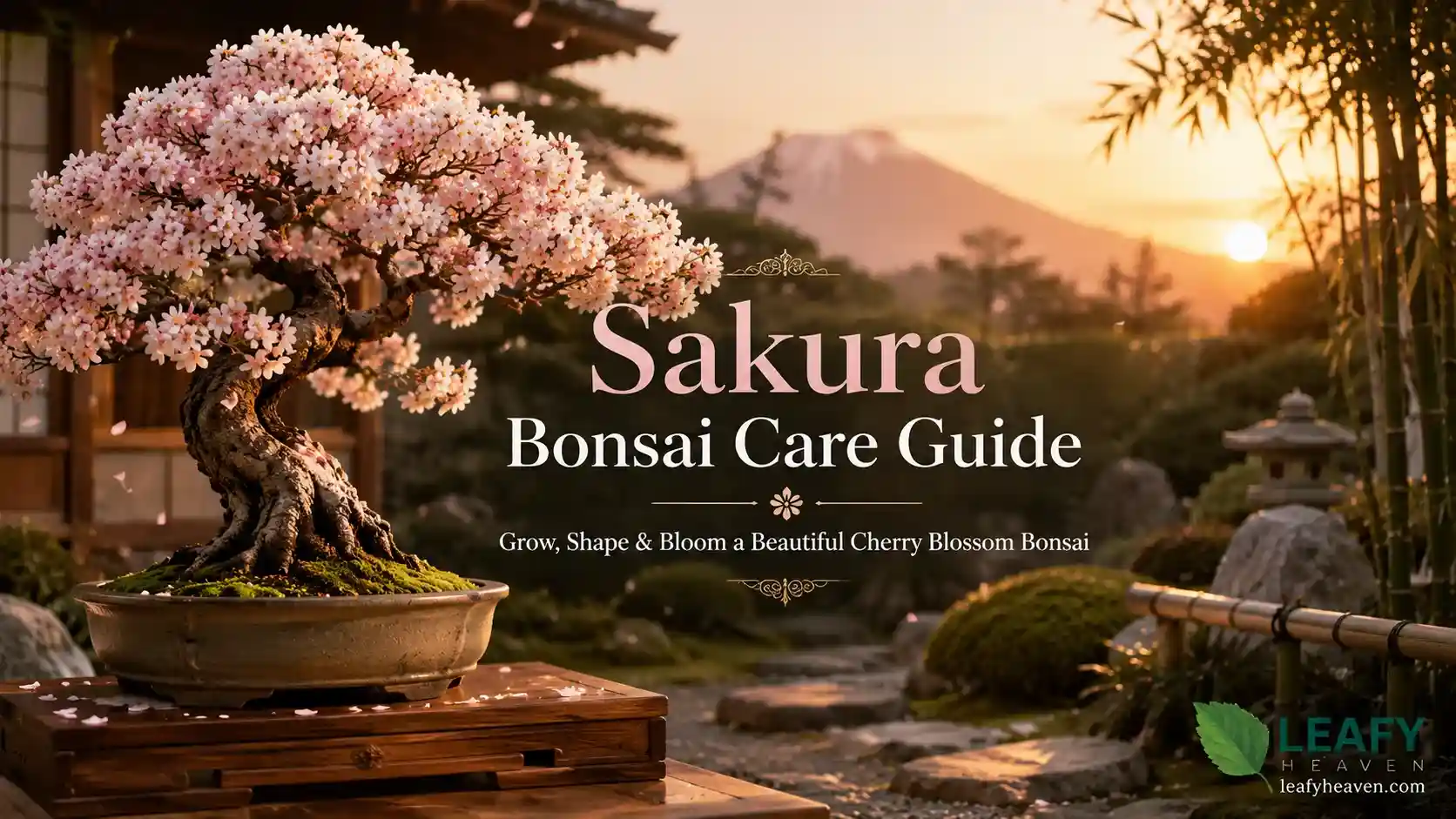
Sakura bonsai is a miniature Japanese cherry blossom tree grown using bonsai techniques to create a compact flowering tree with stunning pink or white blooms. These elegant bonsai trees are admired for their delicate seasonal flowers, refined branching structure, and deep cultural symbolism connected to Japanese tradition and natural beauty.
A sakura bonsai is essentially a small cultivated form of the Japanese flowering cherry tree, most commonly from the Prunus serrulata species. It combines traditional bonsai artistry with the ornamental beauty of cherry blossoms to create a living miniature landscape. The terms cherry blossom bonsai tree, cherry bonsai, Japanese cherry blossom bonsai, and bonsai cherry blossom are often used interchangeably to describe these flowering bonsai varieties.
Unlike standard ornamental cherry trees grown in gardens, sakura tree bonsai are carefully trained through pruning, root restriction, shaping, and seasonal maintenance. Their compact size allows growers to enjoy the appearance of a mature ornamental cherry tree in a bonsai container while preserving graceful flowering and branching patterns.
Sakura bonsai is considered one of the most beautiful flowering bonsai tree species because of its soft pink or white blossoms that appear during spring blooming cycles. Some growers keep cherry blossom bonsai outdoors for natural seasonal dormancy, while others attempt limited indoor cultivation with proper lighting and winter protection. Successful care also involves understanding watering schedules, bonsai soil drainage, pruning methods, and flowering management.
Many enthusiasts grow Japanese cherry blossom bonsai from seeds, while others purchase young trained bonsai trees for faster development. Over time, careful pruning and shaping help improve branch ramification, canopy balance, and bloom production.
In Japanese culture, sakura symbolizes renewal, impermanence, beauty, and the fleeting nature of life. This symbolic importance has made the sakura bonsai one of the most respected and recognizable bonsai styles worldwide. Whether displayed in traditional Japanese gardens or modern homes, these ornamental cherry tree bonsai continue to represent elegance, patience, and seasonal harmony.
What Is a Sakura Bonsai?
Sakura bonsai is a miniature version of a Japanese cherry blossom tree trained using bonsai methods to produce elegant flowering canopies in small containers. These bonsai trees combine traditional Japanese bonsai techniques with the seasonal beauty of cherry blossoms, creating compact ornamental trees with refined branches, textured bark, and delicate spring flowers.
Scientific Name & Botanical Classification
The most common Prunus serrulata scientific name used for sakura bonsai is Prunus serrulata, which is widely known as the Japanese flowering cherry tree. This ornamental cherry species belongs to the Rosaceae plant family, the same family that includes roses, peaches, plums, and fruit-bearing cherry trees.
Japanese flowering cherry trees are native to regions of:
- Japan
- Korea
- China
In natural landscapes, these ornamental cherry trees can grow into medium or large deciduous trees. However, bonsai cultivation techniques allow growers to maintain them in miniature form while preserving their mature flowering characteristics.
Sakura bonsai trees are classified as:
- Deciduous flowering bonsai
- Ornamental bonsai trees
- Temperate climate bonsai species
Their seasonal dormancy cycle plays a major role in healthy growth and flower production.
Difference Between Sakura Bonsai & Regular Cherry Blossom Trees
The primary difference between a sakura bonsai and a regular cherry blossom tree is size control through bonsai training methods. While full-sized Japanese flowering cherry trees may reach several meters in height, a cherry bonsai remains compact through root pruning, branch trimming, and controlled container growth.
Key differences include:
| Feature | Sakura Bonsai | Regular Cherry Blossom Tree |
| Size | Miniature | Full-sized landscape tree |
| Root System | Restricted in bonsai pot | Deep natural root spread |
| Training | Pruned and shaped regularly | Natural unrestricted growth |
| Branch Structure | Artistic ramification | Natural canopy development |
| Flowering Display | Compact seasonal blooms | Large-scale flowering canopy |
Sakura bonsai also requires more frequent maintenance compared to standard ornamental cherry trees. Bonsai growers carefully manage watering, pruning, wiring, and seasonal dormancy to maintain balanced growth and flowering performance.
Flowering behavior is also slightly different because bonsai root restriction can influence bloom density, branch energy, and flowering timing.
Common Types of Sakura Bonsai Trees
Several cherry blossom varieties are used for bonsai cultivation because of their attractive flowers, branching habits, and adaptability to container growth.
Popular sakura bonsai varieties include:
- Prunus serrulata bonsai — The classic Japanese cherry blossom bonsai species with soft pink spring blooms.
- Amanogawa flowering cherry — Known for upright growth and fragrant pale pink flowers.
- Accolade cherry blossom tree — Produces abundant semi-double pink blossoms with elegant arching branches.
- Fuji cherry bonsai — A compact flowering cherry species highly suitable for miniature bonsai styling.
- Tibetan cherry tree — Valued for its glossy bark and ornamental winter appearance.
- Japanese cherry bonsai tree — A broad term used for bonsai created from traditional Japanese flowering cherry cultivars.
Each variety offers different blossom colors, growth habits, bark textures, and seasonal characteristics.
Gardeners interested in growing full-sized specimens can also explore cherry blossom trees suited to Australian climates for outdoor garden planting beyond bonsai form.
Why Sakura Bonsai Is Popular Worldwide
Sakura bonsai is admired globally because it combines artistic bonsai design with the iconic beauty of cherry blossoms. The soft seasonal blooms create dramatic visual impact while maintaining the elegance of miniature tree cultivation.
Major reasons for its popularity include:
- Spectacular pink and white spring blossoms
- Traditional Japanese bonsai aesthetics
- Decorative value for patios, balconies, and bonsai displays
- Elegant branch structure and seasonal color changes
- Strong symbolism connected to renewal and natural beauty
In Japanese culture, sakura blossoms represent the fleeting nature of life, seasonal renewal, and appreciation for temporary beauty. This symbolism has made bonsai cherry blossom trees highly respected among bonsai collectors and ornamental plant enthusiasts worldwide.
Many growers also appreciate the balance between delicate flowering and structured bonsai artistry, making sakura bonsai one of the most visually refined flowering bonsai tree species available.
For growers building their bonsai foundation, this complete gardening and plant care guide covers the essential plant maintenance principles needed before starting any bonsai training project.
Sakura Bonsai Tree Appearance & Characteristics
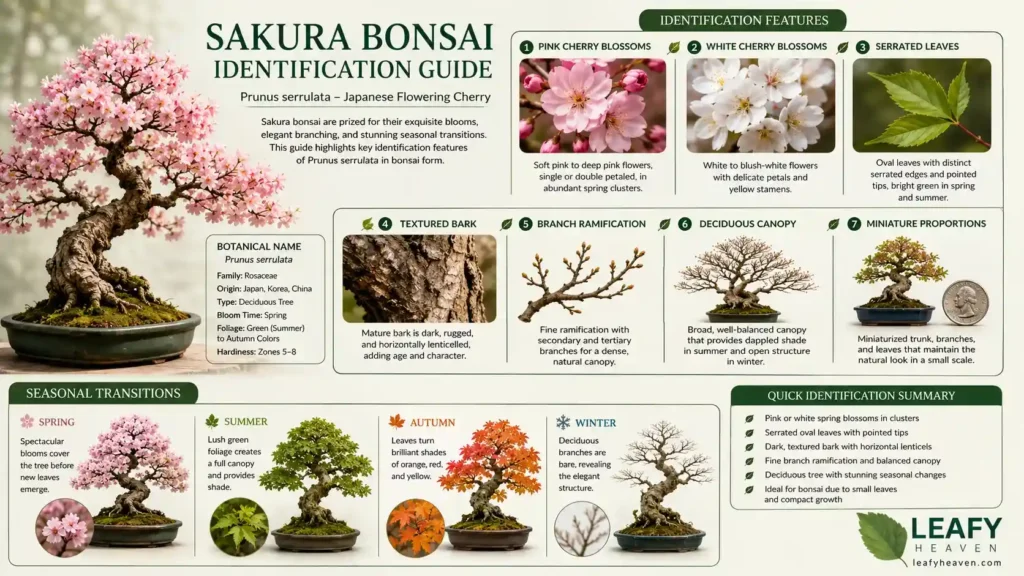
Sakura bonsai trees are known for delicate blossoms, elegant branching, textured bark, and compact ornamental growth. Their miniature size combined with seasonal cherry flowers creates one of the most visually refined flowering bonsai tree styles in traditional Japanese bonsai cultivation.
Flower Colors & Blooming Season
Sakura bonsai is primarily admired for its soft spring blossoms that appear before or alongside fresh foliage growth. Most varieties produce delicate pink blossoms, although some cultivars develop pure white flowers or layered semi-double blooms.
Common flower colors include:
- Light pink
- Deep pink
- Pale blush pink
- White cherry blossom bonsai flowers
- Soft pink-white combinations
The spring blooming cycle usually begins in early to mid-spring depending on climate conditions, winter dormancy quality, and cherry tree variety. Healthy sakura bonsai often bloom for one to three weeks under stable outdoor temperatures.
Flower longevity depends on:
- Temperature stability
- Wind exposure
- Rain intensity
- Overall tree health
- Sunlight conditions
Cool spring weather generally helps cherry blossoms last longer, while excessive heat or strong rain may shorten bloom duration.
Leaf Shape, Bark & Growth Habit
The foliage of Prunus serrulata bonsai is equally ornamental after flowering season ends. Prunus serrulata leaves are typically oval-shaped with serrated edges and pointed tips. Young leaves may emerge with bronze or reddish tones before turning vibrant green during active growth.
Leaf characteristics include:
- Fine serrated margins
- Smooth glossy texture
- Seasonal color transitions
- Compact deciduous foliage
Sakura bonsai bark becomes more textured and visually attractive with age. Mature bonsai may develop slightly peeling or polished bark surfaces depending on the cultivar. Some varieties, such as Tibetan cherry tree bonsai, are especially valued for decorative bark coloration.
Branch ramification is another defining characteristic of high-quality sakura bonsai. Fine branch division creates layered flowering canopies that improve the overall visual balance of the bonsai tree.
Sakura bonsai follows a deciduous growth pattern, meaning:
- Leaves emerge in spring
- Active growth occurs in summer
- Foliage changes color during autumn
- Leaves drop in winter dormancy
This seasonal transition is essential for healthy flowering cycles and long-term bonsai development.
Sakura Bonsai Size & Growth Rate
Sakura bonsai can be developed in several miniature bonsai tree sizes depending on the species, training style, and container dimensions.
Typical bonsai size categories include:
| Bonsai Size | Approximate Height |
| Miniature Bonsai | 6–10 inches |
| Small Bonsai | 10–18 inches |
| Medium Bonsai | 18–30 inches |
Mature height is controlled through:
- Root pruning
- Branch trimming
- Pot restriction
- Seasonal maintenance
Cherry blossom bonsai trees are considered moderate growers. Young trees may grow relatively quickly during active seasons, while mature bonsai develop more slowly as branch refinement increases.
General growth timeline:
- Seed germination: Several weeks
- Early shaping stage: 1–2 years
- Structural development: 3–5 years
- Mature flowering bonsai appearance: 5–10 years
Older sakura bonsai become more valuable as trunk taper, bark texture, and branch ramification improve over time.
Indoor vs Outdoor Appearance Differences
Indoor cherry blossom bonsai usually looks less vigorous compared to outdoor-grown specimens because cherry blossom species naturally prefer outdoor seasonal cycles.
Indoor-grown sakura bonsai may show:
- Reduced flowering
- Longer internodes
- Smaller bloom production
- Weaker branch density
- Limited seasonal color change
Outdoor flowering performance is generally much stronger because the tree receives:
- Natural sunlight intensity
- Proper airflow
- Seasonal temperature variation
- Winter dormancy conditions
Outdoor sakura bonsai often develop:
- Denser branching
- More abundant blossoms
- Stronger trunk growth
- Better leaf coloration
- Improved bark texture
Seasonal dormancy has a major impact on overall appearance and flowering quality. Without sufficient winter dormancy, cherry blossom bonsai may experience weak blooming cycles, irregular growth, or reduced long-term health. This is why most Japanese cherry blossom bonsai trees are recommended primarily for outdoor cultivation rather than permanent indoor display.
Best Growing Conditions for Sakura Bonsai
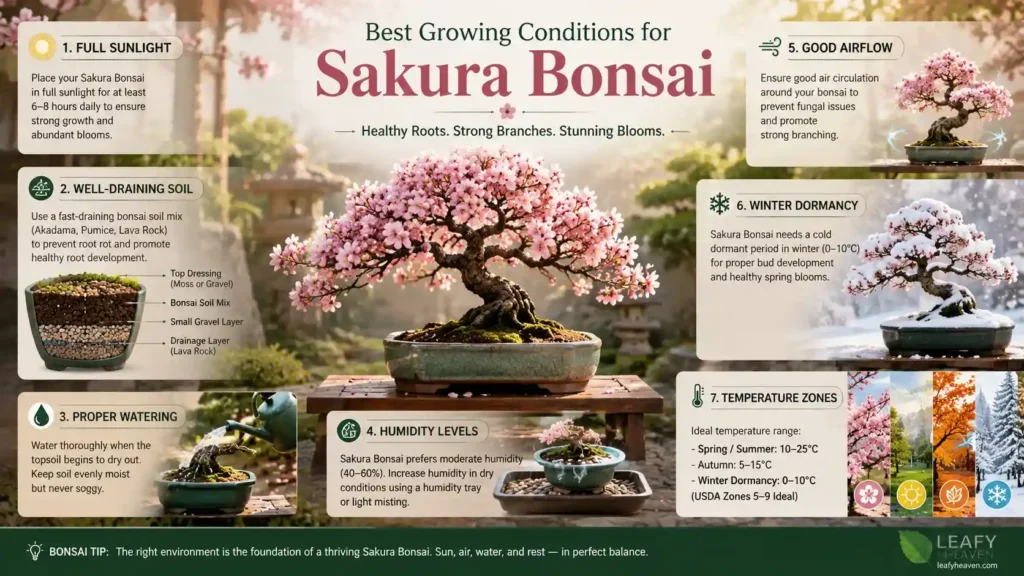
Sakura bonsai grows best in full sunlight, well-draining soil, moderate watering, and cool seasonal temperatures. Proper environmental conditions are essential for healthy root development, balanced foliage growth, and strong spring flowering performance in cherry blossom bonsai trees.
Ideal Sunlight Requirements
Sakura bonsai requires full sun exposure for strong growth and abundant flowering. Most Japanese flowering cherry varieties perform best when they receive at least 6–8 hours of direct sunlight daily.
Morning sunlight is especially beneficial because it:
- Encourages healthy flower production
- Helps dry excess moisture on leaves
- Reduces fungal disease risk
- Supports compact branch growth
Adequate sunlight directly improves bloom enhancement by increasing flower bud development before spring flowering season. Bonsai cherry blossom trees grown in insufficient light often produce:
- Weak flowering
- Sparse foliage
- Long leggy branches
- Reduced canopy density
During extremely hot summer conditions, light afternoon shade may help protect delicate blossoms and prevent excessive soil drying in shallow bonsai pots.
Temperature & USDA Zones
Sakura bonsai is a temperate deciduous bonsai species that requires cool seasonal changes throughout the year. Most Japanese flowering cherry climate conditions naturally include cold winters and mild springs, which help regulate dormancy and flowering cycles.
Typical USDA growing zones:
- USDA Zones 5–8 for most varieties
- Some cold-hardy cultivars tolerate Zone 4 conditions
Growers can verify their exact location using the official USDA Plant Hardiness Zone Map before selecting the most suitable cherry blossom variety.
Cold tolerance varies depending on species and root protection, but sakura bonsai generally handles winter cold better than tropical bonsai species.
Winter dormancy needs are extremely important for healthy flowering. During dormancy:
- Growth slows naturally
- Leaves drop
- Flower buds prepare for spring blooming
- Energy reserves stabilize
Without proper winter chilling, cherry blossom bonsai may develop:
- Weak flowering cycles
- Delayed bud formation
- Reduced vigor
- Irregular leaf growth
Although mature sakura bonsai tolerates cold weather, shallow bonsai containers expose roots to freezing temperatures more quickly than garden-grown trees. In extremely cold regions, some winter root protection may be necessary.
Best Soil Mix for Sakura Bonsai
A proper bonsai soil composition is critical for root health, moisture balance, and oxygen circulation. Sakura bonsai prefers loose, well-draining soil that retains moderate moisture without becoming compacted.
An ideal cherry blossom bonsai soil mix often includes:
- Akadama
- Pumice
- Lava rock
- Organic compost or pine bark
A balanced bonsai soil mixture helps:
- Prevent root rot
- Improve drainage
- Maintain root aeration
- Support healthy microbial activity
Drainage importance cannot be overstated for sakura bonsai because overly wet soil quickly damages delicate roots. Waterlogged conditions commonly lead to fungal infections and declining tree vigor.
Organic matter balance is also important. Excessive organic material may hold too much water, while extremely inorganic soil may dry too quickly during warm weather.
Healthy bonsai soil should:
- Drain rapidly after watering
- Hold moderate moisture
- Allow airflow around roots
- Resist heavy compaction
Humidity & Airflow Needs
Sakura bonsai benefits from moderate humidity combined with strong airflow. Good air circulation helps regulate moisture levels around foliage and blossoms while reducing disease pressure.
Outdoor airflow benefits include:
- Faster drying after rain or watering
- Reduced fungal growth
- Stronger branch development
- Healthier foliage density
Poor ventilation often increases the risk of:
- Powdery mildew
- Blossom blight
- Leaf fungal spots
- Moisture-related diseases
Preventing fungal diseases is especially important during spring flowering season because blossoms are highly sensitive to prolonged moisture exposure.
Indoor cherry blossom bonsai may require:
- Open windows
- Outdoor placement during warm seasons
- Small circulation fans
- Reduced humidity buildup
Proper spacing between bonsai trees also improves overall airflow and disease prevention.
Best Bonsai Pots for Cherry Blossom Bonsai
The best bonsai pots for cherry blossom bonsai combine aesthetic balance with functional drainage and root management.
Important pot features include:
- Adequate drainage holes
- Moderate pot depth
- Stable ceramic construction
- Proper root space
Pot depth depends on the bonsai style and root system size. Most sakura bonsai are planted in relatively shallow containers to maintain miniature proportions while still allowing healthy root development.
Drainage holes are essential because cherry blossom bonsai roots are sensitive to standing water. High-quality bonsai containers usually include:
- Multiple drainage holes
- Wire anchor holes
- Wide surface area for root spread
Ceramic bonsai containers are especially popular for sakura bonsai because they complement the refined Japanese aesthetic of flowering cherry trees. Neutral-colored ceramic pots often highlight the soft pink and white blossoms more effectively during spring bloom displays.
The overall pot should visually balance:
- Tree height
- Trunk thickness
- Flower color
- Canopy shape
- Seasonal appearance
How to Grow Sakura Bonsai From Seeds
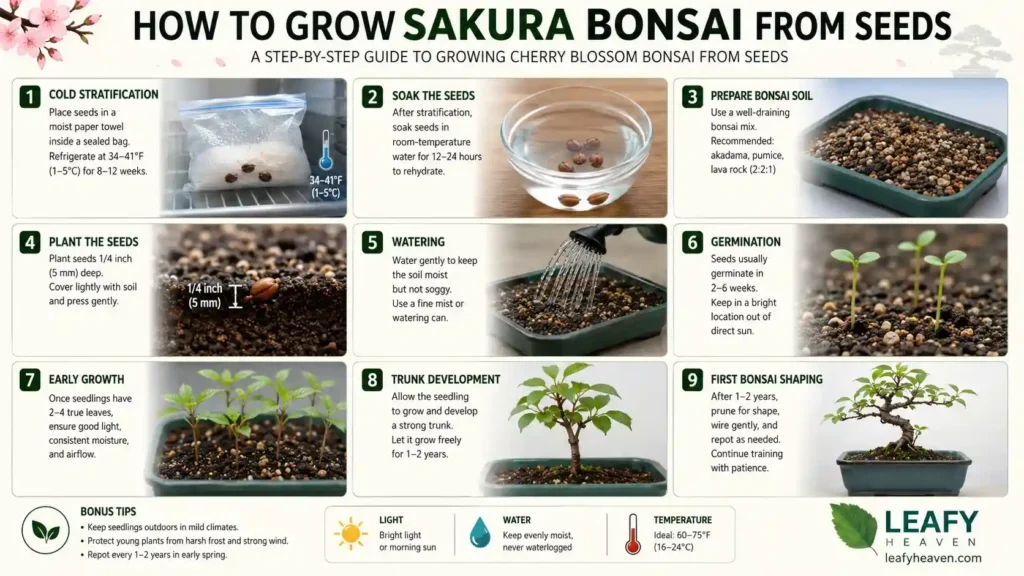
Sakura bonsai seeds require stratification, moisture, warmth, and patience to successfully germinate and develop into healthy bonsai seedlings. Growing a cherry blossom bonsai from seed is a long-term process, but it allows growers to fully shape the trunk, roots, and branching structure from the earliest stages of development.
Where Sakura Bonsai Seeds Come From
Sakura bonsai seeds are collected from mature Japanese flowering cherry trees after the flowering and fruiting cycle finishes. These seeds are commonly sold as:
- Cherry blossom bonsai seeds
- Prunus serrulata seed
- Japanese cherry blossom seed
- Sakura tree bonsai seeds
Most bonsai growers use seeds from ornamental cherry species that naturally produce attractive flowers and compact branching suitable for bonsai cultivation.
Popular seed sources include:
- Prunus serrulata
- Fuji cherry varieties
- Ornamental Japanese flowering cherry cultivars
Fresh seeds generally produce better germination rates than old or improperly stored seeds. High-quality seeds should appear:
- Firm
- Dry but healthy
- Free from mold
- Undamaged
Because cherry blossom trees are deciduous temperate species, their seeds naturally require winter-like conditions before germination can begin.
How to Stratify Cherry Blossom Bonsai Seeds
The cold stratification process is essential for breaking seed dormancy in sakura bonsai species. Without stratification, many cherry blossom bonsai seeds fail to sprout properly.
Basic cold stratification steps:
- Soak seeds in water for 24 hours
- Remove floating or damaged seeds
- Place seeds in moist peat moss, paper towel, or vermiculite
- Seal inside a plastic bag or container
- Store in a refrigerator
Recommended refrigeration duration:
- Typically 6–12 weeks
- Temperature range around 34–41°F (1–5°C)
This cold period mimics natural winter conditions and activates germination triggers inside the seed.
During stratification:
- Keep the medium slightly moist
- Avoid excessive water buildup
- Check periodically for mold formation
After successful chilling, seeds become more responsive to warmth and moisture during planting.
Step-by-Step Seed Planting Guide
Growing sakura bonsai from seed requires careful moisture control and stable growing conditions during early development.
Soak Seeds
Before planting:
- Soak stratified seeds in lukewarm water for 12–24 hours
- Discard seeds that appear hollow or damaged
This step helps soften the seed shell and improve moisture absorption.
Prepare Bonsai Soil
Use a light bonsai soil mixture with:
- Good drainage
- Moderate moisture retention
- Fine particle texture for seedlings
A starter mix may include:
- Akadama
- Pumice
- Fine organic compost
- Seed-starting substrate
Planting Depth
Plant seeds shallowly to avoid excessive moisture buildup.
Recommended planting depth:
- Approximately 0.25–0.5 inches deep
Cover lightly with soil while allowing some airflow around the surface.
Watering Schedule
After planting:
- Keep soil consistently moist
- Avoid soggy conditions
- Mist gently if necessary
Overwatering is one of the most common causes of seed failure in cherry bonsai cultivation.
Seedling Care
Once seedlings emerge:
- Provide bright indirect light initially
- Gradually increase sunlight exposure
- Protect from strong wind and extreme heat
- Maintain moderate moisture levels
Young sakura bonsai seedlings are delicate during the first growing season and require stable environmental conditions for healthy root and trunk development.
How Long Sakura Bonsai Takes to Grow
Growing a mature cherry blossom bonsai from seed requires patience because sakura bonsai develops gradually over several years.
Typical germination timeline:
- 2–6 weeks after planting following successful stratification
During the first year:
- Seedlings focus on root establishment
- Thin trunks begin forming
- Initial branch growth appears
Early trunk development usually takes:
- 1–3 years depending on species and growing conditions
Structural bonsai shaping often begins after the young tree becomes stable and vigorous.
First flowering expectations vary significantly:
- Some trees bloom after 3–5 years
- Others may require 7 years or more for mature flowering
Flower production depends on:
- Species genetics
- Dormancy quality
- Sunlight exposure
- Root health
- Overall bonsai care
Common Seed Germination Problems
Several problems can affect cherry blossom bonsai seed germination if moisture or temperature conditions become unstable.
Mold
Excess humidity and poor airflow commonly cause mold growth during stratification or early planting stages.
Prevention tips:
- Avoid waterlogged media
- Use clean containers
- Monitor moisture levels carefully
Rotting
Seeds often rot because of:
- Overwatering
- Compacted soil
- Poor drainage
- Excessive humidity
Rotting usually destroys the seed before germination begins.
Poor Sprouting
Low germination rates may result from:
- Incomplete stratification
- Old seeds
- Improper temperatures
- Dry storage damage
Fresh properly chilled seeds generally sprout more successfully.
Weak Seedlings
Weak seedlings may develop because of:
- Insufficient sunlight
- Excess moisture
- Nutrient imbalance
- Sudden temperature stress
Healthy seedlings should gradually develop stronger stems, balanced leaf growth, and active root systems during the first growing seasons.
Quick Summary Block
| Stage | Approximate Time |
| Stratification | 6–12 weeks |
| Germination | 2–6 weeks |
| Early Training | 1–2 years |
| Flowering Maturity | 3–7 years |
Sakura Bonsai Care Guide
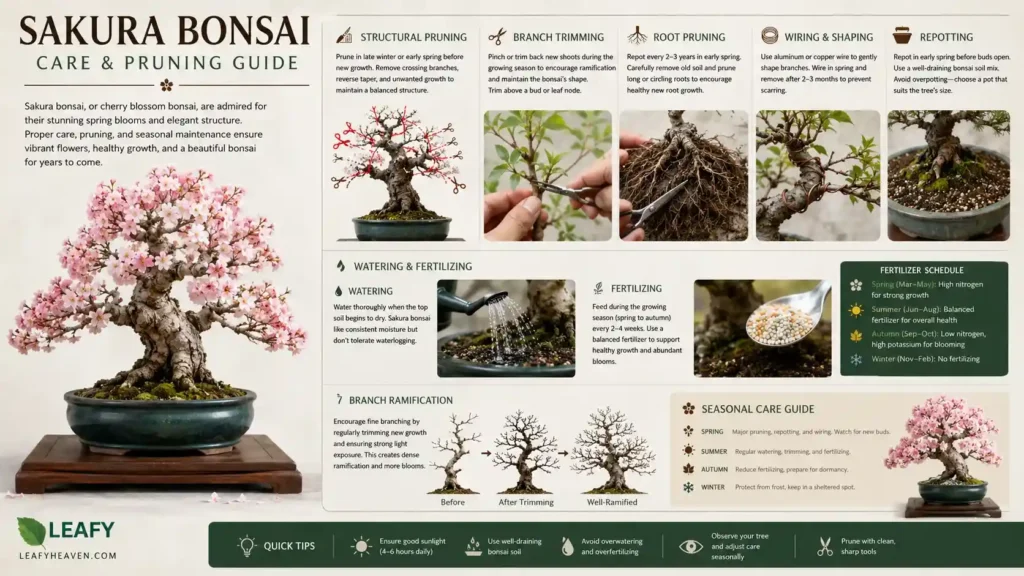
Proper watering, pruning, feeding, and seasonal maintenance are essential for keeping sakura bonsai healthy and flowering consistently. Cherry blossom bonsai trees require balanced care throughout the year to maintain strong roots, refined branching, and reliable spring blooms.
Watering Requirements
Sakura bonsai prefers moist but not soggy soil. The shallow nature of bonsai containers causes moisture to dry faster than standard garden soil, so regular monitoring is important.
Proper watering helps:
- Support healthy root growth
- Maintain flower production
- Prevent leaf stress
- Improve nutrient absorption
Seasonal watering frequency changes throughout the year:
- Spring and summer usually require more frequent watering
- Autumn watering gradually decreases
- Winter dormancy requires lighter moisture management
During active growing seasons, soil should remain evenly moist without becoming waterlogged. Overly dry soil may cause:
- Wilting leaves
- Weak flowering
- Bud drop
- Root stress
Preventing root rot is one of the most important aspects of cherry blossom bonsai care. Constantly wet soil deprives roots of oxygen and encourages fungal growth.
To reduce root rot risk:
- Use fast-draining bonsai soil
- Water only when the upper soil layer begins drying slightly
- Ensure drainage holes remain unobstructed
- Avoid standing water beneath pots
Outdoor sakura bonsai may require daily watering during hot summer periods, while cooler conditions reduce overall moisture demand.
Fertilizer Schedule for Better Blooms
Regular feeding is necessary for healthy foliage growth and strong flowering performance. Sakura bonsai uses significant energy during blooming season, so nutrient balance directly affects flower quality.
Spring fertilization is especially important because it supports:
- New leaf growth
- Branch development
- Flower bud formation
- Root recovery after dormancy
Balanced NPK fertilizers are commonly used during the active growing season. A moderate fertilizer ratio helps maintain healthy overall development without causing excessive foliage growth.
Recommended feeding approach:
- Balanced fertilizer during spring and summer
- Reduced feeding during late autumn
- Minimal or no fertilizer during winter dormancy
Flower boosting nutrients often contain slightly higher phosphorus levels because phosphorus supports:
- Bloom production
- Root development
- Flower longevity
Organic fertilizer options may also improve gradual nutrient release and microbial activity in bonsai soil.
Common fertilizer types include:
- Liquid bonsai fertilizers
- Organic pellets
- Slow-release bonsai fertilizer blends
- Flowering bonsai fertilizers
Overfertilization should be avoided because excessive nitrogen may cause heavy foliage growth with reduced flowering performance.
Pruning & Shaping Techniques
Pruning is essential for maintaining miniature proportions and improving flowering structure in sakura bonsai. Proper pruning also enhances branch ramification and canopy balance over time.
Structural pruning focuses on:
- Defining trunk movement
- Removing unwanted branches
- Improving branch spacing
- Building long-term bonsai shape
Major structural pruning is usually performed during dormancy or early spring before vigorous growth begins.
Maintenance trimming is lighter routine pruning used throughout the growing season to:
- Control branch length
- Maintain compact growth
- Improve sunlight penetration
- Encourage finer branching
Healthy branch ramification creates dense elegant branching patterns that improve the appearance of flowering canopies during bloom season.
When pruning sakura bonsai:
- Remove crossing branches
- Eliminate weak shoots
- Preserve balanced branch distribution
- Avoid excessive flower bud removal
Careful pruning timing is important because incorrect seasonal pruning may reduce the following spring’s blossoms.
Wiring Sakura Bonsai Safely
Wiring helps shape branches and guide the artistic structure of cherry blossom bonsai trees. Sakura bonsai branches are relatively flexible when young but become more delicate as they mature.
The best wiring seasons are typically:
- Late autumn
- Winter dormancy
- Early spring before heavy growth
These periods reduce stress while making branch structure easier to adjust.
Preventing bark damage is extremely important because cherry blossom bark can mark easily under wire pressure.
Safe wiring practices include:
- Using properly sized bonsai wire
- Wrapping branches carefully
- Avoiding excessive tightening
- Monitoring branch swelling regularly
Wire should never remain on the tree long enough to cut into bark tissue.
Branch positioning techniques help create:
- Natural asymmetry
- Open flowering canopies
- Balanced visual movement
- Traditional Japanese bonsai aesthetics
Overly aggressive bending should be avoided because sakura branches may crack under excessive force.
Repotting Sakura Bonsai
Repotting maintains healthy roots and prevents soil compaction inside bonsai containers. Over time, cherry blossom bonsai roots become crowded and require pruning to sustain healthy growth.
Root pruning during repotting helps:
- Stimulate fresh root growth
- Improve nutrient uptake
- Prevent root binding
- Maintain bonsai size control
Repotting intervals depend on tree age and growth rate:
- Young sakura bonsai: every 1–2 years
- Mature bonsai: every 2–4 years
Fast-growing young trees usually require more frequent repotting because their roots fill containers quickly.
The best season to repot sakura bonsai is typically:
- Late winter
- Early spring before bud expansion
Repotting during this stage minimizes stress while allowing rapid recovery during the upcoming growing season.
Basic repotting steps include:
- Remove the tree carefully from the pot
- Trim damaged or circling roots
- Refresh bonsai soil
- Reposition the tree securely
- Water thoroughly after repotting
After repotting, the bonsai should be protected temporarily from intense sunlight and strong wind until active recovery begins.
How to Encourage More Cherry Blossoms on Bonsai Trees
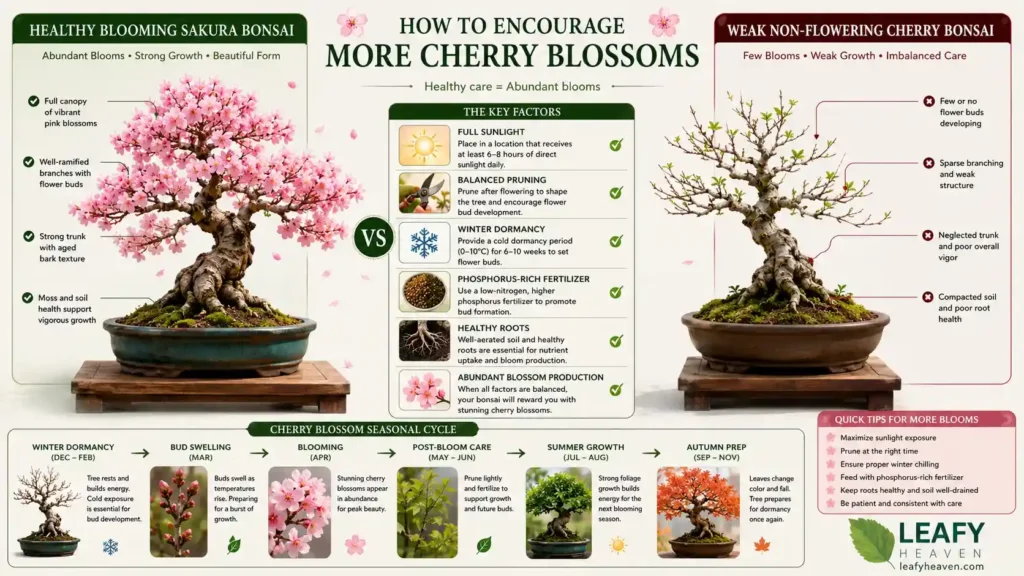
Full sunlight, correct pruning timing, healthy roots, and balanced fertilization help sakura bonsai produce abundant blossoms. Cherry blossom bonsai trees rely heavily on seasonal care and proper environmental conditions to develop strong flower buds and healthy spring blooming cycles.
Why Sakura Bonsai Stops Flowering
Several environmental and maintenance problems can reduce or completely stop flowering in sakura bonsai. Most flowering issues are linked to dormancy disruption, improper pruning, or weak growing conditions.
Lack of Dormancy
Sakura bonsai requires a cold winter dormancy period to reset its seasonal growth cycle and prepare flower buds for spring blooming.
Without proper dormancy:
- Flower production weakens
- Bud development decreases
- Growth becomes irregular
- Bloom timing becomes inconsistent
Indoor cherry blossom bonsai often struggles to flower because warm winter temperatures prevent natural dormancy from occurring properly.
Incorrect Pruning
Poor pruning timing is one of the most common reasons sakura bonsai loses flowers. Cherry blossom trees often develop flower buds on older wood or on branches formed during the previous growing season.
Excessive pruning may remove:
- Developing flower buds
- Mature flowering spurs
- Healthy branch structure
Over-pruning also redirects energy into foliage recovery rather than bloom production.
For best flowering results:
- Avoid heavy pruning immediately before blooming season
- Focus on balanced maintenance trimming
- Preserve mature flowering branches when possible
Low Sunlight
Low sunlight exposure significantly reduces flowering strength in bonsai cherry blossom trees. Cherry species require strong light levels to generate enough energy for healthy blooms.
Insufficient light may cause:
- Weak bud formation
- Sparse flowering
- Long leggy shoots
- Thin foliage density
Outdoor placement with direct sunlight generally produces much stronger flowering performance compared to shaded or indoor environments.
Best Fertilizers for Flowering Bonsai
Proper nutrition directly affects bloom quantity, flower size, and overall tree vigor. Sakura bonsai benefits from fertilizers designed to support flowering development rather than excessive leaf growth.
Phosphorus-rich fertilizers are especially useful because phosphorus supports:
- Flower bud formation
- Root strength
- Bloom longevity
- Energy storage
Balanced feeding schedules help maintain healthy growth while encouraging seasonal blossoms.
Recommended fertilizer practices:
- Feed regularly during active growth
- Reduce feeding during extreme summer heat
- Stop heavy fertilization before winter dormancy
Organic feeding is also popular among bonsai growers because it provides slower nutrient release and improves soil biology naturally.
Common organic fertilizer sources include:
- Organic bonsai pellets
- Fish emulsion
- Compost-based fertilizers
- Mild bone meal blends
Excess nitrogen should be avoided because it may stimulate excessive foliage growth at the expense of flower production.
Seasonal Care for Maximum Blooms
Seasonal maintenance strongly influences the number and quality of cherry blossoms produced each year.
Spring Preparation
Spring preparation begins before buds open. During this stage:
- Increase sunlight exposure gradually
- Resume balanced watering
- Begin light fertilization
- Inspect branches for winter damage
Healthy spring preparation supports stronger flowering canopies and improved blossom longevity.
Winter Dormancy Importance
Winter dormancy is one of the most critical factors for maximum blooms in sakura bonsai. Dormancy allows the tree to:
- Store energy reserves
- Reset flowering hormones
- Develop healthy flower buds
- Regulate seasonal growth cycles
Warm winters or indoor heating conditions may interrupt dormancy and reduce bloom performance the following spring.
For healthy dormancy:
- Keep trees outdoors in cool conditions when possible
- Protect roots from extreme freezing
- Avoid forcing active winter growth indoors
Stable seasonal transitions help maintain reliable flowering year after year.
Flowering vs Non-Flowering Cherry Bonsai Comparison
| Healthy Flowering Bonsai | Weak Non-Flowering Bonsai |
| Full sunlight | Low light |
| Proper dormancy | Warm winter |
| Balanced pruning | Over-pruning |
Common Sakura Bonsai Problems & Solutions
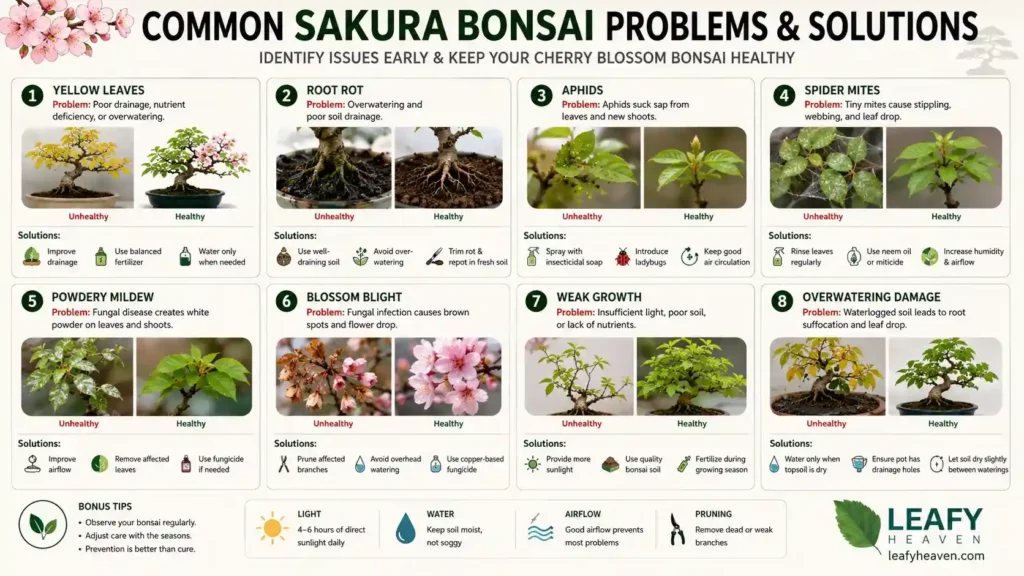
Most sakura bonsai problems are caused by improper watering, poor airflow, fungal infections, or incorrect seasonal care. Early identification of symptoms helps prevent long-term damage and keeps cherry blossom bonsai trees healthy, vigorous, and capable of producing strong seasonal blooms.
Yellow Leaves & Leaf Drop
Yellow leaves and premature leaf drop are among the most common issues in sakura bonsai. These symptoms are usually linked to watering imbalance, nutrient problems, or seasonal confusion.
Overwatering
Overwatering keeps bonsai soil constantly saturated and deprives roots of oxygen. This often causes:
- Yellowing foliage
- Weak growth
- Root decline
- Early leaf drop
Signs of overwatering include:
- Wet compact soil
- Mushy roots
- Slow soil drying
- Fungus growth on the soil surface
Allowing the upper soil layer to dry slightly between watering helps improve root health.
Nutrient Deficiency
Cherry blossom bonsai may develop pale or yellow leaves when nutrients become depleted.
Common deficiencies include:
- Nitrogen deficiency
- Iron deficiency
- Magnesium imbalance
Nutrient problems often appear as:
- Weak leaf coloration
- Reduced vigor
- Slow branch growth
- Poor flowering
Balanced bonsai fertilization usually restores healthy foliage color over time.
Dormancy Confusion
Because sakura bonsai is a deciduous species, seasonal leaf drop during autumn and winter is natural. Some growers mistakenly assume the tree is unhealthy when dormancy begins.
Normal dormancy signs include:
- Yellow autumn foliage
- Gradual leaf shedding
- Slowed growth
- Bare winter branches
However, sudden leaf loss during active growing seasons may indicate environmental stress or root problems.
Root Rot Problems
Root rot is one of the most dangerous issues affecting cherry bonsai trees. It usually develops when roots remain trapped in overly wet or poorly aerated soil.
Poor Drainage
Poor drainage prevents excess water from escaping the bonsai container. This creates ideal conditions for fungal root infections.
Common causes include:
- Blocked drainage holes
- Heavy compact soil
- Oversized containers retaining excess moisture
Root rot symptoms may include:
- Wilting despite wet soil
- Blackened roots
- Sour soil smell
- Weak foliage growth
Compacted Soil
Old compacted bonsai soil reduces oxygen circulation around roots. Compaction also slows water drainage and encourages moisture buildup.
Healthy bonsai soil should remain:
- Loose
- Granular
- Fast-draining
- Well-aerated
Regular repotting helps prevent soil compaction and root decline.
Pest Problems on Cherry Bonsai
Several common insect pests attack sakura bonsai foliage, flowers, and young shoots during active growing seasons.
Aphids
Aphids are small sap-feeding insects commonly found on:
- New shoots
- Flower buds
- Tender leaves
Aphid infestations may cause:
- Curled leaves
- Sticky residue
- Distorted growth
- Weak flower development
Spider Mites
Spider mites often appear during hot dry conditions and can severely damage foliage.
Signs include:
- Tiny webbing
- Speckled leaves
- Dry leaf texture
- Premature leaf drop
Improved humidity and regular foliage inspection help reduce spider mite outbreaks.
Scale Insects
Scale insects attach themselves to branches and stems while feeding on plant sap.
Common symptoms:
- Sticky honeydew residue
- Weak branch growth
- Reduced vigor
- Bark discoloration
Early pest treatment helps prevent severe infestations from spreading throughout the bonsai canopy.
Fungal Diseases & Blossom Issues
Fungal diseases become more common when sakura bonsai experiences excessive moisture, overcrowding, or poor airflow.
Powdery Mildew
Powdery mildew appears as a white dusty coating on leaves and young shoots.
Contributing conditions include:
- High humidity
- Poor air circulation
- Wet foliage
- Shaded growing areas
Untreated mildew may weaken foliage and reduce photosynthesis efficiency.
Blossom Blight
Blossom blight affects cherry blossoms during wet spring conditions. Flowers may:
- Brown prematurely
- Wilt quickly
- Rot before fully opening
Improving airflow and avoiding excessive overhead watering helps reduce blossom disease risk.
Troubleshooting Weak Growth
Weak growth in sakura bonsai usually indicates root stress, nutrient imbalance, or restricted root space.
Root Stress
Root stress commonly develops from:
- Improper watering
- Heat exposure
- Root damage during repotting
- Poor drainage
Affected trees may show:
- Small leaves
- Weak shoots
- Reduced flowering
- Slow recovery
Lack of Nutrients
Insufficient feeding weakens overall bonsai vigor and limits healthy branch development.
Symptoms may include:
- Pale foliage
- Thin branching
- Slow growth
- Weak bloom production
Consistent balanced fertilization supports stronger seasonal performance.
Pot-Bound Roots
Pot-bound roots occur when the root system completely fills the bonsai container and begins circling densely.
Common signs:
- Rapid soil drying
- Slowed growth
- Reduced flowering
- Difficult water absorption
Repotting with root pruning usually restores healthier root function and improves overall tree vitality.
Indoor vs Outdoor Sakura Bonsai
Sakura bonsai performs best outdoors because it requires seasonal dormancy and strong natural sunlight. Japanese cherry blossom bonsai trees are temperate deciduous species that naturally depend on outdoor climate cycles for healthy flowering, foliage development, and long-term growth stability.
Can Sakura Bonsai Grow Indoors?
Sakura bonsai can survive indoors temporarily, but permanent indoor cultivation is usually difficult because cherry blossom species require natural seasonal changes.
Indoor flowering bonsai limitations commonly include:
- Reduced flowering
- Weak branch growth
- Smaller leaves
- Poor dormancy cycles
- Limited airflow
Most indoor environments lack:
- Strong direct sunlight
- Cold winter dormancy
- Natural humidity balance
- Outdoor seasonal temperature variation
Without proper dormancy, sakura bonsai may gradually weaken and lose its ability to flower consistently.
Artificial lighting considerations become important when indoor growing is unavoidable. Grow lights may help supplement sunlight during darker months, especially near shaded windows or apartments with limited natural light.
Useful indoor lighting practices include:
- Using full-spectrum grow lights
- Providing 10–14 hours of light exposure
- Rotating the bonsai regularly for balanced growth
- Avoiding placement near heating vents
Even with artificial lighting, indoor cherry blossom bonsai usually performs less vigorously compared to outdoor-grown specimens.
Best Outdoor Placement
Outdoor placement provides the natural environmental conditions that sakura bonsai needs for healthy seasonal development and flowering.
Patio Placement
Patios are one of the most common outdoor locations for cherry blossom bonsai because they provide:
- Good sunlight exposure
- Stable airflow
- Easy watering access
- Decorative display opportunities
Morning sunlight with mild afternoon protection often works well during warmer climates.
Balcony Growing
Balcony growing can also support healthy sakura bonsai development if the location receives enough direct sunlight.
Important balcony considerations:
- Adequate airflow
- Stable sunlight duration
- Proper drainage management
- Protection from extreme heat reflection
South-facing balconies generally provide stronger flowering performance because of increased sun exposure.
Wind Protection
Although sakura bonsai benefits from airflow, excessive wind may damage blossoms, dry soil rapidly, or break delicate branches.
Wind protection methods include:
- Positioning near walls or screens
- Using bonsai benches with partial shelter
- Avoiding constant strong wind exposure
Balanced airflow without severe wind stress produces healthier foliage and longer-lasting blossoms.
Indoor Winter Protection Tips
Winter care becomes important in regions with severe freezing temperatures or unstable winter weather.
Dormancy Management
Dormancy management is essential because sakura bonsai must experience cool winter conditions to maintain healthy seasonal cycles.
During dormancy:
- Leaf drop is normal
- Growth slows naturally
- Water needs decrease
- Flower buds prepare for spring
Protecting the tree while still allowing cold exposure helps preserve healthy flowering cycles.
Temperature Control
Indoor winter protection may be necessary during extreme freezes, especially for shallow bonsai containers where roots are more vulnerable.
Safe winter protection methods include:
- Unheated garages
- Cold frames
- Sheltered outdoor areas
- Protected greenhouse spaces
Ideal winter temperatures generally remain cool but not excessively frozen for prolonged periods.
Avoid:
- Warm heated rooms
- Sudden temperature swings
- Dry indoor heating exposure
Excess indoor warmth during winter may interrupt dormancy and reduce spring flowering performance.
Indoor vs Outdoor Comparison Table
| Feature | Indoor | Outdoor |
| Flowering Strength | Moderate | Strong |
| Sunlight | Limited | Natural |
| Dormancy | Difficult | Natural |
Sakura Bonsai Styles & Design Ideas
Sakura bonsai can be styled into elegant traditional Japanese bonsai forms emphasizing flowering beauty and graceful branching. The soft blossoms and delicate branch structure of cherry blossom bonsai trees make them highly suitable for artistic bonsai styling focused on seasonal elegance and natural balance.
Popular Sakura Bonsai Styles
Several classic bonsai styles work exceptionally well with sakura bonsai because they highlight flowering canopies and refined branch movement.
Informal Upright
The informal upright style is one of the most popular forms for Japanese cherry blossom bonsai. This style features:
- A naturally curved trunk
- Gradual tapering
- Balanced branch spacing
- Soft flowing movement
Informal upright sakura bonsai creates a highly natural appearance that resembles mature ornamental cherry trees growing in open landscapes.
This style works especially well for:
- Dense spring blossoms
- Elegant branch ramification
- Traditional Japanese bonsai aesthetics
Slanting Style
The slanting style gives sakura bonsai a more dynamic appearance by positioning the trunk at an angled direction rather than fully vertical.
Key features include:
- Angled trunk movement
- Directional branch flow
- Visual sense of motion
- Strong asymmetrical balance
Slanting cherry bonsai trees often appear more dramatic during flowering season because blossoms visually follow the movement of the canopy structure.
Multi-Trunk Style
Multi-trunk sakura bonsai styles imitate small cherry blossom groves or clustered ornamental trees.
This design commonly includes:
- Two or more trunks
- Shared root systems
- Layered flowering canopies
- Natural forest-like composition
Multi-trunk cherry blossom bonsai displays become especially striking during spring when all trunks bloom simultaneously.
Japanese Bonsai Aesthetic Principles
Traditional Japanese bonsai design focuses on natural harmony, simplicity, and seasonal expression rather than perfect symmetry.
Wabi-Sabi
Wabi-sabi is a core Japanese aesthetic philosophy that values:
- Imperfection
- Simplicity
- Aging beauty
- Natural character
In sakura bonsai, wabi-sabi may appear through:
- Slight trunk irregularities
- Weathered bark texture
- Uneven branch flow
- Seasonal transitions
This philosophy helps create bonsai that feels natural rather than artificially perfect.
Seasonal Beauty
Seasonal beauty is central to cherry blossom bonsai appreciation because sakura trees change dramatically throughout the year.
Seasonal visual highlights include:
- Spring blossoms
- Summer foliage density
- Autumn leaf coloration
- Winter branch silhouettes
The temporary nature of cherry blossoms strongly reflects traditional Japanese appreciation for fleeting beauty.
Natural Asymmetry
Natural asymmetry is preferred in most bonsai styles because it creates a more realistic and visually balanced appearance.
Sakura bonsai design often avoids:
- Perfectly mirrored branches
- Artificial geometric shapes
- Overly rigid canopies
Instead, growers emphasize:
- Organic branch movement
- Open flowering space
- Balanced irregularity
This creates softer and more elegant flowering bonsai compositions.
Best Companion Plants & Display Ideas
Proper display styling enhances the visual impact of sakura bonsai and helps create a complete Japanese bonsai presentation.
Moss Accents
Moss accents are commonly added to bonsai soil surfaces to create a mature natural appearance.
Benefits of moss include:
- Improved visual softness
- Moisture retention support
- Enhanced Japanese garden aesthetics
- Better soil surface presentation
Green moss also contrasts beautifully with pink cherry blossoms during spring.
Bonsai Display Tables
Traditional bonsai display tables elevate the tree visually and improve overall presentation quality.
Popular display materials include:
- Dark hardwood tables
- Bamboo stands
- Minimalist Japanese platforms
Proper table height and style help emphasize:
- Trunk movement
- Pot design
- Flowering canopy balance
Japanese Garden Integration
Sakura bonsai integrates beautifully into Japanese-inspired garden settings and outdoor bonsai displays.
Common display combinations include:
- Stone lanterns
- Gravel pathways
- Water features
- Bamboo fencing
- Minimalist garden architecture
Japanese garden integration enhances the peaceful seasonal atmosphere associated with cherry blossom bonsai cultivation and traditional bonsai artistry.
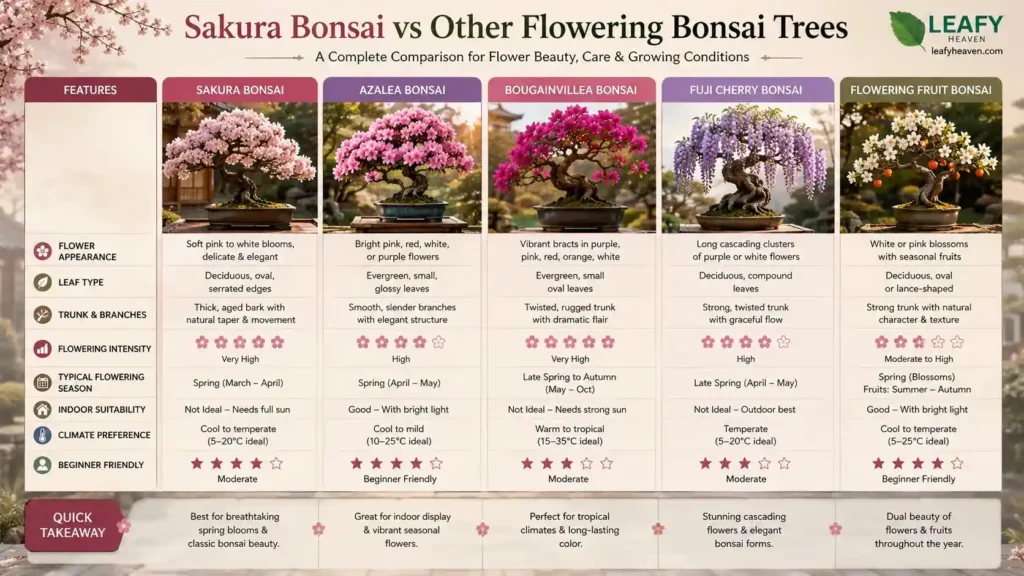
Sakura Bonsai vs Other Flowering Bonsai Trees
Sakura bonsai stands out for its delicate seasonal blossoms and symbolic Japanese beauty compared to other flowering bonsai species. While many flowering bonsai trees produce colorful blooms, cherry blossom bonsai is especially valued for its elegant spring flowering cycle, refined branching structure, and strong connection to traditional Japanese bonsai culture.
While many flowering bonsai trees produce colorful blooms, cherry blossom bonsai is especially valued for its elegant spring flowering cycle, refined branching structure, and strong connection to traditional Japanese bonsai culture.
Sakura Bonsai vs Azalea Bonsai
Sakura bonsai and azalea bonsai are both highly popular flowering bonsai species, but they differ significantly in flowering style, foliage texture, and maintenance requirements.
Sakura bonsai is known for:
- Soft pink or white spring blossoms
- Deciduous seasonal growth
- Elegant branch silhouettes during winter
- Traditional Japanese cherry blossom aesthetics
Azalea bonsai is recognized for:
- Extremely dense flower coverage
- Evergreen or semi-evergreen growth
- Bright red, pink, purple, or white blooms
- Compact foliage pads
Key differences include:
| Feature | Sakura Bonsai | Azalea Bonsai |
| Flowering Style | Soft seasonal blossoms | Heavy dense blooms |
| Growth Pattern | Deciduous | Evergreen/Semi-evergreen |
| Branch Appearance | Elegant open branching | Dense compact structure |
| Dormancy Requirement | Strong winter dormancy | Moderate dormancy |
Sakura bonsai generally creates a lighter, more delicate visual appearance compared to the dense floral display of azalea bonsai.
Sakura Bonsai vs Bougainvillea Bonsai
Bougainvillea bonsai differs greatly from sakura bonsai because it is a tropical flowering species rather than a temperate deciduous cherry tree.
Sakura bonsai characteristics:
- Cool climate preference
- Seasonal spring flowering
- Delicate blossoms
- Winter dormancy requirement
Bougainvillea bonsai characteristics:
- Tropical growth habit
- Bright colorful bracts
- Heat-loving growth
- Longer flowering periods
Bougainvillea bonsai is often easier for beginners in warm climates because it:
- Tolerates stronger heat
- Flowers frequently
- Adapts better to container culture
- Handles pruning aggressively
However, sakura bonsai is often considered more refined in traditional Japanese bonsai aesthetics because of its graceful flowering canopies and seasonal transitions.
Sakura Bonsai vs Fuji Cherry Bonsai
Fuji cherry bonsai is technically a smaller flowering cherry species often used specifically for bonsai cultivation. While both belong to flowering cherry groups, Fuji cherry bonsai usually develops:
- Smaller leaves
- Smaller flowers
- Compact internodes
- Faster bonsai suitability
Sakura bonsai varieties based on Prunus serrulata often produce:
- Larger blossoms
- Broader canopies
- More dramatic spring displays
Fuji cherry bonsai may be slightly easier to maintain in smaller bonsai forms because its naturally compact growth habit responds well to miniature styling techniques.
Both species share:
- Seasonal dormancy needs
- Similar watering requirements
- Traditional Japanese flowering aesthetics
- Deciduous growth cycles
Sakura Bonsai vs Fruit Bonsai Trees
Fruit bonsai trees are grown primarily for miniature fruit production, while sakura bonsai focuses more on ornamental flowering beauty.
Common fruit bonsai species include:
- Apple bonsai
- Citrus bonsai
- Pomegranate bonsai
- Crabapple bonsai
Compared to fruit bonsai trees, sakura bonsai typically offers:
- Softer floral displays
- More delicate branching aesthetics
- Less emphasis on fruit production
- Stronger seasonal symbolism
Fruit bonsai trees often require:
- Pollination management
- Fruit thinning
- Additional feeding support
Sakura bonsai instead prioritizes:
- Flower density
- Canopy elegance
- Seasonal blossom timing
- Traditional ornamental presentation
Flowering Bonsai Comparison Table
| Bonsai Type | Flowering | Indoor Suitability | Difficulty |
| Sakura Bonsai | Seasonal blooms | Moderate | Medium |
| Azalea Bonsai | Heavy blooms | Moderate | Medium |
| Bougainvillea Bonsai | Tropical blooms | High | Easy |
Where to Buy Sakura Bonsai Trees & Seeds
Sakura bonsai trees and seeds are available through bonsai nurseries, garden centers, and specialized bonsai websites. Buyers can choose between growing cherry blossom bonsai from seeds or purchasing partially trained or mature flowering bonsai trees depending on budget, patience, and experience level.
What to Look for Before Buying
Selecting a healthy sakura bonsai is important for long-term growth success and flowering performance. Careful inspection helps avoid weak trees, poor root systems, or artificially decorated bonsai products.
Healthy Roots
Healthy roots are one of the most important signs of a strong bonsai tree.
A quality cherry blossom bonsai should have:
- Firm healthy roots
- Good drainage
- No foul smell
- No black mushy root tissue
Visible surface roots should appear balanced and naturally spread around the trunk base.
Branch Structure
Good branch structure improves future bonsai styling potential and overall tree aesthetics.
Look for:
- Balanced branching
- Smooth trunk taper
- Natural movement
- Fine branch ramification
Avoid trees with:
- Crossing branches
- Heavy scarring
- Poor trunk proportions
- Unnatural shaping
A well-developed branch framework helps create a more refined flowering canopy as the bonsai matures.
Grafted vs Seed-Grown
Many Japanese flowering cherry bonsai are grafted to improve flowering quality or growth stability.
Grafted sakura bonsai:
- Produces reliable flowers faster
- Maintains specific ornamental cultivars
- Often develops quicker blooming performance
Seed-grown bonsai:
- Takes longer to mature
- Offers full control over development
- Creates more natural trunk progression
Both methods can produce beautiful bonsai trees when maintained properly.
Buying Seeds vs Mature Bonsai Trees
Choosing between seeds and mature bonsai depends on experience level, patience, and personal bonsai goals.
Cost Comparison
Cherry blossom bonsai seeds are much cheaper than mature flowering bonsai trees. However, growing from seed requires years of training before achieving a refined bonsai appearance.
General comparison:
- Seeds: low initial cost
- Young pre-bonsai: moderate cost
- Mature flowering bonsai: significantly higher cost
Patience Required
Growing sakura bonsai from seed requires long-term dedication.
Seed-grown bonsai often requires:
- Years of trunk development
- Seasonal pruning
- Structural shaping
- Long flowering maturation periods
Mature bonsai trees provide immediate visual impact but require a larger investment.
Beginner Recommendations
For beginners:
- Young pre-trained bonsai trees are often the best starting option
- They provide existing bonsai structure while still allowing styling experience
Seeds may be better suited for:
- Experienced growers
- Long-term bonsai hobbyists
- Enthusiasts interested in full bonsai development from the earliest stage
Average Sakura Bonsai Price Range
The price of sakura bonsai varies depending on tree age, flowering quality, trunk maturity, and bonsai styling refinement.
| Type | Estimated Price |
| Seeds | Low |
| Young Bonsai | Medium |
| Mature Flowering Bonsai | High |
Additional factors affecting price include:
- Rare cherry blossom cultivars
- Trunk thickness
- Branch ramification quality
- Imported Japanese bonsai origin
- Pot quality and presentation
Highly refined mature Japanese cherry bonsai trees can become premium collector specimens.
Avoiding Fake or Artificial Bonsai Products
Many decorative products marketed online as cherry blossom bonsai are actually artificial replicas rather than living bonsai trees.
Common misleading products include:
- Artificial cherry blossom bonsai tree decorations
- Fake cherry blossom bonsai replicas
- Plastic flowering display trees
Decorative replicas may look attractive temporarily but do not provide:
- Real flowering cycles
- Seasonal growth
- Bonsai cultivation experience
- Long-term living tree development
To identify real sakura bonsai:
- Check for living bark texture
- Inspect root systems
- Confirm botanical species names
- Verify natural leaf growth
- Avoid permanently glued decorative flowers
Reliable bonsai nurseries and specialized bonsai growers are generally the safest sources for authentic cherry blossom bonsai trees and seeds.
Conclusion
Sakura bonsai combines traditional Japanese artistry with the beauty of seasonal cherry blossoms, making it one of the most elegant flowering bonsai trees for collectors and beginners alike. With proper care, patience, and seasonal maintenance, a cherry blossom bonsai can develop into a refined miniature tree that produces stunning spring blooms year after year.
Successful sakura bonsai cultivation depends on several key factors:
- Full sunlight exposure
- Well-draining bonsai soil
- Proper winter dormancy
- Balanced watering and fertilization
- Careful pruning and shaping
Whether grown from Japanese cherry blossom seeds or purchased as a mature bonsai tree, sakura bonsai rewards long-term dedication with graceful branching, textured bark, and delicate pink or white blossoms.
Understanding flowering cycles, pruning timing, root health, and indoor vs outdoor care is essential for maintaining healthy bloom production and long-lasting bonsai vigor. Outdoor cultivation generally provides the best results because natural sunlight and seasonal temperature changes support stronger flowering and healthier growth patterns.
As one of the most respected flowering bonsai species, sakura bonsai also carries deep cultural significance connected to Japanese aesthetics, renewal, and appreciation for seasonal beauty. Its combination of ornamental elegance and traditional bonsai artistry continues to make it highly valued among bonsai enthusiasts worldwide.
Start growing your own cherry blossom bonsai to experience the seasonal beauty of sakura in miniature form. As your skills improve, you can also learn advanced bonsai styling techniques and explore more flowering bonsai species to expand your bonsai collection and artistic development.
Frequently Asked Questions About Sakura Bonsai
Can a sakura bonsai grow indoors permanently?
Sakura bonsai does not grow well indoors permanently because it requires natural seasonal dormancy and strong outdoor sunlight. Temporary indoor display is possible, but long-term indoor cultivation often causes weak flowering, poor growth, and dormancy problems. Outdoor growing conditions usually produce healthier cherry blossom bonsai trees.
How long does a cherry blossom bonsai live?
A well-maintained cherry blossom bonsai can live for several decades. With proper watering, pruning, repotting, and seasonal care, some sakura bonsai trees may survive for 30–50 years or longer. Tree lifespan depends heavily on root health, disease prevention, and correct dormancy management.
Why is my sakura bonsai not flowering?
Sakura bonsai commonly stops flowering because of: Lack of winter dormancy Insufficient sunlight Incorrect pruning timing Nutrient imbalance Weak root health Cherry blossom bonsai requires strong sunlight and proper seasonal temperature changes to develop healthy flower buds for spring blooming.
How often should I water sakura bonsai?
Sakura bonsai should be watered whenever the upper layer of soil begins to dry slightly. During spring and summer, watering may be needed daily in hot conditions. During winter dormancy, watering frequency decreases significantly. The soil should remain moist but never constantly soggy.
Can cherry blossom bonsai produce fruit?
Some cherry blossom bonsai varieties may produce small fruit after flowering, especially if pollination occurs successfully. However, most sakura bonsai are grown primarily for ornamental blossoms rather than fruit production. Flowering quality is usually considered more important than fruit development in ornamental cherry bonsai cultivation.
What is the best cherry species for bonsai?
Prunus serrulata is one of the most popular and widely recommended cherry species for sakura bonsai because of its beautiful spring blossoms and traditional Japanese appearance. Fuji cherry varieties are also highly valued because of their naturally compact growth and bonsai-friendly characteristics.
How difficult is sakura bonsai for beginners?
Sakura bonsai is considered moderately difficult for beginners because it requires careful seasonal care, winter dormancy management, pruning knowledge, and balanced watering. While not as easy as some tropical bonsai species, beginners can successfully grow cherry blossom bonsai with proper research, patience, and consistent maintenance.

Written by the LeafyHeaven Editorial Team
LeafyHeaven shares practical gardening tips and simple plant care guides to help you grow, nurture, and enjoy your plants with ease. Our goal is to make gardening feel natural, approachable, and rewarding for everyone.