
Introduction
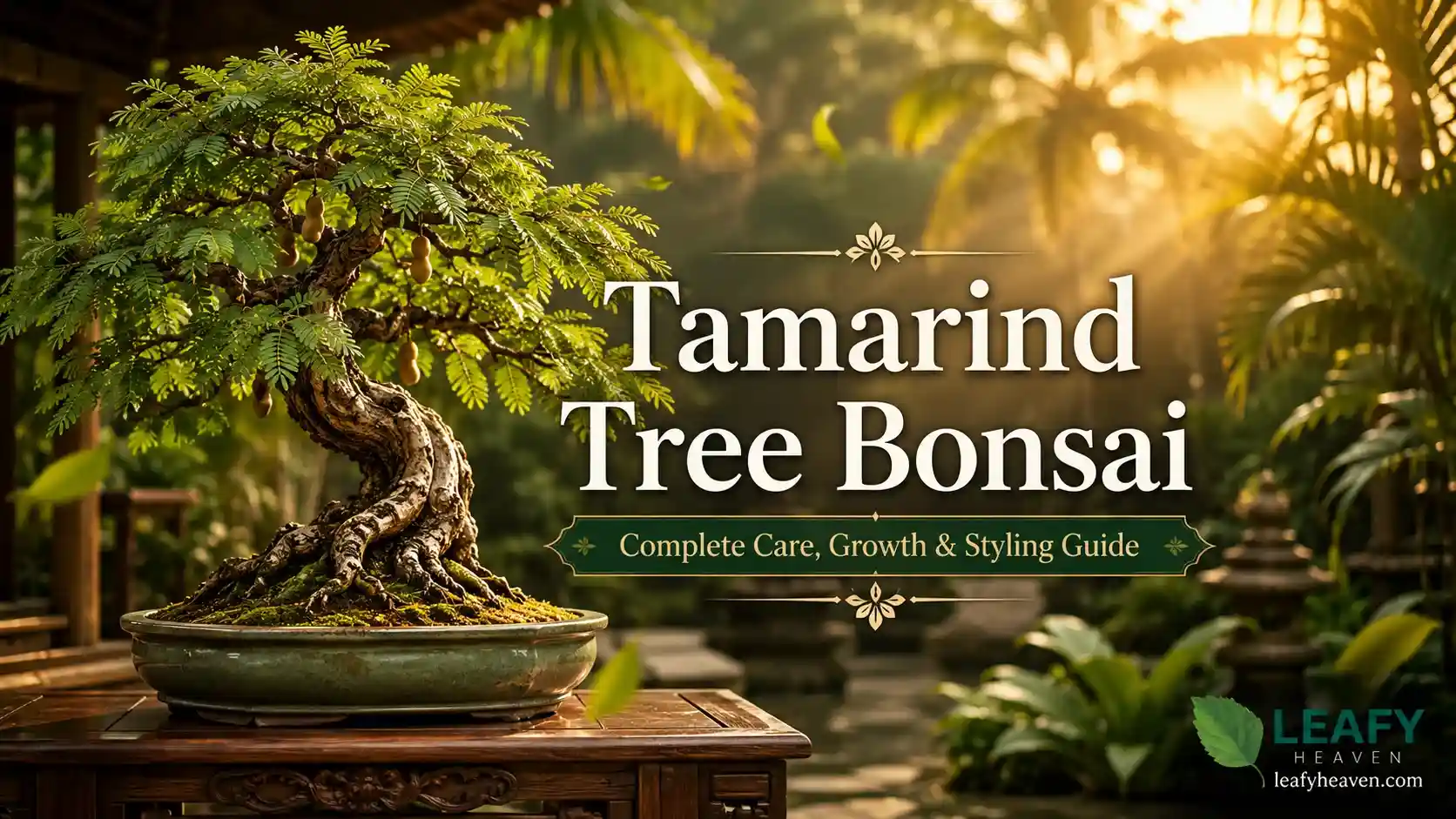
A tamarind tree bonsai is a miniature version of the Tamarindus indica plant that develops elegant branching, delicate compound leaves, and a mature tropical appearance through careful pruning and bonsai training. Its naturally fine foliage and strong trunk structure make it highly suitable for bonsai cultivation.
The bonsai tamarind tree is popular among enthusiasts who enjoy tropical bonsai trees with a unique canopy structure and fast-growing nature. Unlike many traditional bonsai species, a tamarind bonsai tree combines tropical aesthetics with the possibility of producing small edible tamarind fruit when mature and properly maintained.
A bonsai tamarind can be grown both indoors and outdoors depending on climate conditions. In warm tropical or subtropical regions, it performs best outdoors in full sunlight. In cooler climates, growers often keep it as an indoor bonsai tree during colder months while providing warmth, humidity, and bright light.
One reason the tamarind bonsai tree attracts beginner-to-intermediate growers is its strong response to pruning and branch development. The tree grows relatively fast compared to many slow-developing bonsai species, allowing quicker trunk thickening and canopy formation.
The scientific identity of tamarind is also important for bonsai growers. The tamarind scientific name is Tamarindus indica, and it belongs to the Fabaceae family, which is the family of tamarind and many other leguminous tropical plants. The Tamarindus indica plant is native to tropical regions and is valued worldwide for both ornamental beauty and edible fruit production.
What Is a Tamarind Tree Bonsai?
Tamarind bonsai is a tropical bonsai created from Tamarindus indica, known for its delicate leaves, rugged trunk texture, and miniature tree appearance. Its naturally dense foliage and tropical canopy structure make it one of the most attractive tropical bonsai species for growers who enjoy refined branching and fast development.
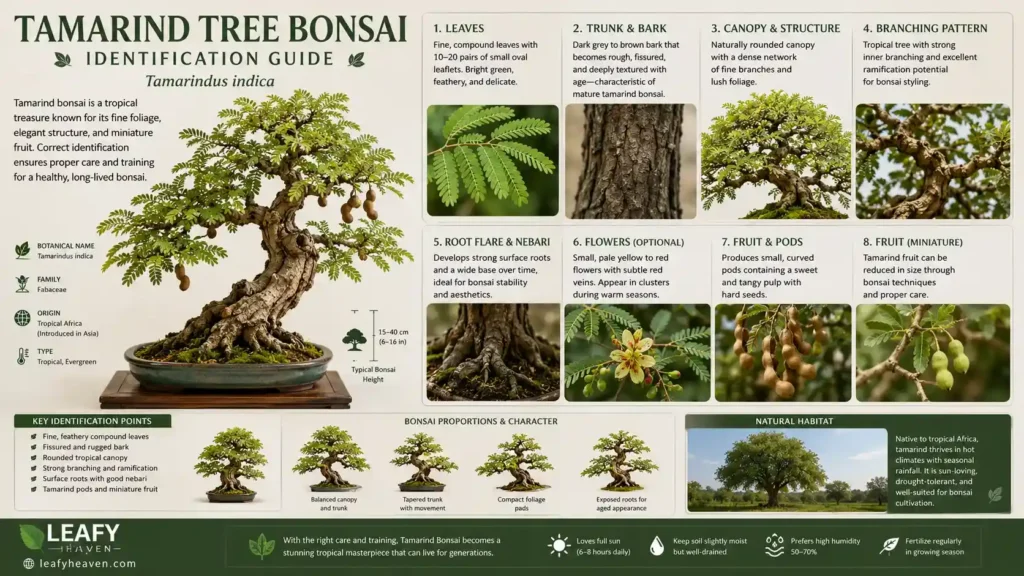
Scientific Name of Tamarind Tree
The scientific name of tamarind tree is Tamarindus indica. It is a long-living tropical tree species widely cultivated in warm climates for ornamental, culinary, and medicinal purposes.
The tamarind scientific name is commonly used in horticulture, botany, and bonsai cultivation to identify the species accurately. Many growers ask, “what is Tamarindus indica?” because the tree is popular both as a fruit-producing tree and as a bonsai specimen.
Tamarindus indica belongs to the Fabaceae family, also known as the legume family. The Tamarindus indica family includes many tropical and subtropical plants known for seed pods and nitrogen-fixing characteristics.
Tamarind Meaning, Origin & Native Habitat
The tamarind meaning is often connected to its edible sour fruit and tropical heritage. Tamarind is a fruit-bearing tropical tree valued for its flavorful pulp, ornamental canopy, and long lifespan.
When people ask “what is tamarind,” they are usually referring to the pod-producing tropical tree that develops feathery leaves and dense branching. The tree is widely used in cooking, traditional remedies, landscaping, and bonsai cultivation.
Tamarind is native to tropical regions of Africa, although it has spread across Asia, India, the Caribbean, and other warm climates for centuries. Today, tamarind native to tropical and subtropical regions grows successfully in many warm environments worldwide.
Because the tree evolved in native tropical regions, it prefers:
- Warm temperatures
- Bright sunlight
- Moderate humidity
- Frost-free conditions
These tropical requirements strongly influence tamarind bonsai care and indoor growing success.
Tamarind Tree Characteristics
The Tamarindus indica tree naturally develops a broad evergreen tropical canopy with graceful branch structure and fine-textured foliage. These features make it highly suitable for bonsai styling.
In nature, tamarind tree size can become very large. Mature trees may reach impressive tamarind tree height levels of 40 to 80 feet under ideal tropical conditions. In bonsai form, however, pruning and root restriction keep the tree compact and miniature.
Key visual characteristics include:
- Fine compound leaf structure
- Dense green canopy growth
- Rugged aging trunk texture
- Strong branch ramification
- Balanced tropical appearance
The leaf structure is especially valuable for bonsai because the naturally small leaflets create better miniature proportions. Over time, the trunk texture becomes rougher and more mature-looking, giving older bonsai specimens a realistic ancient tree appearance.
Tamarind also develops vigorous root behavior. Healthy roots support rapid canopy growth, which is why regular root pruning and controlled repotting are important in bonsai cultivation.
Quick Summary
| Feature | Details |
| Botanical Name | Tamarindus indica |
| Plant Family | Fabaceae |
| Bonsai Type | Tropical Bonsai |
| Indoor Suitability | Partial |
| Growth Speed | Moderate to Fast |
Why Tamarind Is Popular as a Bonsai Tree
Tamarind is valued in bonsai because of its naturally small compound leaves, tropical appearance, and strong response to pruning. Its fast growth, dense branching, and mature-looking trunk texture allow growers to create visually impressive tropical bonsai trees with realistic miniature proportions.
Unique Features of Tamarind Bonsai
One of the biggest strengths of tamarind bonsai is its fine foliage. The tree develops delicate compound leaves with small leaflets that naturally suit bonsai scale without requiring excessive leaf reduction techniques.
Another attractive feature is its natural canopy density. With proper pruning, the tree quickly forms a compact and balanced canopy that resembles mature tropical trees found in nature.
Strong trunk development also makes tamarind desirable for bonsai cultivation. Compared to many slow-growing bonsai species, tamarind can thicken its trunk relatively quickly under warm growing conditions. This helps growers create an aged tropical appearance faster.
Growers who want to strengthen their plant care foundation before attempting bonsai training will benefit from this complete gardening and plant care guide covering essential outdoor and tropical plant maintenance.
The tropical aesthetic of a tamarind bonsai tree is another major reason for its popularity. Its feathery foliage, rugged bark texture, and spreading canopy create a soft tropical character that stands out among many traditional bonsai species.
Popular visual characteristics include:
- Fine-textured foliage
- Elegant tropical canopy
- Rapid branch development
- Strong trunk taper potential
- Natural miniature tree appearance
Is Tamarind Bonsai Good for Beginners?
Tamarind can be suitable for beginners, especially for growers interested in tropical bonsai species. While it is not the absolute easiest bonsai tree, its fast recovery and strong growth habit make it easier to learn pruning and shaping techniques.
Many growers searching for bonsai trees for beginners choose tamarind because the tree responds predictably to trimming and branch training. Beginners can often see visible progress faster than with slower bonsai species.
However, tamarind does require attention to warmth, humidity, and sunlight. Because it is a tropical species, cold temperatures and poor indoor lighting can weaken growth.
For growers interested in an indoor bonsai tree for beginners, tamarind can work well if:
- Bright light is available
- Humidity levels are maintained
- Indoor temperatures stay warm
- Watering remains balanced
The maintenance level is generally considered moderate. It is easier than many advanced bonsai species but still requires regular pruning, watering, and seasonal care.
Indoor vs Outdoor Tamarind Bonsai
A tamarind bonsai can be grown both indoors and outdoors depending on climate conditions. In tropical and subtropical environments, outdoor growing usually produces stronger growth, healthier foliage, and faster trunk development.
An indoor tamarind tree performs best near bright windows or under grow lights where it can receive several hours of strong light daily. Like many indoor bonsai trees, insufficient sunlight indoors may cause weak growth or elongated branches.
Outdoor growing offers several advantages:
- Better sunlight exposure
- Faster canopy growth
- Stronger trunk thickening
- Improved airflow
- Healthier foliage density
As a tropical bonsai tree, tamarind is sensitive to cold weather and frost. Winter protection becomes important in cooler climates where temperatures drop significantly.
Humidity considerations are also important for indoor growers. Dry indoor air can stress tropical bonsai species and reduce leaf health. Many growers improve humidity by:
- Using humidity trays
- Grouping tropical plants together
- Running humidifiers indoors
- Avoiding direct heating vents
During winter, outdoor tamarind bonsai trees should be moved indoors or protected in warm greenhouse conditions to prevent cold damage and leaf drop.
How To Grow Tamarind Bonsai From Seed
Tamarind bonsai can be successfully grown from seed by soaking seeds, improving germination conditions, and training the seedling early. Because Tamarindus indica grows relatively fast in warm climates, seed-grown bonsai can develop strong roots, trunk structure, and branching within the first few years.
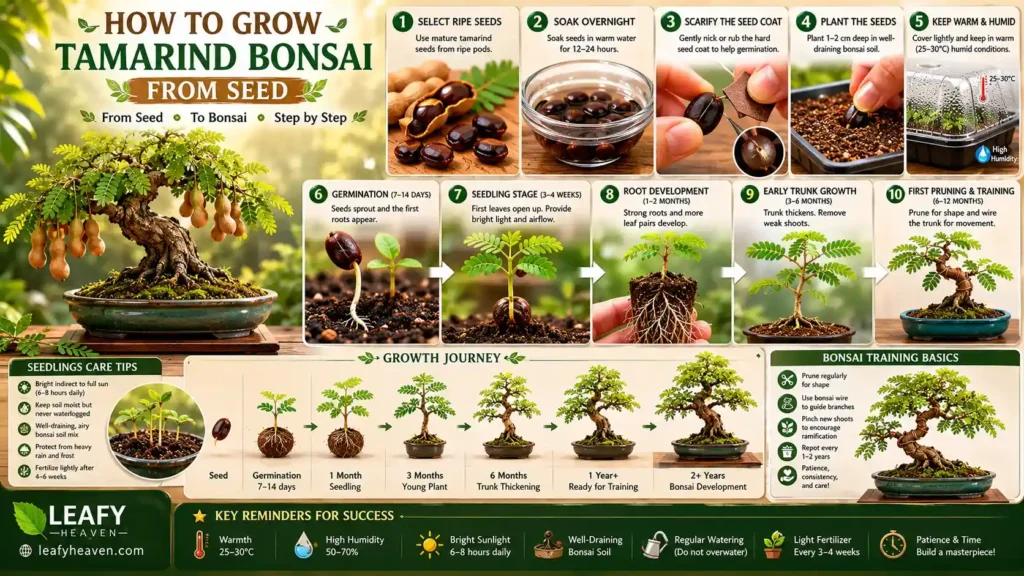
Choosing Healthy Tamarind Seeds
Healthy tamarind seeds are the foundation of successful germination and long-term bonsai growth. Fresh seeds usually sprout faster and produce stronger seedlings than old or dried-out seeds.
When selecting tamarind seeds, look for:
- Hard, fully developed seeds
- Dark brown glossy surface
- No cracks or mold damage
- Fresh seeds from ripe pods
Many growers prefer fresh Tamarindus indica seed because viability decreases over time if seeds are stored improperly.
Tamarindus indica seeds are widely available from:
- Fresh tamarind pods
- Tropical plant nurseries
- Bonsai seed suppliers
- Online seed stores
Using multiple seeds increases the chance of selecting the strongest future bonsai specimen.
Seed Germination Process
Tamarind seeds germinate best under warm and humid tropical conditions. Proper preparation improves sprouting speed and seedling health.
Step-by-Step Germination Process
- Soak seeds overnight
Place tamarind seeds in warm water for 12–24 hours to soften the outer shell and encourage faster germination. - Scarify seed coat if needed
If seeds have very hard outer shells, lightly scratch or nick the surface carefully to help moisture enter the seed. - Use well-draining soil
Plant seeds in a loose bonsai or seed-starting mix that drains easily while still holding light moisture. - Maintain warmth and humidity
Warm tropical conditions significantly improve germination success. Stable warmth encourages quicker root formation. - Provide indirect sunlight
Bright indirect light supports healthy sprouting without overheating young seedlings.
Under proper conditions, tamarind seeds often germinate within a few weeks.
Early Tamarind Seedling Care
Young tamarind seedlings grow quickly when provided with warmth, moisture balance, and strong light. Early care strongly affects future bonsai quality and trunk development.
Healthy root development is especially important during the first growing stages. Avoid compacted soil because restricted roots can slow overall growth.
Key seedling care priorities include:
- Warm tropical temperatures
- Moderate moisture
- Good airflow
- Bright filtered sunlight
- Stable humidity
Humidity helps prevent stress in newly sprouted seedlings. Extremely dry indoor air may slow growth or damage tender leaves.
Because tamarind is a tropical species, cold temperatures can weaken young plants quickly. Seedlings perform best when temperatures remain consistently warm throughout active growth.
When To Start Bonsai Training
Early bonsai training helps shape the future structure of the tree. However, seedlings should first develop healthy roots and stable growth before aggressive pruning begins.
Most growers begin light training after the seedling becomes well established and starts producing stronger branches.
The first goals usually include:
- Encouraging trunk thickening
- Developing branch structure
- Controlling height
- Improving root spread
Early pruning helps create better branch placement and encourages denser canopy growth. Light trimming during active growth also improves ramification over time.
Root pruning should begin carefully once the tree becomes established in its container. Controlled root management helps prepare the tamarind for shallow bonsai pots later in development.
Patience during early training is important because strong trunk formation creates the foundation for mature bonsai appearance.
Quick Takeaway
| Factor | Details |
| Best Germination Temperature | 75–90°F (24–32°C) |
| Average Sprouting Time | 1–4 Weeks |
| Common Early Mistake | Overwatering young seedlings |
| Best Lighting | Bright Indirect Sunlight |
| Early Training Start | After stable seedling growth |
Tamarind Bonsai Care Guide
Tamarind bonsai care requires warm temperatures, bright sunlight, proper watering, pruning, and tropical humidity. Because Tamarindus indica is a tropical species, stable growing conditions are essential for healthy foliage, strong root growth, and long-term bonsai development.
“For a broader understanding of how this species grows beyond bonsai form, this detailedtamarind plant careguide covers full-sized tree maintenance and tropical growing conditions.”
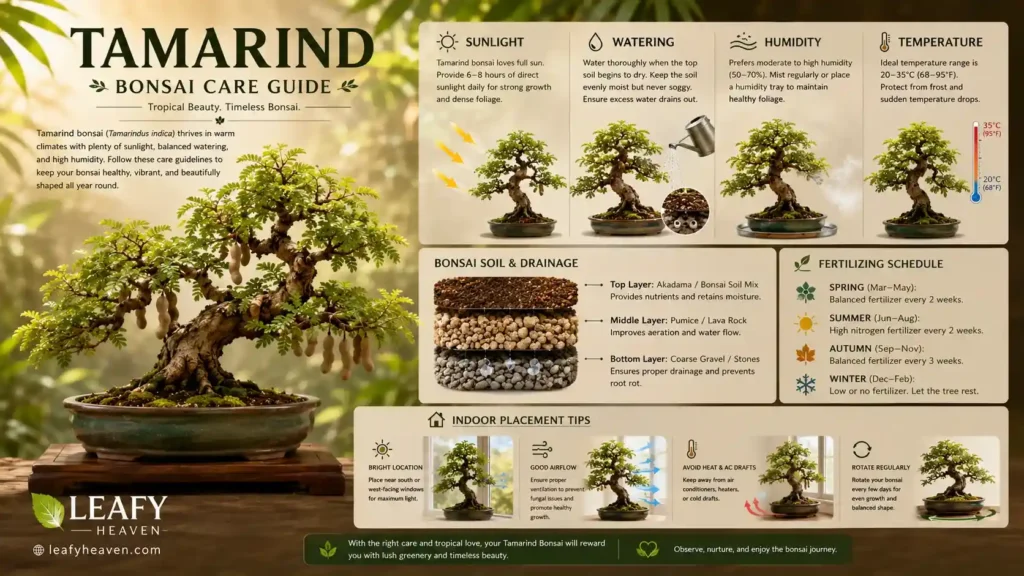
Best Soil for Tamarind Bonsai
Well-draining soil is one of the most important parts of successful tamarind bonsai care. Poor soil structure can trap excess moisture and increase the risk of root rot.
A good bonsai soil mix should provide:
- Fast drainage
- Root aeration
- Moisture balance
- Nutrient retention
Drainage requirements are especially important because tamarind roots dislike constantly soggy soil. Waterlogged conditions may weaken roots and slow growth.
A typical bonsai soil mix for tropical species often includes:
- Akadama or clay granules
- Pumice
- Lava rock
- Coarse sand
- Organic compost in small amounts
Aeration importance should never be ignored in tropical bonsai cultivation. Oxygen circulation around roots supports healthier growth, stronger feeder roots, and better moisture control.
Sunlight Requirements
Tamarind bonsai grows best in full sun conditions where it can receive several hours of direct sunlight daily. Strong light helps maintain compact foliage, healthy branching, and vigorous growth.
Insufficient light may cause:
- Weak branch growth
- Sparse foliage
- Larger leaf size
- Poor canopy density
For outdoor cultivation, full sun exposure usually produces the healthiest growth. In extremely hot climates, light afternoon shade may help reduce heat stress during peak summer temperatures.
Indoor growers often need indoor lighting support if natural sunlight is limited. Grow lights can help maintain healthy growth during winter or in darker indoor spaces.
Proper lighting directly affects leaf health. Healthy tamarind leaves should appear vibrant green, compact, and evenly distributed across the canopy.
Watering Tamarind Bonsai
Balanced watering is essential for proper tamarind plant care. Tamarind bonsai prefers evenly moist soil but does not tolerate prolonged overwatering.
Watering frequency depends on:
- Climate
- Pot size
- Soil drainage
- Tree size
- Seasonal growth
During active tropical growth, tamarind bonsai may require more frequent watering because warm temperatures increase moisture loss.
A practical watering approach is:
- Water thoroughly when the top soil begins drying
- Avoid constantly saturated soil
- Reduce watering slightly during slower winter growth
One of the biggest mistakes in tamarind bonsai care is overwatering. Excess moisture reduces root oxygen and may lead to fungal problems or root rot.
Signs of watering imbalance include:
- Yellow leaves
- Leaf drop
- Weak growth
- Soft roots
- Soil staying wet too long
Avoiding root rot requires both proper watering habits and well-draining soil.
Humidity & Temperature Needs
As a tropical species, tamarind bonsai thrives in warm and moderately humid conditions. Stable tropical climate requirements help maintain healthy foliage and continuous growth.
Ideal growing conditions include:
- Warm daytime temperatures
- Mild nighttime temperatures
- Medium to high humidity
- Protection from cold drafts
Tamarind has strong cold sensitivity. Exposure to frost or prolonged cold temperatures can cause leaf drop, slowed growth, or branch damage.
In cooler climates, indoor protection becomes necessary during winter months.
Indoor humidity methods may include:
- Humidity trays
- Room humidifiers
- Grouping tropical plants together
- Occasional misting
- Keeping away from dry heating vents
Maintaining humidity is especially important for indoor tropical bonsai during dry winter conditions.
Fertilizer Requirements
Tamarind bonsai benefits from regular feeding during active growth periods. A balanced fertilizer helps support foliage development, branch growth, and root strength.
Most growers use balanced fertilizer formulas that contain:
- Nitrogen (N)
- Phosphorus (P)
- Potassium (K)
Growth stage feeding should be adjusted throughout the year. Stronger nitrogen support may help during early active growth, while balanced feeding supports overall tree health.
A basic seasonal feeding schedule often includes:
- Regular feeding during spring and summer
- Reduced feeding during cooler months
- Avoiding excessive fertilizer during weak growth periods
Overfertilizing may cause:
- Excessive soft growth
- Large leaves
- Salt buildup
- Root stress
Consistent but moderate feeding usually produces healthier bonsai structure and canopy density.
Tamarind Bonsai Care Table
| Care Factor | Ideal Condition |
| Sunlight | Full Sun |
| Watering | Moderate |
| Humidity | Medium to High |
| USDA Zones | Tropical/Subtropical |
How To Shape and Style a Tamarind Bonsai
Tamarind bonsai responds well to pruning, wiring, and canopy shaping techniques that create mature tropical bonsai structure. Its flexible young growth, naturally fine foliage, and rapid branch development make it highly suitable for artistic bonsai styling.
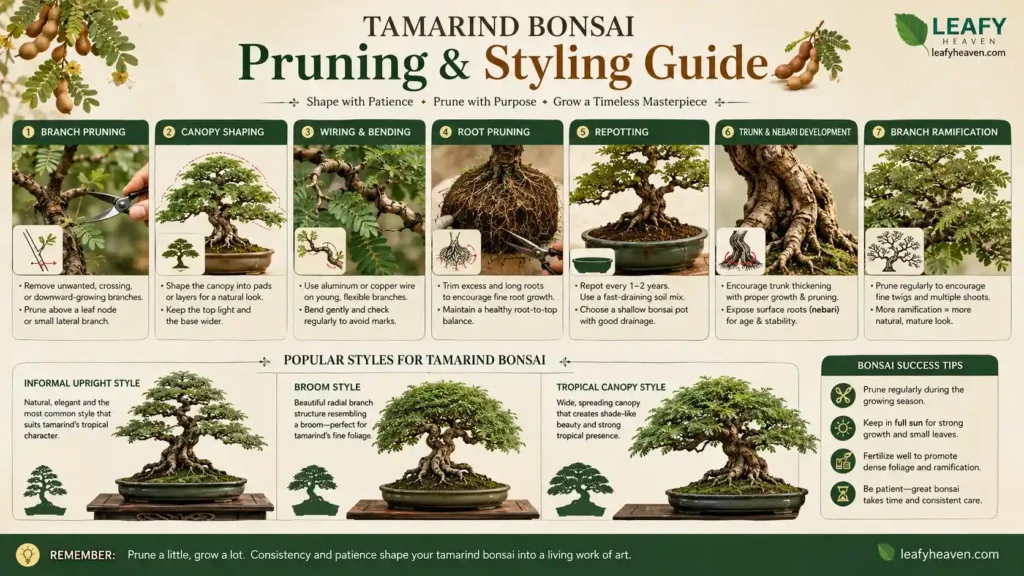
Best Bonsai Styles for Tamarind
Several bonsai styles work especially well for tamarind because of its tropical branching pattern and spreading canopy growth.
The informal upright style is one of the most popular choices. This style creates a gently curved trunk with balanced branch placement, giving the tree a natural mature appearance.
The broom style also suits tamarind bonsai because the species naturally develops dense branching and rounded canopy structure. Fine foliage helps create a soft, symmetrical crown that resembles mature tropical shade trees.
Many growers also prefer a tropical canopy style for tamarind bonsai. This design emphasizes:
- Wide branch spread
- Dense foliage pads
- Broad tropical silhouette
- Natural umbrella-shaped canopy
These styles highlight the tree’s tropical character while maintaining realistic miniature proportions.
Pruning Tamarind Bonsai
Regular pruning is essential for maintaining shape, improving branch structure, and controlling overall size.
Branch pruning helps:
- Encourage ramification
- Improve branch placement
- Control canopy spread
- Increase visual balance
Because tamarind grows relatively fast in warm conditions, unchecked growth can quickly make the canopy appear oversized or unbalanced.
Pruning also improves canopy density by stimulating new branch growth closer to the trunk. Frequent light trimming usually creates finer branching over time.
Leaf reduction techniques may be used on mature trees to maintain proportion and improve visual refinement. Since tamarind already produces naturally small compound leaves, heavy defoliation is often unnecessary.
Good pruning practices include:
- Removing crossing branches
- Eliminating weak growth
- Shortening overly long shoots
- Maintaining balanced canopy shape
Pruning is usually safest during active growing seasons when the tree can recover quickly.
Wiring Techniques
Wiring allows growers to guide branch direction and improve overall bonsai structure. Tamarind responds best to wiring while branches are still young and flexible.
Flexible young branches are easier to bend without cracking or splitting. Older hardened branches become more brittle and difficult to shape safely.
When wiring tamarind bonsai:
- Use appropriately sized bonsai wire
- Bend branches gradually
- Avoid extreme pressure
- Monitor branch growth regularly
Avoiding bark damage is especially important because wire scars can remain visible for long periods. Fast-growing branches may thicken quickly and become marked if wire is left on too long.
Many growers inspect wired branches frequently during active growth to prevent permanent scarring.
Root Pruning & Repotting
Root pruning helps maintain compact growth and allows the tree to remain healthy in shallow bonsai containers.
A proper repotting schedule depends on:
- Tree age
- Growth speed
- Root density
- Pot size
Young tamarind bonsai may require repotting more frequently because vigorous root growth can quickly fill the container.
Root management is important for:
- Preventing root binding
- Encouraging fine feeder roots
- Improving nutrient uptake
- Maintaining healthy growth balance
During repotting:
- Remove overly long roots carefully
- Preserve healthy feeder roots
- Refresh old soil
- Improve drainage structure
Shallow bonsai pots help create the visual proportions associated with mature bonsai design while restricting excessive root expansion.
Repotting is usually safest during active tropical growth periods when recovery is strongest.
Common Styling Mistakes
Several common mistakes can slow tamarind bonsai development or reduce overall visual quality.
Over-pruning is one of the most frequent problems. Removing too much foliage at once may weaken growth and reduce the tree’s energy reserves.
Excessive watering is another common issue. Constantly wet soil can weaken roots, slow trunk thickening, and increase the risk of fungal problems.
Weak trunk development often occurs when growers:
- Prune too aggressively too early
- Restrict growth prematurely
- Keep the tree in very small pots too soon
- Provide insufficient sunlight
Allowing controlled periods of stronger growth before heavy refinement usually produces better trunk taper and stronger overall bonsai structure.
Tamarind Bonsai Growth Timeline
Tamarind bonsai develops gradually, with trunk maturity and refined branching improving over several years. Because Tamarindus indica is a relatively fast-growing tropical species, growers can often see noticeable structural progress earlier than with many traditional bonsai trees.
First Year Growth Expectations
During the first year, tamarind bonsai focuses mainly on root establishment, trunk growth, and early branch formation. Young seedlings usually grow quickly under warm tropical conditions with proper sunlight and watering.
In this stage, growers can expect:
- Rapid seedling growth
- Initial trunk thickening
- Early branch development
- Strong root expansion
- Dense green foliage production
Most first-year tamarind bonsai trees still appear juvenile and lack mature bark texture or refined branching. The primary goal during this period is building overall strength rather than detailed styling.
Proper care during the first year includes:
- Allowing controlled growth
- Avoiding excessive pruning
- Providing strong sunlight
- Maintaining warm temperatures
- Encouraging healthy roots
Early structure planning may begin, but heavy refinement is usually delayed until the tree becomes stronger.
3–5 Year Development Stage
The 3–5 year stage is where tamarind bonsai begins developing a more recognizable bonsai appearance. Trunk thickening becomes more noticeable, and branch ramification improves significantly with regular pruning.
At this stage, growers often focus on:
- Structural branch selection
- Canopy shaping
- Root refinement
- Improved trunk taper
- Balanced branch spacing
With consistent pruning, the canopy becomes denser and more compact. Branches begin forming layered tropical silhouettes that resemble mature full-sized tamarind trees.
Many trees also start showing:
- Better bark texture
- Improved branch movement
- More refined foliage pads
- Stronger visual balance
Repotting and root pruning become increasingly important during this development stage to maintain compact growth in bonsai containers.
Mature Tamarind Bonsai Appearance
A mature tamarind bonsai develops the appearance of a miniature tropical tree with dense branching, refined foliage, and aged trunk character.
One of the most attractive features is bark aging. Over time, the trunk texture becomes rougher and more rugged, creating the visual maturity associated with old tropical trees.
Canopy refinement also improves significantly with long-term pruning and branch training. Mature bonsai specimens often display:
- Dense layered foliage
- Fine ramification
- Balanced tropical canopy structure
- Natural branch taper
- Strong visual proportions
The final result is a miniature tropical tree form that closely resembles a mature Tamarindus indica tree found in nature.
Older tamarind bonsai trees may eventually develop:
- Broad tropical canopy shape
- More dramatic trunk movement
- Enhanced bark character
- Improved branch density
- Stronger bonsai presence
Long-term refinement requires patience, but mature tamarind bonsai can become highly impressive tropical bonsai specimens with realistic natural proportions.
Common Tamarind Bonsai Problems & Solutions
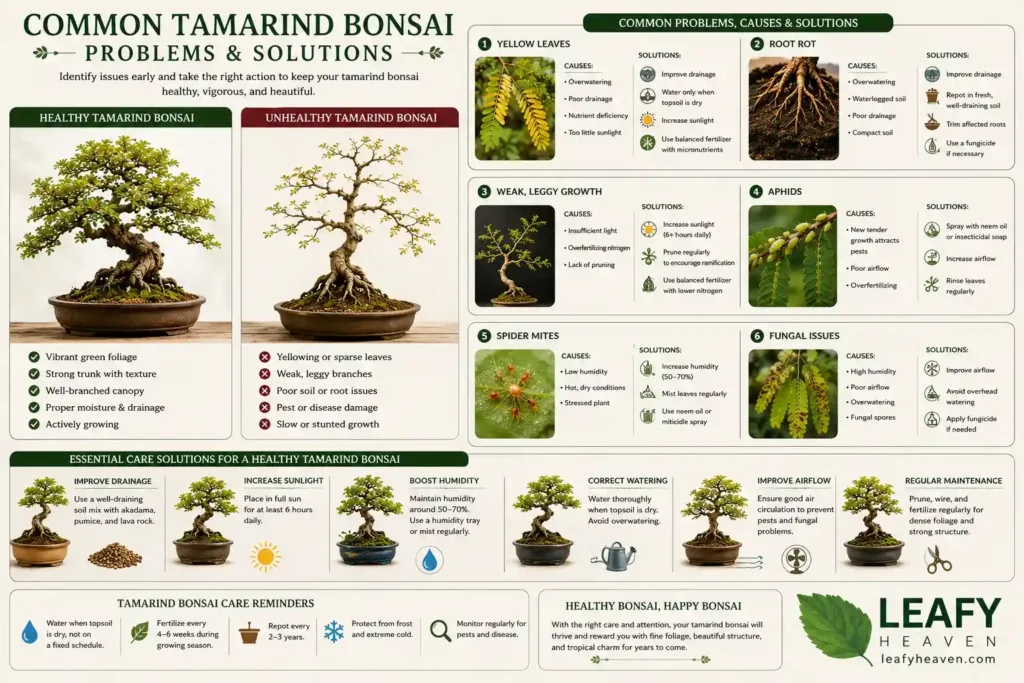
Most tamarind bonsai problems are caused by improper watering, poor lighting, or low humidity. Because tamarind is a tropical bonsai species, unstable growing conditions can quickly affect foliage health, root strength, and overall growth quality.
Yellow Leaves on Tamarind Bonsai
Yellow leaves are one of the most common issues in tamarind bonsai care. In many cases, the problem is linked to watering imbalance or nutrient deficiency.
Overwatering often causes roots to remain constantly wet, reducing oxygen availability and weakening the tree. This stress commonly leads to yellowing foliage and leaf drop.
Underwatering may also cause yellow leaves if the tree becomes excessively dry for long periods.
Nutrient deficiency can develop when:
- Soil nutrients become depleted
- Fertilizer is inconsistent
- Roots are unhealthy
- Soil drainage is poor
To reduce yellowing problems:
- Maintain balanced watering
- Use well-draining bonsai soil
- Apply balanced fertilizer regularly
- Ensure adequate sunlight exposure
Healthy tamarind foliage should remain vibrant green during active growth.
Root Rot Problems
Root rot is usually caused by poor drainage and prolonged overwatering. Tamarind bonsai roots require oxygen circulation and cannot tolerate constantly saturated soil.
Common root rot symptoms include:
- Yellow leaves
- Weak growth
- Soft roots
- Foul soil smell
- Sudden leaf drop
Poor drainage is one of the biggest risk factors in tropical bonsai cultivation. Heavy compacted soil can trap moisture around roots for too long.
To prevent root rot:
- Use fast-draining bonsai soil
- Avoid oversized pots
- Water only when needed
- Improve airflow around roots
- Remove standing water from trays
If root rot develops, affected roots should be pruned carefully during repotting, and fresh soil should be used.
Pest Problems
Several pests may affect tamarind bonsai, especially when trees are grown indoors with limited airflow.
Common pest problems include:
- Aphids
- Spider mites
- Fungal issues
Aphids often gather on soft new growth and feed on plant sap. This may weaken shoots and distort leaf development.
Spider mites are more common in dry indoor environments. They can cause:
- Tiny yellow speckling on leaves
- Webbing under foliage
- Leaf drying
- Weak canopy health
Fungal issues may appear when humidity is excessive without proper airflow. Wet stagnant conditions increase the risk of fungal infections on leaves and roots.
Basic pest prevention methods include:
- Regular foliage inspection
- Good ventilation
- Balanced watering
- Cleaning leaves occasionally
- Isolating infected plants
Early treatment usually prevents serious long-term damage.
Weak or Leggy Growth
Weak or leggy growth is commonly caused by insufficient sunlight and indoor stress. Tamarind bonsai requires strong light to maintain compact branching and healthy foliage density.
Low light conditions often produce:
- Long thin branches
- Sparse foliage
- Weak canopy structure
- Slow trunk thickening
Indoor stress may also occur from:
- Dry indoor air
- Cold drafts
- Inconsistent watering
- Limited airflow
To improve weak growth:
- Increase sunlight exposure
- Use grow lights indoors if needed
- Maintain warm temperatures
- Improve humidity levels
- Prune elongated shoots regularly
Healthy tamarind bonsai should produce dense, balanced tropical growth under proper conditions.
Troubleshooting Table
| Problem | Cause | Solution |
| Yellow Leaves | Overwatering | Improve drainage |
| Leaf Drop | Cold Stress | Increase warmth |
| Weak Growth | Low Light | More sunlight |
Can Tamarind Bonsai Produce Flowers or Fruit?
Mature tamarind bonsai may produce flowers and small tamarind fruit under ideal tropical growing conditions. Although fruiting is less common in small bonsai containers, healthy mature trees can eventually develop both flowers and pods when provided with proper sunlight, warmth, and long-term care.
Tamarind Flowering Conditions
Tamarind bonsai requires stable tropical conditions to support flowering. Young trees usually focus on foliage and branch growth first, while mature specimens may begin flowering after several years of healthy development.
Flowering is more likely when the tree receives:
- Strong sunlight
- Warm temperatures
- Consistent watering
- Balanced nutrition
- Seasonal stability
Outdoor tropical conditions generally improve flowering potential because natural sunlight intensity is stronger than most indoor environments.
Healthy mature branch structure also plays an important role. Weak or heavily stressed trees rarely produce flowers successfully.
Fruit Production in Bonsai Form
A tamarind bonsai can sometimes develop small tamarind fruit, although production is usually lighter than full-sized trees grown in the ground.
Fruit production in bonsai form depends heavily on maturity requirements. Young bonsai trees typically do not produce pods because the tree first prioritizes root establishment and canopy development.
As the bonsai matures, flowering may eventually lead to:
- Small seed pods
- Miniature tamarind fruit
- Seasonal flowering cycles
- Decorative ornamental value
Because bonsai root systems are intentionally restricted, fruit size and quantity are often reduced compared to standard Tamarindus indica trees.
Some mature tropical bonsai specimens produce fruit mainly under:
- Warm climates
- Long growing seasons
- Outdoor cultivation
- Excellent sunlight exposure
Indoor-grown tamarind bonsai may flower less frequently due to lower light intensity and environmental stress.
How To Encourage Flowering
Several growing factors can improve flowering potential in tamarind bonsai.
Strong sunlight is one of the most important requirements. Tamarind develops best when exposed to several hours of direct sun daily. Insufficient light often reduces flowering ability and weakens branch growth.
Fertilizer balance is also important. Excessive nitrogen may encourage leaf growth at the expense of flowers. Balanced feeding helps support healthier seasonal development.
Seasonal care should focus on maintaining:
- Stable warmth
- Healthy root systems
- Proper pruning balance
- Moderate watering
- Consistent tropical conditions
To encourage flowering, growers should:
- Avoid excessive pruning before flowering periods
- Maintain strong branch health
- Prevent root stress
- Keep the tree in active growth conditions
Long-term patience is important because tamarind bonsai usually requires several years of maturity before flowering and fruit production become possible.
Tamarind Bonsai vs Other Tropical Bonsai Trees
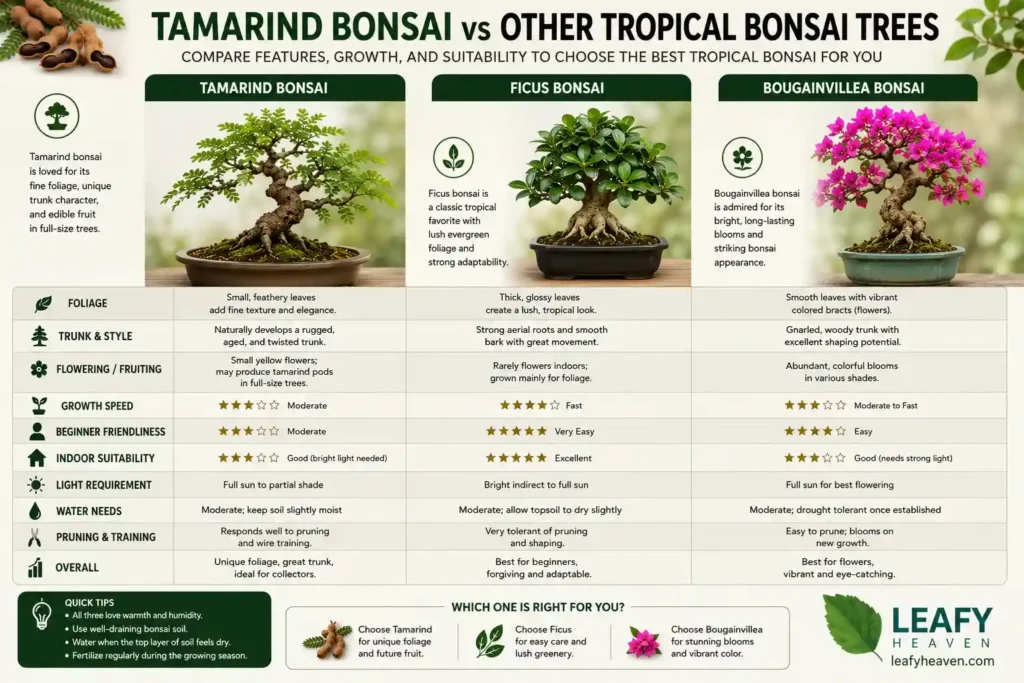
Tamarind bonsai differs from other tropical bonsai species because of its foliage texture, edible fruit potential, and tropical canopy appearance. Its fine compound leaves, fast tropical growth, and rugged aging trunk create a distinctive bonsai style that stands apart from many other bonsai species.
Tamarind Bonsai vs Ficus Bonsai
Ficus bonsai is one of the most common tropical bonsai choices for indoor growers. A ficus bonsai tree is known for its durability, thick glossy leaves, and strong tolerance to indoor conditions.
Compared to bonsai ficus varieties, tamarind bonsai usually develops:
- Finer foliage texture
- More delicate branch appearance
- Faster canopy refinement
- More natural tropical tree silhouette
However, ficus bonsai generally handles indoor stress better than tamarind. Ficus species tolerate:
- Lower humidity
- Reduced sunlight
- Indoor temperature fluctuations
- Inconsistent watering
Tamarind bonsai, on the other hand, typically requires:
- Stronger sunlight
- Better humidity
- Warmer growing conditions
- More tropical care consistency
Ficus is often easier for complete beginners, while tamarind offers a more refined tropical appearance for growers seeking elegant canopy structure.
Tamarind vs Bougainvillea Bonsai
Bougainvillea bonsai is highly valued for its colorful flowering display and dramatic branch movement. A bonsai bougainvillea plant can produce vibrant blooms in pink, purple, orange, red, or white under strong sunlight.
Compared to bougainvillea bonsai, tamarind bonsai focuses more on:
- Fine foliage refinement
- Dense tropical canopy
- Natural miniature tree appearance
- Edible fruit potential
Bougainvillea bonsai usually produces stronger flowering performance, while tamarind develops softer tropical aesthetics with feathery foliage texture.
Important differences include:
- Tamarind bonsai develops compound leaves with softer visual texture
- Bougainvillea develops woody thorny branching
- Tamarind focuses more on canopy refinement
- Bougainvillea emphasizes flowering color impact
Both species require warm climates and bright sunlight, but bougainvillea generally tolerates drought slightly better than tamarind.
Best Tropical Bonsai Trees for Beginners
Several tropical bonsai trees are suitable for beginners depending on indoor conditions, climate, and maintenance preferences.
Popular beginner-friendly bonsai species include:
- Ficus bonsai
- Tamarind bonsai
- Bougainvillea bonsai
- Jade bonsai
- Fukien tea bonsai
Another fast-growing tropical option worth exploring is pigeon pea bonsai, which is especially popular among beginners for its rapid development and beginner-friendly training response.
For growers searching for the best indoor bonsai for beginners, ficus usually ranks highest because of its adaptability and strong indoor tolerance.
Tamarind bonsai is considered moderately beginner-friendly because it grows quickly and responds well to pruning. However, tropical care requirements such as warmth, humidity, and strong lighting are important for long-term success.
When selecting bonsai species, growers should consider:
- Indoor light availability
- Humidity levels
- Temperature stability
- Watering consistency
- Desired bonsai style
Tropical bonsai trees often grow faster than temperate species, making them attractive for beginners who want visible development within a shorter time.
Tropical Bonsai Comparison Table
| Bonsai Type | Indoor Friendly | Flowering | Beginner Friendly |
| Tamarind | Moderate | Possible | Moderate |
| Ficus | Excellent | Rare | Easy |
| Bougainvillea | Moderate | Strong | Moderate |
Where To Buy Tamarind Bonsai Trees
Tamarind bonsai trees are available from tropical bonsai nurseries, online bonsai stores, and specialty bonsai growers. Buyers can find both young starter trees and mature styled specimens depending on budget, size preference, and bonsai experience level.
What To Look for Before Buying
Before purchasing a tamarind bonsai tree, it is important to evaluate the tree’s overall health and structural quality. A healthy bonsai establishes faster and responds better to future styling and pruning.
Healthy roots are one of the most important signs of a strong bonsai. Roots should appear firm, evenly spread, and free from foul odor or excessive rot.
A good bonsai specimen should also show proper trunk taper. This means the trunk gradually narrows from the base upward, creating a mature and natural miniature tree appearance.
Strong branch structure is another important factor. Well-positioned branches improve future bonsai styling and canopy refinement.
When inspecting tamarind bonsai trees, look for:
- Healthy green foliage
- Strong root system
- Balanced branch placement
- Visible trunk movement
- No major pest damage
- Good overall vigor
Avoid trees with:
- Weak yellow leaves
- Soft or damaged roots
- Poor drainage soil
- Reverse trunk taper
- Severe branch scars
Tamarind Bonsai for Sale Online
Many growers purchase tamarind bonsai for sale through online bonsai stores and tropical bonsai nurseries. Online buying provides access to a wider range of sizes, ages, and bonsai styles.
Common online sources include:
- Specialty bonsai nurseries
- Tropical bonsai growers
- Bonsai hobby marketplaces
- Exotic plant stores
- Rare tropical tree suppliers
When searching for a tamarind bonsai tree for sale, buyers may find:
- Seed-grown starter plants
- Pre-trained bonsai material
- Mature styled specimens
- Indoor tropical bonsai trees
- Imported tropical bonsai stock
Many bonsai trees for sale online include detailed photographs that help evaluate trunk structure, root flare, canopy quality, and branch development before purchasing.
A reputable tropical bonsai nursery usually provides:
- Healthy acclimated trees
- Care instructions
- Proper bonsai soil
- Secure shipping methods
- Species identification details
Reading customer reviews and checking nursery reputation can help reduce the risk of unhealthy or poorly developed bonsai material.
Price Range & Size Expectations
Tamarind bonsai pricing varies depending on age, trunk thickness, styling quality, and overall maturity.
Beginner bonsai pricing is generally more affordable because young trees have limited trunk development and less refined structure. Small starter tamarind bonsai trees are often sold as early training material for new growers.
Typical beginner bonsai features include:
- Thin trunks
- Young branch structure
- Basic container setup
- Early-stage styling
Mature bonsai pricing is significantly higher because older trees require years of development, pruning, and root refinement.
More expensive mature tamarind bonsai specimens often include:
- Thick aged trunks
- Refined canopy ramification
- Advanced styling work
- Mature bark texture
- Premium bonsai pots
Larger and older trees generally command higher prices due to the time required to develop realistic tropical bonsai proportions and structure.
Is Tamarind Bonsai Safe for Indoors and Pets?
Tamarind bonsai is generally safe but still requires proper placement away from excessive indoor cold or pet disturbance. Like many tropical bonsai species, it grows best in stable indoor conditions with warmth, airflow, and adequate humidity.
Indoor Placement Tips
Indoor placement strongly affects the long-term health of tamarind bonsai. Because it is a tropical species, the tree requires bright light and warm temperatures throughout the year.
The best indoor locations usually include:
- Bright south-facing windows
- Sunrooms with natural light
- Warm indoor plant areas
- Spaces with steady airflow
Avoid placing tamarind bonsai near:
- Cold drafts
- Air conditioners
- Heating vents
- Frequently opened winter doors
Stable warmth helps maintain healthy foliage and steady tropical growth.
For stronger indoor growth:
- Provide several hours of bright light daily
- Rotate the bonsai occasionally for balanced growth
- Use grow lights if sunlight is limited
- Keep temperatures consistently warm
Healthy indoor placement improves canopy density, leaf health, and overall bonsai vigor.
Pet Safety Considerations
Tamarind bonsai is generally considered relatively safe compared to many toxic ornamental houseplants. However, bonsai trees should still be protected from excessive pet interaction.
Pets may damage bonsai by:
- Digging in soil
- Chewing branches
- Breaking delicate growth
- Tipping shallow bonsai pots
Small bonsai containers can also become unstable if pets frequently jump near plant shelves or indoor displays.
To improve safety:
- Keep bonsai on elevated stands
- Avoid placing trees in pet play areas
- Prevent chewing on leaves or roots
- Use stable bonsai shelving
Even non-toxic plants may still cause mild digestive upset if large amounts of foliage are consumed by pets.
Ventilation & Humidity Management
Good ventilation helps reduce fungal problems and supports stronger tropical growth indoors. Stagnant indoor air may increase stress and weaken foliage quality over time.
Proper airflow benefits:
- Leaf health
- Moisture balance
- Disease prevention
- Stronger branch growth
Humidity management is also important because indoor environments often become very dry, especially during winter.
Tamarind bonsai generally performs best with medium to high humidity levels. Indoor humidity can be improved through:
- Humidity trays
- Indoor humidifiers
- Grouping tropical plants together
- Occasional light misting
- Proper room ventilation
Balanced airflow and humidity help maintain healthier foliage, reduce stress, and improve overall tropical bonsai development indoors.
Conclusion
Tamarind tree bonsai is a rewarding tropical bonsai species that combines elegant foliage, tropical character, and artistic bonsai potential. Its fine compound leaves, strong branch development, and mature canopy structure make it highly attractive for growers who enjoy tropical bonsai trees with natural refinement.
Successful tamarind bonsai cultivation depends on providing the right growing requirements. Warm temperatures, bright sunlight, balanced watering, proper drainage, and moderate humidity all play important roles in maintaining healthy growth and long-term bonsai health.
One of the biggest advantages of tamarind bonsai is its styling flexibility. The tree responds well to pruning, wiring, canopy shaping, and root management, allowing growers to create realistic miniature tropical tree forms with strong visual balance.
Because tamarind is a tropical species, consistent tropical care needs should never be ignored. Indoor growers must pay close attention to lighting, humidity, and winter protection to prevent stress and weak growth.
Long-term development takes patience. Trunk thickening, bark aging, branch ramification, and canopy refinement improve gradually over several years of proper training and maintenance.
Consistent pruning is especially important for maintaining compact growth and improving branch structure. Light regular shaping usually produces better long-term bonsai refinement than aggressive cutting.
For beginners, tamarind bonsai may involve a moderate learning curve because tropical species require more environmental stability than some common indoor bonsai trees. However, growers who maintain proper care conditions are often rewarded with a fast-growing, elegant, and highly distinctive tropical bonsai specimen.
FAQs
How long does it take to grow a tamarind tree bonsai?
A tamarind tree bonsai usually takes several years to develop a mature bonsai appearance. Early trunk thickening and branch structure may develop within 2–3 years, while advanced canopy refinement and aged bark texture often require 5 years or more of consistent pruning and care.
Can tamarind bonsai grow indoors?
Yes, tamarind bonsai can grow indoors if it receives bright light, warm temperatures, and adequate humidity. Indoor growers often place the tree near sunny windows or use grow lights to support healthy tropical growth.
How often should I water tamarind bonsai?
Tamarind bonsai should be watered when the top layer of soil begins to dry slightly. Watering frequency depends on temperature, humidity, soil drainage, and pot size. Avoid keeping the soil constantly soggy because overwatering may lead to root rot.
Does tamarind bonsai produce fruit?
Yes, mature tamarind bonsai may produce small tamarind fruit under ideal tropical growing conditions. Fruiting is more likely in healthy mature trees that receive strong sunlight, balanced fertilizer, and long-term consistent care.
What is the scientific name of tamarind tree?
The scientific name of tamarind tree is Tamarindus indica. It belongs to the Fabaceae family, which includes many tropical leguminous plants.
Is tamarind bonsai good for beginners?
Tamarind bonsai can be suitable for beginners who are willing to learn tropical bonsai care. Its fast growth and strong response to pruning make training easier, although it still requires proper sunlight, warmth, and humidity management.
Can I grow tamarind bonsai from seed?
Yes, tamarind bonsai can be successfully grown from seed. Many growers start by soaking tamarind seeds overnight before planting them in warm, well-draining soil under humid conditions.
Why are my tamarind bonsai leaves turning yellow?
Yellow leaves on tamarind bonsai are commonly caused by overwatering, poor drainage, low light, nutrient deficiency, or cold stress. Improving watering balance, sunlight exposure, and root health usually helps restore healthy green foliage.

Written by the LeafyHeaven Editorial Team
LeafyHeaven shares practical gardening tips and simple plant care guides to help you grow, nurture, and enjoy your plants with ease. Our goal is to make gardening feel natural, approachable, and rewarding for everyone.