
Introduction
Ficus Bonsai is one of the most popular choices for beginners who want to grow a beautiful indoor bonsai tree with relatively simple care. A ficus bonsai tree is created by training tropical ficus species into miniature tree forms through pruning, shaping, and root control techniques. Because of its glossy leaves, flexible branches, and strong growth habit, bonsai ficus varieties are widely used in indoor bonsai collections around the world.
An indoor ficus bonsai tree is especially popular because it tolerates warm indoor conditions better than many traditional bonsai trees. Unlike sensitive outdoor species, a ficus bonsai plant can adapt well to bright indoor environments, making it ideal for homes, apartments, offices, and beginner growers. Its hardy nature, attractive tropical appearance, and ability to recover from pruning mistakes make it one of the best tropical bonsai options for new bonsai enthusiasts.
In this complete guide, you will learn everything about ficus bonsai care, including popular ficus species, watering, sunlight needs, pruning, styling, propagation methods, repotting, and common problems that affect ficus bonsai trees.
What Is a Ficus Bonsai?
Ficus Bonsai is a miniature trained ficus tree grown in bonsai form. It is not a separate plant species. Instead, different ficus species are shaped and maintained using bonsai techniques such as pruning, root restriction, wiring, and controlled growth in shallow containers.
A ficus bonsai is created from tropical ficus trees that naturally grow large in warm climates. With regular trimming and careful training, these trees develop the appearance of mature miniature trees while staying compact enough for indoor bonsai growing. Because ficus species are hardy and adaptable, they are among the most commonly grown bonsai trees for beginners and indoor plant enthusiasts.
Ficus Bonsai Basic Identification
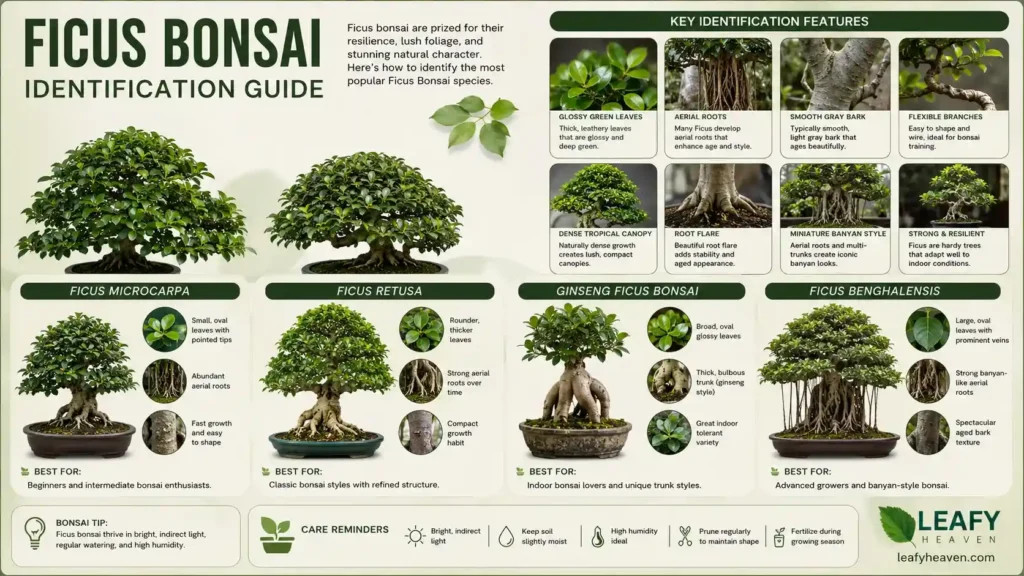
Ficus bonsai plants share several common features that make them easy to recognize among tropical bonsai varieties.
| Feature | Identification Details |
| Scientific Group | Ficus species |
| Plant Type | Tropical evergreen tree |
| Common Bonsai Species | Ficus microcarpa, Ficus retusa, Ficus benghalensis |
| Indoor Suitability | Very good for indoor growing |
| Growth Habit | Fast-growing with dense canopy growth |
| Aerial Roots | Common in humid conditions |
| Leaf Appearance | Small glossy green leaves |
| Branch Structure | Flexible branches suitable for shaping |
Most ficus bonsai trees develop smooth trunks, compact foliage, and strong branching patterns over time. Many species also produce aerial roots, especially in warm and humid environments, giving the bonsai a mature tropical appearance similar to large banyan trees found in nature.
Compared to many other bonsai plants, ficus species tolerate indoor conditions more effectively. Their flexible branches also make styling easier for beginners learning bonsai shaping techniques.
Is Ficus Bonsai a Real Bonsai Tree?
Yes, ficus bonsai is a real bonsai tree when trained through pruning, root control, wiring, and pot restriction.
A bonsai tree is not defined by a specific species. Instead, bonsai refers to the method of growing and training trees in miniature form. Ficus species naturally respond very well to bonsai cultivation, which is why they are widely used as bonsai plants worldwide.
Like other real bonsai tree varieties, ficus bonsai trees require long-term maintenance to preserve their miniature size and tree-like appearance. Regular pruning, canopy shaping, root trimming, and shallow bonsai pots help maintain the structure and proportions expected from authentic bonsai trees.
Popular Ficus Bonsai Types
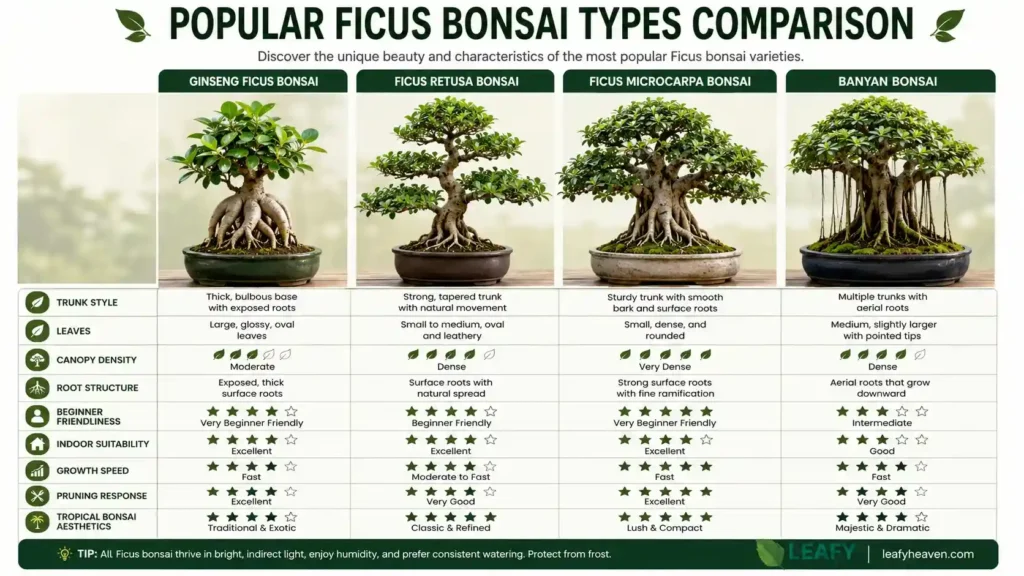
The most common types are Ginseng Ficus, Ficus retusa, Ficus microcarpa, and Banyan Bonsai. Each variety has slightly different growth habits, root structures, leaf size, and styling characteristics, but all belong to the tropical ficus group commonly used for bonsai cultivation.
| Ficus Bonsai Type | Main Features | Best For |
| Ginseng Ficus Bonsai | Thick exposed roots, compact growth | Beginners and indoor bonsai |
| Ficus retusa Bonsai | Smooth trunk, compact leaves | Bonsai styling and shaping |
| Ficus microcarpa Bonsai | Strong growth, aerial roots | Tropical indoor bonsai |
| Banyan Bonsai | Banyan-style roots, spreading canopy | Advanced tropical bonsai styling |
Ginseng Ficus Bonsai
Ginseng Ficus Bonsai is one of the most popular beginner bonsai varieties because of its thick bulbous roots and easy indoor care requirements. A ginseng ficus bonsai tree usually features a swollen root base with a compact leafy canopy grafted on top, giving it a mature miniature tree appearance even at a young age.
Most ficus ginseng bonsai plants sold in garden centers and indoor plant shops are connected to Ficus microcarpa varieties. Because of their hardy growth habit and tolerance for indoor conditions, they are often recommended as starter bonsai trees for new growers.
Ginseng ficus bonsai care is relatively simple compared to many sensitive bonsai species. These trees adapt well to bright indoor light, recover quickly after pruning, and can tolerate occasional beginner mistakes with watering or trimming.
Important features of Ginseng Ficus Bonsai include:
- Thick exposed bulb-like roots
- Compact glossy foliage
- Strong indoor adaptability
- Easy maintenance for beginners
- Popular indoor bonsai appearance
Many indoor growers also search for ficus microcarpa ginseng care because this bonsai variety is commonly labeled under both names in the bonsai trade.
Ficus Retusa Bonsai
Ficus retusa bonsai is known for its smooth trunk, dense branching structure, and compact leaves. It is one of the most widely used tropical bonsai species for shaping and artistic bonsai styling.
Compared to larger-leaf ficus varieties, bonsai ficus retusa develops a more refined miniature appearance, making it suitable for traditional bonsai forms. Its flexible branches also respond well to wiring and canopy shaping.
Many growers confuse Ficus retusa with Ficus microcarpa because both species are closely related and often mislabeled in the bonsai market. However, ficus bonsai retusa generally develops smoother bark, tighter foliage growth, and more compact branching patterns.
Key characteristics of Ficus retusa include:
- Small compact green leaves
- Smooth gray trunk appearance
- Strong response to pruning
- Good branch flexibility for shaping
- Attractive tropical bonsai structure
Proper ficus retusa care includes bright light, warm temperatures, balanced watering, and regular trimming to maintain its compact canopy.
Ficus Microcarpa Bonsai
Ficus microcarpa bonsai is one of the most adaptable tropical bonsai species for indoor growing. It is commonly called Chinese banyan or Indian Laurel Bonsai because of its natural banyan-like growth habit and aerial root production.
Bonsai ficus microcarpa is valued for its vigorous growth, thick trunk development, and ability to recover quickly from pruning. These traits make it highly suitable for long-term bonsai training and tropical bonsai styling.
Microcarpa ficus bonsai trees often develop aerial roots when grown in humid conditions, creating a dramatic mature banyan appearance. The species also tolerates indoor environments better than many temperate bonsai trees.
Common features of Ficus microcarpa include:
- Dense tropical foliage
- Fast growth rate
- Strong pruning recovery
- Aerial root development
- Excellent indoor adaptability
Because of its durability and styling flexibility, Ficus microcarpa remains one of the most common species used in commercial indoor bonsai production.
Banyan Bonsai / Ficus Benghalensis Bonsai
Banyan Bonsai is inspired by the massive spreading banyan trees found in tropical regions. Ficus benghalensis bonsai develops strong aerial roots, wide canopies, and thick trunk structures that resemble mature Indian banyan trees in miniature form.
A banyan bonsai tree naturally prefers warmth, humidity, and sufficient growing space. Compared to compact beginner ficus varieties, banyan ficus bonsai often requires more pruning and structural maintenance to control its vigorous growth habit.
Indian banyan bonsai styling focuses heavily on aerial root formation and canopy expansion. In humid conditions, these roots descend from branches toward the soil, creating the iconic banyan-tree appearance associated with tropical landscapes.
Main characteristics of Ficus benghalensis bonsai include:
- Large spreading tropical structure
- Strong aerial root production
- Thick trunk development
- Fast vigorous growth
- Dramatic mature banyan appearance
Because of its natural growth size, Ficus benghalensis bonsai benefits from regular pruning, warm temperatures, and long-term shaping to maintain balanced bonsai proportions.
Ficus Bonsai Care
Ficus Bonsai needs bright light, balanced watering, warm temperature, and regular pruning to stay healthy and compact. As a tropical bonsai species, it grows best in stable indoor conditions with proper moisture control and consistent care. Compared to many sensitive bonsai trees, ficus bonsai adapts well to indoor environments, making it easier for beginners to maintain long term.
Building a solid plant care foundation before starting bonsai training makes the process significantly easier — this complete gardening and plant care guide covers essential plant maintenance principles every beginner needs.
Does Ficus Bonsai Need Sunlight?
Yes, ficus bonsai needs bright indirect light and can tolerate some gentle direct sunlight.
One of the most common questions beginners ask is: does ficus bonsai need sunlight? The answer is yes. Proper lighting is essential for healthy leaf growth, strong branching, and compact bonsai development.
Indoor ficus bonsai trees grow best near bright windows where they receive filtered sunlight for several hours daily. East-facing windows with soft morning sunlight are often ideal because they provide enough light without overheating the leaves.
Important lighting guidelines for ficus bonsai include:
- Place near a bright indoor window
- Morning sunlight is beneficial
- Avoid intense afternoon summer sun
- Rotate the bonsai regularly for balanced growth
- Use grow lights if indoor light is weak
Low-light conditions can create several problems for ficus bonsai trees, including:
- Weak leggy growth
- Larger leaves
- Slow growth rate
- Yellowing leaves
- Increased leaf drop
Stable bright lighting helps maintain dense foliage and healthy tropical bonsai growth throughout the year.
Ficus Bonsai Watering
Water when the top soil feels slightly dry, but do not keep the roots soggy.
Proper ficus bonsai watering is one of the most important parts of successful ficus bonsai care. Overwatering causes more problems than underwatering, especially for indoor bonsai trees grown in low airflow conditions.
Instead of following a fixed watering schedule, check the soil daily. When the top layer starts feeling slightly dry, water thoroughly until excess water drains from the bottom holes of the pot.
Important watering practices include:
- Water deeply when needed
- Never leave roots sitting in water
- Use bonsai pots with drainage holes
- Reduce watering during slower winter growth
- Increase humidity in dry indoor rooms
Poor watering habits often lead to root rot, yellow leaves, fungal issues, and leaf drop. Soggy compact soil prevents oxygen from reaching the roots, weakening the overall health of the bonsai ficus.
For people learning how to care for ficus bonsai, moisture balance is the key goal. The soil should remain lightly moist but never constantly wet.
Best Soil for Ficus Bonsai
Ficus bonsai grows best in fast-draining bonsai soil that allows both moisture retention and airflow around the roots. Healthy roots require oxygen as much as water, which is why compact heavy soil should always be avoided.
A good bonsai soil mix commonly includes:
- Akadama for moisture balance
- Pumice for drainage and aeration
- Lava rock for root oxygen flow
- Organic material for nutrient support
This type of mix prevents waterlogging while still supporting healthy root development. Standard garden soil is usually too dense for bonsai containers because it compacts easily and holds excessive moisture.
Well-draining bonsai soil also helps reduce the risk of fungal disease and root rot in indoor ficus bonsai trees.
Temperature and Humidity Needs
As a Tropical Bonsai species, ficus bonsai prefers warm temperatures and moderate to high humidity levels.
Most ficus bonsai trees grow best between 65°F and 85°F (18°C to 29°C). Sudden cold exposure can stress the plant quickly, especially indoors during winter months.
For healthy tropical bonsai care, maintain stable growing conditions by following these guidelines:
- Keep indoors in warm rooms
- Protect from cold drafts
- Avoid placing near heaters or AC vents
- Maintain moderate humidity levels
- Use a humidity tray if indoor air becomes too dry
Dry indoor air can reduce aerial root development and may cause brown leaf edges or leaf drop. Consistent warmth and humidity help maintain strong foliage growth and healthy tropical appearance.
Fertilizer Needs
Ficus bonsai benefits from regular feeding during active growth periods. Balanced fertilizer supports leaf production, root health, and dense canopy development.
During spring and summer, feed the bonsai every few weeks using a balanced liquid or granular fertilizer. Active growing seasons require more nutrients because ficus species grow relatively fast compared to many other bonsai plants.
Basic fertilizer guidelines include:
- Use balanced bonsai fertilizer
- Feed regularly during active growth
- Reduce feeding during winter
- Avoid overfertilizing dry soil
- Water before applying strong fertilizer
In colder months, indoor ficus bonsai growth slows naturally, so fertilizer frequency should also decrease. Controlled feeding helps maintain steady healthy growth without creating weak or overly stretched branches.
How to Take Care of a Ficus Bonsai Tree Indoors
Indoor ficus bonsai needs stable warmth, bright light, proper humidity, and careful watering to stay healthy long term. Compared to many outdoor bonsai species, ficus adapts much better to indoor environments because it naturally prefers warm tropical conditions.
An indoor ficus bonsai tree can thrive for many years when placed in the right location and protected from sudden environmental stress. Consistency is one of the most important factors in successful indoor bonsai care.
Best Indoor Placement
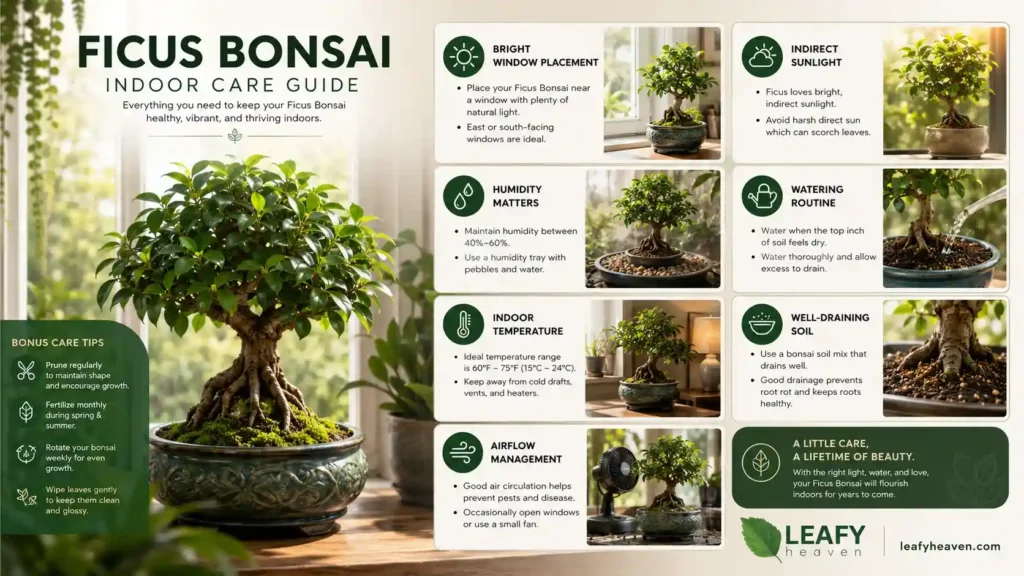
The best location for an indoor ficus bonsai tree is near a bright window with strong indirect sunlight. Bright natural light supports healthy foliage growth, compact branching, and overall bonsai development.
East-facing windows are often ideal because they provide gentle morning sunlight without excessive afternoon heat. South-facing windows may also work if harsh direct sunlight is filtered through curtains.
Important placement tips for bonsai ficus indoor care include:
- Place near a bright window
- Provide several hours of indirect light daily
- Rotate the pot regularly for even growth
- Keep away from cold drafts
- Avoid direct airflow from AC or heater vents
Sudden temperature changes from heating systems or air conditioners can stress indoor bonsai trees and lead to leaf drop or weak growth. Stable indoor temperatures help maintain healthy tropical foliage throughout the year.
Because light usually comes from one direction indoors, rotating the bonsai every few days helps prevent uneven canopy development and leaning growth.
Indoor vs Outdoor Ficus Bonsai
Both indoor and outdoor growing are possible for ficus bonsai, but indoor cultivation is more common in cooler climates. Ficus bonsai outdoors can grow faster in warm humid weather, but outdoor exposure also increases environmental risks.
| Factor | Indoor Ficus Bonsai | Outdoor Ficus Bonsai |
| Light | Bright indirect | Strong filtered sunlight |
| Watering | Moderate | More frequent |
| Growth | Slower | Faster |
| Risk | Low humidity | Sunburn/cold damage |
Indoor bonsai trees usually grow more slowly because indoor light intensity is lower than outdoor sunlight. However, indoor growing provides better protection from extreme heat, cold weather, strong wind, and heavy rain.
Ficus bonsai outdoors performs best only in warm tropical or subtropical climates where temperatures remain stable. In colder regions, outdoor exposure during winter can damage tropical ficus species very quickly.
For most beginners, indoor growing remains the safest and easiest method for maintaining healthy ficus bonsai year round.
Pruning and Styling Ficus Bonsai
Regular pruning keeps ficus bonsai compact, balanced, and tree-like. Because ficus species grow quickly and respond well to trimming, they are highly suitable for bonsai shaping and long-term structural training.
Consistent pruning improves branch density, leaf distribution, and overall bonsai proportions. Styling techniques also help transform ordinary ficus plants into mature-looking tropical bonsai trees with natural artistic form.
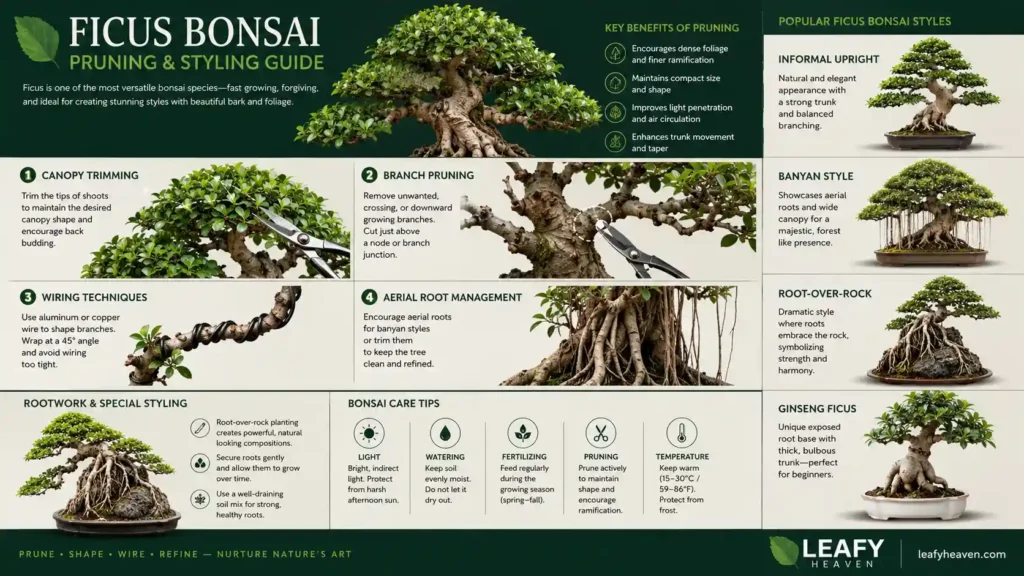
How to Prune Ficus Bonsai
Ficus bonsai should be pruned regularly to maintain its miniature shape and encourage dense branching. Fast-growing shoots can quickly make the bonsai look unbalanced if trimming is neglected for long periods.
The basic goal of pruning is to preserve canopy structure while encouraging smaller, more refined growth.
Important pruning practices include:
- Trim long shoots regularly
- Maintain a balanced canopy shape
- Remove weak or crossing branches
- Cut overly crowded growth
- Encourage fine branch ramification
When new shoots grow several leaves long, they are usually trimmed back to maintain compact growth. This process encourages the development of secondary branching, also called ramification, which creates a fuller and more mature bonsai appearance.
Crossing branches should also be removed because they reduce airflow and create cluttered branch structure. Clean pruning improves both the health and visual balance of the bonsai tree.
Ficus species recover quickly after pruning, which makes them forgiving for beginners learning bonsai maintenance techniques.
Ficus Bonsai Styling Ideas
Ficus bonsai styling allows growers to create different miniature tree forms inspired by mature tropical trees found in nature. Flexible branches, aerial roots, and vigorous growth make ficus one of the easiest bonsai species for creative shaping.
Some of the most popular ficus bonsai styling forms include:
Informal Upright Style
This classic bonsai style features a gently curved trunk with balanced branching and natural taper. It creates a realistic mature tree appearance while remaining simple for beginners to maintain.
Banyan Style
Banyan-style ficus bonsai focuses heavily on aerial roots and spreading canopy structure. Over time, descending roots create the dramatic tropical appearance associated with old banyan trees.
Root-Over-Rock Style
In this style, roots grow visibly over rocks before entering the soil. Ficus species adapt especially well to this technique because of their vigorous root growth and flexibility.
Ginseng Style
Ginseng ficus bonsai styles highlight thick exposed roots and compact foliage. This style is commonly sold as an indoor bonsai because it creates an aged appearance even in younger plants.
Tropical Canopy Style
This styling approach emphasizes dense rounded foliage with strong tropical structure. It works especially well for larger ficus species that naturally produce broad leafy canopies.
Different styling methods may take several years to fully develop, but regular pruning and careful branch positioning gradually create more refined bonsai structure.
Wiring Ficus Bonsai Branches
Wiring is used to guide branches into desired shapes and improve the overall structure of the bonsai tree. Ficus branches are generally flexible, especially when young, which makes shaping easier compared to many rigid bonsai species.
Soft aluminum wire is commonly recommended because it is easy to apply and less damaging to delicate branches.
Basic wiring guidelines include:
- Use soft aluminum bonsai wire
- Wrap wire carefully without excessive pressure
- Young branches bend more easily
- Avoid forcing thick mature branches
- Check regularly for wire marks
Because ficus grows relatively fast, wire can begin cutting into branches if left too long. Regular inspection is important to prevent permanent scars or bark damage.
Young flexible shoots are the easiest to shape and usually respond quickly to gentle positioning. Combining pruning with wiring helps create balanced branch movement and natural bonsai proportions over time.
Repotting Ficus Bonsai
Repot ficus bonsai every 2–3 years to refresh soil and control roots. Regular repotting prevents the root system from becoming overcrowded and helps maintain healthy long-term bonsai growth.
Because ficus species grow actively in warm conditions, repotting is usually safest during the active growing season when the tree can recover quickly from root work.
Important goals of repotting include:
- Refresh old compacted soil
- Improve drainage and airflow
- Control root size
- Encourage healthy new root growth
- Maintain bonsai proportions
The best time to repot ficus bonsai is during the warm growing season, usually in spring or early summer. Warm temperatures support faster root recovery and reduce transplant stress.
During repotting, root pruning is commonly performed to remove overly long, circling, or damaged roots. Trimming the roots helps maintain the miniature size of the bonsai while stimulating healthier fine root growth.
Basic repotting steps include:
- Remove the bonsai carefully from the pot
- Loosen old soil around the roots
- Prune long or unhealthy roots
- Add fresh well-draining bonsai soil
- Reposition the bonsai securely in the pot
- Water thoroughly after repotting
Fresh bonsai soil is important because old soil gradually breaks down and loses drainage ability over time. A healthy bonsai mix containing akadama, pumice, lava rock, and organic material helps maintain proper moisture balance and root oxygen flow.
After repotting, ficus bonsai should be protected from intense sunlight and heavy pruning for a short period while the roots recover. Keeping the tree in warm stable conditions with moderate moisture helps reduce stress and encourages healthy new growth.
Ficus Bonsai Propagation
Ficus Bonsai can be propagated from cuttings in warm, humid conditions. Most ficus species root easily compared to many other bonsai trees, which makes propagation simple for beginners and indoor bonsai growers.
Both ficus microcarpa propagation and ficus retusa propagation are commonly done using stem cuttings because the plants develop roots quickly when provided with warmth, moisture, and stable humidity.
Propagation from cuttings is useful for:
- Creating new bonsai plants
- Cloning healthy parent trees
- Developing future bonsai material
- Practicing bonsai training techniques
- Expanding tropical bonsai collections
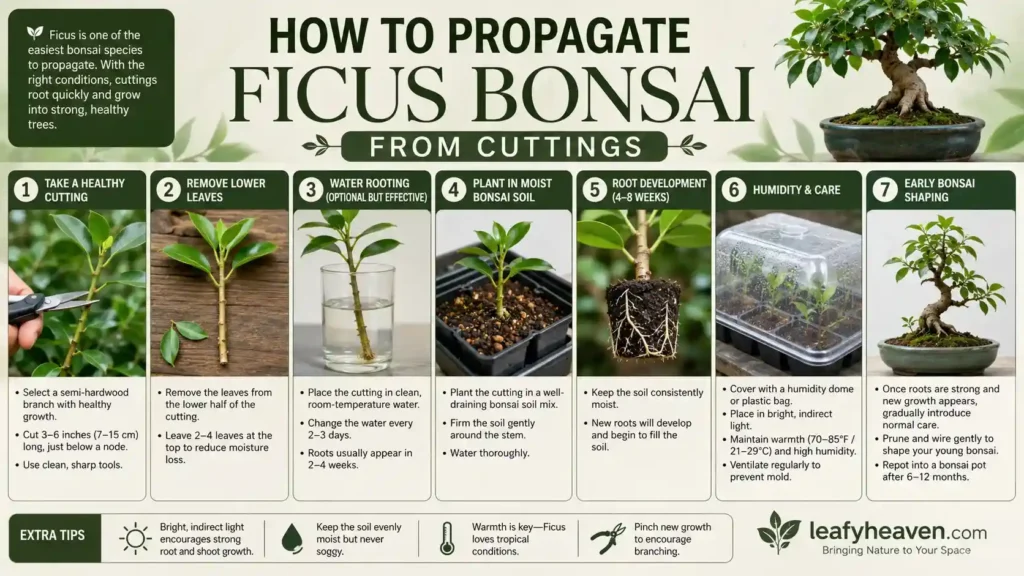
How to Grow Ficus Bonsai From Cuttings
Learning how to grow ficus from cutting is relatively straightforward because ficus species naturally root well in humid environments.
The best cuttings are taken during active warm-season growth when the plant is healthy and growing vigorously.
1. Take a Healthy Cutting
Choose a healthy branch with strong green growth and no disease damage. A cutting with several leaves and flexible young wood usually roots more successfully than weak or old branches.
Clean pruning scissors should be used to make a fresh cut below a leaf node.
2. Remove Lower Leaves
Remove leaves from the lower section of the cutting before planting. This helps reduce moisture loss and prevents buried leaves from rotting in the rooting medium.
Keeping only a few upper leaves allows the cutting to continue photosynthesis while focusing energy on root development.
3. Use Moist Soil or Water Rooting
One of the easiest methods for growing ficus from cuttings is placing the cutting into moist well-draining soil. A light bonsai mix with good airflow helps prevent stem rot while supporting new root formation.
Some growers also use water rooting before transferring the cutting into bonsai soil later.
Common rooting options include:
- Moist bonsai soil
- Perlite and organic mix
- Water propagation
- Small humidity containers
For people learning how to root ficus cuttings, warm temperatures are extremely important because cold conditions slow root development significantly.
4. Keep Humidity Stable
Stable humidity helps prevent the cutting from drying out before roots develop. Warm indoor conditions with moderate humidity improve propagation success rates.
Helpful humidity methods include:
- Using a humidity dome
- Light misting
- Keeping away from strong airflow
- Maintaining warm temperatures
Bright indirect light is ideal during propagation. Harsh direct sunlight can stress unrooted cuttings and dry them too quickly.
5. Train After Roots Develop
Once strong roots form and new growth begins, the young plant can gradually start bonsai training. Early pruning, branch direction, and root development all influence the future structure of the bonsai.
Ficus bonsai propagation works especially well because ficus species recover quickly and tolerate shaping from a young age. With patience and regular care, propagated cuttings can eventually develop into mature tropical bonsai trees.
Common Ficus Bonsai Problems
Most problems come from wrong watering, low light, or sudden environment changes. Although ficus bonsai is considered one of the hardiest indoor bonsai trees, poor growing conditions can still lead to stress, weak growth, and foliage problems.
Early identification is important because many bonsai issues become easier to fix before serious root or branch damage develops.
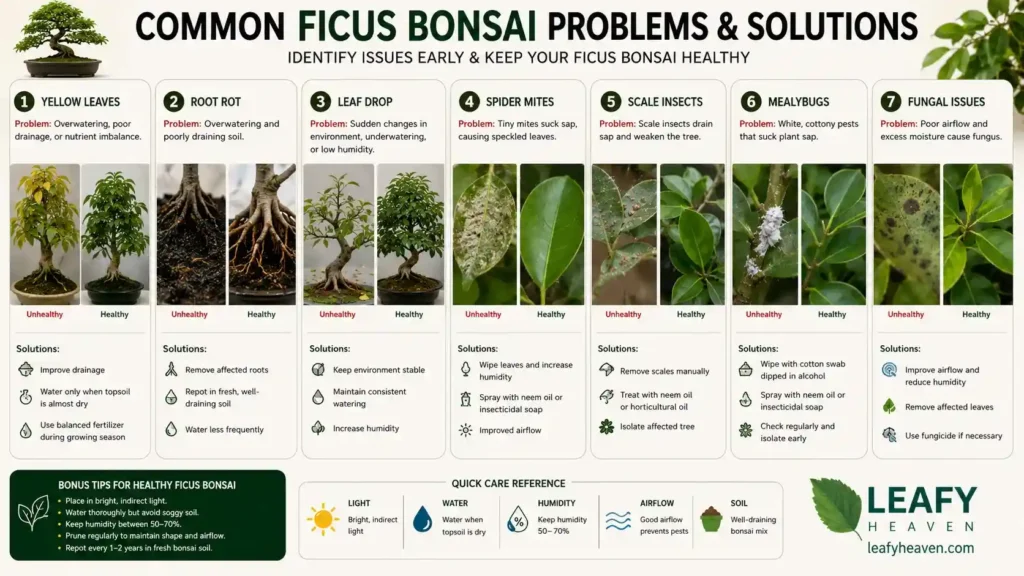
Yellow Leaves on Ficus Bonsai
Yellow leaves on ficus bonsai are usually caused by watering imbalance, poor lighting, or sudden environmental stress.
One or two older yellow leaves occasionally are normal, but widespread yellowing often indicates a care problem that needs correction.
Common causes include:
- Overwatering
- Underwatering
- Low light conditions
- Stress after moving the bonsai
Overwatering is one of the most common reasons for yellow leaves because constantly wet soil weakens the roots and reduces oxygen flow. Underwatering can also cause stress when the roots become too dry for long periods.
Low indoor light may slow growth and weaken foliage color over time. Similarly, moving a ficus bonsai suddenly between locations can trigger temporary stress reactions while the plant adjusts to new light and humidity levels.
Improving light exposure, correcting watering habits, and maintaining stable growing conditions usually helps restore healthy green foliage.
Root Rot
Root rot is a serious problem caused by excessive moisture around the roots for long periods. It commonly develops when drainage is poor or the bonsai remains in soggy compact soil.
Main causes of root rot include:
- Poor drainage
- Soggy soil
- Oversized bonsai pots
When roots remain waterlogged, oxygen levels drop and fungal decay begins damaging the root system. Early symptoms often include yellow leaves, weak growth, black roots, and persistent wet soil smell.
The best solution is immediate corrective action:
- Repot into fresh bonsai soil
- Remove damaged or black roots
- Improve soil drainage
- Reduce excessive watering
Fast-draining bonsai soil and proper watering habits are the most effective long-term prevention methods for root rot.
Leaf Drop
Leaf drop is often a normal stress response in ficus bonsai, especially after environmental changes. Tropical ficus species react quickly to sudden shifts in temperature, lighting, or humidity.
Common triggers include:
- Sudden temperature changes
- Light shock
- Relocation stress
- Cold drafts
- Watering imbalance
Indoor bonsai trees may drop leaves after being moved to a new room or after seasonal indoor heating changes. In many cases, the bonsai recovers once stable growing conditions return.
To reduce leaf drop risk:
- Avoid sudden location changes
- Maintain stable indoor temperatures
- Keep lighting consistent
- Protect from cold airflow
- Avoid excessive watering during stress
Healthy ficus bonsai trees usually regrow foliage once environmental stability improves.
Pests and Diseases
Ficus bonsai can occasionally develop pest or fungal problems, especially in dry indoor conditions with weak airflow.
Common pests include:
- Spider mites
- Scale insects
- Mealybugs
Spider mites often appear in dry environments and may create tiny webbing beneath leaves. Scale insects and mealybugs feed on plant sap and can weaken overall growth if left untreated.
Fungal issues may also develop in overly wet soil or poor airflow conditions. Excessive humidity combined with soggy soil increases disease risk significantly.
Basic prevention methods include:
- Good airflow
- Proper watering practices
- Regular leaf inspection
- Clean bonsai tools
- Removing infected growth quickly
Early treatment is important because pests spread more easily in indoor bonsai collections when ignored for long periods.
Ficus Bonsai Size and Growth
Ficus bonsai can stay small with pruning but naturally wants to grow into a tree. Like other tropical ficus species, these bonsai trees are naturally vigorous growers that continuously produce new shoots, roots, and foliage under warm conditions.
Regular pruning, root control, and bonsai training help maintain compact size while preserving the appearance of a mature miniature tree.
Small Ficus Bonsai
A small ficus bonsai is created through controlled growth techniques rather than genetic dwarfism. Even naturally large ficus species can remain miniature for many years when properly maintained in bonsai containers.
Small ficus bonsai trees are especially popular for:
- Indoor desks and shelves
- Apartment growing
- Beginner bonsai collections
- Tropical bonsai displays
- Compact indoor decoration
Leaf pruning, canopy trimming, and shallow bonsai pots all help maintain smaller proportions and refined structure over time.
How Big Do Ficus Bonsai Trees Get?
Many beginners ask: how big do ficus bonsai trees get?
The size depends on the species, pruning routine, container size, and growing conditions. Most indoor ficus bonsai trees remain between 6 inches and 36 inches tall when regularly maintained.
Typical size ranges include:
| Bonsai Type | Common Height in Pots |
| Small tabletop ficus bonsai | 6–12 inches |
| Medium indoor bonsai | 12–24 inches |
| Mature styled ficus bonsai | 24–36 inches |
Without pruning and root restriction, ficus species naturally attempt to grow much larger like full tropical trees.
Growth Rate
Ficus bonsai generally grows faster than many traditional bonsai species, especially in warm bright conditions. Active growth is strongest during spring and summer when warmth, light, and humidity levels increase.
Growth speed depends on:
- Light intensity
- Temperature
- Humidity
- Watering consistency
- Fertilizer use
- Pot size
Healthy ficus bonsai trees can quickly produce long shoots and dense foliage, which is why regular trimming becomes important for maintaining compact structure.
Because ficus species recover rapidly after pruning, they are commonly recommended for bonsai beginners learning styling and maintenance techniques.
How Big Does a Ginseng Ficus Get?
People commonly ask how big does a ginseng ficus get because this bonsai variety is widely sold as a small indoor tree.
A ginseng ficus bonsai tree typically stays compact in shallow bonsai pots, but its thick exposed roots and canopy can gradually become much larger over time if allowed to grow freely.
Ficus ginseng full grown specimens may eventually develop:
- Thicker bulbous root bases
- Wider tropical canopies
- Taller branching structure
- Stronger aerial root formation
Most indoor growers maintain ginseng ficus bonsai between 8 and 24 inches tall through regular pruning and controlled root growth.
Long-Term Maintenance
Long-term ficus bonsai maintenance focuses on balancing healthy growth with miniature proportions. Because ficus species naturally grow vigorously, ongoing care is necessary to preserve bonsai shape and structure.
Long-term maintenance usually includes:
- Regular canopy pruning
- Root trimming during repotting
- Controlled fertilization
- Consistent watering
- Structural branch shaping
- Periodic wiring adjustments
With proper maintenance, ficus bonsai trees can remain healthy and visually refined for many decades. Mature bonsai specimens gradually develop thicker trunks, improved branch ramification, and more realistic tree proportions over time.
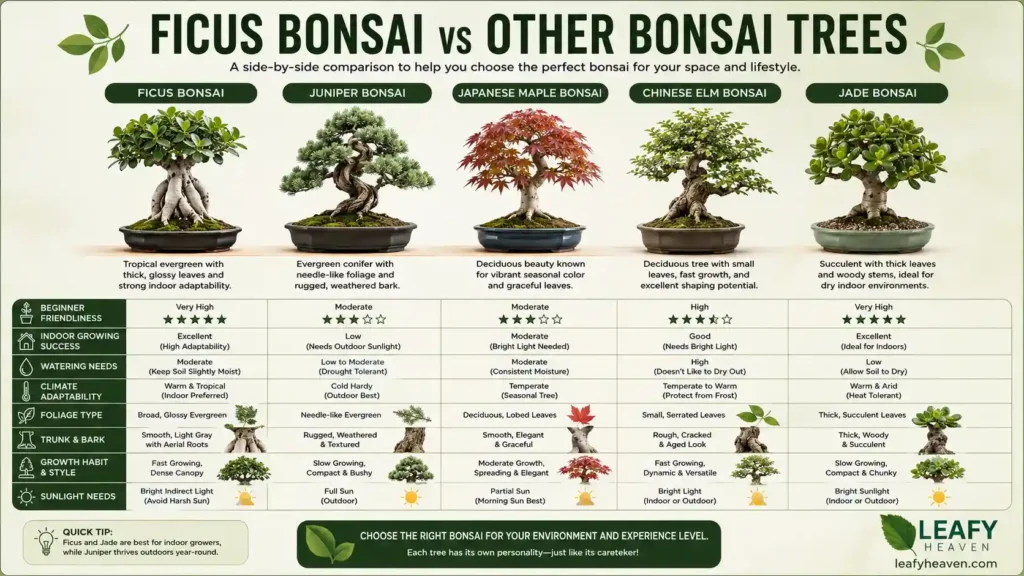
Ficus Bonsai vs Other Bonsai Trees
Ficus is easier indoors than juniper, maple, and many temperate bonsai trees. Because ficus species naturally tolerate warm indoor conditions, they are often considered one of the best beginner-friendly bonsai options for homes and apartments.
Many traditional bonsai trees require outdoor seasonal changes, strong sunlight, or winter dormancy periods, while ficus bonsai adapts more easily to stable indoor environments.
| Bonsai Type | Indoor Friendly | Beginner Friendly | Main Care Need |
| Ficus Bonsai | Yes | High | Light + watering |
| Juniper Bonsai | No, mostly outdoor | Medium | Outdoor sun |
| Japanese Maple Bonsai | Mostly outdoor | Medium | Seasonal care |
| Chinese Elm Bonsai | Indoor/outdoor | Medium | Light balance |
| Jade Bonsai | Yes | High | Dry care |
Compared to juniper bonsai and japanese maple bonsai, ficus bonsai handles indoor humidity and temperature fluctuations more effectively. Chinese elm bonsai can adapt to both indoor and outdoor conditions, but it still requires balanced lighting and seasonal management.
Jade bonsai is another beginner-friendly indoor option, although its watering needs differ significantly because succulent species prefer drier soil conditions.
For most beginners interested in indoor bonsai growing, ficus remains one of the safest and easiest long-term choices because of its strong recovery ability, flexible growth habit, and tolerance for indoor care conditions.
Growers who enjoy exploring different tropical bonsai trees may also find tamarind bonsai rewarding for its fine compound foliage and unique edible fruit potential.
Is Ficus Bonsai Good for Beginners?
Yes, ficus bonsai is one of the best indoor bonsai trees for beginners. Its hardy growth habit, flexible branches, and ability to adapt to indoor environments make it much easier to manage than many traditional outdoor bonsai species.
Many people starting bonsai for the first time choose ficus because it tolerates beginner mistakes better than sensitive temperate bonsai trees.
Forgives Pruning Mistakes
Ficus bonsai recovers quickly after trimming, which makes it ideal for people learning basic bonsai maintenance techniques. Even if branches are pruned unevenly, new growth usually develops strongly under proper care conditions.
This forgiving nature helps reduce the risk of permanently damaging the bonsai during early shaping attempts.
Handles Indoor Conditions Better
Unlike many outdoor bonsai species, ficus adapts well to warm indoor temperatures and stable household conditions. This makes it one of the best indoor bonsai for beginners who want to grow bonsai inside apartments, homes, or offices.
Many bonsai trees for beginners struggle indoors because of low humidity and inconsistent lighting, but ficus species generally tolerate these conditions better than juniper or maple bonsai.
Grows Back Strongly
Ficus bonsai produces vigorous new growth when provided with proper light, warmth, and watering. Strong recovery after pruning or repotting allows beginners to practice shaping techniques with lower risk.
Healthy ficus trees also develop dense foliage quickly, helping the bonsai regain balanced structure after maintenance work.
Easy to Shape
Flexible branches make ficus one of the easiest bonsai species for wiring and styling. Young branches bend more easily than many rigid bonsai species, allowing beginners to experiment with canopy structure and branch movement.
Common beginner-friendly styles include:
- Informal upright
- Ginseng style
- Tropical canopy style
- Banyan style
Because of this flexibility, ficus is often recommended as a beginner indoor bonsai tree for learning core bonsai techniques.
Good for Tropical Bonsai Beginners
Ficus species are especially suitable for people interested in tropical bonsai growing. Their strong indoor adaptability, fast growth, and reliable recovery make them ideal for long-term bonsai practice.
For many growers, an indoor bonsai tree for beginners should be durable, easy to maintain, and visually attractive. Ficus bonsai fits all of these qualities, which is why it remains one of the most widely recommended beginner bonsai trees worldwide.
Another excellent option worth considering is fast-growing bonsai for beginners like pigeon pea bonsai, which develops quickly and responds strongly to pruning in tropical conditions.
Quick Ficus Bonsai Care Summary
| Care Factor | Best Requirement |
| Light | Bright indirect light |
| Water | When top soil is slightly dry |
| Soil | Fast-draining bonsai soil |
| Temperature | Warm, frost-free |
| Humidity | Medium to high |
| Pruning | Regular canopy trimming |
| Repotting | Every 2–3 years |
| Best For | Indoor bonsai beginners |
Conclusion
Ficus Bonsai is a strong, beautiful, and beginner-friendly tropical bonsai that adapts well to indoor growing conditions. Its hardy nature, flexible branches, and attractive glossy foliage make it one of the most popular choices for both new and experienced bonsai growers.
Popular varieties such as Ginseng Ficus, Ficus microcarpa, Ficus retusa, and Banyan Bonsai each offer unique styling characteristics while remaining relatively easy to maintain indoors. With proper light, balanced watering, regular pruning, and timely repotting, ficus bonsai trees can stay healthy and visually refined for many years.
Because ficus species recover quickly from pruning and tolerate indoor environments better than many traditional bonsai trees, they are especially suitable for people starting their bonsai journey for the first time.
Start with a healthy ficus bonsai tree, place it in bright light, and build a simple care routine before advanced styling.
FAQs
How do you care for a Ficus Bonsai?
Ficus Bonsai needs bright indirect light, well-draining bonsai soil, balanced watering, warm temperatures, and regular pruning. Healthy ficus bonsai care also includes proper humidity, occasional fertilizing, and repotting every few years to maintain strong root growth.
Is Ficus Bonsai good indoors?
Yes, Ficus Bonsai is one of the best indoor bonsai options because it tolerates warm indoor conditions better than many outdoor bonsai trees. Its tropical nature allows it to adapt well to homes, apartments, and office environments with bright light.
How often should I water a Ficus Bonsai?
Water the bonsai when the top soil feels slightly dry. Instead of using a strict watering schedule, checking soil moisture regularly is more reliable because indoor temperature, humidity, and light levels can affect watering needs.
Does Ficus Bonsai need sunlight?
Yes, ficus bonsai needs bright indirect sunlight for healthy growth. Gentle morning sunlight is beneficial, but harsh afternoon sun can sometimes damage leaves or dry the soil too quickly indoors.
What is the difference between Ficus retusa and Ficus microcarpa?
Ficus retusa and Ficus microcarpa are often confused in the bonsai trade because they are closely related species. Ficus microcarpa is commonly associated with Ginseng Ficus and Indian Laurel fig forms, while Ficus retusa usually develops more compact foliage and smoother trunk appearance.
Can Ficus Bonsai grow from cuttings?
Yes, ficus bonsai can be propagated from cuttings, especially in warm and humid conditions. Healthy branches usually develop roots easily in moist soil or water propagation setups.
Why is my Ficus Bonsai dropping leaves?
Leaf drop is commonly caused by low light, overwatering, underwatering, cold drafts, sudden temperature changes, or moving the bonsai to a new location. Stable indoor conditions usually help reduce stress-related leaf loss.

Written by the LeafyHeaven Editorial Team
LeafyHeaven shares practical gardening tips and simple plant care guides to help you grow, nurture, and enjoy your plants with ease. Our goal is to make gardening feel natural, approachable, and rewarding for everyone.